
Coffee Stain Vinegar: Quick Fixes to Remove Stains
Columbia Pike Laundry offers pickup & delivery across Northern Virginia.
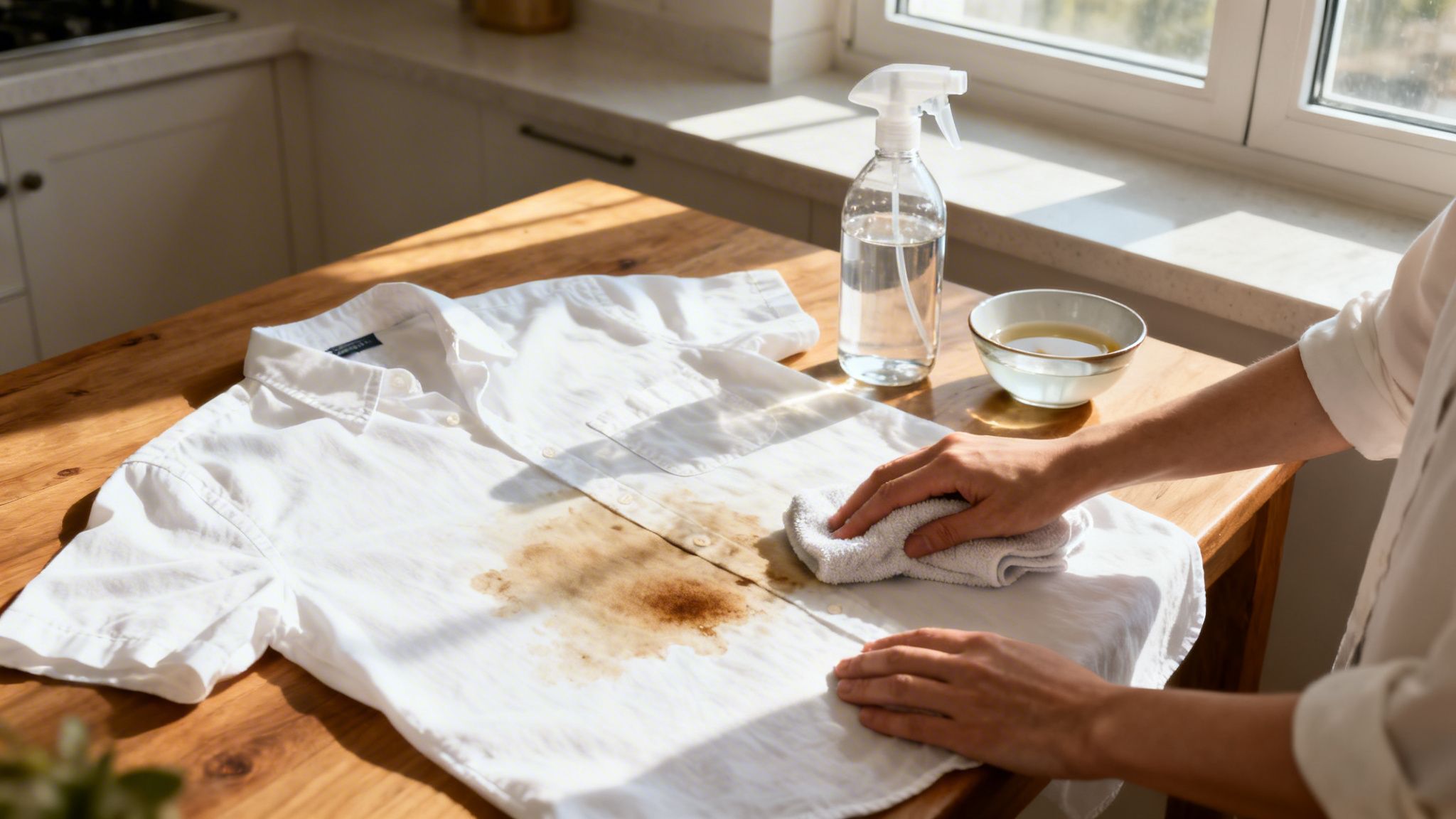
It's that heart-stopping moment we've all experienced: a jolt, a splash, and suddenly your favorite white shirt or cream-colored rug is wearing your morning coffee. But don't panic. That stubborn brown stain doesn't have to be permanent, and the solution is probably already in your pantry. A coffee stain vinegar mix is a surprisingly powerful tool for tackling these spills.
Why Vinegar Is Your Secret Weapon Against Coffee Stains
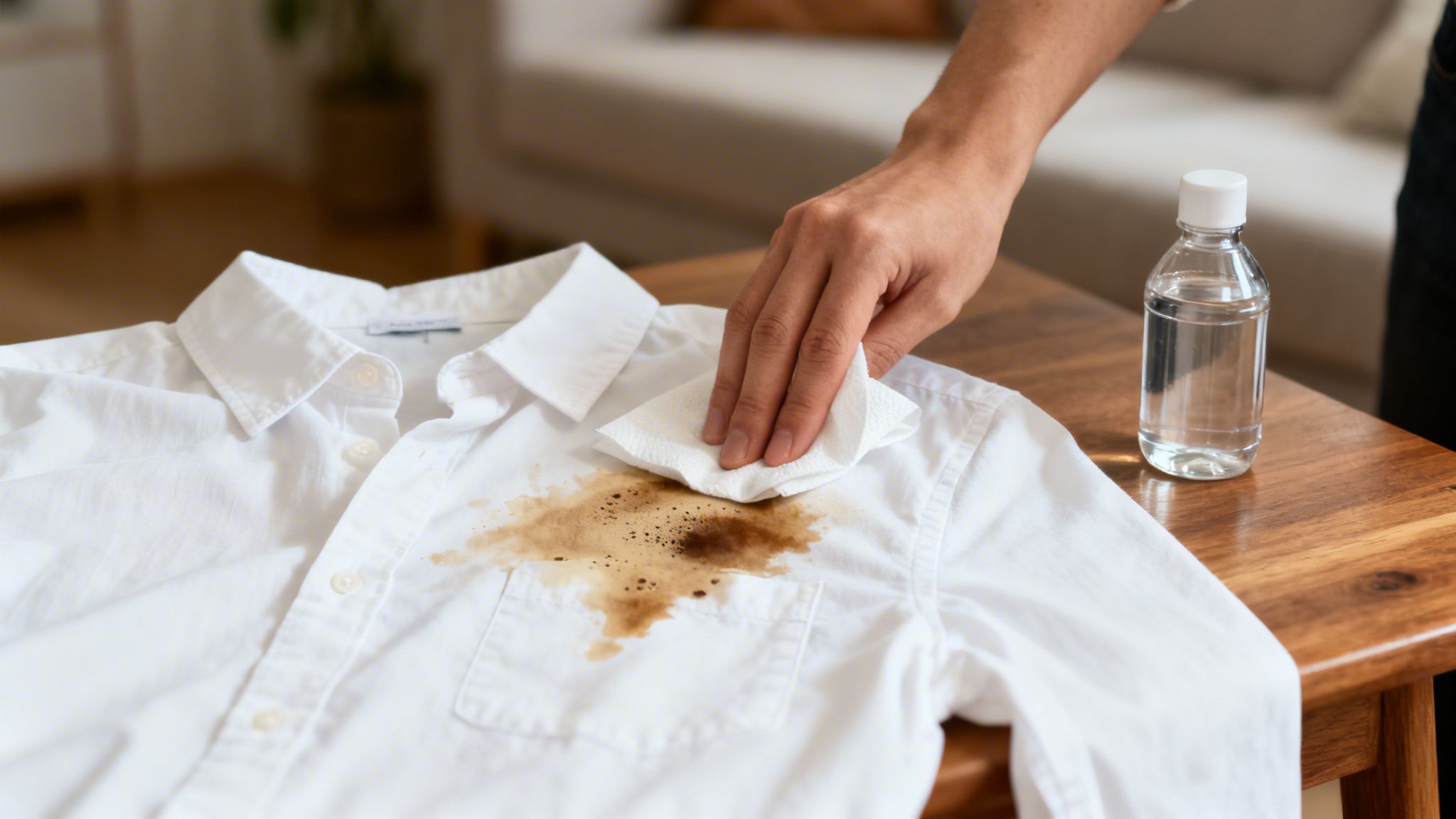
When coffee hits fabric, the feeling is all too familiar. But instead of giving in to the "oh no," let's focus on the "what now." The reason this simple kitchen staple works so well comes down to some basic chemistry.
Coffee gets its color from natural compounds called tannins, the same stuff you'll find in red wine and tea. These tannins are notorious for binding to fabric fibers, leaving behind that tell-tale yellow-brown mark.
This is where plain old distilled white vinegar comes in. Its secret is acetic acid, a mild acid that is fantastic at breaking down those tannins. It essentially loosens their grip on the fabric, allowing them to be flushed away easily. It's not magic, just science at its most practical.
Immediate Actions for a Fresh Coffee Spill
What you do in the first five minutes is critical for successful stain removal. Acting fast can be the difference between a stain that vanishes and one that decides to stick around for good.
Taking these quick, simple steps right away drastically improves your chances of getting that coffee stain out completely.
This isn't just about cleaning; it's about restoring order and peace of mind when a small accident happens. At Columbia Pike Laundry, we believe that armed with the right knowledge, you can confidently manage these common household mishaps.
Mixing Up Your Coffee Stain Solution

Alright, you've blotted the fresh spill, and now it’s time to mix the magic potion. The best part about using vinegar is its simplicity—you don't need a degree in chemistry to get this right.
For most everyday fabrics like cotton, sturdy denim, or synthetics like polyester, your go-to mix is a 1:1 ratio of distilled white vinegar and cold water. This simple blend hits the sweet spot. The vinegar’s acetic acid is just acidic enough to break down the coffee tannins, while the water dilutes it to protect the fabric.
Just pour equal amounts into a small bowl or a spray bottle. If you're tackling a small splash on a shirt, a quarter-cup of each will be more than enough.
First, Always Do a Spot Test
I can't stress this enough: before you go dousing the stain, you have to do a spot test. It’s a non-negotiable step that takes just a few minutes but can save your favorite shirt from a color-bleeding catastrophe.
Find a hidden spot on the item, like the inside of a hem or a seam allowance. Dab a tiny bit of your vinegar solution on with a white cloth, let it sit for a minute or two, and then blot it dry. If you don't see any color lifting off or any change to the fabric, you're good to go.
Key Takeaway: Stick with distilled white vinegar only. Apple cider or red wine vinegar have their own colors and sugars, which will just trade one stain for another, stickier one.
How to Apply the Solution and Lift the Stain
Once your spot test comes back clear, you’re ready to tackle the main event.
- Grab a clean, white cloth and dip it into your vinegar-water mix. Wring it out well; you want it damp, not dripping.
- Gently dab the solution onto the stain. Start from the outside edge and work your way toward the center. This little trick keeps the stain from spreading outwards.
- Resist the urge to scrub! Rubbing can grind the coffee deeper into the fabric and even damage the fibers. A gentle dabbing or blotting motion is all you need.
- Let the solution sit and work its magic for about 5 to 10 minutes. This gives the vinegar time to break down the coffee.
After it has sat for a bit, take a separate dry cloth and blot the area to soak up the moisture. To finish, flush the spot with cool water to rinse out any remaining vinegar before you toss it in the wash.
This method works wonders on clothes, but when it comes to your coffee maker, you need a different approach. Using the right cleaning products for commercial coffee equipment is essential for keeping it in top shape.
If you're curious about other ways to use household staples for laundry, you'll find some great ideas in our article on washing clothes with baking soda and vinegar.
Tailoring Your Technique to Different Fabrics
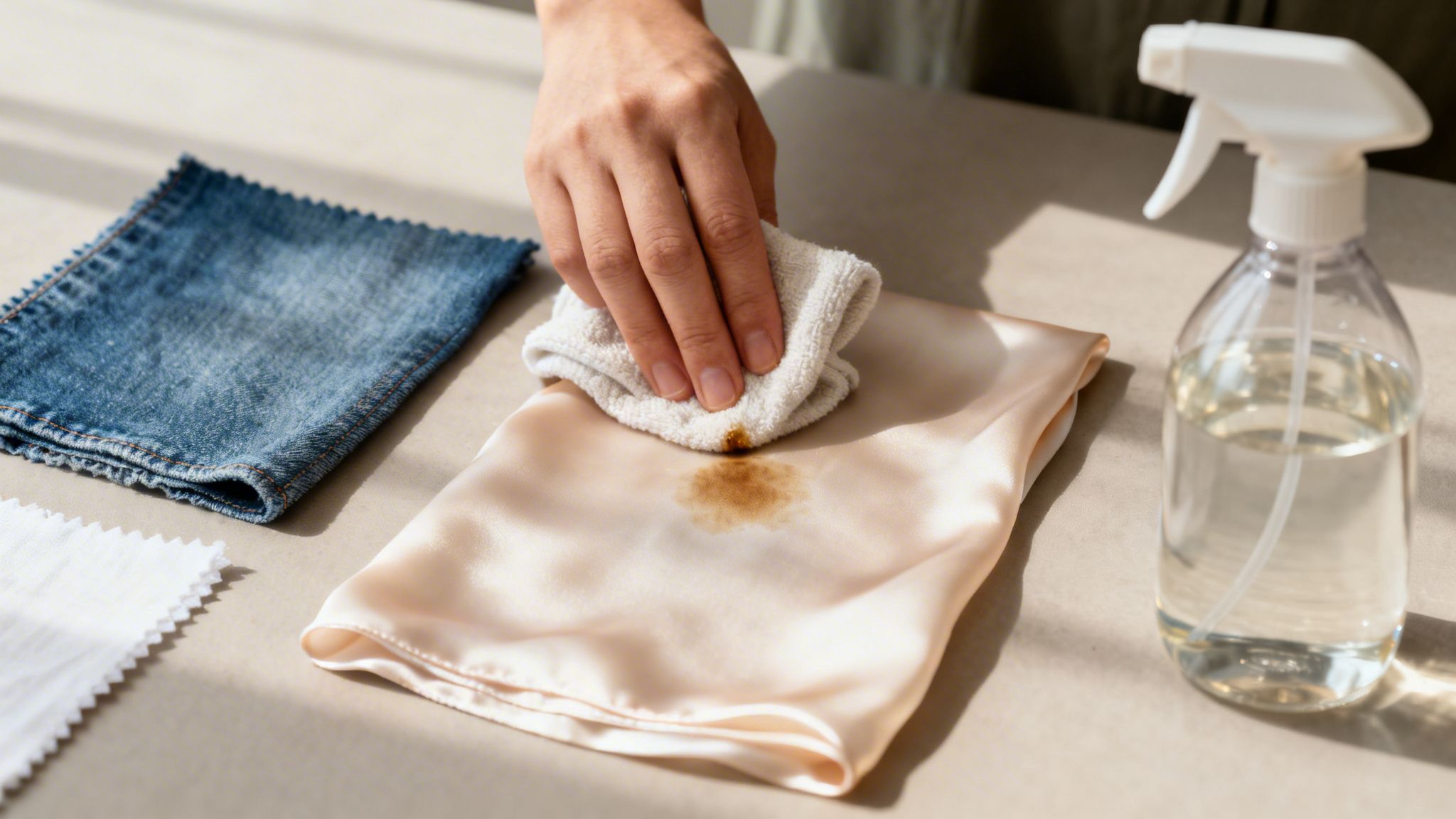
Treating a coffee spill isn’t a one-size-fits-all job. The tough denim of your favorite jacket can handle a much more direct approach than a delicate silk blouse. Knowing how to adapt your vinegar method to the specific material is absolutely key to getting the stain out without causing any new damage.
For sturdy, everyday fabrics like cotton, linen, and denim, you can proceed with confidence. These materials are resilient and respond well to the standard 1:1 vinegar and water solution. Their durable weave allows for a slightly more assertive blotting technique to lift the stain effectively. Just remember the golden rule: always blot, never rub.
Handling Delicate Garments
Delicate fabrics require a much gentler touch. Materials like wool, rayon, or certain blends are sensitive to vinegar's acidity, so you'll need to dilute your solution significantly to protect the fibers.
For delicates, a safe ratio is one part white vinegar to three parts cold water. This mix has just enough acidity to break down the coffee tannins without stressing the fragile fabric structure.
When applying this weaker solution, use a very light dabbing motion with a clean, soft cloth. Press gently and lift, letting the cloth do the work of absorbing the stain. Avoid any pressure that could stretch or distort the weave, especially with fabrics like wool that can easily lose their shape. For especially tricky materials, you can find more detailed advice in our guide to removing stains on silk.
Lifting Stains from Upholstery and Carpets
Coffee stains on upholstery and carpets present a unique challenge—you can’t just toss them in the wash to rinse everything out. The goal here is to lift both the coffee and the vinegar without leaving behind a dreaded water ring.
Here’s my go-to method for non-washable surfaces:
- Spray, Don't Pour: Put your vinegar solution in a spray bottle. Lightly mist the stained area instead of pouring liquid directly onto it, which prevents over-saturation.
- Blot Methodically: With a clean, dry towel, blot the misted area. Press down firmly to absorb the moisture and lift the stain. Work from the outside of the stain inward.
- Rinse with a Mist: Fill another spray bottle with plain, clean water. Lightly mist the same area to "rinse" the vinegar solution from the fibers.
- Dry Blot to Finish: Immediately follow up with a fresh, dry towel, blotting firmly to pull out as much moisture as humanly possible.
This spray-and-blot technique effectively removes the coffee stain and the vinegar cleaning solution, preventing any sticky residue and ensuring your furniture or carpet dries clean.
How to Tackle Old and Stubborn Coffee Stains
We've all had that moment. You pull a shirt from the hamper and find a forgotten, faint brown splotch that’s definitely yesterday's (or last week's) coffee. While catching a spill fresh is ideal, finding an old stain isn’t a lost cause. It just means you need to bring out the heavy hitters.
For these stubborn, set-in stains, your simple coffee stain vinegar spray won't be enough. You need to dial up the power. The secret is to pair vinegar with a gentle abrasive like baking soda to create a paste that can really get deep into the fabric fibers.
Creating and Using a Vinegar-Soda Paste
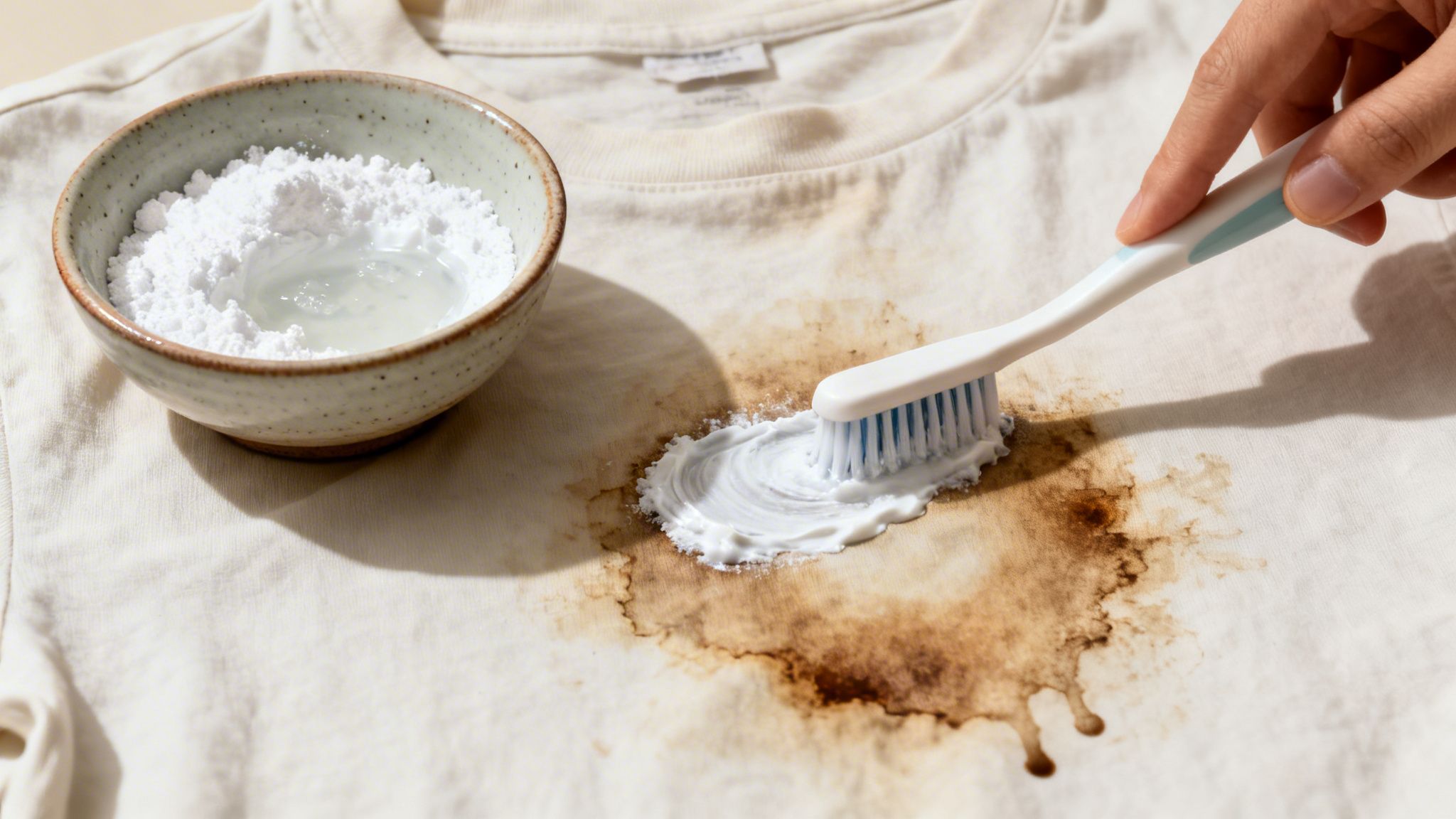
You'll be making a thick paste using distilled white vinegar and baking soda. Think of the consistency of toothpaste—thick enough to stay on the stain without running, but still easy to spread.
- In a small bowl, start with a couple of tablespoons of baking soda.
- Slowly drizzle in the white vinegar, maybe a tablespoon or so to start, and mix it up. You'll see some fizzing, which is a totally normal and expected chemical reaction. Keep adding vinegar until you get that perfect paste-like texture.
Once it's mixed, spread the paste generously over the entire coffee stain. I usually use my fingers or the back of a spoon to gently work it into the fabric. Now, just let it sit and dry completely. This might take anywhere from 30 minutes to a couple of hours, but as it dries, the paste is working its magic to pull the stain out.
Pro Tip: When the paste is dry and crusty, grab a soft-bristled brush (an old toothbrush is perfect for this) and gently scrub away the dried mixture. This little bit of friction helps physically break the stain's bond with the fibers before you move on to the next step.
After brushing everything off, you can hit the spot with your regular 1:1 vinegar and water spray, blot it, rinse, and then toss the item in the wash like you normally would.
When Milk or Sugar Complicates Things
But what if that old stain came from a latte or a sweetened coffee? Now you're not just dealing with coffee tannins; you've got proteins and sugars in the mix, which are a whole different ballgame.
For these complex stains, you need a different first step. Before you even think about the coffee stain vinegar paste, soak the stained portion of the fabric in cool water mixed with a bit of enzyme-based laundry detergent for at least 30 minutes. The enzymes are specifically designed to break down those stubborn protein and sugar compounds.
After that initial soak, you can go ahead with the vinegar and baking soda paste method to finish off what's left of the coffee part of the stain.
Knowing When to Trust a Professional
While the coffee stain vinegar trick is a fantastic first line of defense, sometimes the smartest move is knowing when to call it quits. DIY isn't always the answer, especially when you're dealing with a valuable or delicate garment. Recognizing that limit isn't admitting defeat—it's just smart fabric care.
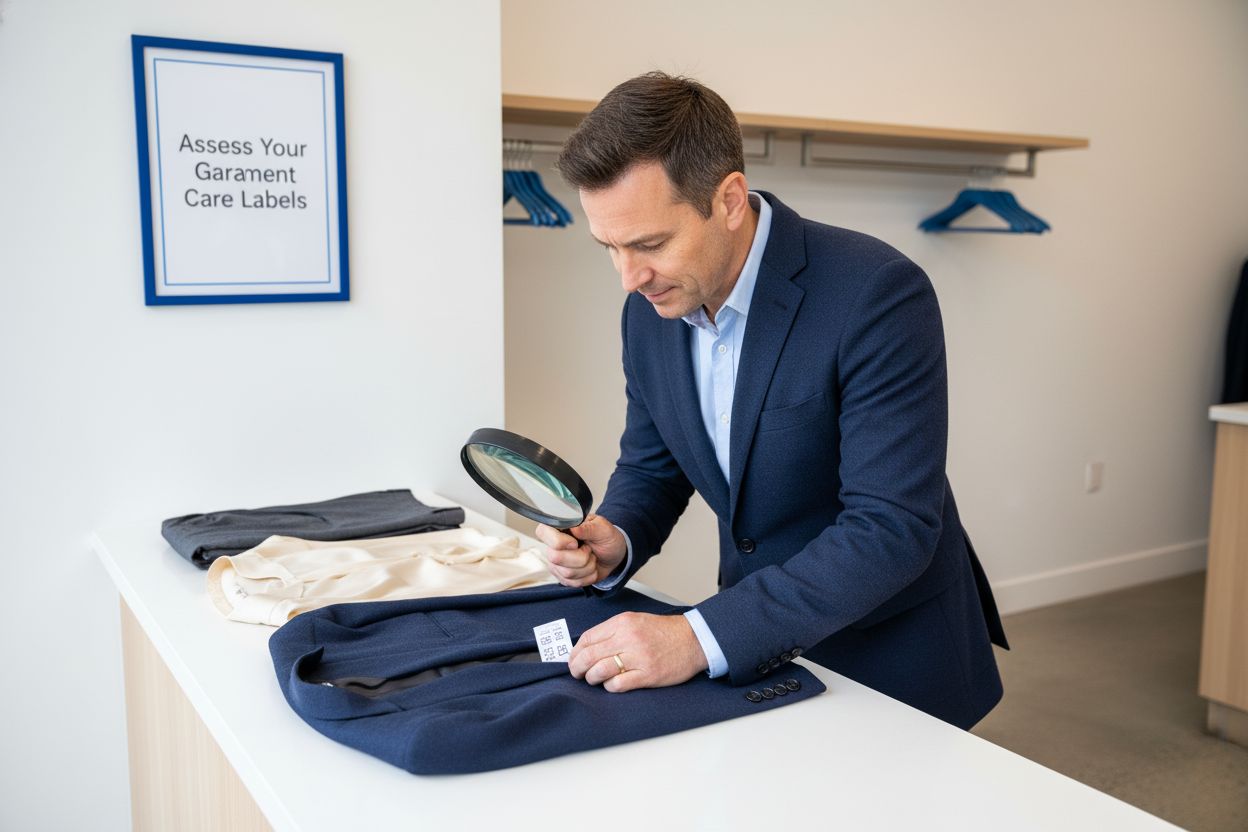
The clearest signal to stop? The care tag. If that little label says "Dry Clean Only," step away from the vinegar. Seriously.
Using a water-based solution, even a heavily diluted one, on these fabrics can be a recipe for disaster. You could end up with shrinkage, stubborn water spots, or colors bleeding all over. That label is there for a reason: the fibers, dyes, or the very structure of the garment can't handle water.
When DIY Attempts Fall Short
Another time to throw in the towel is when the stain just won't budge after one gentle try. You’ve blotted, you've applied your vinegar mix, you've rinsed, and that coffee spot is still staring back at you.
Pushing it further is where the real damage happens. Repeatedly rubbing and applying more solution can fray the fabric fibers, leaving a weak, worn-out patch that's worse than the original stain.
The goal is to lift the stain, not destroy the fabric's integrity. Overworking a spot can actually set it deeper into the fibers, making it permanent even for a professional.
At Columbia Pike Laundry, we see this all the time. We have access to specialized, eco-friendly solvents that are tough on stains but gentle on delicate fabrics. If you're stuck with a stubborn spot, it’s worth seeing how dry cleaners can tackle tough stains that household remedies simply can't touch.
Handing your garment over to a professional takes the stress off your shoulders. It's a simple choice that ensures your favorite clothes are cared for the right way, preserving them for years to come.
Your Questions About Vinegar and Stains Answered
It's smart to have questions before you tackle a stain with something from your pantry. We get it. To make sure you're confident before you start, our team at Columbia Pike Laundry has pulled together answers to the questions we hear all the time.
Will My Clothes Smell Like Salad Dressing?
This is easily the number one question we get asked, and I'm happy to report the answer is a firm no! That sharp vinegar smell is only temporary. It completely disappears after a good rinse or a spin through a normal wash cycle.
If you're working on upholstery or a rug, just blot the area with a clean, damp cloth after you've treated the stain. As it dries, any lingering scent will evaporate, leaving you with a fresh surface, not a salad bowl.
Can I Use Apple Cider Vinegar Instead?
Please don't! We can't stress this enough: for stain removal, you should only ever use distilled white vinegar.
There’s a good reason for this rule. Apple cider vinegar and other colored vinegars have natural dyes and tannins in them. Rather than lifting the coffee, they can actually deposit their own color onto the fabric. You’ll trade a coffee stain for a new, yellowish-brown one that can be even tougher to get out.
Key Takeaway: Sticking with distilled white vinegar is crucial. It’s clear, so it cleans without leaving any color behind. Using anything else is a common mistake that can make the stain worse.
Is Vinegar Safe for All My Clothes?
For the most part, yes—vinegar is safe on sturdy, colorfast fabrics like cotton and polyester. But even so, a spot test on a hidden area is non-negotiable. A quick test on an inside seam or hem can save you from accidentally causing color fading or damage.
However, you need to be careful with delicates. Materials like silk, rayon, or anything with a "Dry Clean Only" tag are best left to the professionals. The risk of damaging these sensitive fibers is just too high.
Vinegar is a surprisingly versatile cleaner beyond just your clothes. For instance, it's also great for descaling your coffee maker. You can learn more about cleaning coffee machines with vinegar to get rid of mineral buildup and keep your coffee tasting fresh.
Sometimes, the smartest move is to let an expert take over. At Columbia Pike Laundry, we provide professional dry cleaning and laundry services, complete with convenient pickup and delivery. Schedule your first pickup at https://columbiapikelaundry.com and get your weekend back.
Free pickup, expert care, delivered back to your door.
Popular Blog Articles




Meet the Author
Daniel Logan didn’t start CPL because he loved laundry. He started it because his family was drowning in time debt, and laundry was one of the biggest weights.
Mornings were chaos with two kids under 5. Evenings felt like catch-up. And weekends? Gone to sorting socks and folding piles.
He knew his story wasn’t unique. So he built a business that gave families like his just a little bit of breathing room one load at a time.
With no laundry experience but deep tech skills, Daniel rolled up his sleeves, doing every job himself while building systems that turned it into a modern laundry service that saves customers time, simplifies their lives, and delivers reliability they can count on.
That’s where CPL began. Not from a playbook, but from pain. From one dad trying to buy back time: for himself, and for every household like his.
Free pickup, expert care, delivered back to your door.