
Cost of Ironing: Your Guide to Savings

Columbia Pike Laundry offers pickup & delivery across Northern Virginia.
Professional ironing usually costs $3 to $12 per item for shirts and pants, and hourly service often runs $20 to $40. What you’ll pay depends on the kind of garment, the fabric, the finish you want, and whether you’re paying per piece, by the hour, or as part of a larger laundry order.
You probably know the scene. A chair has turned into a holding zone for clean clothes, someone needs a crisp shirt tomorrow morning, and the ironing board feels like one more thing standing between you and a normal evening. The cost of ironing looks simple at first, but you are really weighing three things at once: money, time, and how much mental clutter you can tolerate before wrinkled laundry starts to feel like background stress.
For some households, ironing at home makes sense for the occasional shirt or quick touch-up. For others, it becomes a repeating chore that eats into weekends, bedtime routines, or what little quiet time remains. That’s why it helps to look at ironing as a whole decision, not just a line item on a receipt.
The Real Cost of a Wrinkle-Free Wardrobe
One basket of clean laundry doesn’t look threatening. Then it sits for two days, and suddenly it contains work shirts, school clothes, dinner outfits, and the one blouse you forgot you needed. Ironing has a way of turning into a small household bottleneck.

The first cost is the one everyone notices. If you hire it out, you’ll usually see either a per-item charge or an hourly rate. That gives you a clear starting point. A few office shirts may feel affordable. A full family pile can feel different fast.
The second cost is less obvious. It’s the time you spend setting up the board, waiting for the iron to heat, sorting by fabric, and redoing pieces that picked up fresh creases while cooling. If you’ve ever ironed late at night because tomorrow’s outfit wasn’t ready, you already know this cost without putting a number on it.
Practical rule: If ironing keeps getting pushed to “later,” the real issue usually isn’t laziness. It’s that the chore asks for uninterrupted time you don’t actually have.
There’s also the peace-of-mind cost. Some people don’t mind ironing. Others dread it because they worry about scorching a shirt, shining dark fabric, or flattening a collar the wrong way. When that stress becomes part of the task, the cost of ironing goes up even if the dollar amount doesn’t.
A wrinkle-free wardrobe is about appearance, but it’s also about readiness. Clothes that are pressed and hanging properly save decision-making in the morning. That matters more than many people admit.
Here’s the comforting part. You don’t have to treat every garment the same. Some pieces deserve a careful press. Others can be folded, hung promptly, or skipped entirely. The smartest approach usually isn’t “iron everything.” It’s deciding what needs the effort.
Decoding Professional Ironing Prices
Professional ironing prices look confusing until you realize most services use a small handful of pricing models. Once you know which model you’re looking at, quotes make more sense and you can compare options without guessing.
Per-item pricing
This is the easiest model to understand. A shirt has one price. Pants have another. Dresses, blouses, and specialty items may each have their own rate. If you hand over five work shirts and two pairs of trousers, your total is the sum of those individual items.
Per-item pricing works well when:
- You have predictable staples: office shirts, uniform pieces, or dress pants.
- You want cost clarity: you can estimate your bill before you place the order.
- You only need select garments pressed: maybe the shirts need attention, but the casual wear doesn’t.
This is often the best fit for people who think in outfits. If you know exactly which pieces need a crisp finish, per-item pricing feels straightforward.
Hourly or bulk pricing
Some providers price ironing by the hour. Others bundle it into a larger laundry service, often by weight or order type. In that setup, ironing may be separate from washing, or it may be offered as an add-on for certain items.
Hourly pricing can make sense when:
- You have a mixed pile: children’s clothes, blouses, tees, pants, and linens all together.
- The item count is awkward: too many pieces to price mentally one by one.
- You care more about clearing the pile than tracking each garment.
A useful comparison comes from another household chore. If you’ve ever looked into the true cost of house cleaning services, you’ve seen the same pattern. Some people prefer knowing the price per task, while others prefer paying for a block of time and getting the most relief possible from it.
When you ask for an ironing quote, ask one simple question first: “Is this priced by item or by time?” That one answer clears up most confusion.
There’s also a practical difference between pressing and full garment care. Some services include pressing as part of a dry cleaning workflow. Others treat it as a stand-alone finish after washing. That’s why two quotes that sound similar may not cover the same level of work.
If you want a current service menu for comparison, reviewing a local laundry pricing page can help you see how per-item and order-based charges are commonly presented. The important part is not memorizing every category. It’s knowing what you’re being billed for.
A simple way to compare quotes
Use this checklist before you say yes:
- Ask what counts as an item: a blouse, slacks, school uniform, or dress shirt may not fall into the same category.
- Check whether pressing is included: especially if washing or dry cleaning is part of the same order.
- Clarify rush service: urgent turnaround often changes the final price.
- Look for minimums: some services require a certain order size before pickup or bulk handling makes sense.
Once you know the pricing model, the cost of ironing becomes much less mysterious.
Key Factors That Determine Your Ironing Cost
Two people can hand over the same number of garments and get very different quotes. That isn’t always because one service is expensive and another is cheap. Often, the garments themselves ask for different levels of work.
Garment type changes the labor
A basic cotton shirt is one thing. A pleated skirt, lined blouse, or structured pair of trousers is another. Shape matters because ironing isn’t just about flattening fabric. It’s about working around seams, cuffs, collars, waistbands, pockets, and design details without leaving marks behind.
A plain T-shirt may need little more than careful handling after drying. A button-down shirt takes more attention. A dress with sleeves, lining, or delicate trim takes even more.
That’s why the cost of ironing usually rises with garment complexity, not just item count.
Fabric changes the risk
Fabric tells the presser how cautious they need to be. Cotton can usually handle a direct, firm press. Silk, rayon, and blends can need lower heat, extra protection, or a slower finish. Dark fabrics may show shine if handled poorly. Textured fabrics can lose their shape if pressed too aggressively.
Some items also need a different path entirely. Many garments that people casually call “ironing jobs” are better handled through dry cleaning, especially when the care label points away from standard wash-and-press treatment.
A higher ironing price often reflects risk management as much as labor. The more a garment can be damaged by heat, pressure, or moisture, the more care the service has to build into the process.
Service level matters
Not every press is the same. One service may provide a straightforward machine finish for practical wear. Another may hand-finish problem areas like collars, plackets, or cuffs for a sharper look. The garment may end up on a hanger, folded with tissue, or packaged for storage or delivery.
That difference matters if you’re dressing for:
- Daily office wear
- Formal events
- Photos, interviews, or presentations
- Uniform use where consistency matters
Some people only notice the result. Professionals notice the steps required to get there.
Local operating costs affect the quote
Ironing prices don’t exist in a bubble. A service has labor costs, equipment costs, packaging, utilities, maintenance, and transportation if pickup is involved. Those pressures change over time.
One clear example came during the supply chain disruptions of 2021, when commercial laundry equipment like industrial presses rose by 15% to 25% because of higher global steel prices, according to USGS historical iron ore data. That kind of increase doesn’t show up as a dramatic line on your receipt, but it does shape how services price and sustain quality.
The same broad cost pressure can show up in replacement parts, maintenance schedules, and equipment upgrades. So if you’ve ever wondered why pressing isn’t priced like a tiny add-on forever, this is part of the answer.
Turnaround speed changes the math
Urgent service usually costs more because it disrupts workflow. A standard order can move through the normal queue. A same-day or next-day request may require reordering loads, changing staffing priorities, or handling the item separately.
If you need something quickly, ask early and be specific. “Can this shirt be ready for Friday?” is more useful than “I need it soon.”
For wash-and-fold customers, pressing may also be an extra charge rather than a default part of the service. By contrast, most dry-cleaned items are typically pressed as part of that process. That difference catches people off guard, so it’s worth asking before your order is processed.
DIY Ironing vs Professional Pressing A Clear Comparison
Some people want a balanced answer here, and that’s fair. Home ironing isn’t wrong. Professional pressing isn’t automatically necessary. The better choice depends on what you value most: control, speed, consistency, or relief.
Time and effort
The biggest difference is throughput. A person ironing at home works one garment at a time. In professional laundry operations, skilled technicians using standard steam irons can process 7 to 9 shirts per hour, while industrial flatwork ironers can process 1,000 to over 3,000 items in that same amount of time, based on commercial benchmarks summarized by Airtasker’s ironing pricing guide.
That number can sound almost unreal until you remember the equipment isn’t comparable. A home iron on a folding board is designed for occasional use. Industrial finishing equipment is built for volume, repetition, and consistency.
Equipment and hidden costs
At home, you control the setup, but you also own the hassle. You need the iron, the board, clean water if you use steam, space to work, and enough patience to deal with cords, temperature changes, and cool-down time.
There’s also the learning curve. If you’ve ever wondered why sleeves twist, why collars don’t sit flat, or why a pant leg ends up with a crooked crease, that’s because pressing is a skill, not just a motion.
For readers curious about specialty shaping tools, this explanation of a tailor's pressing ham is helpful. It shows why curves like shoulders, darts, and sleeves often need more than a flat board to look right.
Quality and results
Professional pressing usually wins on consistency. The finish tends to be sharper, more uniform, and less likely to show accidental shine or imprint marks. That matters most on business attire, uniforms, dresses, and garments with structure.
At home, you can still get good results. But “good enough” and “ready for a client meeting” aren’t always the same standard.
Home ironing works best when you need flexibility. Professional pressing works best when you need repeatable results without spending your own attention on every seam.
Convenience and peace of mind
The cost of ironing changes shape. DIY looks cheaper if you only count the immediate out-of-pocket expense for one shirt. It looks different if the pile keeps following you from room to room all week.
Here’s a simple side-by-side view:
| Factor | DIY Ironing | Professional Pressing |
|---|---|---|
| Time | You set aside personal time and handle each piece yourself | The work is off your plate once the order is placed |
| Effort | Setup, sorting, pressing, cooling, and hanging are all on you | Staff handle workflow, equipment, and finishing |
| Equipment | Requires a home iron, board, and enough space to use them comfortably | Uses commercial tools designed for higher volume |
| Skill level | Results depend on your technique and patience | Results are usually more consistent across garments |
| Best for | Occasional touch-ups and a few simple items | Larger batches, delicate pieces, and recurring needs |
| Stress level | Can feel manageable or annoying, depending on your schedule | Reduces one repeating household task |
Who should choose which
DIY usually fits if:
- You only iron occasionally
- Your wardrobe is casual
- You don’t mind doing small touch-ups
- You want full control over how each item is handled
Professional pressing usually fits if:
- You wear pressed clothes often
- You’re managing family laundry
- You need reliable presentation for work
- You’d rather reclaim the time than spend it on the board
The comparison isn’t just about whether you can iron. The skill is common. The more important question is whether that task still deserves a place in your week.
Practical Tips to Reduce Your Ironing Expenses
The cheapest shirt to press is often the one that never got badly wrinkled in the first place. A few small habits can shrink the pile before you even decide whether to iron at home or send items out.
Cut wrinkles before they set
Wrinkles become stubborn when fabric dries in a twisted, crumpled shape. You can prevent a lot of work with better handling right after washing.
Try these habits:
- Shake garments out before drying: smooth seams, sleeves, and hems with your hands.
- Avoid overloading the dryer: crowded loads crease more.
- Remove clothes promptly: don’t let finished laundry sit packed together in a warm drum.
- Hang the right items immediately: shirts, blouses, dresses, and slacks benefit most.
Those steps won’t eliminate every crease, but they reduce how many pieces need a full press.
Be selective about what you outsource
Not every item needs professional attention. Think in terms of visible payoff. A dress shirt for work may be worth it. Gym clothes probably aren’t. School polos might matter more than pajama pants.
A practical order often includes:
- Workwear that needs a crisp finish
- Special fabrics you don’t want to risk at home
- Event clothing
- Large batches that would otherwise take over your evening
That kind of triage keeps the cost of ironing focused where it helps most.
The goal isn’t to create a perfectly pressed life. It’s to spend money only where it buys back real time or reduces real stress.
Use service options strategically
If you’re already sending laundry out, ask how pressing fits into the order. Combining services can be more convenient than handling washing one way and pressing another. It also cuts down on separate errands and repeated decisions.
If convenience matters most, a service with pickup and delivery can reduce the hidden cost of transportation and scheduling. That doesn’t automatically make every order cheaper, but it can make the whole routine easier to sustain.
A few more smart moves:
- Bundle items thoughtfully: wait until you have the garments that justify the order.
- Ask about add-ons in advance: especially for wash-and-fold items that need pressing.
- Keep a “needs pressing” section in your closet: this prevents last-minute panic and duplicate orders.
When people feel ironing is expensive, the problem is often not the pressing itself. It’s the inefficiency around it. Better sorting, better timing, and fewer emergency requests usually help.
How Pressing Services Work at Columbia Pike Laundry
If you’re trying to understand how pressing is handled in a real service, clear rules matter more than fancy language. The process is simple once you know which type of order you’re placing.
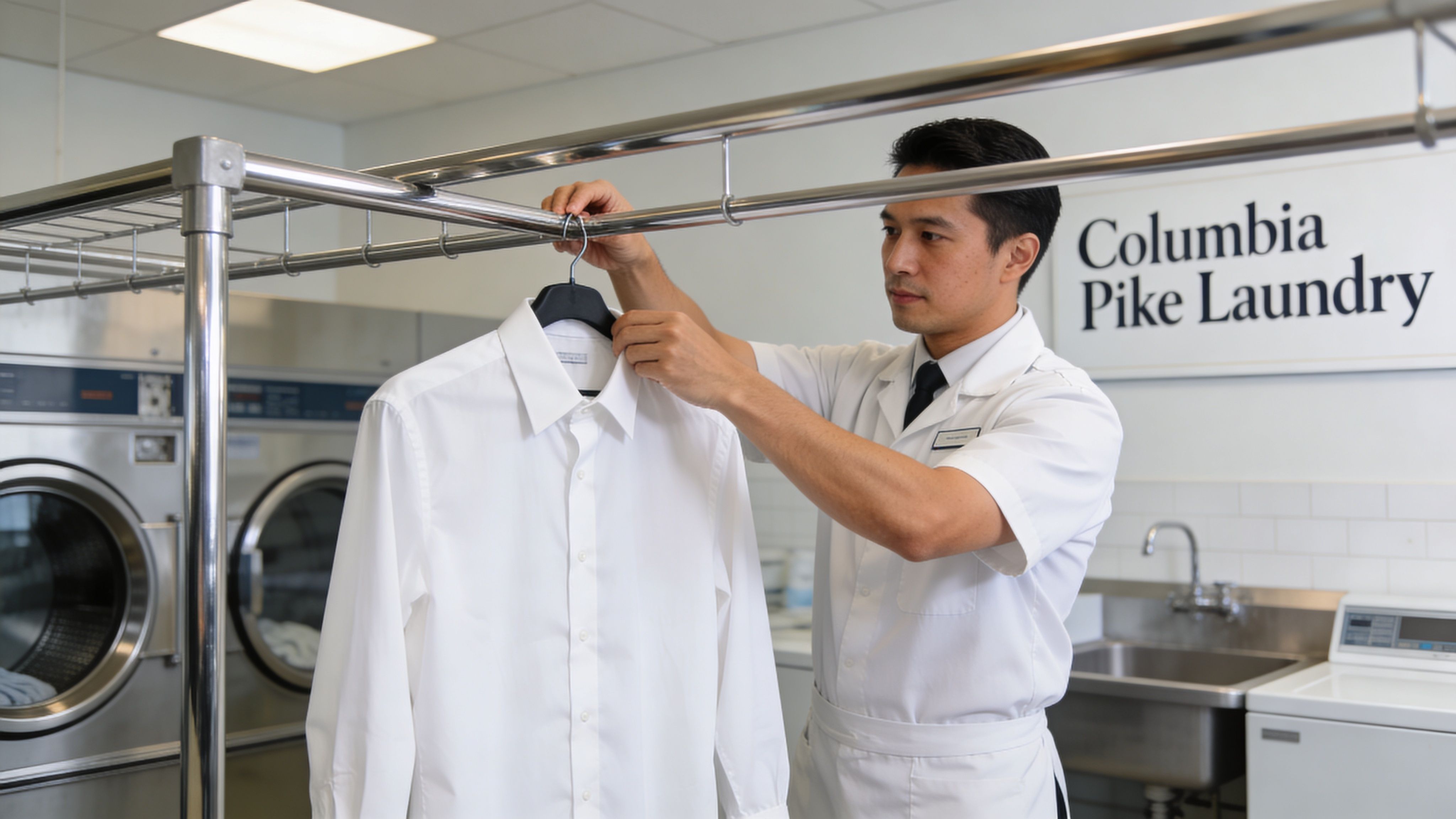
For dry cleaning, most items are pressed by default. That means the finishing step is already built into the service, which is why dry-cleaned garments usually return ready to hang and wear.
For Wash & Fold, pressing is available, but it isn’t automatic. If you want certain pieces pressed, add a note when scheduling your order. There may be an additional charge, so it’s best to identify the garments clearly.
Turnaround basics
The standard turnaround is:
- Laundry: 48 hours
- Dry cleaning: 3 days excluding Sunday
- Express laundry: available with a less than 24 hours guarantee
Those timelines help with planning, but if you need confirmation for a specific garment or a special dry cleaning deadline, a team member needs to confirm it directly. That’s the safest way to avoid assumptions about an item that may need special handling.
How to make the order smoother
A few simple habits make pressing requests easier:
- Separate dry cleaning from wash-and-fold items
- Use order notes for items that need pressing
- Flag delicate fabrics or special instructions clearly
- Ask about unusual items before relying on a tight deadline
If a garment matters for a wedding, interview, or event, don’t guess. Ask for confirmation on that item specifically so the timeline is clear before processing starts.
This kind of transparency matters. It removes the uncertainty people often feel about whether ironing is included, extra, or automatic.
Conclusion Reclaiming Your Time from the Ironing Board
The cost of ironing isn’t just the charge on the receipt. It’s also the hour you spend standing at the board, the low-grade stress of a wrinkled pile waiting for attention, and the mental effort of remembering what needs to look polished by tomorrow morning.
Some people do fine with a home iron and a short list of touch-ups. Others are better served by outsourcing the garments that take the most time, the most skill, or the most patience. Neither choice is wrong. The useful question is simpler: does ironing still belong on your to-do list?
Professional pricing makes more sense when you break it down by per-item rates, hourly or bulk models, and the variables that shape each quote, like garment type, fabric, service level, and turnaround. DIY looks cheaper at first glance, but professional pressing can win quickly when you value consistency, volume, and convenience.
There’s a quiet relief in taking one repeating chore off your plate. Not because ironing is impossible, but because your evenings and weekends have better uses. A wrinkle-free shirt is nice. Getting your time back is better.
If you’ve been treating ironing as a small nuisance, it may help to reframe it. This isn’t only about neat collars and smooth sleeves. It’s about building a routine that supports your life instead of interrupting it.
If you’re ready to stop negotiating with the ironing board, Columbia Pike Laundry offers a simple way to hand off laundry and dry cleaning with less friction. You’re not just outsourcing clothes care. You’re buying back time, reducing household stress, and giving yourself one less thing to carry through the week.
Free pickup, expert care, delivered back to your door.
Popular Blog Articles


Meet the Author
Daniel Logan didn’t start CPL because he loved laundry. He started it because his family was drowning in time debt, and laundry was one of the biggest weights.
Mornings were chaos with two kids under 5. Evenings felt like catch-up. And weekends? Gone to sorting socks and folding piles.
He knew his story wasn’t unique. So he built a business that gave families like his just a little bit of breathing room one load at a time.
With no laundry experience but deep tech skills, Daniel rolled up his sleeves, doing every job himself while building systems that turned it into a modern laundry service that saves customers time, simplifies their lives, and delivers reliability they can count on.
That’s where CPL began. Not from a playbook, but from pain. From one dad trying to buy back time: for himself, and for every household like his.
Free pickup, expert care, delivered back to your door.