
does hydrogen peroxide stain clothes? Quick guide

Columbia Pike Laundry offers pickup & delivery across Northern Virginia.
Yes, hydrogen peroxide can stain clothes, but maybe not in the way you're picturing. It doesn't add a color; it's a mild bleach, which means it can actually strip color right out of the fabric. The biggest risk is using it on your dark or vibrantly colored clothes.
So, How Risky Is It Really?
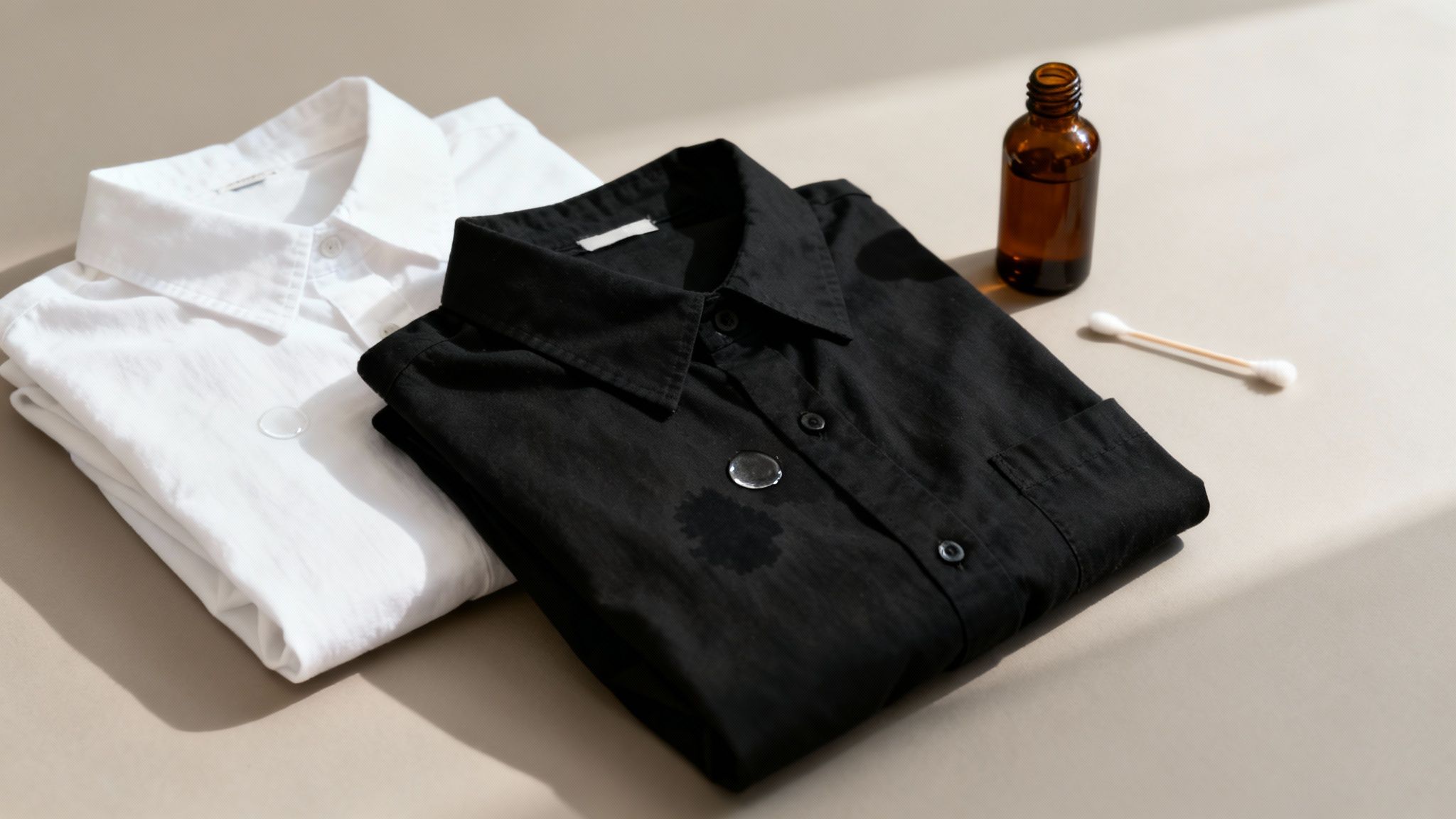
When you wonder, "does hydrogen peroxide stain clothes," the answer is a bit of a "yes, but..." situation. Think of it like a double-edged sword: it’s a total hero for getting out stubborn stains, but it can turn into a villain if you're not careful.
Its cleaning power comes from a process called oxidation, which breaks down the molecules that create color. This is fantastic when you're targeting a coffee spill on a white shirt, but it's a disaster when it starts attacking the actual dye in your favorite blue jeans.
The secret to using it safely comes down to two big things: the concentration you're using and the type of fabric you're treating. The common 3% household solution you find at the drugstore is way gentler than industrial-strength versions, making it a pretty reliable laundry sidekick for most situations.
In fact, studies have shown that adding a bit of 3% hydrogen peroxide to a regular wash cycle doesn't usually cause any damage or discoloration, even in cooler water. You can actually learn more about these laundry findings and see how they might apply to your own routine.
So, while it definitely has bleaching potential, using it the right way keeps the risk low. It all boils down to a few key factors:
- Fabric Color: Whites and colorfast items are your safest bet. Darks and brights? That's where you need to be extra cautious.
- Fabric Type: Sturdy fabrics like cotton and polyester can usually handle it. Delicate materials like silk or wool, however, are a different story.
- How You Apply It: Pouring it straight from the bottle onto a garment is much riskier than diluting it or just adding it to the whole wash cycle.
Hydrogen Peroxide At a Glance Bleaching Risk Factors
To make it even clearer, here’s a quick-reference table that sums up when hydrogen peroxide is more likely to be a friend or a foe to your fabrics.
Ultimately, this isn't about being scared to use a great stain fighter. It's just about knowing when and how to use it so you're lifting the stain, not the color of your clothes.
How Hydrogen Peroxide Really Works on Fabric
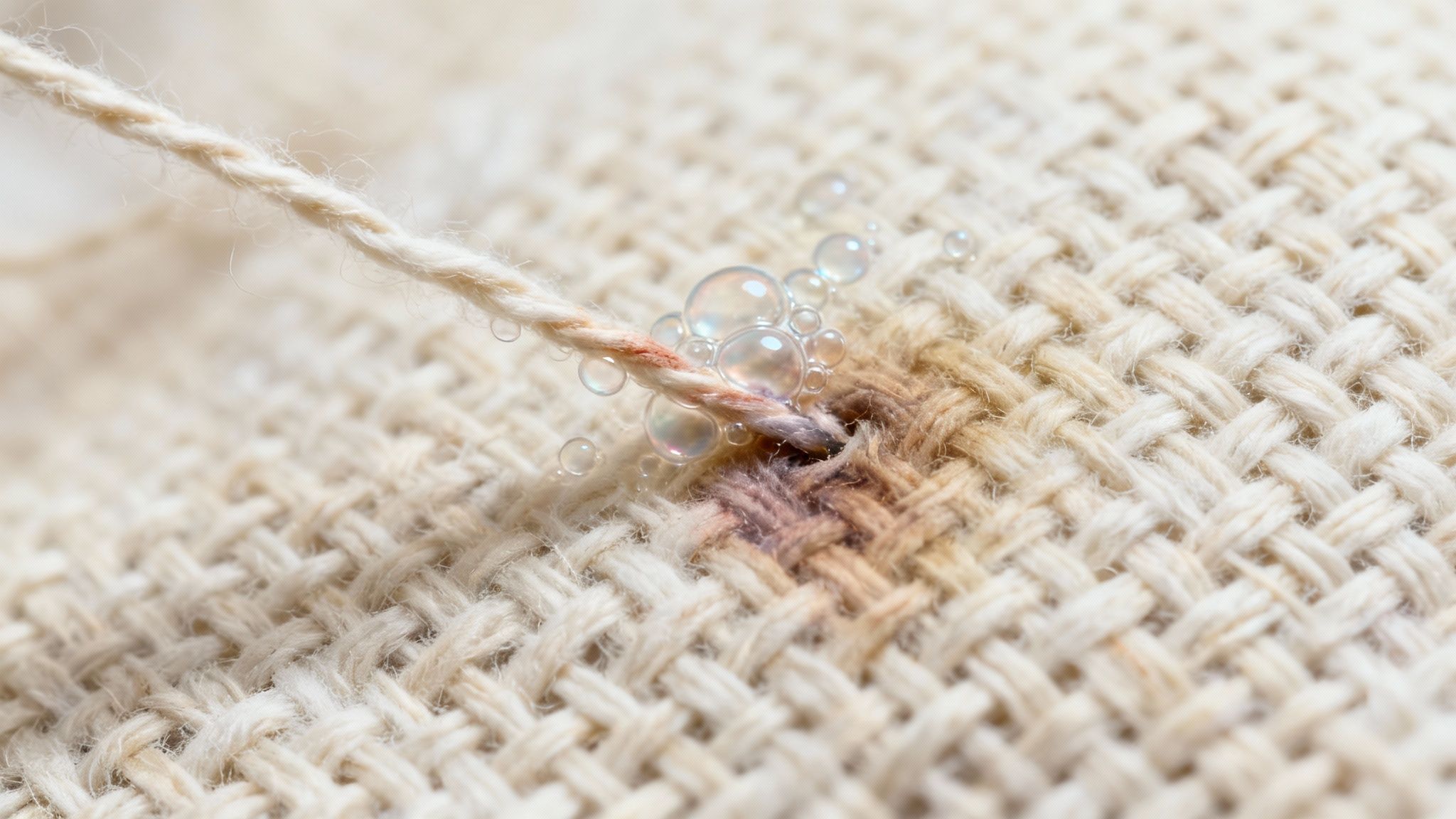
Ever wondered what's happening on a microscopic level when you dab a bit of hydrogen peroxide on a stubborn stain? It’s not magic, but it is some pretty fascinating chemistry. That common brown bottle of 3% hydrogen peroxide in your medicine cabinet is full of tiny, oxygen-releasing powerhouses.
When it hits the fabric, the solution starts breaking down into two things: plain old water and a single, super-reactive oxygen atom. This whole process is called oxidation, and that freed-up oxygen atom is what does all the heavy lifting.
This reaction goes straight for the chromophores, which are the parts of a molecule that give it color. The oxygen atom basically shatters the chemical bonds inside these chromophores, stripping them of their ability to reflect color. The result? The stain becomes colorless, seeming to vanish right before your eyes. This is the secret behind how so many different types of stain removers work to bring your clothes back to life.
A Double-Edged Sword
Here’s the catch, though. This powerful cleaning action is a bit of a double-edged sword. The same oxidation that wipes out a coffee stain can't tell the difference between the color molecules in that stain and the color molecules in your fabric’s dye.
If left on for too long or used on a vulnerable fabric, the peroxide will begin to break down the dye itself, leading to those dreaded bleached-out spots. This is why a spot test is non-negotiable for dark or vibrant clothing.
To get a better feel for this, it helps to understand the general properties of hydrogen peroxide for disinfection, where that same oxidizing power is the key player.
This gets to the heart of the question, "does hydrogen peroxide stain clothes?" It doesn't add a stain; it chemically removes color.
This risk all comes down to a few key factors:
- Fabric Type: Natural protein fibers like silk and wool are much more delicate and susceptible to damage.
- Dye Stability: Some dyes just aren't very colorfast, meaning they'll break down and fade much more easily when exposed to an oxidizer.
- Concentration: Higher concentrations of peroxide will make the bleaching reaction faster and much more intense.
Knowing this delicate balance between stain-fighting hero and color-fading villain is what lets you use it like a precision tool instead of a risky gamble.
Which Fabrics Are Most at Risk
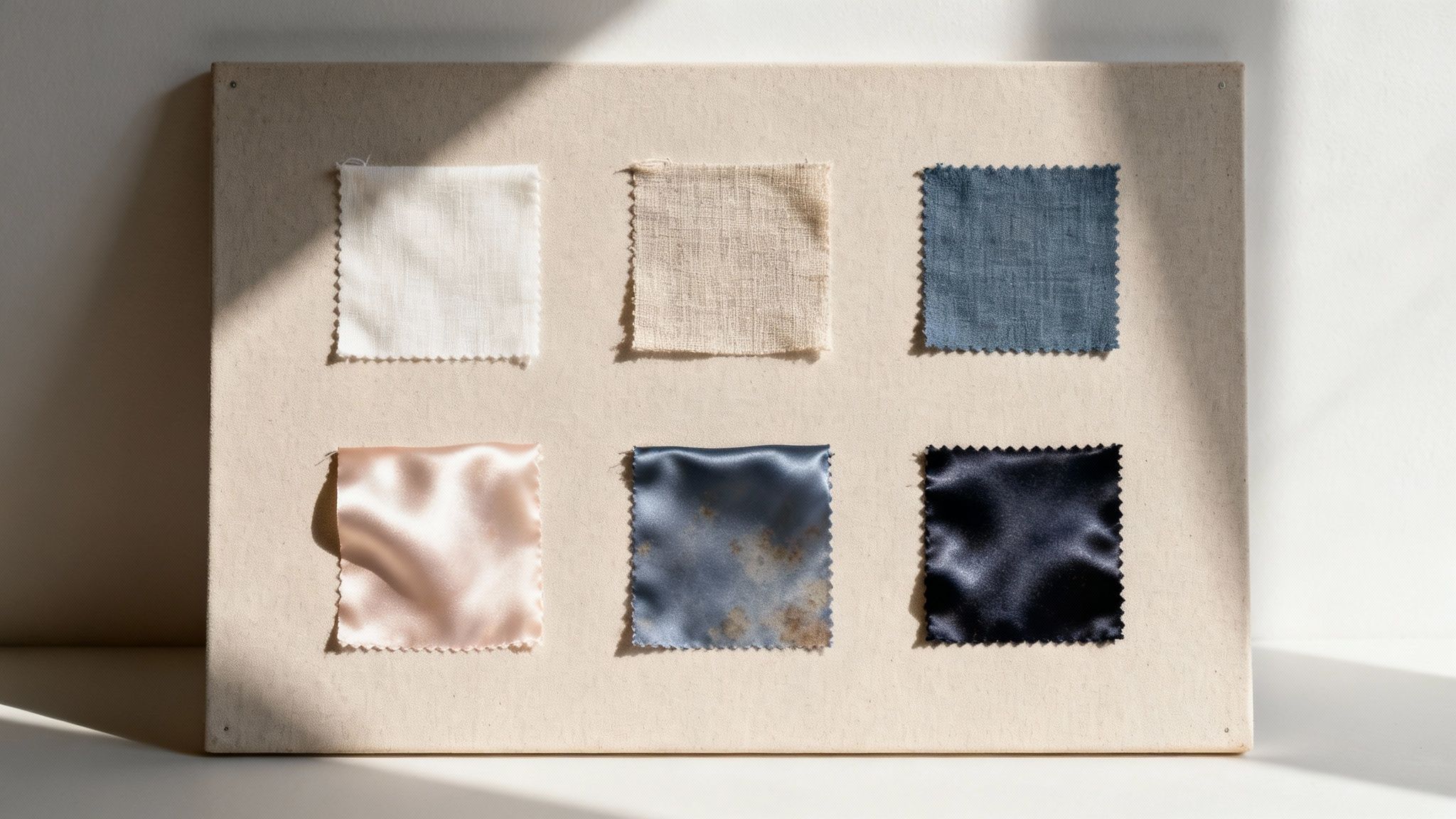
When you're staring down a stubborn stain, it's tempting to grab the hydrogen peroxide and hope for the best. But not all clothes react the same way. Some fabrics are resilient heroes that can handle a careful treatment, while others are far more delicate and will suffer permanent damage.
Knowing the difference is what separates a laundry win from a total catastrophe.
Generally, plant-based fibers and sturdy synthetics are your safest bets. These materials have robust structures that stand up well to the mild oxidative effects of a standard 3% solution.
- Cotton: Most white or light-colored cotton garments can handle direct application for stain removal.
- Linen: Similar to cotton, linen is quite durable and typically safe for peroxide-based cleaning.
- Polyester & Nylon: These workhorse synthetics are usually colorfast and less prone to bleaching from household peroxide.
However, the story changes dramatically with protein-based animal fibers and certain delicate synthetics. The very same chemical reaction that lifts stains can break down the structure of these fibers, causing irreversible harm.
The High-Risk Materials
So, when you ask, "does hydrogen peroxide stain clothes," these are the fabrics where the answer is most likely a resounding "yes." The risk here isn't just about losing color; it's about weakening the fabric itself.
Hydrogen peroxide can cause the protein fibers in materials like silk and wool to become brittle and yellow over time. This chemical reaction permanently alters the fabric, leading to damage that no amount of washing can fix.
You’ll want to proceed with extreme caution—or just avoid using peroxide altogether—on the following materials:
- Silk: Its delicate protein structure is easily damaged, leading to weakened fibers and potential discoloration.
- Wool: Peroxide can strip the natural lanolin from wool, making the fibers brittle and yellow.
- Acetate & Rayon: These semi-synthetics are often less colorfast and can be unpredictable when exposed to oxidizing agents.
- Vibrant or Dark Dyes: Even on a "safe" fabric like cotton, unstable dyes can be stripped of their color, leaving a permanent faded patch.
For more insights on choosing materials built to last, check out our guide on fabrics with longevity for sustainable shopping.
Fabric Safety Guide for Using Hydrogen Peroxide
To make it even easier, here's a quick cheat sheet. This table breaks down how common fabrics typically react to a standard 3% hydrogen peroxide solution, helping you make a smarter choice before you treat a stain.
Remember, this guide is a starting point. The age of the garment, the type of dye used, and the concentration of the peroxide can all play a role. When in doubt, always, always spot test.
Why Strength and Color Are Everything
When it comes to using hydrogen peroxide on your laundry, two things matter more than anything else: the strength of the solution and the color of the fabric. Get one of these wrong, and you could turn a simple stain-fighting trick into a permanent, faded disaster.
Not all hydrogen peroxide is the same. That standard brown bottle you grab from the pharmacy is a 3% solution, which is pretty mild. Think of it like a gentle sprinkler on your lawn. But industrial-grade versions can be 35% or even stronger—that’s more like a fire hose with some serious bleaching power. For anything you're doing at home, sticking with the 3% solution is the only way to go.
Hydrogen peroxide's powerful oxidizing abilities were once reserved for industrial use. While it’s become a household hero, you still have to respect its chemical muscle. Concentrated versions are downright hazardous, but the 3% solution is perfectly safe for most laundry tasks. You can learn more about its chemistry and safe handling in these detailed health and safety guides.
Fabric Color: The Make-or-Break Factor
Beyond the concentration, the dye in your clothes is the real star of the show. Hydrogen peroxide works by breaking down color molecules. That's fantastic when you're trying to lift a red wine stain, but it’s terrible news for your favorite red shirt.
This is exactly why a splash of peroxide on a white cotton shirt usually isn't a big deal—there’s no dye for it to attack. But try that same splash on a black t-shirt or a brightly colored dress, and you'll likely end up with a permanent bleached spot where the dye has been stripped right out of the fibers.
Some fabrics are just asking for trouble. Be extra careful with these:
- Dark Garments: Black, navy, and dark grey clothes are the most likely to show dramatic, faded spots.
- Vibrant Colors: Bright reds, blues, and greens are also very vulnerable to color loss.
- Unstable Dyes: Some cheaper or poorly set dyes will fade with even the slightest exposure.
In the end, using hydrogen peroxide successfully is all about balancing its stain-fighting power against the vulnerability of your fabric's color.
The Foolproof Method for Testing Your Clothes
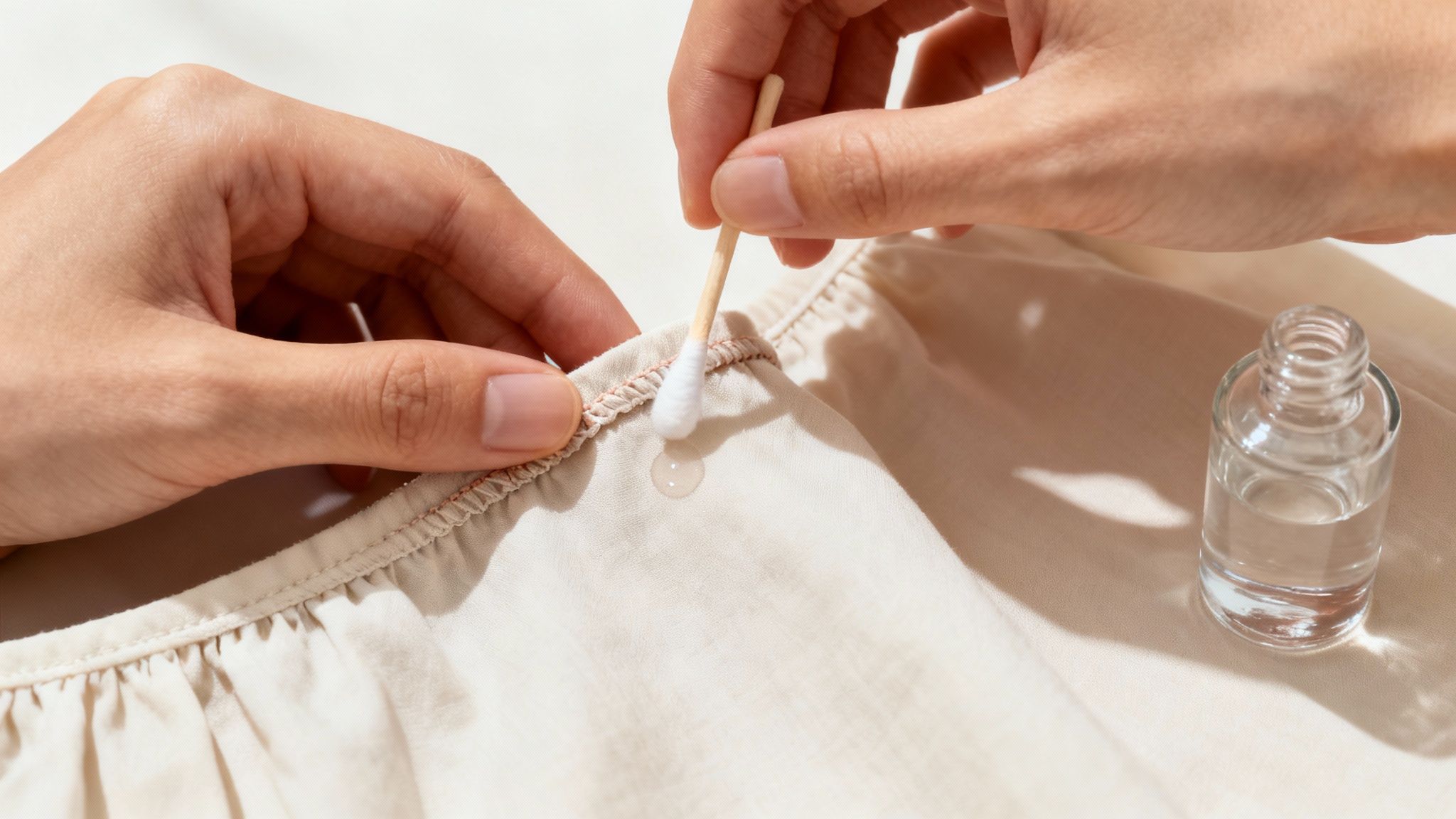
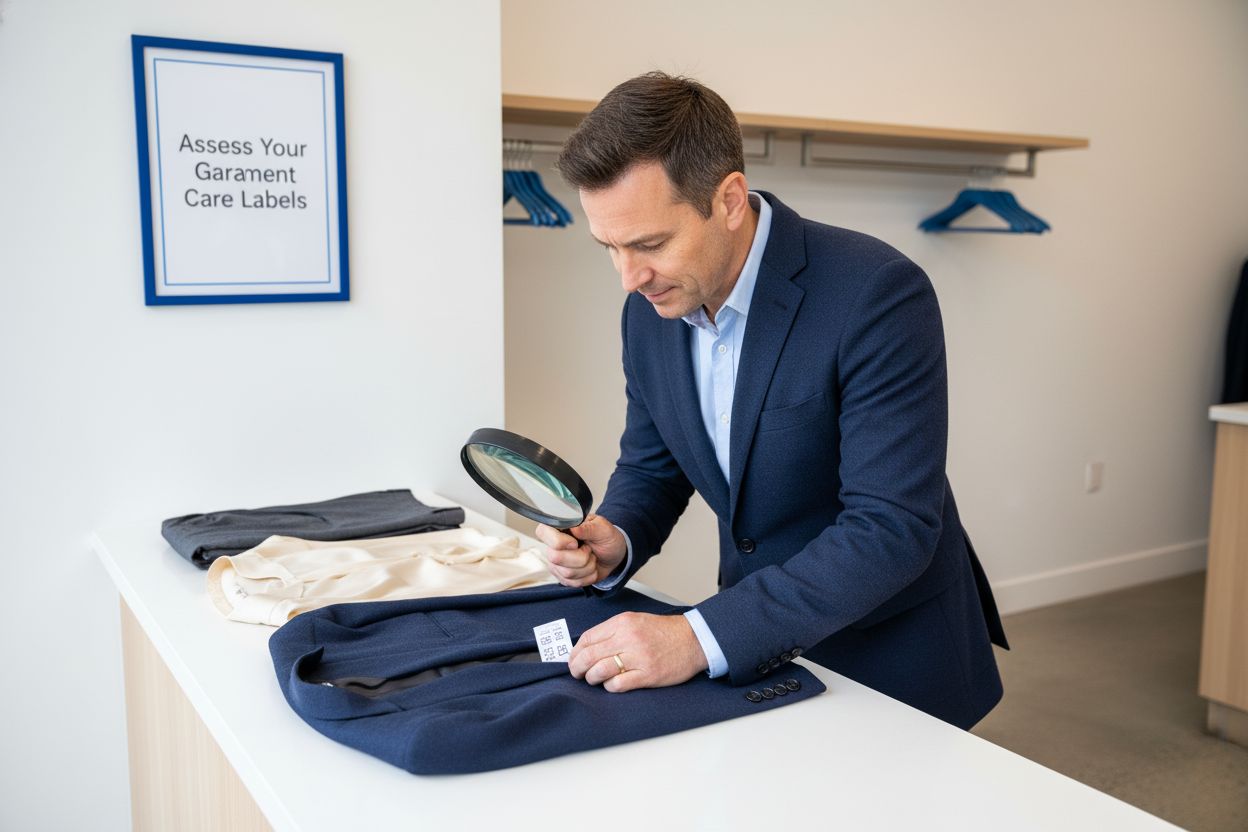
Before you even think about treating a visible stain, there's one simple, non-negotiable step that can save your favorite shirt: the spot test. This little check is your insurance policy against accidentally creating a bleached-out patch where a pesky stain used to be.
Think of it as a dress rehearsal. You wouldn't go on stage without practicing, right? Well, you shouldn’t apply a chemical to your clothes without first seeing how the fabric is going to react. The whole point is to find out if the hydrogen peroxide will strip the dye, without risking the main event.
The good news is, this process is incredibly easy and gives you the confidence to move forward.
How to Perform a Perfect Spot Test
To do this right, you just need a cotton swab, your 3% hydrogen peroxide solution, and about five minutes. Seriously, don't skip this—it's the smartest move you can make in your entire stain-fighting routine.
- Find a Hidden Spot: Look for a place that no one will ever see. The inside hem, a seam allowance, or the underside of a pocket lining are all perfect candidates.
- Apply a Small Amount: Lightly dip a cotton swab in the hydrogen peroxide and gently dab it onto your hidden spot. You only need enough to moisten a tiny patch of the fabric.
- Wait and Watch: Let it sit for at least 5-10 minutes, then blot the area dry with a clean paper towel. Patience is your friend here; the reaction isn't always instant.
Pro Tip: Check the cotton swab right after you dab it on the fabric. If you see any color has transferred from the garment onto the swab, that’s an immediate red flag. It’s a dead giveaway that the dye is unstable and the peroxide will almost certainly strip it.
Once the time is up, take a look at the test spot under a bright light. If there's no change in color, no fading, and no weird texture, you’re good to go. But if you see any lightening or discoloration at all, you've just saved your garment from a permanent, faded mark.
Best Practices for Safe Stain Removal
Alright, ready to tackle those stains like a pro? Let's turn all this chemistry into a simple, actionable game plan. We want hydrogen peroxide to be your go-to stain-fighting hero, not something you're nervous to use.
The golden rule is pretty straightforward: always dilute, apply precisely, and rinse thoroughly.
If you're working with delicate fabrics or anything with color, the first move is to dilute your standard 3% hydrogen peroxide solution. Just mix it with an equal amount of water. This one step dials back its bleaching power, giving you a much gentler approach for those more sensitive items.
Create a Powerful Cleaning Paste
Now, for tougher stains on sturdy fabrics like white cotton, you can mix up a more potent cleaning paste.
- Combine one part 3% hydrogen peroxide with two parts baking soda. You're looking for a thick, spreadable consistency.
- Using a soft brush or even just your finger, apply the paste directly onto the stain.
- Let it do its thing for up to 30 minutes, but don't just set it and forget it—keep an eye on the fabric.
This paste method is fantastic because it concentrates the cleaning power exactly where you need it most. It’s particularly great for things like stubborn, set-in blood stains. For a deeper dive on that specific challenge, our guide on how to remove blood stains from clothes has a ton of extra tips.
Don't forget the final, crucial step: always rinse the treated spot with cold water. This stops the oxidation process in its tracks, making sure the peroxide doesn't keep working and potentially damage the fabric fibers.
By sticking to these practices, you can confidently answer the question "does hydrogen peroxide stain clothes?" with a firm "not when you know what you're doing." For a broader look at keeping textiles in top shape, you might find some general fabric cleaning advice for upholstery useful, as a lot of the same principles apply. Your clothes will definitely thank you for it.
Got Questions About Hydrogen Peroxide and Laundry? We've Got Answers
When you start digging into the world of laundry boosters, it’s easy to get a little overwhelmed. Hydrogen peroxide is a fantastic tool, but using it the wrong way can spell disaster for your favorite clothes. Let's clear up a few common questions so you can use it like a pro.
Is It Safe for My Colored Clothes?
The short answer is: maybe, but you need to be very careful. Hydrogen peroxide is an oxidizer, which means its main job is to break down stains—but it can't always tell the difference between a stain and the dye in your fabric. That’s why it can leave faded or bleached spots, especially on darker or brightly colored clothes.
Before you go all-in, always do a spot test. Find an inside seam or a hidden corner, dab on a little peroxide, wait a few minutes, and see what happens. To be extra safe with colors, I usually recommend diluting it with an equal amount of water to dial back its bleaching strength.
How Long Should I Leave It on a Stain?
This is where timing is everything. For most stains on sturdy fabrics like cotton, letting the peroxide sit for 5-10 minutes is usually the sweet spot. It's enough time to break down the stain without starting to break down the fabric itself.
For a really stubborn stain on a durable white garment, you might push it to 30 minutes, but you'll want to keep a close eye on it.
No matter how long you leave it on, the most important step is to rinse the area thoroughly with cold water as soon as the stain disappears. This stops the chemical reaction in its tracks and prevents the peroxide from slowly weakening the fabric fibers over time.
Tired of spending your weekends in the laundry room? At Columbia Pike Laundry, we give busy families their lives back by handling the washing, drying, and folding for you. Schedule your first pickup and reclaim your weekend. Learn more and get started today!
Free pickup, expert care, delivered back to your door.
Popular Blog Articles




Meet the Author
Daniel Logan didn’t start CPL because he loved laundry. He started it because his family was drowning in time debt, and laundry was one of the biggest weights.
Mornings were chaos with two kids under 5. Evenings felt like catch-up. And weekends? Gone to sorting socks and folding piles.
He knew his story wasn’t unique. So he built a business that gave families like his just a little bit of breathing room one load at a time.
With no laundry experience but deep tech skills, Daniel rolled up his sleeves, doing every job himself while building systems that turned it into a modern laundry service that saves customers time, simplifies their lives, and delivers reliability they can count on.
That’s where CPL began. Not from a playbook, but from pain. From one dad trying to buy back time: for himself, and for every household like his.
Free pickup, expert care, delivered back to your door.