
How to Dry Clean a Suit and Keep It Looking Perfect
Columbia Pike Laundry offers pickup & delivery across Northern Virginia.
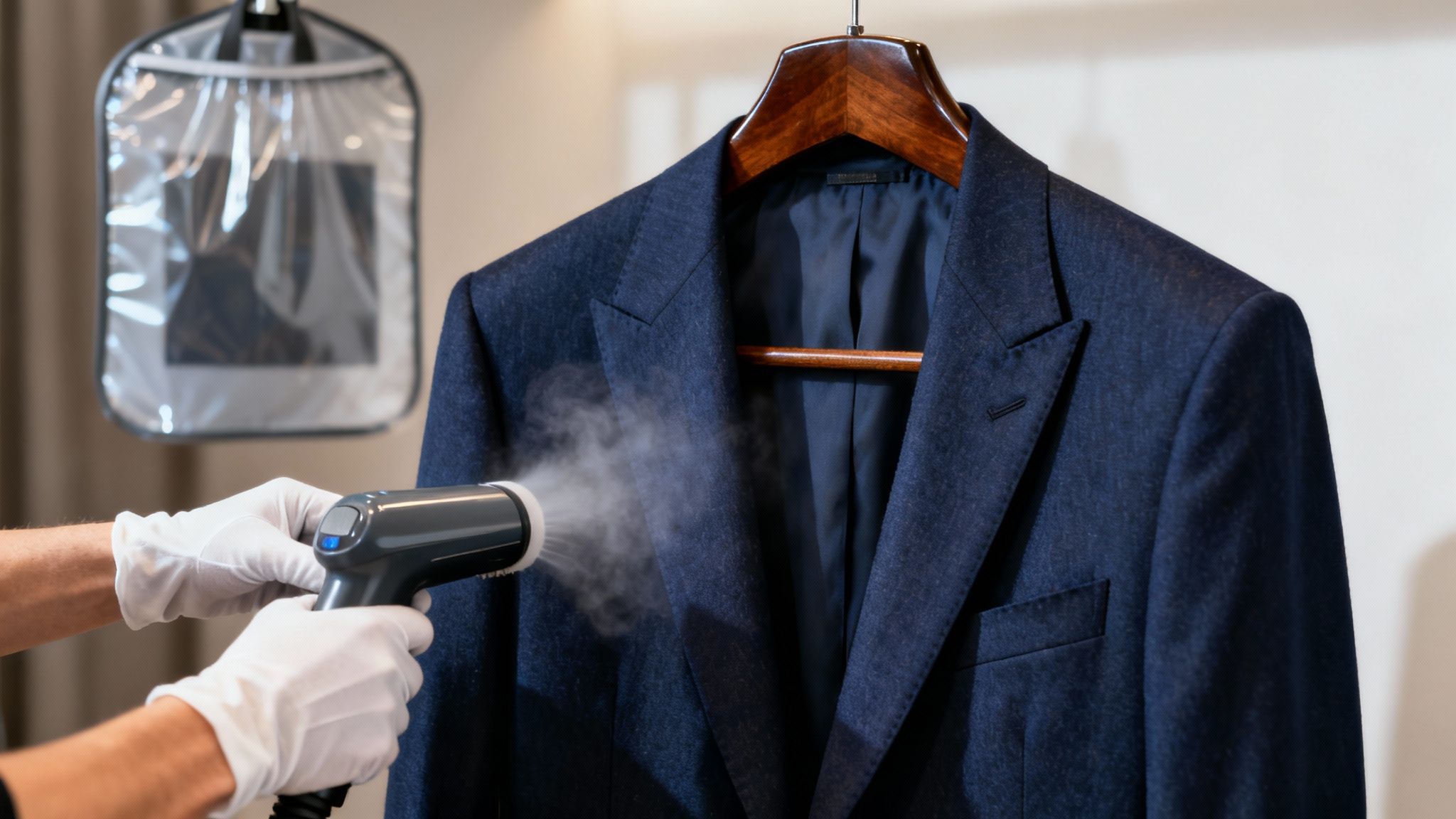
When it comes to caring for a quality suit, the golden rule is simple: dry clean only. I can't stress this enough. Unlike your everyday clothes, a suit is a complex garment. Its shape, structure, and fit depend on delicate materials and internal construction that water will absolutely destroy.
Professional dry cleaning uses specialized solvents, not water, to lift away dirt and oils. This process is gentle enough to protect the delicate wool fibers and, just as importantly, the internal canvas that gives a suit its sharp silhouette.
Why Your Suit Needs More Than Just a Hanger
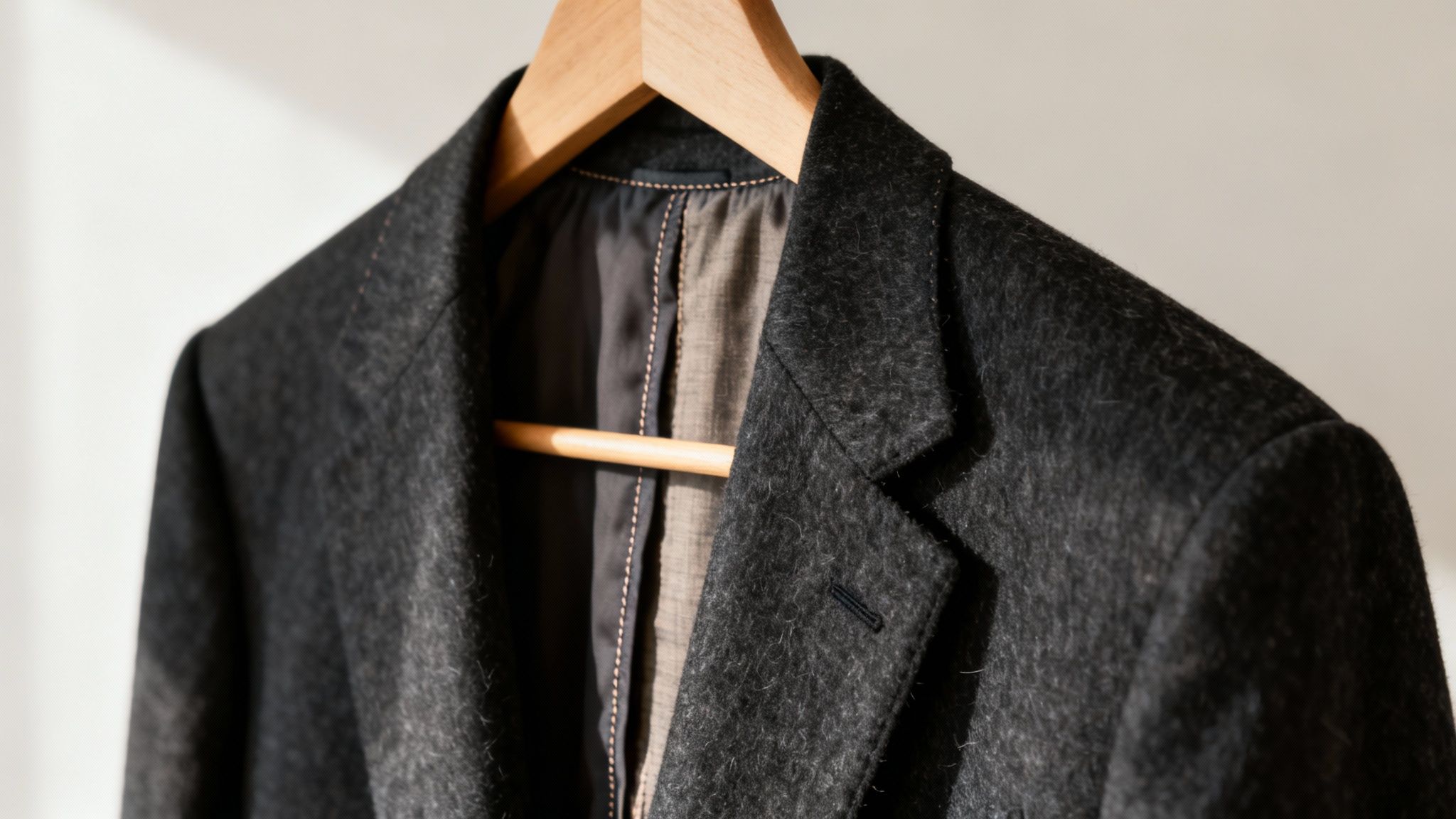
Think of a well-made suit as an investment. It’s been carefully engineered with interwoven fibers, a smooth inner lining, and structured padding to help it drape perfectly. Tossing something like that into a washing machine is a guaranteed way to ruin it.
The combination of water, heat, and the aggressive tumbling of a washing machine is a suit’s worst enemy. Here’s a quick rundown of the damage you can expect:
- Shrinking and Warping: Natural fibers like wool can shrink up to 15% when exposed to water and heat. You’ll never get that tailored fit back.
- Damage to Internal Structure: The inner canvas and padding—the "interfacing"—will bubble, pucker, and pull away from the outer fabric, completely ruining the jacket's smooth lines.
- Color Fading: The dyes in suit fabrics, especially darker ones, can easily fade or bleed, leaving you with a blotchy, worn-out look.
- Lining Disruption: The delicate silk or Bemberg lining will often shrink at a different rate than the wool shell, causing it to bunch up and pull awkwardly from the inside.
The Gentle Power of Professional Dry Cleaning
Professional dry cleaning neatly sidesteps all these problems. The solvent used is incredibly effective at dissolving body oils, food stains, and general grime without ever soaking into the fibers and causing them to swell or lose their shape. This method protects the intricate construction of your suit, making sure it keeps its form, color, and texture for years.
The dry cleaning process has been refined since its early days in the 1820s (when they were experimenting with gasoline!). By the 1930s, safer solvents became the standard, and the industry boomed right alongside America's post-war love for sharp suits. Today, with the industry still seeing steady growth, the need for professional care is as important as ever.
To help you make the right call, I've put together a quick decision-making guide. It’s a handy reference for figuring out the best way to handle any situation your suit might encounter.
Suit Cleaning Decision Matrix
Ultimately, this all comes down to preserving your investment. You wouldn't clean a luxury car with sandpaper, so why subject a finely tailored suit to the brute force of a washing machine?
The Key Takeaway: Choosing to professionally dry clean your suit isn't just about cleaning it—it's about protecting its value and extending its lifespan. It’s the only way to ensure it looks as sharp on its fiftieth wear as it did on its first.
Prepping Your Suit for the Best Clean

Dropping your suit off at the cleaner’s shouldn't be a simple hand-off. If you really want to get the best results, spending just a few minutes prepping your garment beforehand can make a world of difference. Think of it as a partnership with your cleaner—you’re giving them the intel they need to do their best work.
This quick prep is your first line of defense against common cleaning mishaps and ensures every little issue gets the attention it deserves. It’s the difference between getting a suit back that’s simply clean and one that’s truly cared for.
Start With a Pocket Check
This is the most crucial first step, and thankfully, the easiest: empty every single pocket. I mean all of them—the outside pockets, the interior breast pockets, and even that little ticket pocket on the jacket. Forgetting this is probably the most common (and potentially costly) mistake people make.
I’ve seen it all. An ink pen exploding and leaving a permanent mark on a beautiful blazer. A set of keys or a money clip tumbling around, snagging the delicate lining or even damaging the equipment.
We've found melted gum, lipstick tubes, and important business cards reduced to nothing but pulp. A thorough check takes less than a minute and prevents these disasters, protecting both your suit and the other clothes in the same cleaning cycle.
Do a Thorough Visual Inspection
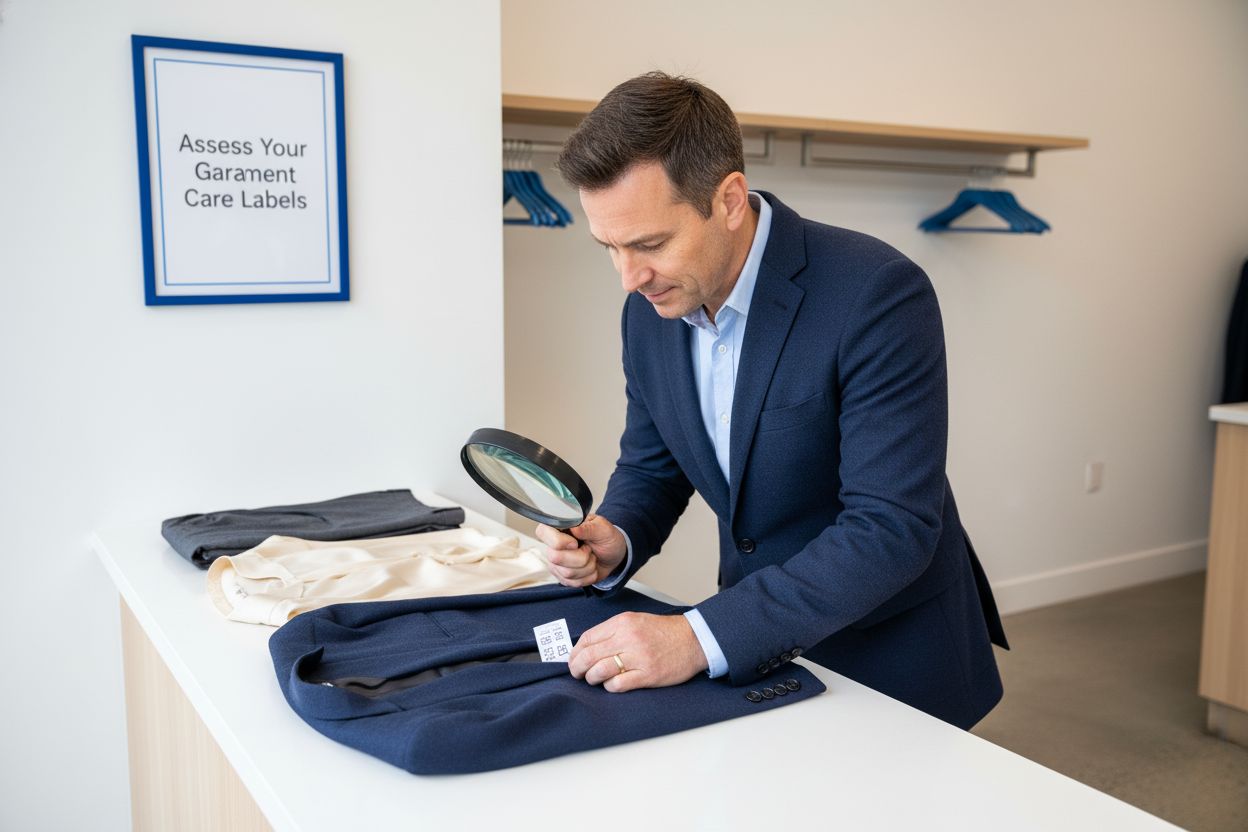
Once the pockets are clear, lay your suit out in good, natural light and give it a solid once-over. You’re looking for things that aren't immediately obvious, because stains can be sneaky, especially on darker fabrics or detailed patterns.
Be sure to focus on the usual trouble spots:
- Cuffs and Collar: This is where body oils and dirt love to build up over time.
- Elbows: They're always picking up subtle grime from desks and tables.
- Lapels: A prime target for tiny splatters from a drink or meal.
- Trouser Knees and Seat: These areas see the most friction and wear.
That tiny, faint spot you can barely see? It can become a permanent, set-in stain after the cleaning process if it isn't pointed out and pre-treated. The heat used in dry cleaning can lock in certain stains, especially sugary ones, making them nearly impossible to remove later.
When you find a spot, resist the urge to treat it yourself with water or some household cleaner. Just make a mental note of it—or even use a small, removable piece of painter's tape to mark the area—so you can point it out to your cleaner. This gives them the critical info they need to choose the right solvent for that specific stain.
Talk to Your Cleaner
This is where all your prep work pays off. When you drop off the suit, take a moment to actually talk to the person at the counter. Good communication is absolutely key to getting the results you want when you dry clean a suit.
Point out every stain you found. If you know what caused it, even better. Knowing whether it’s an oil-based dressing stain or a water-based coffee spill helps the cleaner choose the most effective treatment right from the start.
Don't forget to mention any structural issues you noticed, too. A loose button, a fraying seam, or a small snag in the fabric are all things you should bring to their attention. Many cleaners offer minor repairs, and it's far more convenient to get it all done at once. This kind of teamwork ensures your suit comes back not just clean, but in the best possible shape for its next wear. For more tips on garment care, our guide on how to read clothing care labels is a great resource.
Professional Cleaning vs. At-Home Kits
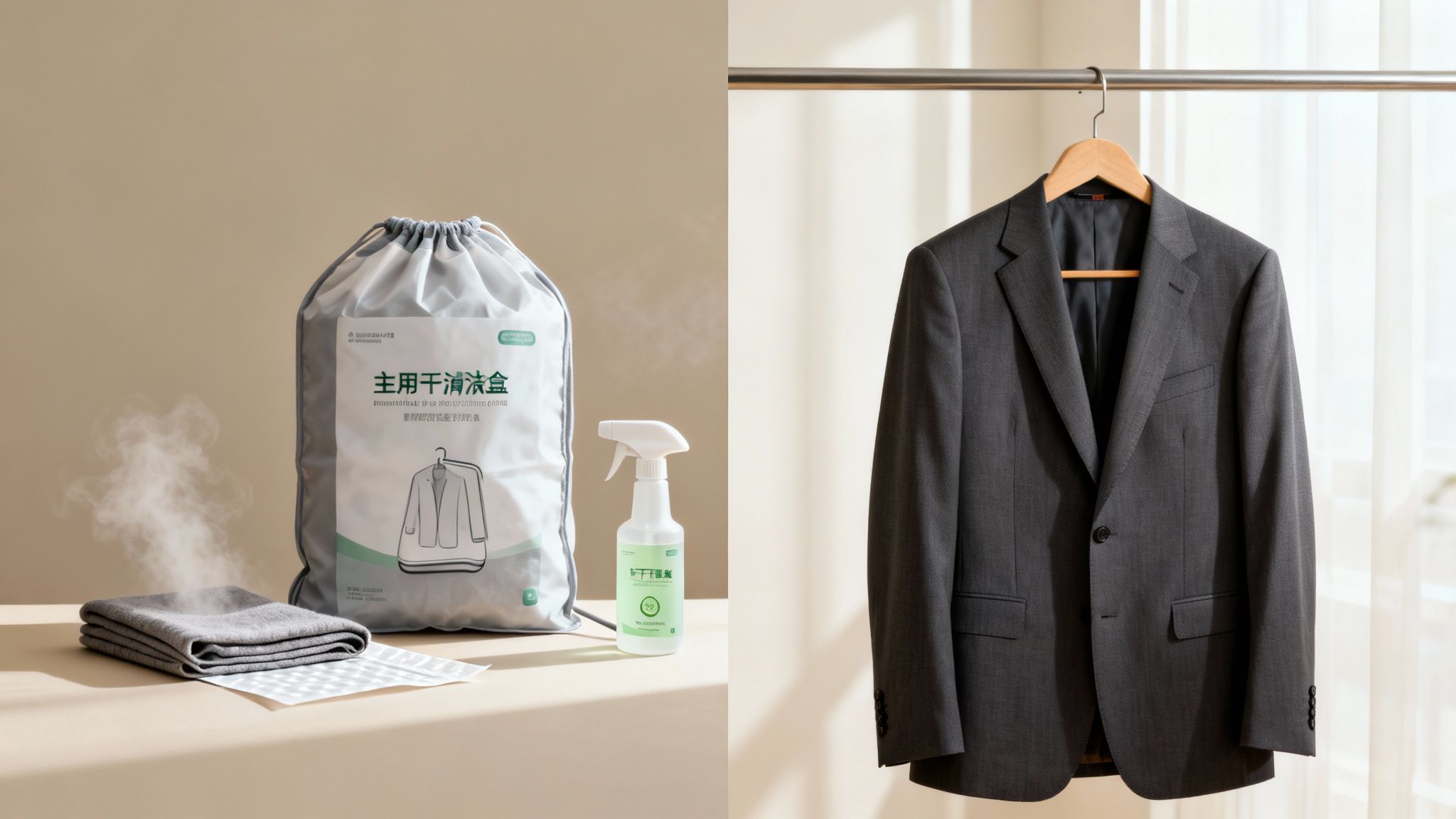
The allure of an at-home dry cleaning kit is easy to understand. It promises convenience and quick results, all from your own laundry room. But when you're dealing with a suit you've invested good money in, is the DIY route a smart shortcut or a risky gamble?
Let's be realistic. This isn't about which option is universally "better," but which is right for the situation at hand. The key is understanding what these kits actually do—and what they don't—compared to a professional service.
How At-Home Kits Actually Work
Those kits you see at the store aren't a true substitute for dry cleaning. Think of them more as fabric refreshers.
The process usually involves a stain remover pen for tiny spots, a moist towelette treated with a cleaning agent, and a special bag. You pop your suit in the bag with the towelette and tumble it in your dryer. The heat creates steam, which helps release light wrinkles and knock down minor odors.
It’s a handy tool for a quick touch-up, but it's crucial to recognize its limits. The steam-based approach simply doesn't dissolve deep-set grime, body oils, or significant stains. It’s more of a mask for odors and a quick fix for a few creases.
The Professional Advantage: Solvents and Expertise
Professional dry cleaning is a whole different ballgame. It doesn’t use water. Instead, we use specialized chemical solvents that are powerful enough to break down and flush away oils, grease, and tough stains—all without causing the fabric fibers to swell, shrink, or lose their shape.
This is exactly why a pro can tackle stubborn stains that at-home kits can't touch. These solvents are designed to clean delicate materials like wool, silk, and linen gently but thoroughly.
Beyond the chemistry, you're also getting expertise. A professional cleaner knows how to identify the stain and the fabric, choosing the precise solvent and treatment needed. That's a level of care a one-size-fits-all kit just can't replicate. It’s no wonder that a well-maintained, professionally cleaned suit can last 20-30% longer than one subjected to risky home attempts.
The global dry-cleaning and laundry services market hit a staggering USD 83.2 billion in 2025 and is on track to reach USD 149.1 billion by 2035. That growth really underscores the value people place on professional care for their best garments. You can dig into more market trends on presscleaners.com.
When to Choose Each Method
So, how do you decide? It all boils down to what you're trying to fix.
Grab an At-Home Kit If:
- You need a quick refresh. The suit doesn't have visible stains but picked up a faint smoky or food smell after a night out.
- You're dealing with minor wrinkles. A short cycle can help release light creases from being packed in a suitcase.
- The stakes are low. You’re using it on a less expensive suit and just want to freshen it up between professional cleanings.
Head to a Professional Dry Cleaner If:
- There are visible stains. Any spot, no matter how small—especially from oil, wine, coffee, or ink—needs a professional’s touch. An at-home kit can actually set the stain, making it permanent.
- The suit has a noticeable odor. Deep-set body odors or mustiness from storage require a solvent-based cleaning to be fully removed, not just masked.
- It’s a high-value or delicate garment. For a suit made of fine wool, silk, or cashmere, the risk of damage from a DIY method is just too high.
- The suit needs pressing. Nothing compares to the crisp, sharp finish of professional pressing. It’s what restores the suit’s original structure and drape.
At-home kits definitely have their place for light maintenance. But for the deep cleaning and expert care needed to preserve the life and look of a quality suit, there is no substitute for a professional. To get a better handle on these distinctions, check out our article on the difference between dry cleaning and laundering.
A Practical Guide to Stains and Suit Longevity
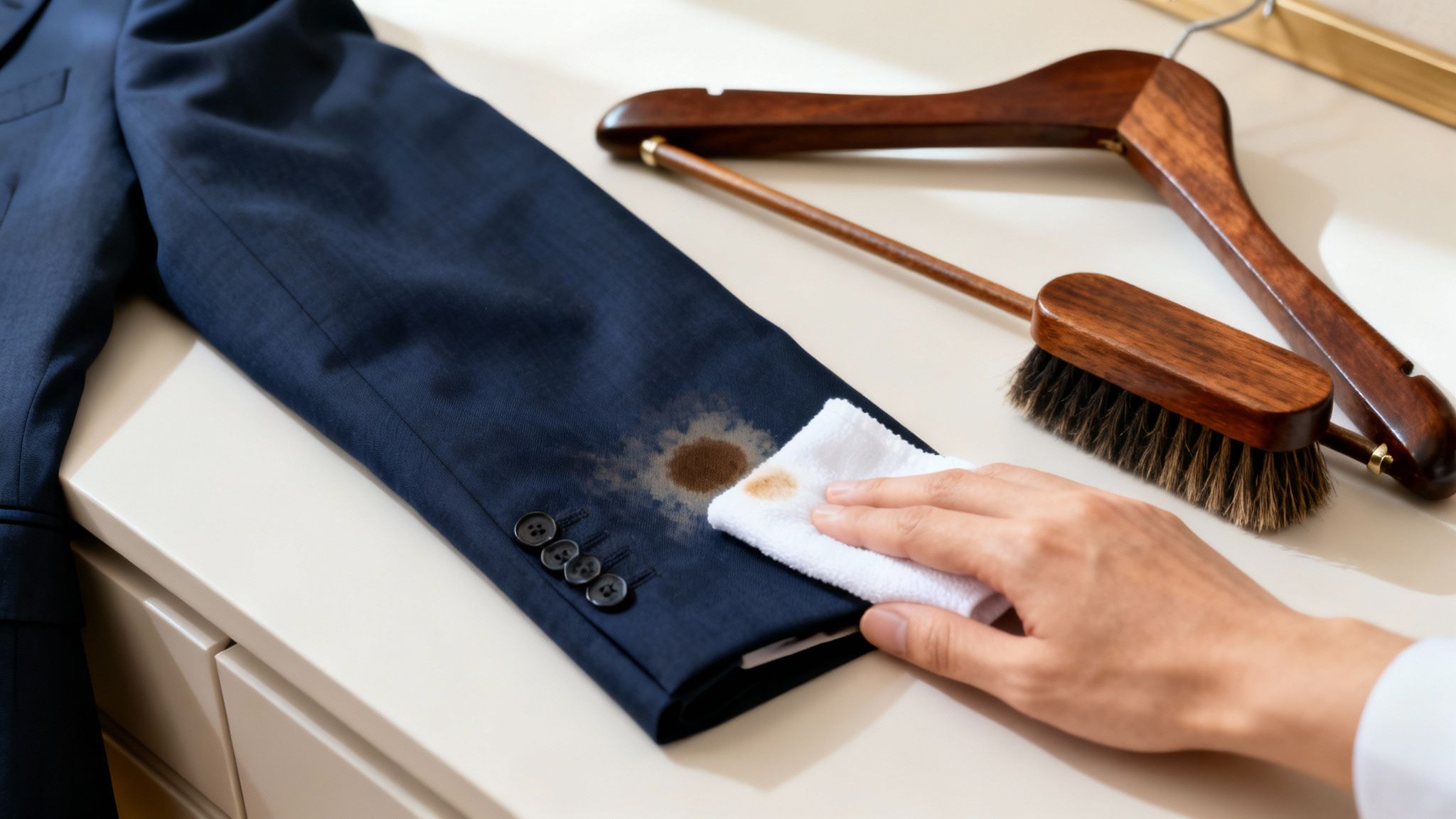
No matter how careful you are, spills happen. It’s just a fact of life. That splash of coffee during a morning meeting or a single drop of vinaigrette at dinner can feel like a complete disaster when you're wearing a quality suit.
What you do in those first few seconds is critical, and unfortunately, your gut reaction is probably the worst thing you can do. The instinct is always to grab a napkin and rub, but that just grinds the stain deeper into the fabric's delicate fibers. Instead, your first move should always be to gently blot the spill with a clean, dry cloth. This wicks away the excess liquid without damaging the weave.
At-Home First Aid for Common Suit Stains
Before you can get your suit to a professional, a little at-home "first aid" can make a huge difference in preventing a minor spot from becoming a permanent flaw. The goal here isn't a miracle removal—it's damage control.
Here’s a quick guide on what to do (and what not to do) in the heat of the moment for some of the most common culprits.
Remember, these are just temporary fixes. Your very next step should be getting the garment to a professional cleaner as soon as you can. When you drop it off, be sure to point out the specific stain and tell them what caused it. That information gives them the best possible chance for a successful removal.
Habits for Extending Your Suit’s Lifespan
Beyond stain emergencies, the real secret to a long-lasting suit comes down to the small habits you build between cleanings. It's about being proactive, not just reactive.
First, brush your suit after every single wear. A soft-bristled garment brush is your best friend here, lifting away the daily dust, lint, and loose fibers that can make a fabric look dull over time. A quick, gentle brushing keeps it looking fresh and actually reduces how often you'll need to clean it.
Next, let your suit breathe. After a day of wear, hang it up in a well-ventilated area for at least 24 hours. This allows the natural fibers to relax back into shape and helps any moisture evaporate completely.
Proper storage is just as vital as proper cleaning. Never use thin wire hangers, which will distort the shoulders and ruin your suit’s structure. Always use a wide, contoured wooden hanger that supports the jacket's natural shape.
Finally, don't over-clean it. A suit rarely needs to be dry-cleaned after just one wear. A good rule of thumb is to clean it after every four to five wears, unless, of course, there's a visible stain or odor. Over-cleaning puts unnecessary stress on the fibers and can be just as damaging as not cleaning it enough.
And when it's time to put it away, don't just throw it in the closet. Protecting your suit from dust and moths is key to its longevity. If you don't have one, invest in a good garment bag to keep your investment safe and sound.
Bring Back Your Weekend with Columbia Pike Laundry
So, you now know the ins and outs of proper suit care—from treating a surprise coffee spill to getting your garments ready for cleaning. But knowing what to do is only half the battle. Finding the time to actually do it, especially when it involves trips to the dry cleaner, can feel like a whole other job.
That’s where we come in.
At Columbia Pike Laundry, we built our service around a simple idea: caring for your clothes shouldn't steal your weekend. We handle the logistics so you can get back to what matters, confident that your suit is in expert hands.
How Our Pickup and Delivery Works
Forget about that last-minute dash to the cleaners before they close. Our whole process is designed to fit your life, not the other way around.
Booking a pickup takes just a few minutes online. You pick a time that works for you, and our drivers take it from there—offering a completely contactless experience right from your porch or building lobby.
Here’s how simple it is:
- Schedule Online in Seconds: A few clicks on our website is all it takes.
- Convenient Porch Pickup: Just leave your items out for us in a designated spot. No need to be home.
- Expert, Gentle Cleaning: We use GreenEarth solvents, an eco-friendly solution that’s powerful against dirt but incredibly kind to fine suit fabrics.
Within three days, your suit is returned to your doorstep, perfectly cleaned, pressed, and ready for your next big event. Think of it less as outsourcing a chore and more as reclaiming your time. For a closer look at the process, check out our step-by-step guide on The Columbia Pike Laundry Experience.
An Investment in Your Wardrobe and Your Time
A good suit is a serious investment. A quality wool suit can easily cost anywhere from $500 to over $2,000. So, why risk it with a DIY cleaning attempt? Industry surveys have found that up to 25% of at-home cleaning efforts can cause permanent damage.
Professional care isn't just a service; it's insurance for your wardrobe. It’s no surprise that the global market for convenient laundry services is growing so quickly—people are realizing their time is just as valuable.
Choosing a professional pickup and delivery service isn't about adding another task to your list. It's about taking one off. It gives you permission to focus on your life while we keep you looking sharp.
We're proud to serve our neighbors in Arlington, Alexandria, and Washington, D.C. Let us handle the details. You just enjoy the peace of mind that comes with a perfectly maintained wardrobe and a weekend that’s finally yours again.
Your Top Suit Dry Cleaning Questions, Answered
Even when you know the basics of suit care, some specific questions always seem to come up. It's completely normal. The world of fabric care has its own language, and getting a handle on the details helps you feel more confident every time you hand over a piece you've invested in.
I've been in this business for a long time, and I've heard just about every question you can imagine. Here are the answers to the ones that come up most often, explained in a way that makes sense.
How Often Should I Really Dry Clean a Suit?
This is probably the number one question I get, and the honest answer is: it depends. There’s no hard-and-fast rule. In fact, one of the biggest mistakes you can make is over-cleaning your suit, which can wear out the fibers prematurely.
A good benchmark to start with is after about four or five wears. But that’s just a starting point. You need to adjust based on real-world situations:
- You had a long, stressful day: If you were perspiring more than usual, don't let the suit sit. Body oils and salts are not friends with fine wool. You'll want to get it cleaned sooner, maybe after just two or three wears.
- You were in a smoky or food-heavy environment: A night out at a steakhouse or a cigar bar means that suit needs to be cleaned, period. Those odors get trapped in the fibers and won't just "air out."
- You spot a stain: Deal with it immediately. The longer a stain sits, the more it sets, and the harder it is for even a professional to get it out completely.
On the other hand, if you just wore the suit for a couple of hours in an air-conditioned office, you can definitely let it go longer. A quick brush and letting it air out on a proper hanger is all it needs. It's all about using your best judgment.
Can I Just Dry Clean the Jacket or Pants Separately?
Technically, yes. But should you? Absolutely not. I always tell my clients to treat a suit as a single garment. Both pieces must be cleaned together, every single time.
The reason is simple: color consistency. Over time, even the most advanced, gentle dry cleaning process can cause an almost imperceptible shift in color or texture. If you only clean the jacket, it will start to look just a little different from the trousers. Maybe it's a tiny bit lighter, or the sheen isn't quite the same.
It's a subtle change that sneaks up on you. But once that mismatch is there, you can't undo it. To protect your investment and ensure the two pieces continue to match perfectly for years to come, always clean them as a pair.
What Is "Eco-Friendly" Dry Cleaning, Really?
"Eco-friendly" gets thrown around a lot, but in our industry, it has a very specific meaning. It all comes down to the solvent used to clean your clothes. For decades, the standard was a chemical called perchloroethylene (or "perc"). It worked, but it was harsh on fabrics and not great for the environment.
Thankfully, we have much better options now. Here at Columbia Pike Laundry, we use the GreenEarth cleaning system. Instead of a petrochemical, it uses a gentle, liquid silicone-based solvent. It’s a completely different approach.
So what does that mean for your suit?
- It's kinder to the fabric. Liquid silicone is incredibly gentle, especially on delicate natural fibers like wool and silk. It helps them stay soft and keeps the colors rich, without that "washed-out" look.
- There’s no chemical smell. You know that classic, sharp "dry cleaning" odor? That's perc. GreenEarth is odorless, so your suit just smells fresh and clean.
- It's truly environmentally safe. The solvent is chemically inert and simply breaks down into sand, water, and carbon dioxide. It leaves no toxic residue behind.
Choosing an eco-friendly cleaner isn't just about the planet—it's about getting a better, gentler clean that extends the life of your favorite garments.
Is Dry Cleaning Going to Shrink My Suit?
This is a huge fear for a lot of people, and it’s understandable. We've all had a favorite sweater shrink in the wash. But with professional dry cleaning, you can put that worry to rest. When done properly, dry cleaning will not shrink your suit.
Shrinkage happens when fibers like wool are exposed to a combination of water, heat, and friction. The water makes the fibers swell up, and the heat and agitation cause them to lock into a new, tighter position.
Dry cleaning avoids this entirely because it uses a solvent with very little to no water. The fibers are cleaned without ever becoming saturated and swollen. In the rare instance a suit comes back smaller, it's almost always the result of improper pressing—someone using way too much steam or heat. That’s not a failure of the cleaning process, but of the person finishing the garment. It’s why you should always trust a cleaner with proven experience.
Ready to take the hassle out of suit care? The team at Columbia Pike Laundry brings professional, eco-friendly dry cleaning right to your doorstep with our pickup and delivery service. We’ll make sure your wardrobe is always looking its absolute best, without you ever having to make a trip.
Free pickup, expert care, delivered back to your door.
Popular Blog Articles





Meet the Author
Daniel Logan didn’t start CPL because he loved laundry. He started it because his family was drowning in time debt, and laundry was one of the biggest weights.
Mornings were chaos with two kids under 5. Evenings felt like catch-up. And weekends? Gone to sorting socks and folding piles.
He knew his story wasn’t unique. So he built a business that gave families like his just a little bit of breathing room one load at a time.
With no laundry experience but deep tech skills, Daniel rolled up his sleeves, doing every job himself while building systems that turned it into a modern laundry service that saves customers time, simplifies their lives, and delivers reliability they can count on.
That’s where CPL began. Not from a playbook, but from pain. From one dad trying to buy back time: for himself, and for every household like his.
Free pickup, expert care, delivered back to your door.