
Dry Clean Suit Price: Your 2026 Guide to Costs & Value

Columbia Pike Laundry offers pickup & delivery across Northern Virginia.
Your suit is hanging there, looking almost ready. Almost.
Maybe it’s for a wedding this weekend, a Monday presentation, a funeral, an interview, or the dinner you forgot was “jacket required.” You pull it out, spot a little shine on the lapel, maybe a faint stain near the cuff, and then the practical question hits: what’s the dry clean suit price going to be?
Many customers want one clear number. I get it. You want to know if this is a quick errand or an annoying expense. But a suit is not a gym shirt, and good dry cleaning is not just “make it smell better.” A suit has structure, shape, fabric memory, and usually more money tied up in it than people like to admit.
That is why the right question is not just “How much does it cost?” It’s also “What am I protecting?”
Your Suit Deserves Better Than a Guessing Game
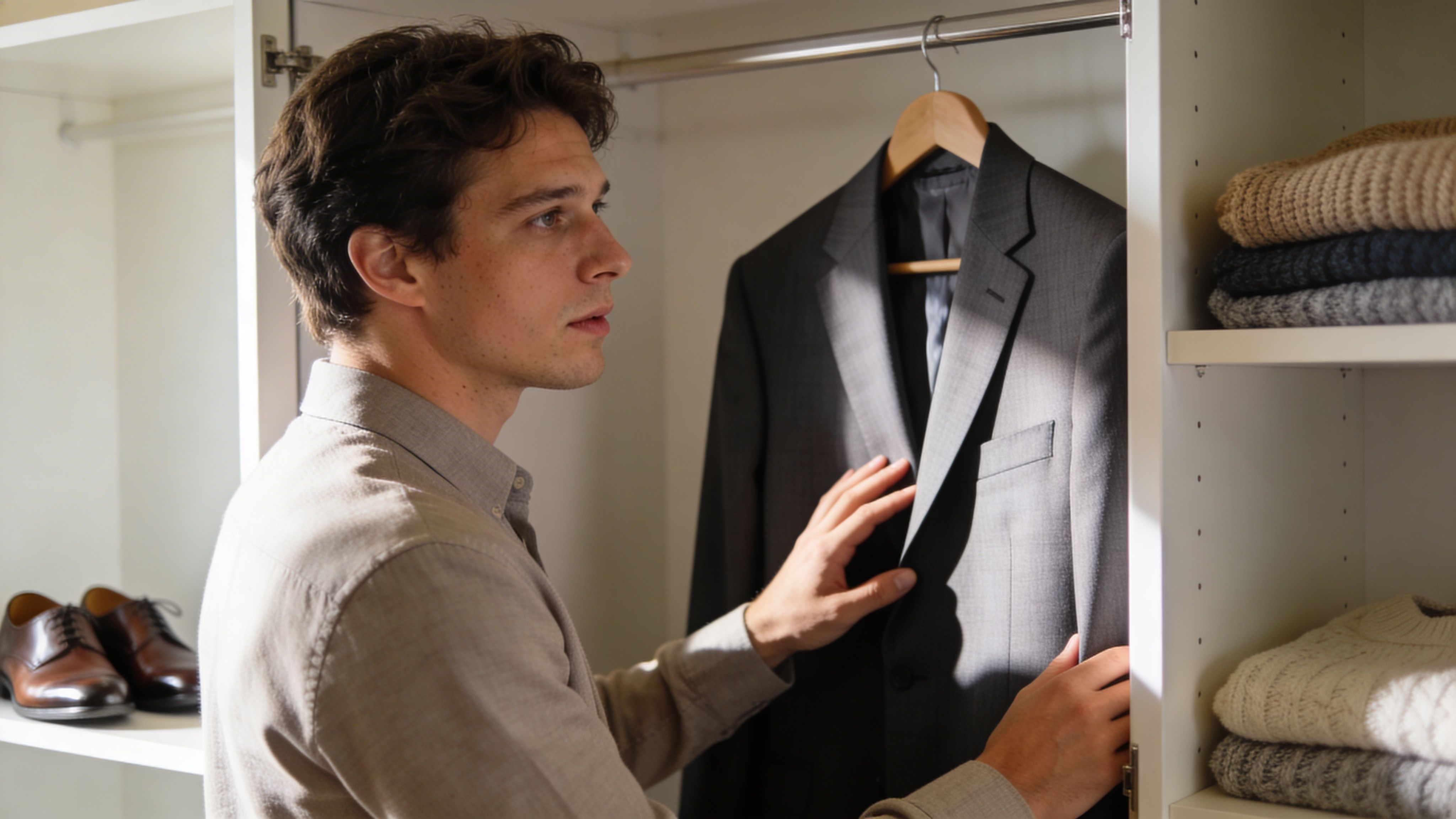
A lot of people stand in the closet doing mental math.
You remember what the suit cost. You remember that the event matters. You also remember your week is already overloaded, and now you have one more thing to solve. The price feels uncertain, so the whole task gets delayed.
That hesitation makes sense. The dry cleaning industry is large and still growing because people rely on professional garment care to keep life moving. The global dry-cleaning and laundry services market reached USD 83.2 billion in 2025 and is projected to grow at a 6% CAGR, according to Press Cleaners’ 2025 dry cleaning statistics. More people are paying for convenience, but clear pricing still lags behind what customers need.
And what customers need is simple. They want to know:
- What a normal suit cleaning should cost
- Why one suit costs more than another
- Whether that extra cost is worth it
- How to avoid wasting time on the whole process
That last one matters more than most cleaners admit. A suit cleaning bill is not only about fabric care. It is also about getting one more chore off your plate. If you’re trying to simplify your life, this is exactly the kind of decision that should feel easier, not more confusing.
Key takeaway: A suit is an asset. Dry cleaning is maintenance for that asset, not a random luxury charge.
If a cleaner can’t explain pricing in plain English, be cautious. You do not need mystery. You need a straightforward answer and competent care.
The Typical Dry Clean Suit Price in 2026
A plain drip coffee has a simple price. A single-origin oat milk latte does not. Suit cleaning follows the same pricing logic.
For a standard two-piece suit, you will usually see prices anywhere from about $10 to $50. The low end usually covers a basic garment in an easy-care fabric. The high end usually reflects finer fabric, more structure, extra finishing, or special handling.
That spread is not a pricing problem. It is the market putting a value on risk, labor, and time.
A cleaner charging more is often protecting two things at once. First, your suit itself. Better cleaning helps preserve shape, fabric texture, and the life of the garment. Second, your schedule. Good service saves you from dealing with rewashing, re-pressing, or replacing a suit that was handled carelessly the first time.
A practical baseline
Use this as a quick way to judge where your bill should land:
| Suit type | Likely pricing direction |
|---|---|
| Basic two-piece in standard fabric | Lower end of the range |
| Wool or cashmere suit | Above the basic price |
| Three-piece suit | Higher than a two-piece |
| Suit with stain treatment or extra finishing | Higher than standard |
If you want a local benchmark before booking service, review the current suit and garment pricing at Columbia Pike Laundry.
Here is the mistake I see all the time. People compare posted prices without comparing what they are buying. A bargain rate loses its appeal fast if the jacket comes back misshapen, the lapels look flat, or the pants pick up shine from careless pressing.
Price matters. Value matters more.
My recommendation
Treat the listed price as the starting line, not the final answer.
Ask these three questions before you hand over the suit:
- What fabric and construction details affect the price?
- Is pressing included in that quote?
- Will you identify stains or special handling needs before cleaning starts?
That is how you protect the suit, avoid surprise charges, and reclaim time you would rather spend somewhere else.
Decoding Your Bill Key Factors That Influence Price
Drop off two suits that look nearly identical, and the tickets can still come back with different prices. That is not random. It usually comes down to risk, labor, and how much work the cleaner has to do to return the suit in the shape you expect.
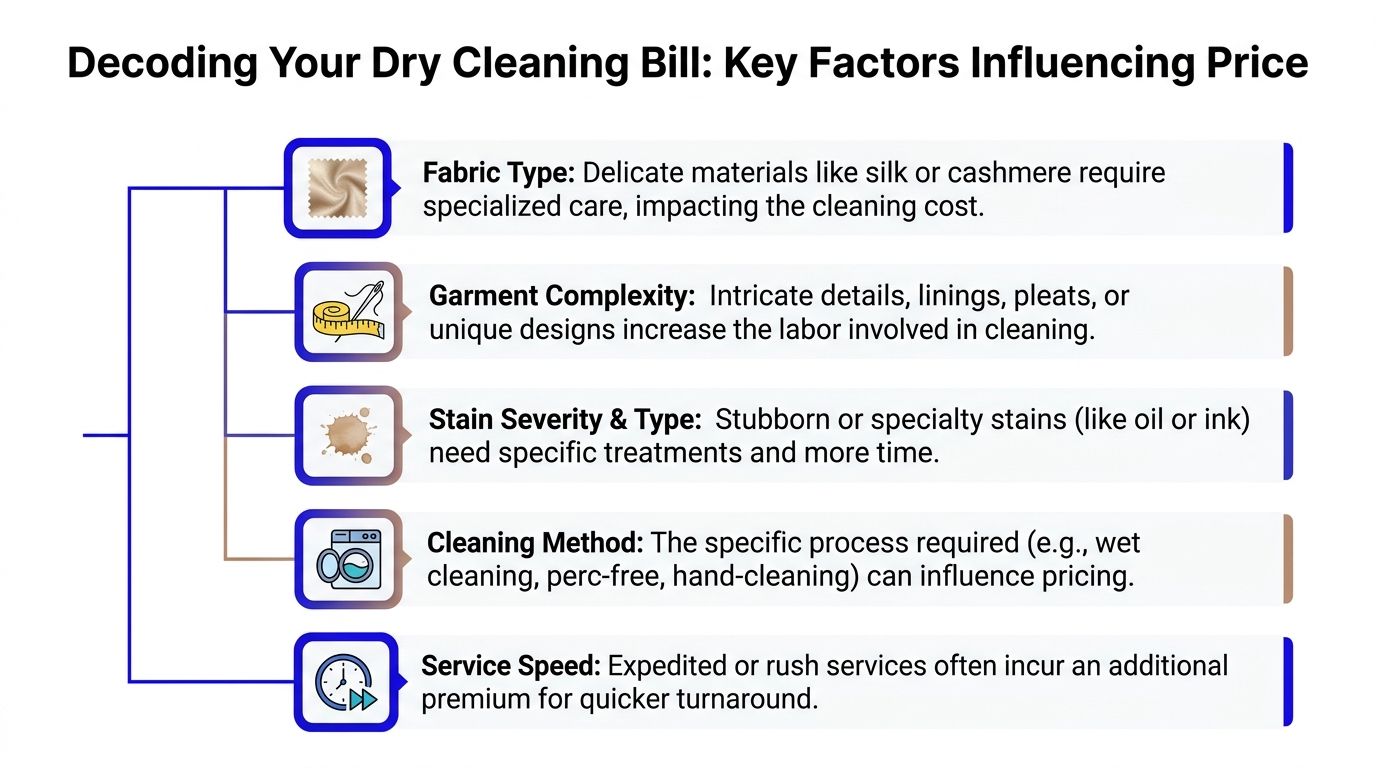
A posted suit price is only the starting point. The final bill reflects what protects the garment and what saves you from dealing with wrinkles, shine marks, reshaping problems, or a ruined jacket that needs replacement. Pay for the right care once, and you protect the suit and get your time back.
Fabric drives the first price jump
Fabric sets the cleaning plan.
Synthetic blends are usually easier and faster to process. Wool needs more control. Cashmere, silk, and linen demand even more caution because the cleaner has to avoid shrinkage, distortion, texture damage, and color issues. That extra care is why the price moves.
A cheaper cleaner may still quote a low number on a premium fabric. I would not treat that as a win. Fine fabric punishes shortcuts.
Short version:
- Synthetic blends usually sit at the easier end of pricing
- Wool needs more careful handling and finishing
- Cashmere, silk, and linen often require specialty treatment
Suit construction changes the labor
A suit is not just fabric. It is structure.
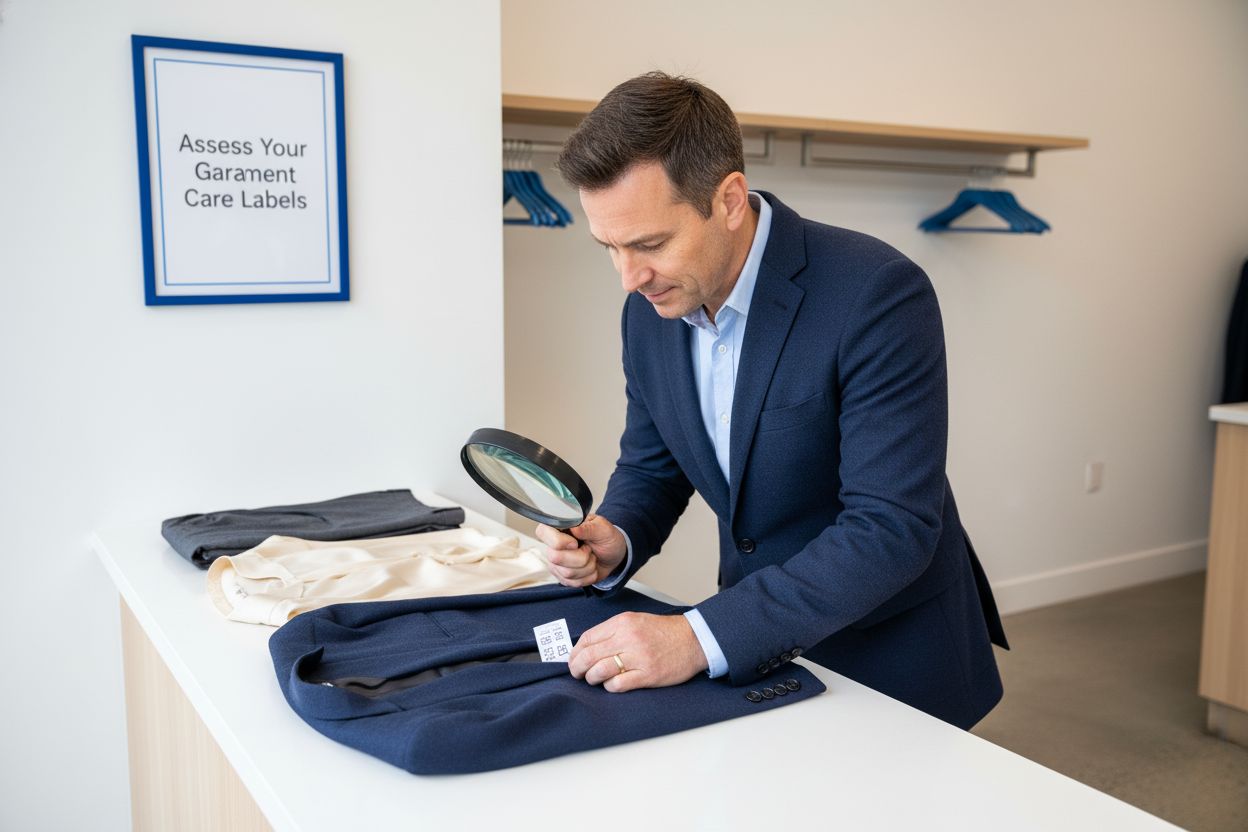
Full lining, shaped lapels, canvassing, shoulder build, vents, and a matching vest all add handling time. Cleaning is only part of the job. The garment also has to be finished correctly so it keeps its shape and hangs the way it should.
Here is where bills often separate:
| Feature | Why it may raise price |
|---|---|
| Full lining | More material to inspect, clean, and finish carefully |
| Structured shoulders | Pressing has to preserve shape, not flatten it |
| Vest or extra pieces | More items to clean and return ready to wear |
| Decorative details | More handwork and more caution |
That is why a three-piece suit or a sharply constructed jacket often costs more than a basic office suit.
Stain treatment is skilled work
One stain can change the whole order.
Oil, wine, makeup, ink, and food residue do not come out the same way. Some need pre-treatment before cleaning. Some need testing first so the fabric or dye is not damaged. That work takes judgment, and judgment is part of what you are buying.
Point out stains at drop-off. It gives the cleaner a better shot at removing them without wasting time on guesswork.
Pressing can make or break the result
A poorly pressed suit looks cheap even if it was cleaned properly.
Real value shows up in good finishing. Good finishing keeps trouser creases straight, lapels shaped correctly, sleeves free of shine, and the jacket body balanced. Sloppy finishing sends you back to your closet with a suit that still needs attention, which defeats the whole point of paying someone else to do it.
If your cleaner offers pickup and delivery, that value goes up again. You are not just paying for solvent and steam. You are buying back the errand, the wait, and the second trip.
Specialty garments should cost more
Vintage suits, designer pieces, altered garments, and family keepsakes deserve slower, more careful handling. A flat rate for every suit may sound convenient, but it can hide cut corners or surprise add-on charges later.
My advice is simple. Do not chase the lowest number on the board. Choose the cleaner that can explain the price clearly, handle the fabric correctly, and return the suit ready to wear. That is how you protect an expensive garment and keep one more chore out of your week.
The Columbia Pike Laundry Experience A Smarter Way to Clean
A modern cleaner should solve two problems at once. First, care for the suit correctly. Second, remove the errand from your week.

That shift matters because customer expectations have changed. U.S. dry cleaning demand is projected to grow at a 7.5% CAGR from 2025 to 2030, with more demand for on-demand service and eco-friendly options, as noted in Grand View Research’s U.S. dry cleaning and laundry services market report.
People are not just buying cleaning anymore. They are buying convenience, consistency, and less hassle.
What smarter service looks like
The basic version of dry cleaning is this: drive over, wait in line, explain the order, come back later, hope the turnaround works.
The smarter version is much simpler:
- schedule service
- leave the garments out
- get the suit returned ready to wear
That is why pickup and delivery matters. It takes a task that normally eats into a lunch break, commute, or Saturday morning and turns it into one less thing you have to think about. If that option fits your routine, you can review Columbia Pike Laundry’s pickup and delivery service directly.
Why the cleaning method matters
A lot of people focus on price and ignore process. That’s backwards.
For suits, especially wool and other premium fabrics, gentler solvent systems matter because they help preserve feel, shape, and finish. Columbia Pike Laundry uses GreenEarth dry cleaning, which is designed for delicate garment care and aligns with the kind of handling premium suits need.
That point matters if your suit is not disposable. If you spent real money on it, the cleaning method should match the value of the garment.
The true value is time
This is the part cleaners undersell.
A suit cleaning order is not just garment maintenance. It is time recovery. You hand off a recurring chore, and in return you get back an hour you would have spent driving, waiting, sorting, or circling it on your to-do list for three days.
Practical advice: If your calendar is packed, choose the cleaner that reduces friction, not the one that merely posts the lowest headline price.
Columbia Pike Laundry also lists a standard dry cleaning turnaround time in its customer FAQ. For a specific garment or a special timing request, the right move is to ask and let a team member confirm the exact timeline.
That’s how this should work. Clear process. Real garment care. Less chaos in your week.
Practical Tips to Maximize Your Suit's Lifespan
You do not need to dry clean a suit after every wear. You do need to take care of it between cleanings.
That is how you protect the fabric, preserve the shape, and avoid paying for preventable damage.
Air it out before you hide it away
After wearing your suit, do not shove it back into a crowded closet.
Hang it in open air for a while so moisture and odor can dissipate. That simple habit helps the fabric recover and keeps the suit fresher between cleanings.
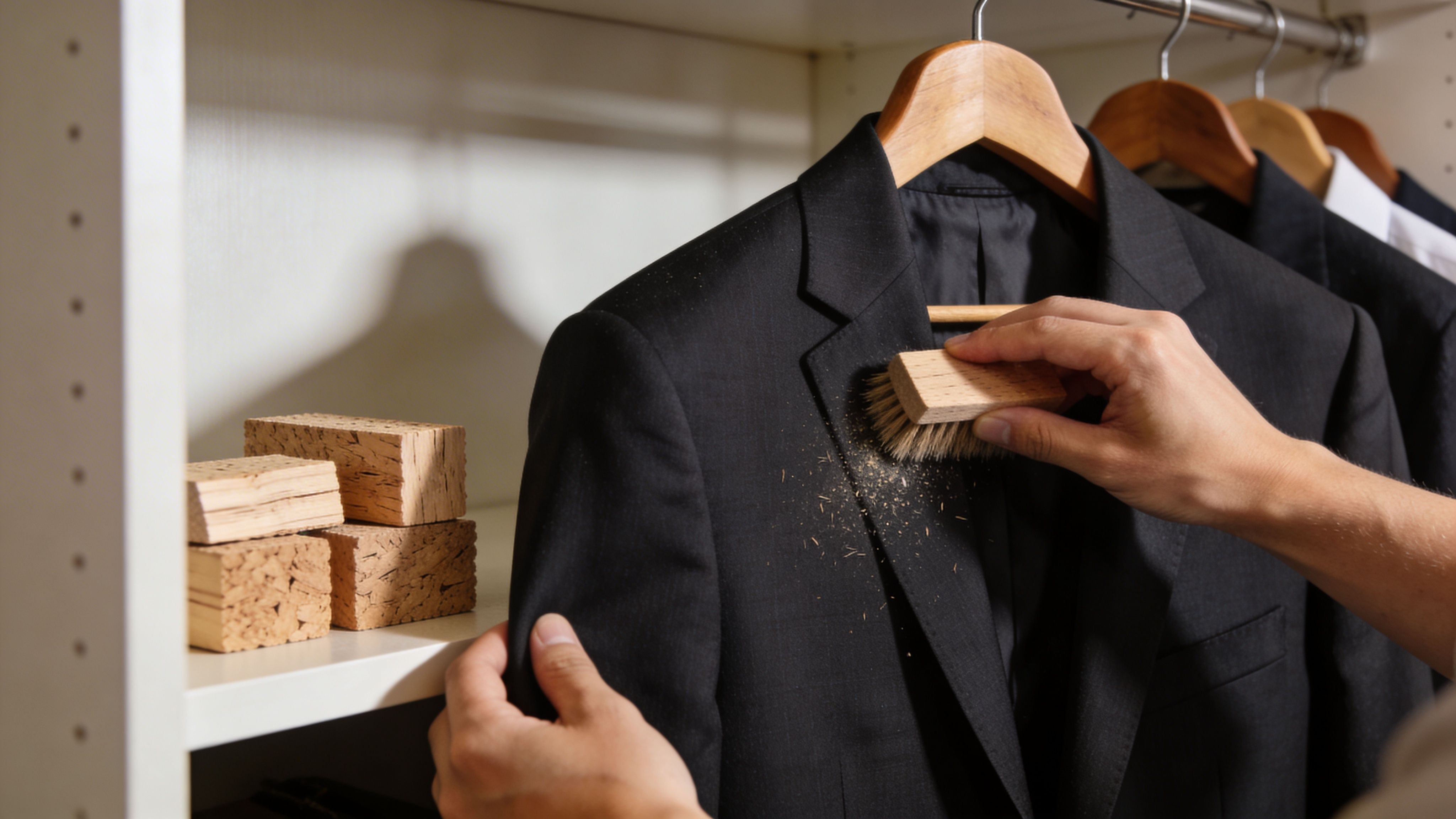
Use a proper suit brush
A soft clothes brush removes surface dust, lint, and light debris before they settle deeper into the fabric.
Brush gently. Go with the grain of the fabric. Focus on the collar, lapels, sleeves, and trouser fronts, where particles tend to collect.
Ditch the plastic cover
The plastic bag from the cleaner is fine for transport. It is not ideal for long-term storage.
Suits need breathing room. Store them in a breathable garment bag or uncovered in a closet with space around them.
Handle small spills carefully
Blot. Do not rub.
Rubbing spreads the stain and drives it deeper into the fibers. Use a clean cloth and light pressure. Then bring the suit in if the mark remains.
Store trousers the right way
Jackets get most of the attention, but trousers lose their shape fast when they’re hung badly. If you want a simple visual guide, this piece on the best way to hang trousers is useful.
Refresh wrinkles without overdoing it
If a suit picks up light wrinkles, careful steaming or pressing can help. If you are trying to handle touch-ups at home, this guide on https://www.columbiapikelaundry.com/post/how-to-iron-a-suit is a practical place to start.
Key habit: Good daily care reduces unnecessary cleanings. That saves wear on the suit and keeps it looking sharp longer.
A suit lasts longer when treated as a specialized garment, not like regular laundry. That means space, brushing, airflow, and restraint.
The Hidden Cost of Not Dry Cleaning Your Suit
Skipping a cleaning can feel like saving money.
Sometimes it is. Often it is just delaying a bigger loss.
The problem is not only visible dirt. A suit collects body oils, dust, odors, and residue you may not notice right away. Left sitting in the fabric, those contaminants dull the look of the suit and make the garment age harder than it should.
There is also a decision problem. A major gap in suit-cleaning content is the lack of transparency about how fabric and construction affect price, and that confusion can push people to avoid cleaning altogether, even when replacement ends up costing more, as explained by Alterations Express on dry cleaning pricing transparency.
What neglect usually leads to
- Set-in stains: Small marks become harder to remove the longer they sit.
- Fabric wear: Dirt and oils stay in contact with the fibers instead of being removed.
- Shape loss: A suit that is worn, stored badly, and never professionally refreshed starts to look tired fast.
- False savings: You avoid one cleaning bill but move closer to replacing the garment.
People often get tripped up here. They compare the dry clean suit price to zero, not to the cost of a suit that looks worn before its time.
That is the wrong comparison.
Comparing maintenance versus replacement, professional cleaning usually wins.
Common Questions About Suit Cleaning Prices
Why does one cleaner quote one number and another cleaner quote something higher?
Because “suit cleaning” is not always the same service. One price may include basic cleaning and pressing. Another may reflect fabric sensitivity, stain treatment, or a more careful finishing standard.
Ask what is included before comparing prices.
Is a three-piece suit always more expensive than a two-piece suit?
Usually, yes.
You are cleaning and finishing an extra garment. Even when the pieces match, the vest adds labor and handling.
Should I worry about hidden fees?
Yes. Not because every cleaner uses them, but because vague pricing is common.
Ask these questions up front:
- Does the listed price include pressing?
- Are there extra charges for stain treatment?
- Will you contact me before any specialty upcharge?
If the answers are fuzzy, keep looking.
Why might the same suit cost different amounts on different visits?
Condition changes.
One visit may involve routine cleaning. Another may involve a stain, odor issue, special spotting, or a fabric concern noticed during inspection. The suit is the same. The work is not.
Is the cheapest cleaner the best value?
Usually not.
The best value is the cleaner who handles the suit properly, explains pricing clearly, and makes the process easy enough to keep up with the maintenance.
If your suit needs professional care and you want the process to feel simple instead of disruptive, Columbia Pike Laundry offers dry cleaning and convenient service options built for busy schedules. It’s a practical way to protect the clothes you rely on and get a little of your week back.
Free pickup, expert care, delivered back to your door.
Popular Blog Articles



Meet the Author
Daniel Logan didn’t start CPL because he loved laundry. He started it because his family was drowning in time debt, and laundry was one of the biggest weights.
Mornings were chaos with two kids under 5. Evenings felt like catch-up. And weekends? Gone to sorting socks and folding piles.
He knew his story wasn’t unique. So he built a business that gave families like his just a little bit of breathing room one load at a time.
With no laundry experience but deep tech skills, Daniel rolled up his sleeves, doing every job himself while building systems that turned it into a modern laundry service that saves customers time, simplifies their lives, and delivers reliability they can count on.
That’s where CPL began. Not from a playbook, but from pain. From one dad trying to buy back time: for himself, and for every household like his.
Free pickup, expert care, delivered back to your door.