
A Complete Guide to Get Stains Out of Clothes for Good
Columbia Pike Laundry offers pickup & delivery across Northern Virginia.
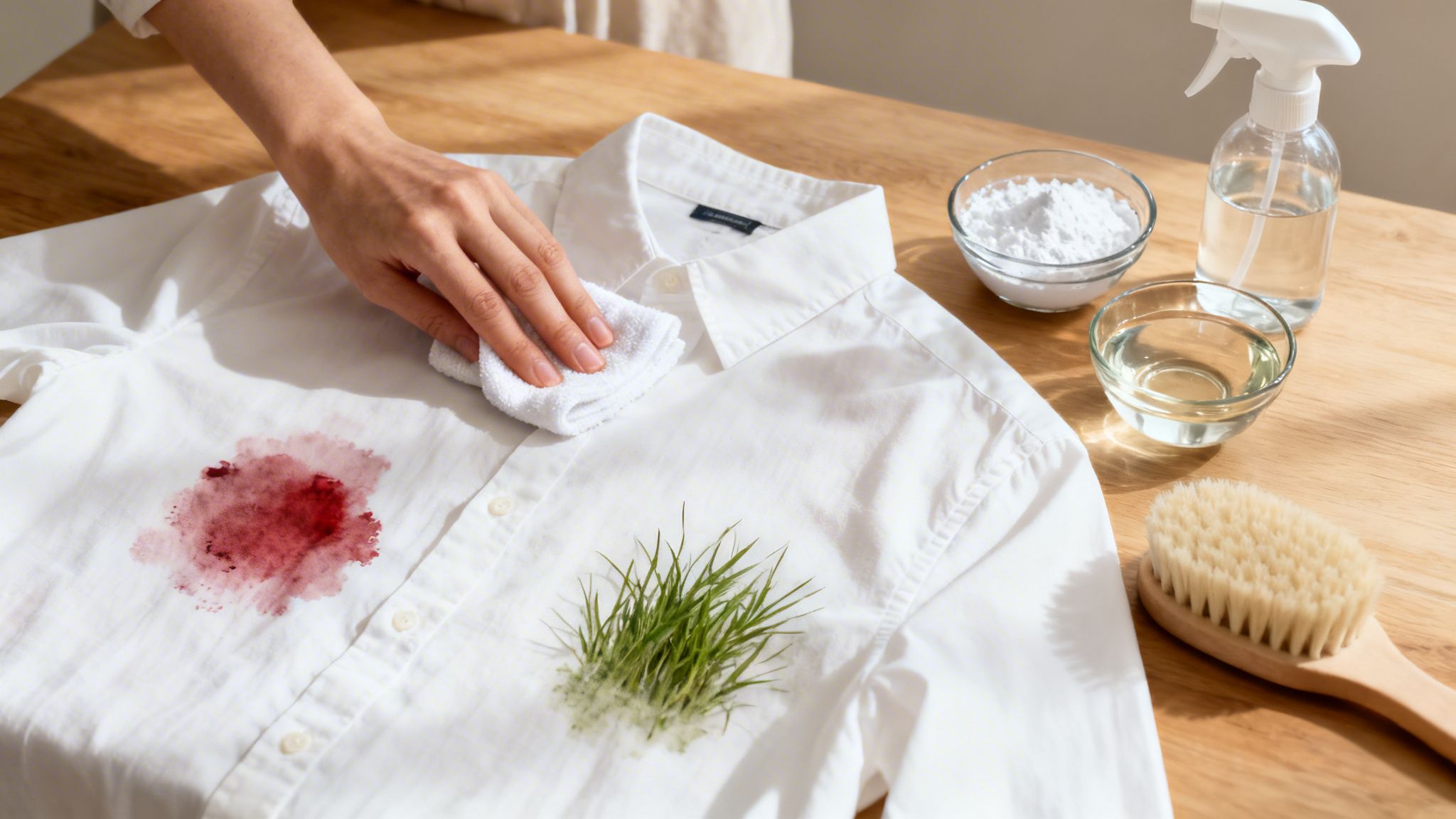
When a spill happens, your first few moments are the most critical. That sinking feeling as you watch coffee splash onto your new white shirt is universal, but panic is the enemy. What you do right away—or more importantly, what you don't do—can mean the difference between a minor inconvenience and a permanent mark.
Think of it as stain first-aid. You're not trying to perform a deep clean on the spot; you're just trying to stop the bleeding, so to speak. The goal is simple: contain the damage and prep the fabric for a proper treatment later. A calm, swift, and correct response is often more powerful than any fancy stain remover you might use hours down the line.
Your First Response to Any Stain Emergency
The clock starts ticking the second a drip of wine, a smear of mud, or a drop of ink lands on your clothes. Your instincts might scream "scrub it!", but that's the fastest way to make things worse. Let's walk through the immediate, must-do actions that will give you the best shot at a complete recovery.
Blot, Don't Rub
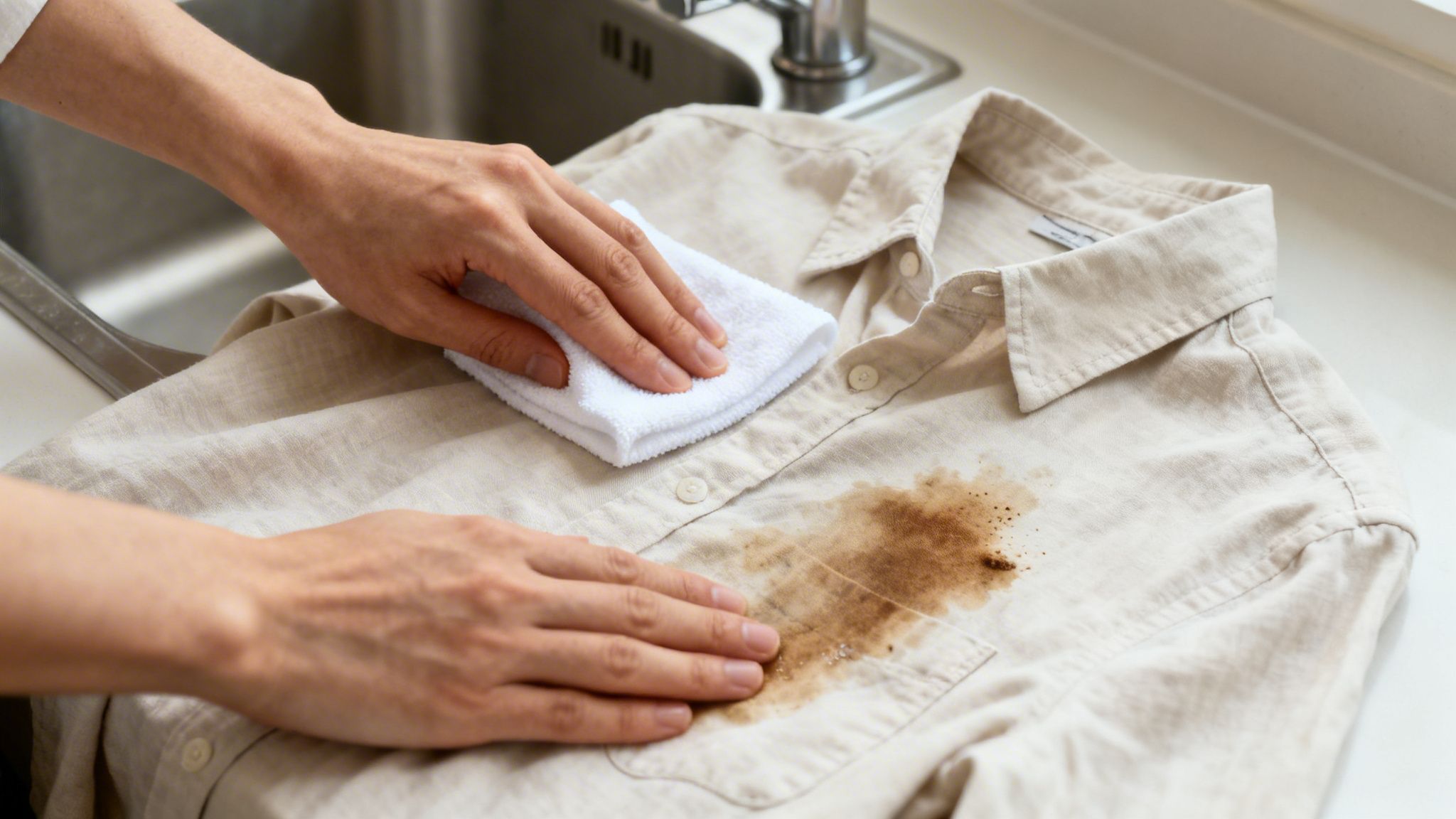
I can't stress this enough: resist the urge to scrub. Rubbing a fresh stain is a disaster in the making. It forces the stain's particles deeper into the fabric's weave and often spreads it out, turning a small spot into a giant, faded mess.
Instead, grab a clean, dry cloth or paper towel and gently blot the area. Start at the outer edge of the stain and work your way in. This motion lifts the excess liquid or solid matter off the fabric before it has a chance to settle in permanently.
Critical First Step: Always blot, never rub. Blotting lifts the stain away from the fabric, while rubbing pushes it deeper, making it significantly harder to remove later. This simple change in technique is a game-changer.
Use Cold Water
For almost any stain that isn't pure oil or grease, cold water is your best friend. Why cold? Hot water can cause a chemical reaction with the proteins in common stains like blood, coffee, or wine, essentially "cooking" them right into the fibers. Once heat sets a stain, it's often there for good.
Here's the trick: turn the garment inside out and flush the stain from the back with cold, running water. This uses the water pressure to push the stain particles back out the way they came in, rather than forcing them deeper into the material.
If you're dealing with a greasy mess, the approach changes. For tips on those specific situations, this guide on how to clean up grease spills is a great resource. And if you want to geek out on the science, our article on how stain removers work for every stain type breaks it all down.
To make things easier, here's a quick cheat sheet for those initial moments of panic.
Stain First-Aid Quick Reference Guide
This table is your go-to for what to do—and what not to do—in the first few minutes after a spill.
Remember, these are just the initial steps to mitigate damage before a full treatment.
Avoid Heat at All Costs
This is the golden rule of stain removal. Keep the stained garment away from all sources of heat. That means no hot water washes (unless the care label specifically allows it for that fabric) and, most importantly, no clothes dryer.
The intense heat from a dryer will permanently set just about any stain that hasn't been completely removed, turning a treatable spot into an irreversible part of the garment.
Always air-dry a treated item first. Once it's fully dry, check the spot in bright light. If you can still see a faint mark, repeat the treatment. Only when you are 100% certain the stain is gone should you even think about putting it in the dryer. A little patience here saves a favorite shirt from the rag pile.
Building Your At-Home Stain Removal Toolkit
You don't need a cabinet overflowing with harsh, expensive chemicals to be ready for a stain emergency. Honestly, some of the best stain fighters I’ve ever used are probably sitting in your kitchen pantry right now. Putting together a simple, smart toolkit means you can jump into action immediately, mixing up gentle but powerful solutions that save your favorite clothes—and your wallet.
It’s no surprise that people are getting more serious about their laundry game. The global laundry care market is massive—it hit USD 109.7 billion and is expected to climb to USD 144.3 billion by 2030. Much of that growth comes from our demand for better stain removal. Liquid detergents, for instance, now own 40-45% of the market because they're so good on grease.
But here’s the reality check: consumer reports show that our own attempts to remove tough stains fail about 65% of the time. This just proves that having the right tools and knowing how to use them makes all the difference. You can explore more data on the laundry care market to see these trends for yourself.
Pantry Powerhouses for Stain Removal
Your first line of defense is often right there in the kitchen. These everyday items have properties that make them incredibly good at breaking down common stains without being too rough on your clothes.
Here are the absolute essentials you should have ready:
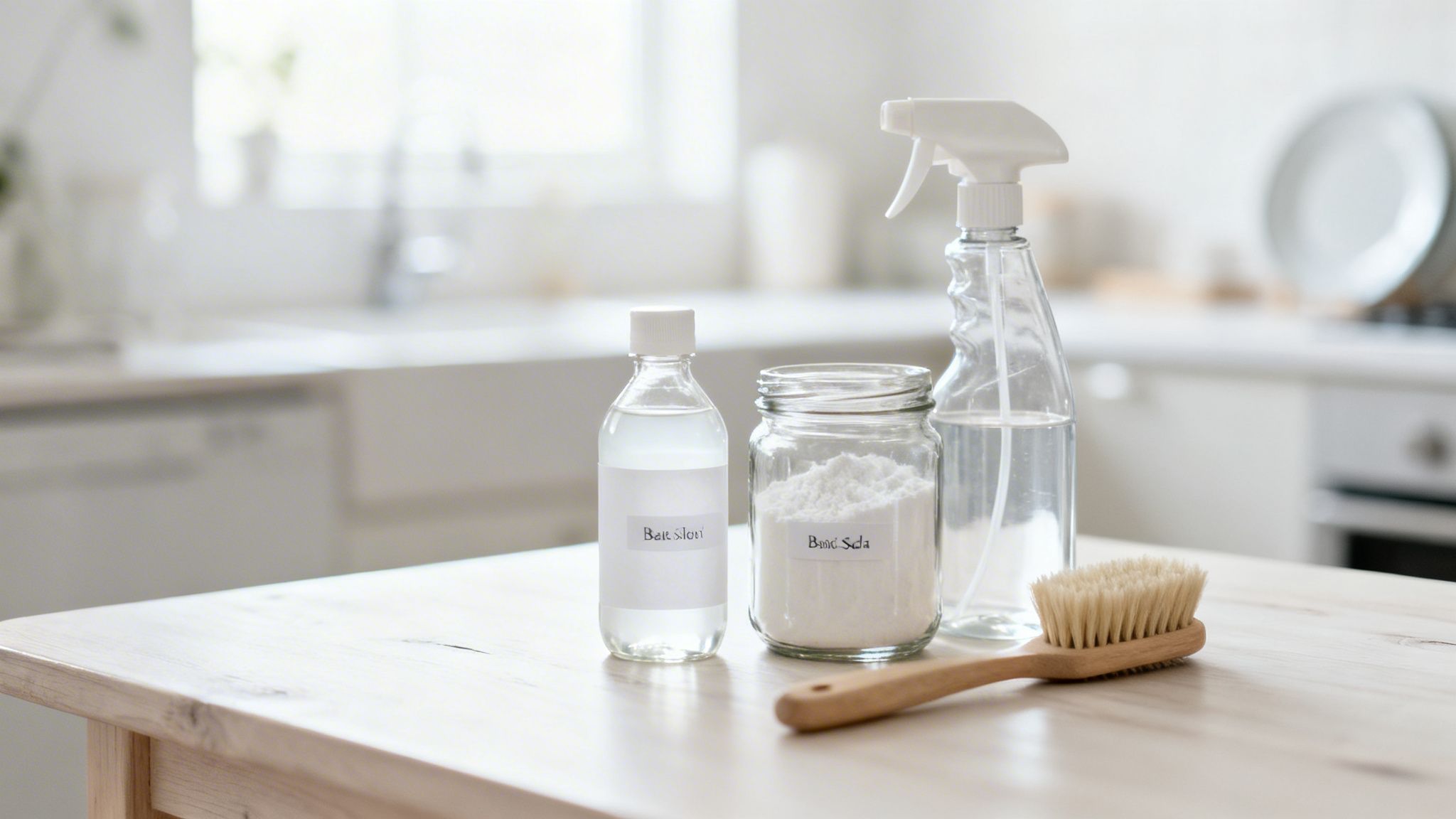
- Distilled White Vinegar: The mild acetic acid in vinegar is a secret weapon. It dissolves tannins, which are the compounds in stains from coffee, tea, wine, and grass. It also works as a natural brightener and fabric softener.
- Baking Soda: As a mild alkali, baking soda is brilliant for soaking up and lifting greasy, oily spots. Make a paste with a little water, and it becomes a gentle scrubber that can work a stain out from between the fabric threads.
- Clear Dish Soap: Grab a simple, clear dish soap—the kind without extra dyes, scents, or lotions. These are formulated to cut right through grease, making them perfect for pre-treating everything from a salad dressing mishap to stubborn ring-around-the-collar.
Expert Tip: Whatever you do, never mix vinegar with chlorine bleach. The combination creates toxic chlorine gas. As you build your kit, it’s a good rule of thumb to store these two far apart to prevent a dangerous accident in your laundry room.
Creating Simple DIY Stain Treatments
With these three basics, you can whip up targeted treatments for specific messes. Think of it like cooking—you're just combining a few simple ingredients to get the right result.
For Oily or Greasy Stains:
Mix up a thick paste with about three parts baking soda to one part water. Slather it right onto the stain and let it sit for at least 30 minutes. The baking soda will literally pull the oil out of the fabric. After it's done its job, just gently scrape off the paste before washing the garment as usual.
For Tannin or Grass Stains:
Make a simple soaking solution with equal parts white vinegar and cold water. Dunk the stained part of the fabric into the bowl and let it soak for about half an hour. The vinegar will go to work breaking down the stain, making it much easier to wash out.
Smart Over-the-Counter Choices
While your pantry items can handle a lot, sometimes a store-bought product gives you an extra edge. If you're going to buy a commercial stain remover, my advice is to look for one with enzymes. These are just biological compounds that are hyper-focused on breaking down specific types of stains.
- Protease: This is your go-to for protein-based stains like blood, sweat, or baby formula.
- Amylase: This one targets starches, so it’s perfect for things like gravy, chocolate, or pasta sauce.
- Lipase: The ultimate enemy of fat. This enzyme is what you need for greasy stains, from butter to engine oil.
Keeping an enzyme-based cleaner in your toolkit is a smart move. It’s a science-backed solution for the really tough stuff and perfectly bridges the gap between a simple home remedy and calling in a professional.
A Fabric-By-Fabric Guide To Safe Stain Removal
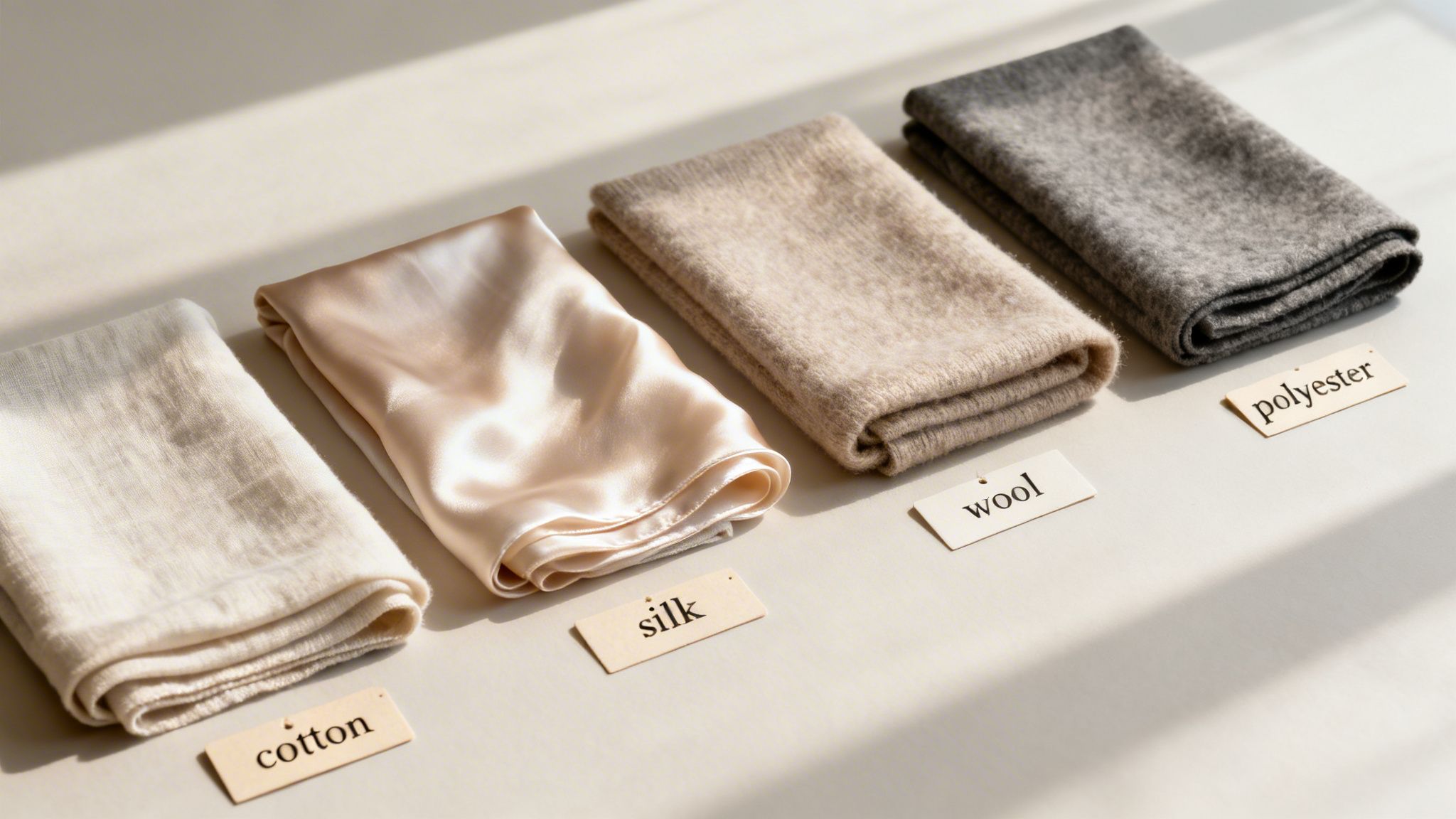
Trying to get a stain out of a shirt without knowing the fabric is a bit of a gamble. You might get lucky, but you could just as easily make things much, much worse. The secret to success isn't just what you use, but where you use it. A method that works wonders on a tough cotton tee can absolutely destroy a delicate silk blouse.
Think of this as your roadmap to treating common fabrics without causing more damage. Knowing the dos and don'ts for what’s in your closet will help you tackle stains with confidence.
Durable Cottons And Linens
Cotton is the workhorse of most wardrobes for a good reason—it’s tough. This natural resilience makes it pretty forgiving when it comes to stain removal, so you have quite a few options in your arsenal.
For most everyday spills on cotton or linen, a good enzyme-based stain remover is your best friend. You can also make a simple paste of baking soda and water for greasy spots or try a soak in diluted white vinegar for things like coffee or wine. Gentle scrubbing with a soft brush is usually fine here.
One quick tip: always do a spot test on a hidden area, like an inside seam. This is especially important for brightly colored cottons to make sure you don't accidentally cause the dye to bleed.
Synthetics Like Polyester And Nylon
Fabrics like polyester and nylon are fantastic at repelling water-based stains. You'll often see liquids just bead up, making them easy to blot away. The real challenge, however, is oil. Oily stains can latch onto these petroleum-based fibers and be incredibly stubborn to get out.
Your go-to weapon for oil on synthetics should be a clear, high-quality dish soap. Its grease-cutting power is perfect for breaking down the stain. Just apply a small drop directly to the spot, let it sit for about ten minutes, and rinse with warm water before you toss it in the wash.
Crucial Reminder: Never, ever use chlorine bleach on anything with spandex or elastane. It will destroy the stretchy fibers, leaving them yellow, brittle, and completely shot.
These same principles often apply to bigger household items, too. For instance, when you're figuring out how to clean fabric sofa at home, identifying the fabric type is always the first step.
Delicate Wool And Silks
This is where you need to slow down and be extra careful. Wool and silk are protein fibers, much like your own hair. Using harsh chemicals, high heat, or rough handling can cause damage that you simply can't undo.
- Avoid High pH Cleaners: Steer clear of enzyme cleaners or anything with a high pH, like baking soda. Over time, these can literally dissolve the delicate protein fibers.
- Use Cool Water Only: Heat is the enemy here. It can cause wool to shrink and silk to lose its beautiful sheen. Stick to cool or lukewarm water for both treatment and washing.
- Blot Gently: Rubbing is a fast way to fray the fibers, creating a permanent fuzzy patch. Always blot gently with a clean, white cloth, working from the outside of the stain inward.
For these delicate materials, your safest options are a pH-neutral detergent or heavily diluted white vinegar (a 1-to-8 ratio of vinegar to water is a good starting point). Honestly, if a stain on silk or wool looks really bad, this is often the moment to stop and call a professional. For a deeper dive, check out our guide on https://www.columbiapikelaundry.com/post/stains-on-silk-how-to-remove for more specific tips.
Safe Stain Removal By Fabric Type
To make it even simpler, here’s a quick-reference table for what to use (and what to avoid) on the most common fabrics in your laundry basket.
This chart is a great starting point, but always remember the golden rule: when in doubt, test a hidden spot first. Taking that extra minute can save your favorite garment from a laundry disaster.
How to Tackle the Toughest Common Stains
Alright, let's get into the nitty-gritty—the game plan for those all-too-common stains that send us into a panic. Forget vague advice; this is your specific, actionable guide for when you're up against the big offenders like red wine, oil, ink, blood, and coffee.
Each stain has its own personality, and knowing what you're up against is half the battle. Think of red wine as a tannin stain, grease as oil-based, and blood as a protein stain. This difference is what dictates the tools and techniques that will actually work.
Defeating Red Wine Stains
The moment a glass of red wine tips over feels like it's happening in slow motion. The key is to act fast, but don't just start scrubbing. First, gently blot the fresh stain with a clean, dry cloth to soak up as much of the spill as you possibly can.
Next, pile a mound of regular table salt directly onto the stain. Salt is surprisingly brilliant at drawing the remaining wine out of the fabric fibers. Let it sit for at least an hour—you'll literally see the salt turn pink as it works its magic. Once the salt has done its job, just scrape it away and flush the back of the stain with cold water to push the rest of the pigment out.
What About Club Soda? You’ve probably heard this old trick. It can work, but not because of the bubbles. Its real value is just being a handy, non-staining liquid to dilute and blot the stain immediately. Cold water does the same thing.
Erasing Grease and Oil Spots
Salad dressing, bike chain grease, a dropped french fry—oily stains are sneaky. They can leave a dark, semi-translucent mark that seems to laugh at water. That’s because oil and water simply don’t mix. Your first move is always to absorb the excess oil without spreading it around.
Sprinkle a generous amount of an absorbent powder like baking soda, cornstarch, or even baby powder right on the spot. Give it a good 30 to 60 minutes to pull the grease out of the fabric.
Afterward, scrape off the powder and put a drop of a good, grease-fighting dish soap on the stain. Gently work it in with your fingers or a soft-bristled brush, let it sit for another 15 minutes, and then rinse it all out with warm water before you toss it in the laundry.
Outsmarting Ink Stains
An exploded pen in your pocket can feel like a complete disaster, but most ink stains are surprisingly solvable if you have the right solvent. For most ballpoint pen ink, your best friend is rubbing alcohol.
First, place a clean white towel or a few paper towels under the stain to stop it from bleeding through to the other side. Then, dampen a different clean cloth with rubbing alcohol and gently dab at the ink. You should see the ink start to transfer from your shirt to the cloth. Keep dabbing with a fresh section of your cloth until the ink is gone, then give the spot a good rinse and wash as usual.
- Your Go-To Tool: Rubbing alcohol or an alcohol-based hand sanitizer.
- The Key Technique: Always blot and dab. Never, ever rub or wipe.
- Final Step: A thorough rinse followed by a normal wash cycle.
For a deeper dive into some of the most challenging blemishes, you can check out our post on 5 of the most difficult stains and how we can treat them for more professional tips.
Handling Blood Stains
Blood is a protein stain, which means it has one very specific weakness and one major enemy. The absolute golden rule for blood is to only use cold water. Hot water will literally cook the protein, setting the stain into the fabric fibers for good.
As soon as you can, flush a fresh stain from the back with cold running water. This pushes the blood back out the way it came in, instead of deeper into the fabric. For a more stubborn spot, try making a paste of salt and cold water. Apply it to the stain, let it sit for a bit, and then rinse. Enzyme-based stain removers are also fantastic here, as their whole job is to break down proteins.
Conquering Coffee and Tea Spills
Just like red wine, coffee and tea are tannin stains. A fresh spill can often be handled by simply flushing it from behind with cold water. A great trick is to stretch the stained fabric over a bowl and pour cold water through it from about a foot high to create some gentle pressure.
If a faint brown mark lingers, it's time to bring in a mild acid. Mix up a solution of one part distilled white vinegar to two parts cold water and let the stained area soak for about 30 minutes. The vinegar helps break down the tannins. After the soak, just launder the garment in the warmest water allowed by the fabric care label to finish the job.
Knowing When to Throw in the Towel (and Call a Pro)
Sometimes, the smartest stain-fighting move is knowing when to stop. We’ve all been there: scrubbing away at a stubborn spot, only to realize we're either making no progress or, even worse, starting to damage the fabric.
That’s your cue. Recognizing when a stain is out of your league isn’t admitting defeat—it's a strategic move to save a piece of clothing you truly care about.
Stains That Are Just Built Different
Some messes are simply too tough for household remedies. They require specialized solvents and equipment you just won't find under your kitchen sink. Pushing your luck with these can turn a simple stain into a permanent problem.
You should immediately think about calling in an expert when you’re dealing with:
- Old, Set-In Paint or Varnish: Once oil-based paint has fully cured, it forms a hard, polymer bond with the fabric. Household cleaners just can't break that down.
- Heavy Grease and Motor Oil: A small salad dressing drip is one thing, but heavy-duty automotive grease needs powerful solvents that can dissolve the oil without stripping the color from your clothes.
- Strong Dyes or Chemical Spills: Think hair dye, permanent markers, or industrial chemicals. These things are designed to be permanent, and only a professional has access to the specific agents that can neutralize them.
Trying to tackle these at home often ends in disaster. You might spread the stain, bleach the fabric, or weaken the fibers, leaving you with a much bigger problem than you started with.
When the Fabric Is the Real Issue
The type of fabric is just as crucial as the type of stain. For some delicate materials, even a simple water stain can be a catastrophe if you don't handle it perfectly.
My Golden Rule: Never, ever try to treat suede, leather, or fur at home. Water can leave permanent spots, and regular cleaners will strip their natural oils, making them dry, brittle, and cracked. These materials always need a specialist. No exceptions.
Other fabrics like silk, velvet, and some fussy rayons are also tricky. It’s incredibly easy to ruin their texture or sheen if you get them too wet or scrub too hard. If that care label screams "Dry Clean Only," it’s a warning you should absolutely listen to.
The Professional Advantage
So, what kind of magic are the pros working with? It really comes down to science and some seriously powerful tools. Dry cleaners use solvents like hydrocarbon that can dissolve tough, oil-based stains without a drop of water. They also have steam jets and spotting tables that let them treat a tiny area with pinpoint accuracy.
This is why the industry is so essential. There's a reason the US dry-cleaning market was valued at $9.80 billion—people rely on that expertise when it really matters. Professional solutions can outperform home methods by 50-70%, especially for delicate fabrics. You can dig into the growth of the professional laundry market if you're curious about the data behind it.
Ultimately, using a service like Columbia Pike Laundry isn’t a last resort. For your irreplaceable items, delicate fabrics, and those impossible stains, it’s the safest and smartest move you can make. Think of it as an investment in keeping your favorite clothes looking great for years to come.
Common Questions About Stain Removal
Even when you think you've done everything right, some stains just don't want to cooperate. You might follow all the rules and still see a faint outline, or discover a mystery spot and have no clue where to even begin. Let's dig into some of those real-world laundry questions that always seem to pop up.
Can I Get an Old, Set-In Stain Out of My Clothes?
Ah, the million-dollar question. Tackling an old stain that's already been through a hot dryer is one of the toughest laundry battles you can face, but it’s not always a lost cause. The heat has essentially cooked the stain into the fabric fibers, making it incredibly stubborn.
Your best shot at home is a long, patient soak. Get the garment submerged in a bucket of cold water mixed with a high-quality enzyme-based stain remover. Let it sit for several hours, or even overnight. Those enzymes are designed to break down the specific proteins or fats holding the stain together. After the long soak, gently work a bit more of the remover into the spot with your fingers or a soft brush, then launder as you normally would.
But it’s important to be realistic. The odds of completely removing a set-in stain at home are pretty low. If it's an item you truly care about, this is the perfect time to bring in a professional. We have access to specialized spotting agents that can break chemical bonds that home remedies simply can't touch.
Does Hot Water Really Set Stains?
Yes, without a doubt. For certain types of stains, heat is public enemy number one. Understanding this is one of the most critical parts of successful stain removal.
Think of it this way: for protein-based stains (like blood, sweat, or dairy) and tannin-based stains (like red wine, coffee, or tea), hot water acts like a skillet. It literally "cooks" the stain's compounds right into the fabric's weave. This creates a chemical change that can make the spot permanent.
The Golden Rule of Water Temperature: Always, always start with cold or cool water when treating a stain. It's the safest universal approach. Hot water should only enter the picture during the main wash cycle after you are 100% sure the stain is completely gone.
What if I Don’t Know What Caused the Stain?
Mystery spots happen to the best of us. When you’re facing an unknown stain, the strategy is to start with the most gentle, universal method and escalate from there. Whatever you do, don't jump straight to aggressive treatments like bleach.
Here’s your action plan for that unidentified mark:
- First, flush the area from the back of the fabric with cold water. This helps push any loose particles out instead of driving them deeper in.
- Next, work a small amount of a clear, pH-neutral detergent or a broad-spectrum enzyme cleaner into the spot.
- Let it sit. Give the cleaner about 15-30 minutes to get to work breaking down whatever is in there.
- Finally, launder the garment in cold water on a normal cycle.
Don’t even think about putting it in the dryer until you've seen the results. If a mark is still there after it comes out of the wash, you can try a more targeted treatment, but this safe starting point keeps you from accidentally setting the stain for good.
Why Didn’t the Stain Come Out in the Wash?
It’s such a frustrating moment—you pull your favorite shirt from the washer, only to see the ghost of that stain still hanging on. It’s a common problem, and it can happen for a few reasons. Maybe the pre-treatment wasn't quite strong enough, you used the wrong kind of cleaner for that specific stain, or the water wasn't the right temperature for your detergent to work its magic.
The single biggest mistake you can make right now is tossing it in the dryer. That high heat will lock in whatever residue is left, making it nearly impossible to remove later.
If a stain is still there after a wash, do not dry the item. Instead, immediately re-treat the damp spot. You could try a different method or just let the stain remover sit for a longer period. Then, run it through the wash again. If that stubborn spot still won't budge after a second go-round, that's a clear signal that it’s time for the professional-grade solvents and expertise of a dry cleaner.
Sometimes, the best way to get stains out of clothes is to simply let an expert handle it. For those impossible spots or delicate garments you don’t want to risk, Columbia Pike Laundry is here to help. We combine professional techniques with meticulous care to give your clothes their best chance at a fresh start.
Reclaim your time and leave the tough laundry challenges to us. Schedule your first pickup and delivery today.
Free pickup, expert care, delivered back to your door.
Popular Blog Articles





Meet the Author
Daniel Logan didn’t start CPL because he loved laundry. He started it because his family was drowning in time debt, and laundry was one of the biggest weights.
Mornings were chaos with two kids under 5. Evenings felt like catch-up. And weekends? Gone to sorting socks and folding piles.
He knew his story wasn’t unique. So he built a business that gave families like his just a little bit of breathing room one load at a time.
With no laundry experience but deep tech skills, Daniel rolled up his sleeves, doing every job himself while building systems that turned it into a modern laundry service that saves customers time, simplifies their lives, and delivers reliability they can count on.
That’s where CPL began. Not from a playbook, but from pain. From one dad trying to buy back time: for himself, and for every household like his.
Free pickup, expert care, delivered back to your door.