
A Practical Guide to Getting Grease Out of Clothes
Columbia Pike Laundry offers pickup & delivery across Northern Virginia.
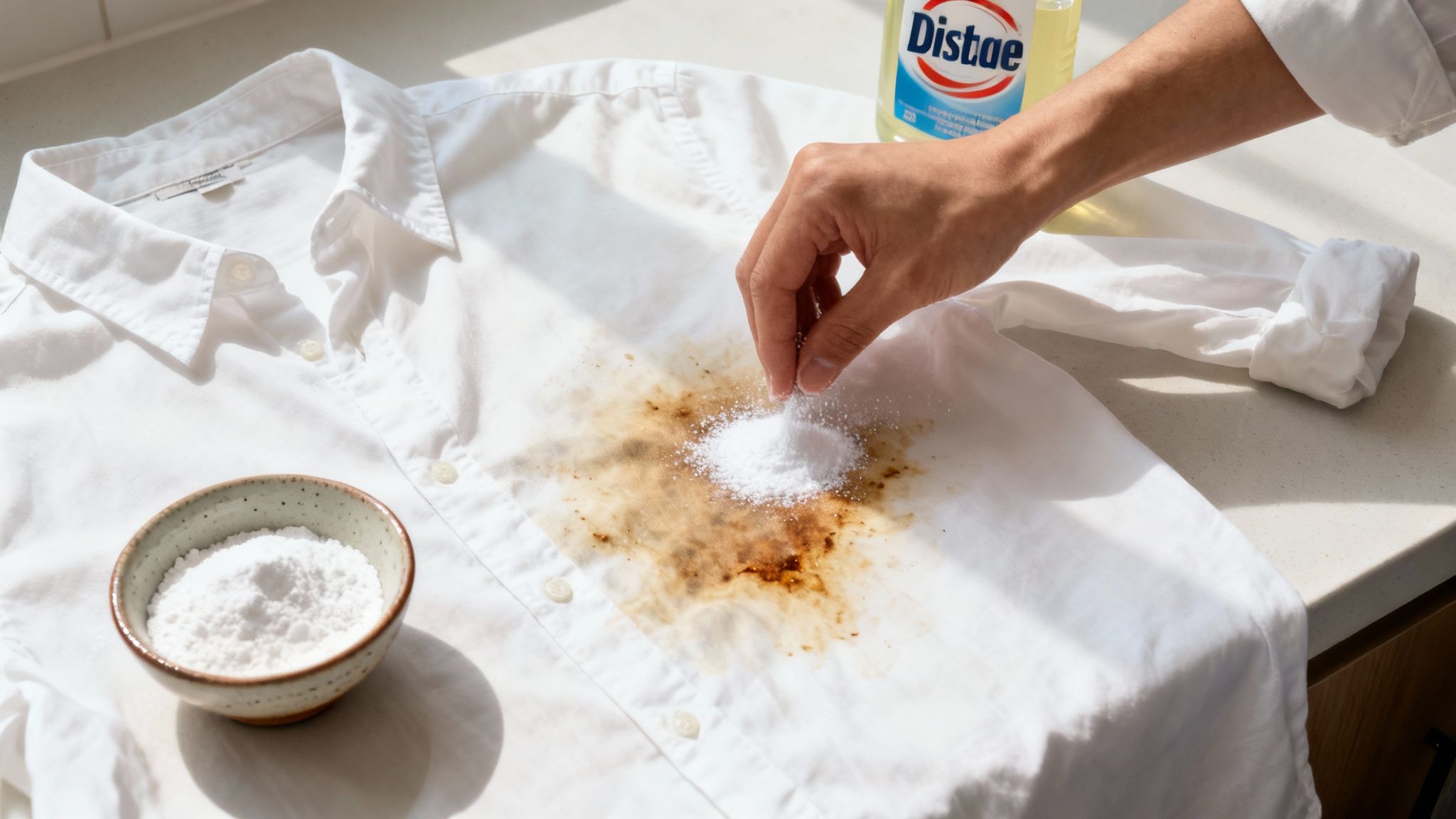
It’s a moment we’ve all had. That sinking feeling as a rogue french fry or a drip of salad dressing lands squarely on your favorite shirt. Your first instinct might be to panic, but the real key to getting grease out of clothes is acting fast. You need an absorbent like baking soda to pull the oil out, then a grease-cutter like dish soap to break it down—all before it ever touches the heat of a dryer.
Why Grease Stains Are So Stubborn
Before you toss that shirt into the rag pile, it helps to understand what you're really up against. Whether it’s from cooking splatters, a bit of car maintenance, or even just the natural oils from your skin, grease stains are a pain for one simple reason: they hate water.
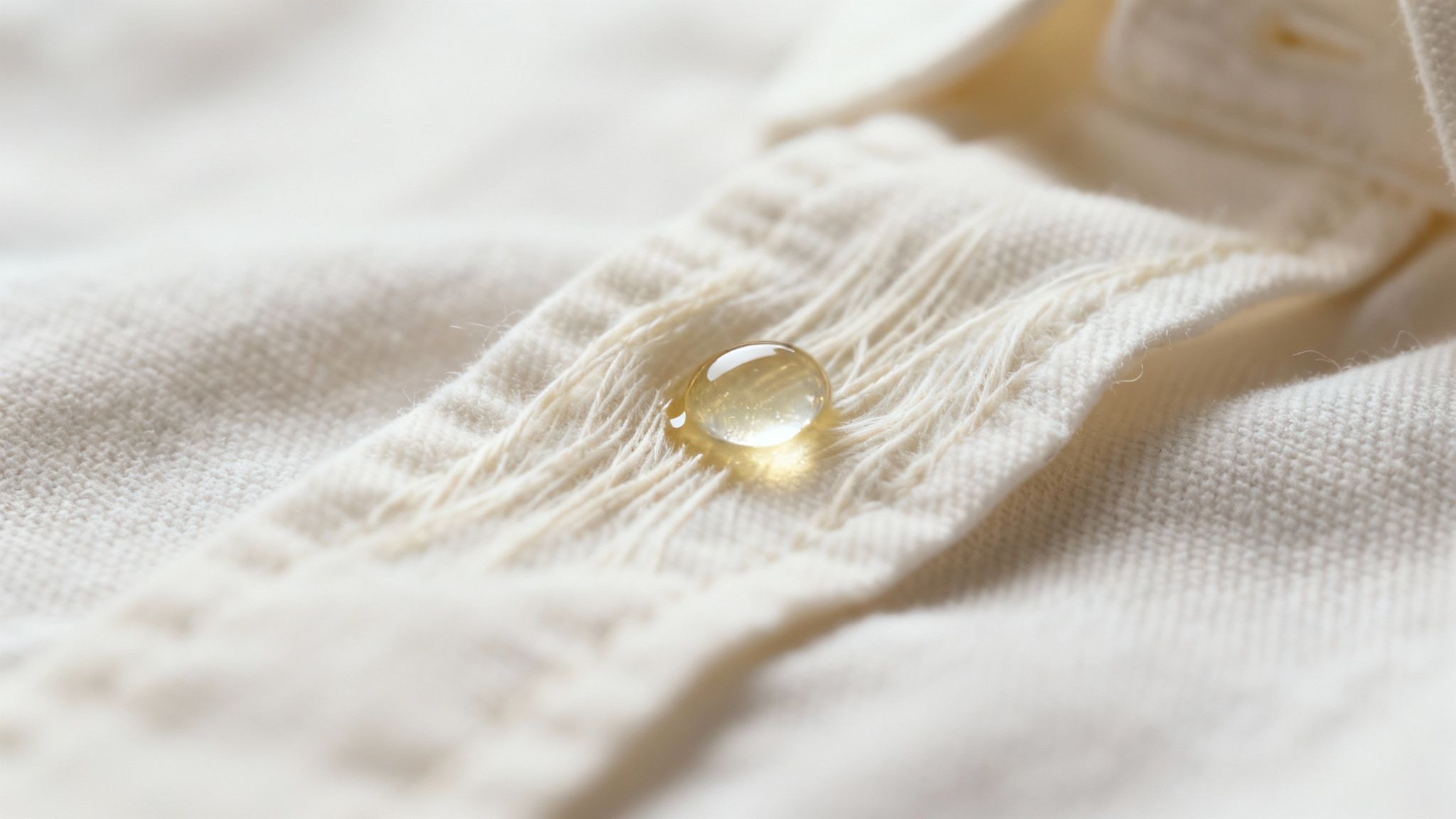
Grease and oil are hydrophobic, which is just a scientific way of saying they repel water. When you throw a greasy garment into a normal wash, the water molecules just slide right past the oil, leaving the stain locked deep into the fabric fibers. It’s the classic oil-and-water experiment, playing out on your clothing.
The Science of the Stain
So, how do you get them to mix? You need a middleman—something that can bridge the gap between the oil and the water. This is where degreasing agents, especially good old dish soap, save the day.
Dish soap is packed with molecules called surfactants. Think of them as having two-sided personalities. One end loves oil (the hydrophobic side), and the other end loves water (the hydrophilic side). When you work the soap into the stain, the oil-loving ends grab onto the grease particles, surrounding them. Then, when water is introduced, the water-loving ends get pulled away, taking the trapped grease with them. It’s a brilliant bit of chemistry happening right in your laundry room.
The real challenge isn’t just the chemistry; it’s the fabric itself. Porous materials like cotton and linen act like sponges, absorbing grease quickly and making it harder to lift out completely.
Common Culprits and Their Impact
Not all grease is the same, and knowing what you're dealing with can make a big difference in how you treat the stain.
- Food Grease: Think butter, cooking oil, and salad dressing. These are organic stains and usually respond well to enzyme-based cleaners designed to break down fats.
- Automotive Grease: This stuff is often mixed with grime and synthetic chemicals, making it much darker and tougher. You’ll likely need a more powerful solvent for this.
- Body Oils: That gradual yellowing you see on shirt collars and cuffs? That’s a slow buildup of body oils. It requires consistent pre-treatment to keep at bay.
Understanding this basic science takes the guesswork out of laundry. Instead of just hoping a stain comes out, you can tackle it with the right tools and techniques to save your clothes from the donation bin. This guide will walk you through exactly how to do it.
Your First-Response Toolkit for Grease Stains
That sinking feeling when a rogue drop of salad dressing lands on your favorite shirt is all too familiar. But it doesn't have to be a death sentence for your garment. Your first move is the most important one in the battle to get grease out of clothes. Put down the water and stop scrubbing—your best weapons are probably sitting in your kitchen cabinet right now.
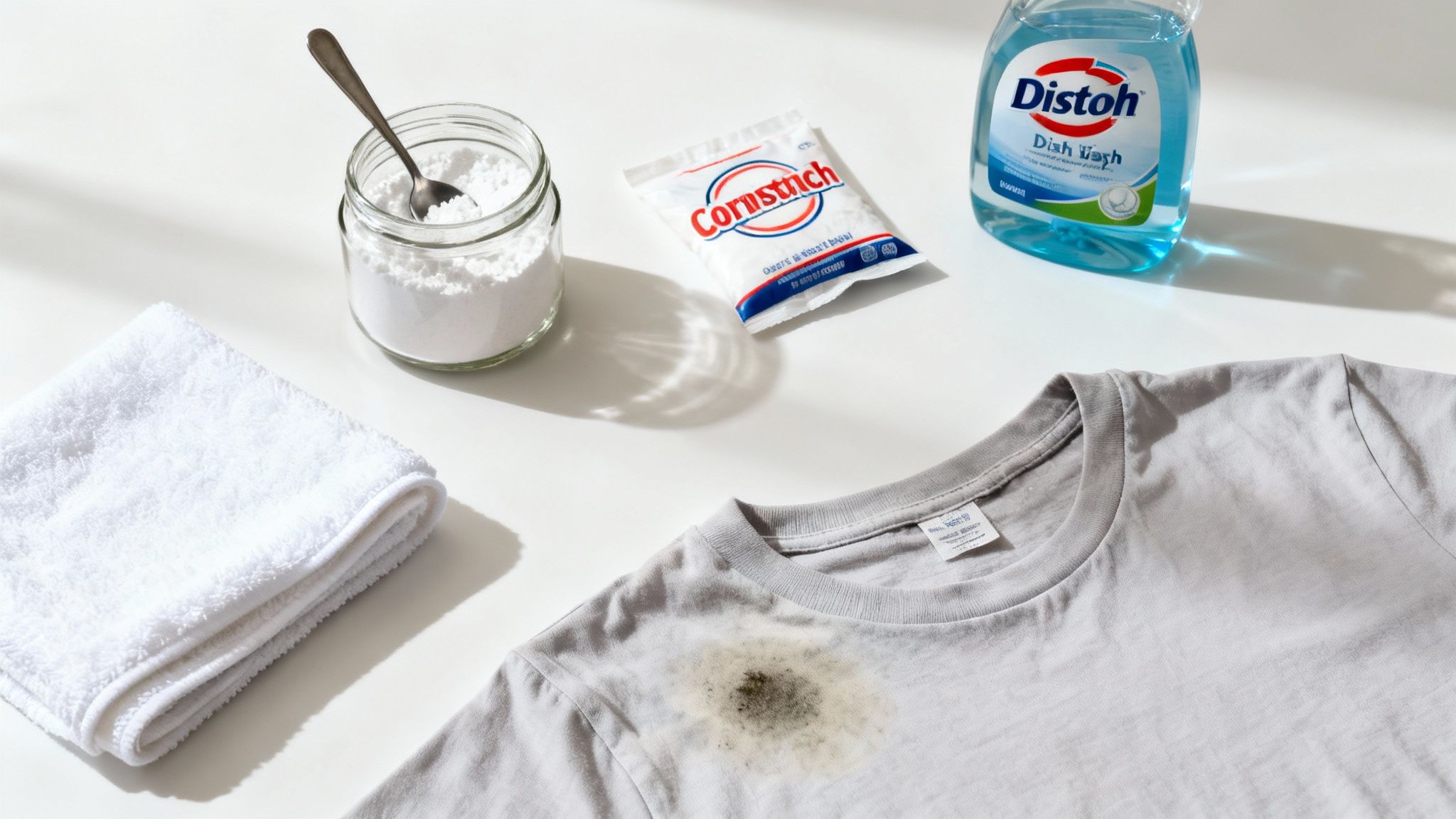
I always tell people to think about tackling a fresh grease stain in two simple phases: absorb, then break down. First, you need to pull as much of that liquid oil out of the fabric as you can before it has a chance to spread and settle in.
The Power of Absorbent Powders
This is where things like baking soda, cornstarch, or even baby powder become your secret weapon. These fine powders are incredibly porous, acting like tiny sponges to draw the grease up and away from the fabric fibers.
Here’s the method I’ve perfected over the years:
- Blot, Don't Rub: First things first, grab a clean cloth or paper towel and gently blot any excess oil. If you rub, you’re just forcing the stain deeper into the fabric.
- Cover the Stain: Be generous here. Sprinkle your powder of choice over the entire greasy area, making sure it’s completely covered with a thick layer.
- Give It Time: Now, just let it sit. The powder needs at least 30 minutes to do its job properly. For a really nasty stain, I’ve left it on for a couple of hours. You'll actually see the powder start to look clumpy or discolored as it soaks up the oil.
- Scrape and Re-Assess: Use something with a dull edge, like an old credit card or a butter knife, to gently scrape the powder away. If the spot still looks dark, don't hesitate to repeat the process with a fresh pile of powder.
This absorption trick is a real game-changer, especially for everyday fabrics like cotton and denim that tend to drink up oil in a flash.
Breaking Down the Grease with Surfactants
Once you’ve soaked up the worst of it, it's time to deal with what’s left behind. This is where a good degreasing dish soap—that classic blue Dawn is famous for a reason—is your best friend. The magic is in its surfactants, which are molecules specifically engineered to grab onto grease and wash it away.
Just put a small dab of the dish soap right on the stain. Work it into the fibers gently with your fingers or a soft-bristled toothbrush. You want to see a nice lather, but don't scrub so hard that you damage the fabric. Let that sit for about 15-20 minutes before rinsing it out completely with warm water.
Key Takeaway: The one-two punch of an absorbent powder followed by a degreasing dish soap is hands-down the most effective at-home strategy for fresh grease stains. It's a method that tackles both the surface oil and the stubborn residue embedded in the fibers.
Before you toss that garment in the wash, here’s a quick guide to help you choose the right tool for the job.
Choosing Your Best At-Home Grease Treatment
This table breaks down some common household items, what they’re best for, and which fabrics they play nicely with.
Remember, these are just starting points. The best approach often combines a powder to absorb followed by a liquid to break down the rest.
It's a huge industry for a reason—stains are tough. Standard home detergents often only remove 40-50% of a set-in grease stain, while professional-grade treatments can hit 92% success. That’s why your quick action at home matters so much.
For those really tricky spots, it helps to understand what's actually happening on a chemical level. We have a great breakdown of this on our blog; you can learn more by reading about how stain removers work for every stain type.
While you'd never use them on your clothing, looking at how professionals use industrial-strength degreasers like carbon off cleaner shows the power of using a targeted solvent to dissolve grease. The most important rule? After you treat a stain, always let the garment air dry. Never, ever put it in the dryer unless you are 100% sure the stain is gone. The heat will set that stain for good.
How to Treat Grease on Different Fabric Types
Not all fabrics are created equal, and trying a one-size-fits-all approach to get grease out of clothes can end in disaster. The same aggressive scrubbing that saves your favorite denim jeans will absolutely ruin a silk blouse. The real secret to success is understanding how different materials react to grease and, more importantly, to the cleaning agents you use.
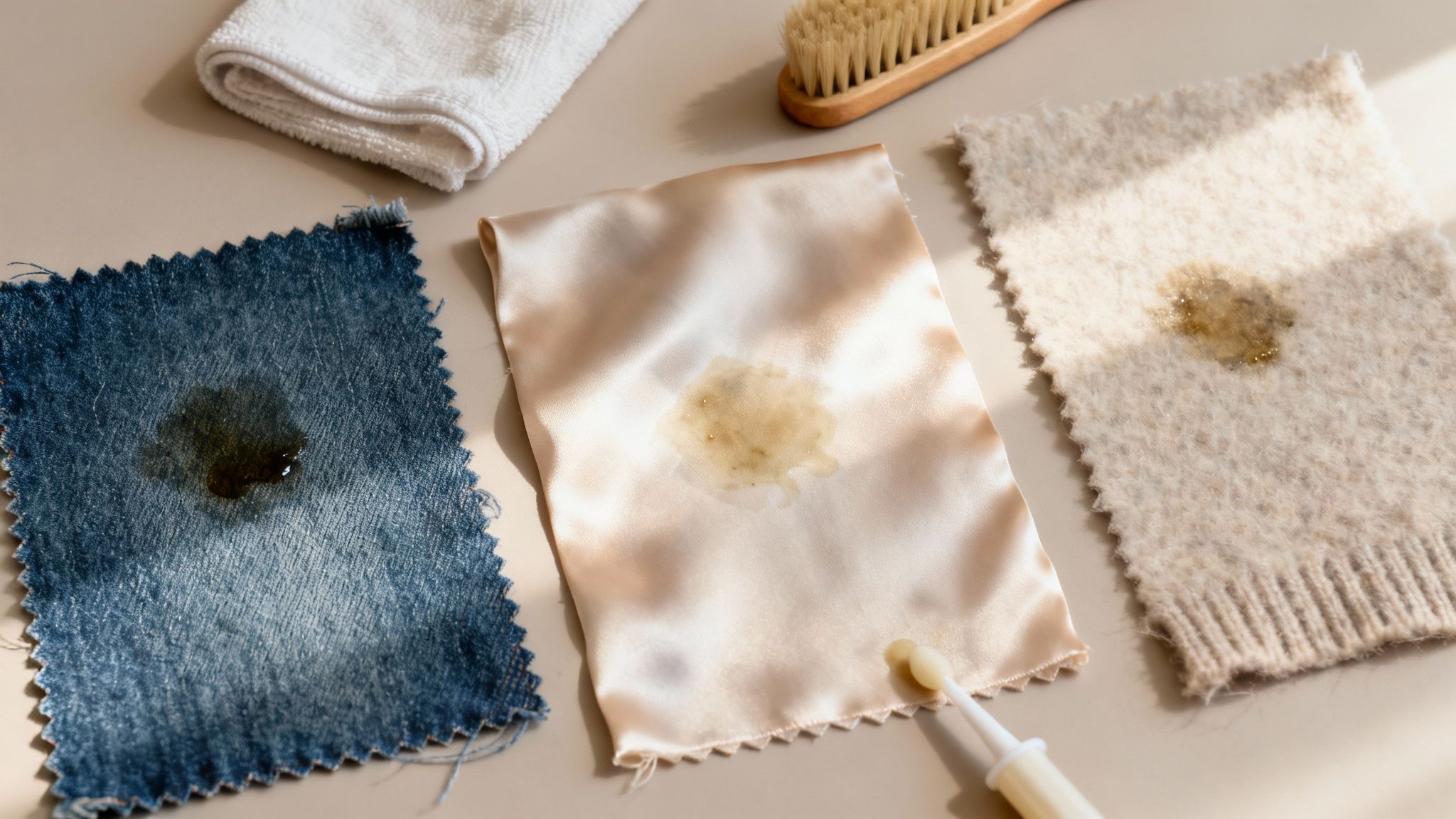
It’s less about the specific cleaner and more about matching the method to the material. A tough, hardy fabric can take a bit of a beating, but a delicate one needs a much gentler touch. Let’s break down the best strategies for the clothes you actually own and wear.
Handling Everyday Durable Fabrics
Think of these as your daily workhorses: cotton, denim, and most synthetic blends like polyester. These materials are built to last, which thankfully gives you more wiggle room when tackling a stubborn grease spot.
If you've just splattered some salad dressing on a cotton t-shirt or polyester shorts, that first-response combo of an absorbent powder and dish soap is your best bet. Because these fabrics are so porous, they soak up grease fast, so quick action really is key.
For these sturdy materials, you can be a bit more assertive:
- Pre-treat with purpose. After you've lifted the excess oil with baking soda, don’t be shy. Work a good, grease-cutting dish soap directly into the stain with an old toothbrush or soft-bristled brush.
- Turn up the heat. Always check the care label first, but most cotton and synthetic clothes can handle a warm or even hot wash cycle. That higher temperature is a game-changer for dissolving and flushing out any lingering oil.
- Bring in the big guns. For set-in automotive grease on a pair of work jeans, a solvent-based pre-treater can be a lifesaver. I've even seen a small dab of a mechanic's hand cleaner work wonders before a wash.
The best part about these fabrics is their resilience. If the stain is still there after the first wash, you can usually repeat the process a couple of times without causing damage. Just make sure to air-dry the garment between attempts—the heat from a dryer will set that stain for good.
Gently Treating Delicate Materials
This is where things can go sideways fast. Fabrics like wool, silk, and rayon demand a completely different, much softer approach. If you get aggressive with scrubbing or use harsh chemicals, you’ll end up with permanent damage like stretching, fading, or even a hole.
On delicates, the goal is to lift the stain, not fight it. Patience is everything. Use gentle blotting, never rubbing, which only grinds the grease deeper into those fine fibers and can cause pilling or fraying.
For these sensitive items, start with your mildest method. Cornstarch is often a better choice than baking soda here because its fine texture is less abrasive. Let it sit to absorb the oil, then gently brush it away.
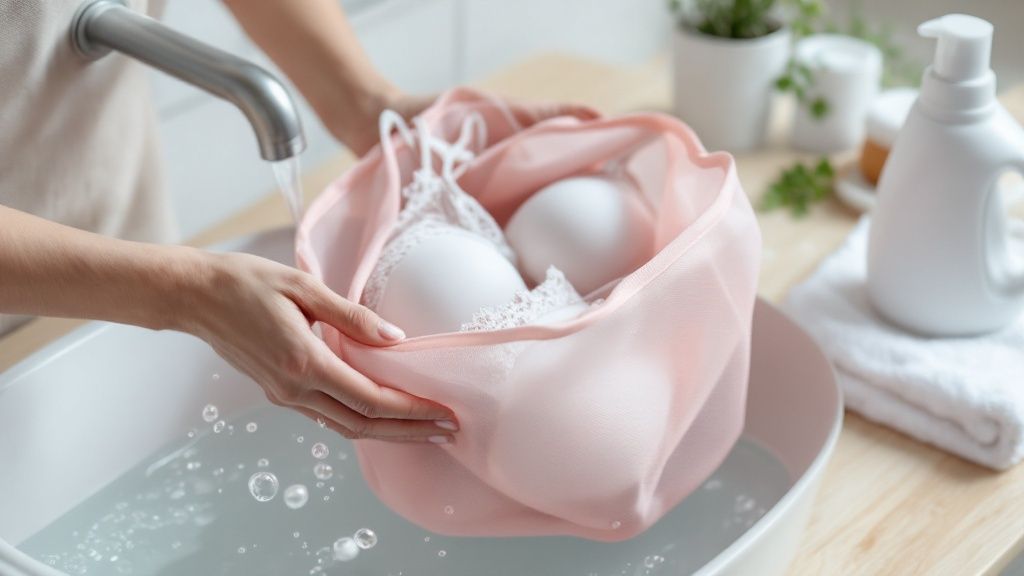
Instead of applying dish soap directly, try a diluted vinegar solution or an enzyme-based cleaner formulated specifically for delicates. A crucial step: always test your cleaning solution on a hidden spot first, like an inner seam, to make sure it won’t cause any discoloration. Silk, with its unique protein-based fibers, presents its own set of challenges. For a deeper dive, check out our guide on how to get oil stains out of silk. Honestly, for expensive or treasured delicates, professional dry cleaning is often the safest bet.
Spot Treating Non-Washable Items
But what about the things you can't just toss in the washer? I'm talking about your couch, a suede jacket, or a leather handbag. For these items, careful spot treatment is your only play.
For most upholstery, you can create a gentle cleaning solution with just a few drops of dish soap mixed into a cup of water. Use a clean cloth to apply only the suds to the stain, blot gently, and then "rinse" by blotting with a different cloth dampened with plain water.
Suede and leather are a whole different ballgame. Water itself can leave a stain on these materials, so start with an absorbent powder like cornstarch. Let it sit for several hours to draw out the grease, then brush it off. If a mark remains, I strongly recommend consulting a professional cleaner who specializes in leather and suede. They have the right solvents and expertise to tackle the grease without ruining the finish.
Common Mistakes That Can Set Grease Stains Forever
Sometimes, getting grease out of clothes is less about what you do and more about what you don’t do. We’ve all been there—making a split-second decision in the laundry room that accidentally turns a minor splatter into a permanent mark. If you can sidestep these common pitfalls, you’ll dramatically boost your chances of saving your favorite garments.
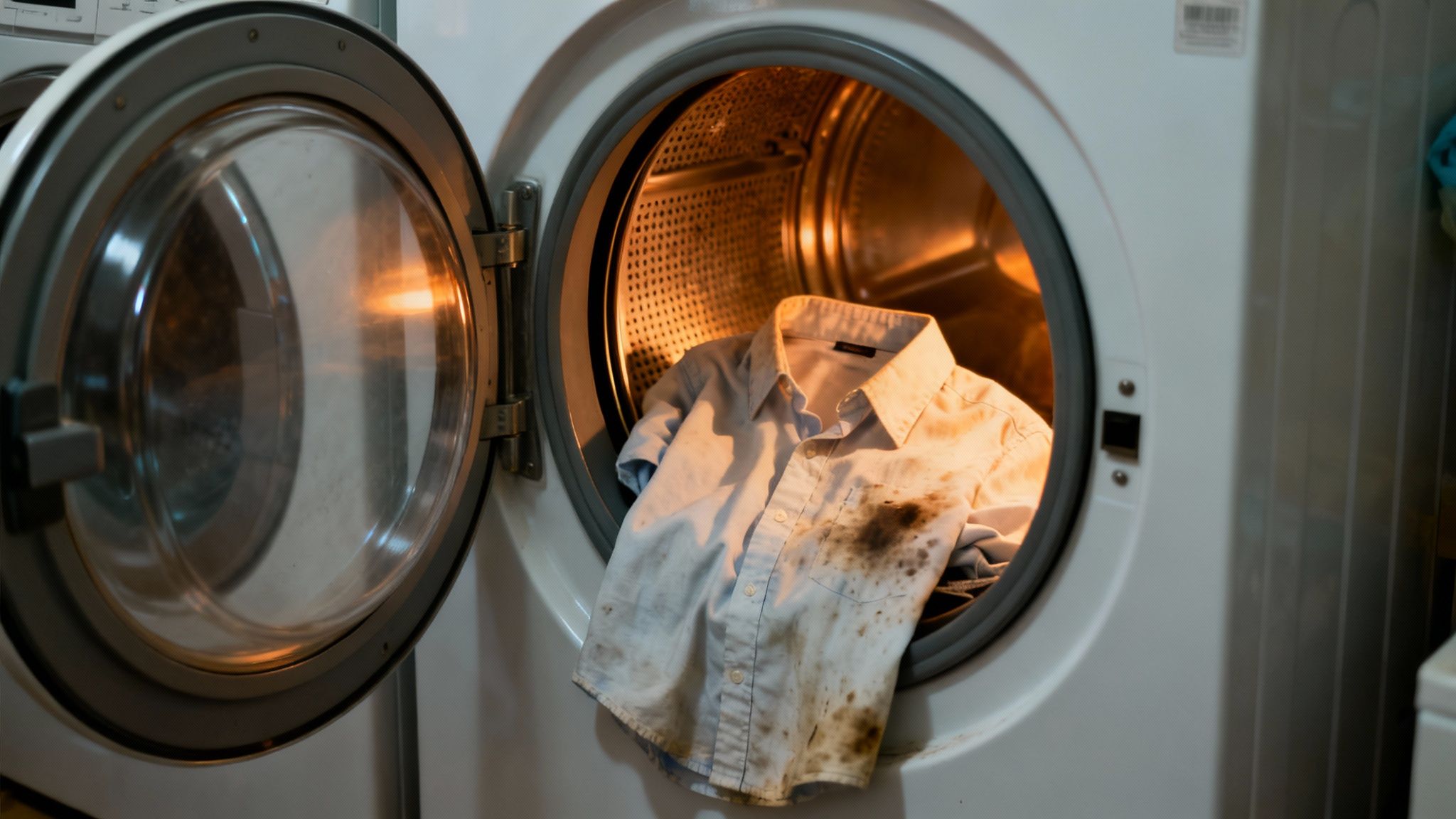
The single biggest, most irreversible error you can make is applying heat. Tossing a still-greasy garment into a hot dryer is like firing pottery in a kiln—it essentially bakes the oil right into the fabric fibers. Once that happens, the stain is likely there for good.
The Catastrophe of High Heat
Always, and I mean always, air-dry any item you've treated for a grease stain. Once it’s completely dry, hold it up under a bright light and inspect the spot. If you see even a faint shadow of the original stain, it’s time for another round of treatment. Only when you are 100% certain the stain is gone should that item see the inside of a dryer.
Another classic mistake is rubbing the stain frantically. I get it, it feels like you're doing something productive, but aggressive scrubbing just spreads the grease over a larger area. Even worse, it can damage delicate fibers, leading to pilling, fraying, or a faded patch on the fabric.
Insider Tip: Instead of rubbing, gently blot a fresh stain with a clean cloth or paper towel to lift any excess oil. When you apply a cleaner, use your fingertip or an old, soft-bristled toothbrush to work it in with a light, circular motion. The goal is to lift the grease, not grind it deeper into the weave.
Ignoring the Fabric Care Label
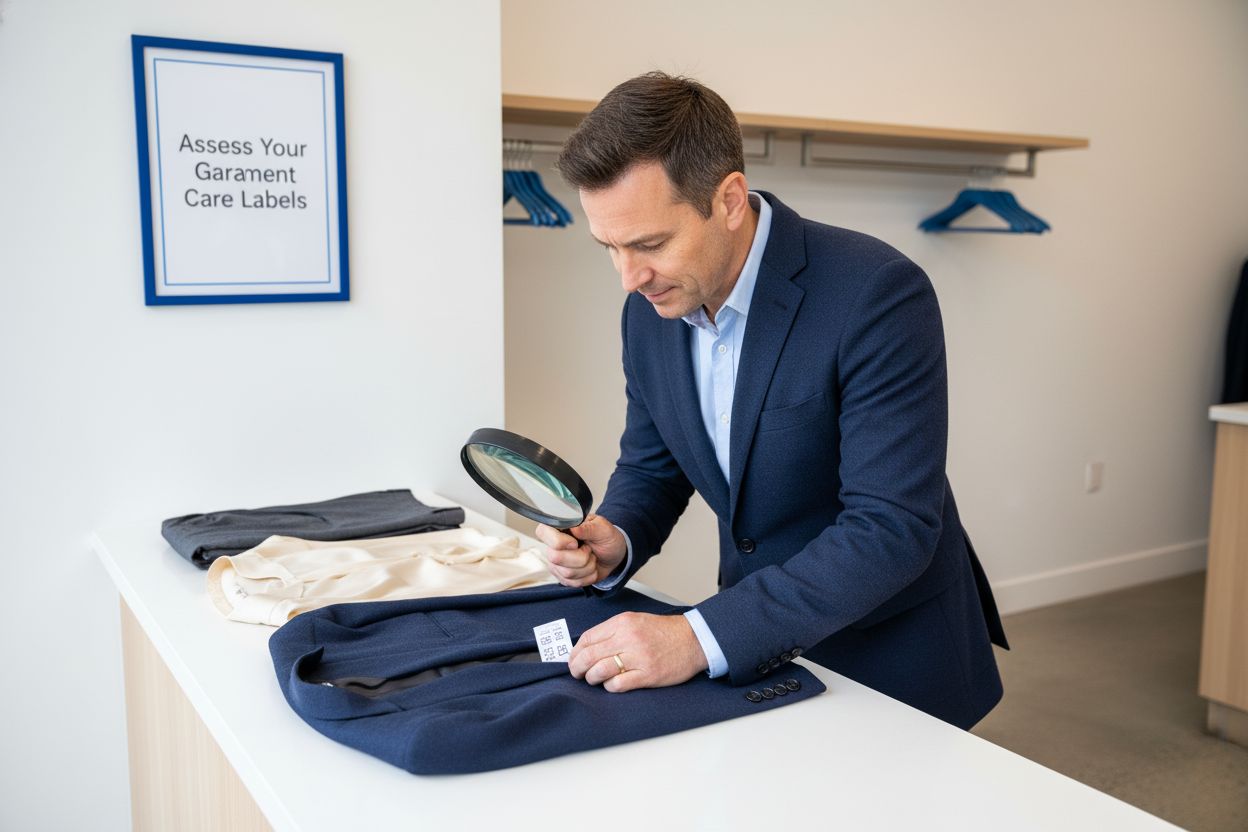
It’s so easy to ignore that little tag, but it’s basically your garment's instruction manual. Using water that's too hot on wool will shrink it, and putting a harsh solvent on silk can literally dissolve the color. Keep an eye out for these critical mistakes:
- Using the Wrong Cleaner: A heavy-duty degreaser that works wonders on your jeans could be a complete disaster on a rayon blouse. Always test your cleaning solution on an inconspicuous spot first, like an inside seam or hem.
- Forgetting to Protect Your Work Surface: When you're treating a stain, the oil and cleaning solution can easily soak through. Always slip a piece of cardboard or a thick, folded towel behind the stain to keep it from transferring to the other side of the garment.
- Applying Water to Certain Stains: This is a big one for oil-based stains on delicate fabrics like suede or some silks. Sometimes, water can create its own separate stain, making your job even harder.
In the end, patience is your best friend in stain removal. Rushing the process or grabbing the wrong tool can do far more harm than good. Beyond these specific grease-related errors, it's smart to be aware of other common cleaning mistakes that can sabotage your efforts. By avoiding these laundry disasters-in-the-making, you’re not just cleaning your clothes—you’re preserving them for years to come.
When to Trust a Professional With Grease Removal
Even with the best home remedies and a bit of laundry savvy, there are moments when trying to get grease out of clothes yourself is a losing battle. You’ve pre-treated, you’ve soaked, you’ve washed, but that faint, stubborn shadow of a stain is still there. This is when it's time to stop fighting and call in the experts.
Knowing when to wave the white flag is a skill in itself. Some grease stains are just too old, too big, or too deeply set into the fibers for anything you have at home to handle. Pushing it further can actually damage the fabric, cause colors to fade, or just waste your time and energy.
Key Signs It’s Time for Professional Help
Think of your local dry cleaner as a specialist for your clothes. You wouldn’t try to set a broken bone yourself, right? The same logic applies when a valuable garment is facing a laundry emergency.
Here are the clear signals that it’s time to step away from the DIY methods:
- The Stain Has Survived Multiple Washes: If a grease spot has been through a wash and, especially, a hot dry cycle, the heat has likely set the oil deep into the fabric fibers. Professionals have access to specialized solvents that can break those bonds in ways that store-bought products simply can't.
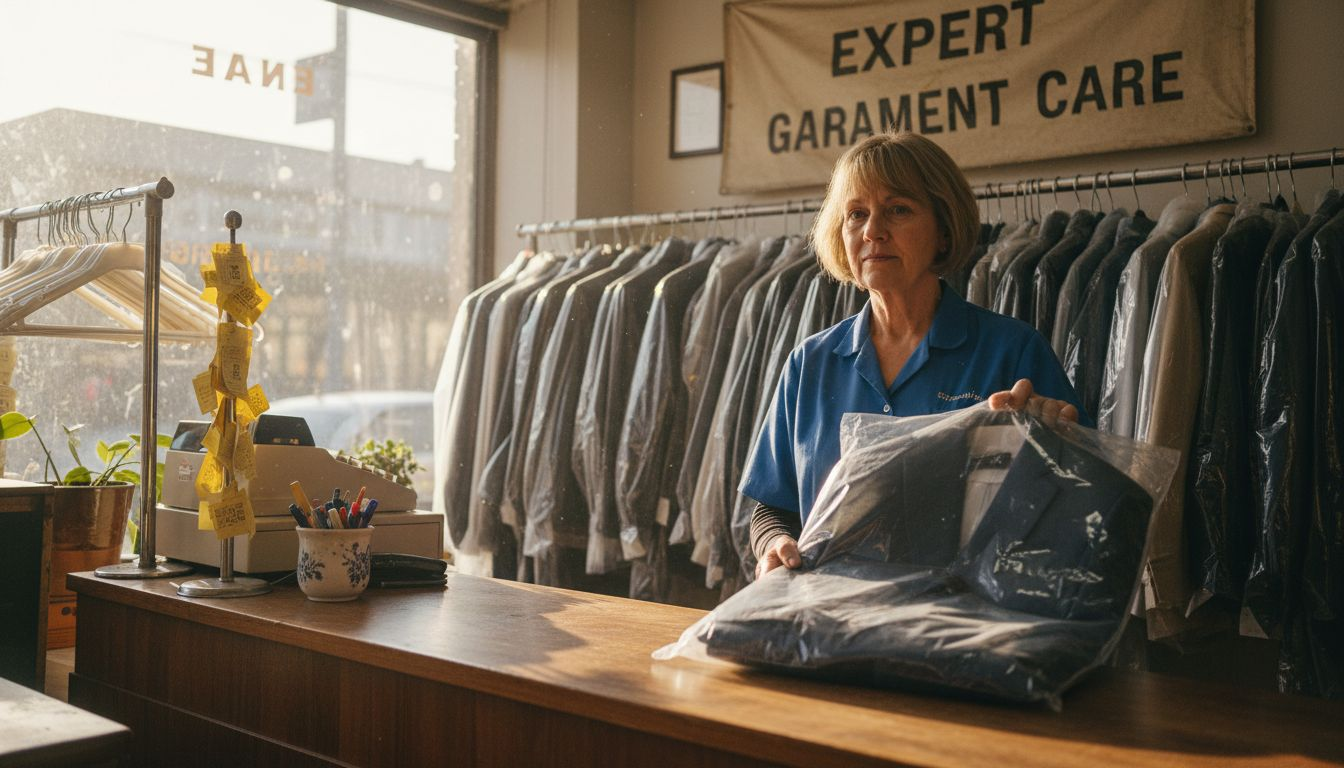
- The Garment Is Marked "Dry Clean Only": Take that tag seriously. It's a direct instruction from the people who made the garment. Fabrics like silk, certain wools, rayon, and structured pieces like blazers can shrink, warp, or be ruined by water-based cleaning.
- The Fabric Is Extremely Delicate or Valuable: Is it your grandmother’s vintage silk scarf? That expensive cashmere sweater you saved up for? For items where the risk of ruin is just too high, the cost of professional cleaning is a small price to pay for preservation.
- The Stain Is a Mystery: If you have no idea what kind of grease you’re dealing with—motor oil, synthetic lubricant, or some strange compound—a professional can identify it and use the right solvent for the job. Guessing at home could make it worse.
It really boils down to risk versus reward. If ruining the item would be a true loss, whether financially or sentimentally, trusting a professional is the smartest, safest move you can make.
The Science Behind Professional Grease Removal
So, what kind of magic are the pros working with? It's less magic and more advanced chemistry. Unlike the detergents we use at home, dry cleaners use powerful, non-water-based solvents designed specifically to dissolve oils and fats without messing with the structure of delicate fabrics.
At Columbia Pike Laundry, for example, we use the eco-friendly GreenEarth cleaning system. This method uses a gentle liquid silicone that doesn't chemically react with fabric fibers. Instead, it just flushes the grease and dirt right out, leaving clothes feeling clean and soft, without that harsh chemical smell. It’s a perfect example of how professional-grade tools are just better equipped for the tough jobs.
More Than Just a Cleaning Service
The modern laundry industry is built on expertise and convenience. The U.S. dry-cleaning market is valued at $12.9 billion in 2025, which shows how much people rely on these services to save both their time and their favorite clothes. Grease is a huge part of that; it's the top reason for returns in 38% of cases where home methods fail by setting stains deeper. In contrast, professional methods, like those we use at Columbia Pike Laundry, successfully remove 97% of grease stains, even on delicates. You can discover more insights about these laundry trends to see why expert care truly matters.
Choosing a service with pickup and delivery isn't just about handing off a chore—it's about getting your time back and knowing your clothes are getting the best care possible. For a deeper dive into how we tackle these challenges, read our guide on how dry cleaners remove stains. Ultimately, it’s about peace of mind.
Got Grease Stain Questions? We've Got Answers.
Even when you follow all the steps, getting grease out of clothes can leave you with a few lingering questions. It’s one of the most common and frustrating laundry problems out there, so a little extra insight can make a world of difference. We've gathered the top questions we hear from customers to give you clear, practical answers and help you tackle that next oily spot with confidence.
Can You Really Get Old, Set-In Grease Stains Out?
Yes, you absolutely can, but you’ll need to arm yourself with patience and a more aggressive game plan than you would for a fresh spill. When grease sits for a while, and especially if it has gone through a hot dryer cycle, the oil literally cooks into the fabric fibers. It's not just a stain anymore; it's practically bonded to the material.
For a DIY rescue mission on a set-in stain, you'll need a multi-step attack. I'd start with a solvent-based treatment. It sounds strange, but a product like WD-40 can be surprisingly effective here. It’s engineered to break down grease and can help re-liquefy that old, hardened oil. After letting the solvent work its magic, follow up with a thick paste made from a high-quality dish soap and baking soda.
Let this mixture sit on the stain for at least a few hours—overnight is even better. This gives it maximum time to penetrate the fibers and break down the stubborn oil. Afterwards, scrub it gently with an old toothbrush and wash the item in the hottest water the fabric can safely handle. That said, for clothes you truly care about, professional cleaning is the smarter, safer bet. Our specialized solvents dissolve aged grease far more effectively than anything you can buy at the store.
Expert Takeaway: Don't give up on an old grease stain, but be realistic. It might take two or three treatment cycles to fully get it out. The non-negotiable rule is to always air-dry the garment between attempts. Never, ever put it back in the dryer until you are certain the stain is completely gone.
Does the Dryer Really Set Grease Stains for Good?
This is the single most important rule in the world of grease stain removal: heat is your enemy. The intense heat inside a clothes dryer takes that oil and polymerizes it. This chemical reaction creates a bond between the oil and the fabric fibers on a molecular level. It essentially turns a treatable spot into a permanent part of the garment's design.
Think of it like frying an egg. Before you add heat, the egg is a liquid you can wipe up. Once it's cooked, its structure is permanently altered. The exact same principle applies to oil stains on fabric. Once it’s baked in, the stain becomes incredibly difficult, and often impossible, to remove.
To avoid this laundry disaster, make it a habit to meticulously inspect any treated garment before it goes anywhere near the dryer. Hold it up to a bright light and examine it from a few different angles. A faint, shadowy spot is often all that's left, and it's easy to miss when the fabric is wet. If you see even a hint of it, repeat your pre-treatment process. Only when you’re 100% sure the stain has vanished is it safe to machine dry.
What’s the Best Store-Bought Grease Stain Remover?
Walking down the laundry aisle can be overwhelming. When you’re fighting grease, you want to look for products that fall into one of two main categories: enzyme-based cleaners or solvent-based degreasers.
- Enzyme-Based Cleaners: Products like Puracy Natural Stain Remover or Zout are your go-to for food-based grease—think butter, salad dressing, or cooking oil. The enzymes in these formulas are proteins specifically engineered to break down the organic compounds in fats and oils. They literally "eat" the stain away.
- Solvent-Based Cleaners: For tougher, petroleum-based stains like motor oil or mechanical grease, a solvent-based product is usually the more powerful choice. A classic example is Lestoil Heavy Duty Cleaner. These work by dissolving the grease itself, making it much easier to wash away.
No matter which one you grab, always follow the directions on the label. Even more important is to do a quick spot test on a hidden area of the garment first, like an inside seam. This simple step ensures the cleaner won't bleach or damage your specific fabric.
How Does Professional Dry Cleaning Get Grease Out So Well?
The term "dry cleaning" is a little misleading—it isn't actually a dry process. Instead of water, it uses specialized liquid chemical solvents to clean clothes. This is precisely why it's the undisputed champion for getting grease out of clothes, especially from tricky fabrics.
Oil and water naturally repel each other, which is why a normal wash cycle often just pushes a grease stain around. Oil-based stains, however, are soluble in the chemical solvents used in dry cleaning. The process is so effective because the solvent dissolves and completely flushes the grease away from the fabric fibers, all without the harsh scrubbing or high heat that would destroy materials like silk, wool, or rayon.
At Columbia Pike Laundry, we use advanced, eco-friendly solvents like the GreenEarth system. This method is incredibly gentle on fabrics yet ruthless on stains. It safely lifts away grease while perfectly preserving the color, shape, and feel of your most valued clothing. It’s simply the safest and most reliable way to ensure your clothes come back looking brand new.
Don't let a stubborn grease stain win. If you're facing a tough spot or just want to reclaim your time, let the experts at Columbia Pike Laundry take care of it. We offer professional dry cleaning and wash-and-fold services with convenient pickup and delivery. Schedule your pickup today and let us bring your clothes back to life!
Free pickup, expert care, delivered back to your door.
Popular Blog Articles




Meet the Author
Daniel Logan didn’t start CPL because he loved laundry. He started it because his family was drowning in time debt, and laundry was one of the biggest weights.
Mornings were chaos with two kids under 5. Evenings felt like catch-up. And weekends? Gone to sorting socks and folding piles.
He knew his story wasn’t unique. So he built a business that gave families like his just a little bit of breathing room one load at a time.
With no laundry experience but deep tech skills, Daniel rolled up his sleeves, doing every job himself while building systems that turned it into a modern laundry service that saves customers time, simplifies their lives, and delivers reliability they can count on.
That’s where CPL began. Not from a playbook, but from pain. From one dad trying to buy back time: for himself, and for every household like his.
Free pickup, expert care, delivered back to your door.