
how often should you do laundry: quick guide
Columbia Pike Laundry offers pickup & delivery across Northern Virginia.
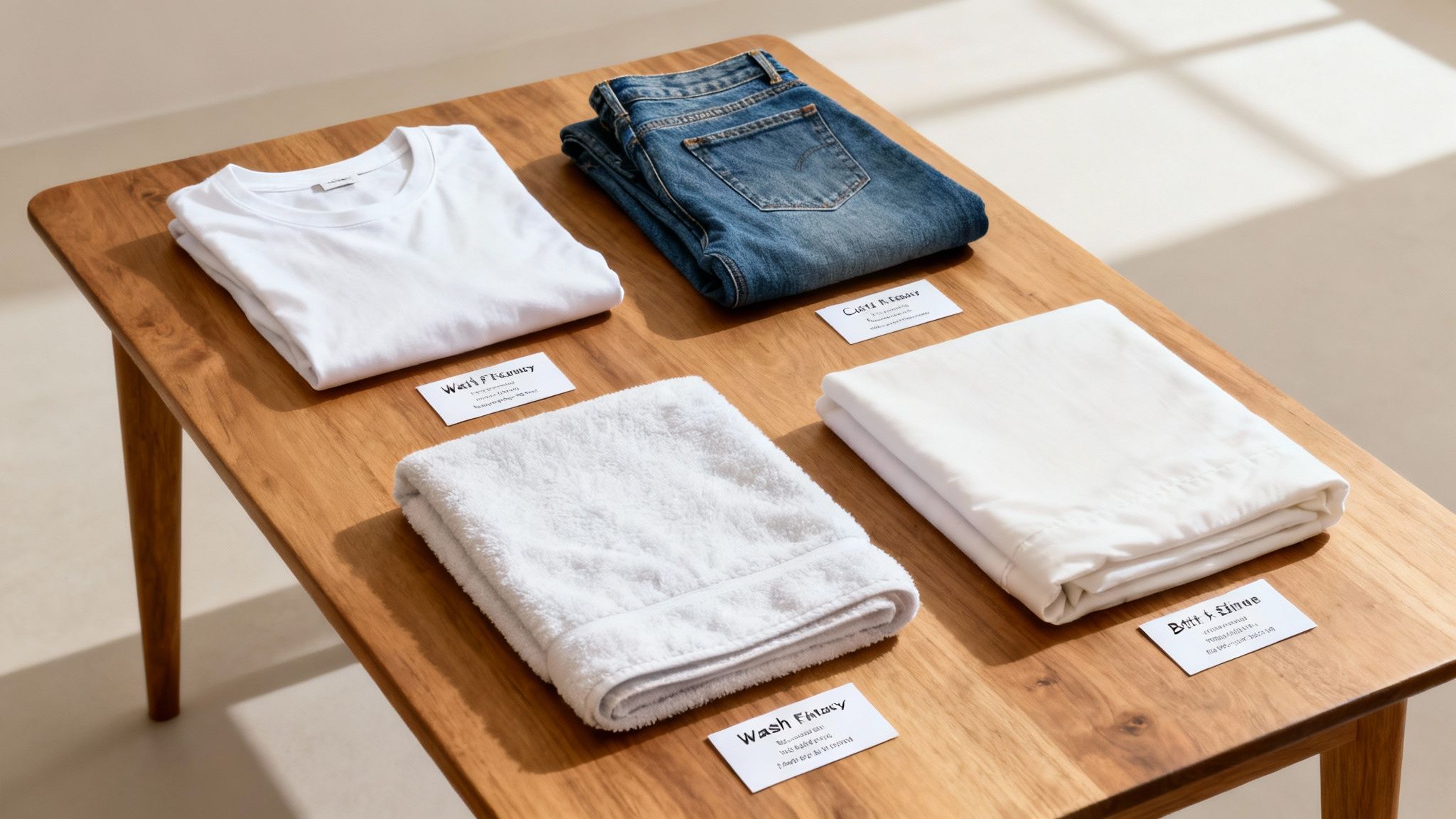
It's one of those questions that seems simple on the surface: how often should you do laundry? But in reality, the answer is a lot more complicated. As a general rule, things you wear close to your body like t-shirts and socks need a wash after just one use. Sturdier items like jeans or a favorite sweater can usually go for three to five wears. And for things around the house, plan on washing bedding weekly and bath towels after about three uses.
Your Quick Guide to Laundry Frequency
While those quick guidelines are a fantastic starting point, your perfect laundry schedule is unique to you. It's shaped by your lifestyle, how many people are in your home, and even the climate you live in. Think of these rules less as strict laws and more as a solid foundation you can tweak to fit your life.
This guide is designed to give you some clear, straightforward advice for the most common items that pile up in the laundry basket. It's meant to cut through the guesswork and give you a simple framework to start with.
Quick Guide How Often to Wash Common Items
Here’s a simple table that breaks down the recommended washing schedule for your everyday clothes and linens. When you're standing in front of your hamper wondering if those jeans have one more day in them, just refer to this chart.
Think of this as your cheat sheet for a cleaner, fresher home without over-washing your favorite clothes.
The Time Commitment Behind the Chore
It's pretty obvious that staying on top of all this washing takes a serious amount of time. How often people actually get around to doing laundry can vary, but the latest numbers show just how much of our lives this one chore takes up.
Globally, the average person spends about 4.5 hours per week on laundry-related tasks. It gets even more specific in the United States, where a 2025 survey found that 68% of urban households spend at least two hours every single week washing, drying, and folding. If you're curious, you can explore more about laundry service market trends to see how these habits are changing.
That time commitment is exactly why getting a handle on your laundry frequency is so important. It’s the first step toward building a smarter, more manageable routine that can give you some of that precious time back.
Factors That Define Your Laundry Schedule
Those general laundry guidelines are a great place to start, but let's be honest—they're just that. General. Ever wonder why your laundry pile seems to regenerate twice as fast as your neighbor's? The answer isn't a mystery; it’s woven into the unique fabric of your daily life.
Your personal laundry rhythm isn't dictated by some universal rulebook. Instead, it’s a mix of your lifestyle, where you live, and your family’s health needs. Getting a handle on these key drivers is the first step toward building a system that actually works. In fact, a solid grasp of understanding time management can completely change how you tackle all household chores, laundry included.
Once you see how these pieces fit together, you can ditch the generic advice and create a routine that truly fits your life.
Your Daily Activity Level
The single biggest factor dictating your laundry schedule is what you do all day. Your job and hobbies directly influence how quickly your clothes get caked with sweat, dirt, and bacteria.
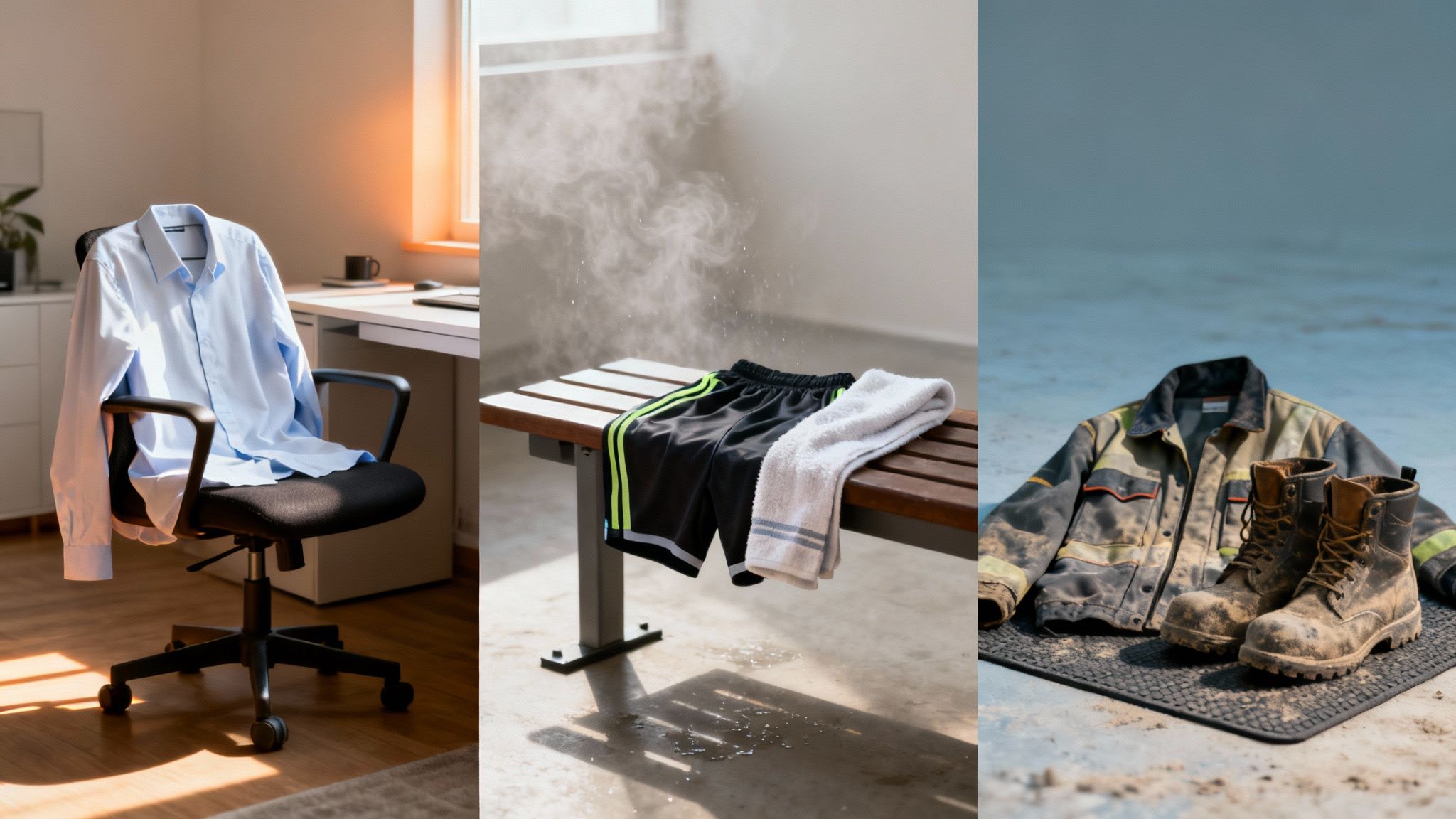
Just think about the difference between a remote graphic designer and a construction worker. The designer might throw on a clean shirt for a video call but can easily wear the same pair of pants a few times. The construction worker, on the other hand, comes home covered in dust, sweat, and grime. For them, washing clothes after every single wear isn't just about hygiene—it's a necessity.
This same principle applies to your life outside of work.
- Fitness Enthusiasts: That high-tech activewear is great at wicking away sweat, but that also makes it a perfect breeding ground for bacteria and odors. Gym clothes, yoga pants, and running shorts should always hit the hamper after one use to keep the fabric performing well and prevent skin irritation.
- Parents of Young Children: Spills, grass stains, and playground adventures are just another Tuesday. This means kids' clothes, especially for toddlers, almost never get worn more than once before they need a good wash.
- Sedentary Lifestyles: If you work from home or in a quiet, climate-controlled office, your clothes face far fewer challenges. You can comfortably get multiple wears out of most items, which naturally cuts down on your laundry volume.
Climate and Environmental Factors
It might sound odd, but where you live plays a huge role in how often you do laundry. The weather right outside your door directly impacts how your body—and your clothes—react.
In a hot, humid climate like a Washington, D.C. summer, you sweat more, even on a short walk to the Metro. All that moisture creates a welcoming environment for bacteria, which leads to odor and potential skin issues. As a result, clothes worn in these conditions need to be washed far more often, usually after just one wear.
On the flip side, someone living in a cool, dry climate is going to sweat a lot less. Their clothes stay fresher for longer, allowing for several wears between washes. That simple environmental difference can easily cut a person’s laundry duties in half.
The rule of thumb is simple: More sweat means more washing. If a piece of clothing feels damp from perspiration, it’s time for the hamper, no matter how long you've had it on.
Personal Health Considerations
Finally, when it comes to laundry, personal health is non-negotiable. For some people, frequent washing isn't just about being clean; it's essential for their well-being.
People with sensitive skin, eczema, or allergies often need to be more diligent. Sweat and environmental allergens like pollen love to cling to fabric fibers, and that can trigger serious irritation. Washing clothes, towels, and bedding more often is a simple way to remove those triggers and keep skin happy.
Likewise, if someone in your house is sick, it's a smart move to ramp up the laundry, especially their bedding and clothes. This helps prevent germs from spreading to everyone else. Using a warmer water setting during these times can also help sanitize everything more effectively.
How Your Household Shapes Your Laundry Schedule
It’s pretty obvious that a single person’s hamper is going to look a lot different than one from a family of five. The real answer to "how often should I do laundry?" isn't one-size-fits-all; it’s all about who you share your home with.
The trick is to stop following generic advice and start building a rhythm that actually works for your life. This turns laundry from a monster of a chore into something you can actually manage, whether you’re washing for one or staring down a mountain of tiny, grass-stained socks.
For Singles and Couples
When it's just you or you and a partner, laundry is mostly a game of efficiency. You want to run full loads to save water and energy, but you don't want to let dirty clothes sit so long they start to develop a permanent funk.
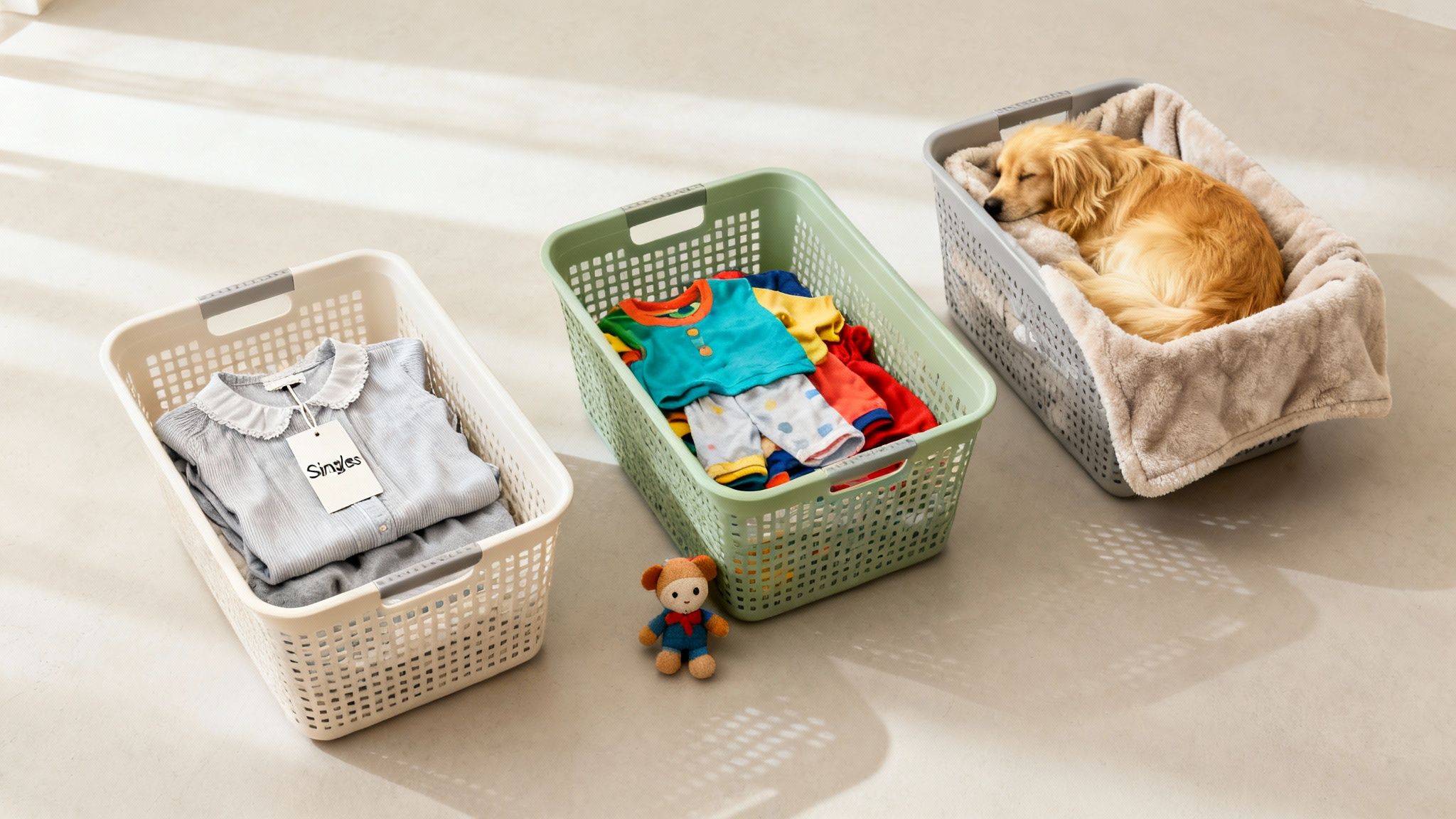
For most singles and couples, tackling laundry once or twice a week is the sweet spot. This is usually enough to cover everything from work clothes and gym gear to towels and sheets. Plus, washing less often means less wear and tear, helping your favorite clothes last longer.
For Families with Young Children
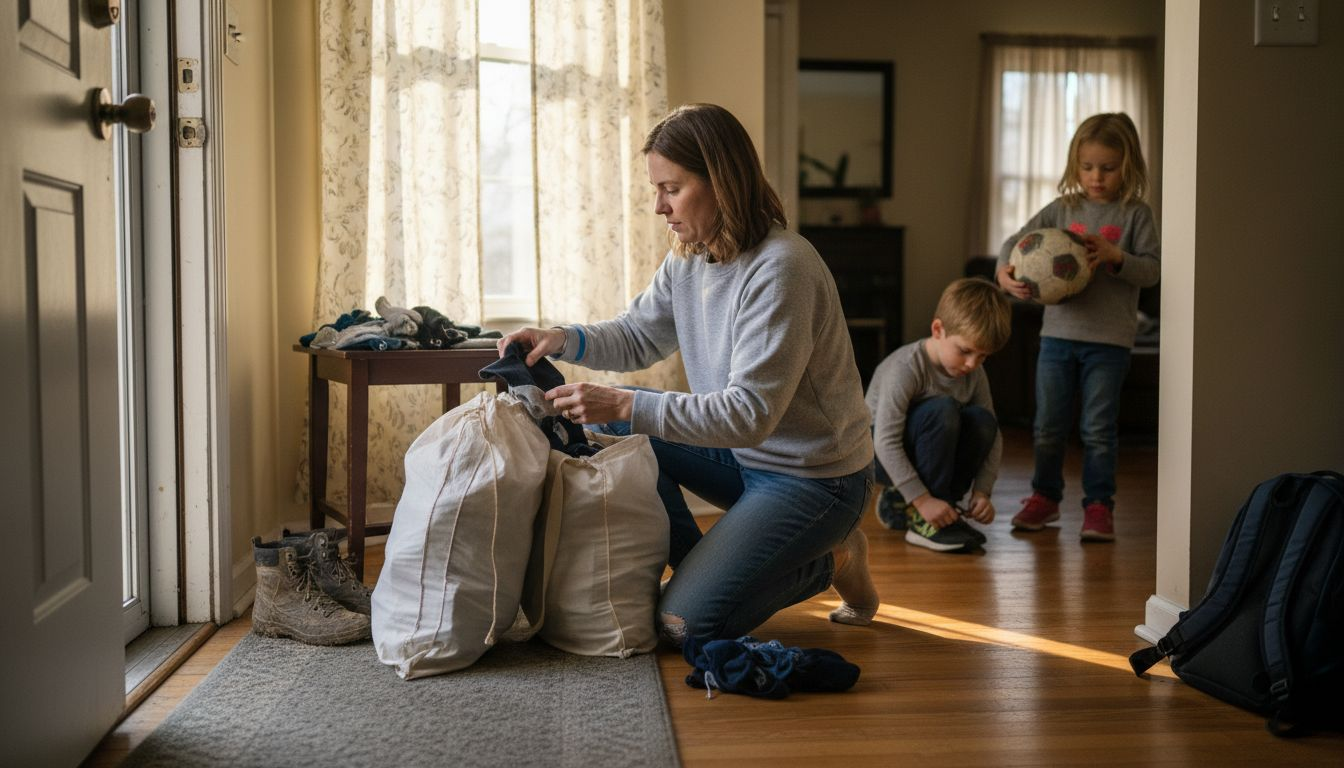
Okay, welcome to the laundry big leagues. Once kids enter the picture, the laundry machine seems to run on a constant loop, churning through an endless supply of spills, stains, and mystery grime. With kids, the name of the game is frequency and consistency.
Letting the hampers overflow is a rookie mistake you'll only make once. A much saner approach that many parents swear by is the "one load a day" strategy. It keeps the laundry pile from becoming an intimidating mountain and ensures a clean uniform or favorite pajama set is always ready to go.
A great system is to assign a category to each day. Think towels on Monday, kids' clothes on Tuesday, and sheets on Wednesday. This simple routine can save you from those weekend-long laundry marathons.
And when you have a baby, their sensitive skin requires a little extra care. For a deep dive, check out our guide on the dos and don'ts of washing baby clothes.
For Homes with Pets
Our furry family members bring us so much joy… and so much fur, dander, and dirt. If you have pets, you know the battle against pet hair is real. Bedding, blankets, and furniture covers quickly become magnets for hair and odors, meaning they need to be washed more often to keep your home smelling fresh and reduce allergens.
A solid routine for a pet-friendly home might look like this:
- Pet Bedding: Wash it weekly to keep smells and germs under control.
- Blankets & Throws: Every 1-2 weeks is a good rule of thumb, depending on where your pet likes to nap.
- Your Bedding: If your pet sleeps with you, a weekly wash is non-negotiable.
These household realities reflect some bigger patterns, too. The average North American family runs their washer about 300 times per year, while European households average closer to 200 times annually. According to PressCleaners.com, these differences often come down to things like family size, appliance habits, and local customs.
How Fabric Types Impact Washing Frequency
Treating your entire wardrobe the same way is like using one recipe for every single meal—it just doesn't work. The real secret to figuring out how often you should do laundry is getting to know your fabrics. Not all materials are created equal, and their unique characteristics determine how they handle dirt, sweat, and daily wear.
Think of your clothes as a collection of different tools. Tough, durable fabrics like cotton and denim are the workhorses of your closet. They're built to last and can usually go a few wears before needing a wash. Their strong fibers don't trap odors or lose their shape easily, which is why they're staples for everyday life.
Delicate materials, on the other hand, need a much lighter touch.
Durable vs. Delicate Materials
Hardworking fabrics are the backbone of most wardrobes and can definitely handle more time between washes.
- Cotton: As a natural fiber, cotton is both breathable and strong. This means your t-shirts and casual clothes are comfortable and resilient. A basic cotton tee worn right against your skin should probably be washed after each use, but thicker items like chinos can go longer.
- Denim: Jeans are legendary for their durability. In fact, washing them too often can wear down the fibers and cause the color to fade. Unless your jeans are visibly dirty or have stretched out, most pairs can easily go 5-10 wears between washes.
In contrast, think of your delicate fabrics as precision instruments that require careful handling.
- Silk and Wool: These natural fibers have some amazing properties. Wool is naturally odor-resistant and breathable, so a sweater can often just be aired out and worn again. Silk is beautifully luxurious but also fragile, usually needing a wash after just one or two wears to keep body oils from setting into the fabric.
- Linen: While it's a strong material, linen wrinkles in a heartbeat and soaks up moisture quickly. This usually means it needs washing more often than cotton, especially when it's warm outside.
Just like a garden where every plant has different watering needs, each fabric in your closet has its own care instructions. Understanding this is the key to making your clothes last.
The Special Case of Activewear
Performance fabrics are a modern marvel, designed specifically to wick sweat and keep you cool. But this high-tech design comes with one non-negotiable rule: wash after every single use.
The synthetic fibers in your activewear, like polyester and spandex, are fantastic at pulling moisture away from your skin. The downside? That moisture makes them a perfect breeding ground for bacteria and the microbes that cause odor. Letting sweaty gym clothes sit in the hamper is an open invitation for germs to multiply, leading to stubborn smells that are incredibly hard to get out later.
To learn more about proper care, you can explore our guide on how to keep high-performance gear fresh. Washing them right away doesn't just kill the smells; it also protects the fabric's technical features, keeping your gear in top shape.
Beyond the Schedule: When Do Your Clothes Really Need a Wash?
Having a laundry schedule is fantastic for staying on top of the heaps, but life doesn't always stick to a calendar. Sometimes clothes need washing ahead of schedule, while others are perfectly fine for another wear. If you only follow rigid rules, you risk overwashing your favorite jeans while letting a gym shirt fester in the hamper.
The real secret? Learning to trust your senses.
This more intuitive approach doesn't just keep you from wearing a subtly funky sweater. It also helps you avoid unnecessary wear and tear on your clothes, which saves water, energy, and money. Most importantly, it ensures your wardrobe is genuinely clean right when it needs to be.
Listen to Your Senses
Instead of just checking the day of the week, start paying attention to the signals your clothes are sending. These cues are often more telling than a giant spaghetti sauce stain.
The Sight Test: This one’s the most straightforward. If you see dirt, spills, or stains, it’s time for a wash. No debate there. But also look for the less obvious stuff, like slight discoloration on the collars and cuffs of your shirts. That’s a telltale sign of buildup from sweat and body oils.
The Sniff Test: Don’t knock the classic sniff test! If an item has even a faint odor, it means bacteria have already started to multiply. A shirt might look perfectly clean, but a musty or sour smell is a clear signal that it belongs in the hamper.
The Feel Test: Fabrics change when they get dirty. That crisp t-shirt you love might start to feel limp and saggy. Your jeans can get baggy and stretched out in the knees. If a garment just doesn't feel fresh or hold its shape anymore, it's ready for a wash.
By tuning into these three simple checks—sight, smell, and feel—you can build a laundry routine that actually responds to your life. It stops you from automatically washing clothes that are perfectly fine to wear again, which is a huge factor in making them last longer.
Learning to spot these signs empowers you to make smarter laundry decisions. It’s a simple shift in mindset that makes a big difference for your wardrobe and your utility bills. You’re no longer just cleaning on a schedule; you’re cleaning with purpose.
Reclaim Your Time with a Smarter Laundry Solution
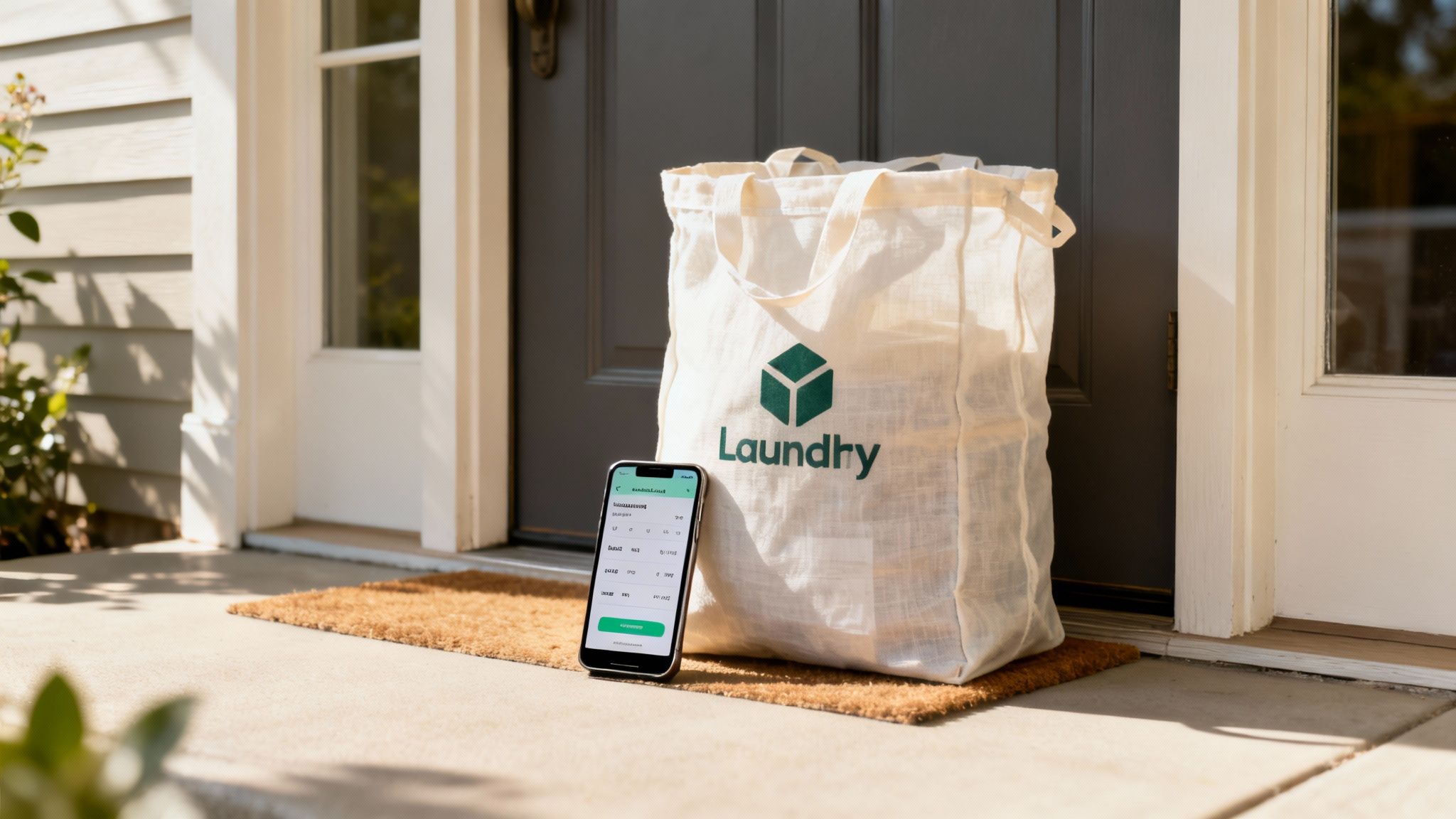
Let’s be honest: trying to keep up with the “right” laundry schedule can feel like a full-time job. If you’re constantly staring down a mountain of clothes in the hamper, there’s a much simpler way to get your valuable time back without compromising on clean laundry.
Think about a laundry system that’s as easy as ordering a pizza. With a professional pickup and delivery service, you can completely hand off the chore. It’s the ultimate "set it and forget it" solution—your clothes get expert care, and you never have to step foot in a laundry room.
How a Laundry Service Makes Your Life Easier
This kind of service isn't just a luxury; it's a smart strategy for simplifying your entire routine and removing a huge source of household stress. Just think about all the hours you spend sorting, washing, drying, and folding. Now, imagine putting that time toward your family, hobbies, or just catching your breath.
- Professional Care: Your clothes and linens are treated with commercial-grade equipment and expert techniques, which can actually help them last longer.
- Total Convenience: You can schedule pickups right from your phone and get clean, neatly folded laundry delivered back to your door.
- Less Stress: Taking a repetitive, time-sucking task off your plate frees up mental space for the things that truly matter.
Outsourcing laundry is becoming more and more common, especially for busy people in urban areas. The demand for on-demand services, powered by easy-to-use apps and quick turnarounds, is changing how we manage our homes. In fact, the U.S. market makes up over 70% of North America’s laundry industry revenue, proving just how much people value convenient, high-quality solutions.
By outsourcing your laundry, you’re not just getting clean clothes—you’re buying back your time. It's a simple, effective way to bring more balance to a busy life.
At Columbia Pike Laundry, we handle every detail with care so you can focus on what’s important. To see just how easy it can be, check out our complete guide to laundry pickup and delivery services and start reclaiming your weekends.
Sorting Through Common Laundry Questions
Even with the best intentions and a schedule, laundry always seems to come with a few lingering questions. Let’s clear up some of the most common debates so you can fine-tune your routine, save some time, and help your clothes last longer.
Can You Really Wear Jeans More Than Once?
You bet. In fact, you absolutely should. Denim is a seriously sturdy fabric designed to take a beating, so it doesn't need to be washed after every wear. Unless you’ve got visible dirt or they’ve stretched out of shape, most pairs of jeans are good for 5-10 wears before they need a trip through the wash.
Washing denim too often is a fast track to faded colors and worn-out fibers. A great pro-tip is to just hang them up to air out between wears—it does wonders for keeping them fresh.
How Often Should I Wash Sheets if I Have Allergies?
For anyone dealing with allergies, especially to things like dust mites or pollen, your bed is ground zero. Washing your sheets once a week in hot water isn't just a suggestion; it's a must. That heat is what kills off dust mites and washes away all the other allergens that build up.
If your allergies are particularly bad, think about washing your pillowcases twice a week. They're right up against your face all night, so they collect irritants much faster.
Does Cold Water Actually Clean Clothes?
It sure does. For most of what you're washing, cold water works perfectly. Detergents have come a long way, and today's formulas are packed with enzymes that are specifically designed to attack dirt and grime in cooler temperatures.
Switching to cold water is a win-win: it cuts down on your energy bill and is much kinder to your clothes, helping to prevent shrinking and keeping colors bright. Save the hot water cycles for really tough jobs, like sanitizing bedding when someone's been sick or tackling greasy stains.
Is It Really That Bad to Leave Wet Laundry in the Machine?
In a word, yes. Forgetting a wet load in the washer is practically an invitation for mildew. That damp, dark, and enclosed space is the perfect environment for mold and bacteria to throw a party, which is what causes that funky, sour smell that’s so hard to get rid of.
As a rule of thumb, try to get your wet clothes into the dryer within 8-12 hours at the absolute latest. If a load does get forgotten, your best bet is to run it through another wash cycle, maybe with a splash of vinegar, to knock out the smell before drying.
You didn’t outsource laundry. You bought back your weekend. Let Columbia Pike Laundry handle the details with our convenient pickup and delivery service, so you can focus on what truly matters. Schedule your first pickup today and feel the relief.
Free pickup, expert care, delivered back to your door.
Popular Blog Articles


Meet the Author
Daniel Logan didn’t start CPL because he loved laundry. He started it because his family was drowning in time debt, and laundry was one of the biggest weights.
Mornings were chaos with two kids under 5. Evenings felt like catch-up. And weekends? Gone to sorting socks and folding piles.
He knew his story wasn’t unique. So he built a business that gave families like his just a little bit of breathing room one load at a time.
With no laundry experience but deep tech skills, Daniel rolled up his sleeves, doing every job himself while building systems that turned it into a modern laundry service that saves customers time, simplifies their lives, and delivers reliability they can count on.
That’s where CPL began. Not from a playbook, but from pain. From one dad trying to buy back time: for himself, and for every household like his.
Free pickup, expert care, delivered back to your door.