
How to Clean Suede Jacket at Home Safely

Columbia Pike Laundry offers pickup & delivery across Northern Virginia.
Suede usually gets your attention at the worst possible moment. You pull your jacket out for dinner, notice a dark thumbprint near the cuff, and then remember the drizzle from yesterday. Or you spot a mystery mark on the shoulder and have no idea whether it came from coffee, rain, or someone else’s hand lotion.
That’s the hard part of suede. It looks relaxed and easy to wear, but the minute something lands on it, people freeze. Some put the jacket back in the closet and hope the mark disappears. Others scrub at it with water and a paper towel, then end up with a bigger problem than the one they started with.
If you’re searching how to clean suede jacket at home, the safest answer is this: handle small problems gently, use the right tool for the right stain, and stop before a simple fix turns into permanent damage. Home care can work well for light dust, minor scuffs, fresh water marks, and some fresh oil spots. It’s much less forgiving when the stain is old, large, unknown, or sitting on delicate dyed suede.
That Sinking Feeling a Stain on Your Favorite Suede
A suede jacket has a way of becoming the one you reach for without thinking. It softens with wear, works with almost anything, and somehow feels more personal than a standard coat. That’s why a stain on suede lands differently. It doesn’t feel like a laundry problem. It feels like you might ruin a favorite piece if you make one wrong move.
The usual scene is familiar. A little rain hits your shoulders on the walk from the car. You set the jacket down, forget about it, and later notice pale rings where the drops dried. Or you brush against a doorway and find a shiny scuff near the pocket. The mark looks small, but suede has a way of making small problems look bigger because the texture changes as much as the color.
Practical rule: The first mistake with suede is usually panic. The second is using too much moisture or too much pressure.
The good news is that suede doesn’t always need aggressive cleaning. Often, it needs patience, a clean surface, and a method that matches the stain. The bad news is that random household fixes can leave water lines, flattened nap, or color changes that are harder to correct than the original spot.
That risk-reward balance matters. If the issue is light and fresh, home treatment is often worth trying. If the jacket is expensive, heavily stained, brightly dyed, or sentimental, preserving it matters more than proving you can clean it yourself.
Preparing Your Workspace and Gathering Tools
Good suede cleaning starts before the first brush stroke. A rushed setup is how a small spot turns into a larger repair job. Give yourself a clean, dry, well-lit place to work, with no direct sun, no heater nearby, and no steam from a bathroom or kitchen.
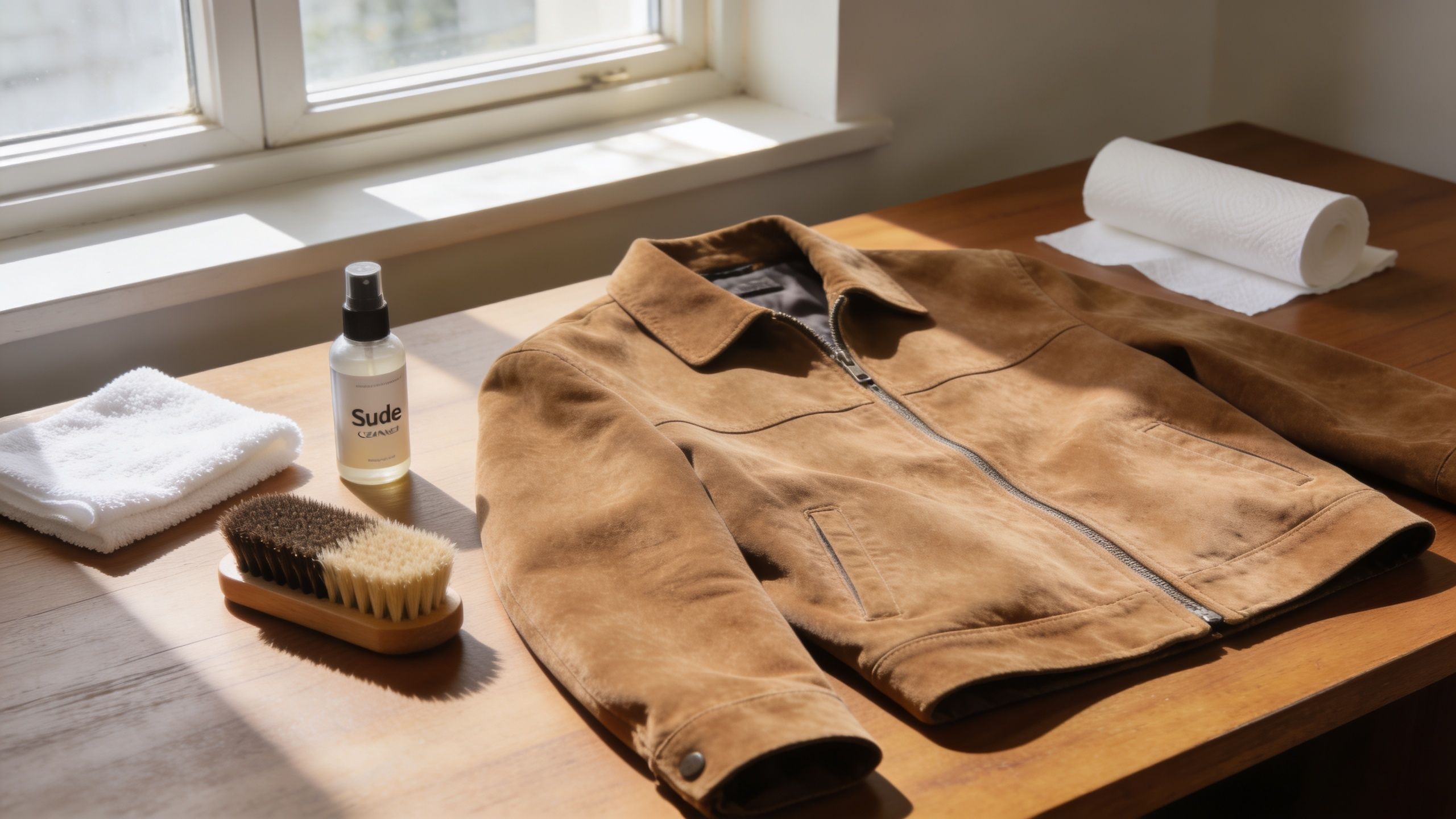
That prep matters because suede shows every mistake. Too much water can leave rings. Too much rubbing can rough up one patch and flatten another. If the jacket was expensive, brightly dyed, or has sentimental value, this is the point where it makes sense to weigh the cost of a home attempt against the cost of correcting a bad one. Sometimes the cheaper decision is professional help. If you want a baseline for that call, this professional leather care advice is useful.
Set the jacket on a sturdy hanger or lay it flat on a clean towel. The goal is simple. Keep the suede supported so you are not tugging, bunching, or stretching it while you work.
What to gather first
Pull together your tools before you touch the stain:
- Suede brush. Use it to remove loose surface dirt and lift the nap after spot treatment.
- Suede eraser. Best for dry scuffs, light marks, and small shiny areas.
- Clean white cloths. White cloth avoids dye transfer and makes it easier to see whether soil is coming off.
- Cornstarch or talcum powder. Useful for fresh oily spots because the powder can absorb residue while it sits on the surface.
- Isopropyl alcohol. Sometimes helpful for certain stains, but only in small amounts and only after a hidden-spot test.
- Soft-bristled toothbrush. Good for seams, pocket edges, and tight corners where a larger brush is too clumsy.
Skip colored rags, paper towels with texture, household cleaners, and soaking-wet cloths. Those are common shortcuts, and they create many of the jobs professionals end up correcting.
If you also clean fabric furniture at home, some of the same handling rules apply. These stain removal tips for furniture explain why blotting, restraint, and fiber-safe tools matter on textured materials.
The test that saves jackets
Test every method on a hidden area first, such as an inside hem or under the collar. Check for darkening, color lift, stiffness, or a rough change in texture after it dries.
One careful test can save an expensive jacket. That is the real risk-reward line with suede. Home care works best when the problem is light, the tools are right, and the jacket can tolerate a small mistake. If any of those conditions are missing, sending it out is an investment in keeping the jacket wearable, not just a cleaning bill.
The Foundation Regular Brushing and Nap Care
A suede jacket usually tells you what it needs. If it looks dusty, slightly shiny at the cuffs, or flat through the elbows, start with brushing before you try any stain treatment. That simple step carries the best reward with the least risk, which is exactly what home suede care should aim for.

Brushing removes dry soil sitting on the surface and lifts the nap back into place. On a jacket that gets regular wear, that alone can freshen the color and soften tired-looking areas. It also helps you see the condition of the suede before you decide whether the jacket is safe to handle at home or better left to a cleaner.
How to brush the right way
Use short, light strokes with the grain of the suede. Work in small sections instead of scrubbing across the whole jacket. Heavy pressure does not clean better. It just grinds grit into the fibers and can leave one panel looking rougher than the rest.
A steady routine works well:
- Start at the top and work downward so loosened dust does not fall onto areas you already cleaned.
- Brush broad panels first such as the chest, sleeves, and back.
- Spend extra time on wear points like cuffs, collar edges, elbows, and pocket openings.
- Rebrush flattened spots gently with repeated passes, not added force.
If a section still looks dark or slick after gentle brushing, stop there and reassess. That kind of mark may be body oil, ground-in soil, or moisture damage. Those are the spots where DIY starts to lose its value.
What brushing can and can’t fix
Regular brushing helps with:
- Loose dust and dry surface dirt
- Mild flattening of the nap
- Light scuffs near the surface
- General dullness from storage or everyday wear
It does not remove oil, ink, sticky residue, or old set-in spills. It also will not reverse stiffness or discoloration caused by too much water. I have seen more jackets damaged by overworking one small mark than by the original stain itself.
That is the essential trade-off. Brushing is low-risk maintenance. Aggressive spot work is not.
A jacket with light dust and a few shiny wear areas often responds well to patient brushing and a suede eraser. A jacket with uneven dark patches, color transfer, or several unknown stains has more to lose. In that case, professional care protects the garment’s value and finish in a way home methods often cannot. If you want a broader look at caring for leather garments beyond suede, this piece on professional leather care advice is a helpful companion. For a related principle on working gently with textured materials, London House Cleaners' upholstery guide is also useful.
Brush first. It clears surface dirt and gives you a safer read on whether the jacket needs simple upkeep or professional attention.
A Guide to Removing Common Suede Stains
A suede stain asks a simple question. Is this something you can improve safely at home, or are you about to make an expensive jacket harder to save?
The right answer depends on the stain itself. Dry surface marks and fresh grease spots often respond well to careful home treatment. Ink, heavy dye transfer, large water marks, and anything you cannot identify deserve more caution because suede does not tolerate trial and error very well.
Use this table as a starting point, not a dare.
Suede stain removal cheat sheet
| Stain Type | Primary Tool | Technique at a Glance |
|---|---|---|
| Water spots and salt rings | White cloth and diluted alcohol solution | Lightly dampen the affected panel evenly, then blot and air-dry |
| Oil or grease | Cornstarch or talcum powder | Cover the spot, let it sit, then brush away gently |
| Ink, wine, or coffee | White cloth with diluted isopropyl alcohol | Dab from the outside inward, never soak or rub |
| Light scuffs or shiny marks | Suede eraser | Rub gently, then brush to restore texture |
| Dry surface dirt | Suede brush | Use short strokes with the grain |
If you also deal with fabric stains around the house, London House Cleaners' upholstery guide is useful for one shared principle: match the method to the stain instead of treating every mark the same way.
Water spots and rain marks
Water marks fool people because the stain looks simple. On suede, they can leave a hard outline if only the middle of the spot gets wet.
Treat the whole affected panel lightly so the moisture dries evenly. A small ring on a sleeve may need attention across that section of the sleeve, not just the center of the mark.
Follow this order:
- Test on an inside hem or another hidden area.
- Mix equal parts isopropyl alcohol and distilled water.
- Dampen a clean white cloth. The cloth should feel barely wet, not loaded.
- Lightly blot across the marked area and slightly beyond it.
- Let the suede air-dry completely.
- Brush the nap back into place once dry.
Stop if the color starts transferring to the cloth. At that point, the safer choice is professional suede cleaning, especially on dark jackets and dyed fashion suede.
Oil and grease stains
Fresh oil is one of the better candidates for DIY because you can often pull some of it out before it settles deeper. The trade-off is time. The longer it sits, the less forgiving it gets.
Cover the spot with cornstarch or talcum powder and leave it undisturbed for several hours or overnight. Do not press the powder in. Do not add water. Do not start scrubbing because the surface still looks dark after ten minutes.
Brush the powder away gently and check the area in natural light. If the stain has lightened but not disappeared, repeat once or twice. If it stays dark, feels stiff, or spreads into a larger shadow, home care has probably done all it can do without raising the risk.
That is usually the point where paying for professional work protects the jacket better than another round of experimenting.
Ink wine and coffee
These stains carry more risk. They spread fast, and rubbing them deeper into suede is easy.
Use a white cloth lightly dampened with a 1:1 mix of isopropyl alcohol and distilled water. Work from the outside edge inward with small dabbing motions. Keep the cloth moving to a clean area so you are lifting the stain, not putting it back down.
A few rules matter here:
- Test first on a hidden spot
- Use only a white cloth, never a colored towel
- Dab gently instead of rubbing in circles
- Watch for dye transfer from the jacket
- Stop if the suede darkens unevenly or the color starts lifting
Fresh spills are always easier than old ones, but this is still a category where restraint matters more than persistence. If the stain is large, bright, or already set, professional cleaning is often the lower-cost decision in the long run because it reduces the chance of permanent color loss.
Scuffs and shiny spots
Scuffs and polished-looking wear marks are usually the safest home fix. Use a suede eraser with light pressure, then brush the area to blend the nap.
Keep your touch light. If the suede starts feeling warm under your fingers, you are working too hard and flattening the texture instead of restoring it.
For readers who want the reason behind these different methods, this article on explaining various stain remover actions gives a clear breakdown of why powders help with oils while solvents help with other stain types.
One last rule I follow with suede jackets I care about. If a stain is small and the treatment is low-risk, home care makes sense. If the stain is deep, old, or emotionally expensive because the jacket matters to you, professional service is not an indulgence. It is protection for a garment that can be difficult and costly to replace.
Drying Reshaping and Protecting Your Jacket
A suede jacket often looks fine right after spot cleaning, then dries into trouble. Stiff panels, a flattened nap, and tide lines usually show up later, after heat, bad airflow, or too much handling has had time to do its work.
Let the jacket air-dry at room temperature, away from sun, radiators, vents, and hair dryers. Use a broad, padded hanger so the shoulders keep their shape. If only one spot was treated, resist the urge to fold the jacket or lay that area against a hard surface while it dries. Suede remembers pressure.
A few drying habits make a real difference:
- Leave space around the jacket so air can circulate evenly
- Keep hands off the damp area because pressing and checking can flatten the texture
- Gently support cuffs, collars, and pocket edges if they look misshapen
- Wait until the area feels fully dry, not just surface-dry, before brushing
After it dries, restore the nap with a suede brush using light, even strokes. Brush in one direction first, then blend only where needed. If you see a slightly polished patch, a suede eraser can help, but sparingly. Too much friction creates the same shine you are trying to fix.
Protection is useful, but it has limits. A suede protector spray can buy you time against light moisture and everyday grime, provided the jacket is fully dry before application and the spray is made for suede. Apply a light, even coat and test it first in a hidden spot. If the jacket is expensive, brightly dyed, or already showing uneven color, professional dry cleaning is usually the safer investment than layering more product onto a stressed surface.
The same caution applies to water exposure in general. The lesson is similar to why wet cleaning damages area rugs. Saturation can do more harm than the original soil when the material has a delicate structure.
I treat the drying stage as the point where the DIY math either works or stops working. If the jacket is drying evenly and the nap comes back with light brushing, home care did its job. If it starts drying blotchy, stiff, or out of shape, stop there. Paying for professional help at that point protects the jacket you already own.
When to Skip DIY and Trust a Professional
Some jackets shouldn’t be a home experiment. If the stain is large, old, unknown, or sitting on bright or unevenly dyed suede, the downside of DIY climbs fast. The same is true for vintage pieces, lined jackets with structure, and anything that already shows water marks from an earlier failed cleaning attempt.
There’s also a time factor that people don’t always price in. If you spend an evening spot-testing, dabbing, waiting, brushing, reapplying powder, and still aren’t sure whether the mark is lifting, home cleaning stops being the cheap option. It becomes the risky one.
Clear signs to stop
Skip the home fix if you notice any of these:
- Color transfer during spot-testing
- A stain that spreads when dampened
- A flattened or shiny patch getting worse with friction
- An unknown greasy or sticky residue
- Set-in ink, wine, or coffee that didn’t improve with careful dabbing
- A jacket you’d be upset to replace
According to industry guidance, suede jackets worn under normal conditions should undergo professional dry cleaning at least once per year to remove accumulated dirt, oils, and environmental debris that home cleaning can’t fully address, as noted by Madame Paulette’s suede jacket care guidance.

That recommendation matters because suede holds onto more than visible spots. It collects body oils, dust, and environmental grime deep in the nap. Home care is good maintenance. It isn’t a full substitute for specialty cleaning.
Why professional care is sometimes the cheaper choice
A valuable suede jacket is a bad place for trial and error. The same logic applies across delicate textiles. If you’ve ever read about why wet cleaning damages area rugs, the pattern will sound familiar. Once moisture, agitation, and fibers interact the wrong way, correction gets harder and more expensive.
For garments like suede and leather, Columbia Pike Laundry offers dry cleaning, and suede items are handled through a trusted specialty cleaner. That isn’t the same as giving up on home care. It’s choosing the lower-risk path when the jacket matters more than the experiment.
Professional cleaning is also the better call for routine upkeep on jackets you wear often. Industry guidance recommends annual deep cleaning for regular wear, and more frequent professional attention for heavily worn suede, which is a practical reminder that maintenance protects the garment long before a dramatic stain shows up.
If your suede jacket has a light scuff or a fresh mark, careful home treatment can absolutely help. If the stain is older, larger, or too risky to guess at, Columbia Pike Laundry can help you take the safer route and keep a favorite jacket in good shape without adding one more chore to your week.
Free pickup, expert care, delivered back to your door.
Popular Blog Articles



Meet the Author
Daniel Logan didn’t start CPL because he loved laundry. He started it because his family was drowning in time debt, and laundry was one of the biggest weights.
Mornings were chaos with two kids under 5. Evenings felt like catch-up. And weekends? Gone to sorting socks and folding piles.
He knew his story wasn’t unique. So he built a business that gave families like his just a little bit of breathing room one load at a time.
With no laundry experience but deep tech skills, Daniel rolled up his sleeves, doing every job himself while building systems that turned it into a modern laundry service that saves customers time, simplifies their lives, and delivers reliability they can count on.
That’s where CPL began. Not from a playbook, but from pain. From one dad trying to buy back time: for himself, and for every household like his.
Free pickup, expert care, delivered back to your door.