
How to Get Pit Stains Out of Your Favorite Shirts for Good
Columbia Pike Laundry offers pickup & delivery across Northern Virginia.
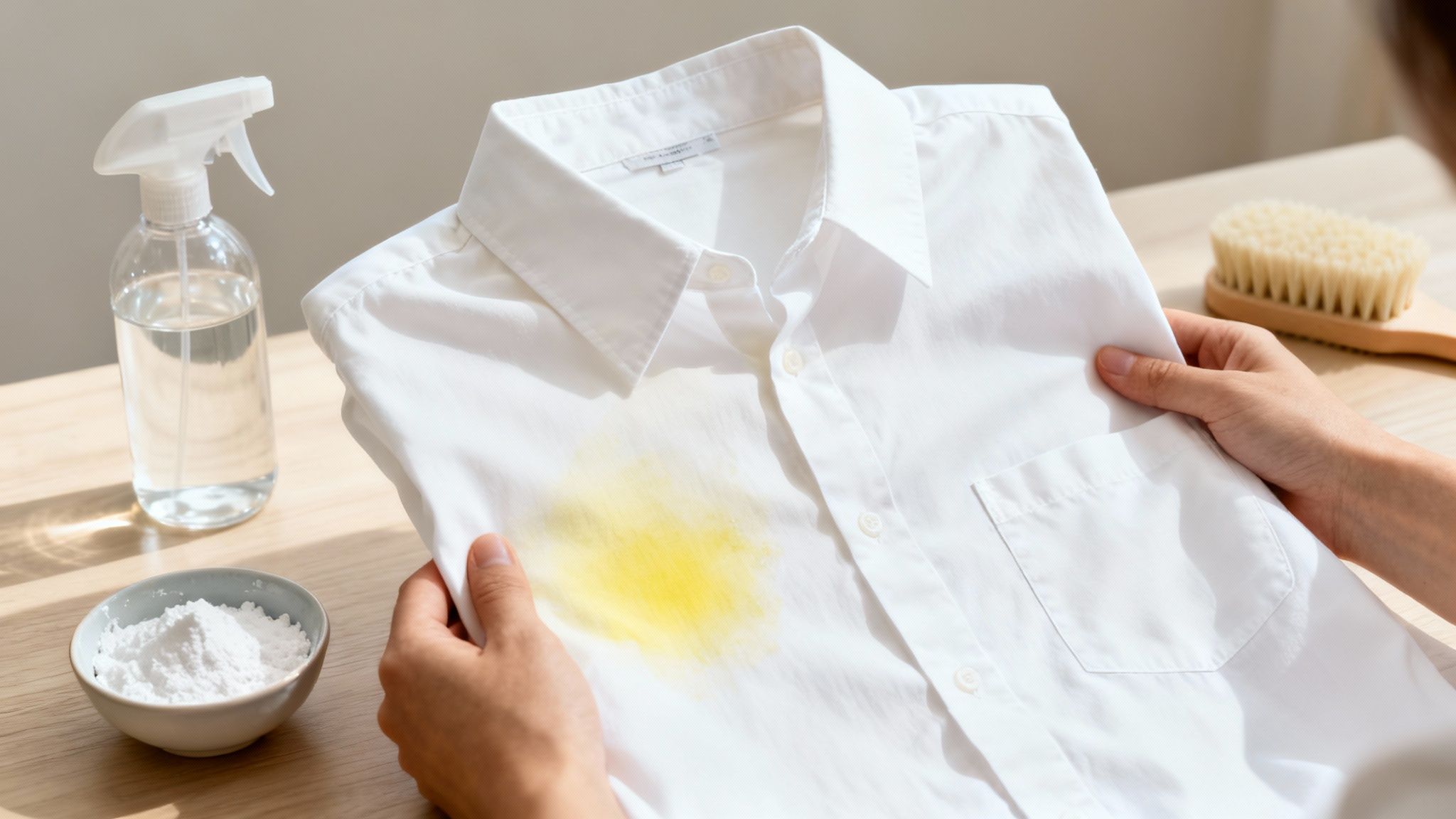
Before you can get rid of those stubborn armpit stains, you have to know what you’re up against. It’s not just sweat causing that ugly yellowing. The real culprit is a chemical reaction between the aluminum in your antiperspirant and the proteins in your sweat, which creates a tough compound that glues itself to fabric.
This is exactly why tossing a stained shirt into a normal wash cycle rarely does the trick.
Why Stubborn Armpit Stains Really Happen
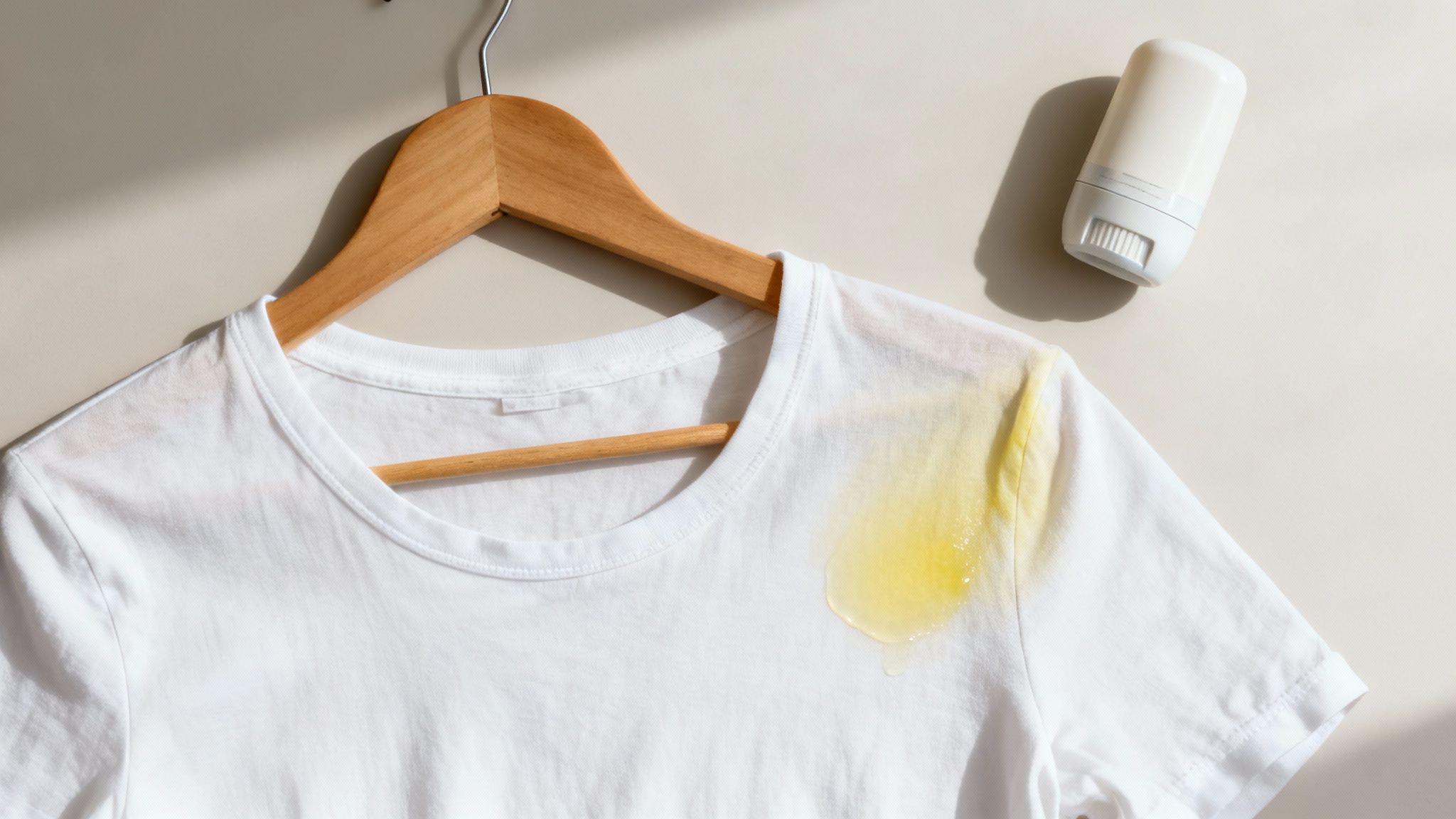
Ever notice how a favorite white shirt suddenly develops those tell-tale yellow pit stains, while other clothes seem immune? The answer isn't a mystery—it's just basic chemistry happening right in the underarms of your shirt.
On its own, your sweat is mostly colorless. The problem starts the moment you swipe on your antiperspirant. The active ingredients in most products are aluminum-based compounds designed to block your sweat ducts. When these aluminum salts mix with the proteins in your sweat, they react and form a whole new yellowish substance.
This new compound is incredibly good at bonding with fabric fibers, especially natural ones like cotton. With every wear, another microscopic layer builds up, making the stain more entrenched and more obvious over time.
The Science Behind the Stain
Think of it as a kind of superglue. The aluminum and sweat proteins team up to lock the discoloration deep into the weave of the fabric. Your standard laundry detergent and a water-based wash cycle just aren't equipped to dissolve that specific chemical bond.
This explains why pit stains can stubbornly survive multiple washes. Worse yet, the heat from your dryer can actually "bake" the stain in, making it even darker and harder to remove later.
The real issue is the chemical bond. Once the aluminum-protein complex sets into the fabric, it becomes highly resistant to traditional detergents, requiring a targeted chemical approach—like an acid or an oxidizing agent—to break it apart.
This isn’t just a laundry-day headache; it’s a major reason people throw away clothes. Pit stains are a leading cause for discarding perfectly good shirts, which feeds into the staggering 92 million tons of textile waste produced globally each year.
In fact, research on textile staining shows that a normal wash might only remove less than 50% of the discoloration once the bond has formed. You can read more about how these stubborn stains bond to fabrics in recent textile studies, but the bottom line is clear: a different strategy is needed.
Why Some Shirts Stain Worse Than Others
Not all fabrics are created equal when it comes to pit stains. The material of your shirt plays a huge role in how easily a stain sets in.
Here’s a quick rundown of what I’ve seen:
- Cotton: As a highly absorbent natural fiber, cotton is public enemy number one. Its fibers drink up the sweat-antiperspirant mix, allowing stains to penetrate deeply and bond tightly.
- Polyester & Blends: These synthetic fabrics don't absorb as much moisture. Stains can still happen, but they tend to sit more on the surface, which usually makes them a bit easier to tackle.
- Delicate Fabrics: Materials like silk and wool are a special case. Since they are protein-based fibers themselves, they are extremely sensitive to damage from both the stain and the aggressive cleaning agents needed to remove it.
Once you understand that you're fighting a specific chemical reaction—not just everyday grime—you can switch your approach. It’s all about choosing the right tools to break that bond and bring your clothes back to life.
At-Home Methods That Actually Remove Yellow Stains
Before you start browsing for heavy-duty commercial stain removers, take a look in your kitchen. Some of the best tools for tackling those stubborn yellow pit stains are probably already in your pantry.
These everyday items are your first line of defense. They work by breaking down the specific chemical bonds that cause that dreaded yellowing, often without needing harsh, industrial-strength ingredients. The trick is knowing which method to use for your specific shirt and having a little bit of patience.
The Baking Soda and Hydrogen Peroxide Paste
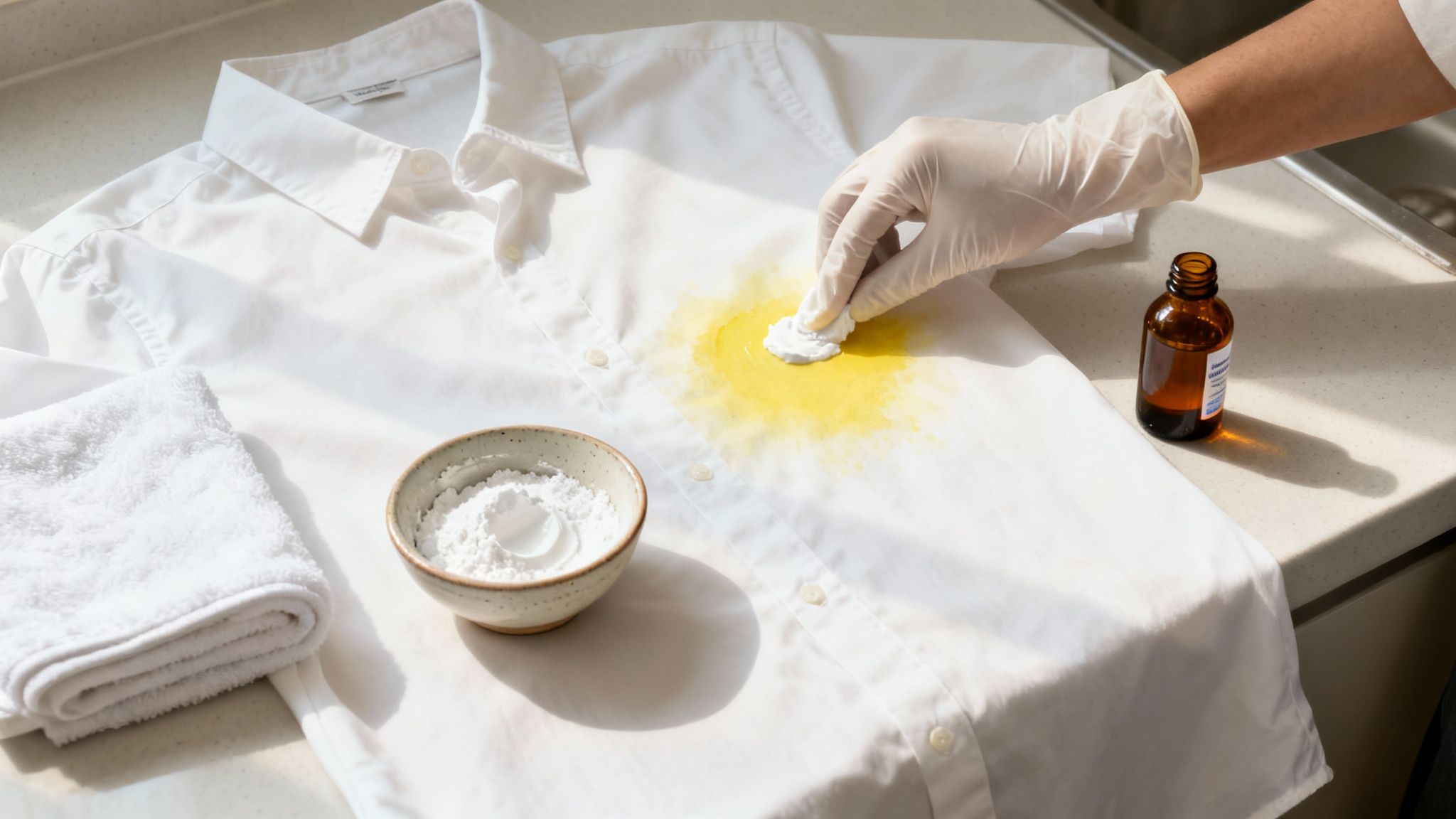
This is the classic, heavy-hitting combo for tough, set-in stains on white and light-colored cottons. It’s a powerhouse for a reason: the mixture creates a gentle oxidizing and abrasive action that literally lifts the discoloration out of the fabric fibers.
Here’s my go-to recipe:
- 1 part baking soda
- 1 part hydrogen peroxide (the standard 3% solution)
- 1 part water
Just mix these into a thick paste. I like to use an old toothbrush to gently work it into the stained area, making sure to cover it completely. Let it sit for at least 30 minutes—or even up to an hour for really old stains—before tossing the shirt in a cold wash cycle.
One thing I've learned is that this method sometimes needs a second round for really stubborn marks. Always check the stain after washing but before you even think about putting it in the dryer. Heat will set that stain for good.
A word of warning: Many people reach for chlorine bleach, thinking it will whiten everything. This is a huge mistake for pit stains. The chlorine can actually react with the proteins in sweat and the aluminum from your deodorant, creating a chemical reaction that makes the stain darker and permanent.
The White Vinegar Soak
What about colored shirts or more delicate fabrics? This is where a simple white vinegar soak comes in. Hydrogen peroxide can sometimes be a bit too aggressive and might lighten colors, but vinegar is a much safer bet.
As a mild acid, vinegar is fantastic at dissolving the aluminum chloride and deodorant gunk without stripping the color from your shirt. It’s also a natural deodorizer, which is a nice bonus.
Just mix equal parts white vinegar and cool water in a bowl or sink. Submerge the stained parts of the shirt and let them soak for about 20-30 minutes. After soaking, I usually rub the fabric against itself to help loosen the stain before laundering it as usual. This technique is also a great pre-treatment step for more significant buildup, much like you might see in some advanced laundry stripping recipes.
Even common household items need to be used with care. Research has shown that oxidizers like peroxide can sometimes cause fabrics to yellow when exposed to light. It's also wild to think that consumer studies show around 70% of dirty laundry is soiled with invisible stuff like sweat and body oils—the very things that eventually build up into those ugly stains.
A Quick Guide to DIY Pit Stain Remedies
It can be tough to remember which remedy works best for which situation. Here’s a simple table to help you compare these popular methods and choose the right one for your shirt's fabric and stain type.
This at-a-glance guide should help you make a quick decision when you're faced with a fresh stain and don't have time to second-guess yourself.
A Gentler Dish Soap Approach
For those really delicate fabrics like silk or wool, or for stains that are still fresh, a much gentler method is the way to go. You’d be surprised how effective a simple pre-treatment with a clear, grease-fighting dish soap can be. The soap is designed to break down oils, which is exactly what binds deodorant residue to fabric fibers.
Just apply a small drop of dish soap directly to the stain and gently work it in with your fingers. Let it sit for about 15-20 minutes before rinsing thoroughly with cool water. Then, wash the garment following its care label instructions. While we're focused on shirts, these principles of fabric care apply elsewhere; for bigger challenges, you might find guides on how to clean a fabric sofa at home useful.
Choosing a Commercial Stain Remover
If those home remedies didn't quite get the job done, don't worry. A quick trip down the laundry aisle is usually the next logical step. Staring at that wall of bottles can feel a bit overwhelming, but you're really just looking for one of two types of products to knock out stubborn pit stains.
The two main players here are enzyme-based cleaners and oxygen-based bleaches. Each one comes at the problem from a different angle, and knowing which one to reach for makes all the difference.
Enzyme Cleaners: The Stain Digesters
For the specific cocktail of sweat, oil, and deodorant that causes pit stains, an enzyme-based cleaner is your best bet. These formulas are packed with biological compounds that literally digest the different parts of the stain.
Think of it like this: protease enzymes go to work on the protein from your sweat, while lipase enzymes break down the greasy, oily gunk from your deodorant and natural body oils. It's a highly targeted attack that dissolves the stain's core components without damaging your clothes. They are perfect for pre-treating stains on whites and colors. Just apply the product, let it sit for 15-30 minutes, and then wash as you normally would.
The real magic of enzyme cleaners is that they break down and remove the stain's components, not just bleach them. This makes them far more effective on complex underarm stains.
Oxygen Bleach: For Stubborn Yellowing
Got a favorite white shirt with ugly, set-in yellowing? This is where oxygen-based bleach comes in. Products like OxiClean are powered by sodium percarbonate, which creates a fizzing action when it hits the water. Those little oxygen bubbles get deep into the fabric fibers, lifting and breaking apart the yellow discoloration.
Unlike chlorine bleach—which can actually react with the proteins in sweat and make the stain worse—oxygen bleach is a much safer choice for this particular problem. For a really tough stain, dissolve the powder in cool water and let the shirt soak for a few hours before tossing it in the wash.
You're not alone in this fight. The fabric stain remover market is massive, expected to grow from $12.6 billion to $22.0 billion by 2033. Companies put a ton of research into tackling everyday problems like sweat stains because it's an issue everyone deals with.
If you want to get into the nitty-gritty of how these products work their magic, check out our guide on how stain removers work for every stain type. Understanding the science behind the clean helps you choose the right product and finally say goodbye to those pit stains for good.
Smart Habits to Keep Pit Stains from Forming
While it's great to know how to tackle pit stains, an even better strategy is to prevent them from ever showing up. Moving from a reactive mindset to a proactive one will save you a ton of frustration—and a few of your favorite shirts. We're not talking about a complicated overhaul of your life, just a few small habits that make a huge difference.
One of the biggest culprits? Getting dressed too quickly after putting on deodorant. When the product is still wet, it rubs right off onto the fabric, creating a concentrated buildup that’s destined to stain. Just give it a few minutes to dry completely before you pull that shirt on. It's the simplest change you can make.
Choose Your Products and Protection Wisely
Take a look at what you’re putting on your skin. The aluminum in most antiperspirants is what reacts with sweat to cause those stubborn yellow stains. Switching to an aluminum-free deodorant can be a game-changer. Deodorants focus on neutralizing odor instead of blocking sweat, and for many people, that's enough to solve the problem.
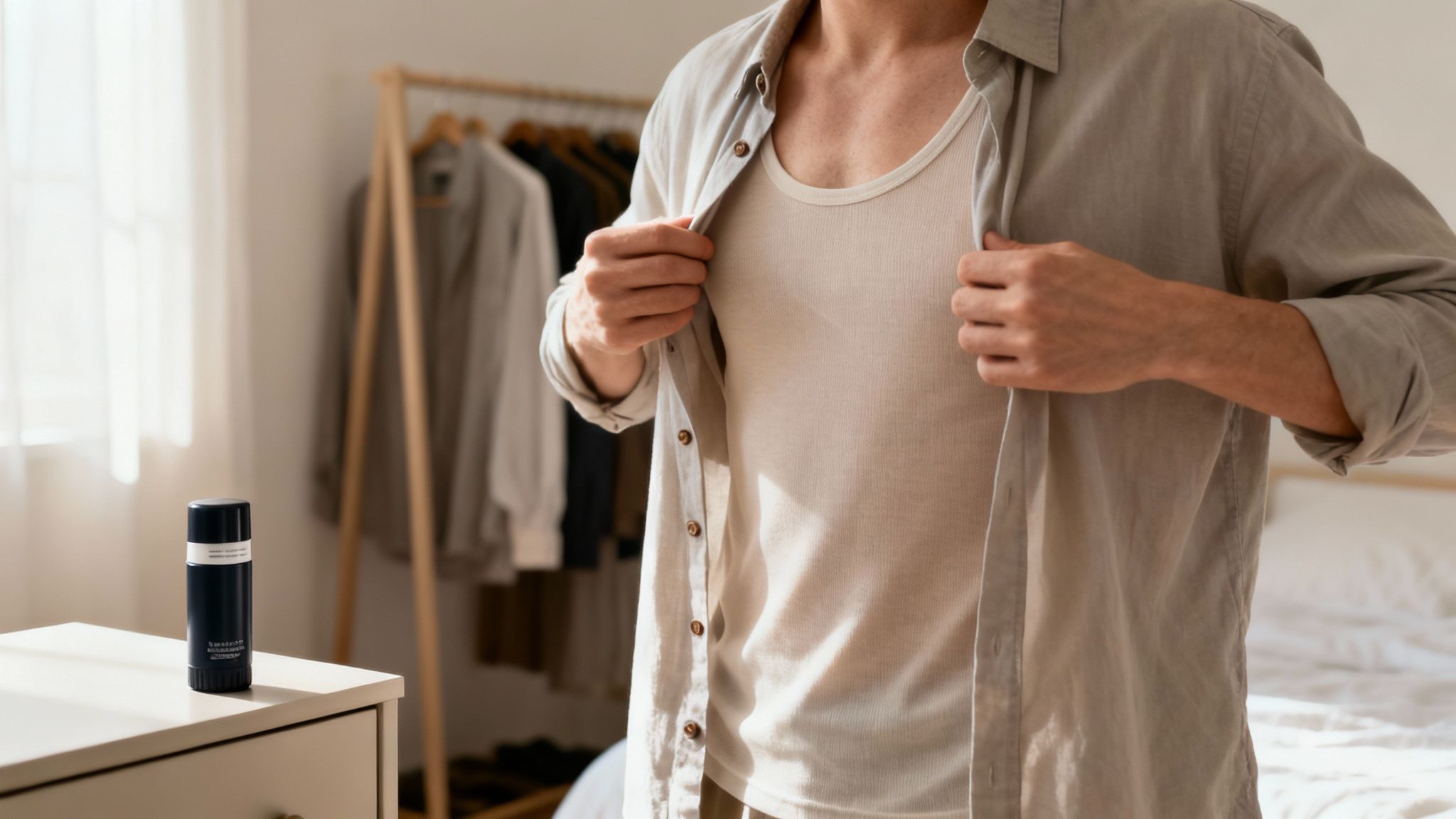
Another incredibly effective tactic is simply adding a barrier. A thin cotton undershirt acts as a shield between your skin and your nice outer shirt. It soaks up the sweat and deodorant residue, taking one for the team so your button-downs and favorite tees don't have to.
The goal is to minimize direct contact between the chemical culprits and your clothes. Whether it's letting deodorant dry or wearing an undershirt, creating separation is key to long-term prevention.
Beyond product choices, some people look into long-term grooming solutions. You might be surprised to learn about some of the unexpected benefits of underarm hair reduction that go beyond just aesthetics.
Small Tweaks to Your Laundry Routine
How you do your laundry is just as critical as how you get ready in the morning. When a worn shirt sits in the hamper for days, that sweat-and-aluminum mixture has all the time in the world to chemically bond with the fabric fibers. Once that happens, the stain becomes a real nightmare to remove.
The fix is simple: wash your shirts soon after wearing them, especially after a hot day or a workout. A quick turnaround stops that chemical reaction in its tracks before it can set in.
Finally, whatever you do, don't throw a shirt with a faint underarm stain into the dryer. The high heat will essentially bake the discoloration right into the fabric, making it permanent. Always air-dry shirts if you see even a hint of a stain. This gives you a chance to check your work and treat the spot again if needed, ensuring it's truly gone for good.
Knowing When to Call a Professional Laundry Service
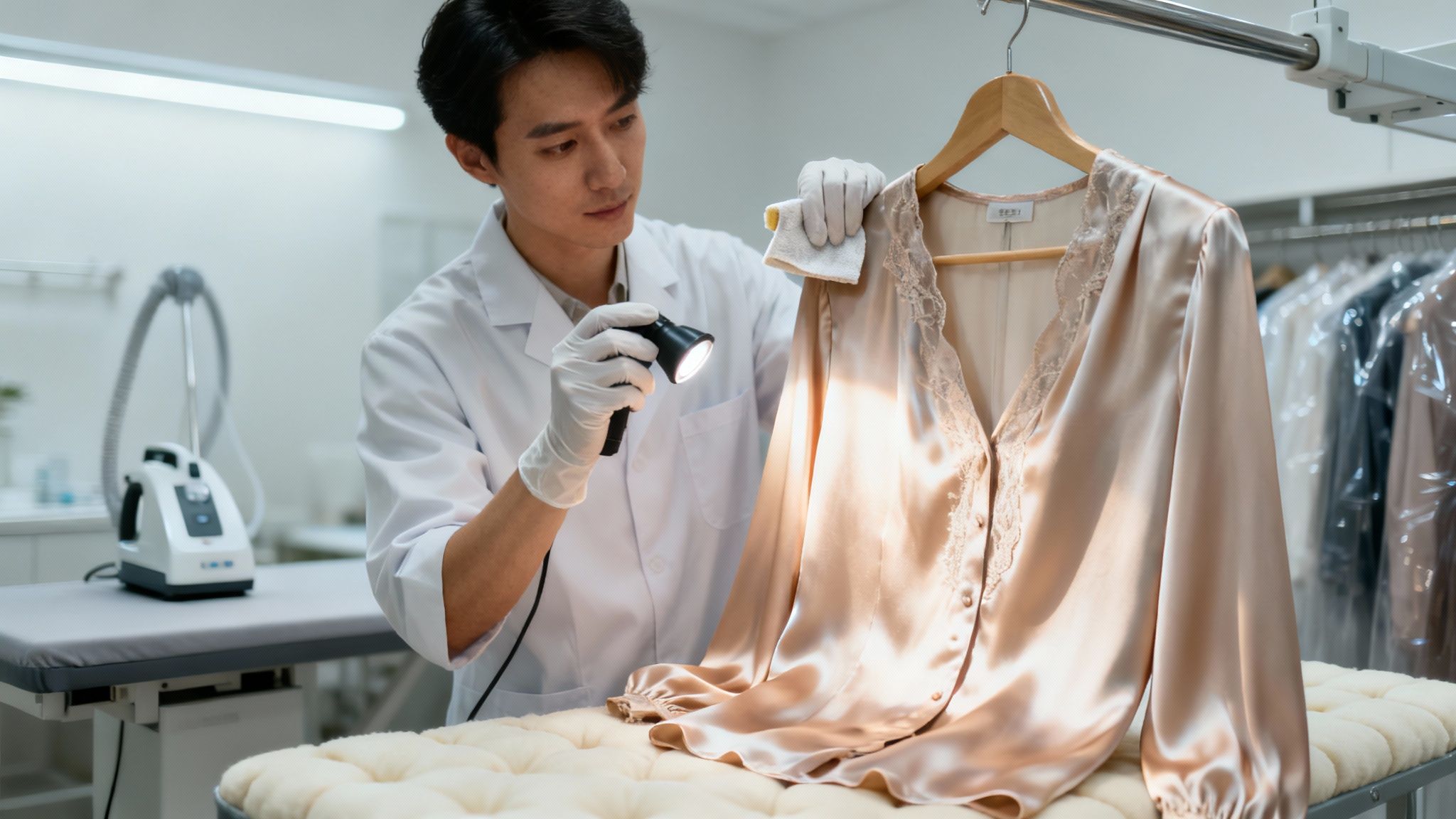
You’ve tried the baking soda pastes, the vinegar soaks, and the best store-bought sprays you can find, but that yellow stain is still stubbornly clinging to your favorite shirt. I get it. While DIY methods are a fantastic first line of defense, there comes a point when you need to call in the experts.
Knowing when to wave the white flag can be the difference between rescuing a beloved garment and damaging it beyond repair. Sometimes, the risk of treating it at home just isn't worth it. For certain fabrics and stains, escalating the fight requires a professional touch.
When the Fabric Is Too Delicate
Your everyday cotton tee can handle a bit of scrubbing, but what about a silk blouse or a wool sweater? These delicate, protein-based fibers are incredibly sensitive to the very ingredients—like vinegar or hydrogen peroxide—that make DIY remedies so effective on sturdier fabrics.
Vigorous scrubbing can easily snag or tear their delicate weaves, and the wrong chemical can cause permanent discoloration or change the fabric’s texture for good. This is where professional care is non-negotiable.
- Silk and Wool: These natural fibers are easily damaged by the wrong pH levels or aggressive cleaning agents.
- Rayon and Viscose: These semi-synthetics get notoriously weak when wet and can stretch or warp with even gentle handling.
- Linen: While durable, linen can be prone to color loss if treated with harsh oxidizers like peroxide.
Professional cleaners don’t just use stronger chemicals; we use different chemicals. We have access to specialized solvents and spotting agents designed to target specific stains on delicate materials without compromising the fabric's integrity.
For Irreplaceable or Expensive Garments
Think about that designer shirt you saved up for or the vintage dress passed down from your grandmother. When a piece of clothing has significant monetary or sentimental value, experimenting with stain removal is a high-stakes gamble. One small mistake could ruin it forever.
A professional service isn't just a cleaning; it's an insurance policy for your most treasured items. Our trained technicians understand fabric composition and stain chemistry, allowing us to apply precise treatments you simply can't replicate at home. We take the guesswork out of the process, giving you peace of mind. To get a better sense of how the pros tackle these jobs, you can read about how dry cleaners remove different types of stains.
When the Stain Is Old and Set-In
The final sign it’s time to call for backup is when you’re dealing with an old, deeply set-in stain. If a pit stain has survived multiple wash-and-dry cycles, it has chemically bonded with the fabric fibers. At this point, over-the-counter products rarely have enough power to break that bond.
We use a combination of professional-grade enzymatic treatments, controlled temperature, and specialized equipment to safely break down these stubborn, baked-in stains. Instead of giving up on a shirt you love, let a professional give it one last chance at revival.
Your Top Questions About Pit Stains, Answered
Even with the best game plan, there are always a few tricky questions that come up when you’re battling underarm stains. Let's tackle some of the most common ones we hear, so you can feel confident you're using the right approach.
Should I Use Bleach on Pit Stains?
This is a big one, and the answer is a hard no—at least when it comes to chlorine bleach. It’s tempting to reach for it on a white shirt, but the chlorine will actually react with the proteins in your sweat and the aluminum in your antiperspirant. This chemical reaction can make those yellow stains even darker and set them permanently.
Your best friend here is an oxygen-based bleach (think OxiClean) or the hydrogen peroxide and baking soda paste we mentioned earlier. These are much safer and way more effective for this specific kind of stain.
Why Are My Pit Stains Grey, Not Yellow?
If you're noticing a stiff, greyish patch in the armpit of your shirt, you're dealing with something a little different. This isn't the classic yellowing from a sweat-antiperspirant reaction. Instead, it’s a direct buildup of the deodorant or antiperspirant product itself, combined with body oils and dirt.
The good news is the treatment is pretty similar. An enzyme-based stain remover is great for breaking down the gunk. You’ll want to work the treatment into the stiff area with a soft brush before washing to really loosen up that residue.
When a stain has been there for a while, it's a whole different ballgame. Professional cleaners like us have access to specialized solvents and enzyme treatments that are much stronger than anything you can buy in a store. We can safely break down set-in stains that home remedies just can't touch.
How Can I Get That Lingering Deodorant Smell Out of My Shirts?
That stubborn scent that sticks around even after washing is caused by bacteria and product residue that have worked their way deep into the fabric fibers. The easiest way to knock it out is with a simple white vinegar soak.
It's a really effective natural deodorizer. Here’s all you have to do:
- Mix one part distilled white vinegar with four parts cool water in a small tub or sink.
- Dunk the underarm area of your shirt into the solution, making sure it’s fully submerged.
- Let it soak for at least 30 minutes.
- Toss it in the wash as usual. Don't worry, the vinegar smell will rinse out completely.
This quick soak doesn't just cover up the smell—it neutralizes the bacteria causing it, leaving your shirt genuinely fresh.
Still struggling with stubborn stains or just ready to reclaim your laundry day? Let Columbia Pike Laundry take the chore off your hands. Our expert wash & fold and dry cleaning services handle everything from your daily wear to delicate items, guaranteeing a perfect clean. Schedule your first pickup today and see how easy laundry can be.
Free pickup, expert care, delivered back to your door.
Popular Blog Articles




Meet the Author
Daniel Logan didn’t start CPL because he loved laundry. He started it because his family was drowning in time debt, and laundry was one of the biggest weights.
Mornings were chaos with two kids under 5. Evenings felt like catch-up. And weekends? Gone to sorting socks and folding piles.
He knew his story wasn’t unique. So he built a business that gave families like his just a little bit of breathing room one load at a time.
With no laundry experience but deep tech skills, Daniel rolled up his sleeves, doing every job himself while building systems that turned it into a modern laundry service that saves customers time, simplifies their lives, and delivers reliability they can count on.
That’s where CPL began. Not from a playbook, but from pain. From one dad trying to buy back time: for himself, and for every household like his.
Free pickup, expert care, delivered back to your door.