
How to Get Sunscreen Out of Clothes A Practical Guide
Columbia Pike Laundry offers pickup & delivery across Northern Virginia.
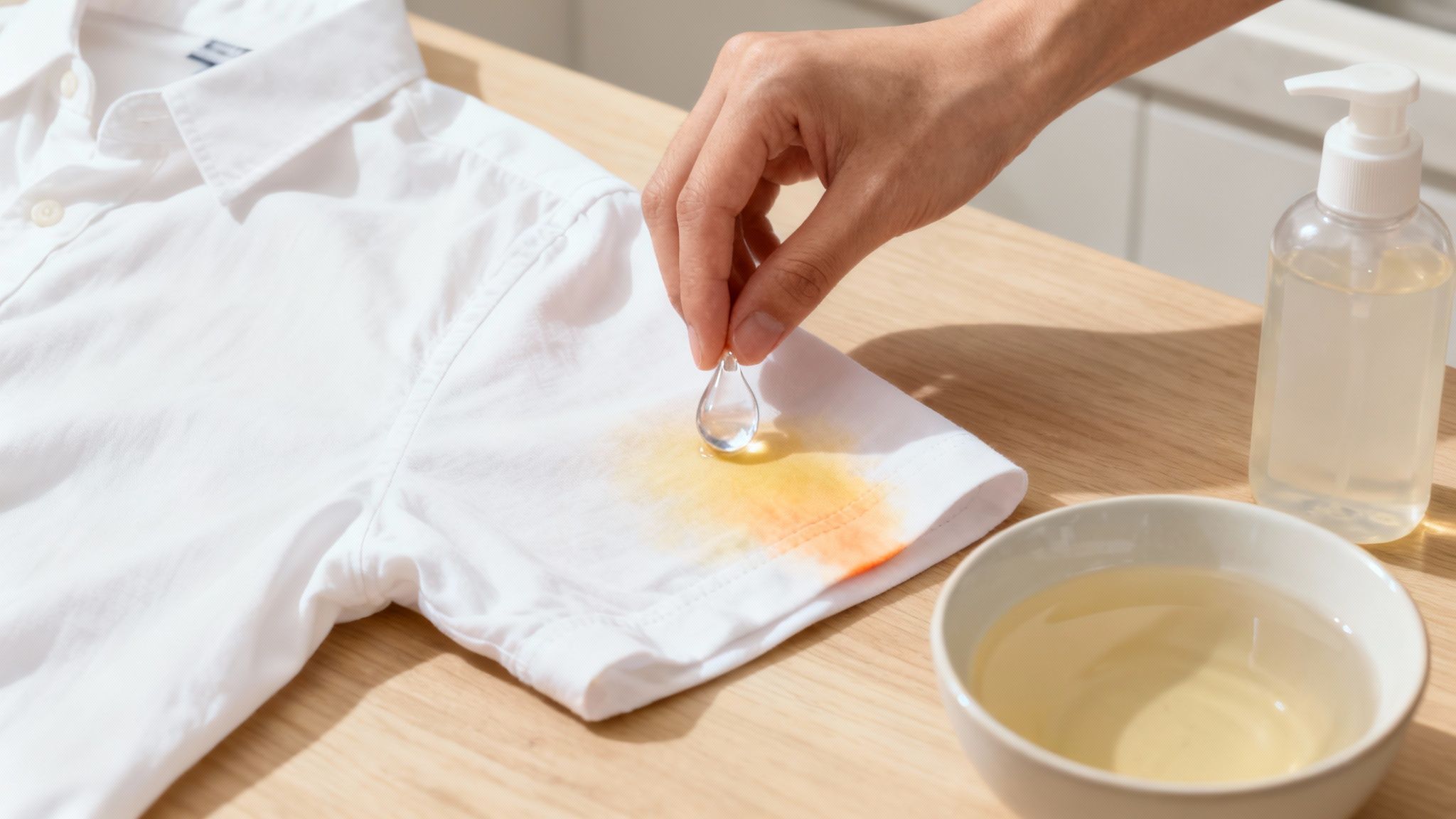
The first rule of sunscreen stains? Act fast. Your best bet is to scrape off any excess lotion, then pre-treat the oily mark with a little dish soap or laundry detergent. Wash it in the hottest water the fabric can handle, but whatever you do, steer clear of chlorine bleach—it can actually make the stain worse.
Most importantly, always air-dry the garment until you're absolutely certain the stain is gone. Tossing it in a hot dryer is the fastest way to set that stain for good.
Your Guide to Banishing Sunscreen Stains
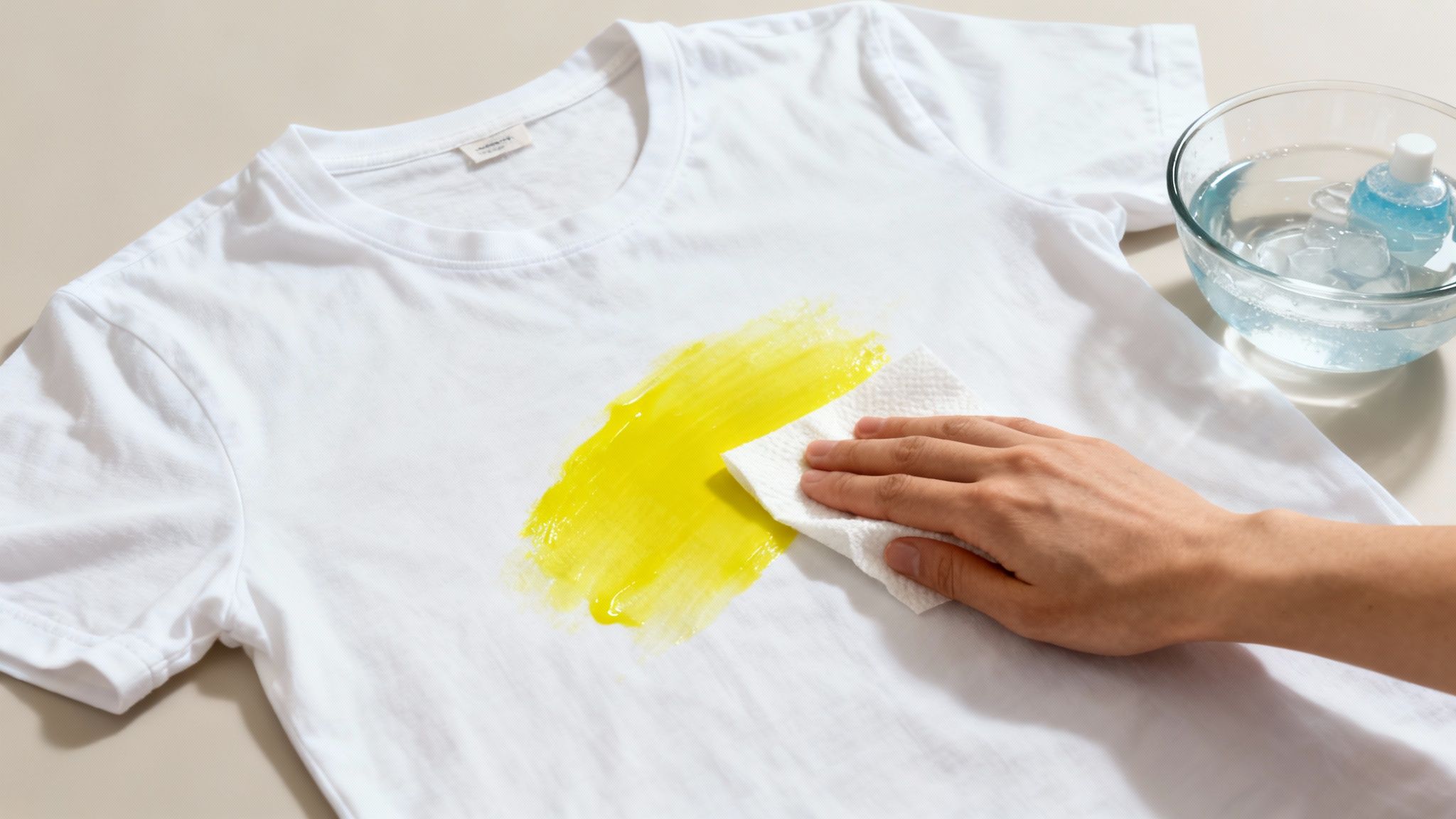
We've all seen it: that tell-tale yellow smear on a favorite white t-shirt. It's the ghost of a fun day in the sun, but it’s also one of the most stubborn laundry challenges you'll face. Sunscreen is a tricky mix of oils, waxes, and active chemical ingredients designed to stick to your skin, which is exactly why it clings so stubbornly to fabric.
The real troublemaker, though, is often found in chemical sunscreens. The main culprit is an ingredient called avobenzone, a powerful UV filter. When avobenzone comes into contact with minerals in hard water (especially iron), a chemical reaction occurs, leaving behind those frustrating orange or rust-colored marks that seem to appear out of nowhere after washing.
This reaction is so well-known that major detergent manufacturers actually suggest specific pre-treatment methods to break it down. You can learn more about how avobenzone causes stubborn stains from this CBS News report.
Immediate Action Is Your Best Defense
When it comes to sunscreen stains, time is not on your side. The quicker you can get to it, the better your odds of getting it out completely. Letting a fresh stain bake in the sun all afternoon is a recipe for a permanent mark.
If you spot a smear, a little bit of "stain first aid" goes a long way.
Sunscreen Stain First Aid
Think of these immediate steps as your foundation for successful stain removal. By tackling the spot right away, you make the work you do later in the laundry room that much more effective.
The most critical takeaway? Blot, don't rub, and keep that garment away from the dryer. Heat is the enemy of a fresh sunscreen stain. It will lock in the oils and discoloration, making removal nearly impossible.
Figuring Out What Kind of Sunscreen Stain You Have
Before you reach for any old stain remover, you have to play detective for a minute. Not all sunscreens are made the same, and neither are the stains they leave behind. Using the right strategy for the right type of stain is the difference between success and a permanently ruined shirt.
The biggest clue is right there in the bottle. Was it a thick, white cream that you had to rub in, or one of those clear, fast-absorbing sprays? That single difference tells you almost everything you need to know about the stain you're facing.
Mineral vs. Chemical Sunscreen Stains
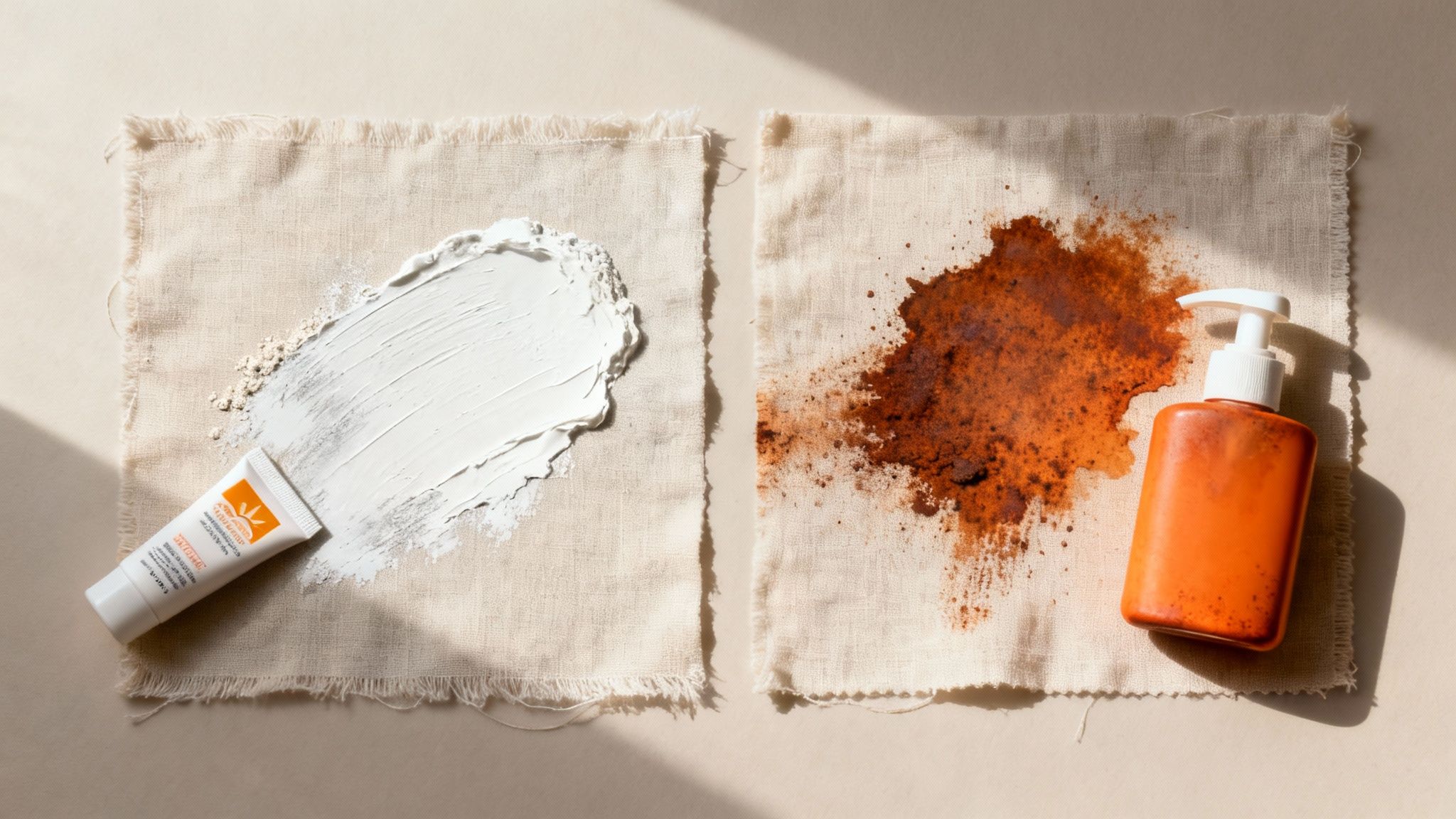
Mineral sunscreens are the ones with zinc oxide and titanium dioxide. They work by creating a physical shield on your skin. When that stuff gets on your clothes, you're usually left with a chalky white mark or a slightly greasy, yellowish smear that sits right on the surface.
- What it looks like: A white, powdery smudge or a pale, oily patch.
- Where it is: It’s mostly sitting on top of the fabric fibers, not soaked deep inside.
- How to fix it: The game plan is to first get rid of the solid particles, then go after the oily residue.
Chemical sunscreens are the sneaky ones. They absorb into your skin, and their stains often don't even show up until after you've washed the item. This happens when an ingredient like avobenzone has a bad reaction with the minerals in hard water, creating a brand-new stain in the wash.
- What it looks like: A very distinct orange, yellow, or rust-colored spot.
- Where it is: The stain has chemically bonded with the fabric, becoming part of the dye.
- How to fix it: You need something that can break down that chemical reaction.
Knowing the difference between mineral and chemical sunscreens is absolutely crucial. If you treat a rust-colored avobenzone stain like a simple oil stain, you’ll just get frustrated and set the mark for good.
What Does Your Stain Look Like?
Take a second to remember how it happened. Did a big glob of white lotion land on your dark swimsuit at the beach? That's almost certainly a mineral stain. Your job will be to gently scrape off the excess and then treat the oil it left behind.
But what if your favorite white t-shirt came out of the laundry with strange orange spots around the collar? That’s the classic sign of a chemical reaction. This calls for a completely different plan, usually involving a specific rust remover to reverse that discoloration.
Key Takeaway: A white, chalky stain is from a mineral sunscreen. A delayed, orange-colored stain is the calling card of a chemical sunscreen. Nailing this identification is the single most important step to getting your clothes clean again.
Your At-Home Stain Removal Toolkit
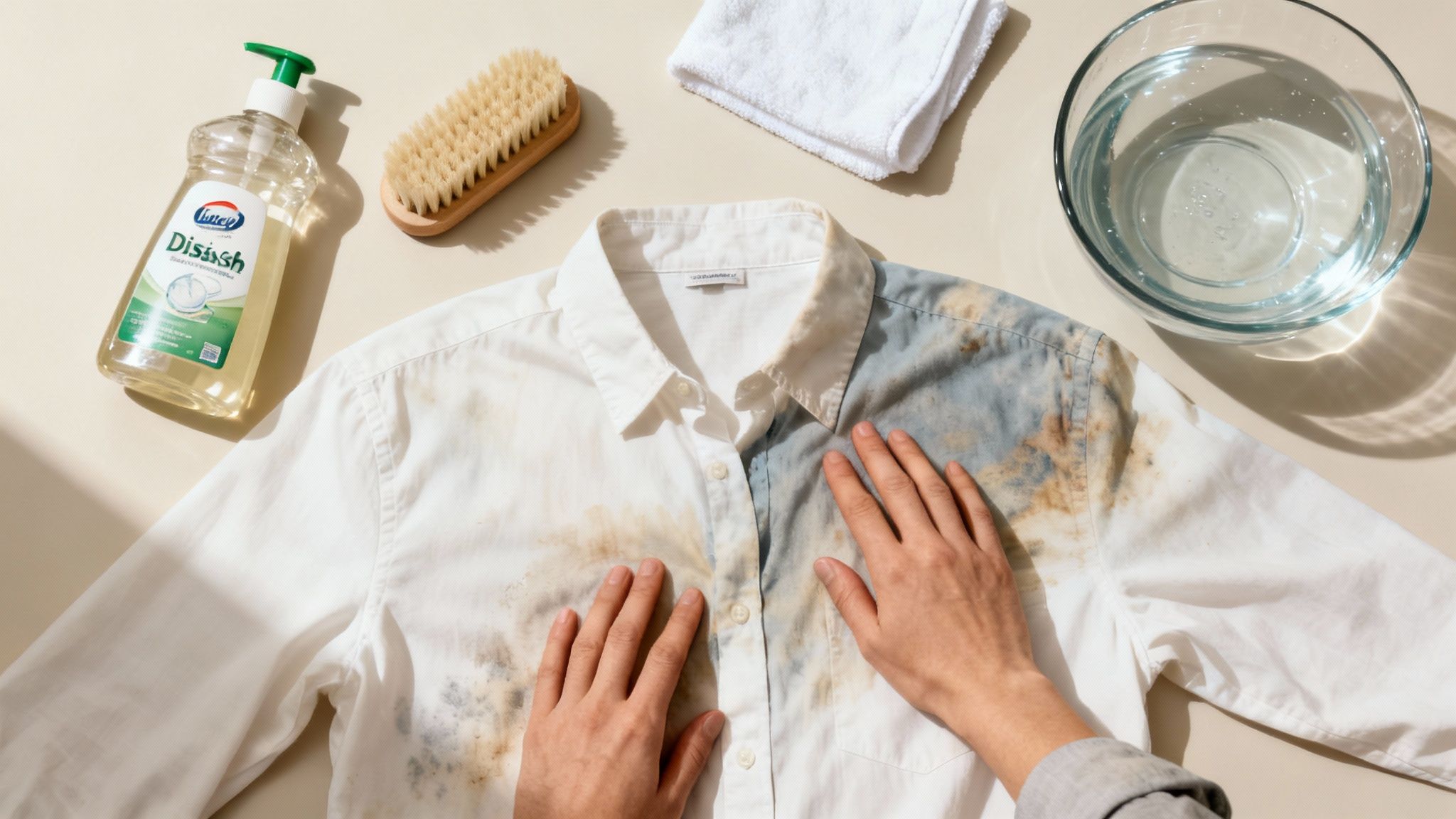
So, you’ve figured out what kind of sunscreen caused the stain. Now it’s time to raid your cleaning cabinet. The great news is you probably already have everything you need to tackle these stubborn marks. You don’t need fancy, expensive products—just a few household staples and the right technique.
When it comes to sunscreen stains, two things are absolutely critical: speed and sequence. You want to act fast, ideally within the first 24 hours, to give yourself the best chance of success.
The proven method is pretty straightforward: start by rinsing the spot with cool water, gently blot it, and then pretreat with a good degreaser like liquid dish soap. Let that sit for at least five to thirty minutes before you even think about putting it in the washing machine.
Pre-Treating to Break Down the Oils
This first step is the most important one, so don't skip it. Sunscreen is oily by nature, and you need something that can cut through that grease before the wash cycle begins.
Liquid Dish Soap: A quality dish soap is your secret weapon. Its degreasing power is perfect for lifting the oily residue from fabric fibers. Just dab a small amount directly onto the stain and gently work it in with your fingers or a soft-bristled brush. Let it sit for at least 15 minutes.
Heavy-Duty Laundry Detergent: No dish soap? A liquid laundry detergent with powerful cleaning enzymes is a great alternative. Apply it the same way you would the dish soap.
Think of this pre-treatment as the step that does all the heavy lifting. It loosens the oily part of the stain, making it possible for your washing machine to rinse it away completely. If you prefer a more natural approach, ingredients like natural lemon oil can also be surprisingly effective at cutting through grease.
Pro Tip: Whatever you do, don't use hot water when you first rinse or pre-treat the stain. Heat will essentially "cook" the oil into the fabric, setting it for good. Always, always start with cool water.
Washing and Drying the Right Way
Once your pre-treatment has had time to work its magic, it's time for the wash. Check the garment’s care label and use the warmest water setting the fabric can safely handle. The warmer water helps dissolve the oils your pre-treatment has already broken down.
After the wash cycle finishes, here comes the most crucial moment: step away from the dryer.
The intense heat from a machine dryer is the fastest way to make a faint stain a permanent one. Instead, hang the garment to air-dry, preferably out of direct sunlight.
Once it's fully dry, give the spot a thorough inspection in good light. If you see even a hint of the stain left, just repeat the pre-treatment and washing steps. Only after you are 100% certain the stain is completely gone should you ever toss it in the dryer. If you want to dive deeper into the science, our guide on how stain removers work for every stain type is a great resource.
To make things easier, here's a quick guide for handling different fabrics.
Stain Removal Methods for Common Fabrics
Remember, this table is a general guide. Always double-check your garment's care label before you start. When in doubt, a more cautious approach is always the better choice.
Tackling Stubborn Stains and Delicate Fabrics
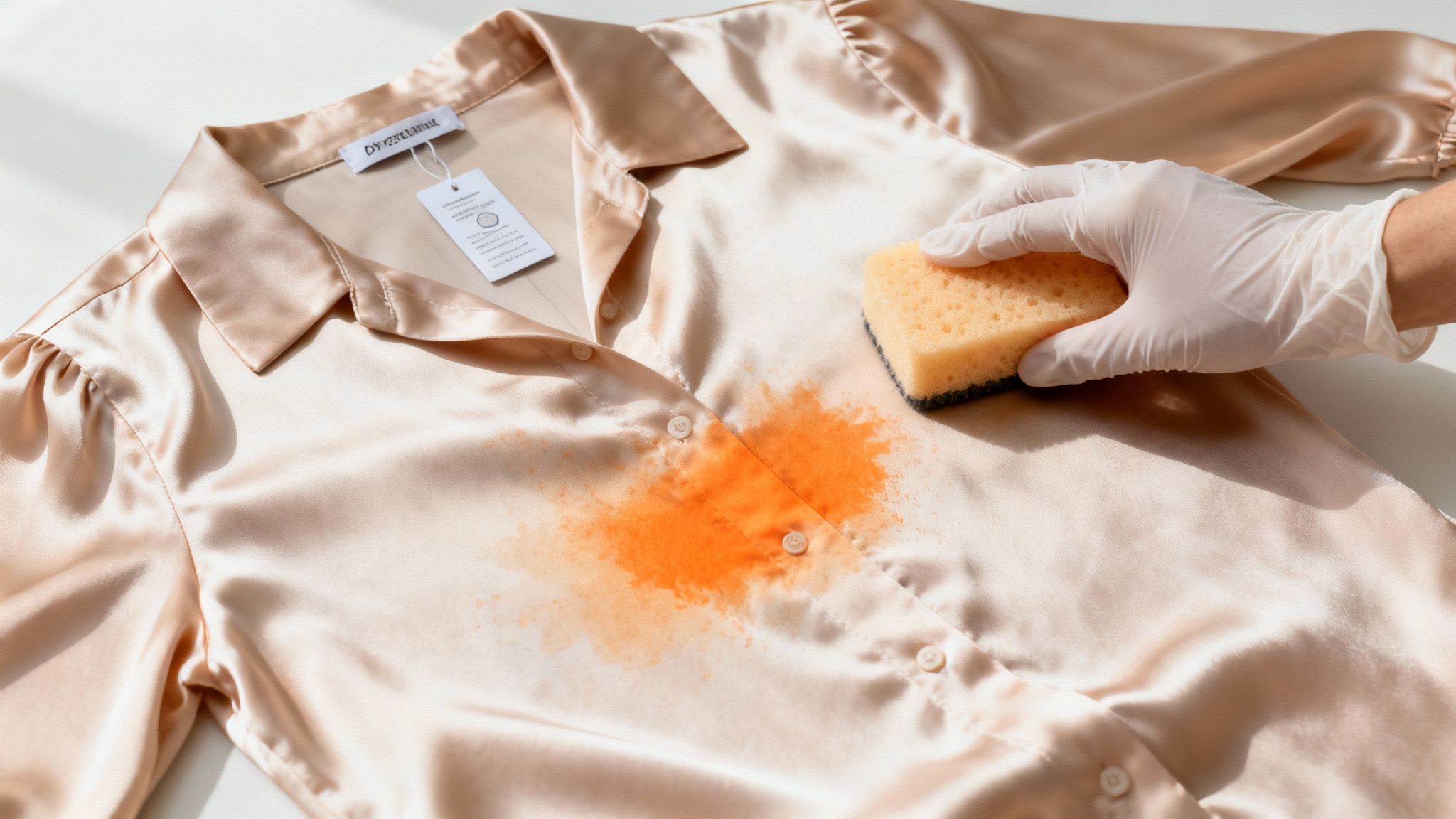
It’s happened to all of us. You follow every step perfectly, yet that faint yellow or orange ghost of a stain just won't disappear. This is particularly true for older stains that have had time to set, or those deep, rusty marks that can appear when avobenzone in sunscreen reacts with minerals in your water.
When your usual pre-treatment routine just isn’t cutting it, you need to bring out the heavy hitters. For those especially stubborn, rust-colored stains on white cotton or other sturdy, colorfast fabrics, a commercial rust remover can work wonders. It’s formulated to target the exact chemical bonds that cause these frustrating marks. Just be sure to test it on a hidden spot first—think an inner seam or hem—and follow the product’s instructions to the letter. These are powerful chemicals.
Of course, that kind of aggressive treatment is a definite no-go for a huge portion of your wardrobe. When you're dealing with delicate materials, the game changes entirely.
Handling Delicate and Dry-Clean-Only Fabrics
Your favorite silk blouse, that delicate rayon dress, or a fine-knit wool sweater simply can't handle the same treatment as a cotton t-shirt. Harsh scrubbing, strong chemicals, and even hot water can lead to disaster: shrinking, fading, or a complete change in the fabric's texture. These materials are especially prone to damage from the oils in sunscreen.
Here’s what you absolutely must keep in mind for your delicates:
- No Rubbing, Period: Scrubbing will only fray or break the delicate fibers, often leaving a permanent fuzzy patch or a weak spot in the garment.
- Skip the Kitchen Chemistry: Common DIY suggestions like vinegar or lemon juice are far too acidic for protein-based fibers like silk and wool. They can strip color and damage the material itself.
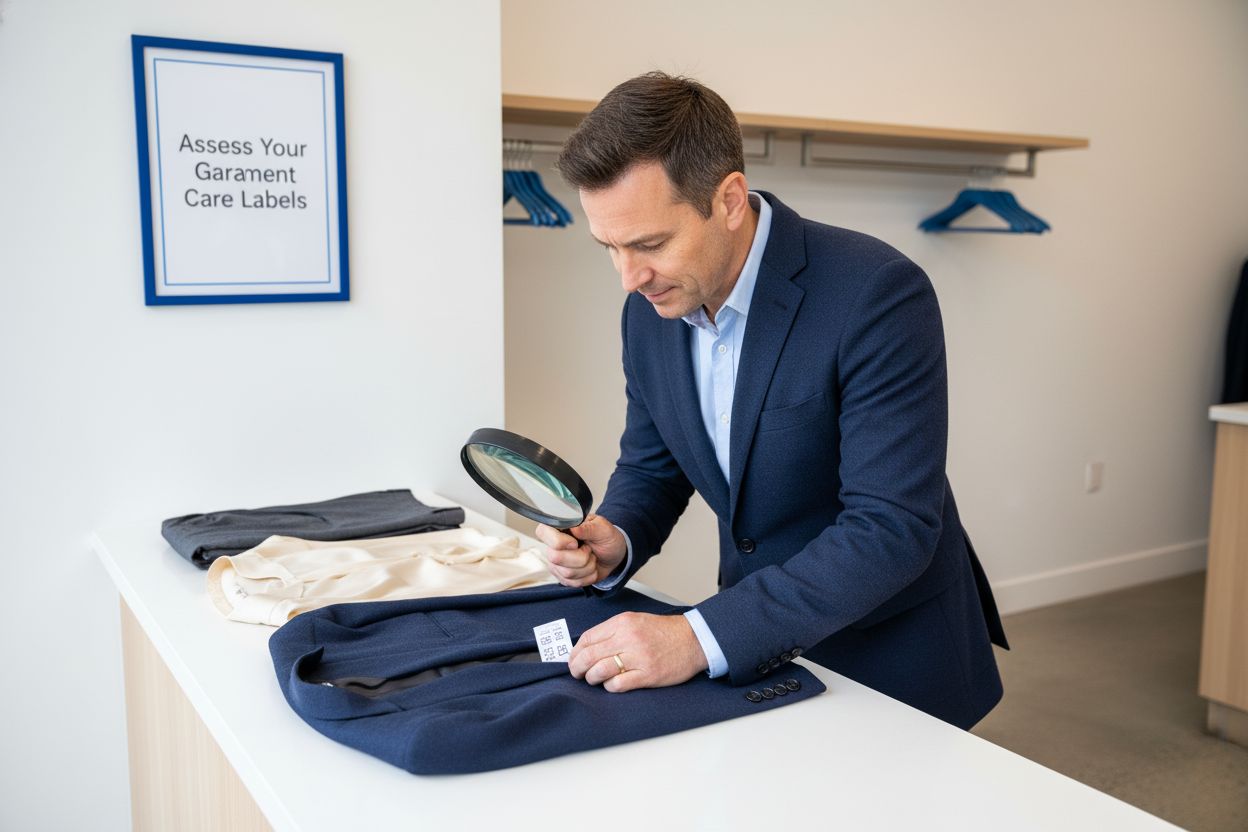
- The Label is Law: If that little tag says "Dry Clean Only," it means it. The manufacturer put it there for a reason. These clothes were not constructed to handle a water-based wash at home.
For these pieces, a DIY fix often creates a much bigger problem than the original stain.
A delicate garment is an investment. Trying to save a few dollars with a risky at-home treatment can end up costing you the entire piece. When you're not 100% sure, the smartest move is to stop and hand it over to a professional.
Knowing When to Call for Professional Help
There comes a point where the best laundry strategy is knowing your limits. If you're looking at a deeply set stain on an expensive or sentimental item, it's time to trust an expert. Professional cleaners have an arsenal of specialized solvents and cleaning techniques that are far more effective—and infinitely safer—than anything you can buy at the grocery store.
For anyone in the Arlington area, handing a tough stain over to us at Columbia Pike Laundry isn't giving up; it's the smart play. Our team knows exactly how different fabrics react and can pinpoint the right method to lift a stain without damaging the garment. You can learn more about how professional dry cleaners remove tough stains and what makes their methods so effective.
Don’t risk a costly mistake. Let us handle the tough stuff so you can get back to wearing your favorite clothes without a worry.
Preventing Future Sunscreen Stains
The best way to deal with a sunscreen stain is, of course, to avoid getting one in the first place. While the methods we've covered are effective, a few simple tweaks to your daily routine can spare you a lot of laundry headaches and keep your summer clothes looking pristine.
The biggest culprit behind most sunscreen stains? Rushing. After you apply sunscreen, give it a solid 10-15 minutes to absorb into your skin before putting on your clothes. If it's still wet or greasy to the touch, it will transfer directly onto the fabric, creating an instant oily mess. This is hands-down the most common reason we see those frustrating yellow smudges on shirt collars and sleeve cuffs.
Make Smarter Sunscreen Choices
The formula you choose matters, too. While no sunscreen is completely stain-proof, some are definitely less problematic for your wardrobe than others.
- Go Mineral: Sunscreens that use zinc oxide and titanium dioxide as their active ingredients are far less likely to cause those stubborn, delayed-reaction rust stains that chemical sunscreens (especially those with avobenzone) can create.
- Opt for "Quick-Dry" Formulas: Many brands now offer "rub-proof" or "quick-dry" versions. These are specifically designed to set faster on your skin, which minimizes the window for it to transfer onto your clothes.
Pro Tip: Planning to wear that new white linen shirt or your favorite sundress? Make it a mineral sunscreen day. It’s a small, easy switch that can prevent a major laundry disaster.
A few smart habits can also make a huge difference. Try applying sunscreen while you're still in a towel or robe, giving it plenty of time to sink in before you even think about your outfit for the day.
For more great tips, check out our guide to simple habits to prevent stains and keep clothes fresh. A little bit of mindfulness goes a long way in keeping sunscreen where it belongs: on your skin, not on your clothes.
Got Questions About Sunscreen Stains? We've Got Answers.
Even with the best advice, some sunscreen stain scenarios can be real head-scratchers. Let’s clear up a few of the most common questions that pop up, so you can tackle those greasy marks with confidence.
Why Did Chlorine Bleach Turn My Sunscreen Stain Brown?
This is a classic laundry mistake, and a frustrating one at that. You see a yellowish stain on a white shirt and instinctively reach for the chlorine bleach, only to find you've made it ten times worse.
Here’s what’s happening: Many chemical sunscreens contain a key ingredient called avobenzone. When avobenzone meets chlorine bleach, a chemical reaction occurs that essentially locks in the stain, turning it into a dark, rusty brown blotch. At that point, it's pretty much permanent.
Pro Tip: When dealing with a sunscreen stain, just say no to chlorine bleach. If you need some extra lifting power for whites or color-safe fabrics, an oxygen-based bleach (like OxiClean or a generic version) is your best friend. It fights the stain without triggering that nasty chemical reaction.
What About Sunscreen on Things I Can't Wash?
Got a sunscreen smear on a baseball cap, a canvas tote bag, or the strap of your favorite backpack? Don't panic. You can’t toss it in the machine, but you can definitely spot-treat it.
First, gently scrape off any thick blobs of sunscreen with a dull knife or the edge of a credit card. Next, mix a drop or two of liquid dish soap into a small bowl of cool water.
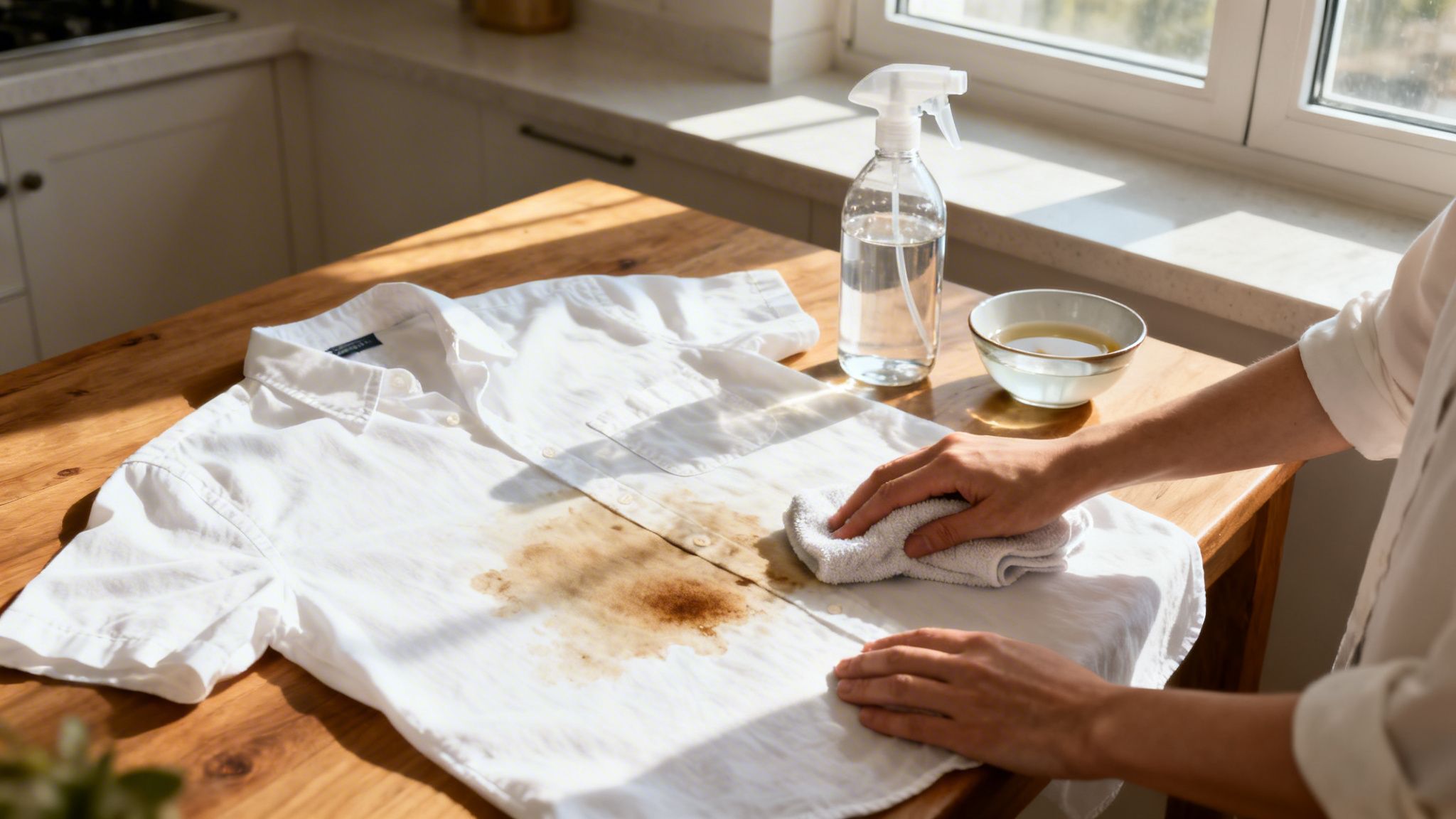
Dip a clean cloth or a soft brush (an old toothbrush works great) into the sudsy water and gently dab at the stain. Always work from the outside edges of the stain inward to keep it from spreading. Once you've treated the spot, take a new, clean cloth dampened with plain water and blot the area to "rinse" out the soap. Let it air-dry completely, preferably out of direct sunlight.
Do All Sunscreens Stain Clothes the Same Way?
Definitely not. The type of sunscreen you use makes a huge difference in the kind of stain you'll be dealing with.
Chemical sunscreens, especially those with avobenzone, are the biggest culprits behind those sneaky, rust-colored stains that seem to appear out of nowhere after washing. This is particularly true if you have hard water, as the minerals can worsen the reaction.
On the flip side, mineral sunscreens that use zinc oxide or titanium dioxide are much less problematic. They tend to leave a chalky white residue or a simple oily spot on the surface of the fabric. These are usually much easier to lift out with a standard pre-treatment of dish soap or laundry detergent. If you’re constantly battling mystery stains on your summer whites, switching to a mineral formula might just be the answer.
Battling a stain that just won't quit, or simply want to reclaim your weekend from laundry duty? Columbia Pike Laundry is here to help. Our professional stain removal techniques and convenient pickup and delivery service give your clothes the expert care they deserve. Schedule your first pickup today and discover the relief of a laundry-free life.
Free pickup, expert care, delivered back to your door.
Popular Blog Articles



Meet the Author
Daniel Logan didn’t start CPL because he loved laundry. He started it because his family was drowning in time debt, and laundry was one of the biggest weights.
Mornings were chaos with two kids under 5. Evenings felt like catch-up. And weekends? Gone to sorting socks and folding piles.
He knew his story wasn’t unique. So he built a business that gave families like his just a little bit of breathing room one load at a time.
With no laundry experience but deep tech skills, Daniel rolled up his sleeves, doing every job himself while building systems that turned it into a modern laundry service that saves customers time, simplifies their lives, and delivers reliability they can count on.
That’s where CPL began. Not from a playbook, but from pain. From one dad trying to buy back time: for himself, and for every household like his.
Free pickup, expert care, delivered back to your door.