
How to whiten clothes: Simple Tips for Brighter Whites
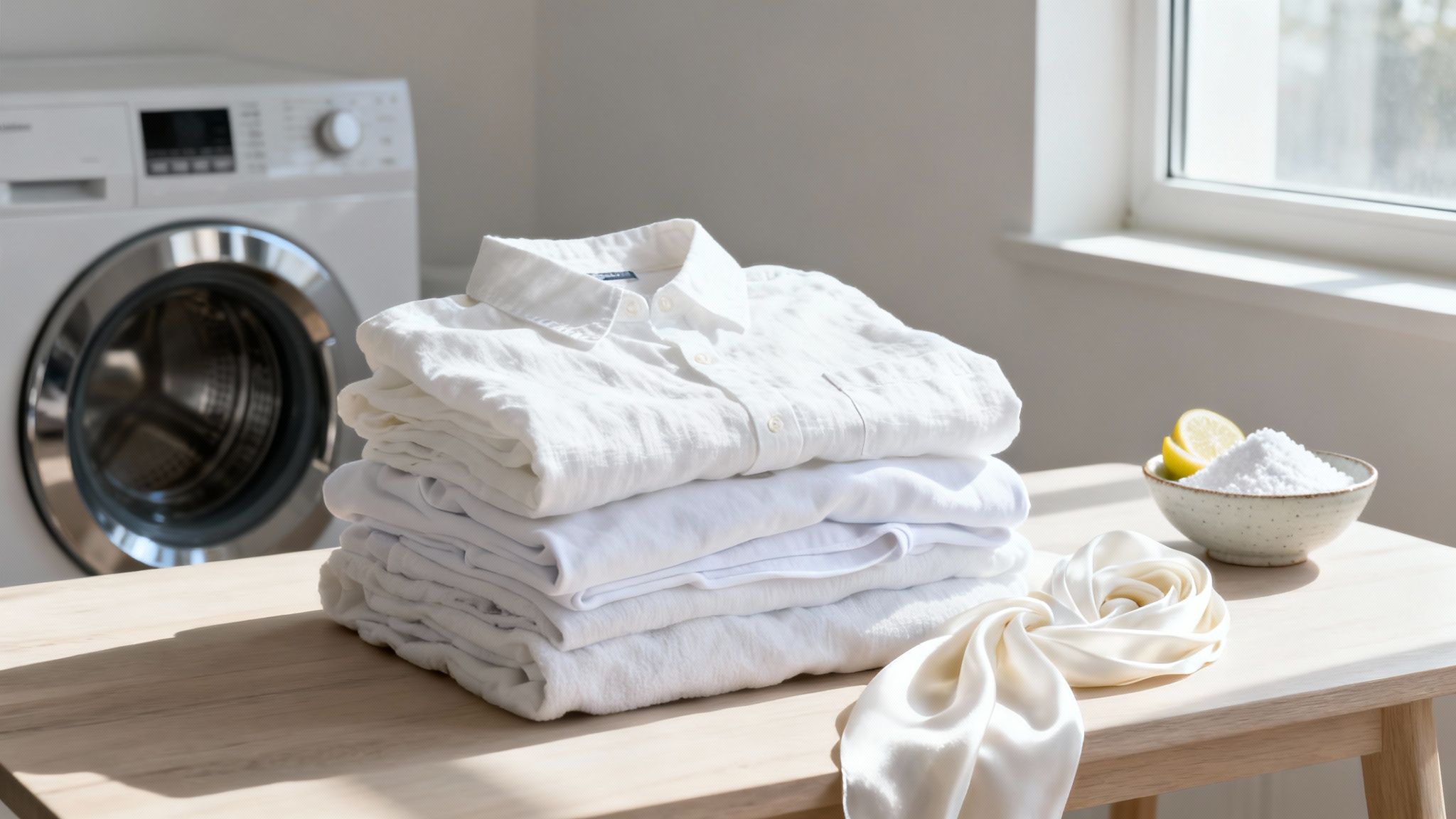
Columbia Pike Laundry offers pickup & delivery across Northern Virginia.
Ever wonder why that crisp white shirt starts looking a little… sad? It's a common frustration, but the reason your whites go gray or yellow often isn't a big, obvious stain. It's usually a slow, sneaky buildup of things you can't even see.
Why Your White Clothes Turn Yellow or Dingy
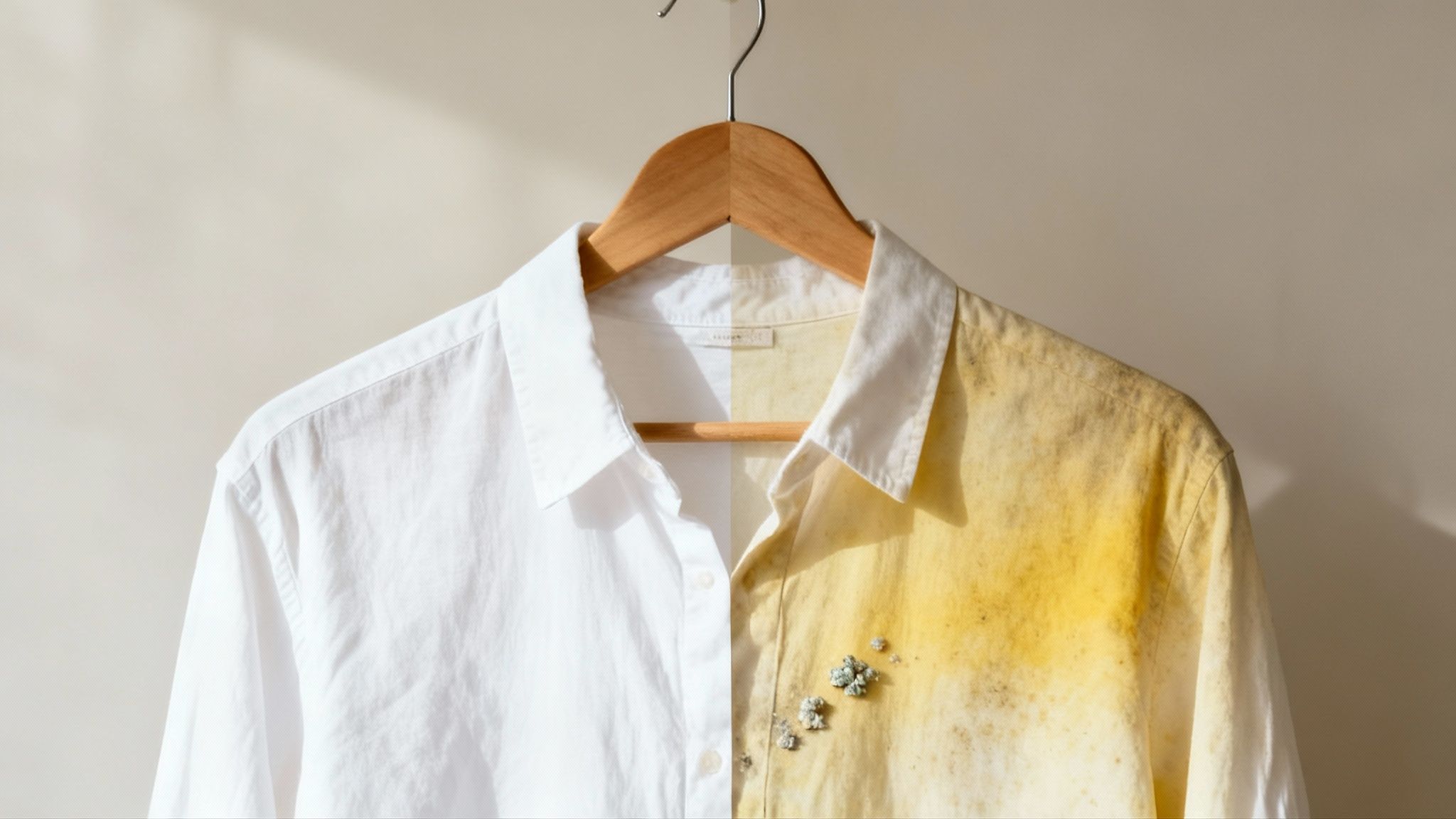
The main culprits behind dingy whites are often invisible, like detergent residue and mineral deposits from hard water. These build up over time, along with everyday grime and body oils, stripping the fabric of its brightness. Getting to the root of the problem is the only way to truly bring them back to life.
Before you can fix the issue, you have to know what you're up against. Sometimes, our best intentions in the laundry room are actually what's causing the discoloration.
The Invisible Culprits Behind Discoloration
Believe it or not, one of the biggest offenders is your laundry detergent—specifically, using too much of it. We all do it, thinking more soap means a better clean. But excess detergent doesn't rinse out properly. Instead, it leaves a sticky residue that acts like a magnet for dirt and grime, giving your clothes a dull, grayish cast.
The water coming out of your tap could also be the problem. If you have hard water, it’s loaded with minerals like calcium and magnesium. These minerals latch onto fabric fibers, wash after wash, creating a stiff, dingy buildup that regular cleaning just won't touch.
Body Oils and Environmental Factors
Our own bodies contribute to the problem, too. Sweat and body oils work their way deep into fabrics, especially around collars and underarms. Over time, these oils oxidize or react with ingredients in products like deodorant, leading to stubborn, yellowed patches. It’s a specific kind of stain that needs a targeted approach, which we cover in our guide on how to get rid of yellow stains on white clothes.
The irony? Even products meant to improve our laundry can backfire. Fabric softeners often leave a waxy coating on clothes. While it feels nice and soft, that same coating can trap dirt and prevent your whites from getting truly clean.
Finally, think about where you store your clothes. If they’re packed away in a damp basement or a dusty attic, they can absorb moisture and pollutants from the air, causing them to yellow over time. Once you know what's causing the dinginess, you're in a much better position to reverse it and keep your whites looking brilliant.
Your At-Home Whitening Toolkit
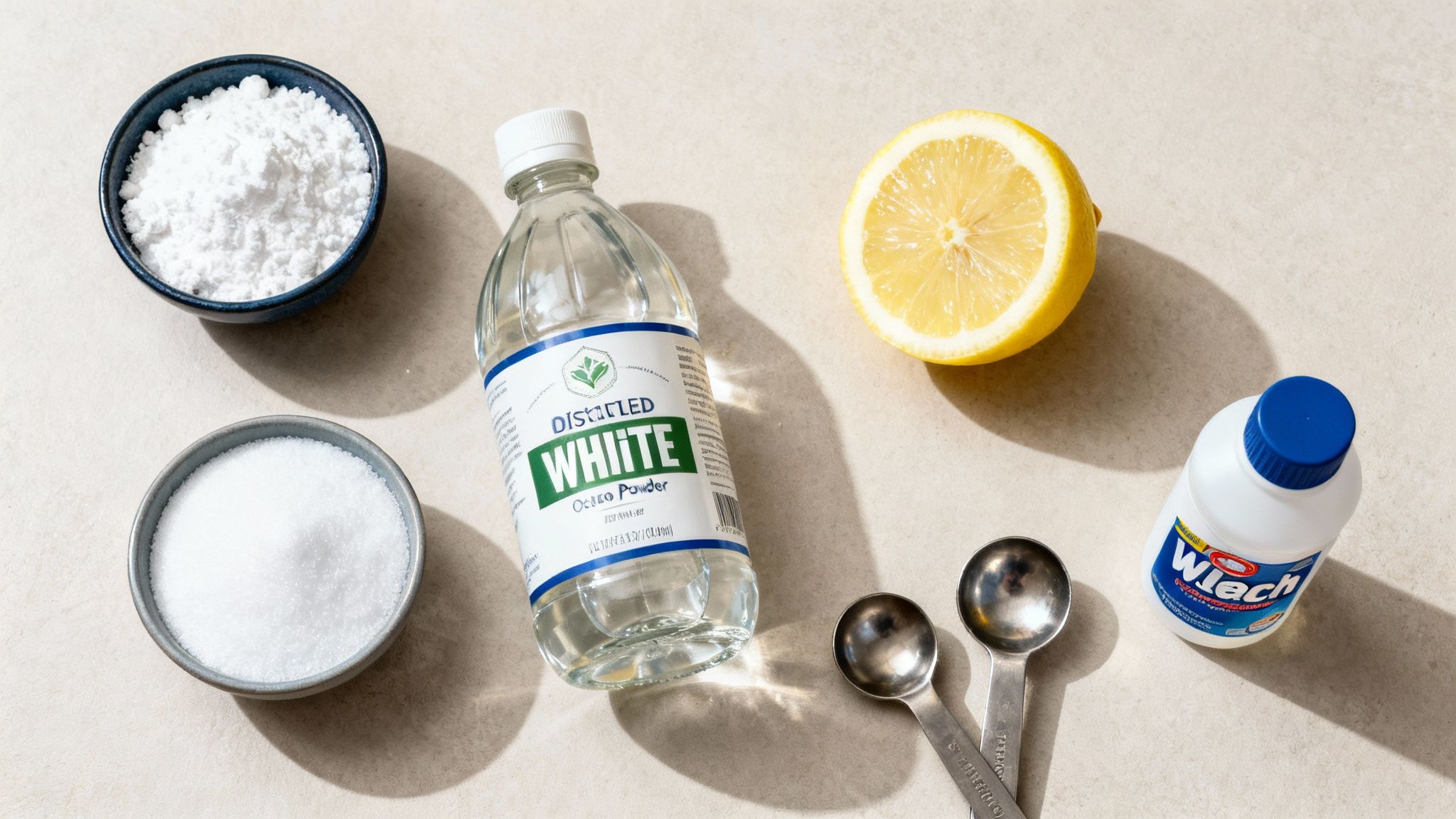
Alright, now that we know why your favorite white tee looks a little lackluster, let's talk about how to fix it. Getting that crisp, clean look back is completely doable, and you probably already have everything you need in your laundry room or kitchen pantry.
The real secret is picking the right tool for the job. A whitener that works wonders on your sturdy cotton sheets could completely ruin a delicate silk blouse. This is your guide to the best options—what they do, which fabrics they’re safe for, and exactly when to reach for them.
Commercial Whitening Powerhouses
When you need serious, reliable results, commercial whiteners are your best bet. But the two main types work very differently, so you can't just use them interchangeably. Knowing what makes them tick is the key to brightening your clothes safely and effectively.
Chlorine Bleach (Sodium Hypochlorite)
This is the heavy-hitter of the laundry world. Chlorine bleach is a powerful chemical that obliterates stains and disinfects by literally breaking down their chemical bonds. It’s incredibly effective on stubborn grime and that general dinginess that builds up on durable fabrics.
- Best For: Tough stains, yellowing, and dinginess on sturdy, all-white fabrics like cotton and linen. Always, always check the garment's care label first.
- Use With Caution: Never let chlorine bleach touch wool, silk, mohair, spandex, or leather. It can dissolve these delicate fibers, causing permanent yellowing or even holes.
Oxygen-Based Whiteners (Sodium Percarbonate)
Often sold in powder form and called "color-safe bleach," oxygen whiteners are a much gentler alternative. When you mix them with water, they release tiny oxygen bubbles that lift away stains and brighten fabrics without the harshness of chlorine. This makes them a far more versatile and safer choice for a wider range of clothes.
An oxygen-based whitener is my personal recommendation for most whitening tasks. It brightens effectively without the risk of weakening fibers or causing the accidental yellowing that can happen with overuse of chlorine bleach.
Gentle and Effective Pantry Solutions
You don’t always need a specialized product to see impressive results. Some of the best whiteners are everyday household items that work by breaking down residue and gently lifting discoloration. They're especially great if you have sensitive skin or are working with more delicate garments.
Baking Soda (Sodium Bicarbonate)
This kitchen staple is an unsung hero in the laundry room. Baking soda is a natural deodorizer and a mild alkali, which helps soften hard water and seriously boost your detergent's cleaning power. It gently lifts stains and cuts through the residue that causes dullness.
- How to Use: Just add a half cup of baking soda directly to the washing machine drum with your regular detergent. For a powerful pre-soak, dissolve one cup in a gallon of warm water and let your whites soak for a few hours.
Distilled White Vinegar
The acetic acid in white vinegar is fantastic for dissolving the mineral deposits from hard water and the sticky gunk left behind by detergents and fabric softeners. It acts as a natural brightener and fabric softener, leaving clothes looking whiter and feeling softer.
- How to Use: Pour one cup of distilled white vinegar into the fabric softener dispenser during the final rinse cycle. Don't worry about the smell—it vanishes completely as the clothes dry.
Lemon Juice
The citric acid in lemon juice is a natural bleaching agent. It’s particularly good at tackling those stubborn yellow underarm stains and brightening dull spots. Its whitening power gets a major boost from the sun, creating a fresh-smelling, natural solution. And if you're looking for another powerful laundry additive, you can learn more about using Borax for laundry stripping in our detailed guide.
- How to Use: Mix equal parts lemon juice and water in a spray bottle and spritz it directly on stains before washing. For an all-over brightening soak, add a half cup of lemon juice to a gallon of hot water.
Choosing Your Whitening Agent
With so many options, how do you pick the right one? This quick-reference table breaks it down to help you select the best whitener based on your fabric type and how much help it needs.
Ultimately, the best approach is to start with the gentlest method that will get the job done. For everyday dullness, a little baking soda or vinegar might be all you need. For more serious discoloration, an oxygen whitener is a reliable choice. Save the chlorine bleach for those truly tough cases on durable fabrics.
The Right Way to Whiten Different Fabrics
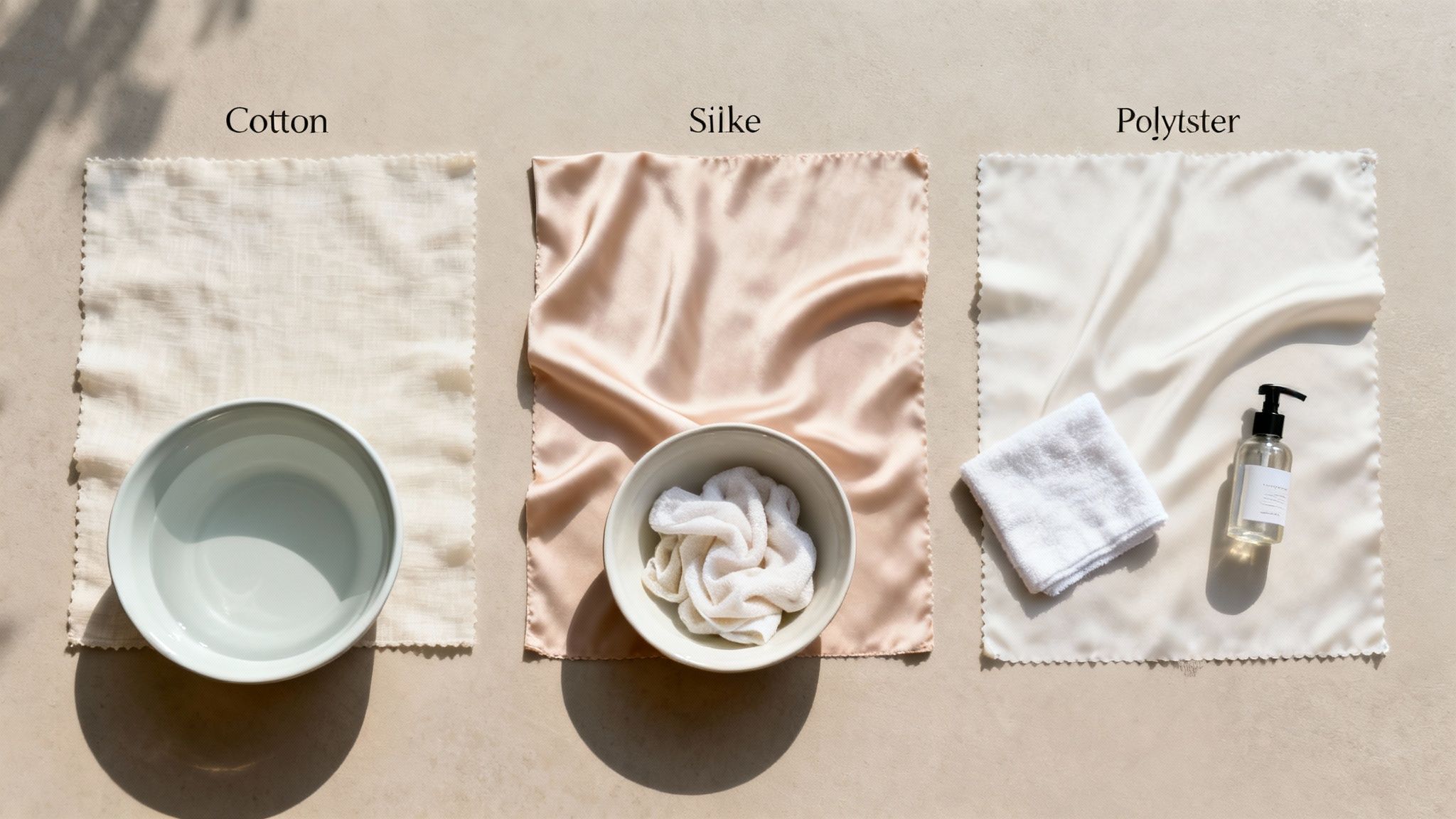
Throwing all your white garments into the same wash is one of the quickest ways to ruin them. Think about it: a sturdy cotton towel can handle a serious whitening soak, but that same treatment would absolutely destroy a delicate silk blouse. The real secret to getting brilliant whites is learning to tailor your approach to the specific fabric you’re working with.
This isn't about becoming a laundry scientist. It's simply about respecting the unique fibers that make up your clothes. A successful outcome—crisp, bright whites without any damage—hinges on using the right method for the right material. Let's break down exactly how to handle the most common fabrics in your closet.
Handling Sturdy Cottons and Linens
Cotton and linen are the workhorses of the fabric world. We're talking about your bedsheets, bath towels, and those favorite white t-shirts that see constant use. These natural fibers are incredibly durable and can withstand more intensive whitening methods, which makes them the easiest to bring back to life.
For instance, knowing how to properly care for a white cotton midi dress means you can keep it looking brand new. For these items, a pre-soak is your best weapon against general dinginess and yellowing.
My Go-To Pre-Soak Strategy:
- Grab a tub or a large basin and fill it with one gallon of warm or hot water. But first, always double-check the care label—if it says cold only, stick to that.
- Add either one cup of powdered oxygen whitener or a combination of a half-cup of baking soda and a half-cup of hydrogen peroxide. Give it a good stir until everything is completely dissolved.
- Submerge your cotton and linen pieces, making sure they're totally saturated. Let them soak for at least four hours. For really discolored items, I recommend letting them sit overnight.
- After the soak, gently wring out the excess water and toss them in the wash as you normally would, using the warmest water the fabric can handle and your usual detergent.
This pre-soak is a game-changer for breaking down the body oils and detergent residue that cause that dreaded yellowing in cottons. For more in-depth tips on this, our guide on how to wash whites has you covered.
Reviving Synthetic Fabrics Like Polyester and Nylon
Synthetics like polyester, nylon, and rayon are a different beast entirely. They’re essentially a type of plastic, and they have a knack for attracting and trapping oil-based stains and body oils. It's why that white polyester workout shirt can start looking dull after just a few wears.
Whatever you do, keep chlorine bleach far away from these fabrics. It triggers a chemical reaction that can cause permanent yellowing and even weaken the fibers over time. The key is to use a treatment that cuts through that oily buildup without using harsh chemicals.
An oxygen-based whitener is your best friend for synthetic whites. It gently lifts the grime that clings to these fibers without causing the irreversible damage you'd get from chlorine bleach.
Start by filling a basin with warm water and dissolving a scoop of oxygen whitener, following the package directions. Let your synthetic garments soak for at least two hours. Afterward, wash them in warm water with a high-quality detergent formulated to fight oils. And be sure to avoid high heat in the dryer—it can set any lingering oily stains, making them nearly impossible to get out later.
Gently Brightening Delicate Silk and Wool
Silk and wool are protein-based fibers, making them extremely sensitive. High heat, harsh chemicals, and even rough agitation can cause them to shrink, yellow, or lose their beautiful natural luster. Chlorine bleach is the ultimate enemy here; it will literally dissolve these fibers.
For these precious items, a gentle, natural approach is the only way to go. Distilled white vinegar works wonders because its mild acidity helps break down mineral deposits from hard water without harming the fabric itself.
A Safe Hand-Washing Method for Delicates:
- Start with a clean basin filled with cool water. Hot water is a fast track to shrinkage and warping.
- Add a half-cup of distilled white vinegar to the water and give it a gentle mix.
- Submerge your silk or wool garment and gently swish it around. Let it soak for about 30 minutes.
- Drain the vinegar water and rinse the garment thoroughly with cool, clean water until you can no longer smell the vinegar.
- Gently squeeze out the excess water—never wring or twist!—and lay the item flat on a clean, dry towel to air dry, far away from direct sunlight or heat.
This simple soak is often all it takes to restore a subtle brightness to delicates that have started to look a bit tired. Remember, when it comes to silk and wool, patience and a light touch are far more effective than any heavy-duty cleaner. By matching your whitening strategy to the fabric, you can bring all your whites back to life with confidence.
Common Whitening Mistakes to Avoid
In the pursuit of brilliantly white clothes, it's surprisingly easy to do more harm than good. A little too much of this, the wrong temperature for that, and suddenly your laundry day becomes a lesson in frustration. Knowing what not to do is just as important as knowing the right steps for whitening your clothes safely.
It's a common assumption that "more is more" when it comes to cleaning, but that logic can seriously backfire in the laundry room. By steering clear of a few frequent mistakes, you'll protect your clothes from damage and keep them looking their best for years.
The Overuse of Chlorine Bleach
Chlorine bleach has a reputation as the ultimate whitener, but it's a powerful tool that needs to be handled with respect. It’s fantastic for disinfecting and knocking out heavy-duty stains on sturdy fabrics, but relying on it too heavily is a recipe for disaster.
Here’s the problem: over-bleaching physically breaks down fabric fibers. With every dose, your favorite cotton sheets and t-shirts get a little weaker, making them more likely to rip and wear out. What's worse, a buildup of chlorine can react with minerals in your water, creating a chemical reaction that leaves behind a stubborn yellow tint. It’s one of the biggest reasons people end up with yellowed whites, even when they think they're doing everything right.
Think of chlorine bleach as a last resort, not a weekly habit. For regular brightening, a good oxygen-based whitener is a much gentler and more effective choice for the long haul.
Mixing Cleaning Products Unsafely
This mistake goes way beyond just ruining your clothes—it's a genuine safety hazard. You might be tempted to mix a few cleaners together, hoping to create some kind of super-whitening potion. Don't. Many common household products release toxic gases when combined.
The number one rule you absolutely cannot break is to never mix chlorine bleach with ammonia or vinegar.
- Bleach + Ammonia: This creates chloramine gas, which can cause serious respiratory issues, chest pain, and breathing difficulties.
- Bleach + Vinegar: This mix produces chlorine gas, a highly toxic chemical that can cause severe lung damage even in small amounts.
Stick to one product at a time and always make sure your laundry room has good airflow. Follow proven methods and resist the urge to play chemist. It's just not worth the risk.
Applying Heat to the Wrong Stains
When you spot a stain, your first instinct might be to hit it with hot water. And while hot water is great for lifting dirt and oil in a normal wash, it's the absolute worst thing you can do for certain stains—especially protein-based ones.
I'm talking about stains from things like:
- Blood
- Egg
- Milk or other dairy
- Sweat
Heat essentially "cooks" these proteins right into the fabric, setting them permanently. Once a protein stain has been set with heat, getting it out is nearly impossible.
Always, always start with cold water for any mystery stain or one you know is protein-based. Pre-treat the spot, make sure the stain is gone, and then you can wash the item in whatever temperature the care tag recommends. This simple habit will save more of your white clothes than you can imagine. Avoiding these common slip-ups will get you far more than just brighter whites—it’ll give your clothes a much longer life.
How to Keep Your Whites Brighter for Longer
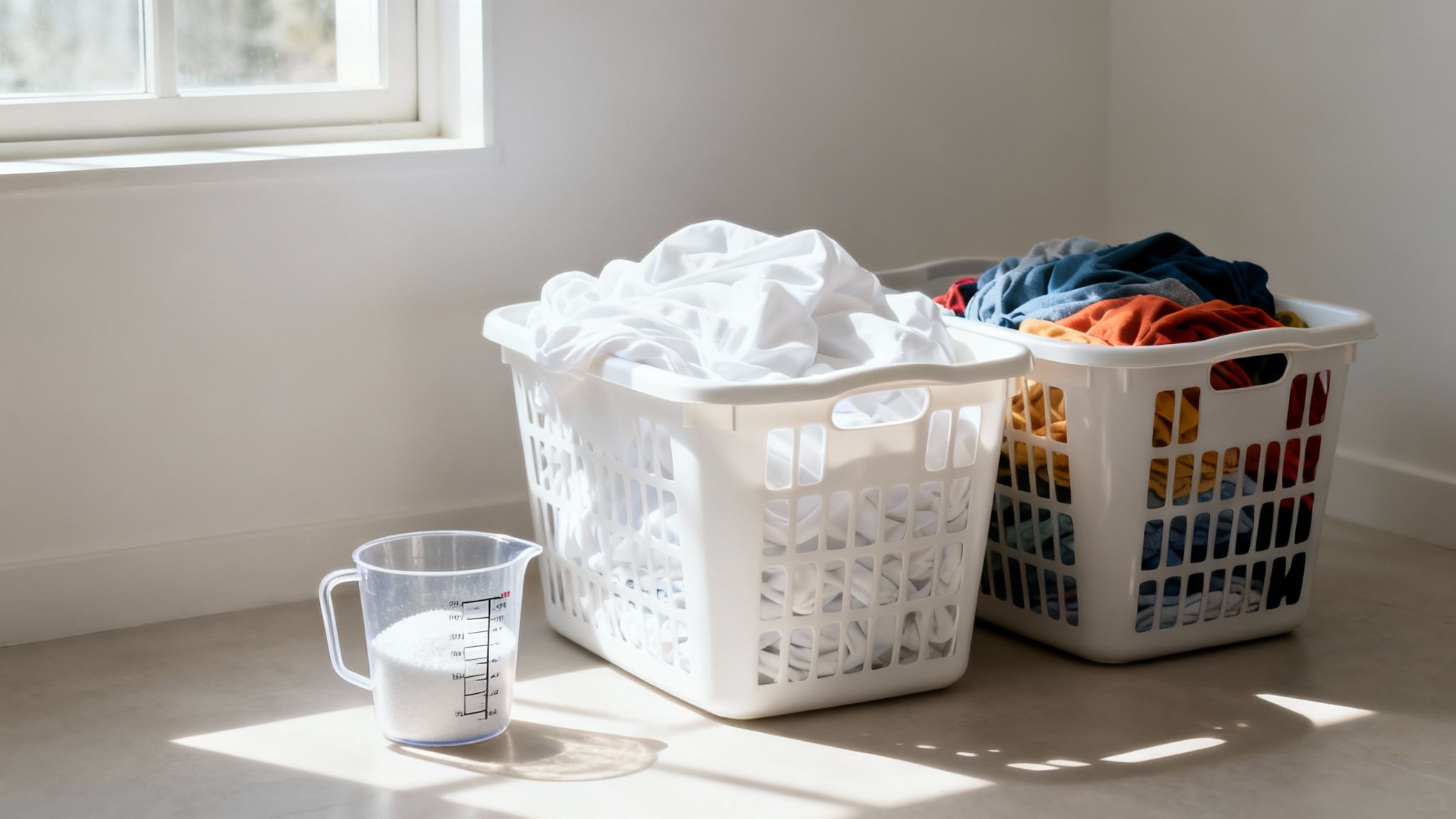
Honestly, the best trick to whiten clothes is to stop them from getting dull in the first place. Instead of waiting for that dreaded yellow tint to appear, a few smart habits can keep your whites looking crisp and new for way longer.
These aren't complicated, time-consuming steps. It's really just about being a little more intentional with your laundry routine. These small adjustments in how you sort, wash, and store your clothes make a massive difference in preventing the slow buildup that leads to dinginess.
Master the Art of Sorting
We all know to separate whites from colors, but for truly bright whites, you need to go a step further. Sort your white laundry by both color and how dirty the items are. Think about it: a lightly worn t-shirt just doesn’t need the same aggressive cleaning as a pair of grass-stained socks.
When you wash them together, all that dirt and grime from the filthy items can swirl around and resettle on the cleaner clothes, leaving everything looking a little bit gray. I always create a separate pile for really soiled whites so I can tackle them with a more intensive wash cycle without dulling everything else.
"Preventing discoloration is always easier than reversing it. Think of your laundry routine as preventative maintenance for your clothes. A little extra care now means less aggressive whitening treatments later."
This one habit—sorting by soil level—is probably the most overlooked tip for keeping an entire white wardrobe looking its best.
The "Just Right" Rule for Detergent
It’s easy to think that more soap means cleaner clothes, but it’s actually the opposite. Using too much detergent is one of the fastest ways to make your whites look grimy. The excess soap never fully rinses out, leaving behind a sticky film that attracts dirt like a magnet.
That residue is what causes that dull, grayish cast on so many white fabrics. Always, always measure your detergent based on the load size and what the bottle recommends. Don't just eyeball it and pour. If you have hard water, try adding a half-cup of baking soda directly into the drum. It softens the water and boosts your detergent’s power, so you can often get away with using less.
Wash Your Whites Promptly
When it comes to white clothes, procrastination is not your friend. The longer a dirty white shirt or pair of socks sits in the hamper, the more time sweat, body oils, and dirt have to set deep into the fibers.
Over time, these substances oxidize and create those stubborn yellow stains that are a real pain to get out. Try to get in the habit of washing your whites pretty quickly after you wear them, especially things like workout gear or undershirts. This is the simplest way to learn how to whiten clothes—by never letting them lose their brightness to begin with.
Let's be honest, sometimes a DIY approach just won't cut it. While home remedies are great for keeping your everyday whites looking fresh, certain situations call for a professional's touch. Stepping back can be the smartest move you make, especially when a favorite item is on the line.
If you're staring down a stubborn, mysterious stain that’s been there for a while, or you're nervous about treating a delicate fabric, it’s probably time to call in the experts. It's just not worth the risk of ruining something you love.
Why Bring in the Pros?
Think about those truly special items. That vintage lace blouse you inherited, a delicate silk scarf, or the ultimate heirloom—a wedding dress. These aren't the pieces you want to experiment on with a scoop of baking soda and a prayer. Home remedies can be too harsh, potentially weakening the fibers, causing permanent yellowing, or even creating holes.
Professional laundry services have an arsenal of tools and solutions that you just can't get at the grocery store. We use commercial-grade equipment and specialized solvents designed for specific fabrics and stains. Our team knows how to identify the source of the discoloration—be it an oil-based stain on tricky polyester or general dinginess on a fine wool sweater—and apply a targeted treatment that works without damaging the garment.
When a tough whitening job feels more like a stressful science experiment, it's a sign to let an expert take over. The best way to care for a garment you love is to entrust it to someone who lives and breathes this stuff.
Here at Columbia Pike Laundry, we take the guesswork out of the equation. Our free pickup and delivery service means you don't even have to leave the house. We'll handle your most challenging whitening tasks with professional care, and you’ll usually have your clothes back within 48 hours.
It's not just about getting the laundry done; it's about restoring your clothes and giving you back your time and peace of mind. Let us tackle the tough stuff.
Got Questions About Whitening Clothes? We've Got Answers.
Even with a solid plan, a few questions always seem to pop up mid-laundry cycle. Getting the right answer can be the difference between a load of brilliant whites and a laundry-day headache. Let's tackle some of the most common questions we hear.
A big one is frequency: how often should you really be whitening your clothes? Honestly, it's not an every-wash kind of thing for most items. A good routine is to give your everyday whites—think t-shirts, socks, and towels—a brightening soak with an oxygen-based whitener about once a month. But if you see something starting to look a little dull, jump on it right away before the dinginess really sets in.
Getting the Best (and Safest) Results
People are often surprised to learn just how effective plain old sunlight can be. Does it actually work? Absolutely! The sun’s UV rays are a natural bleaching agent that breaks down the chemical bonds in stains and brightens the fabric itself. For a little extra power, try hanging your whites out to dry on a sunny day right after washing them with a bit of lemon juice in the rinse cycle.
What about mixing different whiteners? This is where you have to be careful. It’s generally fine to use things like baking soda and vinegar together in a wash—they react to create a gentle, fizzing cleaner. But you should never, ever mix chlorine bleach with other cleaning products, especially anything containing ammonia or even vinegar. The combination creates dangerous toxic gas.
Here's the most important piece of advice I can give: always start with the gentlest method first. A simple soak or adding a scoop of baking soda is often all you need to keep your whites looking fresh, saving you from having to pull out the heavy-hitters later.
And what about those tricky garments—the ones with white sections and colored parts? It's a gamble. Oxygen-based whiteners are usually labeled "color-safe," but I always recommend testing a hidden spot first, like an inside seam. Natural methods like lemon juice or strong sun-drying, however, are almost guaranteed to fade the colored areas, so it's best to avoid them for those items.
Tired of battling dingy whites and stubborn stains? Let Columbia Pike Laundry handle it for you. We provide professional whitening and laundry services with the convenience of pickup and delivery, giving you back your time and peace of mind. Schedule your first pickup today!
Free pickup, expert care, delivered back to your door.
Popular Blog Articles





Meet the Author
Daniel Logan didn’t start CPL because he loved laundry. He started it because his family was drowning in time debt, and laundry was one of the biggest weights.
Mornings were chaos with two kids under 5. Evenings felt like catch-up. And weekends? Gone to sorting socks and folding piles.
He knew his story wasn’t unique. So he built a business that gave families like his just a little bit of breathing room one load at a time.
With no laundry experience but deep tech skills, Daniel rolled up his sleeves, doing every job himself while building systems that turned it into a modern laundry service that saves customers time, simplifies their lives, and delivers reliability they can count on.
That’s where CPL began. Not from a playbook, but from pain. From one dad trying to buy back time: for himself, and for every household like his.
Free pickup, expert care, delivered back to your door.