
Laundry Pickup & Delivery: A Guide to Reclaiming Your Time

Columbia Pike Laundry offers pickup & delivery across Northern Virginia.
Saturday starts with good intentions. You want a slow breakfast, maybe a walk, maybe time with your kids, maybe no plan at all. Then you see the hamper. One load becomes three. Three becomes sorting, stain checking, dryer swapping, folding, and that chair in the bedroom that somehow became a holding zone for clean clothes.
By Sunday afternoon, the weekend feels smaller than it should.
That’s why more people are treating laundry pickup & delivery as a practical household system, not a splurge. It takes a repeating chore out of your hands and turns it into something scheduled, handled, and returned ready to wear. For many households, that shift matters more than spotless folding. It means less friction at home, fewer unfinished tasks in the background, and more room to be present.
Your Weekend Should Not Revolve Around Laundry
There’s a particular kind of stress that comes from never being fully caught up. The hamper isn’t overflowing enough to feel urgent on Wednesday, but by the weekend it has grown to consume your plans. Towels need washing. Work clothes need to be ready. Someone needs socks. Someone else needs a clean uniform by Monday morning.
That cycle wears people down because it’s not just one task. It’s dozens of tiny decisions. Separate darks or not. Air dry or tumble dry. Wash today or push it one more day. Even people who are organized still end up spending mental energy on laundry long before they ever touch the machine.

Some people try to fix this with better routines. That can help. If you want a simple way to map out wash days without overthinking it, these best laundry schedule templates are useful for seeing what a calmer routine can look like on paper.
Why more households are changing the system
At a certain point, the problem isn’t effort. It’s that the job keeps coming back.
The shift toward outsourcing laundry reflects that reality. The U.S. online laundry services market was valued at USD 8.28 billion in 2023 and is projected to grow at a 33.4% CAGR from 2024 to 2030, reflecting a broader change in how households manage time and chores, according to Grand View Research’s U.S. online laundry services market report.
Laundry doesn’t have to be a weekly test of discipline. For a lot of people, it’s simply a task that makes more sense to hand off.
That’s the practical appeal of a scheduled laundry service. You’re not trying to become better at squeezing laundry into your life. You’re deciding it doesn’t need to sit at the center of your weekend anymore.
What buying back time really looks like
It’s rarely dramatic. It looks more like this:
- For parents: Saturday morning stays open for errands, soccer, or doing nothing at all.
- For professionals: You stop ending Sunday night with shirts in the dryer and one eye on the clock.
- For caregivers: One more physically repetitive task leaves the list.
- For anyone tired of household drag: The home feels less like a workplace.
That’s why laundry pickup & delivery lands differently than many convenience services. It doesn’t just save effort once. It removes a repeating source of clutter, delay, and low-grade stress.
What Exactly is Laundry Pickup and Delivery
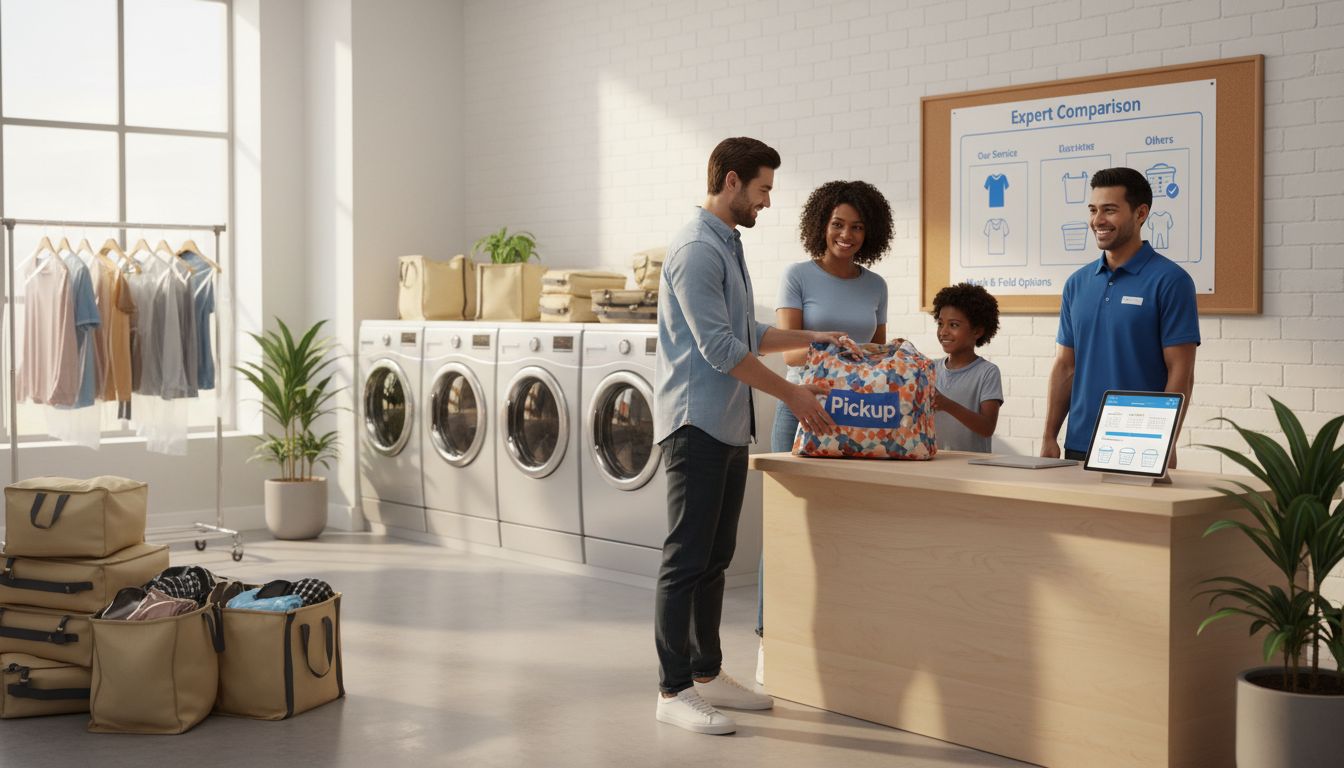
It's similar to a food delivery app, but for your clothes. You schedule a pickup, place your items out, and a driver collects them. The laundry is cleaned professionally, folded or hung based on the service, and returned to your door.
That simple description helps, but people still get confused about what is included. They wonder if this means wash and fold only, whether dry cleaning is separate, whether they need to be home, and whether the process is awkward the first time. Most of that uncertainty disappears once you picture the service as a routine, not a special event.
The basic model
Laundry pickup & delivery usually works in four parts:
- You schedule a pickup. This is done online or through an app.
- You place your items in a bag. For a first order, many services accept an ordinary bag.
- The provider cleans the items. Everyday clothes go through wash and fold. Garments that need solvent cleaning, pressing, or hanger return go through dry cleaning.
- Your clean items come back. Folded stacks, hanging garments, and any requested care preferences are handled before delivery.
That’s the whole idea. Instead of you doing transport, waiting, washing, drying, and folding, the provider takes over the full chain.
How it differs from doing laundry yourself
The biggest difference isn’t only convenience. It’s that the task becomes managed.
At home, laundry depends on your time, your machine capacity, your detergent, your attention, and your willingness to stop what you’re doing every time a cycle ends. At a laundromat, you also add travel, waiting, hauling bags, and machine availability.
With pickup and delivery, you’re replacing all of that with a scheduled service. That matters because laundry tends to interrupt other parts of life in small but annoying ways.
Here’s a simple comparison:
| Option | What you handle | What the service handles |
|---|---|---|
| At home | Sorting, washing, drying, folding, timing, supplies | Nothing |
| Laundromat | Transport, loading, waiting, folding, carrying back | Machines only |
| Laundry pickup & delivery | Bagging items and adding notes | Pickup, cleaning, folding or hanging, return |
Practical rule: If a chore keeps reappearing and breaking up your week, it’s a good candidate for outsourcing.
Why people stick with it
The first order often feels like a test. After that, many people stop thinking of it as “using a service” and start thinking of it as how laundry gets done now.
That shift happens because the benefit is bigger than clean clothes. It gives you permission to stop spending personal time on a task that doesn’t need your attention. Your clothes still come back clean and ready. The difference is that your evening or weekend remains intact.
For families, that can mean less tension at home. For professionals, it can mean a more reliable wardrobe without a late-night reset. For small businesses, it can mean steady linen and garment care without assigning it to staff. The service is simple on purpose. Its primary value is what it removes from your calendar and your head.
The Columbia Pike Laundry Process From Door to Drawer
When people hesitate to try laundry pickup & delivery, it’s usually because they can’t quite see the handoff. What bag do you use? What if you have dry cleaning too? What if you live in an apartment? A clear process solves most of that.

One reason reliable services feel easy is that the operation behind them is disciplined. In commercial laundry routing, route optimization can reduce vehicle miles by 15% to 25% and support over 95% on-time deliveries, helping prevent a standard turnaround from slipping into a much longer wait, as explained in Linentech’s guide to route planning techniques for commercial laundries.
Scheduling your pickup
You start by choosing a pickup window online or in an app. The goal is to fit the service into your life, not the other way around. If you already know your household rhythm, weekly or bi-weekly recurring service usually feels easiest because it removes one more thing to remember.
You’ll also add the practical details that make pickup smooth:
- Pickup location: Front porch, lobby, front desk, or another approved spot
- Building access notes: Door codes, package room instructions, or entry limitations
- Care preferences: Detergent, drying preferences, hanging requests, or folding notes
For apartment residents, this part matters. Clear building instructions make the service feel normal instead of complicated.
Preparing your laundry
The first order is usually simpler than people expect. Place your laundry in a bag. A trash bag, tote, or other sturdy bag works for that first pickup. Afterward, many services return items in a reusable laundry bag for future orders.
If you’re mixing wash and fold with dry cleaning, keep them in separate bags and label them if you can. That one habit prevents confusion and keeps the right items in the right cleaning stream.
A quick prep checklist helps:
- Everyday laundry: Shirts, jeans, pajamas, socks, towels
- Separate dry cleaning: Suits, dresses, blouses, specialty fabrics
- Add notes for exceptions: Delicates, fragrance-free requests, hang-dry items
- Flag bulky items: Comforters, blankets, bath mats, or anything oversized
Contactless pickup
You don’t need to wait at home for the driver. Contactless pickup works best when the pickup location is consistent and easy to identify. Leave the bag where instructed, and the driver collects it.
That small detail changes the whole feel of the service. Laundry no longer requires a block of time. It becomes something that happens in the background while you work, take care of your kids, or move through your day.
Leave clear instructions once, and future pickups get much easier. Good laundry service runs on routine.
Professional cleaning and order tracking
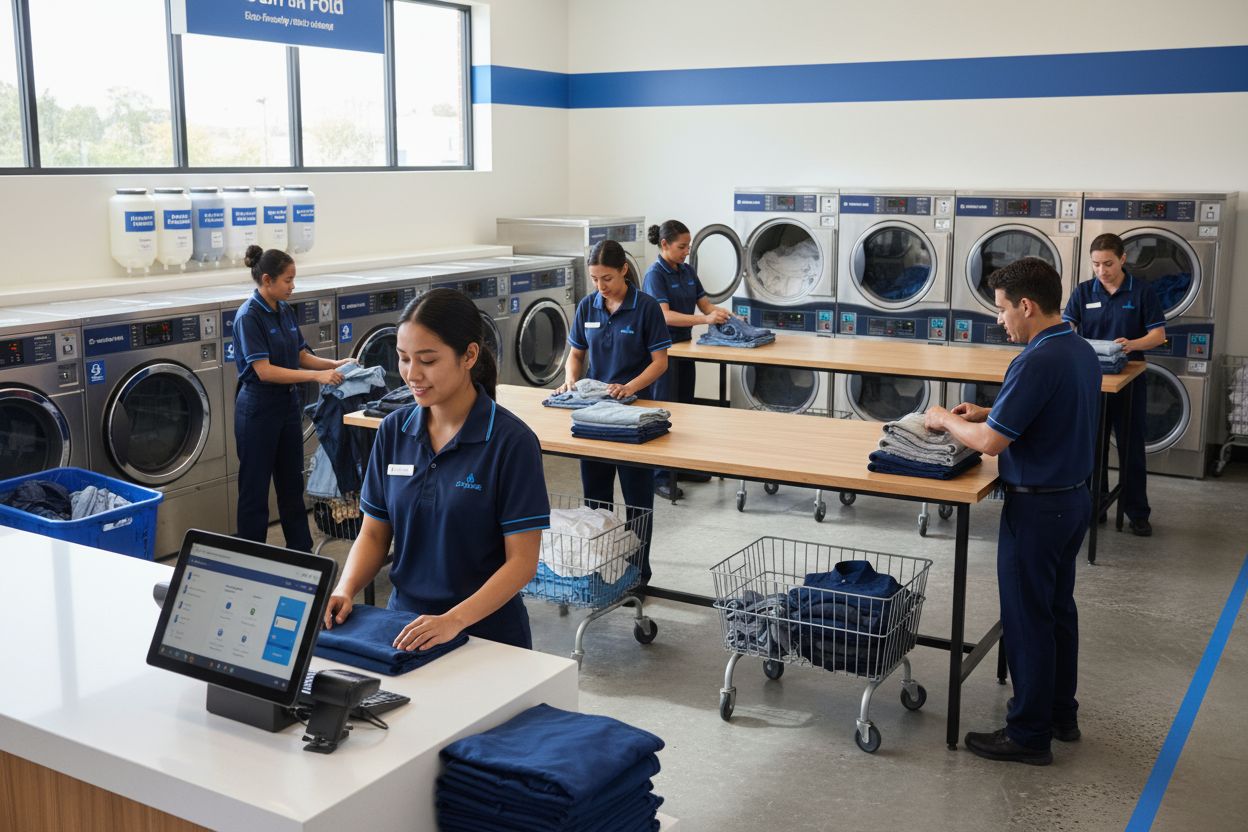
At the facility, the work becomes careful and item-specific. Everyday laundry is sorted, washed, dried, and folded. Whites, colors, and delicates are separated to protect fabrics. If you’ve added profile preferences, those instructions guide detergent, drying, and finish.
Dry-clean-only garments follow a different path. They’re handled separately and usually return on hangers rather than folded.
Behind the scenes, strong operations use tracking to follow the order from pickup through cleaning and return. That matters because it reduces avoidable delays and helps customer support answer questions quickly. It also makes mixed orders more manageable, since laundry and dry cleaning may move on different timetables before being returned properly.
Prompt delivery and the final handoff
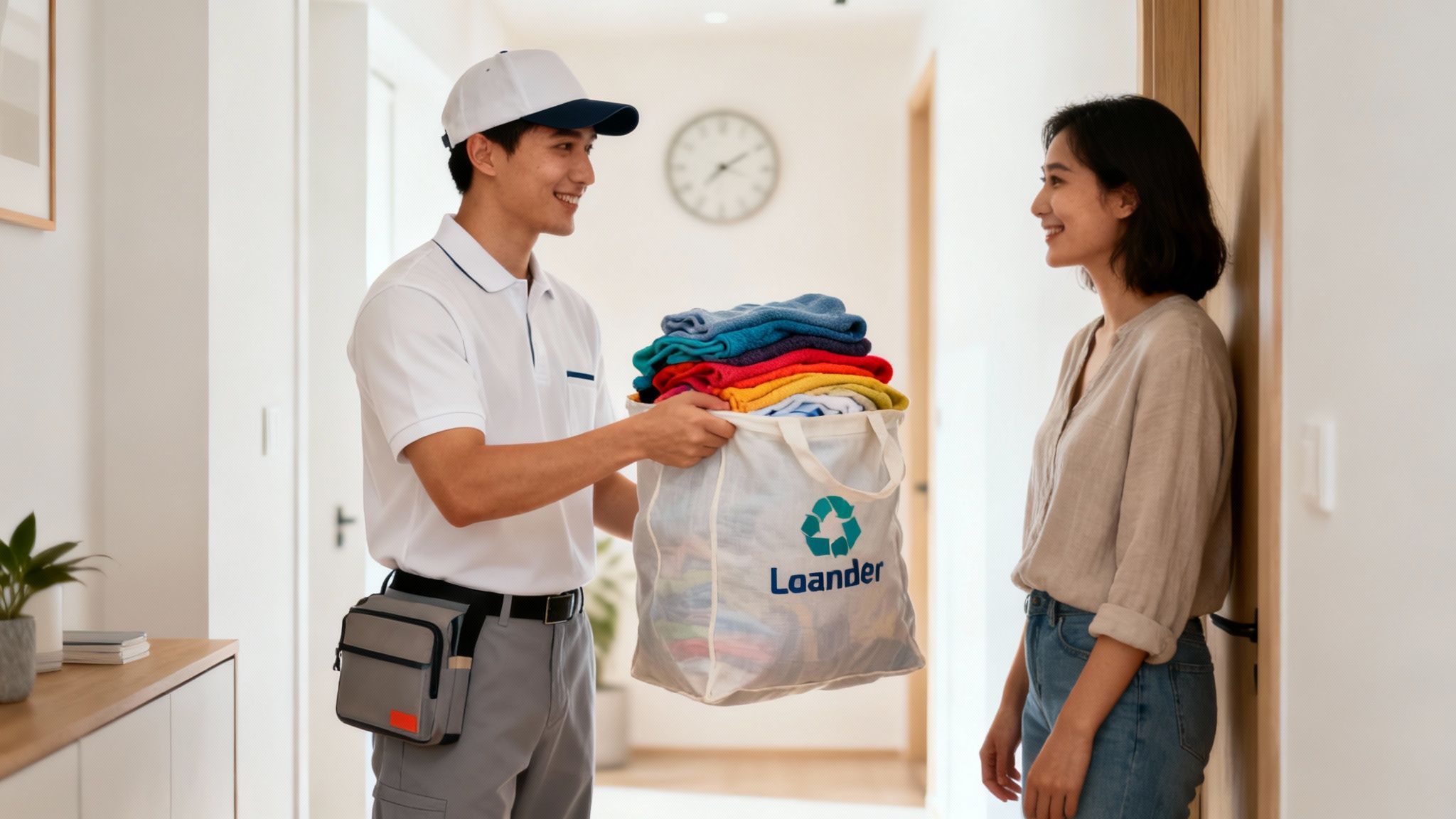
A dependable service should bring your clothes back ready to put away, not ready for more work. Laundry should arrive folded neatly. Dry-cleaned items should return pressed and hanging. If you requested certain pieces to be hung instead of folded, that instruction should carry through.
This is also where a local provider like Columbia Pike Laundry fits for households that want wash and fold, dry cleaning, and pickup and delivery in one system. The service supports contactless pickup, customer profiles with cleaning preferences, and separate handling for combined orders.
The ultimate goal isn’t the delivery itself. It’s opening the bag and being able to put items straight into drawers and closets without spending another hour “finishing” the chore.
Simple Pricing for a Simpler Life
People often ask about cost because they’re trying to compare this service to doing laundry themselves. That’s fair, but the better comparison is between a repeating chore that keeps interrupting your week and a system that removes it.
Laundry pricing usually follows three simple models. Wash & Fold is charged by the pound. Dry Cleaning is priced per item. Bulky household pieces are often charged by the piece because they take different handling and machine space.
How to read laundry pricing without getting lost
A lot of confusion comes from mixing service types together. If you know which bucket an item belongs in, pricing starts to make sense fast.
| Service type | Common pricing model | Typical examples |
|---|---|---|
| Wash & Fold | By the pound | T-shirts, pants, towels, kids’ clothes |
| Dry Cleaning | Per item | Suits, dresses, blouses, jackets |
| Bulky items | Per piece | Comforters, blankets, bath mats |
For example, a comforter may be priced differently depending on the care label. A machine wash and fold comforter costs $25, while a comforter that requires dry cleaning costs $30-35.
Why order minimums exist
Pickup and delivery adds transportation, scheduling, and route planning to the cleaning itself. That’s why many providers set a minimum order.
High-volume operations can keep minimums workable by using end-to-end tracking software that reduces turnaround delays by 20% to 30% and supports route efficiency across service areas such as Arlington and DC, which helps make minimums like $50 viable, according to Curbside Laundries’ write-up on scaling pickup and delivery.
At Columbia Pike Laundry, the pickup and delivery minimum is $50. For many people, that helps to visualize as about 15 pounds of laundry, roughly a kitchen-sized trash bag stuffed with clothes. In-store drop-off has a $38 minimum.
A minimum isn’t there to make a simple order harder. It’s there because a route, a driver, tracking, and return delivery all have to work together for the service to stay consistent.
Thinking in terms of household systems
If you’ve ever compared home cleaning services, you’ve probably seen a similar pattern. The structure is less about charging for every minute and more about matching pricing to labor, travel, and type of work. This is why a practical explainer like Shiny Go Clean Madison's pricing guide can be useful. It helps frame household services as systems with clear cost logic, not random fees.
For readers who want the exact current rates for wash and fold, dry cleaning, and larger items, the easiest place to check is the pricing for hassle-free laundry delivery.
Recurring service is where many people feel the mental relief most. Once pickup happens weekly or bi-weekly, laundry stops being a question and starts being handled.
A Service for Every Schedule and Situation
The value of laundry pickup & delivery changes depending on who’s using it. The process may be the same, but the relief looks different in each household or workplace.

One issue that gets overlooked is mixed orders. A 2025 survey found that 37% of users reported errors from poor mixing instructions when wash and fold and dry cleaning were not clearly separated. Clear bag separation and order notes help prevent those mistakes.
For busy professionals
If you wear office clothes, business casual, uniforms, or workout gear in the same week, laundry can get messy fast. Everyday items need routine washing. Dress shirts, slacks, or suits may need separate care. Without a system, everything ends up in one pile until Sunday evening.
That’s where combined pickup becomes useful. You can send wash and fold in one labeled bag and dry-clean-only pieces in another, then let the provider route them correctly. You don’t need two errands or two reminders. You need one pickup and clear instructions.
For families with children
Families don’t usually struggle because they can’t wash clothes. They struggle because laundry is constant. School clothes, towels, bedding, sports uniforms, and the surprise midweek mess all stack onto the same cycle.
When a family uses pickup and delivery regularly, the biggest shift is often emotional. The weekend feels less reactive. Instead of facing “laundry mountain,” parents can treat clean clothes as a completed household function.
A simple family setup often looks like this:
- One bag for regular clothes: Everyday shirts, pants, pajamas, play clothes
- One bag for special handling: Delicates, stain notes, air-dry requests
- A repeating day: Weekly or bi-weekly pickup to stop buildup before it turns into a pile
For apartment residents
Apartment living adds a layer that people in single-family homes sometimes forget. Shared laundry rooms can be inconvenient, but even with service, building logistics matter. Front desks, package rooms, call boxes, elevators, and door codes can all affect the handoff.
That’s why delivery instructions aren’t a small detail. They’re part of the service working well. If your building only allows drivers to go as far as the front desk or package room, clear notes create a stable routine. Once that routine is set, the service stops feeling complicated.
In apartment life, the best service is the one that fits the building you already live in.
For small businesses and care-focused settings
Small businesses often need clean linens, towels, uniforms, or staff garments without asking employees to handle the laundry pipeline themselves. Health and wellness spaces, salons, and other service businesses especially benefit from consistency. Clean inventory supports the customer experience. It also reduces one more operational task inside the business.
For older adults or people with mobility concerns, the benefit is different but just as important. Carrying bags, bending for machines, and moving wet laundry can be physically taxing. Pickup and delivery helps preserve independence while reducing strain.
In all of these situations, the service works best when it removes chaos, not just labor. Clean laundry matters. A calmer week matters too.
Answering Your Top Laundry Service Questions
Even after people understand the process, a few trust questions usually remain. They’re sensible questions. You’re handing over clothing you wear every day, and you want to know exactly how it’s handled.
With 45% of households in major markets like DC and Arlington located in multi-unit buildings, delivery details such as front desks, package rooms, and door codes become a real service requirement, especially since delivery access is a barrier for about 1 in 4 potential users in those settings.
Is my laundry washed with other people's clothes
No. Your laundry should be washed and dried separately. That protects privacy, supports hygiene, and reduces mix-ups.
This is one of the clearest signs of a careful operation. If a provider can’t answer this directly, keep asking questions.
Can I use my own detergent or ask for fragrance-free care
Yes. Many services let you add detergent preferences in your account or order notes. Columbia Pike Laundry uses Free & Clear detergent by default, and customers can also request alternatives or provide their own detergent.
That matters for sensitive skin, household preferences, and anyone who doesn’t want a strong scent on clothing or bedding.
What if I have both laundry and dry-clean-only items
You can usually send both in the same pickup as long as they’re in separate, labeled bags. That’s the safest way to avoid confusion. If you need items that require specialty garment care, use a provider that also offers dry cleaning so those pieces stay in the proper cleaning stream.
If you need a specific dry-cleaning timeline for a particular garment, the right answer is to ask the team to confirm it directly rather than assume.
Do I need to be home for pickup or delivery
Usually, no. Contactless service is common. You leave your items in the designated location, and the driver picks them up and returns them according to your instructions.
For apartments and condos, include detailed notes about entry rules, front desk procedures, lobby drop-off, or package room access. That’s often the difference between a smooth experience and a frustrating one.
What if there’s a problem with my order
A dependable provider should have a straightforward service recovery process. If something needs to be re-cleaned or corrected, contact the business right away and explain the issue clearly.
Good laundry service doesn’t mean nothing ever goes wrong. It means the team responds, tracks the order, and fixes the problem without turning it into your next project.
Stop Doing Laundry and Start Living
The biggest benefit of laundry pickup & delivery isn’t that you avoid a machine. It’s that you stop giving a repeating chore so much of your time, attention, and weekend energy.
That’s why this choice feels bigger than outsourcing. You’re setting up a household rhythm that removes clutter from your schedule and from your mind. Clean clothes still appear. Towels still get washed. Workwear still comes back ready. But you’re no longer the person carrying the whole process every week.

“Laundry isn’t your job anymore” works because it gets to the point. The time you get back can go to rest, family, errands that actually need you, or a weekend that feels like your own again.
If you’re ready, keep it simple. Schedule the first pickup and see how it feels. If you already know laundry is a constant source of drag, set up a recurring service and let the routine carry the load for you.
If you're ready to hand off the chore and get some breathing room back, schedule a pickup with Columbia Pike Laundry. If a regular rhythm sounds better than one more weekly decision, set up recurring service and let laundry become one less thing you have to think about.
Free pickup, expert care, delivered back to your door.
Popular Blog Articles


Meet the Author
Daniel Logan didn’t start CPL because he loved laundry. He started it because his family was drowning in time debt, and laundry was one of the biggest weights.
Mornings were chaos with two kids under 5. Evenings felt like catch-up. And weekends? Gone to sorting socks and folding piles.
He knew his story wasn’t unique. So he built a business that gave families like his just a little bit of breathing room one load at a time.
With no laundry experience but deep tech skills, Daniel rolled up his sleeves, doing every job himself while building systems that turned it into a modern laundry service that saves customers time, simplifies their lives, and delivers reliability they can count on.
That’s where CPL began. Not from a playbook, but from pain. From one dad trying to buy back time: for himself, and for every household like his.
Free pickup, expert care, delivered back to your door.