
A Complete Guide to Laundry Stripping for Fresher Fabrics
Columbia Pike Laundry offers pickup & delivery across Northern Virginia.
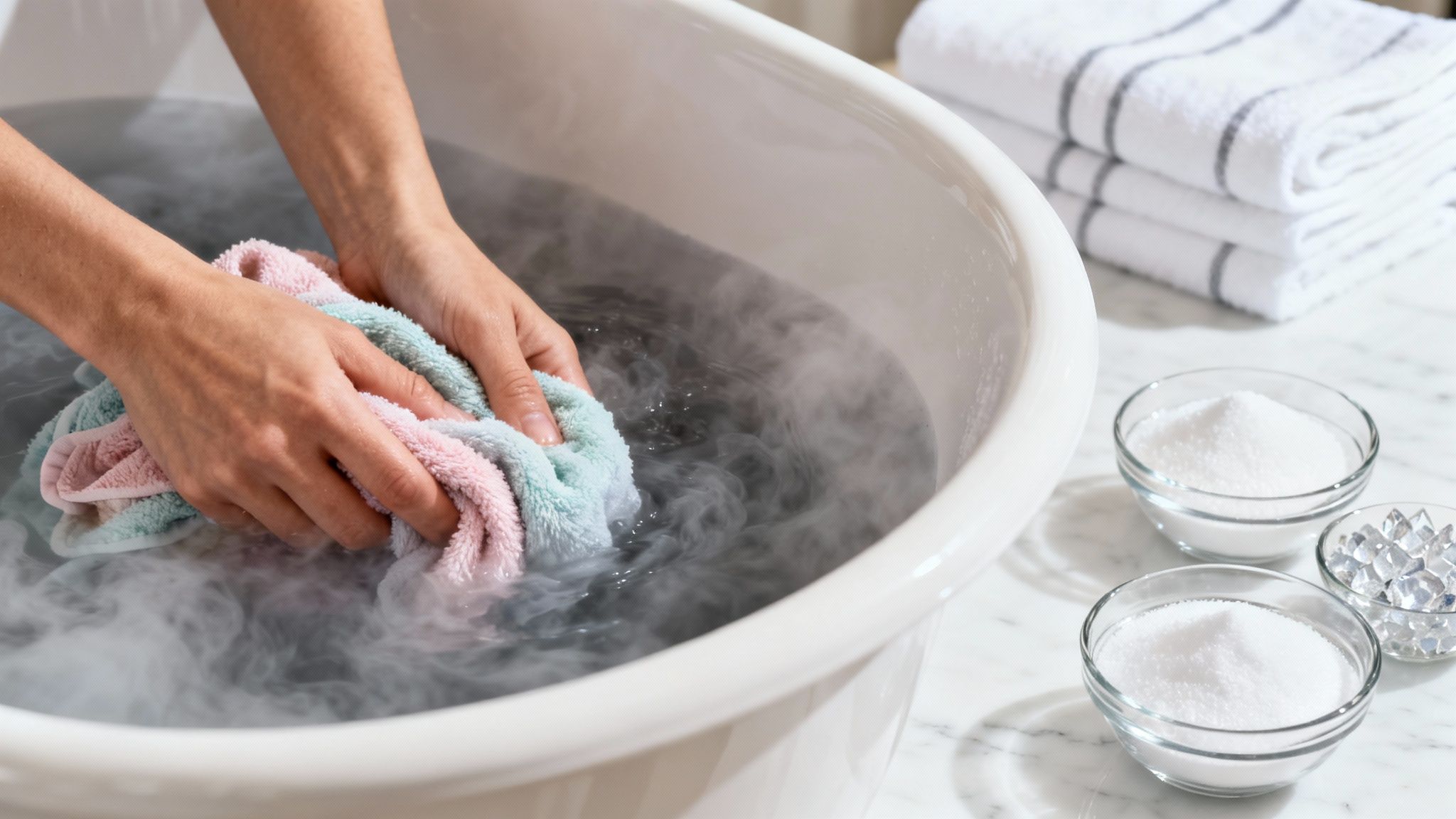
Laundry stripping is essentially a deep-cleaning soak for your clothes and linens. It's a way to get rid of all the gunk that builds up over time—stuff like detergent residue, fabric softener, minerals from hard water, and body oils that a normal wash cycle just can't handle.
Think of it as a serious detox for your fabrics. It’s especially effective for those towels that just don't feel soft anymore or sheets that have lost that crisp, fresh feeling. The process is famous (or maybe infamous) for turning the water a shockingly murky color, which is all the proof you need that it's working.
Why Your "Clean" Laundry Isn't Actually Clean
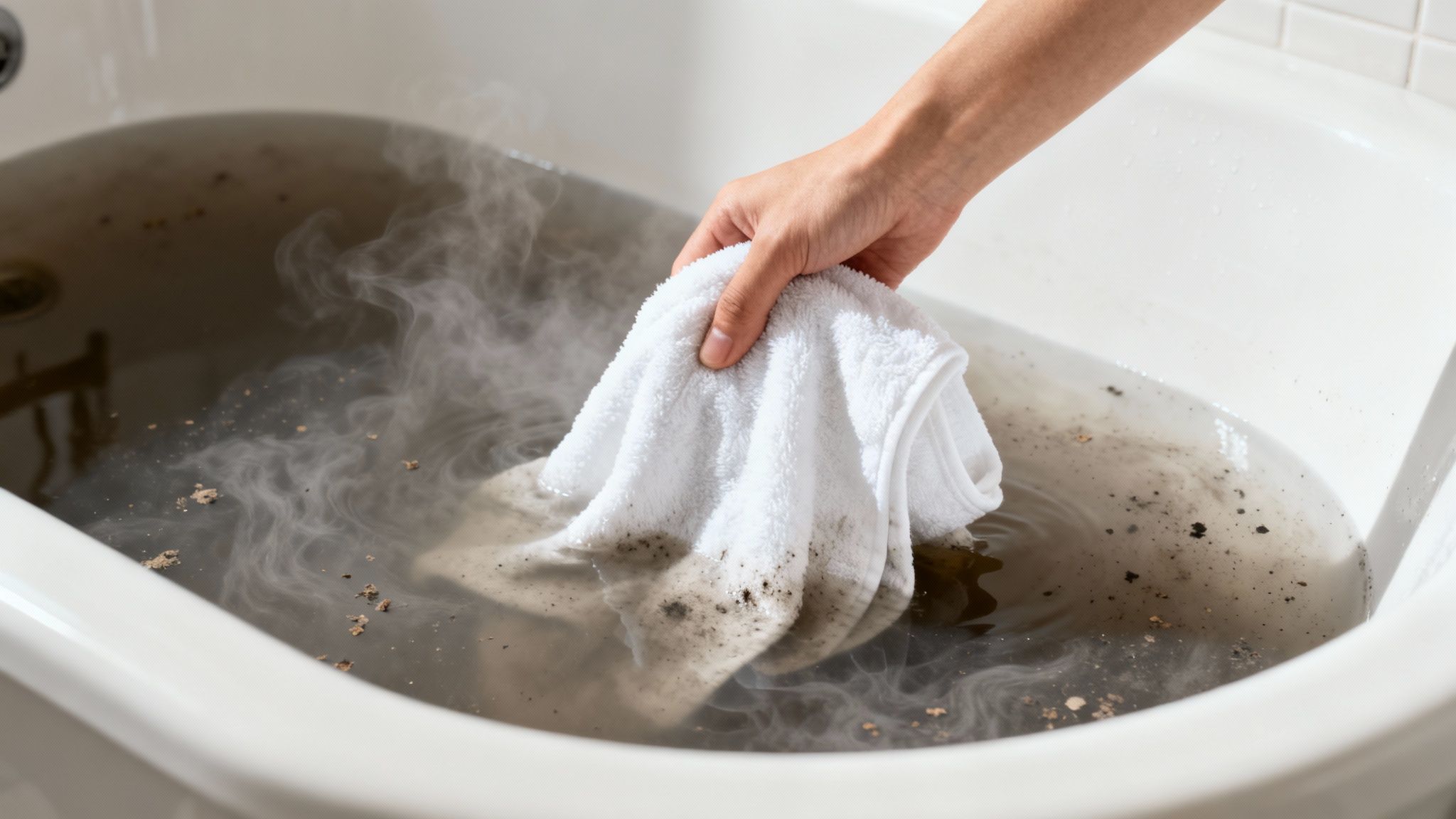
Ever pull a load of towels from the dryer and wonder why they feel stiff or aren't as absorbent as they used to be? Maybe you’ve noticed a faint, musty smell that just won't go away. That's the classic sign of residue buildup.
Over time, almost invisible layers of grime embed themselves deep within the fabric fibers. Even the best washing machines, especially if you have hard water, can't always rinse everything away. Detergent residue, waxy fabric softeners, and body oils combine to create a film that traps odors and makes fabrics feel less than fresh. It's a similar challenge to removing stubborn soap residue from other household materials.
The Problem with Buildup
This buildup isn't just about how your laundry feels. It directly affects how it works. Your high-performance workout gear might hold onto sweat odors no matter how many times you wash it, or your kitchen towels might just push spills around instead of soaking them up. This is exactly what laundry stripping is designed to fix.
Laundry stripping zeroes in on several common types of buildup that regular washing often misses. Understanding what you're up against can help explain why your fabrics aren't feeling as fresh as they should.
Common Types of Laundry Buildup Targeted by Stripping
Each of these culprits contributes to that feeling of "un-clean" laundry, even when it's fresh out of the dryer.
The real magic of laundry stripping is in its simplicity. By combining very hot water with a few powerful cleaning agents, you can break down and dissolve these stubborn residues, literally pulling them out of the fabric. The result is laundry that is restored to a cleaner, softer, and more effective state.
It's no surprise that this deep-cleaning method has gained so much traction. It aligns with a growing consumer interest in getting a truly perfect clean, a trend reflected in the global laundry care market. That market was valued at USD 107.4 billion and is expected to climb to USD 172.3 billion by 2034. The whole point of stripping is to cut through all the products we add to our laundry and get back to the clean fabric underneath.
Getting Your Stripping Supplies Ready
Before you can get to the strangely satisfying part—seeing all that gunk come out of your "clean" laundry—you'll need to round up a few key supplies. Don't worry, there’s nothing exotic on this list. You can find everything you need right in the laundry aisle of most grocery stores.
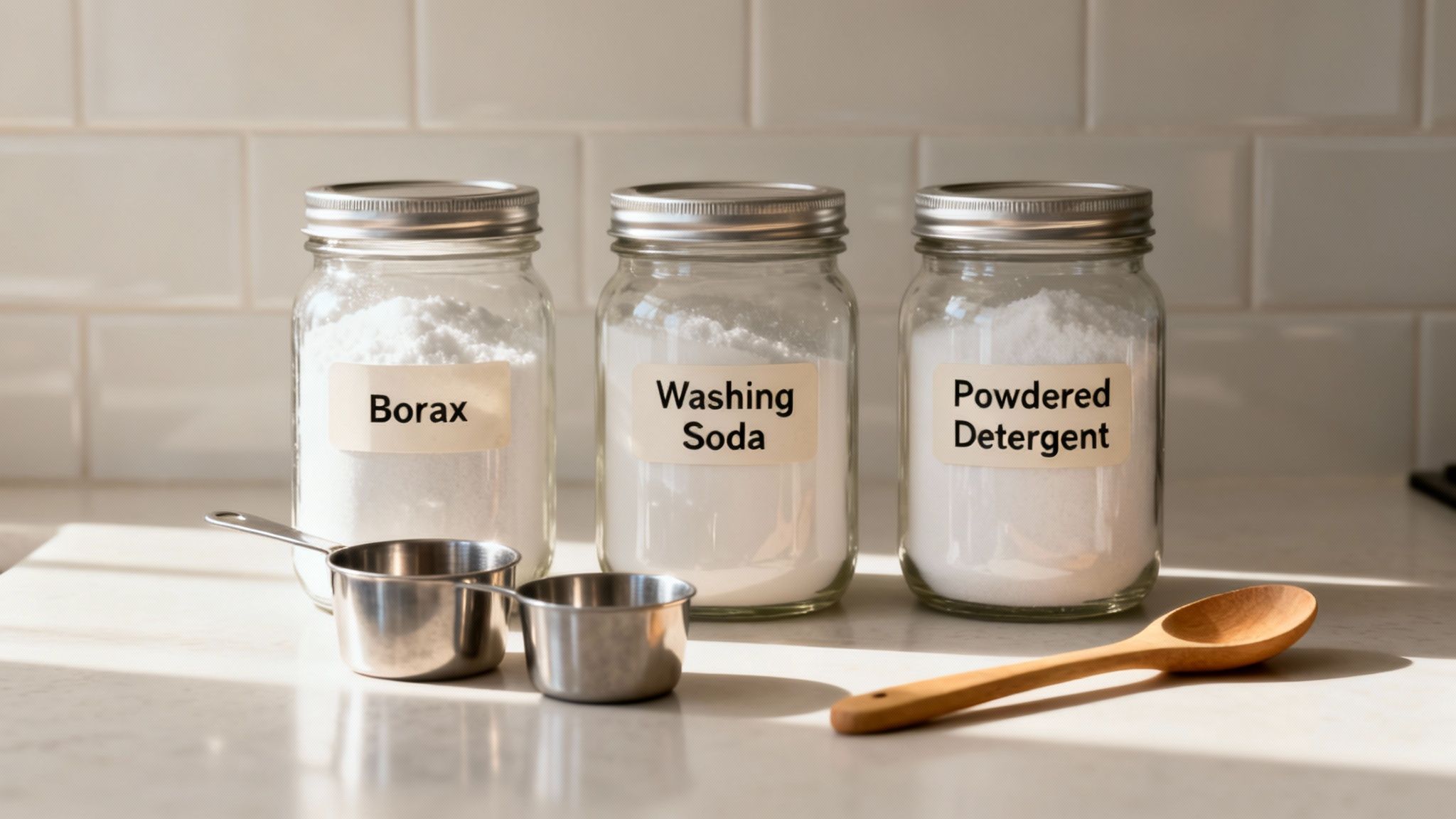
The real power of laundry stripping comes from a specific trio of ingredients working together. It’s this combination that creates a super-soak capable of breaking down buildup that your regular wash cycle just can’t touch.
The Laundry Stripping "Recipe"
Think of this as your core toolkit. You only need three things, and each one has a specific job in getting the grime out of your fabrics.
Borax (Sodium Borate): This is your water softener. Hard water is full of minerals that prevent detergents from working properly. Borax takes care of that, giving your detergent a fighting chance to get things clean. If you're curious about the science, you can learn more about using borax for laundry stripping in our detailed guide.
Washing Soda (Sodium Carbonate): This is different from baking soda, so make sure you grab the right box! Washing soda is highly alkaline, which makes it a powerhouse for dissolving tough, greasy, and oily residues that have embedded themselves deep in the fibers.
Powdered Laundry Detergent: You absolutely need to use a powdered detergent. Liquid detergents often contain softeners and other additives that can actually contribute to the buildup you’re trying to eliminate. A simple, low-residue powder is exactly what you want here.
The real magic happens when these three ingredients team up. Borax gets the water ready, washing soda cuts through the grease, and the powdered detergent lifts and washes all that loosened gunk away.
Of course, you’ll also need somewhere to do the soaking. A clean bathtub is the go-to for most people because of its size. If you don't have one, a large plastic tub or even a top-loading washing machine (just for the soaking part, not for running a cycle) works just as well.
Your Step-by-Step Guide to Laundry Stripping
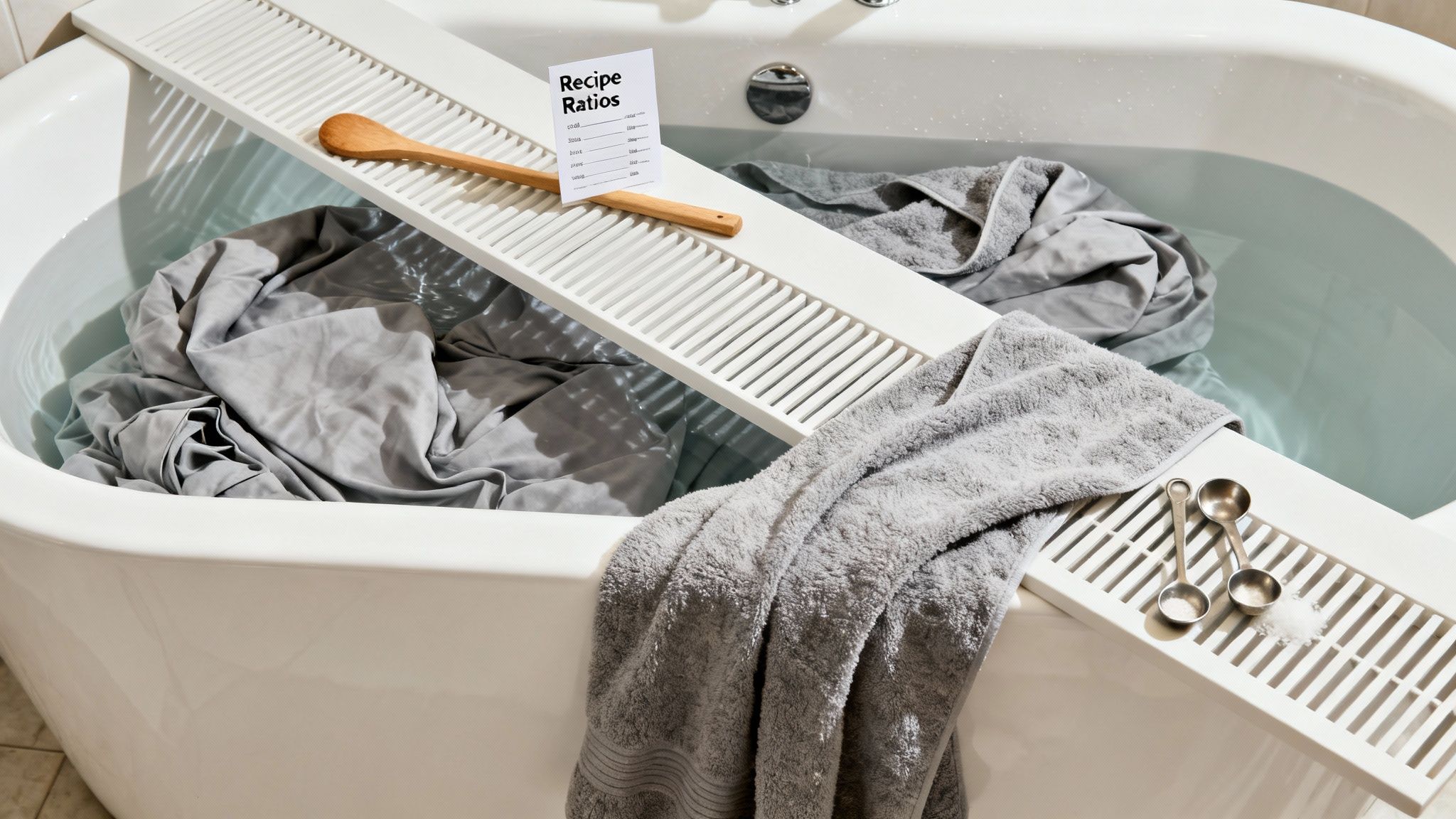
Alright, this is the part you've been waiting for. We're about to turn your bathtub into a deep-cleaning powerhouse for your laundry. This isn’t your everyday wash cycle; it’s a specific, almost scientific process designed to pull out years of buildup. The results can be a little shocking but are always incredibly satisfying.
First thing's first: fill your clean bathtub, top-loading washer, or another large basin about halfway with the hottest water you can get from the tap. Seriously, the heat is a critical part of this. It’s what helps open up the fabric fibers so we can get all the gunk out.
Mixing Up the Magic Soaking Solution
As the tub fills, you'll want to mix in your cleaning agents. We're creating a powerful cocktail that's designed to break down hard water minerals, body oils, and stubborn detergent residue. Getting the measurements right is key to success.
For a standard-sized bathtub, this recipe is a tried-and-true classic:
- ¼ cup of Borax: This softens the water and gives your detergent a serious cleaning boost.
- ¼ cup of washing soda: This stuff is a powerhouse for dissolving greasy, oily buildup.
- ½ cup of powdered laundry detergent: This will help lift and trap all the grime we're pulling out.
Pour these ingredients directly into the hot water. I usually use a long-handled spoon to give it a good stir, making sure everything is completely dissolved. You don't want any gritty powder left at the bottom, as a smooth solution ensures every item gets cleaned evenly. If you're curious about other options, we have a complete list of laundry stripping recipes you can explore.
The Big Soak
Once your stripping solution is ready and fully mixed, it’s time to add your clean laundry. Submerge the items completely, making sure each one is thoroughly soaked. Just be careful not to pack the tub too tightly—everything needs a little room to float and release its grime.
And now, we wait. Patience is key here, as this process takes anywhere from four to six hours. I make it a point to come back and give everything a good stir every hour or so. This little bit of agitation really helps the solution work its way deep into the fabric from all sides.
Get ready for the big reveal! You’ll probably see the water start to change color within the first hour. Don't panic when it turns a murky, unappealing gray or brown. That's the visual proof that it's working! You're literally seeing all the hidden oils, minerals, and old soap residue leaving your fabrics.
After several hours have passed, the water will be cool and the job is done. Drain the tub and gently squeeze the dirty water out of each piece of laundry. From there, transfer the whole load to your washing machine for one final, crucial step.
Run a water-only or rinse-only cycle. Do not add any more detergent! The goal is just to rinse away the stripping solution. After that, toss them in the dryer as you normally would. You'll be amazed at how soft, fresh, and truly clean your laundry feels.
What to Strip and What to Skip
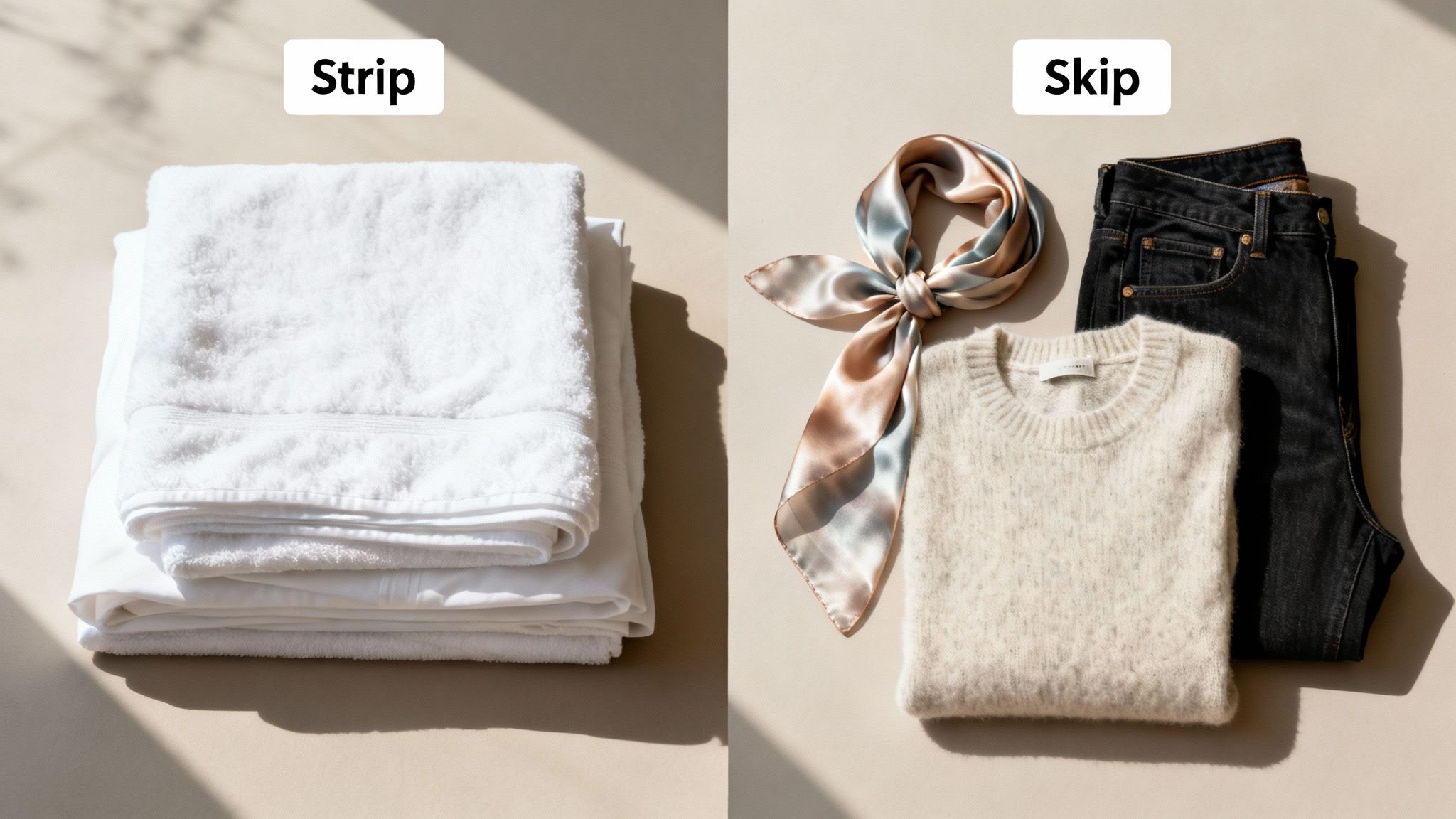
Laundry stripping is an intense deep-cleaning process, and that means it's not a one-size-fits-all solution for your entire wardrobe. Figuring out which items can handle the soak and which ones to skip is the most important step to getting great results without ruining your favorite clothes.
This method is really designed for tough, durable fabrics that see a lot of use and can stand up to hot water for a long time.
Think about the workhorses of your linen closet. Those white bath towels that don't seem as fluffy anymore? Your everyday cotton bedsheets? They're perfect for this. Stripping can cut through the built-up detergent and fabric softener residue, making them feel soft and absorbent again.
The same goes for most synthetic workout gear. Activewear is a magnet for body oils and sweat, which leads to that lingering funk even after a normal wash. Stripping can knock out that stubborn odor and bring your gym clothes back to life.
Items You Should Never Strip
Just as crucial as knowing what to strip is knowing what to keep far away from that hot, sudsy water. The combination of high heat and a potent soaking mixture can be a recipe for disaster for some fabrics.
My rule of thumb: If you'd be heartbroken to lose it, don't strip it. This is a heavy-duty cleaning technique, not a gentle refresh.
Here’s a quick list of fabrics that should sit this one out, no exceptions:
- Delicates: Anything like silk, lace, wool, or cashmere will be destroyed. The hot water can cause them to shrink, warp, or completely lose their shape.
- Vibrant or Dark Colors: If an item is new, brightly colored, or a dark shade like navy or black, it's very likely to bleed dye. You risk ruining the item itself and staining everything else in the tub along with it.
- Anything Stretchy: Spandex, leggings, and clothes with elastic waistbands are a no-go. The intense heat will break down the elastic fibers, leaving them brittle and permanently saggy.
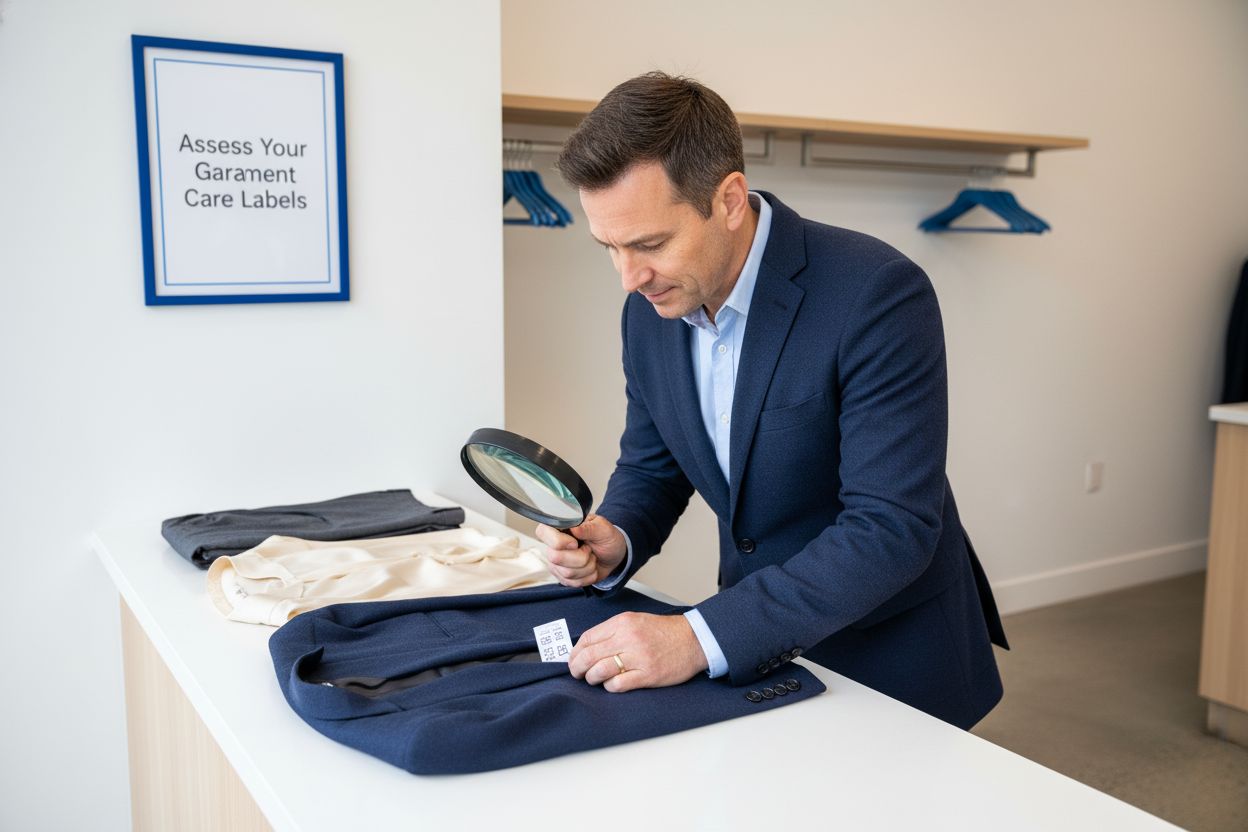
Before you toss anything into the stripping mix, take a second to check the tag. If you're not sure what those little symbols mean, our guide on how to read clothing care labels can save you from a major laundry mishap.
A Few Insider Tricks for a Perfect Strip
Getting that incredibly satisfying, deep-cleaned result from laundry stripping is pretty straightforward, but a few pro tips can make a huge difference.
First off, always start with items that are already clean. This might sound backward, but stripping isn't for removing mud or grass stains. It's designed to pull out the deep-set gunk—minerals, body oils, and detergent residue—that a normal wash cycle leaves behind.
The real magic ingredient here is very hot water. It's what opens up the fabric's fibers, allowing all that trapped buildup to finally escape. And remember, this is an intense cleaning method. Don't get carried away and start doing it every week. Think of it more as a seasonal deep clean, perfect for reviving your towels and sheets every few months.
Getting the Best Possible Results
Worried about colors bleeding? Always do a quick spot test. Just dab a hidden corner of a colored item with your hot water and borax mixture before you toss the whole thing in. It takes a second and can save you from a laundry disaster.
Don't be surprised if you notice a faint mineral-like smell after stripping, especially if you have hard water. This is totally normal and should disappear after the final rinse and dry cycle.
It’s also worth remembering that truly clean laundry starts with a clean machine. Before you even think about stripping, it’s a good idea to learn how to clean your washing machine. Otherwise, you risk transferring old grime right back onto your freshly stripped fabrics.
The demand for this level of clean is only growing. In fact, the commercial laundry market is expected to reach USD 9.9 billion by 2036, driven by consumers looking for better cleaning solutions. You can dive into the full research on these consumer cleaning trends on futuremarketinsights.com.
Your Laundry Stripping Questions, Answered
Once you get the hang of what laundry stripping is all about, a few practical questions almost always pop up. Let's walk through the most common ones so you can feel totally confident before you start your first soak.
How often should I strip my laundry?
This is probably the number one question I get. Think of stripping as a deep-cleaning reset, not a regular part of your weekly routine. It's powerful stuff, so you don't want to overdo it.
For things that see a lot of use and build-up, like bath towels and bedsheets, stripping them every three to four months is a great rhythm to get into. For really stubborn items, like gym clothes that hold onto odors no matter what, you might do it a bit more often. But even then, we're only talking a few times a year.
Can I just use my regular liquid detergent?
I know it’s tempting to use what you already have on hand, but for this, the answer is a hard no. It has to be powdered detergent.
Here’s why: liquid detergents often contain softeners, conditioners, and other additives that can actually contribute to the very residue you're trying to strip away. Powdered detergents, on the other hand, usually have a simpler, more direct formula that's much better at breaking down grime without leaving anything behind.
Is this going to hurt my washing machine or pipes?
It's a valid concern! You're mixing up a pretty potent concoction, after all. But rest assured, it's highly unlikely to cause any harm. The ingredients—Borax, washing soda, and detergent—are all common laundry boosters that people have used for decades.
When you get to that final rinse cycle in the machine, the stripping solution is so heavily diluted that it poses no more risk to your washer or your home's plumbing than a normal load of laundry.
What about my septic system?
If you have a septic tank, you're right to be cautious about what goes down the drain. The good news is that laundry stripping is generally considered septic-safe, as long as you treat it as an occasional deep clean.
The ingredients are biodegradable. In the small amounts you’re using just a few times a year, they won't throw off the crucial bacterial balance in your tank. Moderation is key here.
If you love the idea of perfectly clean laundry without the deep-soaking marathon, let Columbia Pike Laundry take care of it for you. We offer professional wash & fold and dry cleaning services with easy pickup and delivery, giving you back your time and peace of mind. Schedule your first pickup and see the difference.
Free pickup, expert care, delivered back to your door.
Popular Blog Articles

Meet the Author
Daniel Logan didn’t start CPL because he loved laundry. He started it because his family was drowning in time debt, and laundry was one of the biggest weights.
Mornings were chaos with two kids under 5. Evenings felt like catch-up. And weekends? Gone to sorting socks and folding piles.
He knew his story wasn’t unique. So he built a business that gave families like his just a little bit of breathing room one load at a time.
With no laundry experience but deep tech skills, Daniel rolled up his sleeves, doing every job himself while building systems that turned it into a modern laundry service that saves customers time, simplifies their lives, and delivers reliability they can count on.
That’s where CPL began. Not from a playbook, but from pain. From one dad trying to buy back time: for himself, and for every household like his.
Free pickup, expert care, delivered back to your door.