
Professional Dry Cleaning Near Me - Arlington Experts

Columbia Pike Laundry offers pickup & delivery across Northern Virginia.
By the time many people search professional dry cleaning near me, they’re not casually browsing. They’re standing over a chair piled with clothes, checking a care label they don’t trust, or noticing a stain at the worst possible moment.
Sometimes it’s not even about the stain. It’s about the weight of one more household task. One more thing to sort, wash, dry, fold, hang, and remember. Clean clothes matter, but so does your time. So does your patience. So does walking into Monday feeling prepared instead of behind.
Professional garment care can help with both. It can protect fabrics that don’t do well in a regular wash, and it can also give you back hours you’d rather spend with your family, your work, or your own quiet evening.
Reclaiming Your Weekend from Laundry Chaos
Sunday evening has a way of turning a small pile of clothes into a full mental burden. The kids need uniforms. Your favorite work shirt still isn’t clean. The comforter has been sitting in the corner for a week because it won’t fit well in a home machine. Then someone spills coffee on a blazer you need tomorrow.
That’s when the search for professional dry cleaning near me starts to feel less like a luxury and more like a practical reset.

More households are making that choice. The U.S. dry-cleaning and laundry services market reached USD 9.80 billion in 2024 and is projected to grow to USD 10.36 billion in 2025, with growth tied to on-demand pickup and delivery as busy professionals and families prioritize convenience, according to Press Cleaners’ 2025 dry cleaning statistics overview.
What you’re really buying back
You’re not only paying for cleaned garments.
You’re paying for fewer chores competing for your attention. You’re paying for a suit that’s ready when you need it, a dress that hangs correctly, and a week that feels a little less crowded.
Practical rule: If laundry regularly steals time from rest, family routines, or work prep, outsourcing it isn’t indulgent. It’s a household system.
Relief looks different for different people
For a parent, relief might mean not spending part of Saturday sorting tiny socks and school clothes.
For a professional, relief might mean skipping a last-minute trip to the store before a meeting.
For an older adult or a caregiver, relief might mean avoiding the physical strain of hauling bags, lifting wet laundry, or wrestling with bulky bedding.
That’s why local professional cleaning matters. The closest good option isn’t just nearby. It becomes part of the rhythm of your week, like grocery delivery or a reliable mechanic. Once that routine is in place, laundry stops setting the tone for your days.
What Professional Dry Cleaning Really Means
A lot of people hear “dry cleaning” and picture clothes getting cleaned without any liquid at all. That’s the confusing part. Dry cleaning isn’t dry. It uses a liquid solvent instead of water.
A simple way to think about it is your stovetop after cooking bacon. If grease is stuck to the pan, plain water won’t do much. You need something that can break down oily residue. Fabrics work the same way. Some stains and some fibers respond better to solvent than to water.
Why water works sometimes and fails other times
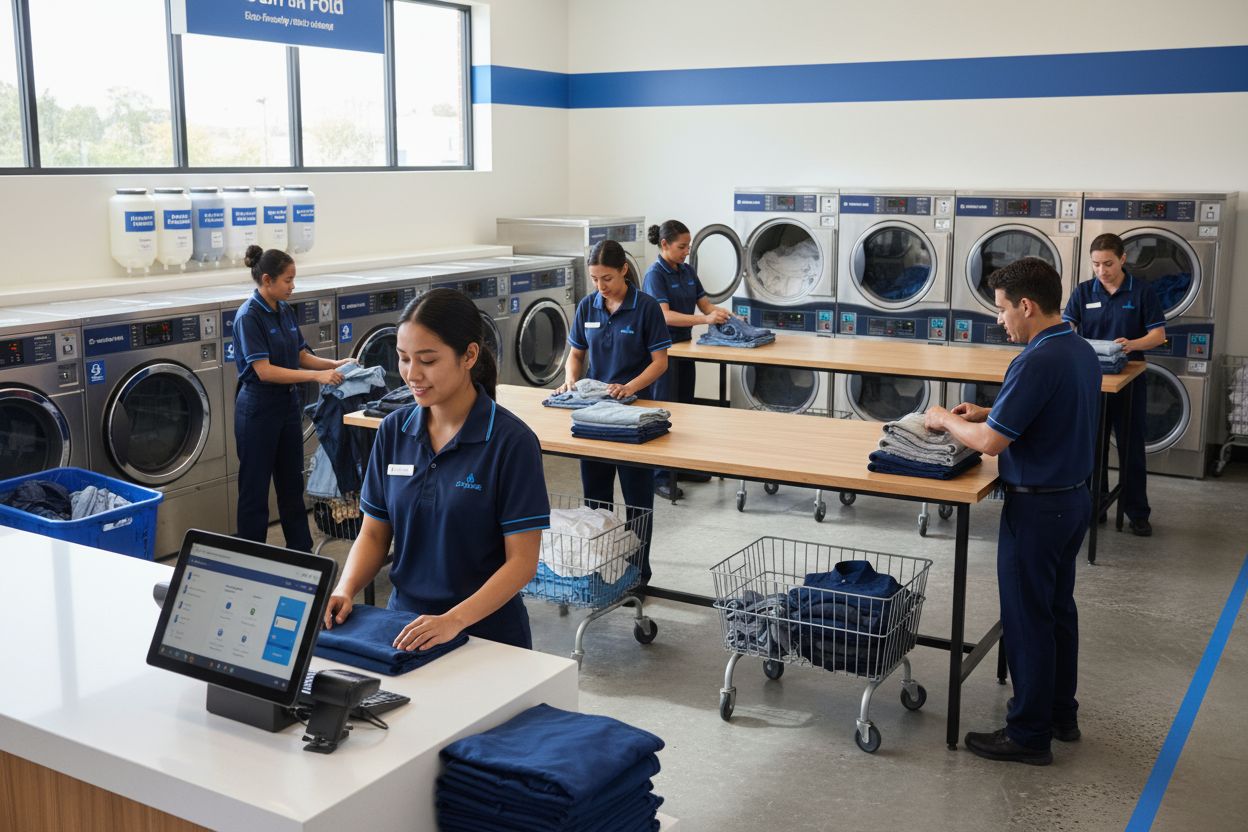
Wash and fold is great for everyday clothes like T-shirts, pajamas, towels, and many kids’ items.
But wool jackets, silk blouses, lined dresses, and structured garments often need a different approach. Water can swell fibers, distort shape, or leave delicate fabrics looking tired. Oil-based stains are another trouble spot.
Professional cleaning uses non-aqueous solvents such as GreenEarth® to remove oil-based stains. That solvent’s low surface tension helps it move deeper into fibers, reaching up to 95% stain removal efficiency on wool and silk without the shrinkage or damage water can cause, as described by Martinizing’s explanation of professional dry cleaning.
What happens during the process
A good cleaner doesn’t just drop garments into a machine and hope for the best.
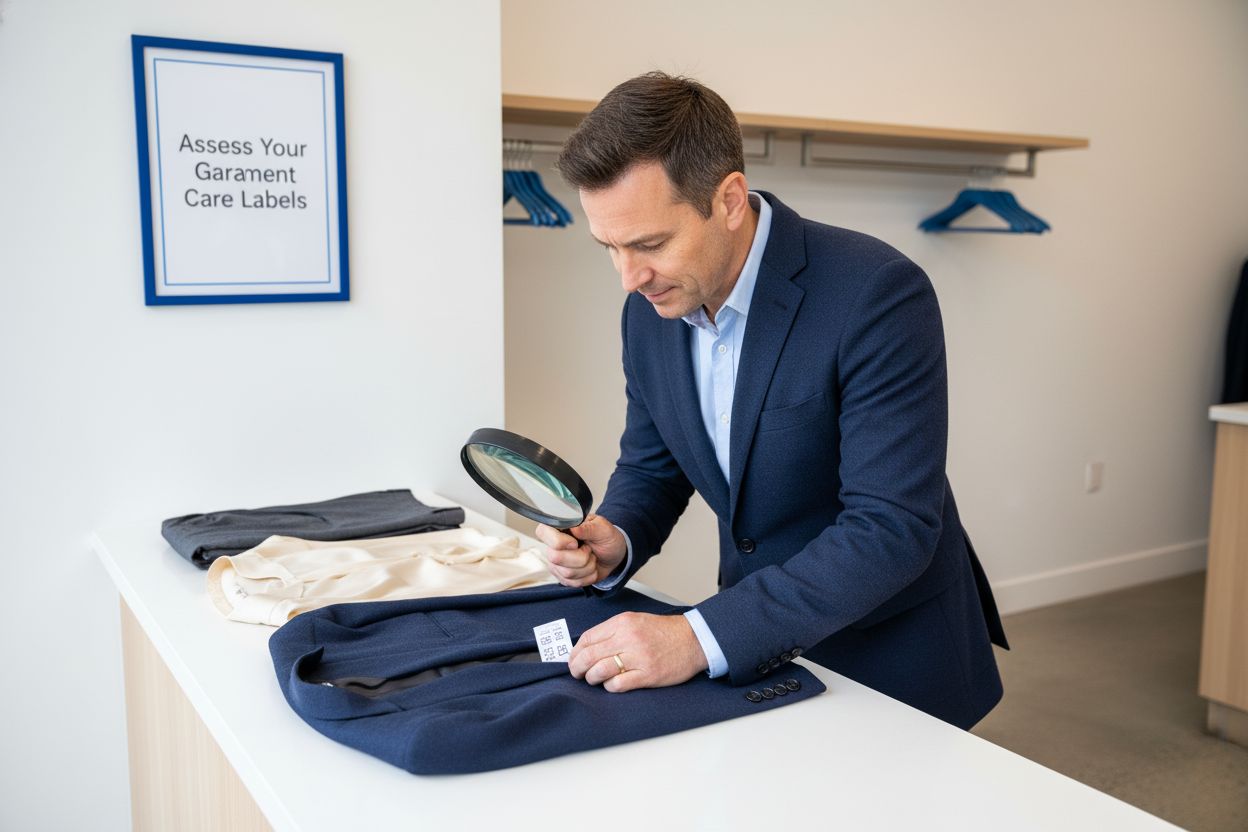
The work usually starts with inspection. Someone checks the care label, looks for stains, notices missing buttons or weak seams, and decides what kind of treatment the item needs. Then the garment is pre-treated where needed, cleaned in solvent, dried carefully, and finished with pressing.
That inspection step matters more than people realize. If you’ve ever wondered why a stain that survived your home wash disappears at a cleaner, it often comes down to early identification and targeted treatment.
Some garments don’t need “stronger” cleaning. They need more appropriate cleaning.
Wash and Fold vs. Dry Cleaning
| Characteristic | Wash & Fold Laundry | Professional Dry Cleaning |
|---|---|---|
| Main cleaning method | Water and detergent | Liquid solvent instead of water |
| Best for | Everyday clothing, towels, basics | Suits, dresses, wool, silk, structured garments |
| Stain strength | Good for common dirt and sweat | Better for many oil-based stains |
| Risk to delicate fabrics | Can cause shrinkage or shape changes on sensitive items | Gentler for many delicate or structured garments |
| Typical finish | Folded, sometimes hung on request | Usually returned pressed on hangers |
| Common use case | Weekly household laundry | Garments that need shape, drape, or specialty care |
If you’re deciding whether a garment belongs in laundry or dry cleaning, the care label is the first clue. The fabric and garment structure are the second. A cotton T-shirt and a lined wool blazer may both be “clothes,” but they don’t need the same treatment.
Why eco-friendly solvent choices matter
Many people searching locally aren’t only asking, “Will this get clean?”
They’re also asking, “What is this process using on my clothes?” That question makes sense, especially for households with children, sensitive skin, or garments worn close to the body.
GreenEarth is often chosen because it’s gentler on many fabrics than older dry cleaning methods. For families, that can feel more reassuring than dropping clothes off and never knowing what process was used. When a cleaner explains the difference clearly, you’re able to make a more informed choice instead of guessing.
How to Choose the Right Local Dry Cleaner
Not all cleaners operate the same way. That matters more now because the industry has changed a lot in recent years. Since the COVID-19 pandemic, approximately 30% of U.S. dry cleaning businesses have closed, and the businesses that remained often did so by adapting with services like contactless pickup, eco-friendly methods, and more flexible scheduling, as noted by American Drycleaner.
That shift gives you a useful filter. A strong local cleaner usually looks organized, transparent, and easy to work with. A weaker one often feels vague from the start.

Questions worth asking before you hand over your clothes
You don’t need insider knowledge. You just need a short checklist.
- Ask what cleaning method they use. If a cleaner can explain the difference between water-based laundry and solvent-based garment care in plain language, that’s a good sign.
- Ask how they handle stains. You want a service that inspects garments and treats spots intentionally, not one that gives a vague promise.
- Ask about turnaround. Reliable timing matters when you need work clothes, school items, or event wear back on schedule.
- Ask what happens with specialty items. Wedding dresses, suede, leather, formalwear, and household textiles often need separate handling.
- Ask how pickup and delivery work. The process should feel simple, not like another task to manage.
- Ask how they respond if something goes wrong. Re-cleaning policies and customer support tell you a lot about the business.
Signs of a cleaner that respects your time
A good operation removes friction.
That means online scheduling, clear order notes, text or email updates, and easy instructions for apartment buildings or porch pickup. It also means they answer practical questions directly instead of making you chase details.
For owners of service businesses, there’s a useful parallel in these strategies for attracting cleaning clients from Recepta.ai. The same things that build trust in a cleaning company also help you choose one: clarity, responsiveness, convenience, and consistency.
What transparency looks like in real life
A trustworthy cleaner will usually make these things easy to find:
- Service boundaries so you know what they clean and what gets routed to a specialist
- Care options such as fragrance-free choices, detergent preferences, or separate handling notes
- Minimums and logistics for pickup and delivery
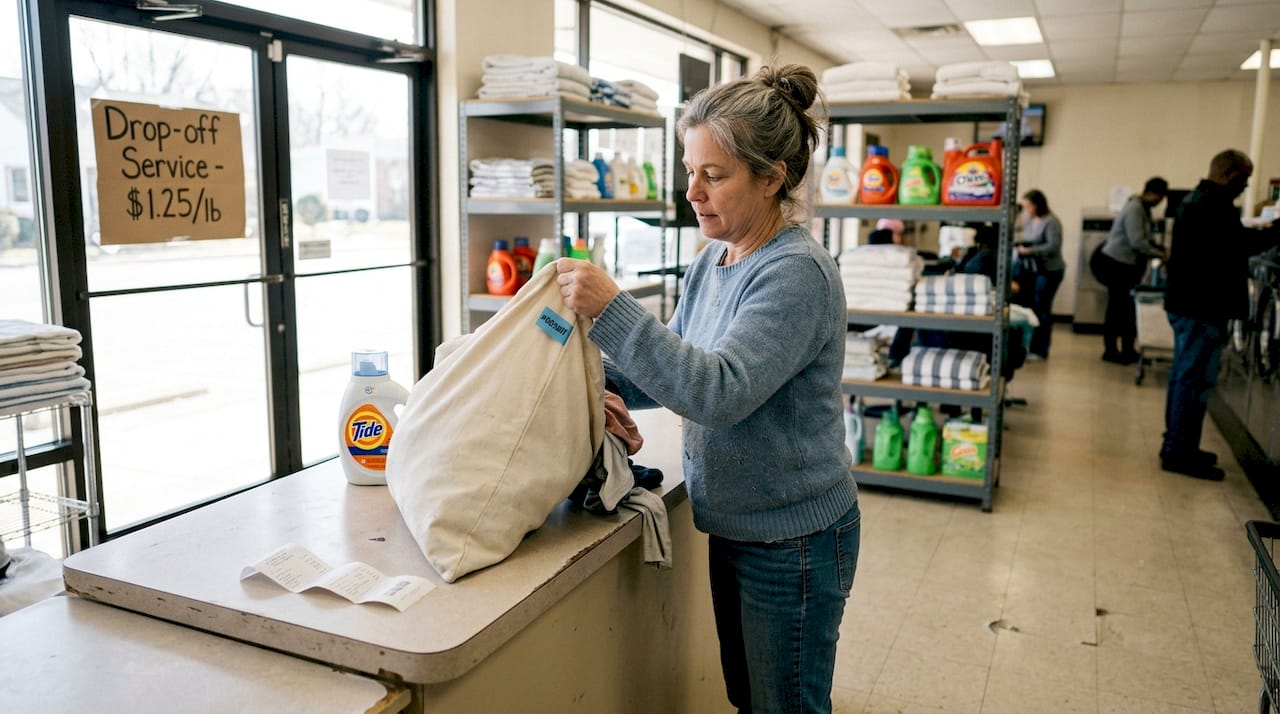
- Store information including hours and location if you prefer drop-off
One local example is Columbia Pike Laundry, which offers wash and fold, dry cleaning, and pickup and delivery, along with customer-set preferences and clear service information through its website.
The best local cleaner often isn’t the one with the flashiest pitch. It’s the one that answers ordinary questions well.
The Convenient Pickup and Delivery Experience
Convenience sounds nice in theory. What people really want to know is whether it’s awkward.
Usually, it’s simpler than expected.
What the first order looks like
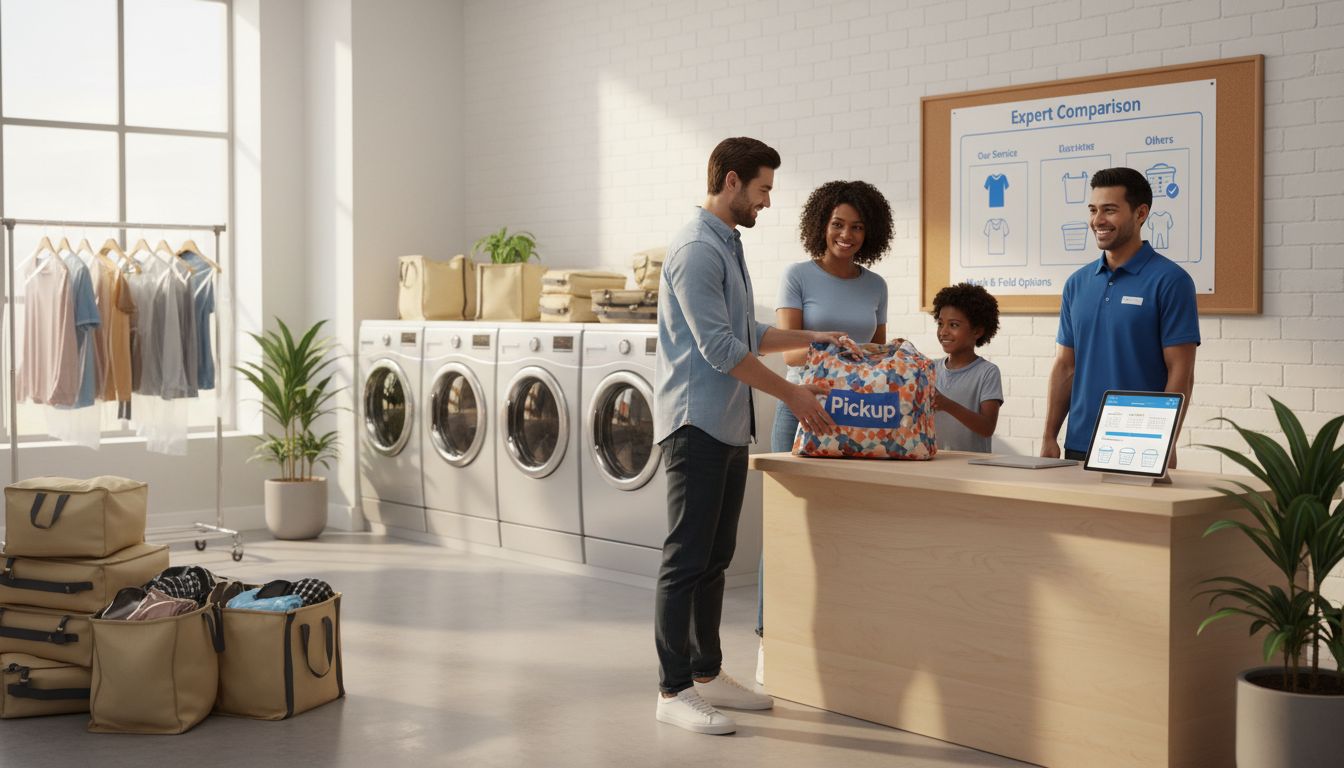
You schedule pickup and delivery, choose your service, and add any notes that matter. If you’re mixing laundry and dry cleaning, separate the bags and label them if you can. For a first order, you can usually use any bag you already have.
Then you leave the items where instructed. That might be your porch, front desk, lobby, or another approved spot.
You don’t have to make it fancy. The point is to make the task disappear from your to-do list.
Common worries people have
The stress usually comes from little unknowns, not the actual process.
Do I need to be home
Usually, no. Contactless pickup and delivery is now a normal option. If the cleaner has clear instructions and access details, the process can happen while you’re working, commuting, or out with family.
What if I live in an apartment
That’s common. Many customers use a front desk, package room, or building entry with notes. The key is giving specific instructions.
What if I have special preferences
Good services let you add them. You might request fragrance-free detergent, hung items instead of folded ones, or separate treatment for delicates. That’s where a digital scheduling flow helps.
If you like seeing how businesses organize customer bookings clearly, this guide on how to schedule appointments gives a useful look at what makes the process easier for both sides.
Why pickup changes the whole task
Driving to a cleaner doesn’t seem like much until it’s stacked on top of everything else. The trip there, the trip back, the remembering, the waiting. Pickup removes the part of laundry that often causes procrastination.
That’s especially helpful for:
- Parents juggling school schedules and packed evenings
- Professionals who leave early and get home late
- Older adults who’d rather avoid carrying heavy bags
- Small businesses that need repeat service without repeated phone calls
“Any system that reduces decisions during a busy week is worth keeping.”
When pickup works well, it fades into the background. That’s the point. The service should feel dependable enough that you stop thinking about it.
Understanding Pricing and Turnaround Norms
People often hesitate to try professional care because they’re unsure how pricing works. The structure is usually straightforward once you know the categories.
Why some items are priced by the pound and others by the piece
Wash and fold is typically charged by weight. That makes sense because it’s processed as a laundry load.
Dry cleaning is usually priced per item. That also makes sense because a blazer, silk dress, and pair of slacks don’t take the same handling, inspection, finishing, or pressing.
Bulky items such as comforters or bath mats are often priced separately because they take up extra machine space and may need special handling.
If you want to see a real service menu before placing an order, Columbia Pike Laundry lists its rates on its pricing page.

What you’re paying for besides “clean”
The finish is part of the value.
Professional pressing uses steam injection and vacuum extraction to set creases that resist wrinkling 2-3 times longer than home ironing, and suits can retain their shape through 10+ wears, according to the cited explanation in this video reference on pressing in professional cleaning.
That matters if you wear structured clothing regularly. It also matters if you’re trying to make quality garments last.
A practical way to judge the cost
Instead of asking only, “How much is this shirt to clean?” ask a wider question.
Does the service save me an errand?
Does it keep me from replacing damaged or misshapen clothing sooner?
Does it return the item ready to wear instead of still needing work at home?
For many households, the value comes from all three.
Turnaround without guesswork
Turnaround is where clear communication matters most.
For Columbia Pike Laundry, laundry turnaround is 48 hours, dry cleaning turnaround is 3 days excluding Sunday, and express service is available for laundry within 24 hours, based on the company’s published service information. If you have a very specific garment deadline, the safest answer is to ask the team to confirm it directly before relying on it.
That last point is worth remembering with any cleaner. Standard timelines are helpful, but unusual fabrics, specialty items, and formalwear may need longer. A careful cleaner won’t guess.
Why Columbia Pike Laundry is Your Neighborly Choice
When people search for professional dry cleaning near me, they usually want four things at once. They want convenience, careful handling, straightforward communication, and a service that doesn’t make them worry about what happened to their clothes.
Local businesses often stand out in these areas.
What makes a neighborhood service feel dependable
A dependable cleaner doesn’t just process garments. It fits into daily life.
That means you can drop off in person if that’s easier. It means pickup works for homes, apartments, and busy schedules. It means the business is reachable, and the service feels built for regular people with real routines.
Columbia Pike Laundry is a family-owned laundry and dry cleaning service based at 2602 Columbia Pike in Arlington, with store hours listed as Monday to Friday 8am to 8pm, and weekends 10am to 6pm. It serves Arlington, Alexandria, McLean, Falls Church, Springfield, Fairfax, Oakton, Great Falls, Washington, DC, and surrounding areas through pickup and delivery.
Why process matters as much as convenience
A lot of cleaners talk about speed. Fewer explain care.
If you’re thinking about your family’s clothes, your own skin sensitivity, or the life of garments you wear often, the method matters. Eco-friendly dry cleaning options, fragrance-free defaults, separate laundry handling, and clear customer preferences all make the service feel more customized and less generic.
That’s useful whether you’re sending in workwear, kids’ items, bedding, or formal pieces that need more attention.
A calmer way to stay on top of clothing care
The most helpful service is often the one that lowers background stress.
You stop wondering when you’ll get to the laundry. You stop postponing the comforter. You stop trying to decide whether a stain is worth dealing with tonight. Instead, clothing care becomes one recurring task you don’t have to carry alone.
When a household system works, it gives you back more than time. It gives you a little steadiness.
Your Top Questions Answered
A good cleaner should make the process feel clearer, not more mysterious. These are the questions many households ask once they move from washing everything at home to choosing professional care on purpose.
Is my laundry mixed with other people’s items
No. At Columbia Pike Laundry, customer laundry is washed and dried separately. That matters for hygiene, but it also matters for peace of mind. If you are sending children’s clothes, bedding, or anything you want handled with extra care, separate loads are part of what you are paying for.
Can I combine laundry and dry cleaning in one order
Yes. You can usually send both in the same pickup request. It helps to bag them separately and label them, because wash-and-fold and dry cleaning follow different care paths, much like taking one car in for a wash and another in for engine work.
What if I need fragrance-free care
You can request it. The company notes that it uses Free and Clear detergent by default, with other options available. That is helpful for households with sensitive skin, and it also reflects a larger point. Cleaning method is not just about getting stains out. It is about choosing a process that fits the people who wear the clothes.
Do you handle specialty items
Yes. Formalwear, wedding dresses, suede, leather, and alterations are available. Some pieces may need more time or may be routed to a specialty partner, which is normal. Delicate items often need a different cleaning method for the same reason some pans go in the dishwasher and others must be hand-washed. The material decides the safest process.
Is there an order minimum
Yes. Pickup and delivery has a minimum order amount, and in-store drop-off has its own minimum. Checking that before you book helps you avoid surprise fees and decide whether this is a small refresh or a larger weekly reset.
What if I need a very specific dry cleaning deadline
Ask first. Standard turnaround works for many orders, but a deadline for a suit, dress, or event item is specific enough that it should be confirmed directly with the staff. That quick check can save a lot of last-minute stress.
Free pickup, expert care, delivered back to your door.
Popular Blog Articles

Meet the Author
Daniel Logan didn’t start CPL because he loved laundry. He started it because his family was drowning in time debt, and laundry was one of the biggest weights.
Mornings were chaos with two kids under 5. Evenings felt like catch-up. And weekends? Gone to sorting socks and folding piles.
He knew his story wasn’t unique. So he built a business that gave families like his just a little bit of breathing room one load at a time.
With no laundry experience but deep tech skills, Daniel rolled up his sleeves, doing every job himself while building systems that turned it into a modern laundry service that saves customers time, simplifies their lives, and delivers reliability they can count on.
That’s where CPL began. Not from a playbook, but from pain. From one dad trying to buy back time: for himself, and for every household like his.
Free pickup, expert care, delivered back to your door.