
Professional laundry organization guide for busy families

Columbia Pike Laundry offers pickup & delivery across Northern Virginia.
Laundry consumes precious hours every week for busy Arlington families and professionals, creating stress and mounting piles that never seem to end. The average household tackles about 400 loads annually, with women spending 87 hours and men 29 hours on this repetitive task. This guide delivers expert strategies to transform your laundry workflow through smart organization, efficient batching methods, and workspace optimization. You will learn how to reclaim personal time while maintaining clean, fresh clothes for your entire household.
Key takeaways
| Point | Details |
|---|---|
| Daily small loads prevent backlog | Processing one load daily eliminates overwhelming folding sessions and keeps laundry manageable |
| Zone-based laundry rooms boost efficiency | Dedicated areas for sorting, washing, drying, folding, and storing reduce handling time by 30% |
| Color-coded hampers streamline sorting | Pre-sorting at the source saves 15 minutes per laundry session and prevents fabric damage |
| Front-load washers save resources | These machines use 3,452 gallons less water annually compared to top-load models |
| Professional services complement home systems | Outsourcing select loads frees up time while maintaining organized home laundry routines |
Understanding your laundry challenges and setting up your space
The time burden of laundry extends far beyond the 26 minutes spent per load. When you multiply this by 400 annual loads, the hours add up quickly, creating a significant drain on family time and energy. This workload falls disproportionately on women, who handle laundry three times more often than men in most households.
Identifying your specific pain points helps target improvements effectively. Common challenges include sorting confusion, limited workspace, inadequate storage for supplies, and bottlenecks at the folding stage. Each of these friction points adds minutes to every load, compounding into hours of wasted time annually.
The physical space you dedicate to laundry directly impacts efficiency. An ideal laundry room spans 85-130 square feet with distinct zones for each task stage. Smaller spaces can still function well when organized vertically with wall-mounted storage and stackable appliances.
Pro Tip: Measure your current laundry room and sketch a basic floor plan before reorganizing. This simple step helps you visualize workflow improvements and identify wasted space.
Essential setup elements include:
- Sorting station with multiple hampers near the entry point
- Washing and drying equipment positioned side by side for easy transfer
- Folding surface at comfortable height, ideally 36 inches from floor
- Storage shelves or cabinets within arm’s reach of machines
- Hanging rod for air-drying delicates and reducing wrinkles
The table below shows how proper zoning reduces handling time:
| Task Zone | Purpose | Time Saved Per Load |
|---|---|---|
| Sort | Pre-separate by color and fabric | 5 minutes |
| Wash | Load directly from sort bins | 3 minutes |
| Dry | Transfer without walking across room | 2 minutes |
| Fold | Dedicated surface prevents re-handling | 8 minutes |
| Store | Return items to rooms efficiently | 7 minutes |
For busy Arlington families, applying these organizational laundry tips for busy families creates immediate improvements in daily workflow. The key is establishing systems that family members can follow consistently without constant supervision or decision-making.
Laundry room organization and workflow optimization
Configuring your laundry space around task zones eliminates unnecessary movement and reduces cognitive load. Each zone should contain everything needed for that specific step, preventing backtracking and searching for supplies mid-task.
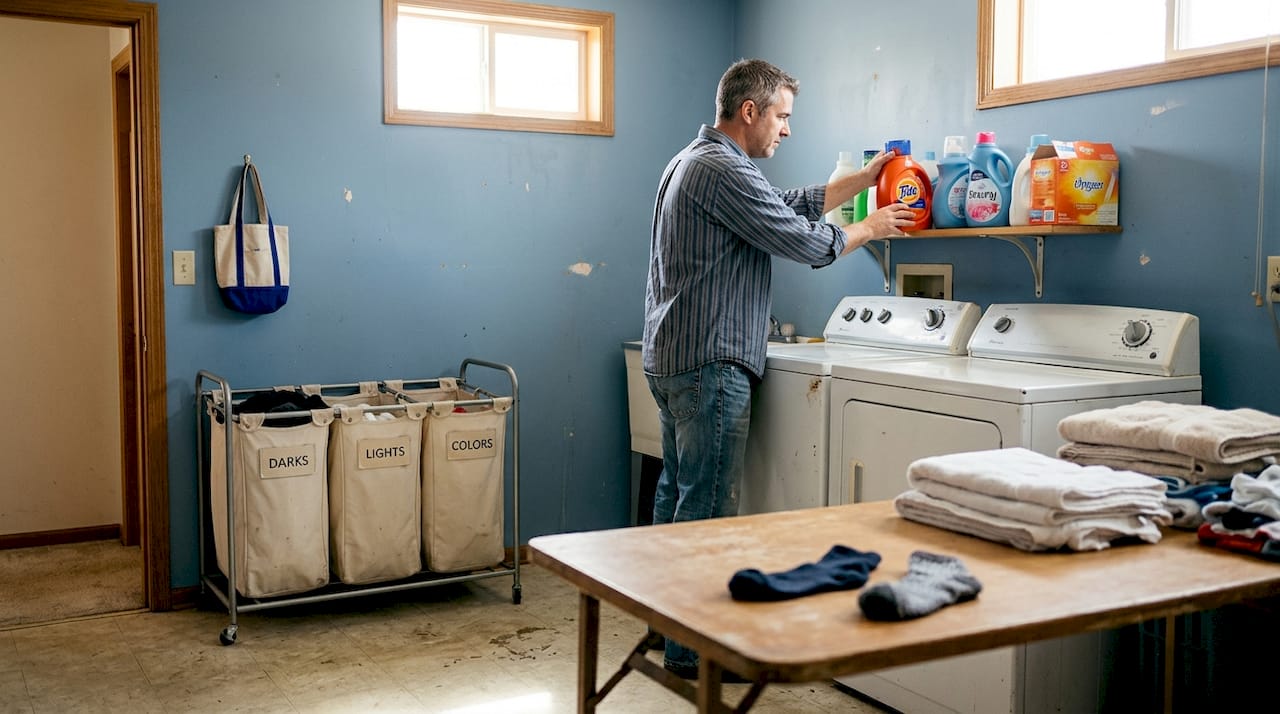
Start by positioning your sorting station near the room entrance. This allows family members to deposit dirty clothes without entering the full workspace. Use three to five hampers color-coded by wash type: whites, darks, delicates, towels, and special care items. Labeling each hamper clearly helps children and other household members sort correctly from the start.
Place detergents, fabric softeners, and stain treatments on a shelf or in a cabinet directly above or beside your washing machine. Zone workflow and arm’s reach supplies cut task time by eliminating repeated trips across the room. Keep frequently used items at eye level and specialty products on higher shelves.
Your drying zone should include both machine and air-drying options. Install a retractable clothesline or wall-mounted drying rack for items that cannot tumble dry. Position a small basket nearby to collect dryer lint and items that need immediate attention, like clothes requiring touch-up ironing.
The folding zone deserves special attention since this stage often creates the biggest bottleneck. A countertop or table at 36 inches high prevents back strain during extended folding sessions. Keep a small trash bin underneath for lint, tags, and packaging. Add a basket for items heading to other rooms and another for clothes needing repairs.
Pro Tip: Install a pull-down ironing board in your folding zone to handle wrinkled items immediately rather than creating a separate ironing pile that may never get processed.
Optimal layouts follow these principles:
- Linear flow from sort to store with no backtracking
- Machines positioned for easy door access without interference
- Clear floor space for moving laundry baskets between zones
- Adequate lighting at each task area, especially folding
- Ventilation to prevent moisture buildup and musty odors
Using bins and trays maintains order throughout the process. Designate specific containers for work in progress at each stage. This visual system shows exactly where each load stands in the workflow, preventing the common problem of forgotten wet clothes in the washer.
Implementing these laundry room organization tips transforms chaotic laundry sessions into smooth, predictable routines. The initial setup investment pays dividends every single time you process a load.
Effective laundry sorting and small batching methods
Professional sorting methods form the foundation of efficient laundry management. The traditional approach of doing laundry once weekly creates massive folding backlogs that overwhelm busy families. Small batching offers a superior alternative by spreading the workload across daily manageable increments.
Sorting laundry at source with color-coded hampers eliminates decision fatigue and prevents fabric damage from mixed loads. Assign each family member a specific hamper color or dedicate hampers to wash categories. This system allows anyone to start a load without sorting through a mountain of mixed clothes.
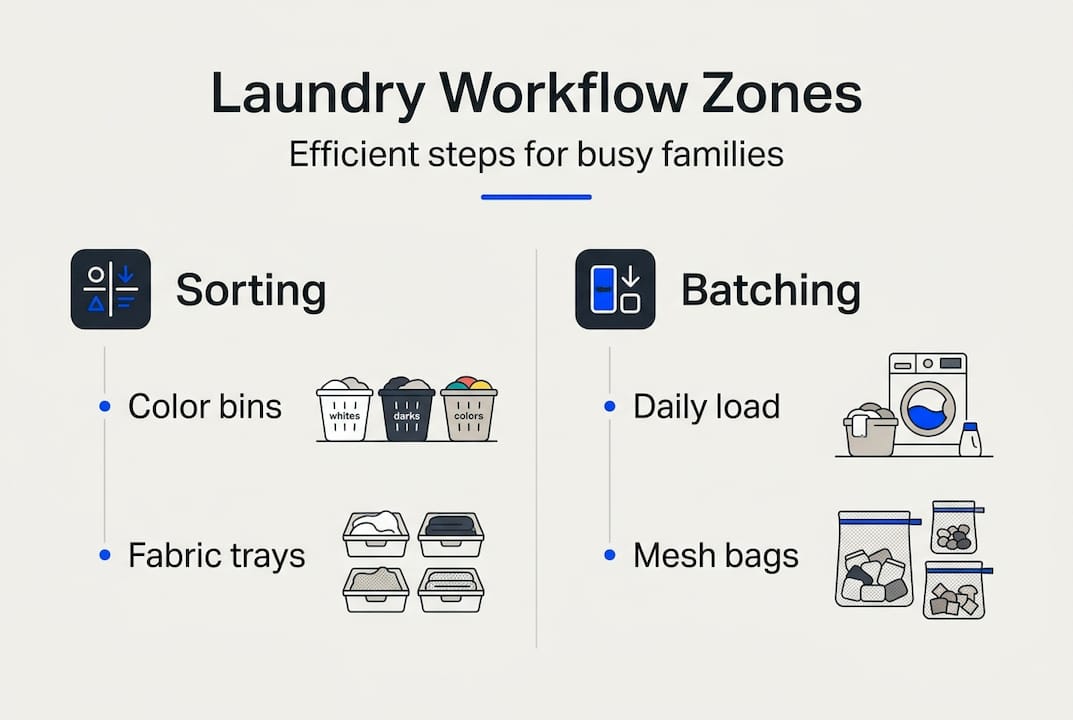
Handling delicates requires special attention to prevent damage during washing. Use mesh laundry bags for bras, lingerie, and items with straps or embellishments. These bags protect garments from tangling and snagging while allowing thorough cleaning. Group similar delicates together and wash on gentle cycles with cool water.
The one load a day method revolutionizes home laundry management. Small batching prevents folding backlog by limiting each session to a single load from start to finish. This approach applies the Theory of Constraints principle, identifying folding as the bottleneck and preventing work-in-progress buildup.
Pro Tip: Schedule your daily load during a natural transition time, like after breakfast or before dinner, so the routine becomes automatic rather than something you must remember.
Here is how small batching compares to traditional bulk processing:
| Approach | Loads Per Session | Folding Time | Backlog Risk | Flexibility |
|---|---|---|---|---|
| Bulk Weekly | 5-8 loads | 2-3 hours | High | Low |
| Small Batching | 1 load | 15-20 minutes | Minimal | High |
Involving family members distributes the workload and teaches valuable life skills. Children as young as four can sort colors and match socks. Elementary age kids can move clothes between washer and dryer with supervision. Teenagers should manage their own laundry completely, including folding and putting away.
Create age-appropriate task lists:
- Ages 4-6: Sort colors into designated hampers, match clean socks
- Ages 7-10: Load washer with guidance, transfer to dryer, fold simple items
- Ages 11-13: Run complete wash cycles, fold all items, deliver to rooms
- Ages 14+: Full laundry independence including stain treatment and special care
These laundry tips for busy families work because they break overwhelming tasks into bite-sized pieces that fit naturally into daily routines. The key is consistency rather than perfection, building habits that sustain themselves over time.
Choosing efficient equipment and reducing environmental impact
Your choice of washing machine significantly impacts both efficiency and environmental footprint. Front-load washers save 3,452 gallons annually compared to top-load models that consume 8,552 gallons. Despite higher upfront costs, the payback period averages just 6.5 years through reduced water and energy bills.
Front-load machines offer additional benefits beyond water savings. They spin faster, extracting more moisture and reducing drying time. The tumbling action cleans more gently, extending garment life. These machines also accommodate larger loads, allowing you to wash bulky items like comforters without overloading.
Load size optimization maximizes machine efficiency and prevents waste. Washing full loads uses resources more effectively than multiple small loads. However, overloading reduces cleaning effectiveness and increases wear on both clothes and equipment. Fill the drum about three-quarters full, leaving room for proper agitation.
Pro Tip: Weigh a typical full load once to learn what the right amount feels like, then use that tactile memory rather than weighing every time.
Detergent selection and dosing affect both cleaning results and environmental impact. High-efficiency machines require HE-specific detergents that produce fewer suds. Using too much detergent leaves residue on clothes and inside machines, while too little fails to clean effectively. Follow package directions based on load size and soil level.
Optimized wash parameters reduce environmental impact by 60-80% depending on temperature, load size, and detergent choices. Washing in cold water saves energy while cleaning most items effectively. Reserve hot water for heavily soiled items, bedding, and sanitizing needs.
The data below shows resource usage across machine types:
| Machine Type | Annual Water Use | Annual Energy Cost | Lifespan | Environmental Score |
|---|---|---|---|---|
| Top-Load Agitator | 8,552 gallons | $85 | 10-14 years | Low |
| Top-Load Impeller | 6,000 gallons | $65 | 10-14 years | Medium |
| Front-Load | 5,100 gallons | $45 | 12-15 years | High |
Practical strategies for balancing efficiency with family needs:
- Run full loads during off-peak electricity hours when rates are lower
- Use quick wash cycles for lightly soiled items to save time and energy
- Air dry when possible, especially during warm months
- Maintain machines regularly to preserve efficiency and extend lifespan
- Consider water temperature carefully, defaulting to cold unless hot is necessary
These ways to save on laundry tips demonstrate how smart equipment choices and operational practices create both economic and environmental benefits. The investment in efficient machines pays returns throughout their service life while reducing your household’s resource consumption.
Streamline your laundry with Columbia Pike Laundry
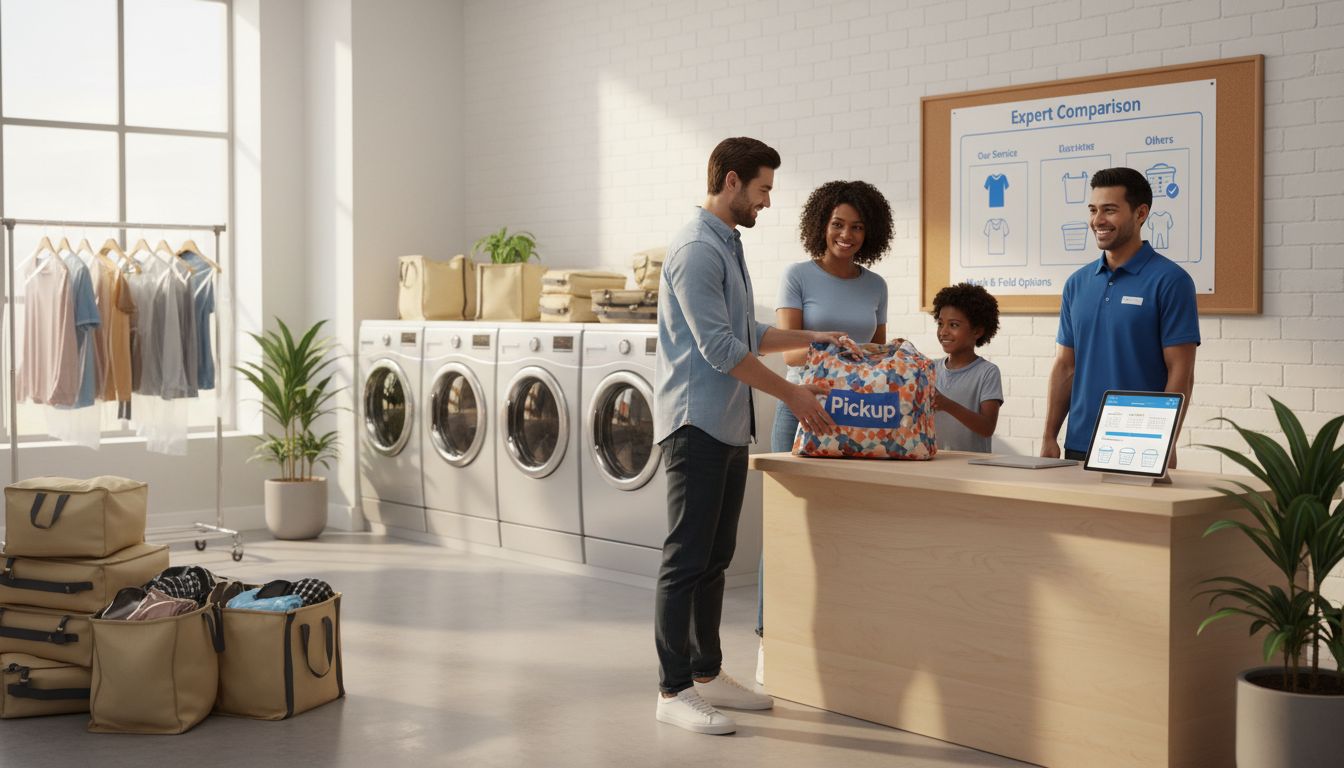
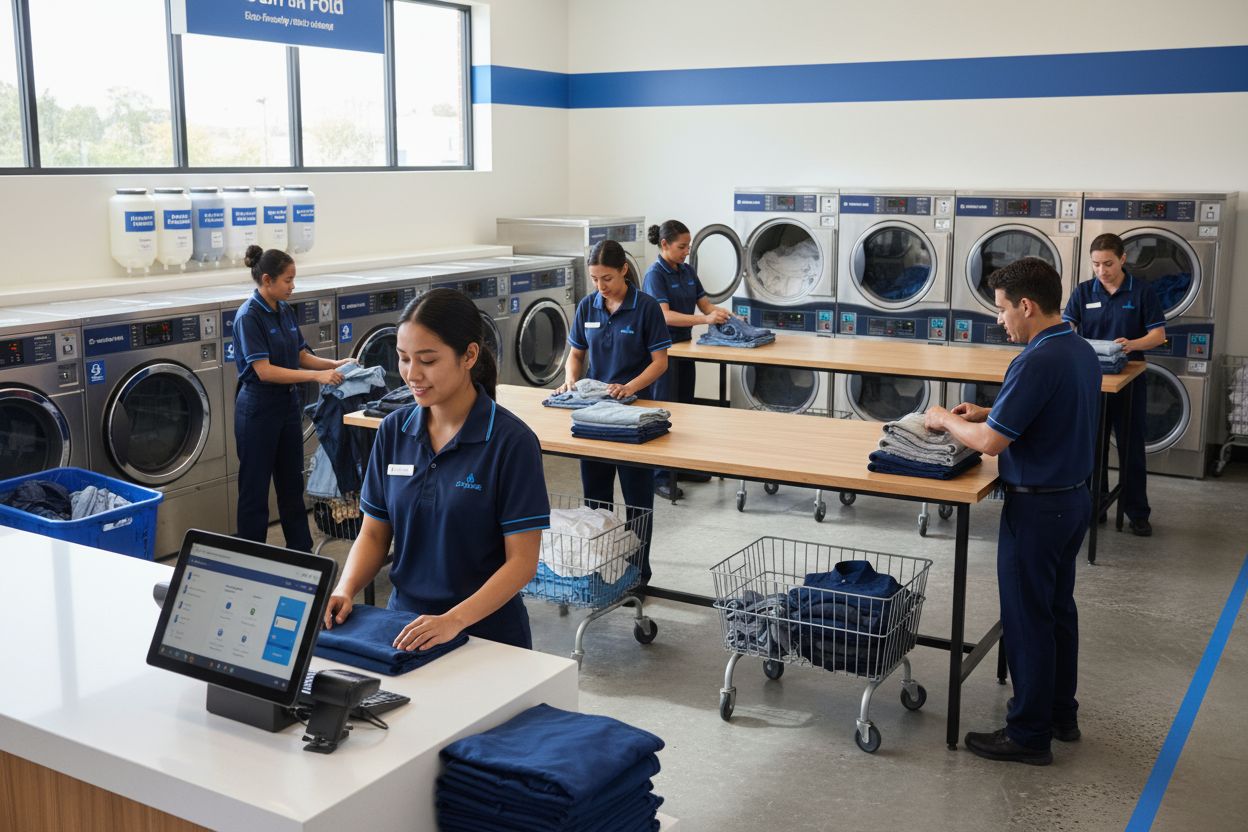
Even with optimized home systems, busy Arlington families can benefit from professional laundry support. Columbia Pike Laundry offers a simple 3-step process that complements your home organization efforts. Schedule a pickup through our app, and we collect your laundry at your convenience. Our team processes everything in-house with attention to your specific preferences, from fragrance-free detergents to custom folding instructions. We return your items within 48 hours, fresh and ready to wear.
Combining professional services with home laundry management creates flexibility for demanding schedules. Handle everyday items at home using your optimized system, while outsourcing time-consuming loads like bulky bedding or seasonal items. This hybrid approach maximizes efficiency without sacrificing control over your household routines.
Our local Arlington location at 2602 Columbia Pike means we understand the specific needs of busy families and professionals in our community. These organizational laundry tips for busy families work even better when you have reliable backup support for overwhelming weeks. Visit Columbia Pike Laundry to learn how our services can help you reclaim valuable personal time.
FAQ
What is the best way to start organizing a laundry room?
Begin by removing everything from the space and sorting items into keep, donate, and discard piles. Establish clear zones for sorting, washing, drying, folding, and storing, ensuring each area has the supplies needed for that task. Use labeled bins and baskets to maintain organization, and check these laundry room organization tips for detailed guidance on creating functional zones.
How can busy families involve children in laundry tasks?
Assign age-appropriate responsibilities starting around age four with simple sorting and sock matching. Use color-coded hampers and picture labels so young children can participate successfully without constant supervision. Older children should progress to running full wash cycles and managing their own laundry completely, and these kids laundry tips for busy families provide specific strategies for each age group.
What are the main benefits of small batching laundry?
Processing one load daily prevents the overwhelming folding backlogs that plague weekly laundry marathons. This approach distributes work evenly across the week, making laundry feel manageable rather than burdensome. Small batching also improves household flow by ensuring clean clothes are always available, and you can explore more about the benefits of small batching laundry for your specific situation.
How much water do front-load washers actually save?
Front-load machines use approximately 5,100 gallons annually compared to 8,552 gallons for traditional top-load agitator models. This 3,452 gallon annual savings translates to lower utility bills and reduced environmental impact. The investment pays for itself within 6.5 years on average through decreased water and energy costs.
When should families consider professional laundry services?
Professional services make sense during particularly busy periods, for bulky items that strain home equipment, or when time constraints make home laundry management impossible. Many Arlington families use a hybrid approach, handling routine loads at home while outsourcing larger or time-consuming items. This strategy maintains control over daily laundry while providing flexibility when schedules become overwhelming.
Recommended
Free pickup, expert care, delivered back to your door.
Popular Blog Articles



Meet the Author
Daniel Logan didn’t start CPL because he loved laundry. He started it because his family was drowning in time debt, and laundry was one of the biggest weights.
Mornings were chaos with two kids under 5. Evenings felt like catch-up. And weekends? Gone to sorting socks and folding piles.
He knew his story wasn’t unique. So he built a business that gave families like his just a little bit of breathing room one load at a time.
With no laundry experience but deep tech skills, Daniel rolled up his sleeves, doing every job himself while building systems that turned it into a modern laundry service that saves customers time, simplifies their lives, and delivers reliability they can count on.
That’s where CPL began. Not from a playbook, but from pain. From one dad trying to buy back time: for himself, and for every household like his.
Free pickup, expert care, delivered back to your door.