
Your Guide to the Washing Machine Rinse and Spin Cycle
Columbia Pike Laundry offers pickup & delivery across Northern Virginia.
Ever noticed that "rinse and spin" setting on your washing machine and wondered what it's actually for? It’s one of those simple, yet surprisingly useful, features that can be a real laundry lifesaver. Think of it as a specialized tool, not for cleaning, but for solving specific laundry problems without running a whole new wash.
What Exactly Is the Rinse and Spin Cycle?
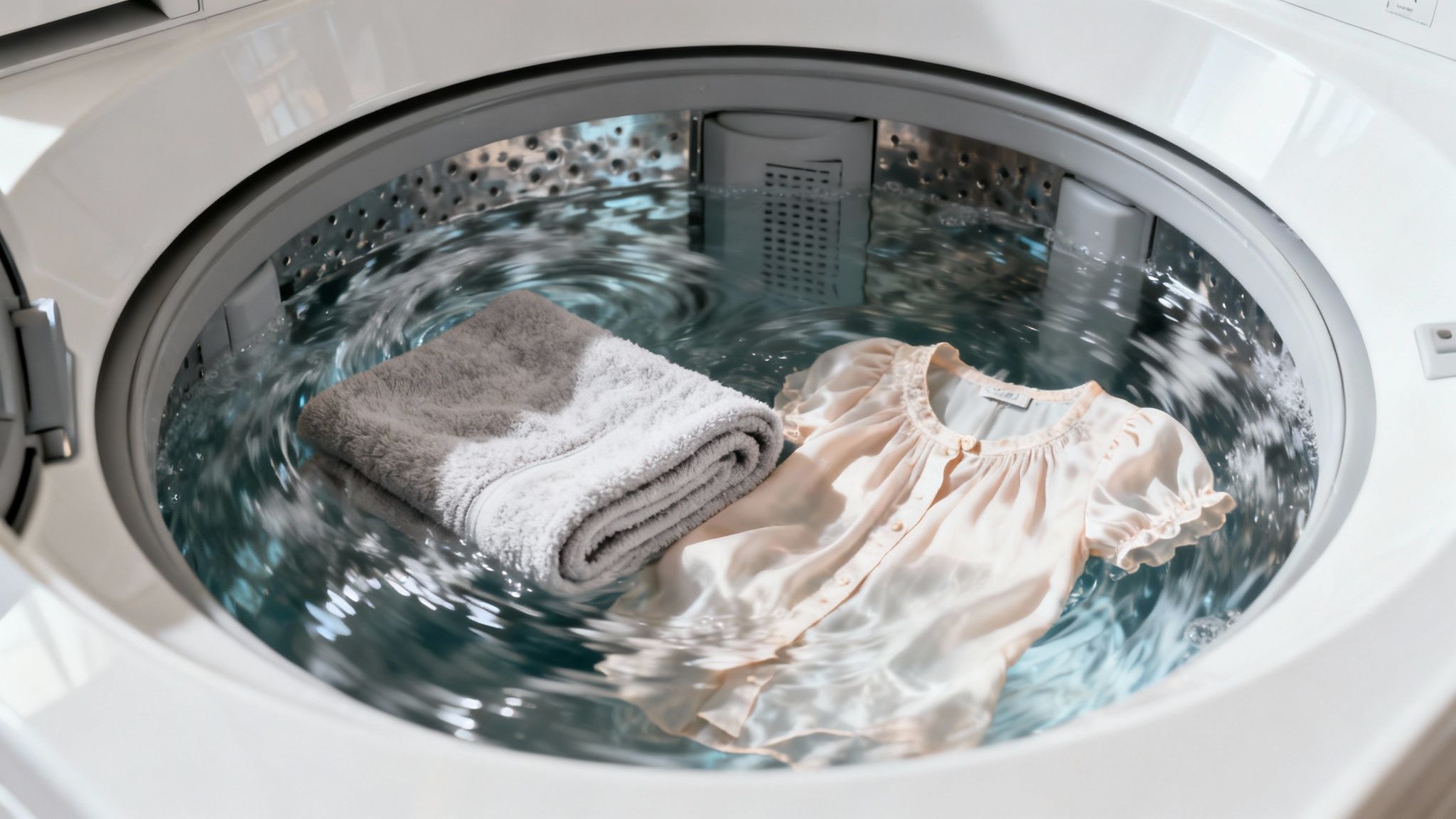
The rinse and spin cycle is your machine’s "quick fix" option. It skips the main wash and sudsing part of a normal cycle and jumps straight to the final two steps.
First comes the rinse. The drum fills with clean, cool water, soaking everything inside. This is perfect for flushing out things you don't want on your clothes—like the chlorine from a day at the pool, dust from items that have been in storage, or even that stubborn, sticky feeling from too much detergent in the last wash.
Then, the machine drains and goes into the spin phase. This is the heavy lifter. The drum spins at a high speed, using centrifugal force to wring a ton of water out of your fabrics. Your clothes come out damp, not dripping, which dramatically shortens their time in the dryer or on the clothesline.
How It Works: A Simple Breakdown
The whole process is quick and efficient. Since it skips the long wash portion and doesn't heat the water, it saves energy, water, and time. It’s the perfect go-to when your clothes don't need a deep clean but could use a good drenching and wringing.
Here’s the process in a nutshell:
- Rinsing: The machine uses only water—no soap—to give your clothes a thorough flush.
- Spinning: It then uses pure physics, spinning fast to pull excess water out of the fabric.
Key Takeaway: The rinse and spin cycle doesn't clean clothes. Its job is purely mechanical: to saturate with water and then spin that water out as efficiently as possible.
Why You Should Care
Knowing when to use this cycle can solve some common laundry headaches in a flash. Got a load that came out feeling stiff or soapy? Instead of rewashing everything, a quick rinse and spin will fix it in less than 30 minutes. It's also the perfect final touch for delicates you’ve washed by hand. It saves you the arm workout of wringing them out and helps them keep their shape.
When You Should Use the Rinse and Spin Cycle
So, you know what the rinse and spin cycle is, but the real magic is knowing when to use it. Think of it less like your everyday wash setting and more like a secret weapon for those unique laundry problems. It’s the perfect shortcut when you need a quick fix without the time, water, and energy of a full wash.
Rescuing Soapy or Stiff Clothes
You know that feeling—you pull a load of laundry out, and it just feels...off. Maybe it’s a little stiff, slightly sticky, or you can even feel a hint of soap residue. It usually means a bit too much detergent was used, or the machine was a little too packed.
Instead of rewashing the whole thing, just pop it back in for a rinse and spin. This cycle is the perfect remedy. The extra rinse will flush out all that leftover soap, leaving your clothes feeling soft and truly clean. Then, the final spin wrings out the excess water so they don't take forever to dry. It's a targeted solution that fixes the problem in under 30 minutes.
The Perfect Finish for Hand-Washed Items
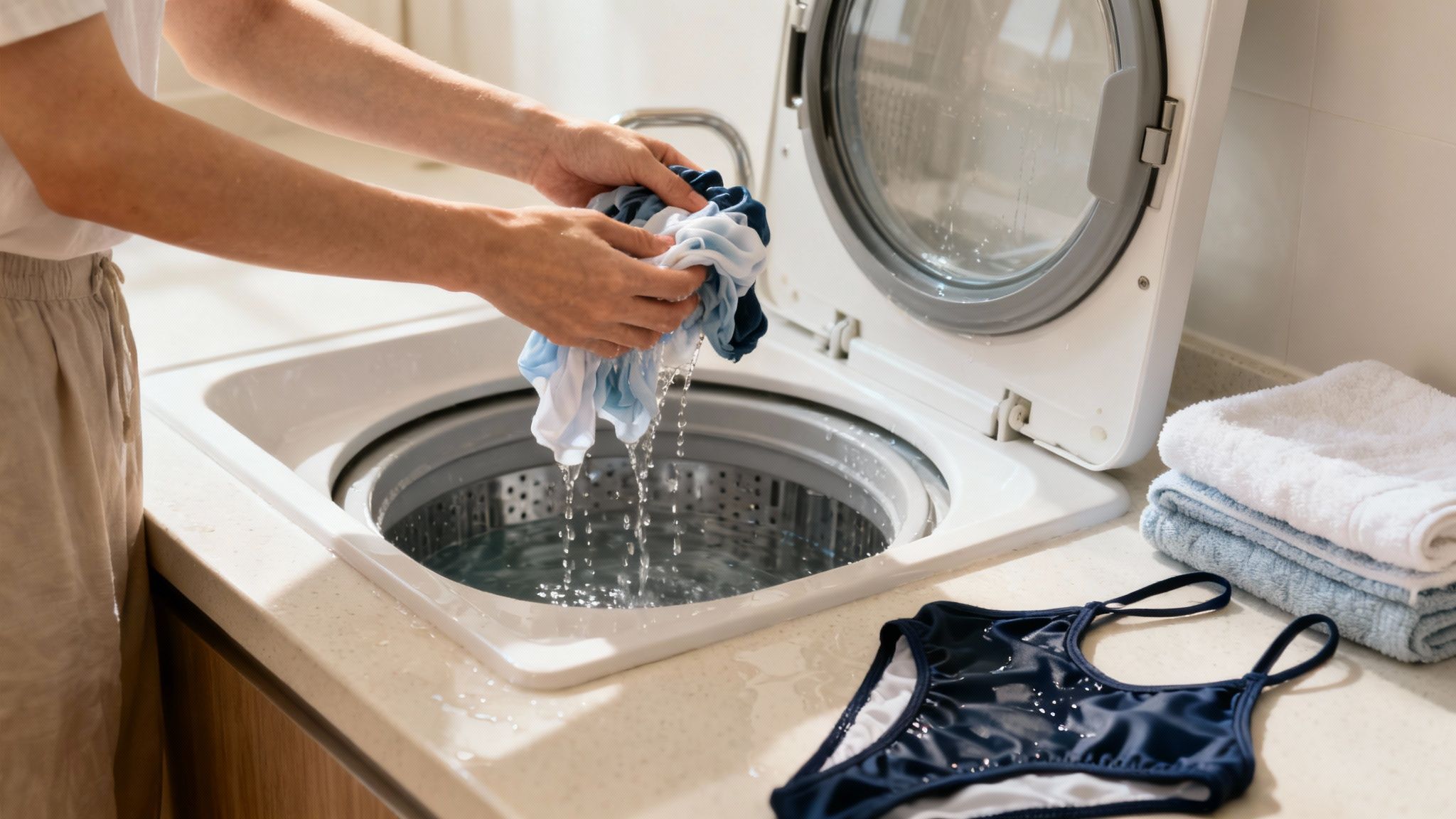
Hand washing is a must for certain delicates—think silk, fine lingerie, or that favorite wool sweater. The real challenge, though, isn't the washing; it's getting them dry without stretching or damaging the fabric by wringing them out by hand. This is where the rinse and spin cycle is a total game-changer.
Once you're done with your gentle hand wash, just place the dripping garments into the machine.
- The rinse gives them one final pass with fresh water.
- The spin extracts way more water than you ever could manually.
This simple move helps your delicates keep their shape and dramatically slashes drying time, which also helps prevent that musty smell that can set in when things stay damp for too long. If you're dealing with sensitive fabrics and worried about colors running, take a look at our guide on how to prevent color bleeding in laundry.
Refreshing Stored or Musty Garments
We’ve all been there. You pull out your seasonal clothes from the back of the closet or a storage bin, and they have that stale, musty smell, even though they were clean when you put them away. They aren’t dirty enough for a full wash, but they definitely need a refresh.
This is the ideal job for a rinse and spin. It runs fresh water through the fibers to wash away any dust and stale odors, and the spin cycle leaves them just damp enough for a quick run in the dryer or a short time hanging on the line.
A quick rinse can be all you need to make stored clothes smell fresh again. It's a faster, gentler alternative to a full wash cycle for items that are not truly dirty.
When to Use Rinse and Spin: A Quick Guide
Feeling unsure about which laundry headache calls for a rinse and spin? Use this quick reference table to solve common laundry problems with the right machine setting.
This table makes it easy to see how a simple rinse and spin can be a powerful tool for more than just one or two laundry tasks.
The demand for smarter, faster laundry solutions is bigger than ever. In fact, the global laundry care market hit USD 109.71 billion in 2024, proving just how much people value convenient options that fit into a busy lifestyle.
How It Differs From Other Machine Cycles
Staring at all the dials and buttons on a modern washing machine can feel a little like trying to decipher a secret code. To really get the best results, you need to know not just what each cycle does, but also what it doesn't do. The rinse and spin cycle has a very specific job, and understanding how it stacks up against its neighbors on the dial is key to mastering laundry day.
Think of your washer's cycles as different tools in a toolbox. You wouldn't use a hammer to drive a screw, and you definitely wouldn't run a full wash cycle when all you need is a quick rinse. Making the right choice saves time, water, and unnecessary wear and tear on your clothes.
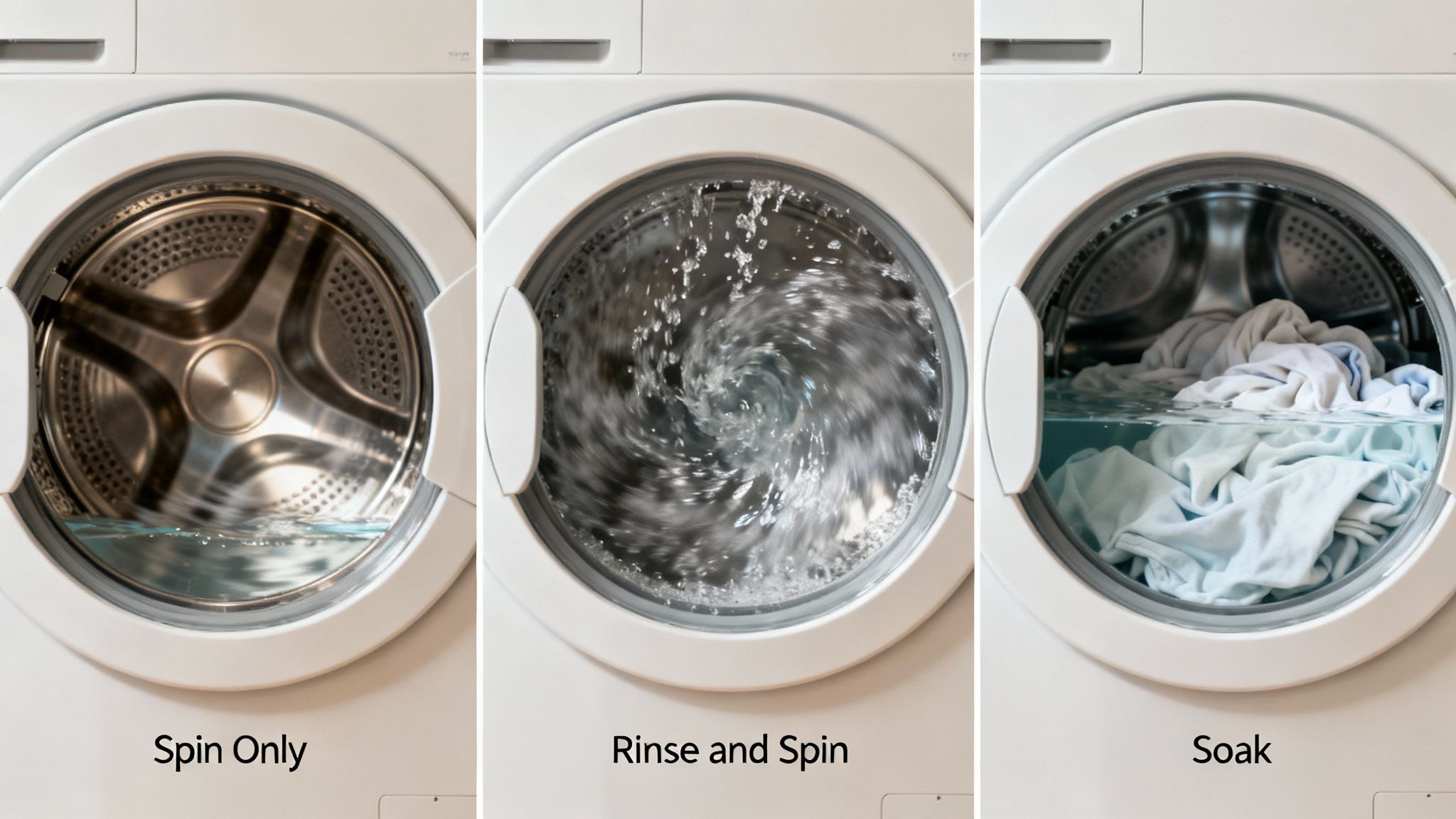
Rinse and Spin vs. Spin Only
At first glance, these two sound almost the same, but they have completely different functions. The Spin Only cycle (sometimes called "Drain & Spin") is a one-trick pony, but it's a great one. Its only job is to drain any water out of the drum and then spin at high speed to wring moisture out of the fabric. Critically, it adds no new water.
Imagine you’ve just hand-washed a sweater. The "Spin Only" cycle is like putting that sopping wet garment into a high-powered salad spinner to get the excess water out before you lay it flat to dry.
In contrast, a rinse and spin cycle would first drench that sweater in fresh, clean water before spinning it out.
- Use Spin Only When: Your clothes are already rinsed but still dripping wet. This is perfect for when a cycle gets interrupted by a power outage.
- Use Rinse and Spin When: You need to both flush something out (like chlorine or dust) and get the excess water out.
Rinse and Spin vs. a Quick Wash
A Quick Wash is exactly what it sounds like: a complete, but much shorter, version of a normal wash. It includes a brief wash with detergent, a rinse, and a final spin. It's built for small, lightly soiled loads you need clean in a hurry—usually taking just 15 to 30 minutes.
The game-changing difference here is the detergent. A Quick Wash is for cleaning, while a rinse and spin is for refreshing. Running your delicates through a Quick Wash after you've already hand-washed them would be redundant and expose them to unnecessary chemicals. This kind of garment-care knowledge is just as important as knowing the difference between wash-and-fold and dry cleaning services.
A Quick Wash is for cleaning dirty clothes, fast. A Rinse and Spin is for refreshing already-clean clothes that just need a final flush and spin.
Making the Right Choice for Your Clothes
Once you know these differences, you can make much smarter choices for your laundry. By picking the right cycle for the job, you treat your clothes more gently, save on water and energy, and get the exact result you were looking for.
Each setting is a specific tool for a specific problem. The rinse and spin cycle fills a unique and valuable role, acting as the perfect bridge between a full, sudsy wash and a simple, water-extracting spin.
Solving Common Rinse and Spin Problems
It’s happened to all of us. You expect to find damp clothes ready for the dryer, but instead, you open the lid to a drum full of sopping wet laundry. When a rinse and spin cycle goes wrong, it's frustrating, but don't reach for the phone just yet. Most of the time, it's one of a few common issues you can fix yourself.
The number one reason for a failed spin cycle is an unbalanced load. If your washer starts thumping and banging like a drum solo gone wrong, that's the sound of the contents shifting to one side. Modern machines are smart; they have sensors that will actually stop the spin to prevent the machine from damaging itself. This is especially common when you’re washing just one heavy item like a bathmat or a couple of bulky towels that have decided to clump together.
Identifying and Fixing the Issue
Before you assume the worst, try these simple steps. More often than not, one of these quick checks will get your machine spinning again in minutes.
- Redistribute the Load: This is the easiest fix by far. Just open the door, untangle the wet clothes, and spread them out evenly inside the drum. Then, simply restart the spin cycle.
- Check for Leveling: Is your washing machine standing perfectly flat? Use a level to check. Even a slight tilt can throw off the balance sensors and halt the spin.
- Inspect the Drain Filter: A clogged filter is another sneaky culprit. If water can't drain out quickly enough, the machine won't even attempt the high-speed spin. Your user manual will show you where to find and clean the filter, which is usually full of lint, forgotten coins, and other gunk.
When to Seek Professional Help
Of course, sometimes the problem is more than just a clump of wet towels. If you’ve tried all the tricks above and your clothes are still waterlogged, it could be a sign of something more serious. Issues like a broken lid switch, a snapped drive belt, or a motor on its last legs are best left to the pros.
If you’ve done the basic troubleshooting and the machine still won't cooperate, it's probably time to call for backup. For persistent issues, your best bet is to contact professional appliance repair companies that can safely get to the bottom of the mechanical or electrical problem.
Pro Tip: Don't overload the machine! We're all tempted to cram that last towel in, but overloading is a leading cause of unbalanced loads and puts a ton of unnecessary strain on the washer's motor and suspension.
Keeping your machine happy ensures every cycle runs smoothly. It's a small part of a massive global industry—just think, the laundry detergent market is projected to jump from USD 76.87 billion in 2025 to USD 110.95 billion by 2032, all powered by billions of households running cycles just like these. If you're curious about the numbers, you can explore the full report here.
Let Us Handle the Laundry for You
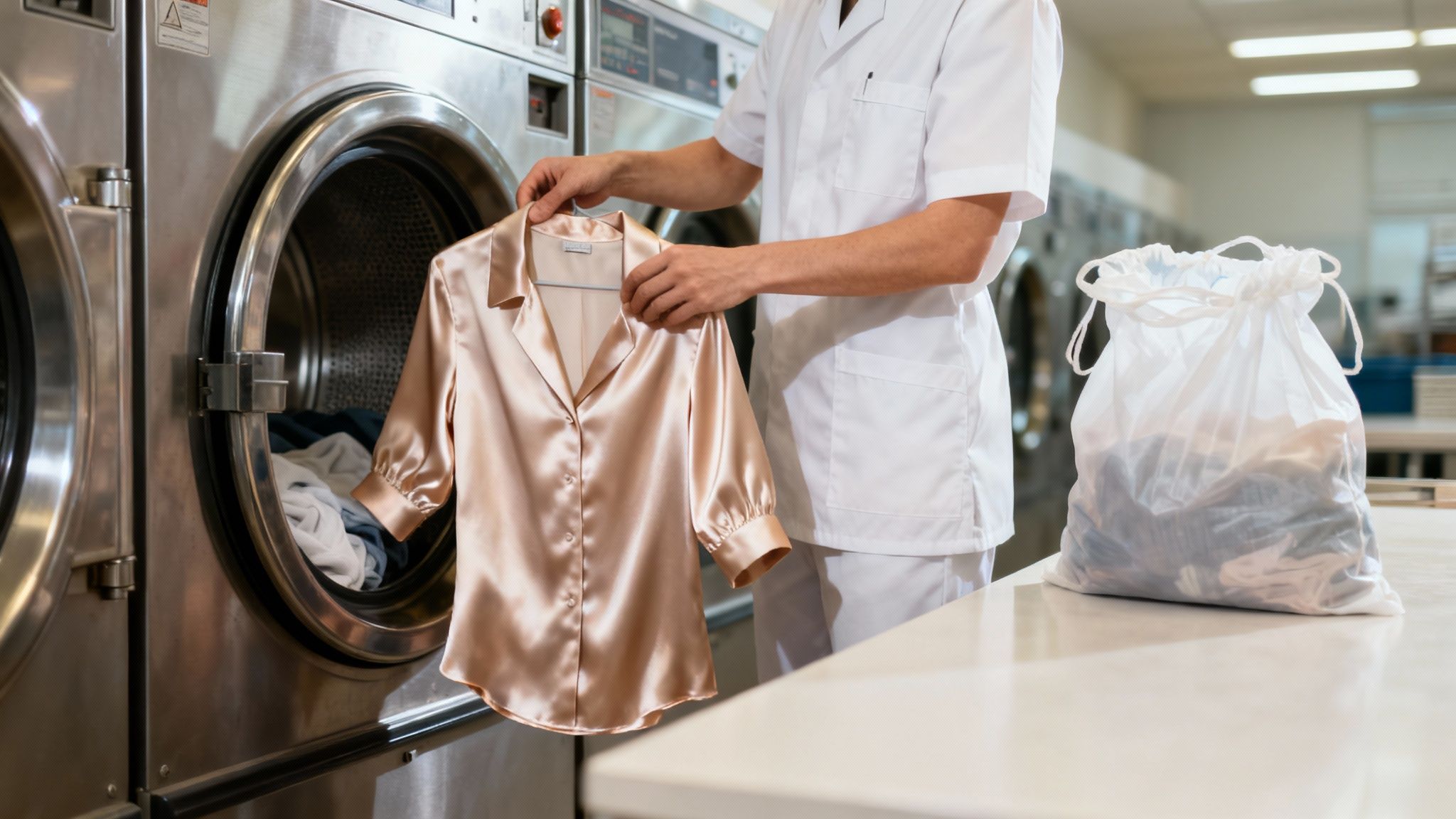
Knowing the difference between laundry cycles is great, but what if you could just hand it all off and know it's done right? At Columbia Pike Laundry, we're here to take laundry completely off your plate. Think of us as your personal laundry experts, giving your clothes exactly what they need while you get your valuable time back.
Sometimes you don't need a full wash. Maybe you've hand-washed a delicate silk blouse and don't want to risk stretching it by wringing it out. Or perhaps you've got a pile of swimsuits that just need a solid rinse to get the chlorine or salt water out. Instead of fussing with it yourself, just let us know.
How to Request Special Care
Getting customized care for your items is straightforward. When you set up your order, simply leave us a note with your instructions. It's that easy.
- For Pickup Orders: Just add a comment to your online order. Something like, "Please give the hand-washed items in the separate bag a gentle rinse and spin only," works perfectly.
- In-Store Drop-Off: When you bring your laundry in, just have a quick chat with one of our attendants. We’ll take it from there.
Our team has access to commercial-grade machines that are both more effective and gentler than the one in your home. We can dial in the perfect spin speed to protect your delicate fabrics while getting them ready for a quick, even dry.
By letting us handle these small but finicky tasks, you're doing more than just getting clean clothes—you're literally buying back your free time. It’s about letting go of a chore and focusing on what you'd rather be doing.
You’re not alone in wanting to save time. The global market for laundry services hit USD 83.2 billion in 2025 and is projected to reach USD 149.1 billion by 2035. This growth is all about busy people like you looking for convenient, reliable help. With laundromats having a 94.8% success rate over five years, it’s clear this is an industry built on trust and service.
More Than Just a Rinse
From a single special request to taking over your entire laundry routine, our goal is to make your life easier. We’re here to give you a break from the never-ending cycle of washing, drying, and folding.
Check out our laundry pickup and delivery service to see how simple it is to have fresh, perfectly cared-for clothes delivered right to your door.
Your Top Questions About Rinse and Spin, Answered
Alright, so we've covered what the rinse and spin cycle is and when it's your go-to move. But a few practical questions always pop up. Let's get right into them so you can use this setting like a pro.
Think of this as the final piece of the puzzle—the little details that make all the difference in getting your clothes just right.
Does a Rinse and Spin Cycle Use Hot or Cold Water?
Great question. Your washer will almost always use cold water for a standalone rinse and spin cycle, and that’s a good thing. The main goal here is to flush out residue and wring out water, not to deep clean or fight stains, so there’s no need to bring the heat.
Using cold water is a win-win:
- It saves energy: Heating water is the most energy-intensive part of a wash, so using cold water keeps things efficient.
- It protects your clothes: Cold water is much gentler on fabrics, preventing things like shrinking or colors bleeding.
Can I Add Fabric Softener During a Rinse and Spin?
You bet! This is actually one of the smartest ways to use this cycle. If you have some towels that came out of the wash feeling a bit stiff or want to freshen up blankets that have been sitting in the closet, this is your solution.
Just pour your favorite liquid softener into the dispenser like you normally would. The machine will add it during the rinse, leaving your items feeling soft and smelling great without the wear and tear of a full wash.
Pro Tip: A quick rinse and spin with a bit of fabric softener is my secret weapon for refreshing guest linens before company arrives. It takes less than 30 minutes and makes everything feel brand new.
How Long Does a Rinse and Spin Cycle Take?
One of the best things about the rinse and spin cycle is how fast it is. It’s designed for those moments when you just need a quick fix. On most machines, you're looking at a total time of about 15 to 30 minutes.
That speed is a real lifesaver. Whether you're quickly rinsing a swimsuit after a day at the pool or getting a hand-washed sweater ready to dry, it’s a quick and efficient way to get the job done.
Is the High Spin Speed Safe for Delicate Clothes?
This is where you need to be careful. The high-speed spin is fantastic for sturdy items, but it can be too rough for your delicates. Fabrics like silk, lace, cashmere, and some fine knits can easily be stretched, snagged, or damaged by that much force.
Before you toss a delicate item in, check your machine's settings. Many washers let you adjust the spin speed.
- If you can lower the spin speed: Perfect. Just choose the "Low Spin" or "Delicate Spin" option.
- If you can't adjust the speed: You’re better off skipping the machine. Gently squeeze the water out by hand and then roll the garment in a clean, dry towel to absorb the excess moisture. When it comes to your most prized items, a little extra manual care is always worth it.
Stop spending your weekends on laundry. At Columbia Pike Laundry, we give you back your time by handling everything from everyday clothes to special-care items with professional precision.
Free pickup, expert care, delivered back to your door.
Popular Blog Articles





Meet the Author
Daniel Logan didn’t start CPL because he loved laundry. He started it because his family was drowning in time debt, and laundry was one of the biggest weights.
Mornings were chaos with two kids under 5. Evenings felt like catch-up. And weekends? Gone to sorting socks and folding piles.
He knew his story wasn’t unique. So he built a business that gave families like his just a little bit of breathing room one load at a time.
With no laundry experience but deep tech skills, Daniel rolled up his sleeves, doing every job himself while building systems that turned it into a modern laundry service that saves customers time, simplifies their lives, and delivers reliability they can count on.
That’s where CPL began. Not from a playbook, but from pain. From one dad trying to buy back time: for himself, and for every household like his.
Free pickup, expert care, delivered back to your door.