
What Is In Laundry Detergent? A Simple Explainer
Columbia Pike Laundry offers pickup & delivery across Northern Virginia.
Saturday morning often starts the same way. You gather socks from under beds, turn shirts right-side out, toss everything into the washer, and add a pod or a scoop almost without thinking. The machine hums, the day moves on, and laundry becomes one more task sliding along in the background.
But there’s a fair question hiding in that ordinary routine. What is in laundry detergent, exactly? Most of us use it constantly and know very little about what’s touching our clothes, towels, sheets, and kids’ pajamas.
That mystery matters more than it seems. The ingredients in detergent affect how well stains come out, whether colors stay bright, how fabrics feel, and whether a product may bother sensitive skin. They also shape how a detergent behaves in hard water and what kind of residue it may leave behind.
Laundry works best when the whole system works together. Clean detergent helps, and so does basic machine care. If your dryer has been taking longer lately or clothes feel hotter than usual, it’s worth reviewing how to clean your dryer's lint trap so airflow stays strong and your laundry routine stays efficient.
Your Laundry Routine and the Mystery in the Box
A detergent label can feel oddly vague. You might see words like “power clean,” “fresh scent,” “deep stain removal,” or “free & clear,” but those phrases don’t explain what the product is made of. That’s where people get stuck.
Many readers assume detergent is just soap with perfume. It isn’t. Modern detergent is a blend of ingredients, and each group has a job. Some lift oily soil, some help in hard water, some target food stains, and some change how clothes look or smell after washing.
Practical rule: If you’ve ever wondered why one detergent works beautifully on gym clothes but struggles with pasta sauce, the answer is usually in the ingredient mix, not just the brand name.
The easiest way to make sense of detergent is to separate the ingredients into roles:
- Main cleaners: These remove everyday dirt, body oils, and grime.
- Support ingredients: These help the cleaners work better in real water conditions.
- Stain specialists: These target things like blood, grass, starch, and grease.
- Finishing ingredients: These affect brightness, softness, and scent more than cleaning itself.
Once you see detergent that way, the label starts to look less like chemistry homework and more like a set of practical choices. You can start matching the formula to your household instead of guessing based on packaging.
The Core Cleaning Crew Surfactants and Builders
The heart of most detergents is a pair of ingredient families that do the heavy lifting. These are surfactants and builders. If you understand these two, the rest of detergent chemistry gets much easier.
According to Rinse’s explanation of laundry detergent ingredients, surfactants typically make up 15-30% of the formula, and builders make up another 20-50%. That tells you something important right away. Cleaning power of detergent doesn’t come from fragrance or bright packaging. It comes from these foundational ingredients.
How surfactants pull dirt away
A surfactant is the ingredient commonly referred to as “soap,” even though detergent and soap aren’t exactly the same thing. A helpful way to picture a surfactant is as a tiny connector with two sides. One side is attracted to water. The other side is attracted to oils and grime.
That odd little structure is what makes washing possible.
When surfactants are mixed into water, they help water spread through fabric more easily. Then they grab oily soil, loosen it from fibers, and help carry it away in the wash water. That’s why plain water alone usually won’t remove body oil from collars, makeup from pillowcases, or the greasy film that builds up on kitchen towels.
Some common examples include sodium lauryl sulfate (SLS) and alkylbenzene sulfonic acid, both noted in the same Rinse overview. These ingredients became especially important after World War II, when synthetic surfactants replaced older animal-based soaps and gave detergents better performance across a wider range of washing conditions.
This visual gets the idea across nicely.

Why builders matter more than people realize
If surfactants are the cleaning crew, builders are the support crew that clears the road ahead.
Here’s the common point of confusion. People try a detergent in one home, love it, move somewhere else, and suddenly it seems weaker. Often the issue isn’t the detergent. It’s the water.
Hard water contains minerals, especially calcium and magnesium. Those minerals interfere with the cleaning process. Builders help by softening the water so surfactants can keep doing their job. Without that support, detergent can struggle, fabrics can feel dull, and soil may not rinse away as cleanly.
The same Rinse source notes that builders once often relied heavily on sodium tripolyphosphate (STPP), but its use was reduced because of environmental concerns. Alternatives such as zeolite A and sodium carbonate are now common.
Real-life signs these ingredients are doing their job
You don’t need to read a chemistry chart to spot the effect of surfactants and builders. You can usually see it in the laundry basket.
Look for these everyday clues:
- Cleaner collars and cuffs: Surfactants are especially helpful with body oils and everyday grime.
- Less dingy-looking fabric: Builders help prevent minerals and loosened soil from settling back onto clothes.
- Better results in cold water: Some surfactants are designed to keep working even when you skip hot cycles.
- Fewer mystery gray towels: Hard water often leaves fabrics looking tired, and builders help reduce that problem.
Hard water can make a good detergent seem mediocre. A formula with the right support ingredients often matters as much as the main cleaner.
What this means when you shop
When you compare detergents, don’t focus only on scent names or whether the cap is pretty. Think about your real washing conditions.
If your laundry often comes out stiff, cloudy, or less fresh than it should, your formula may not be handling water hardness well. If oily stains linger after washing, the surfactant system may not be a good match for the kind of soil your household creates.
This is why one detergent can be perfect for workout gear and family basics, while another is better for lightly worn clothes in a low-mess household. The product isn’t just “strong” or “weak.” It’s built from ingredients that perform differently in different situations.
The Stain-Fighting Specialists Enzymes and Bleaches
General dirt is one thing. Stains are another.
A shirt can look clean overall and still keep a faint tomato spot, a grass mark, or a ring of baby food on the shoulder. That’s where specialty ingredients come in. Two of the most important are enzymes and bleaches.
Enzymes act like stain-specific tools
Enzymes are often the ingredient that makes a detergent feel smarter. Instead of scrubbing everything the same way, they target certain kinds of messes.
A simple analogy works well here. Think of enzymes as tiny scissors designed for specific materials. One type cuts apart proteins. Another breaks down starches. Another works on fats and oils.
According to Wikipedia’s laundry detergent overview, enzymes are typically used at 1-2% concentration, yet they can have a big effect on stain removal. The same source notes that proteases can break down protein peptide bonds in blood stains, achieving 90% removal in 30 minutes and enabling low-temperature wash cycles.
That helps explain why enzyme detergents are often useful for homes with kids, athletes, cooks, or anyone who deals with frequent food and body-based stains.
The main enzyme types people benefit from
You don’t need to memorize scientific names, but it helps to know the broad categories.
- Proteases: These go after protein-based stains such as blood and grass.
- Amylases: These target starches from foods like rice, potatoes, or pasta.
- Lipases: These help break down fats and oily residue.
This is one reason a detergent may handle a spaghetti-sauce napkin better than a plain, simple powder with fewer specialty ingredients. It’s not always about being harsher. It’s often about being more targeted.
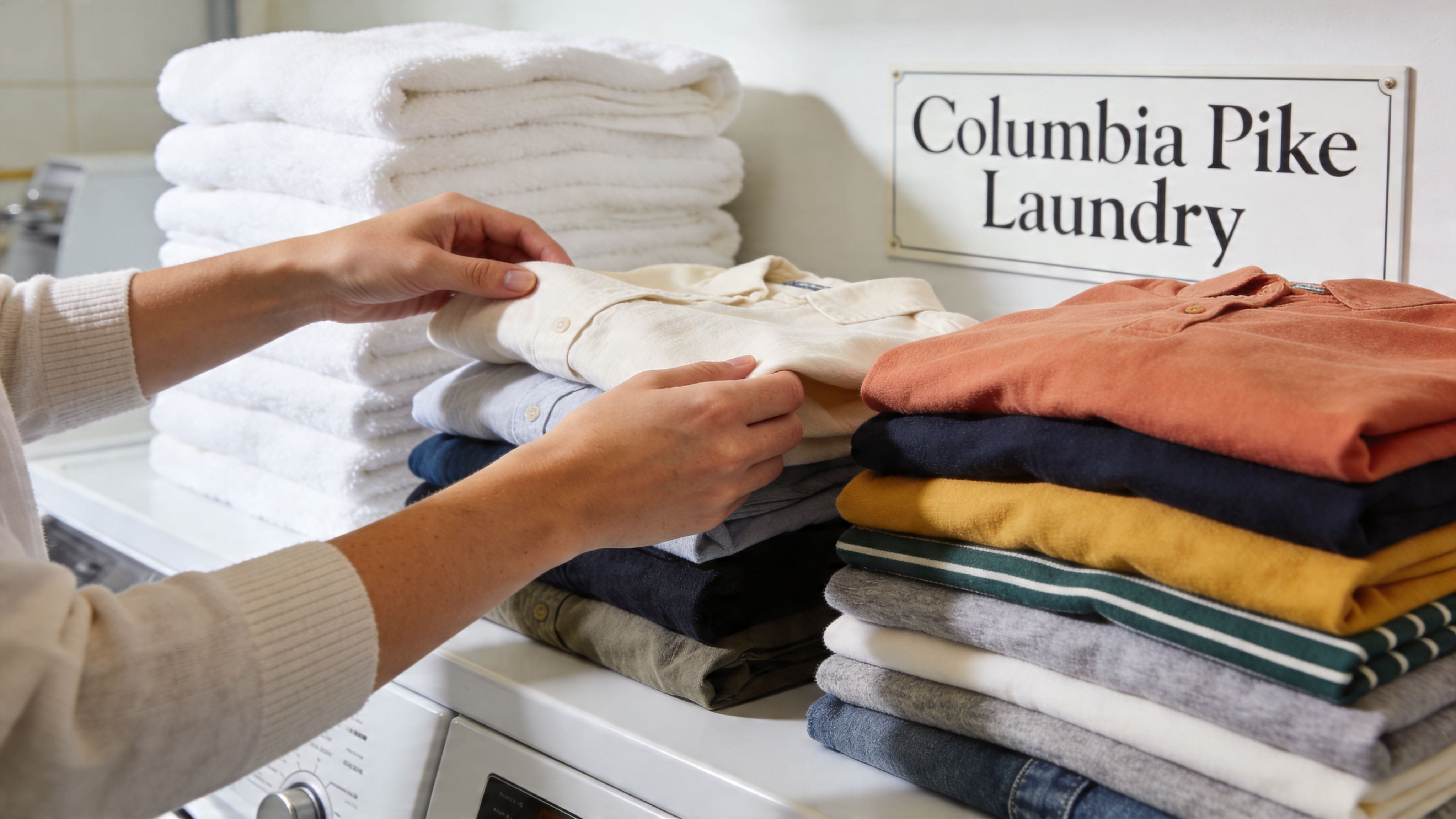
Here’s the practical side of that science.
Bleach doesn’t always mean chlorine
The word “bleach” makes many people nervous, and fairly so. They picture the strong bottle under the sink and imagine faded towels or damaged shirts. In detergent, bleach can mean more than one thing.
Chlorine bleach is powerful and familiar. It can whiten and disinfect, but it’s also the harsher option and isn’t suitable for many colored fabrics or delicate items.
Oxygen bleach is usually the gentler choice. It’s often found in detergents or laundry boosters designed to brighten and lift stains without the same level of harshness. Many people prefer it for routine laundry because it helps with dinginess and stain removal while being easier on color-safe loads.
Here’s where readers often get mixed up: enzymes and bleach don’t do the same job.
- Enzymes break down certain kinds of stains into smaller pieces so they can wash away.
- Bleaches work by changing or breaking down the color compounds that make stains visible.
That difference matters. A greasy salad dressing stain and a tea stain may not respond best to the same ingredient.
If a stain has substance, like blood, egg, or sauce, enzymes often matter. If the problem is lingering discoloration, a gentler bleach system may help more.
When these ingredients are most useful
You’ll notice the value of enzymes and bleaches most in households where laundry gets messy in very human ways.
Think about:
- Children’s clothes: Food, grass, and mystery smears often involve proteins, starches, and oils.
- Workout wear: Body oils and odor-related buildup can be stubborn.
- Kitchen linens: Grease and food stains need more than basic soil removal.
- White basics: Socks, undershirts, and sheets can look dull even when they’re technically clean.
If your detergent removes ordinary grime but leaves behind visible spots, the missing piece may be a stronger stain-treatment system, not more detergent.
The Finishing Touches Brightness Scent and Softness
Once the dirt and stains are handled, a different set of ingredients shapes how laundry feels when it comes out of the dryer or off the rack. These don’t always do the main cleaning. Instead, they influence the final result you notice first: brightness, smell, texture, and overall “clean” feeling.
This is the part of detergent that often gets the most marketing attention. It’s also where people with sensitive skin or strong scent preferences may need to read labels more carefully.
Brightness isn’t always the same as clean
One of the more surprising answers to “what is in laundry detergent” is that some ingredients are there to make clothes look brighter, not necessarily to wash away more dirt.
These are often called optical brighteners. In simple terms, they help fabric appear whiter or brighter by changing how light reflects from the cloth. That visual effect can make white shirts, socks, and sheets seem fresher, even when the ingredient itself isn’t doing the actual soil removal.
That doesn’t mean brighteners are bad. It just means they solve a different problem. If your priority is a crisp, bright look, you may like them. If your priority is keeping formulas minimal, you may decide they aren’t necessary.
Fragrance and dye make a product feel clean
Many people judge detergent within seconds of opening the washer. If the load smells “fresh,” the product feels successful. That’s why fragrance plays such a large role in laundry products.
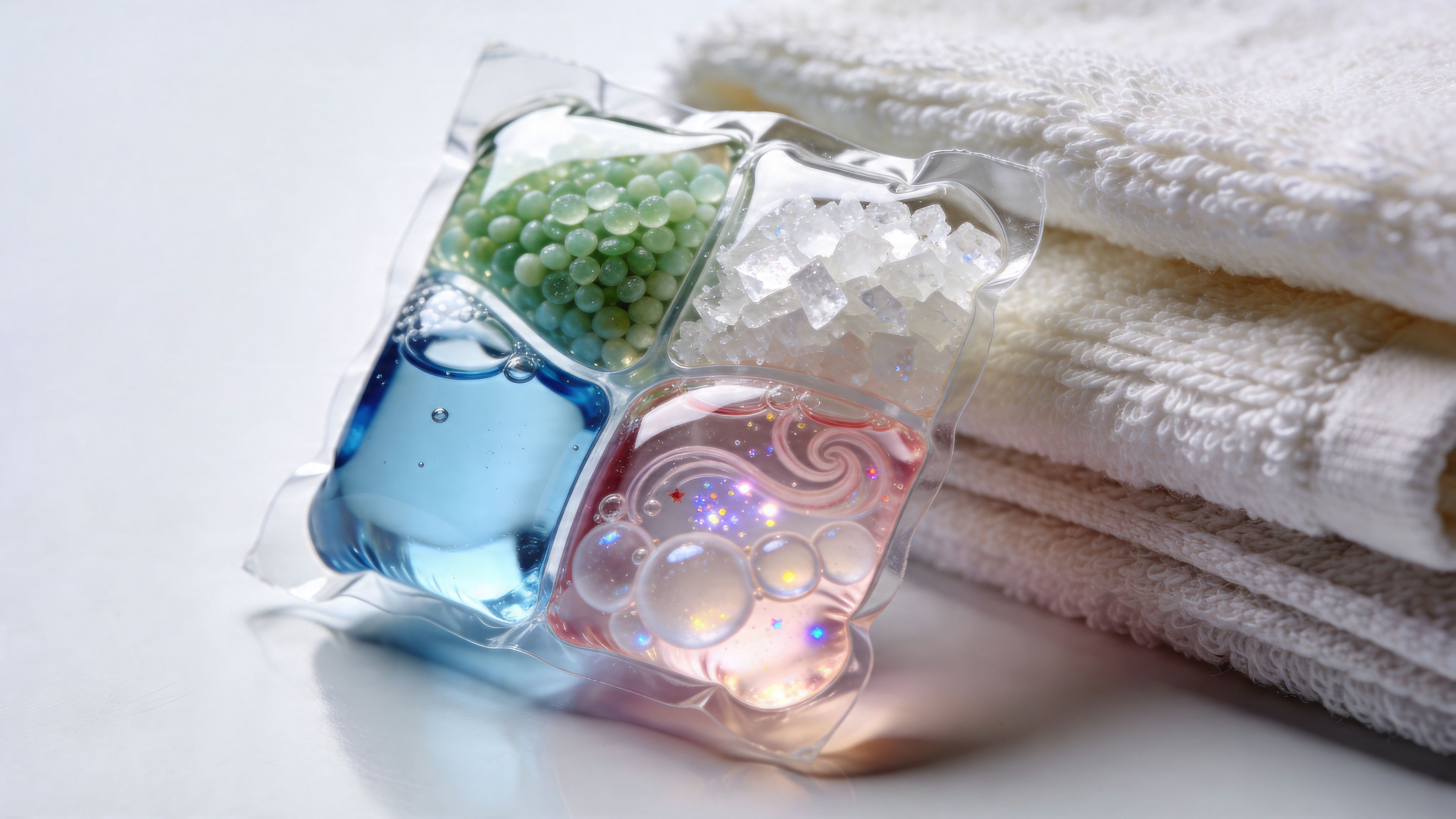
Fragrance can make towels smell pleasant and give sheets that just-washed feeling. Dyes, meanwhile, mostly affect the product in the bottle or pod more than the cleaning itself. They help create a recognizable look, whether that’s a bright blue liquid or a colorful swirl inside a pod.
But these ingredients are also where some households run into trouble.
A practical consideration is this:
- If you love a scented laundry room: Fragranced products can make the routine more enjoyable.
- If your skin reacts easily: Fragrance and dye are often the first extras to reconsider.
- If you wash baby clothes or bedding for sensitive sleepers: Simpler formulas may be the safer bet.
Some detergent ingredients are there for experience, not necessity. That’s useful to know when you’re trying to simplify laundry for sensitive skin.
Softness comes from coating fibers
Some detergents and many companion products include softening agents. These ingredients work by coating fabric fibers so they feel smoother and create less static.
That coating can feel lovely on pajamas, sheets, and everyday knits. It’s one reason some people swear by all-in-one products that promise cleaning plus softness in one step.
The tradeoff is practical. A coating that improves softness can also build up over time on some fabrics. Athletic wear, towels, and moisture-wicking textiles sometimes perform better when they aren’t heavily coated. If towels stop absorbing water well or gym fabrics feel less breathable, a heavily softening formula may be part of the story.
If you’re interested in gentler ways to soften fabrics, this guide to eco-friendly laundry softener is a useful next read.
The quiet helpers in the formula
A few ingredient types rarely get front-label attention, but they still matter.
These often include:
- Solvents: They help keep liquid detergents stable and evenly mixed.
- Preservatives: They help prevent unwanted microbial growth in a product that may sit on a shelf for quite a while.
- Polymers: These can help keep loosened soil or dye from settling back onto fabric during washing.
- Chelators and related helpers: These support performance in mineral-rich water and help the whole formula stay balanced.
Most shoppers don’t need to identify each one by name. What matters is understanding the difference between core cleaning ingredients and finishing ingredients. One group removes dirt. The other changes the way “clean” looks, smells, and feels.
A simple way to read this part of the label
If you’re staring at a bottle and wondering whether a formula fits your home, ask these questions:
- Do I need heavy scent, or just clean clothes?
- Do I want bright white appearance, or fewer extras?
- Will softness help these fabrics, or coat them too much?
- Does anyone in this home react to fragrance or dyes?
Those questions often lead to better choices than brand loyalty alone. A detergent can be excellent and still not be right for your family’s skin, fabrics, or preferences.
A Guide to Choosing Your Ideal Detergent
Once you know what detergent is made of, shopping gets calmer. You stop asking, “Which one is best?” and start asking, “Which one fits my laundry?”
That’s a much easier question to answer. Different households need different formulas. A family with muddy uniforms, a runner washing technical fabrics, and someone with sensitive skin may all choose differently for good reasons.
Start with your real-life priority
The label matters, but your laundry habits matter more. Before comparing brands, decide what problem you’re trying to solve.
Here are the most common starting points:
- Sensitive skin: You’ll usually want fewer extras, especially fragrance and dye.
- Frequent stains: Look for formulas that include enzyme systems.
- Hard water headaches: A detergent with strong support ingredients often helps.
- Modern high-efficiency machine use: Choose an HE-labeled product that’s designed for that washer type.
- Low-fuss convenience: Pods may feel easiest, while powders and liquids give more control.
One of the most useful resources for households dealing with irritation concerns is this guide to the best laundry detergent for allergies.
A quick cheat sheet for labels
| Ingredient Category | Primary Function | Look For On Labels (Keywords) |
|---|---|---|
| Surfactants | Lift oils, dirt, and grime from fabric | surfactants, cleaning agents, stain lifting |
| Builders | Help detergent work better in hard water | water softening, sodium carbonate, zeolite |
| Enzymes | Target protein, starch, and fat-based stains | enzymes, protease, amylase, lipase |
| Bleaches | Brighten or break down visible discoloration | oxygen bleach, color-safe bleach |
| Optical brighteners | Make fabrics appear brighter | brighteners, whitening, optical |
| Fragrance and dyes | Add scent and product color | fresh scent, perfume, dye-free, free & clear |
| Softeners and conditioning agents | Reduce static and create softness | softening, fabric care, conditioning |
| Stabilizers and preservatives | Keep liquid formulas usable and stable | preservatives, stabilizers |
Sensitive skin often means simpler is better
If someone in your household deals with itching, dryness, or irritation after laundry day, start by reducing variables. A “Free & Clear” style detergent is often the first smart move because it usually removes the extras most likely to cause trouble.
That doesn’t mean every scented detergent is a problem for every person. It means the path to solving laundry-related irritation is usually subtraction, not adding more products.
A few practical tips help:
- Choose fewer add-ons: Skip scent beads and strongly perfumed boosters if you’re troubleshooting skin reactions.
- Wash bedding carefully: Sheets and pillowcases stay in close contact with skin for long stretches.
- Be careful with all-in-one products: Convenience can also mean more ingredients.
- Rinse concerns matter: If residue worries you, proper dosing becomes as important as the formula itself.
Eco-friendly claims need a calm reading
Laundry marketing loves words like “natural,” “green,” “plant-based,” and “clean.” Those words can be useful, but they don’t all mean the same thing.
A better approach is to look for the practical idea behind the label:
- Phosphate-free: This usually signals an effort to avoid older builder systems associated with environmental concerns.
- Biodegradable or plant-based: These terms suggest something about ingredient origin or breakdown, but they don’t automatically tell you how well the product will perform for your laundry.
- Minimal ingredient lists: These can appeal to shoppers who want a simpler formula, though simpler doesn’t always mean stronger on stains.
If environmental impact is high on your list, think beyond the bottle too. Cold-water performance, accurate dosing, and avoiding rewashing can matter just as much as a buzzword on the front label.
The most sustainable detergent for many households is the one that gets clothes clean in one wash, works in cooler water, and doesn’t require extra corrective steps.
HE detergents are not optional for HE machines
This is one of the easiest shopping mistakes to fix. If your washer is a high-efficiency model, use an HE detergent.
These products are designed to work with lower water levels and controlled sudsing. Too many suds can interfere with rinsing and machine performance. If your machine calls for HE detergent, take that label seriously. It’s less about brand preference and more about how the washer was built.
Powders, liquids, and pods each suit a different kind of household
This choice often comes down to habit, storage, and the kinds of stains you deal with.
Powder
Powder detergent can be appealing for people who like a straightforward product and easy measuring. It can work well for general laundry, especially if you prefer shelf-stable products and simple packaging. Some powders may need more care to dissolve fully, especially if you overload the washer or use very short cycles.
Liquid
Liquid detergent is flexible and familiar. It’s easy to pre-treat a stain with a small dab before washing, which many families find helpful. It also tends to blend into routine quickly because you can adjust the amount more intuitively.
Pods
Pods are convenient, fast, and tidy for many users. You don’t have to pour or guess as much. The tradeoff is less control. If your load is tiny or unusually large, a pre-measured dose may not match perfectly. They also deserve extra caution in homes with small children because they can look like candy.
A simple decision path
If you’re still unsure, use this short filter:
- Skin issues in the home? Start with fragrance-free and dye-free.
- Lots of food, grass, or body-based stains? Pick an enzyme detergent.
- Hard water or dingy clothes? Prioritize formulas with strong builder support.
- Want softness and scent most of all? Focus on finishing ingredients, but watch for buildup.
- Prefer fewer decisions? Choose one well-matched detergent and use it consistently before switching again.
Most laundry problems don’t need a dramatic overhaul. They need a better match between the formula and the life your clothes are living.
How We Handle Laundry With Care at Columbia Pike Laundry
Learning what is in laundry detergent is useful and reassuring. It also confirms something else. Laundry has more moving parts than it seems.
There’s the detergent itself, the water hardness in your area, the difference between towels and activewear, the question of fragrance, the risk of residue, and the steady stream of stains that don’t politely arrive one at a time. That’s before you even get to sorting, drying, and folding.
A professional routine can bring real relief. A good laundry process doesn’t just wash clothes. It manages details consistently, even when life is noisy.
Thoughtful defaults matter
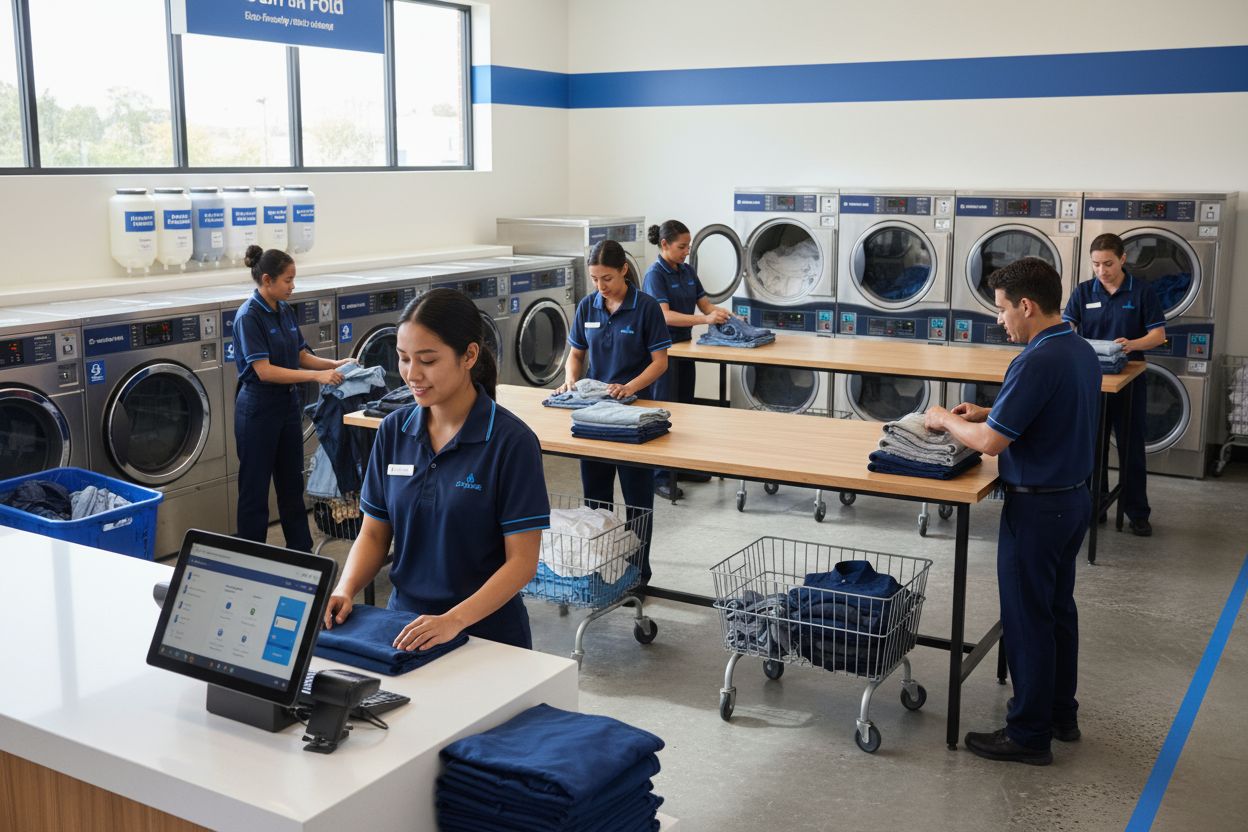
At Columbia Pike Laundry, garment care starts with practical choices that work for a wide range of households. The default detergent is Free & Clear, which fits the needs of many customers who want an effective wash without added fragrance.
That kind of default matters because many people aren’t looking for an intense scent cloud when they open the bag. They want clothes that feel clean, comfortable, and easy to wear, especially in homes with children, sensitive skin, or mixed fabric types.
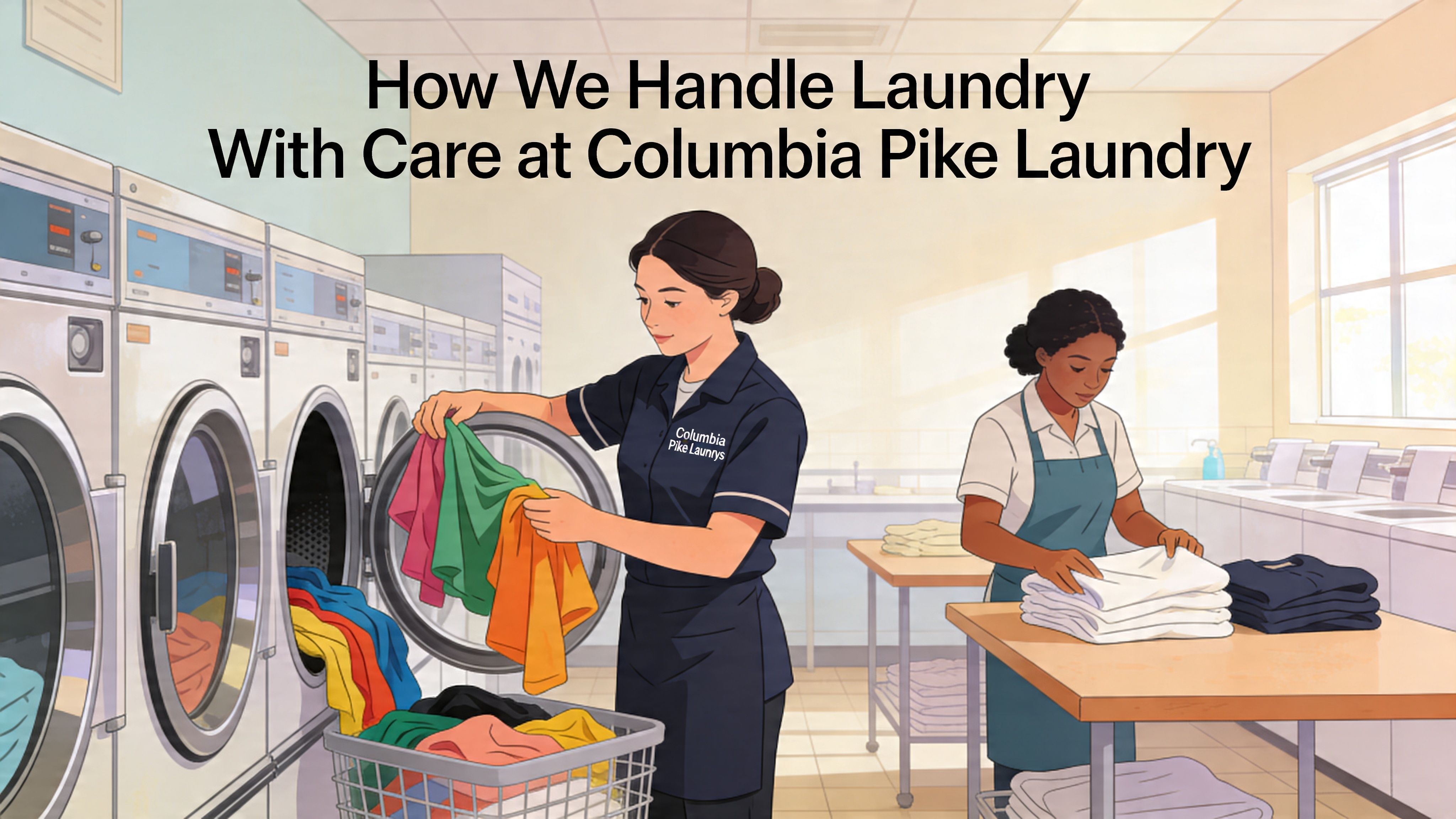
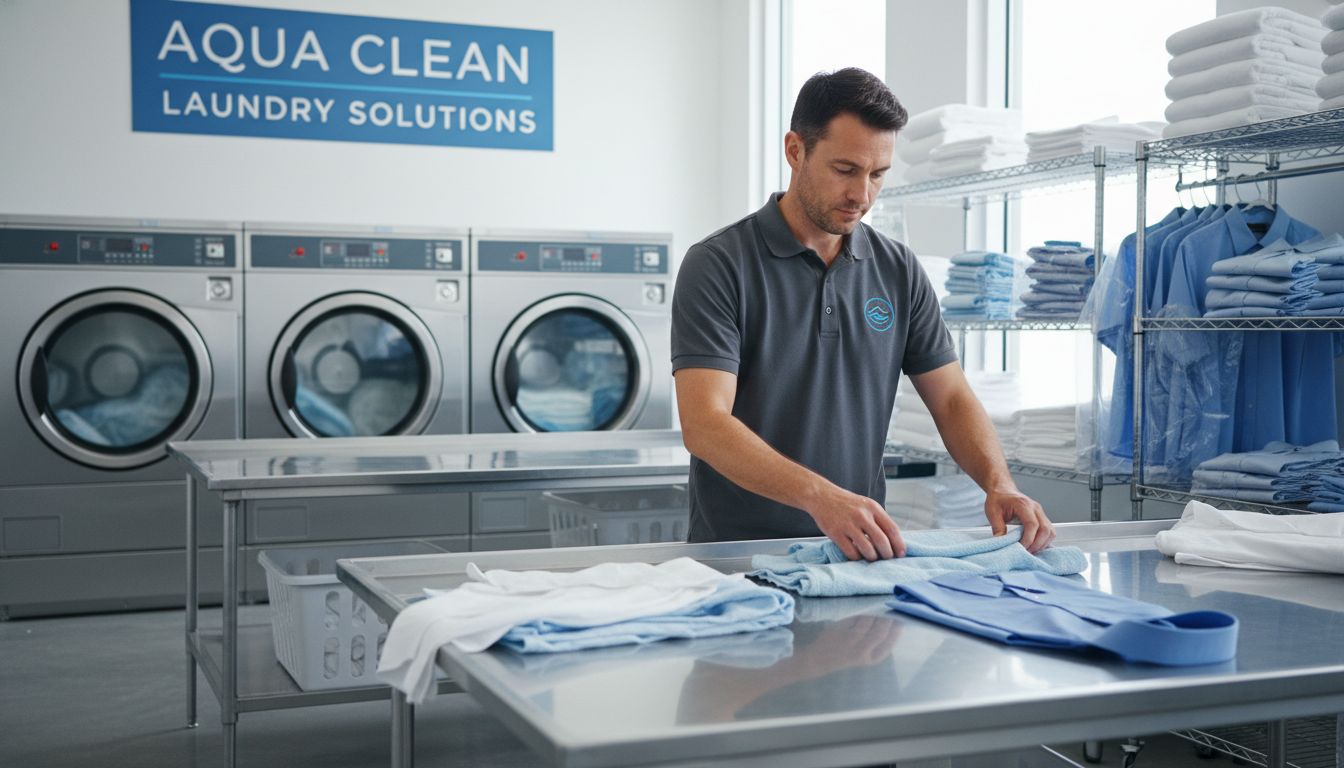
The care process also includes separating whites, colors, and delicates. That simple discipline protects fabric appearance and lowers the chance of dye transfer or rough treatment from one load to another.
This is what that care looks like in practice.
Preferences aren’t treated like a nuisance
Laundry gets easier when your preferences don’t have to be re-explained every week.
Some customers prefer unscented products. Others want a familiar brand. Columbia Pike Laundry can also accommodate requests for products like Tide or Gain for an upcharge, and customers can provide their own detergent when they want something highly specific.
That flexibility matters for households where detergent choice isn’t casual. Sometimes it’s about allergies. Sometimes it’s about a child’s skin. Sometimes it’s just about wanting your clothes washed the way you’d wash them yourself, without spending your own evening doing it.
The real benefit is mental space
The practical side of outsourcing laundry is obvious. Someone else washes, dries, and folds. The deeper benefit is quieter than that.
You don’t have to stand in an aisle comparing labels after work. You don’t have to wonder if a scented formula will bother someone at home. You don’t have to keep adjusting your routine load by load because one child has eczema, another plays soccer, and your towels have started feeling off.
A dependable laundry service handles those variables with care, consistency, and room for your preferences.
Clean clothes are nice. Predictable care is better. That’s what turns laundry from a recurring chore into one less thing occupying your head.
For families, busy professionals, older adults, and small business owners, that steadiness is often true luxury. Not spotless marketing language. Not a dramatic reinvention of laundry day. Just fewer decisions, less friction, and more time back.
If you’re ready to stop overthinking detergent labels and hand the whole routine to a team that treats your clothes with care, Columbia Pike Laundry can help. Schedule pickup and delivery, set your preferences, and get back time for the parts of life that matter more than a pile of unfolded shirts.
Free pickup, expert care, delivered back to your door.
Popular Blog Articles


Meet the Author
Daniel Logan didn’t start CPL because he loved laundry. He started it because his family was drowning in time debt, and laundry was one of the biggest weights.
Mornings were chaos with two kids under 5. Evenings felt like catch-up. And weekends? Gone to sorting socks and folding piles.
He knew his story wasn’t unique. So he built a business that gave families like his just a little bit of breathing room one load at a time.
With no laundry experience but deep tech skills, Daniel rolled up his sleeves, doing every job himself while building systems that turned it into a modern laundry service that saves customers time, simplifies their lives, and delivers reliability they can count on.
That’s where CPL began. Not from a playbook, but from pain. From one dad trying to buy back time: for himself, and for every household like his.
Free pickup, expert care, delivered back to your door.