
What Temperature to Wash Delicates A Practical Guide
Columbia Pike Laundry offers pickup & delivery across Northern Virginia.
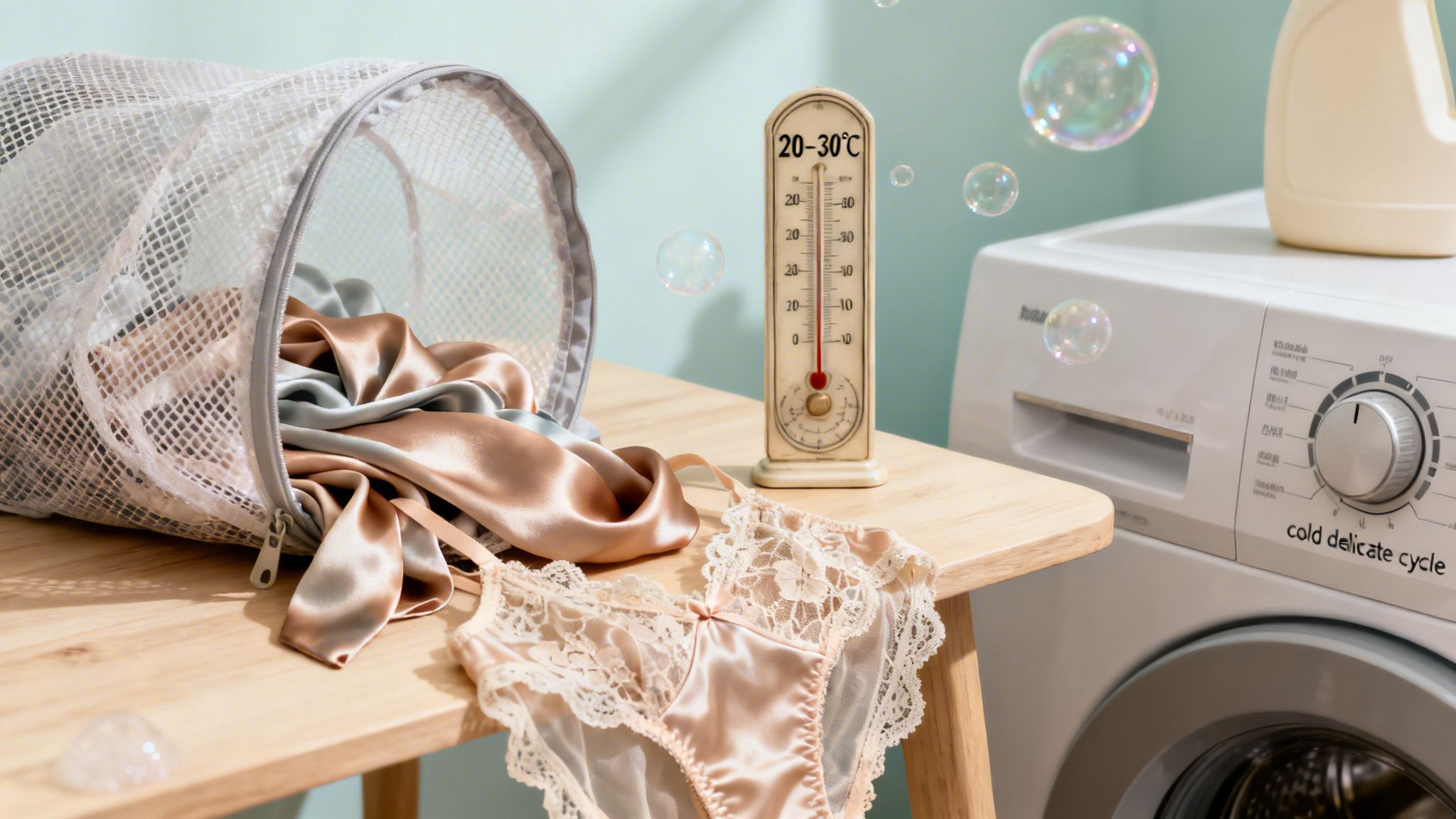
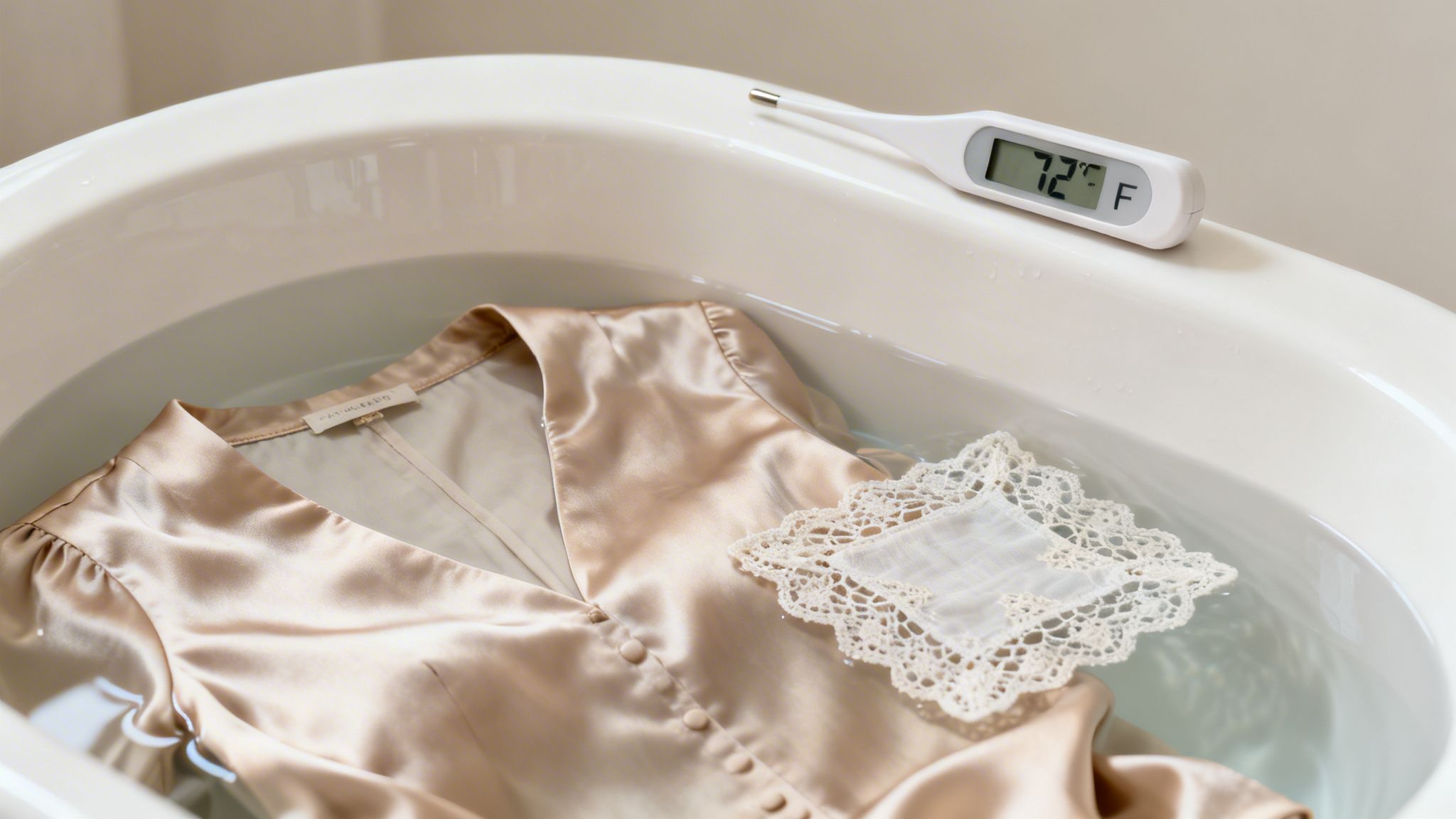
When it comes to washing your delicates, let's get straight to the point: cold water is your best friend. We're talking about a temperature between 68-86°F (20-30°C). Sticking to cold is the single most important thing you can do to protect the fabrics you love.
Why Heat Is the Enemy of Delicates
Think of hot water as a bully to delicate fibers like silk, wool, and lace. It causes them to shrink, bleed their beautiful colors, and lose that soft texture you fell in love with. Choosing a cold wash isn't just a smart move for your energy bill; it's a conscious choice to preserve your wardrobe.
This one simple change helps your clothes keep their original shape and feel, wash after wash. Once you understand why this rule is so crucial, you’ll be able to keep your favorite pieces looking brand new for years.
The Real-World Impact of Water Temperature
The difference in temperature can be dramatic. For instance, delicate fabrics like silk and wool can shrink by a shocking 10-15% if they're washed in water hotter than 104°F (40°C). This is exactly why most modern washing machines have a delicate cycle that defaults to a cool 65-75°F.
And it’s not just about protecting your clothes. A study by Procter & Gamble found that washing at 86°F (30°C) instead of 140°F (60°C) cuts energy consumption by a massive 65% per load. Those savings really add up over time! You can dive deeper into these temperature findings on Puella Scents.
When you choose cold water, you're actively preserving the integrity of each fiber. You’re telling the delicate structure of lace, silk, and cashmere to stay exactly as it is, preventing the stretching and dullness that hot water inevitably causes.
To make things even clearer, I've put together a quick guide for the most common delicate materials you'll encounter.
Quick Temperature Guide for Delicate Fabrics
This table breaks down exactly what temperature to use for each fabric and why it matters.
Keep this chart handy, and you'll never have to second-guess your temperature settings again. A quick glance is all it takes to make the right choice and keep your garments safe.
How to Read Laundry Care Labels Without Confusion
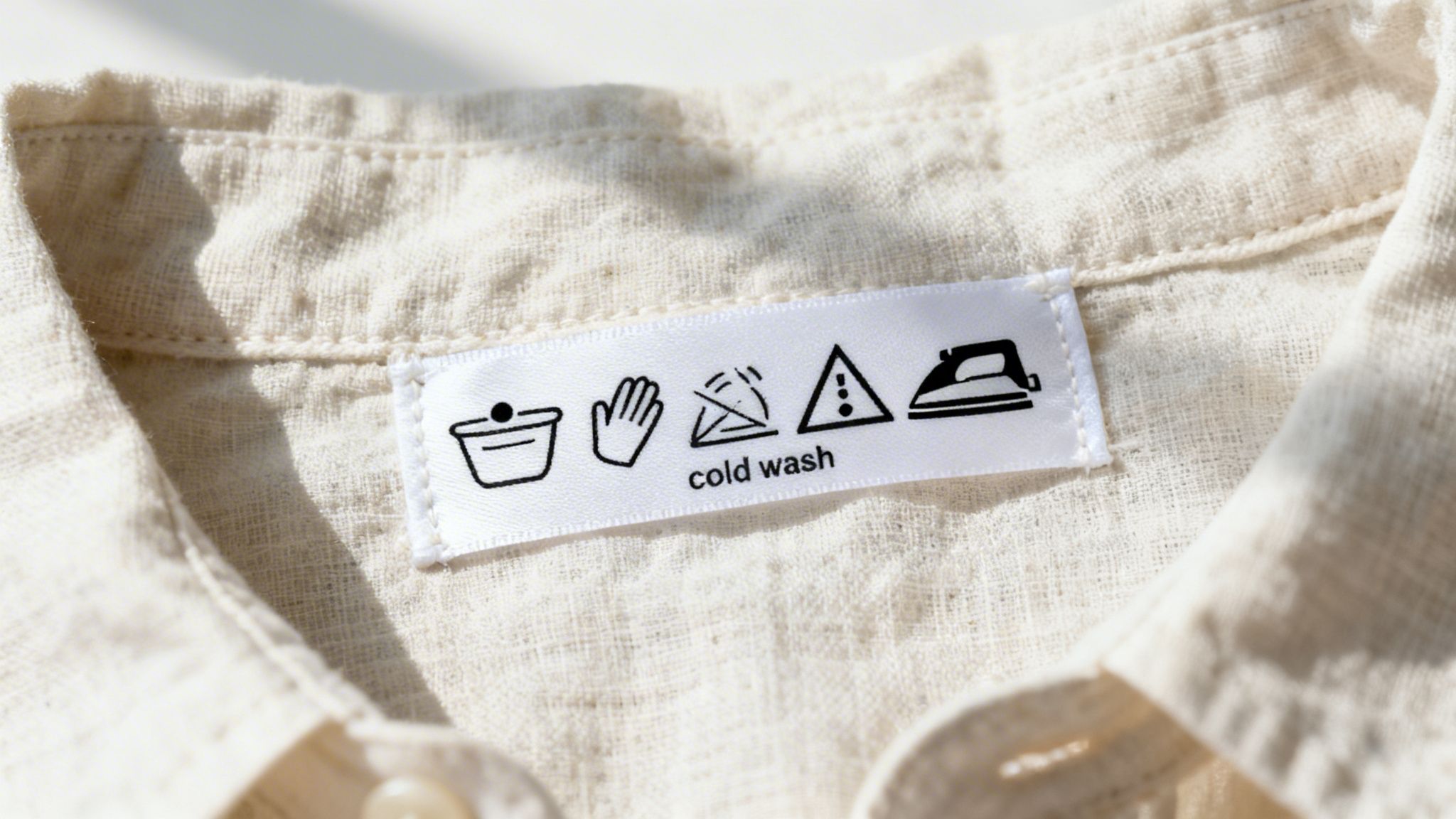
Before you go anywhere near the washing machine, the first place you should always look is the care label on your garment. Seriously. Think of that little tag as a direct message from the people who made your clothes—it's their personalized instruction manual for keeping it in great shape.
Those tiny hieroglyphics might seem confusing at first, but they're the single most reliable guide you have. Taking a moment for understanding fabric care symbols is what separates laundry guesswork from expert care. Once you learn this simple visual language, you’ll know exactly how to treat every delicate item you own.
The Key Symbols for Temperature
When it comes to wash temperature, the symbol you’re looking for is the washtub. Inside that little tub, you’ll see a number of dots. This is the universal code for water temperature, and it takes all the guesswork out of the equation.
- One Dot: This means wash in cold water, which is usually 86°F (30°C) or colder. You'll see this on most of your delicate items.
- Two Dots: Use warm water, right around 104°F (40°C).
- Three Dots: This calls for hot water, typically about 120°F (50°C).
Following the dot system is the best way to prevent your favorite sweater from shrinking or your silk blouse from losing its color. The label gives you the manufacturer’s tried-and-true advice for a reason!
Of course, the washtub isn't the only symbol that matters. If you see a hand dipping into the tub, that means hand wash only—a clear sign that a machine cycle is too aggressive. A big 'X' through the tub means do not wash at all, which is your cue to head to a professional dry cleaner.
For a deeper dive into all the symbols, our complete guide on how to read clothing care labels has you covered. Mastering these basics gives you the confidence to wash everything perfectly, every single time.
Matching the Right Temperature to Each Delicate Fabric
Going beyond the care label and understanding why certain fabrics demand cold water is the real secret to protecting your clothes. Every delicate material has its own personality, and the wrong water temperature can cause damage that you just can't undo. It's a bit like cooking—you wouldn't try to poach an egg with a blowtorch, and you shouldn't blast delicate fibers with hot water.
So, what temperature to wash delicates? The answer is almost always cold water. It’s gentle, protective, and preserves the very qualities that make these fabrics special in the first place. Hot water, on the other hand, is the enemy of delicate fibers.
Why Cold Water Protects Silk and Wool
For a fabric like silk, cold water is non-negotiable. It protects the natural proteins that give silk its signature shine and smooth-as-glass feel. Hot water dulls that beautiful luster and weakens the threads, leaving your favorite blouse looking tired and lifeless.
When it comes to wool and cashmere, heat is even more of a disaster. Think of it this way: hot water gives wool a fever. The fibers panic, lock up, and shrink into a tight, dense mat. This process, called felting, is permanent. There’s no coming back from it.
- Silk & Satin: Cold water is your best friend for keeping their luxurious sheen and buttery-smooth feel intact.
- Wool & Cashmere: Using cold water is the only way to prevent felting. It keeps the microscopic scales on the fibers from locking together and shrinking your favorite sweater.
- Lace & Sheer Fabrics: These lightweight materials can easily snag or tear. A gentle, cold wash minimizes the stress on their fragile threads.
The science here is pretty clear. A 2018 study found that delicate garments washed above 30°C faded 40% faster and had color bleeding in 62% of cases. That’s a huge risk to take with your vibrant clothes. You can see more on the impact of delicate cycles by exploring what to wash on the delicate cycle at Apartment Therapy.
Special Considerations for Other Materials
Of course, it's not just about silk and wool. Many other fabrics need a gentle touch. If you have unique items like tablecloths or bags, you might find specific advice like how to clean oil cloth helpful. And then there's rayon, a fabric notorious for shrinking if it even looks at warm water.
Once you start to understand the why behind the temperature, you develop an instinct for proper fabric care. You'll move from just following rules to making smart, confident choices that keep your entire wardrobe looking fantastic. To build on this, take a look at our complete guide on the delicate wash cycle for more machine-specific tips.
Your Essential Toolkit for Washing Delicates
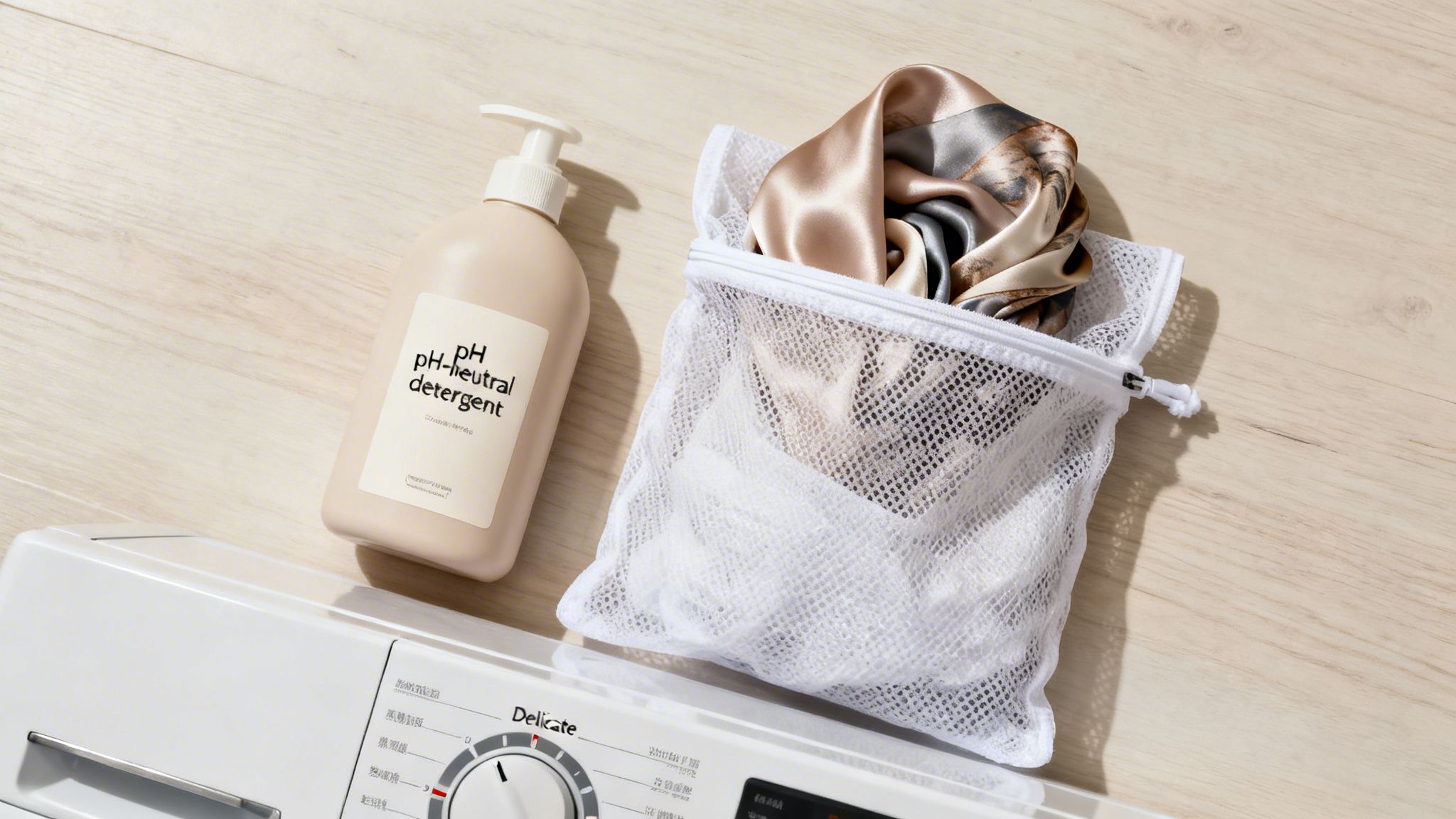
Nailing the right water temperature is a game-changer, but it's only half the battle. To truly protect your delicate garments, you need to think about your detergent and wash cycle, too. These three elements work together to give your clothes a gentle, yet effective, clean.
Let's start with the detergent. For delicates, you absolutely want a pH-neutral formula. Standard alkaline detergents are too aggressive for natural fibers like silk and wool; they strip away the natural oils that keep them soft and lustrous, leaving them feeling brittle over time.
Look for modern detergents specifically formulated for cold water. These are brilliant because they use specialized enzymes that act like tiny little scissors, snipping away at dirt and oil molecules without needing hot water to get the job done. That’s how you get a deep clean while protecting your clothes from heat damage.
Choosing the Right Wash Cycle
Your washing machine probably has a few settings that sound pretty similar. Knowing the difference is crucial for giving your clothes the right level of care. It all comes down to two things: agitation (how much the drum tumbles) and spin speed (how fast it wrings out water).
- Delicate Cycle: This is your go-to for most delicates. It features low agitation and a slow spin, which puts far less stress on the seams and fibers of your clothes.
- Hand Wash Cycle: The gentlest option your machine has. It uses minimal agitation and the slowest spin speed to mimic the action of washing by hand. This is perfect for your most precious items, like fine lingerie or antique lace.
- Wool Cycle: Designed specifically to keep wool from felting or shrinking. This cycle uses very little tumbling—often just a gentle soak and swirl—to clean without damaging the fibers.
By pairing a gentle, pH-neutral detergent with the correct cycle—like the Hand Wash setting for a treasured silk scarf—you create the ultimate protective environment. This combination ensures your delicates are cleaned effectively without facing the mechanical stress that causes wear and tear over time.
The Right Way to Dry Delicates After the Wash
You’ve carefully chosen the right detergent and the perfect cold wash setting. But all that effort can be completely undone in the last five minutes of your laundry routine. The final, and arguably most crucial, step is drying your delicates correctly—and that means staying far away from your machine dryer.
For delicate fabrics, the dryer is public enemy number one. The combination of high heat and aggressive tumbling is a guaranteed way to cause shrinking, stretching, and permanent damage to fragile fibers.
To keep those favorite pieces looking their best, air-drying is truly the only safe bet. This gentle method lets moisture evaporate naturally, without putting any stress on the fabric. Mastering this final step is what will keep your clothes looking and fitting great for years.
By skipping the machine dryer, you're not just preventing damage—you're actively extending the life of your garments. Air-drying is the single most effective way to preserve the integrity of delicate fabrics after washing.
Essential Air-Drying Techniques
Not all garments should be dried the same way. Gravity can be just as much of an enemy as heat, so learning a few simple techniques is key to helping your clothes maintain their shape.
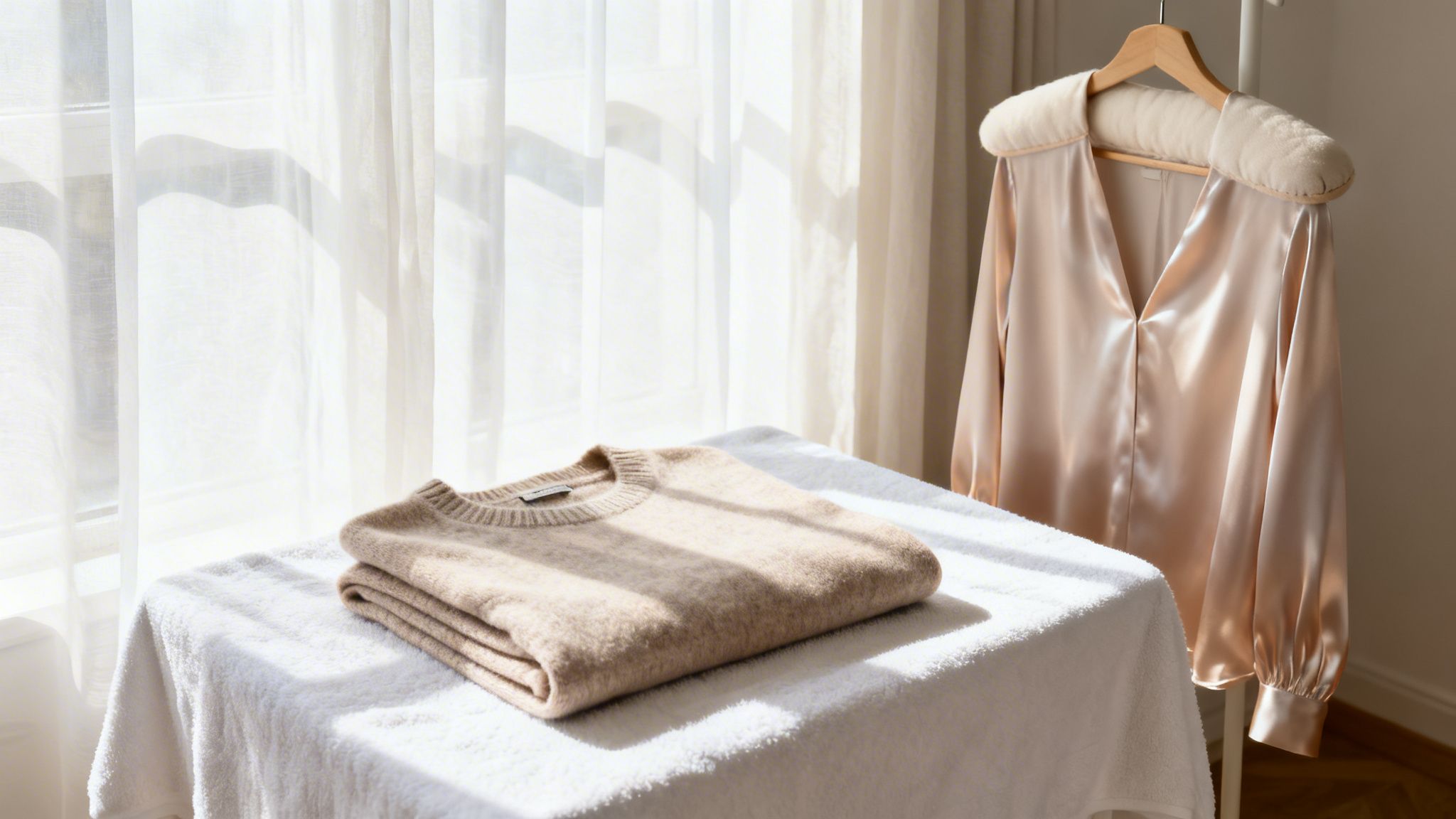
Lay Sweaters Flat: Heavy knits like wool and cashmere will stretch out completely if hung. Instead, lay your sweater flat on a thick, clean towel. Gently roll the towel up (like a sushi roll!) to press out excess water. Then, unroll it and lay it flat on a fresh, dry towel or a mesh drying rack away from direct sun.
Use Padded Hangers: For blouses, dresses, and other lightweight woven fabrics, padded hangers are your best friend. They prevent those dreaded shoulder bumps and allow the garment to hang naturally as it dries. Whatever you do, avoid thin wire hangers.
Keep Out of Direct Sunlight: While fresh air is fantastic, direct sun is not. Its UV rays can cause beautiful, vibrant colors to fade and can even weaken delicate fibers over time. Your best bet is a shaded spot with good air circulation.
For more pro tips on creating the perfect setup, check out our guide on how to air dry clothes indoors.
When to Let a Professional Handle Your Delicates
Mastering the right wash temperature for your delicates is a huge step, but a true laundry pro also knows when to back away from the washing machine. Sometimes, the risk of a DIY wash just isn't worth it. Trusting your most precious items to a professional isn't giving up; it's the smartest way to protect your clothes and your peace of mind.
Think of it like this: you wouldn't try to fix a complex Swiss watch yourself, would you? The same logic applies to certain garments. Items with intricate beading, fragile embroidery, or delicate sequins are prime candidates for damage. Even the gentlest cycle can snag threads, pull at lace, or dislodge embellishments forever.
When to Call in the Pros
Some clothes have needs that a home washing machine simply can't meet, no matter which temperature or cycle you choose. This is where a professional service, with the right equipment and experience, becomes essential.
- Structured Garments: Think about that favorite blazer, a tailored jacket, or a formal dress. They get their shape from internal materials like interfacing and padding. Water can cause these structures to warp, bunch up, or even dissolve, completely ruining the garment's fit and form.
- Precious Heirlooms: That vintage lace tablecloth from your grandmother or a delicate silk christening gown is absolutely irreplaceable. These aren't just clothes; they're memories. Professional cleaning is the only way to ensure they’re safely preserved for the next generation.
- Stubborn Stains on Delicates: An oil smudge or wine spill on a silk blouse can be a nightmare. Trying to treat it at home often leads to spreading the stain, setting it permanently, or creating water rings. Professionals have specialized solvents that can lift tough stains without damaging the delicate fabric underneath.
Handing these items over to an expert is about guaranteeing your most valuable and beloved pieces get the precise care they deserve. It’s the ultimate form of clothing care.
When the stakes are this high, we’re here to help. At Columbia Pike Laundry, we treat your delicates with the professional expertise they require. Plus, with our convenient pickup and delivery service, you get top-tier care for your clothes and get precious time back in your day.
A Few Lingering Questions About Washing Delicates
Even after you've sorted everything and read the labels, a few questions can still pop up. It's completely normal to feel a little hesitant with your favorite clothes on the line. Let's walk through some common concerns so you can feel totally confident at the washing machine.
Can Clothes Actually Get Clean in Cold Water?
It’s a common myth that you need hot water to really get clothes clean, but that’s just not the case anymore. Today's detergents are packed with powerful enzymes specifically designed to attack dirt and oils in cold water (68-86°F or 20-30°C).
So yes, your delicates will come out perfectly clean. In fact, washing most of your laundry in cold water is a great habit—it saves energy and prevents the heat damage and shrinkage that can ruin your clothes.
Is the Hand Wash Cycle Better Than the Delicate Cycle?
Think of it as the difference between "gentle" and "ultra-gentle." While both cycles are good, the Hand Wash cycle is almost always the gentlest option your machine has. It uses the least amount of agitation and the slowest spin to mimic washing by hand.
For your most fragile pieces—think silk blouses, lingerie, or anything sheer—this setting is your safest bet.
When in doubt, always choose the most cautious method you can. It's far better to be a little too gentle than to risk damaging an item you love.
What if My Garment Has No Care Label?
Ah, the mystery garment! We’ve all been there. When a care label is missing or unreadable, the golden rule is to play it safe.
Your best move is to hand wash the item in a sink with cold water and just a dab of gentle detergent. If you really need to use a machine, tuck it into a mesh laundry bag first. Then, select the 'Hand Wash' cycle with cold water. And whatever you do, never toss it in the dryer; let it air-dry flat or on a padded hanger.
Sometimes, the best and safest solution is to simply let a professional handle it. For those irreplaceable or deeply cherished items, Columbia Pike Laundry offers expert care you can trust, plus convenient pickup and delivery services. Schedule your pickup today and take the guesswork out of laundry day.
Free pickup, expert care, delivered back to your door.
Popular Blog Articles





Meet the Author
Daniel Logan didn’t start CPL because he loved laundry. He started it because his family was drowning in time debt, and laundry was one of the biggest weights.
Mornings were chaos with two kids under 5. Evenings felt like catch-up. And weekends? Gone to sorting socks and folding piles.
He knew his story wasn’t unique. So he built a business that gave families like his just a little bit of breathing room one load at a time.
With no laundry experience but deep tech skills, Daniel rolled up his sleeves, doing every job himself while building systems that turned it into a modern laundry service that saves customers time, simplifies their lives, and delivers reliability they can count on.
That’s where CPL began. Not from a playbook, but from pain. From one dad trying to buy back time: for himself, and for every household like his.
Free pickup, expert care, delivered back to your door.