
Baking Soda and Laundry Odors How to Get Truly Fresh Clothes

Columbia Pike Laundry offers pickup & delivery across Northern Virginia.
We’ve all been there: you pull a load of laundry out of the dryer, and instead of smelling fresh, it still has that lingering scent of gym sweat or damp towels. It’s frustrating. Before you reach for a heavy-duty, artificially scented detergent, try reaching into your pantry instead.
Adding about a half-cup of baking soda directly into your washing machine drum along with your regular detergent can work wonders. This isn't just about masking smells—it's about getting rid of them for good.
The Simple Science of Why It Works
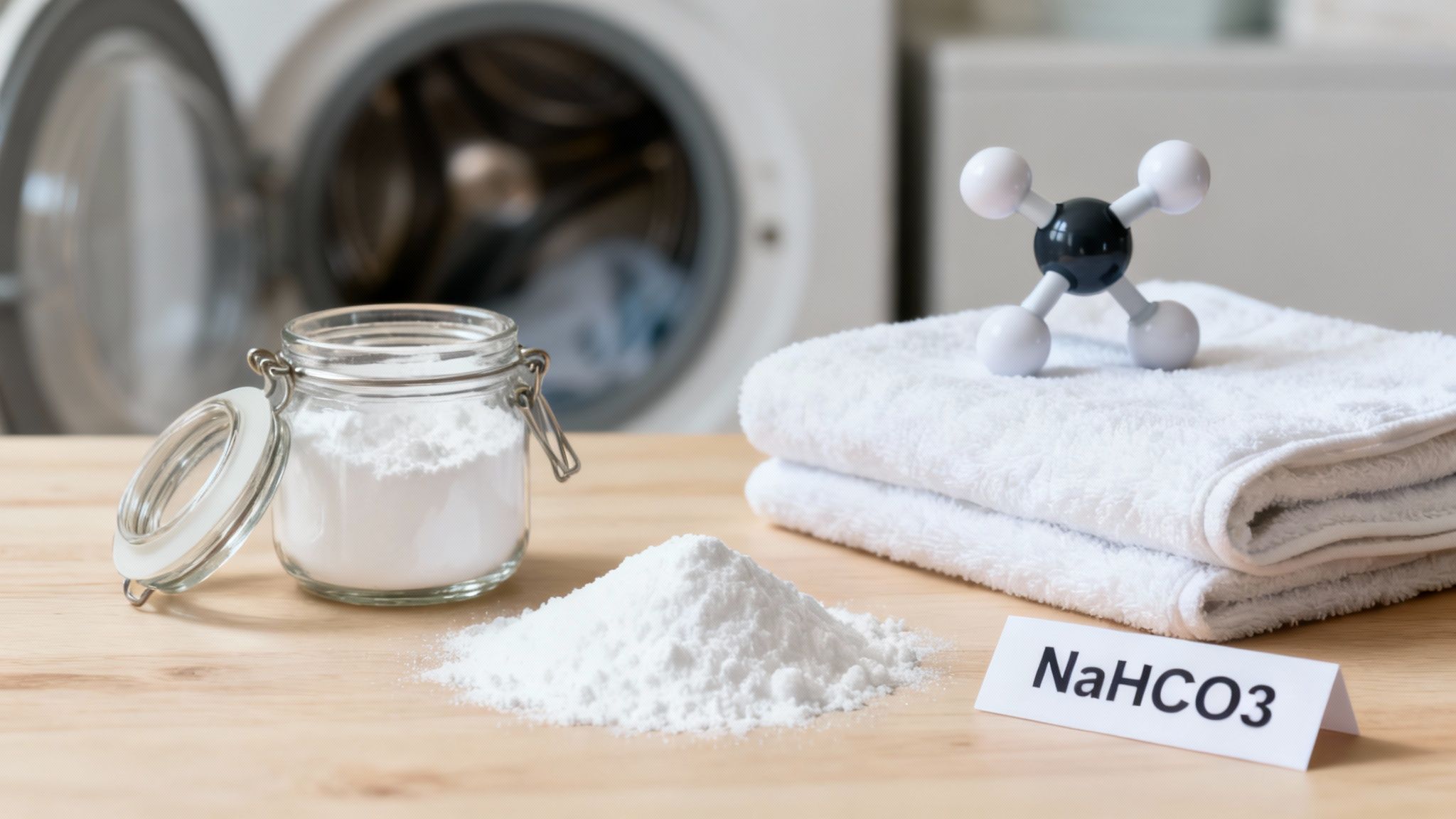
Ever wondered why that workout shirt still stinks after a wash? The problem is often acidic compounds, like the butyric acid in sweat, that some detergents struggle to break down completely. This is where baking soda (or its scientific name, sodium bicarbonate) becomes your secret weapon.
Baking soda is a mild alkali. On the pH scale, it sits opposite to those acidic molecules that cause odors. When you toss it into your laundry, it gets to work balancing the water's pH, which neutralizes the acids causing the funk.
Essentially, it doesn't just cover up the smell with a fresh scent; it eliminates it at a chemical level. Think of it as hitting a reset button for your fabrics.
What Kinds of Odors Can It Handle?
This neutralizing superpower makes baking soda a go-to for all sorts of laundry headaches. It's not a one-trick pony—it tackles the root cause of many common stinks.
- Sweat and Body Odor: The acidic nature of perspiration is no match for baking soda's alkaline punch.
- Mildew and Mustiness: It's perfect for getting that sour, funky smell out of damp towels or clothes you accidentally left in the washer a bit too long.
- Environmental Smells: It can even help lift stubborn, absorbed odors like smoke from fabrics.
Once you understand this basic chemistry, you’ll see its potential everywhere. These same principles are behind many other effective DIY cleaning solutions, like the classic baking soda and vinegar solutions for household problems many people use around their homes.
As a bonus, baking soda also softens the water, which helps your detergent do its job more efficiently. Experts say adding just ½ cup can boost your detergent’s performance so much that you might even be able to use a little less soap.
Quick Guide to Using Baking Soda for Odors
For a quick reference, here’s a simple breakdown of how much baking soda to use for different laundry issues.
This simple guide can help you tackle most common odor problems with confidence, using an ingredient you probably already have at home.
Adding Baking Soda to Your Washing Machine
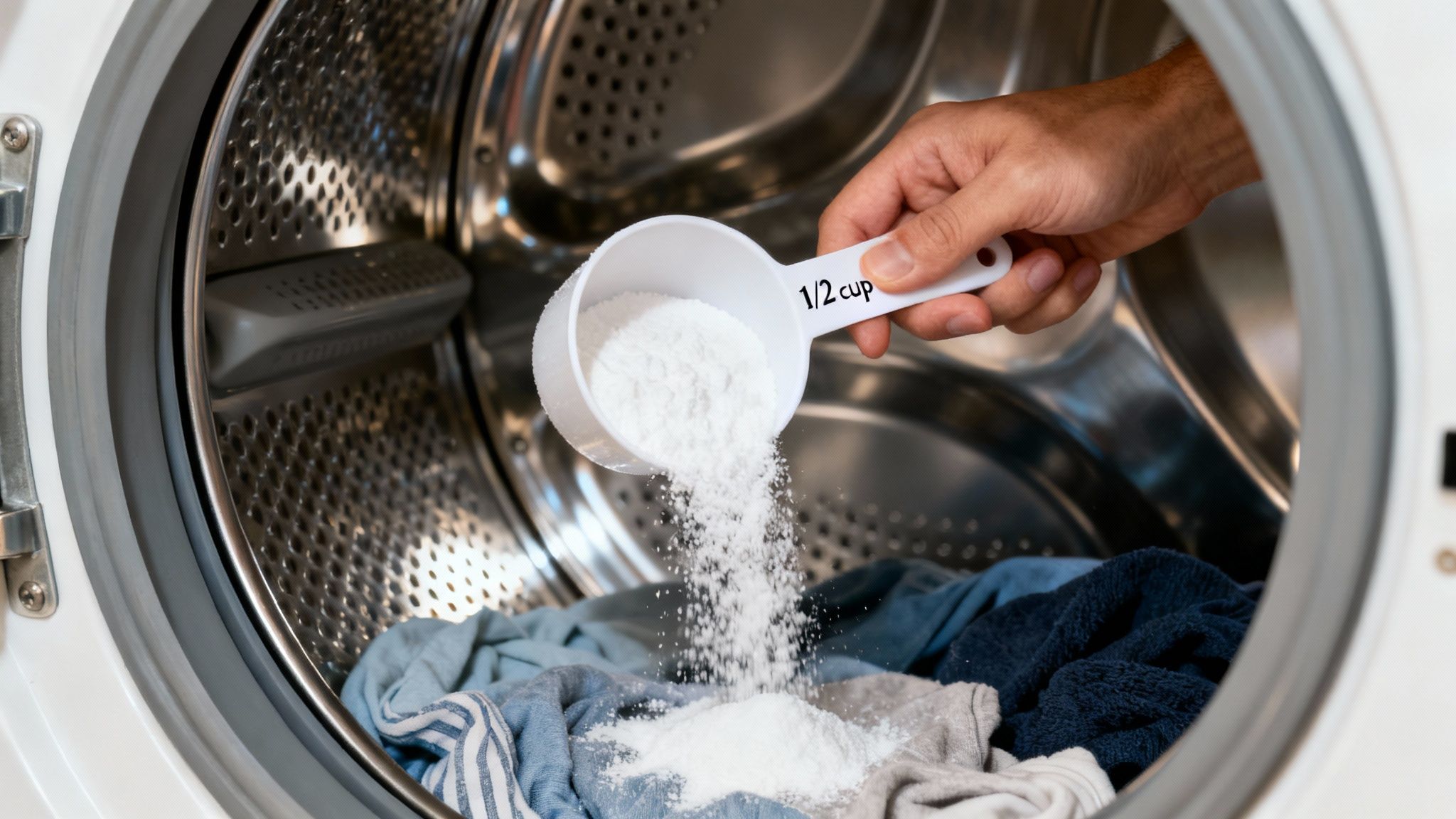
Putting baking soda to work against laundry odors is incredibly simple, but the secret to getting it right is all about how and where you add it. You want it to dissolve completely and get to work on your clothes the moment the wash cycle begins. This method is effective for any machine, whether it’s a classic top-loader or a newer high-efficiency (HE) front-loader.
For a typical load of laundry, one-half cup of baking soda is the sweet spot. It's just enough to zap everyday smells and give your detergent a little boost.
But if you’re facing a bigger challenge—like a hamper full of soccer uniforms or a load that sat damp for a day too long—don't be afraid to double down. Go ahead and use a full cup for those extra-large or extra-stinky loads.
The best way to do it? Sprinkle the baking soda directly into the empty washing machine drum before you put your clothes in. Just scatter it across the bottom. This ensures it dissolves evenly as the water fills the tub. After that, toss in your laundry and add your detergent like you always do.
Why You Should Skip the Dispenser Drawer
I know it’s tempting to just pour everything into those convenient dispenser drawers, but with baking soda, that's a mistake you'll want to avoid. It can cause more problems than it solves.
Here’s what can happen:
- It Can Clog and Clump: Unlike liquid detergents, powdered baking soda can easily get damp and form hard clumps inside those little compartments.
- It Won't Be Released at the Right Time: Dispenser trays are timed to release products at specific points in the cycle. You want the baking soda in there from the very beginning to start neutralizing odors and softening the water for your detergent.
- It Might Leave Residue: When baking soda clumps up in the dispenser, it might not flush out completely. This can leave a gunky, chalky residue in your machine and even on your clean clothes.
Tossing it straight into the drum sidesteps all these potential headaches. It gets to work immediately and rinses away clean.
Key Takeaway: For the best results, always add baking soda directly to the empty washer drum before adding your clothes. This lets it dissolve fully, neutralize odors from the get-go, and help your detergent work more effectively.
This one tiny change to your laundry routine can make all the difference in the battle against tough baking soda and laundry odors. You get all the deodorizing power without the messy fallout from a clogged dispenser. It’s a simple trick that helps every load come out smelling genuinely fresh, not just perfumed.
Using a Baking Soda Pre-Soak for Tough Odors
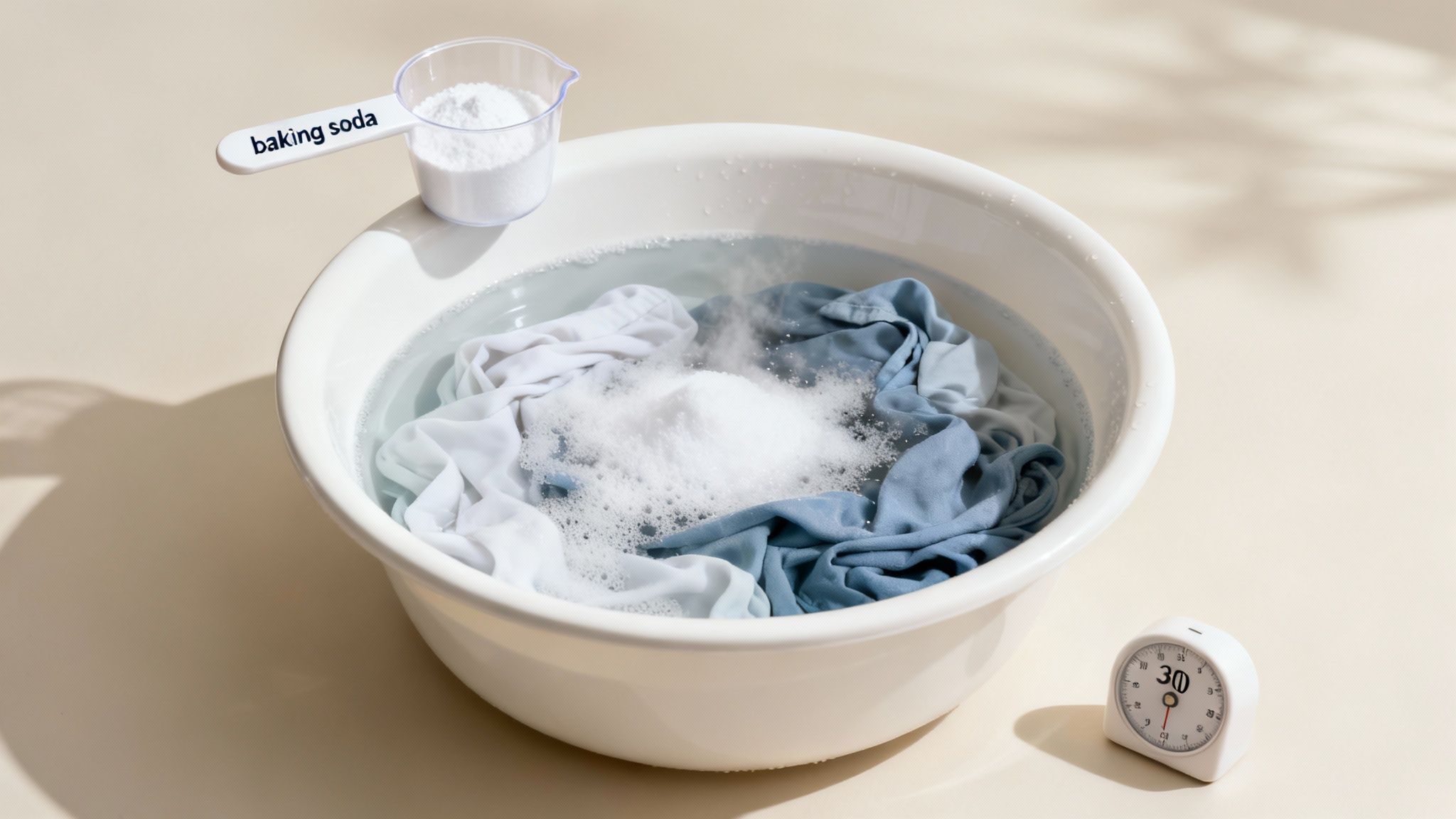
Sometimes, just tossing baking soda into the wash isn't enough. We've all been there—gym clothes forgotten in a bag over the weekend, or beach towels that were still a bit damp when they hit the hamper. For those truly set-in, stubborn smells, a baking soda pre-soak is your best friend.
This method gives the baking soda the time it needs to really work its magic, neutralizing those funky, acidic odors before the clothes even see the inside of your washing machine. Think of it as a rescue mission for items you were about to give up on.
Mixing the Right Soaking Solution
Don't worry about getting out the measuring spoons; this is more art than science. The key is to make a solution concentrated enough to do the job. You're creating a powerful deodorizing bath for your smelliest laundry.
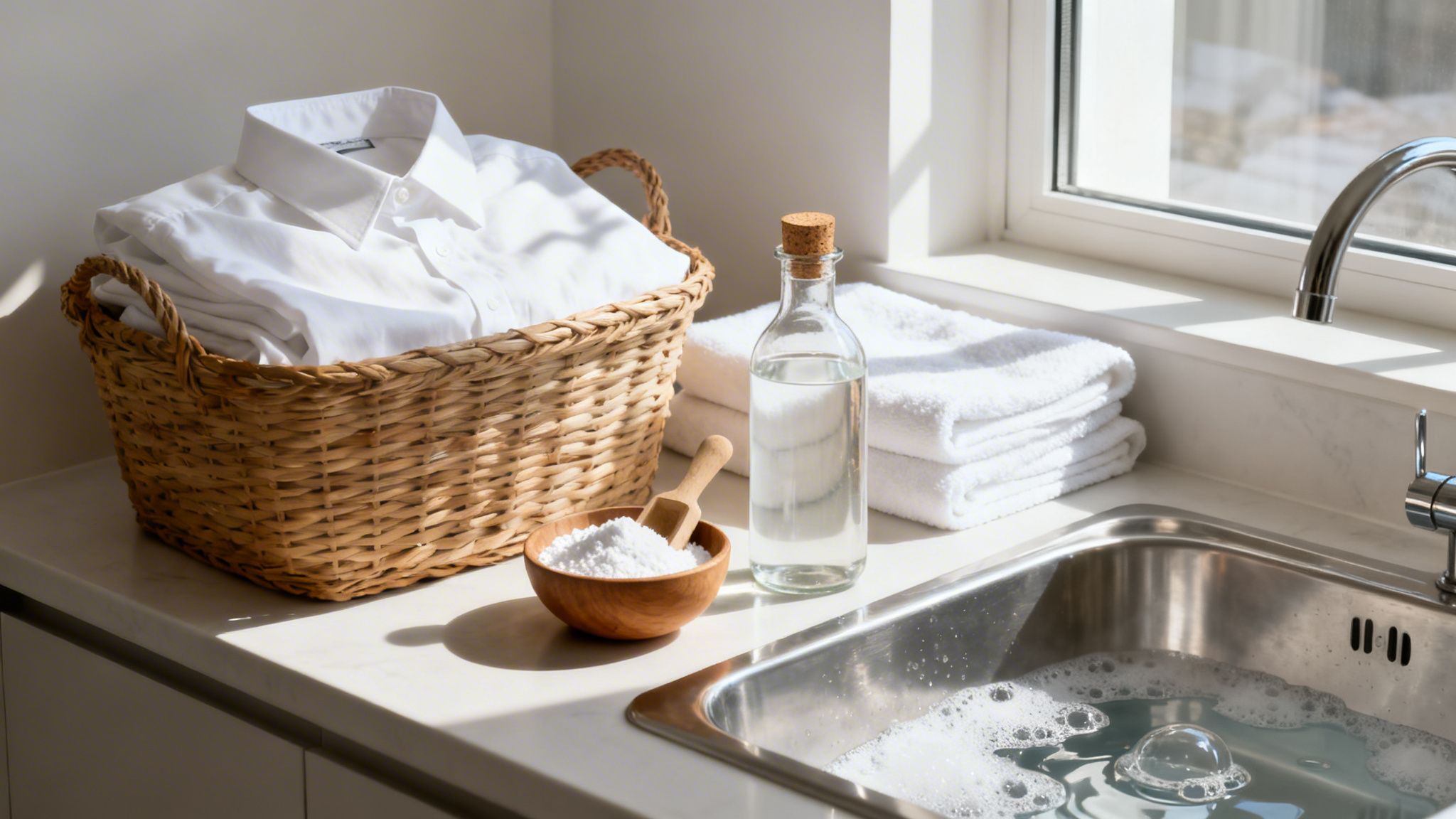
- For a few problem items: Grab a bucket or just use your sink. Dump in one full cup of baking soda and add about four gallons of warm water. Give it a good stir to help the powder dissolve.
- For a whole load of smelly stuff: The bathtub or the basin of a top-loading washer works perfectly. Use two cups of baking soda and fill it with enough warm water to completely cover everything.
Once you've mixed your solution, submerge the clothes completely. You want every fiber saturated so the baking soda can get in there and neutralize the source of the smell.
My Go-To Tip: For really intense smells—think hockey gear or that vintage jacket that smells like an attic—let it soak overnight. That extended time is crucial for breaking down the toughest odors. For most things, though, a soak for an hour or two will do the trick.
From the Soak to the Wash
Here's the important part: don't rinse the clothes after they're done soaking. That baking soda still clinging to the fabric will give your wash cycle an extra deodorizing punch.
Just gently wring out the excess water from each piece and toss the whole load directly into your washing machine. Add your usual detergent and run a normal cycle. You’ll be surprised at how this one extra step can completely eliminate smells that a regular wash couldn't even touch.
Have you ever pulled a "clean" towel from the closet only to get a whiff of a musty, damp basement? That's where this pre-soak really shines. Baking soda's alkaline nature is incredible at trapping and neutralizing those specific mildewy particles. For more tips on that particular problem, take a look at our guide on how to get the mildew smell out of clothes. A pre-soak makes it even more powerful, saving countless towels from becoming garage rags.
Knowing Which Fabrics to Treat with Caution
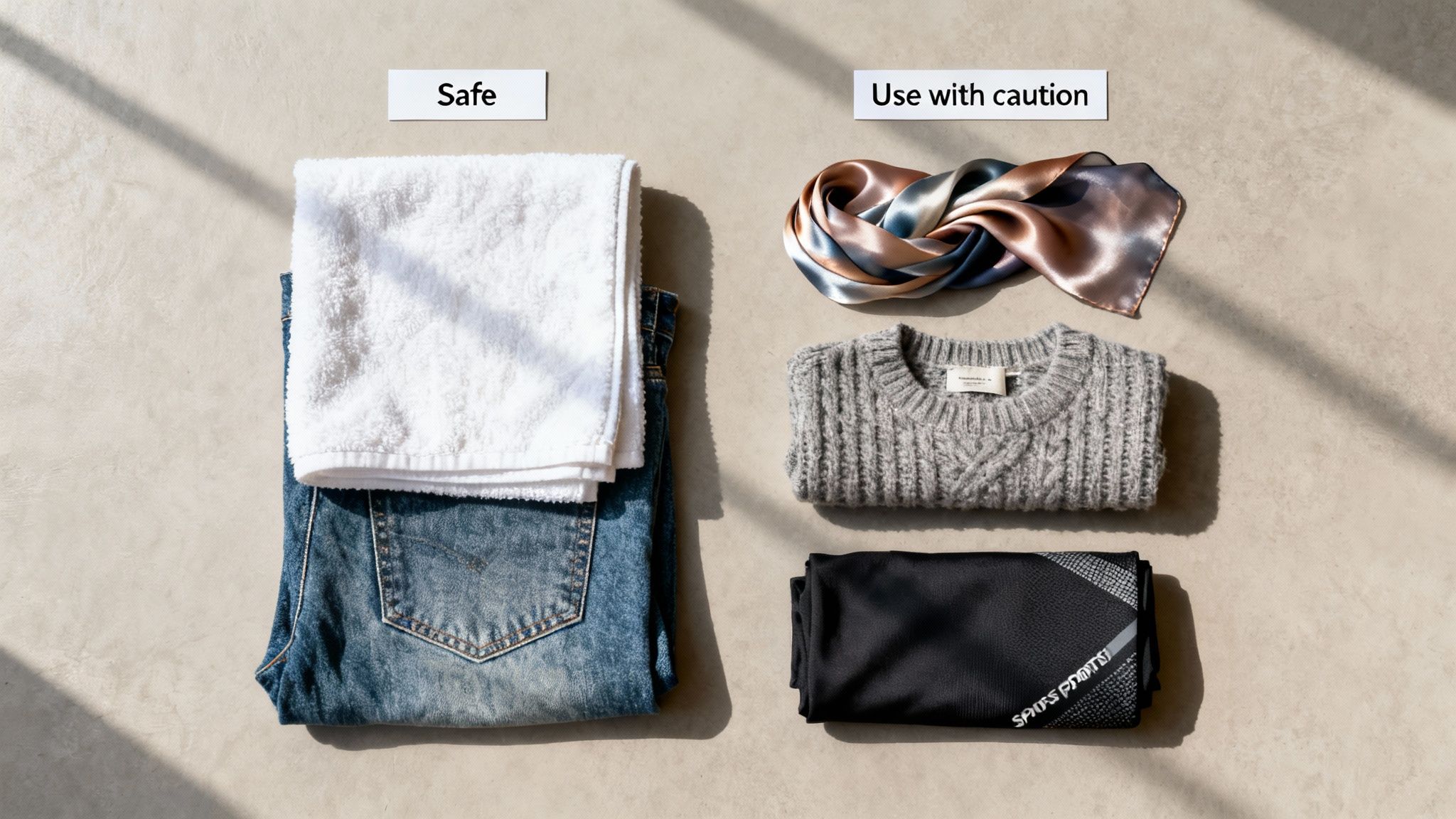
Baking soda is a true workhorse in the laundry room, but it's not a universal fix for every fabric. Its effectiveness comes from a combination of mild alkalinity and a slightly abrasive texture—qualities that can be too much for more sensitive materials.
I like to think of it as a gentle exfoliant. It works wonders on tough, durable fabrics like cotton towels and denim, scrubbing away odor-causing grime. But just as you wouldn't use a harsh scrub on delicate skin, you need to be careful with certain clothes.
Over time, that gentle abrasion can weaken fine threads, leading to fading, a loss of softness, or even premature wear. Knowing when to use it and when to choose something else is key to keeping your wardrobe in top shape.
Delicate Fibers That Need Special Care
Certain fabrics, especially those prized for their luxurious feel, just don't play well with baking soda. Repeated exposure can strip their natural oils or damage their delicate structure.
Pay close attention to these materials:
- Silk and Satin: The fine grit in baking soda can easily scratch the smooth, lustrous surface of these fabrics, leaving them looking dull and feeling rough.
- Wool and Cashmere: These are protein-based fibers. Baking soda's higher pH can make them brittle over time, ruining that signature softness you love.
- Lace and Sheer Fabrics: These are fragile by design. The tiny, abrasive particles can snag and tear the delicate weave, causing damage that’s impossible to repair.
Expert Advice: When it comes to these delicates, it's best to skip the baking soda entirely. If you’re dealing with odors, opt for a gentle hand wash with a detergent made specifically for wool or silk. For truly special items or stubborn smells, a professional service like Columbia Pike Laundry has the right tools for the job.
Performance Fabrics and Coated Materials
It's not just the natural luxury fibers you have to watch out for. Modern activewear and outerwear often feature special coatings that wick moisture, repel water, or block UV rays.
Baking soda's abrasive nature can slowly wear down these technical finishes. Suddenly, your favorite moisture-wicking shirt isn’t keeping you dry, or your water-resistant jacket starts soaking up rain. Always check the care label on your performance gear. If it mentions a special coating, your best bet is to use a detergent formulated for activewear to tackle baking soda and laundry odors without compromising the high-tech features.
To make it even clearer, I've put together a quick reference guide to help you decide what's safe and what needs a different approach.
Baking Soda Fabric Safety Guide
This table should give you a good starting point. When in doubt, always test on a small, hidden spot or simply choose a gentler alternative for your prized garments.
When to Reach for Something Stronger Than Baking Soda
Baking soda is a fantastic first-pass solution for most everyday laundry smells, but let's be realistic—it's not a silver bullet. Knowing when to put the box down and try a different approach is key to actually solving the problem, not just masking it.
Think of baking soda as your go-to for general mustiness or light sweat odors. It’s brilliant for that. But when you’re up against a truly stubborn stench, you need to bring in a specialist.
The Limits of Baking Soda
Some smells are just too deeply embedded or chemically complex for a simple alkali like baking soda to tackle. It works by neutralizing acidic odors, but not all smells are created equal.
You'll likely need to escalate your treatment plan for things like:
- Deep-Set Mildew and Mold: If a gym bag or a pile of towels sat damp for days, you're not just fighting a smell; you're fighting a fungus. Baking soda can help with the odor, but it won’t kill the source.
- Heavy Chemical Smells: Gasoline, paint thinner, or heavy smoke leave behind volatile organic compounds (VOCs). These molecules cling to fibers in a way baking soda can't break down.
- Rancid Greasy or Oily Stains: While baking soda might absorb a fresh oil spot, it can't break down the complex fats that cause that distinct, sour smell as they decay over time.
My Two Cents: The real goal is to eliminate what's causing the smell. If the source is bacteria, mold, or a greasy residue, you need a solution that specifically targets and breaks down those culprits.
When you hit one of these roadblocks, it’s not a defeat—it’s just a sign to switch tactics.
Safe and Effective Alternatives for Tough Odors
Once you’ve identified a smell that’s out of baking soda’s league, don't despair. You have some excellent, and often common, household options ready to step in.
Distilled white vinegar is probably the most well-known alternative. As an acid, it works wonders at dissolving the residue left by detergents and fabric softeners, which can trap bacteria. It also directly tackles the bacteria causing the smell. To see how to use them together (but in separate cycles!), check out our guide on washing clothes with baking soda and vinegar.
For organic-based odors, enzyme cleaners are your best friend. These products are formulated with enzymes that literally "eat" the proteins in things like sweat, pet urine, and blood, completely breaking down the source of the smell. They are absolute lifesavers for workout gear and kids' clothes.
And sometimes, the smell isn't just in the laundry but has permeated the environment. For these bigger jobs, it might be worth looking into professional odor removal services for complex issues that can offer solutions for your entire home.
If you’ve tried it all and that stubborn smell just won’t quit, or if you’re dealing with a delicate item like a silk dress or a wool suit, it’s time to call for backup. That's what we're here for at Columbia Pike Laundry. We see these tough cases every day and have the professional-grade tools and expertise to safely get your items back to smelling fresh and clean.
Common Questions About Laundry and Baking Soda
Even with a solid game plan, it's natural to have a few questions before you toss a new ingredient into your washing machine. You want to be sure, right? To clear up any lingering doubts, I've rounded up the most common questions I hear about using baking soda for laundry odors. Let's get them answered so you can wash with confidence.
Is Baking Soda Safe for High-Efficiency (HE) Washers?
Yes, it’s perfectly safe. In fact, it’s a great match. HE machines use very little water and require low-sudsing detergents, and baking soda creates zero suds. It dissolves easily, even in the small amount of water used in modern washers, so it gets to work without causing any trouble.
The one thing to remember is always to add the baking soda directly into the drum before you add your clothes. Never put it in the automatic dispenser drawers. Those are designed for liquids and can get clogged by powders, especially in sensitive HE models. A half-cup is plenty to boost your load without leaving a trace of residue.
Can I Mix Baking soda With Other Laundry Products?
It's tempting to throw everything at a tough odor, but with laundry chemistry, less is often more. Mixing baking soda with other popular boosters can sometimes cancel out their effects or just be a waste of product.
Here’s what you need to know:
- Vinegar: Never in the same load. Baking soda is alkaline and vinegar is acidic. Mix them together, and they just neutralize each other, leaving you with little more than salty water. If you want to use both, use baking soda in the wash cycle and add vinegar to the rinse cycle. They’re a great team, just not at the same time.
- OxiClean: This combo is generally fine. Both products work to enhance your detergent's power. For truly grimy or smelly loads, though, I've found it's sometimes better to let each one work its magic in separate washes to get the full benefit.
- Bleach: Do not mix baking soda with chlorine bleach. This is a critical one. While it won't create dangerous fumes like a bleach-and-ammonia mix, it can reduce the bleach's disinfecting power, making it less effective.
My Two Cents: The best way to tackle a really tough laundry problem is to use one targeted solution at a time. This lets each product work at full strength without anything else getting in the way.
Will Baking Soda Keep My Clothes Smelling Fresh for Weeks?
Baking soda is a fantastic problem-solver for getting rid of odors that are already there. Think of it as hitting the reset button on a smelly garment. It neutralizes the existing funk in a single wash, but it doesn't create a long-lasting scent barrier.
For that truly lasting freshness, you need a more complete strategy. Consistently using baking soda definitely helps manage odors wash after wash. But things like making sure your clothes are completely dry, keeping your washer clean, and never letting damp laundry sit in the machine are just as important.
If you’re looking for more ways to lock in that clean scent, our guide on how to make your clothes smell fresh has some great tips that pair perfectly with a baking soda routine.
Free pickup, expert care, delivered back to your door.
Popular Blog Articles


Meet the Author
Daniel Logan didn’t start CPL because he loved laundry. He started it because his family was drowning in time debt, and laundry was one of the biggest weights.
Mornings were chaos with two kids under 5. Evenings felt like catch-up. And weekends? Gone to sorting socks and folding piles.
He knew his story wasn’t unique. So he built a business that gave families like his just a little bit of breathing room one load at a time.
With no laundry experience but deep tech skills, Daniel rolled up his sleeves, doing every job himself while building systems that turned it into a modern laundry service that saves customers time, simplifies their lives, and delivers reliability they can count on.
That’s where CPL began. Not from a playbook, but from pain. From one dad trying to buy back time: for himself, and for every household like his.
Free pickup, expert care, delivered back to your door.