
The Essential Guide to the Care of Fabrics
Columbia Pike Laundry offers pickup & delivery across Northern Virginia.
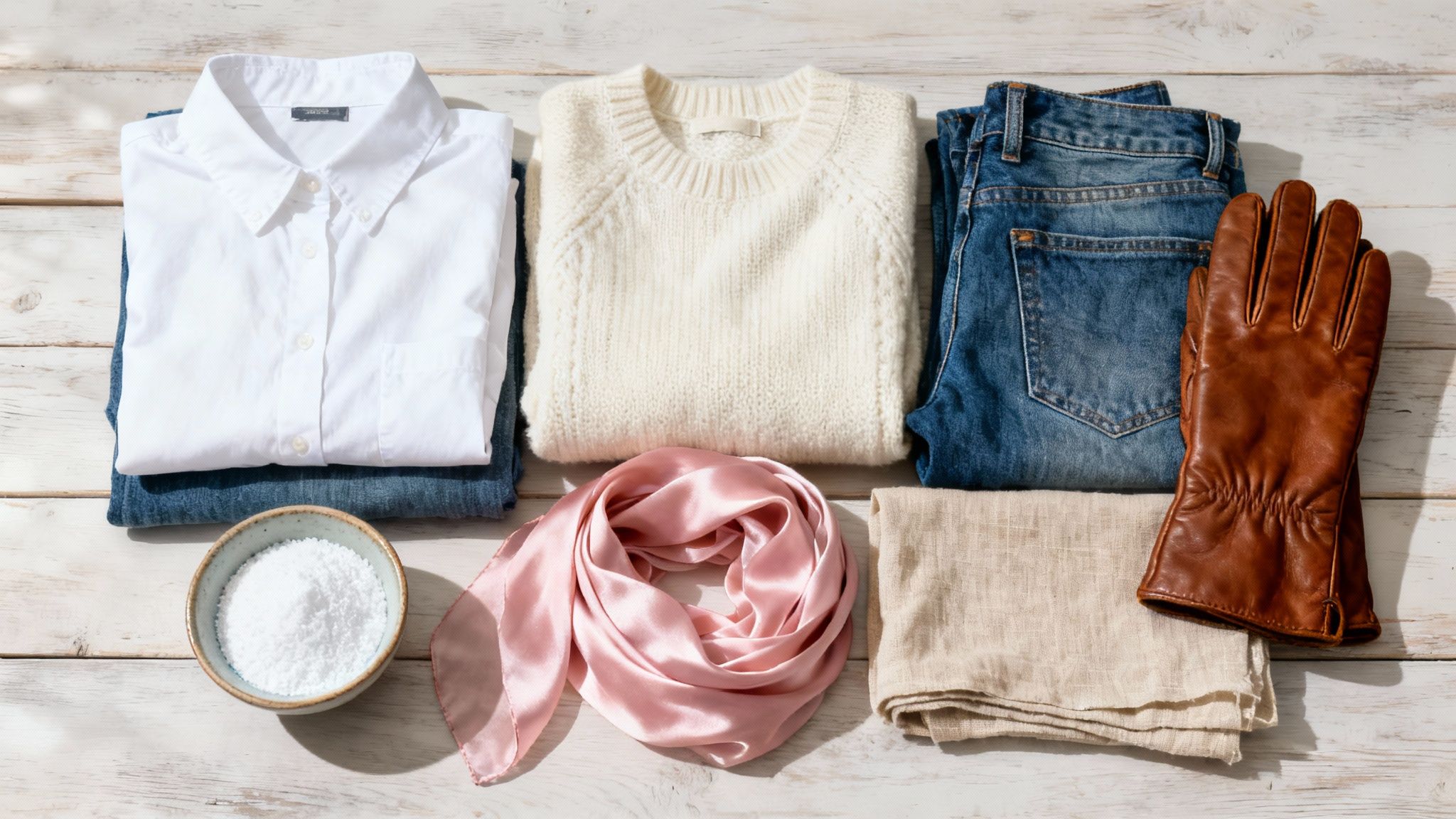
Proper fabric care is the secret to keeping your favorite clothes looking and feeling great, not just for a season, but for years to come. It’s more than just avoiding the occasional laundry mishap. It’s about truly understanding what your clothes are made of—from a sturdy pair of jeans to a delicate silk scarf—and giving them what they need to thrive.
Why Fabric Care Is a Skill Worth Learning
Let’s be honest, figuring out how to care for different fabrics can feel like a chore. But it’s a simple skill that pays off big time. You wouldn’t clean a hardwood floor with a glass cleaner, right? The same logic applies to your wardrobe. Different materials have completely different needs, and guessing can lead to shrunken sweaters, faded colors, and blouses that just don't feel the same anymore.
Think of this guide as your personal cheat sheet to becoming a fabric care pro. We'll walk through the essentials step-by-step, so you can feel confident handling anything in your closet.
The Real-World Payoffs of Smart Fabric Care
Beyond preventing laundry day disasters, getting this right has some seriously practical benefits that you’ll notice in your wallet and your lifestyle.
- You'll Save Money: When your clothes last longer, you buy new ones less often. It's that simple. Proper washing and drying stops the kind of wear and tear that forces perfectly good clothes into early retirement.
- It's a Sustainable Habit: Keeping your garments in good shape for years is a fantastic way to reduce textile waste. Every piece of clothing you save is one less item heading to a landfill.
- Your Clothes Will Look and Feel Better: The right techniques lock in the original color, fit, and feel of your clothes. Your softest sweaters will stay soft, and your brights will stay bright.
This focus on making clothes last isn't just a niche trend; it’s a massive global movement. The fabric care market was recently valued at around $111.16 billion and is expected to grow to nearly $148.97 billion. That number shows just how much people everywhere are looking for better ways to protect their clothing. You can dig into the numbers in this fabric care industry report.
Ultimately, knowing the basics of fabric care demystifies those confusing symbols on the tag and puts you in control. It's about protecting the clothes you love, saving a little money, and making a smarter choice every time you start a load of laundry.
2. Decoding the Language of Your Laundry Tags
Ever felt like you need a secret decoder ring to do your laundry? Those little symbols on your clothing tags can seem cryptic, but they're actually a straightforward guide to keeping your favorite pieces looking their best.
Think of it this way: the clothing tag is the manufacturer's instruction manual. It's their recipe for success, telling you exactly how to care for the fabric so it lasts. Ignoring it is a bit like baking a cake without checking the oven temperature—you might get lucky, but you also might end up with a shrunken, faded disaster.
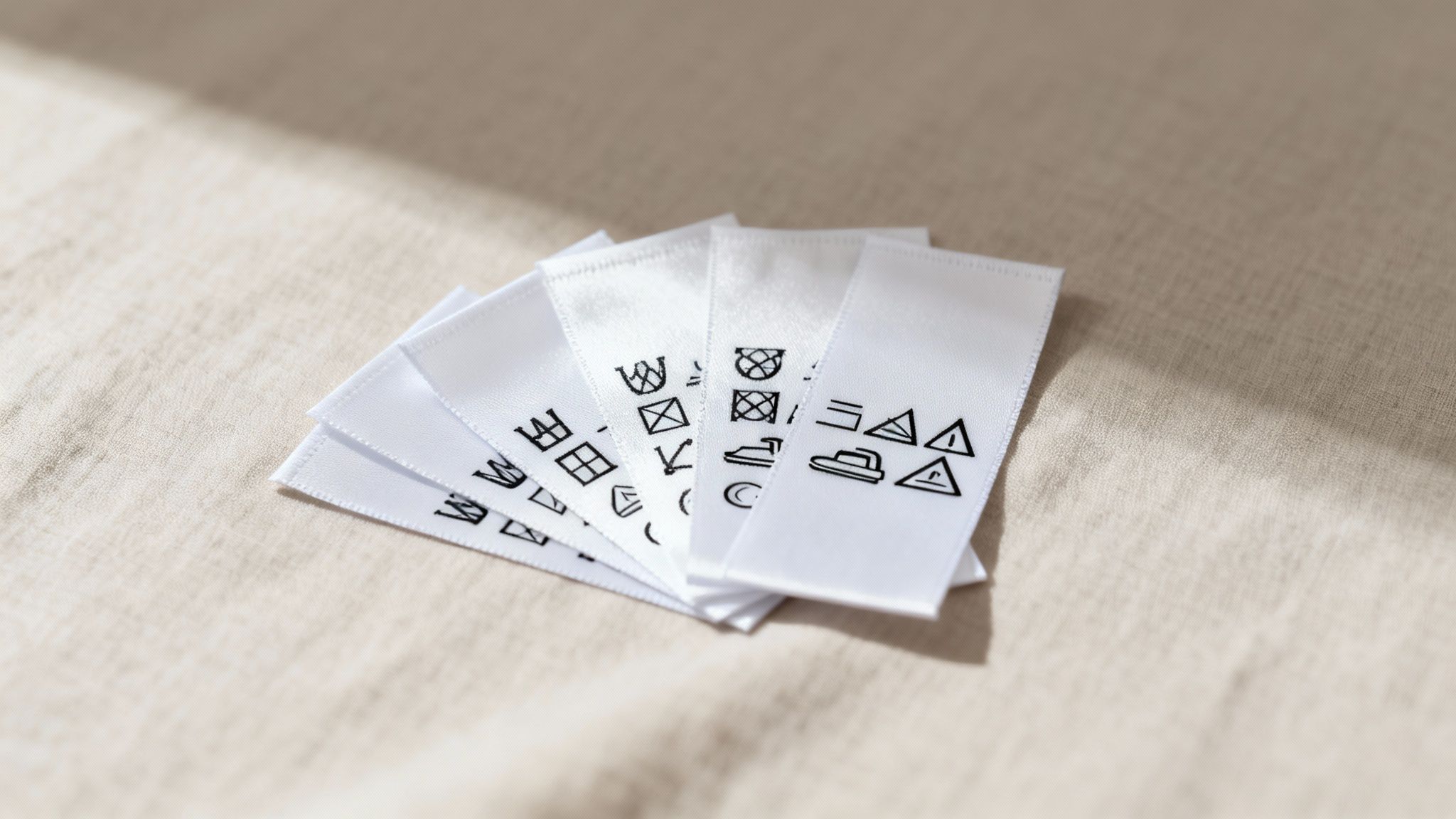
Taking just a few seconds to check the tag is the single most important step in mastering your laundry routine. These icons are grouped into five key areas: washing, bleaching, drying, ironing, and professional care. Once you know what they mean, you'll have the power to prevent common laundry mishaps.
Washing Symbols
Your primary guide is the washtub symbol. This little icon tells you everything you need to know about the washing process, from whether it can go in the machine to the right water temperature.
The temperature is usually indicated by dots inside the tub—the more dots, the hotter the water.
- One Dot: Use cold water, around 30°C (86°F). This is perfect for delicates, darks, or bright colors that might bleed.
- Two Dots: Use warm water, around 40°C (104°F). This is a safe bet for most everyday synthetics and whites that aren't heavily soiled.
- Three Dots: Use hot water, around 50°C (122°F). Save this for the tough stuff like white cotton sheets, towels, and socks that need a deep, sanitizing clean.
Look out for lines under the washtub. One line means to use the permanent press cycle, which has a gentle cool-down period to reduce wrinkles. Two lines mean it's time for the delicate cycle. And if you see a big 'X' through the whole symbol? That's a hard stop: Do Not Wash.
It's amazing how many laundry headaches come from simply misreading these symbols. That favorite wool sweater that now fits a teddy bear? It likely happened because the tag's washing instructions were ignored. A quick check can save your clothes, your time, and your money.
Bleaching and Drying Instructions
Next in line are the triangle (for bleaching) and the square (for drying). Getting these two right is essential for keeping your colors bright and your fabrics in their original shape.
A plain, empty triangle means you can use any bleach you want. But if you see a triangle with two diagonal lines inside, that's a specific instruction to use non-chlorine bleach only. A solid triangle with an 'X' through it is an absolute no-go: Do Not Bleach.
The square symbol deals with all things drying. A circle inside the square means it's safe for the tumble dryer.
- One Dot in Circle: Tumble dry on low heat.
- Two Dots in Circle: Tumble dry on normal/medium heat.
- A Solid, Filled Circle: Tumble dry with no heat—this is the "air fluff" setting.
If the whole symbol is crossed out, Do Not Tumble Dry. Instead, you'll probably see other icons like a little arc at the top of the square (line dry) or a horizontal line in the middle (dry flat). These are non-negotiable for items like knit sweaters that can easily stretch or lose their shape in a machine.
Want to become a true expert? We break it all down in our complete guide on how to read clothing care labels.
To make things easier, here's a quick cheat sheet for the symbols you'll see most often.
Common Laundry Symbols at a Glance
Keep this guide handy, and you'll be decoding labels like a pro in no time.
Ironing and Professional Care
Finally, let's talk about the finishing touches. The iron symbol and the circle symbol tell you how to press your garments and when to call in the professionals.
The iron symbol works just like the washtub and dryer—dots indicate the heat level. One dot means low heat (for synthetics), two dots mean medium heat (for wool or polyester), and three dots mean high heat (for sturdy cotton and linen). An 'X' through the iron means exactly what you think: Do Not Iron.
The simple circle is your cue to head to the dry cleaner. If you see this, the item is designated Dry Clean Only. Sometimes you'll see letters inside the circle (like P, F, or A), but don't worry about those—they're specific instructions for your dry cleaner about which chemical solvents to use. And if the circle is crossed out, it's a warning to Do Not Dry Clean.
Mastering Your Everyday Fabrics
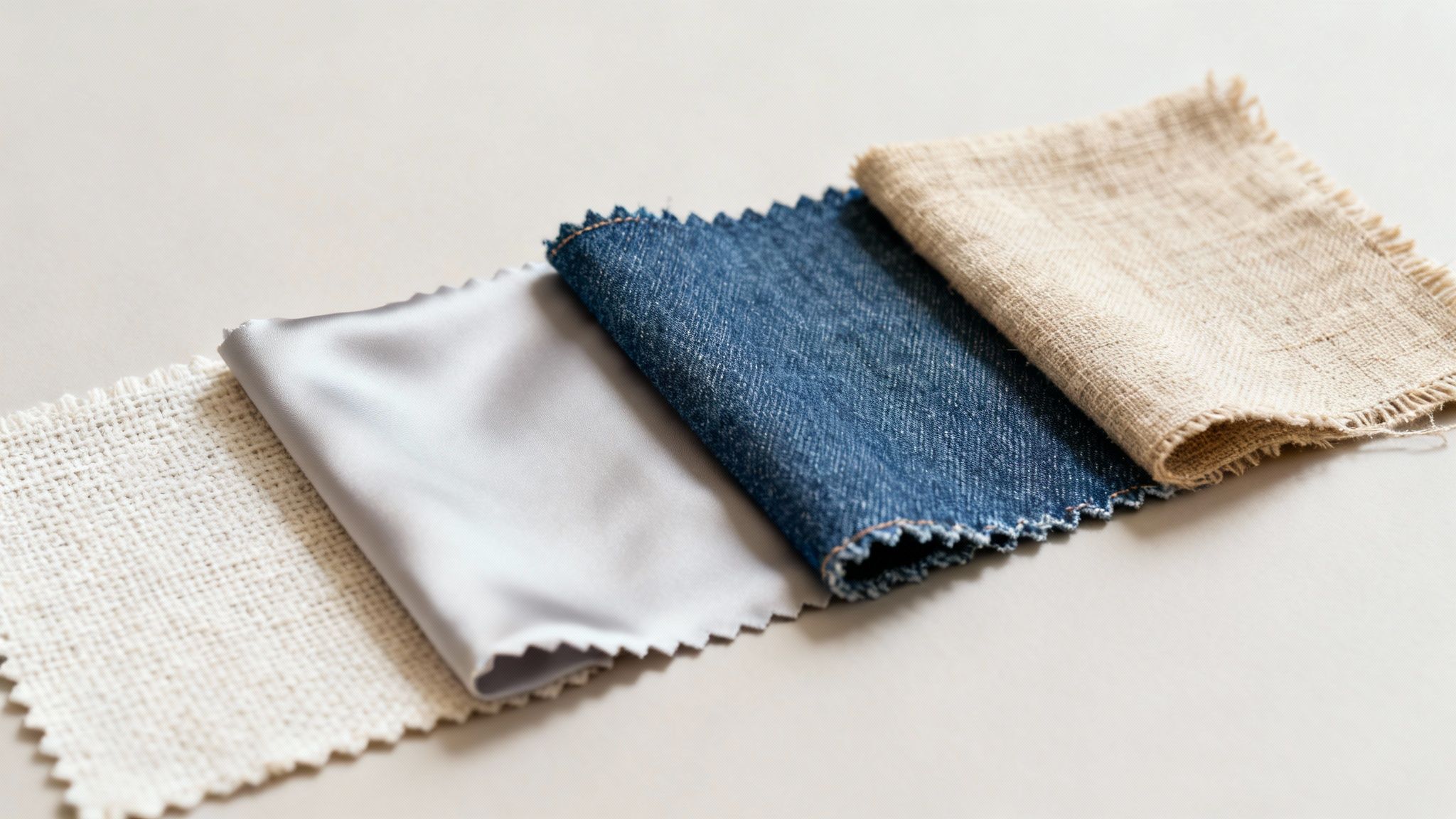
Let's start with the workhorses of your closet—the fabrics you wear on repeat. Learning how to properly care for staples like cotton, denim, and linen isn't about memorizing a long list of rules. It’s about creating a few simple habits that keep these everyday heroes looking and feeling great for years to come.
From that t-shirt you love to your go-to pair of jeans, a little know-how makes all the difference. Every material has its own quirks, but once you understand them, laundry day stops being a guessing game and becomes a simple, effective routine.
Caring for Classic Cotton
Cotton is the king of comfort, showing up in everything from our bedsheets to our favorite hoodies. As a natural fiber, it's pretty durable, but it has two main enemies: shrinking and fading. The secret to keeping cotton in top shape is all about managing the temperature.
Always wash your cottons in cold or warm water. Hot water is the number one reason cotton clothes shrink, as it makes the fibers tighten up. If you need a deeper clean for things like white towels or sheets, warm water is the perfect middle ground. When it's time to dry, think low and slow. Tumble dry on low to medium heat, because high heat not only risks more shrinking but can also make the fabric feel brittle over time.
Here's a pro tip: pull your cotton items out of the dryer while they're still a little damp. Letting them air-dry the rest of the way is a great trick for keeping them soft and maintaining their original shape.
Perfecting Your Polyester Care
Polyester is a synthetic powerhouse. It's tough, holds its shape, and fights off wrinkles and fading like a champ, which is why it's so common in activewear and blouses. But it has one major weakness: high heat.
Washing polyester is a breeze; warm water and your usual detergent work just fine. The real trick is in the drying. Because the fibers are essentially a form of plastic, the high temperatures from a dryer can cause them to melt, warp, or pucker permanently. To be safe, always tumble dry your polyester garments on a low or no-heat setting.
Polyester is also famous for generating static cling. An easy fix is to toss in a dryer sheet or a few wool dryer balls. This little step breaks the static charge, so your clothes come out comfortable and ready to wear.
Think of heat as the arch-nemesis of many fabrics. For natural fibers like cotton, it causes shrinking. For synthetics like polyester, it can cause irreversible damage. Mastering temperature settings is arguably the most important skill in fabric care.
Keeping Denim Timeless
A great pair of jeans is a wardrobe cornerstone. The goal with denim is to preserve that rich, deep color and keep the fit just right. The secret? Wash them less often, and when you do, do it right.
When it is time for a wash, always turn your jeans inside out. This simple step protects the outside surface from friction in the machine, which is what causes that faded, worn-out look. Use cold water and, if you can, a detergent made for dark clothes. Always wash them with other darks to prevent any dye from bleeding onto lighter items.
How you dry them matters just as much.
- Best Method: Hang them up to air dry. It’s the gentlest option and completely eliminates any risk of shrinking or heat damage.
- Good Method: If you're in a hurry and need the dryer, use the lowest heat setting you have. Pull them out when they are still slightly damp to finish air drying.
By washing less and avoiding heat, you'll lock in that perfect color and fit for much, much longer.
Living with Lovely Linen
Linen is prized for its breezy, lightweight feel and relaxed elegance, but it's also famous for wrinkling. The trick to caring for linen is to embrace its naturally soft, slightly rumpled texture while keeping major creases at bay. The good news is that linen actually gets softer and more absorbent with every wash.
Wash your linen pieces in cold or lukewarm water, and stick to the gentle cycle. It's also best to go easy on the detergent, as too much can leave a residue that makes the fabric feel stiff. Linen is super absorbent, so give it plenty of room to move around in the washing machine rather than cramming the load.
When drying, use a low heat setting and—just like with cotton—pull the items out while they're still a bit damp. Hanging them or laying them flat right away will dramatically cut down on wrinkles. For anyone who wants to become a true expert, this comprehensive linen care guide is a fantastic resource. By mastering these simple steps, you can ensure your everyday fabrics will stand the test of time.
Handling Delicate and Specialty Fabrics
Not everything in your closet can be treated like a pair of old blue jeans. Some fabrics, like silk, wool, or leather, need a little extra TLC. It can feel a bit daunting at first, but once you understand what makes them special, caring for them becomes second nature.
Think of these garments as investments. They bring a touch of luxury or unique style to your wardrobe, but they're also sensitive. The key isn't a complicated, time-consuming routine; it's simply about knowing when to use a gentle touch and when it’s best to let a professional handle it.

The Fine Art of Caring for Silk
Silk is a protein fiber, much like our own hair. That's what gives it that incredible smoothness and shine. But this delicate structure also means it's easily damaged by high heat and harsh detergents, which can quickly dull its luster and weaken the fibers.
When in doubt, hand-washing is your safest bet for silk.
- Prep the Water: Fill a clean basin with cool or lukewarm water. Hot water is a definite no-go, as it can harm the fibers.
- Add a Gentle Soap: Use just a tiny amount of a pH-neutral detergent made specifically for delicates.
- A Quick Soak: Let the garment soak for just three to five minutes, gently swishing it around. Don't rub, twist, or scrub the fabric.
- Rinse Clean: Hold it under cool, running water until you're sure all the soap is gone.
- Press, Don't Wring: Gently squeeze the excess water out. Never, ever wring out a silk garment! A great trick is to lay it flat on a clean towel, roll the towel up, and press gently to absorb more moisture.
- Dry Carefully: Hang it on a padded hanger away from any direct sunlight or heat sources, which can cause yellowing or damage over time.
For a more detailed look at keeping this beautiful material pristine, be sure to read our guide on how to care for silk clothing.
How to Wash Wool Without Shrinking It
Wool is another incredible natural fiber, famous for its warmth. Its fibers are covered in tiny, overlapping scales. Think of a pinecone: when it's cold, the scales stay closed and flat. But add heat and friction, and those scales open up and lock onto each other, causing the dreaded shrinking and felting.
The golden rule for wool is simple: avoid heat and agitation. Unless you’re trying to turn your favorite sweater into a doll's outfit, never wash it in hot water or put it in a hot dryer.
Many modern washing machines have a trustworthy "wool" or "delicate" cycle that uses cool water and a gentle spin. If you go this route, always use a wool-safe detergent and pop the item in a mesh laundry bag for an extra layer of protection. Still, hand-washing is the ultimate foolproof method.
When it's time to dry, always lay wool items flat on a towel or a drying rack. Hanging a wet wool sweater is a recipe for disaster—its own weight will stretch it completely out of shape.
Leather and Suede: A Different Approach
Leather and suede aren't your typical fabrics; they're treated animal hides, and water is their mortal enemy. It can cause stiffness, stains, and ugly discoloration. With these materials, prevention is truly the best medicine. Start by treating any new item with a quality protective spray designed for leather or suede to help it repel water and minor spills.
If a spill does happen, act fast.
- For Leather: Use a soft, damp cloth to gently wipe away spills. For more stubborn spots, you'll need a cleaner made specifically for leather.
- For Suede: A simple suede brush can buff away dry dirt. If you get a liquid stain, blot it immediately with a clean cloth and let it air dry.
For anything more serious, like a set-in stain or heavy soiling, it's time to call in the professionals. They have the right tools and conditioning treatments to restore these materials without ruining them.
That sinking feeling when a splash of red wine lands on your new white shirt? We've all been there. Whether it's coffee, a drop of salad dressing, or a grass stain from a weekend picnic, a quick response can mean the difference between a temporary mishap and a permanent mark.
The secret isn't some magic formula, but knowing how to tackle the specific type of stain you're facing. But before you do anything, burn these three rules into your memory:
- Act Fast. The longer a stain has to settle in, the more it bonds with the fabric fibers. Time is your enemy here.
- Blot, Don't Rub. Your first instinct might be to scrub the stain away, but that just grinds it deeper into the fabric and makes the spot bigger. Gently blot with a clean cloth instead.
- Always Test First. Dab a tiny bit of your cleaning solution on a hidden area, like an inside seam, to make sure it won’t bleach or damage the fabric.
Tackling Oil-Based Stains
Oil-based stains—think grease, makeup, or salad dressing—are a classic laundry problem because oil and water just don't play well together. The goal here is to draw the oil out of the fabric before it even hits the washing machine.
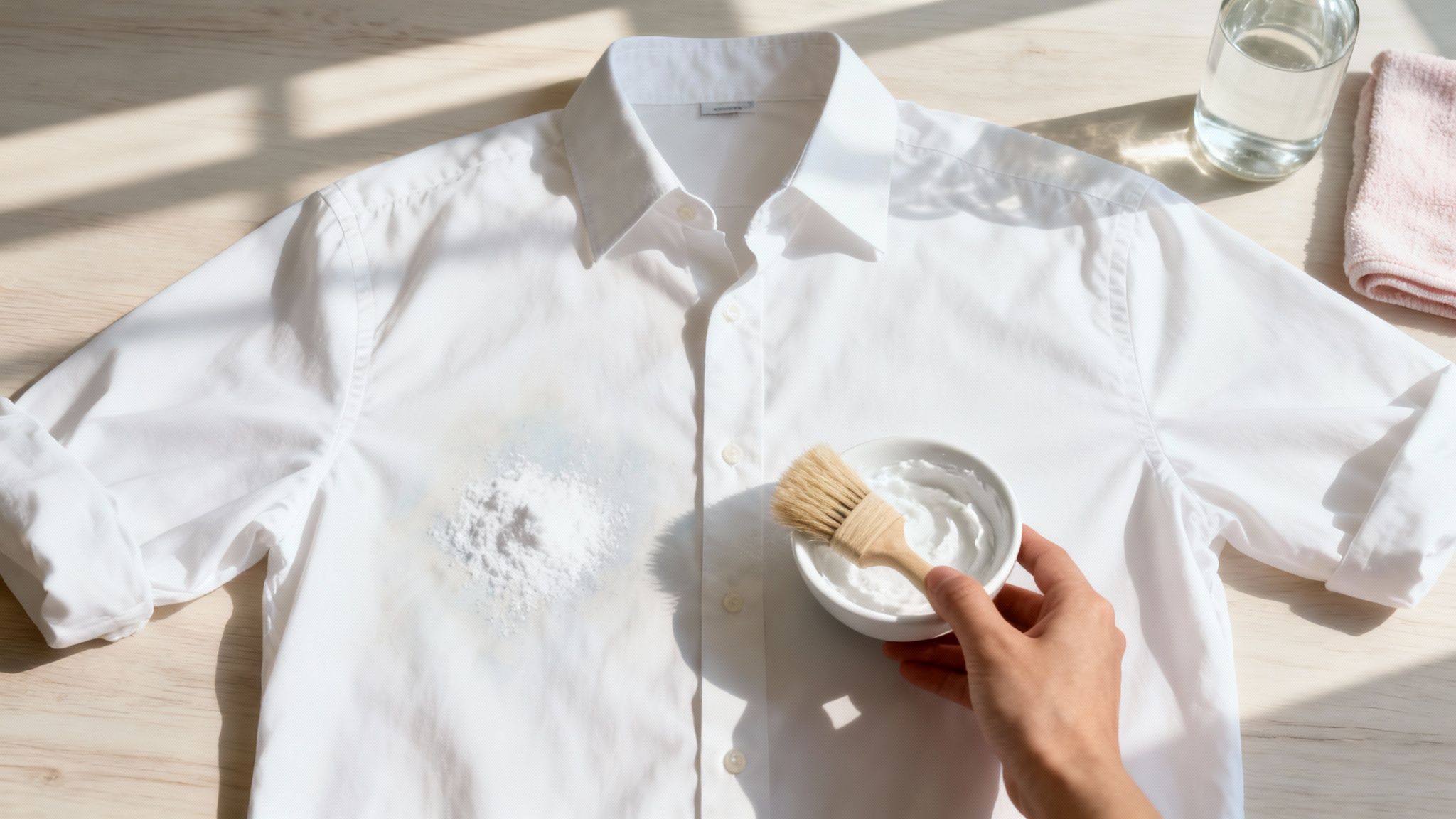
Lay the garment on a flat surface and generously cover the stain with something absorbent, like cornstarch or baking soda. Let it work its magic for about 30 minutes. You'll actually see the powder start to clump up as it soaks up the oil. Scrape the powder off, then put a small drop of dish soap right on the spot. Dish soap is designed to cut through grease, making it the perfect tool for the job. Work it in gently with your finger, let it sit for a few more minutes, and then wash as you normally would.
Removing Tannin-Based Stains
Tannins are plant-based compounds that give things like coffee, tea, red wine, and fruit juice their color. Unfortunately, that means they act like a dye on your clothes.
When a fresh tannin stain happens, blot it immediately. Turn the fabric inside out and flush the stain from the back with cold water—this helps push the stain out of the fibers, not further in. For a little extra power, you can mix equal parts white vinegar and water and gently dab the solution onto the stain before tossing it in the wash. Just be sure to use the warmest water the care label allows.
When to Call for Help: If you're dealing with a set-in oil or tannin stain, or if the spill is on something delicate like silk or wool, it's time to step back. Home remedies can sometimes set these stains permanently on dry-clean-only fabrics. Let a professional take it from here.
Dealing with Protein-Based Stains
Protein stains come from organic stuff—blood, sweat, grass, milk, you name it. They're incredibly common, but they have one non-negotiable rule: always use cold water.
Hot water will literally cook the proteins, setting them into the fabric permanently. Start by soaking the garment in cold water for at least 30 minutes. If the stain is still hanging on, you can gently rub a bit of laundry detergent or an enzyme-based stain remover into the spot before running it through a cold wash cycle.
Once you know how to spot these three main types of stains, you're armed with the knowledge to handle most everyday spills. You can stop panicking and start acting, giving your favorite clothes a much better shot at a long, stain-free life.
Knowing When to Call the Professionals
Becoming a pro at home laundry is a fantastic skill, but some clothes just need a level of care your washing machine can't provide. Deciding to hand something over to a professional isn't giving up; it's the smartest move you can make to protect your investment and keep your favorite pieces looking their best for years.
Think of it like this: you can handle basic car maintenance like filling the tank or checking the tire pressure, but you trust a mechanic for the serious engine work. Professional cleaners are the expert mechanics for your wardrobe, armed with specialized tools and knowledge for the really delicate jobs.
Why Dry Cleaning Is Different
The name "dry cleaning" is a little misleading—it isn't a completely dry process. Instead of water, it uses special liquid solvents that are tough on dirt but gentle on fabric. This is crucial for materials that would otherwise shrink, warp, or completely lose their shape in a regular wash.
These solvents are powerful enough to break down grease and oil but delicate enough to preserve fragile fibers. It’s why you almost always see a "Dry Clean Only" tag on structured wool suits, certain silks, and tailored blazers. If you're curious about the science behind it all, you can learn more about how the dry cleaning process works and what makes it so effective.
Your Checklist for Professional Care
So, when do you skip the laundry room and head to the pros? Here are the most common situations where an expert's touch is your best bet.
- Structured Garments: Think blazers, suit jackets, and tailored coats. They have internal padding and interfacing that gives them their sharp shape. Water can dissolve or ruin that structure, leaving your garment looking limp and distorted.
- Delicate Embellishments: That beautifully beaded dress or sequined top? A washing machine is its worst enemy. The agitation can easily snag threads and destroy intricate work. Professionals know how to clean these items without causing damage.
- Stubborn, Set-In Stains: If you've already tried (and failed) to get out a tough ink or old oil stain at home, don't give up hope. A professional has access to specialized spot treatments that can often lift stains you thought were permanent.
- Large, Bulky Items: Trying to cram a heavy comforter, duvet, or large blanket into your home machine is a bad idea. It won't get properly cleaned, and you risk damaging your washer's drum and motor.
- Materials Prone to Water Damage: Fabrics like suede, leather, some velvets, and certain silks should never be soaked in water. Professionals use entirely different methods to clean and condition these materials, keeping them soft and safe.
Trusting a professional with these items isn't just about convenience; it's about preservation. You're ensuring that your most valuable, delicate, or structured pieces are cleaned in a way that maintains their integrity, color, and fit for years to come.
Frequently Asked Questions About Fabric Care
Even with all the best advice, some practical questions always seem to pop up right when you're standing in front of the washing machine. Let's tackle a few of the most common ones.
Can I Wash Dry Clean Only Items at Home?
This is the big one, isn't it? While it's tempting to try and save a trip, that "Dry Clean Only" tag is there for a reason. For structured pieces like a wool coat, a tailored suit, or a delicate silk blouse, water can be the enemy, causing shrinking, warping, or color bleeding that you just can't undo.
So, what's the verdict? For these high-stakes items, professional dry cleaning really is the safest bet. They use special solvents that clean without the risks of water damage, protecting your investment.
How Can I Stop My Clothes From Fading?
Keeping your favorite black jeans black and your vibrant tees bright is easier than you think. The number one rule is to wash them in cold water. High heat is a major culprit in breaking down dyes.
Another pro tip: turn your clothes inside out before they go in the wash. This simple step protects the colored surface from the friction of the machine, especially for jeans and anything with a print. Also, try not to over-dry them—that intense heat is just as bad for color as hot water. If you can, line-drying in the shade is your best friend for long-lasting color.
The most common laundry mistakes are often the easiest to fix. Simple habit changes—like using cold water and turning clothes inside out—can dramatically extend the life and look of your favorite pieces.
What Is the Best Way to Store Seasonal Clothing?
Before you pack anything away, make sure it’s completely clean. Even tiny, invisible spots of oil or dirt can attract pests or develop into stubborn stains over time.
Once everything is fresh and clean, follow these simple storage rules:
- Fold, Don't Hang: Gravity is not a friend to heavy knits. Always fold your wool and cashmere sweaters to prevent them from stretching out and getting those dreaded shoulder bumps.
- Choose Breathable Containers: Think fabric bins or breathable garment bags. Store them somewhere cool, dark, and dry.
- Avoid Sealed Plastic: Those airtight plastic containers might seem like a good idea, but they can trap moisture, leading to mildew or yellowing.
If you’re dealing with specialized gear, like outdoor wear, you might find more specific advice by checking out a brand’s guide that answers common questions about outdoor fabric care.
Ready to take laundry off your to-do list for good? Columbia Pike Laundry offers expert care for all your garments, from everyday loads to delicate dry cleaning.
Free pickup, expert care, delivered back to your door.
Popular Blog Articles



Meet the Author
Daniel Logan didn’t start CPL because he loved laundry. He started it because his family was drowning in time debt, and laundry was one of the biggest weights.
Mornings were chaos with two kids under 5. Evenings felt like catch-up. And weekends? Gone to sorting socks and folding piles.
He knew his story wasn’t unique. So he built a business that gave families like his just a little bit of breathing room one load at a time.
With no laundry experience but deep tech skills, Daniel rolled up his sleeves, doing every job himself while building systems that turned it into a modern laundry service that saves customers time, simplifies their lives, and delivers reliability they can count on.
That’s where CPL began. Not from a playbook, but from pain. From one dad trying to buy back time: for himself, and for every household like his.
Free pickup, expert care, delivered back to your door.