
Commercial Laundry Safety Tips: Protecting Staff and Clients
Columbia Pike Laundry offers pickup & delivery across Northern Virginia.
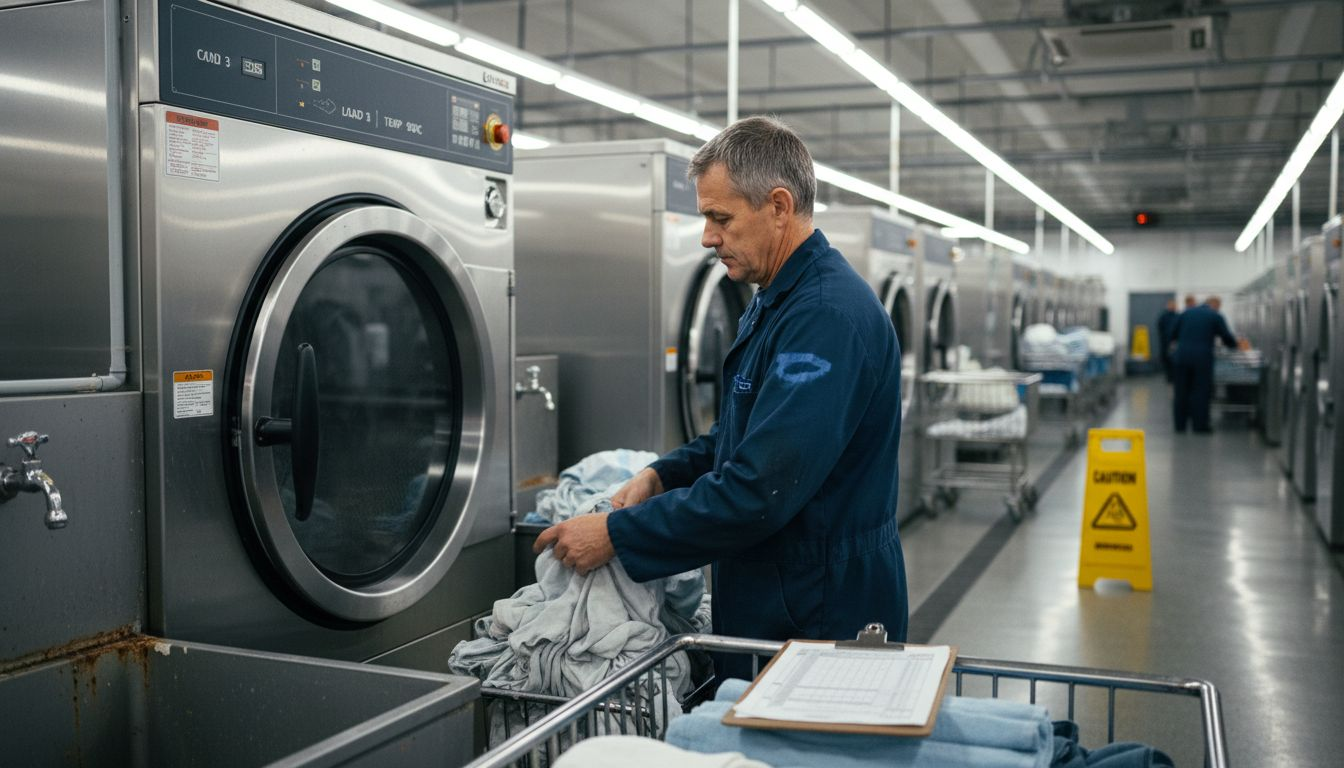
Over 40,000 American workers are employed in commercial laundry facilities, facing daily risks from powerful machinery and hazardous chemicals. Protecting staff, equipment, and clients goes far beyond compliance—it directly impacts workplace safety, business reputation, and operational costs. A clear understanding of commercial laundry safety reveals how industry standards, equipment protocols, and ongoing staff training work together to reduce accidents and improve results for every American company in this essential business sector.
Key Takeaways
| Point | Details |
|---|---|
| Comprehensive Safety | Commercial laundry safety requires a multi-faceted approach encompassing worker training, equipment protection, and chemical handling. |
| Preventive Measures | Regular equipment maintenance, safety audits, and proper use of personal protective equipment are essential for preventing workplace hazards. |
| Infection Control | Implementing structured protocols for handling potentially infectious materials is critical to maintaining hygiene standards. |
| Ongoing Education | Continuous staff training and emergency preparedness drills are crucial for ensuring effective safety management in laundry operations. |
What Commercial Laundry Safety Means
Commercial laundry safety represents a comprehensive approach to protecting workers, equipment, and clients from potential hazards inherent in industrial cleaning environments. Machine safety standards established by regulatory bodies like OSHA define critical protocols for preventing workplace accidents and maintaining operational integrity.
Safety in commercial laundry settings encompasses multiple critical dimensions, including equipment protection, chemical handling, personal protective equipment (PPE), and risk management. The ANSI Z8.1-2016 standard provides specific guidelines for commercial laundry equipment design, emphasizing worker protection through structured operational protocols. These standards address potential risks such as mechanical injuries, chemical exposures, electrical hazards, and ergonomic challenges that can emerge during complex laundering processes.
Effective commercial laundry safety strategies require systematic approaches that integrate technological safeguards, staff training, and continuous risk assessment. Key safety elements include implementing machine guards, using appropriate personal protective equipment, maintaining proper chemical storage and handling procedures, ensuring adequate ventilation, and establishing clear emergency response protocols. Regular equipment maintenance, comprehensive staff training programs, and proactive hazard identification are fundamental to creating a secure working environment.
Pro Safety Insight: Always conduct monthly safety audits of laundry equipment and procedures, documenting potential risks and implementing immediate corrective actions to prevent workplace incidents.
Major Equipment Hazards and Prevention
Commercial laundry equipment presents numerous potential safety risks that demand rigorous prevention strategies. Machine guarding regulations serve as critical frameworks for protecting workers from mechanical injuries, with industrial washing machines, dryers, and folding equipment representing significant potential hazard zones.
The most common equipment-related risks include mechanical entrapment, pinch point injuries, electrical malfunctions, and moving component accidents. Lockout and tagout procedures are essential protocols that prevent accidental machine activation during maintenance or repair, dramatically reducing the likelihood of catastrophic workplace accidents. Industrial laundry equipment often involves complex mechanical systems with rotating drums, powerful motors, and intricate electrical configurations that can create dangerous scenarios if proper safety measures are not consistently implemented.
Comprehensive equipment safety requires a multifaceted approach involving regular maintenance, staff training, and proactive risk assessment. Key prevention strategies include installing comprehensive machine guards, implementing strict operational protocols, conducting routine equipment inspections, and ensuring all staff members understand and follow established safety guidelines. Advanced commercial laundry facilities should integrate safety technologies such as automatic shut-off mechanisms, emergency stop buttons, and protective barriers around high-risk equipment zones.
Pro Safety Insight: Establish a mandatory daily equipment safety checklist that requires workers to inspect machine guards, electrical connections, and potential mechanical wear before initiating laundry operations.
Here is a summary of potential hazards in commercial laundries and prevention strategies:
| Hazard Type | Possible Risks | Primary Prevention Strategy |
|---|---|---|
| Mechanical | Entrapment, moving parts, pinch-points | Install machine guards and shut-offs |
| Electrical | Electric shock, fire, system failure | Perform regular electrical inspections |
| Chemical | Burns, respiratory irritation, spills | Use labeling, ventilation, PPE |
| Biological/Cross-Contamination | Pathogen exposure, infections | Separate processing zones, disinfection |
Proper Chemical Handling and Storage
Chemical safety is a critical component of commercial laundry operations, requiring meticulous attention to detail and strict adherence to established safety protocols. Hazardous chemical guidelines provided by OSHA establish comprehensive frameworks for managing potentially dangerous cleaning agents, ensuring worker protection and environmental safety.
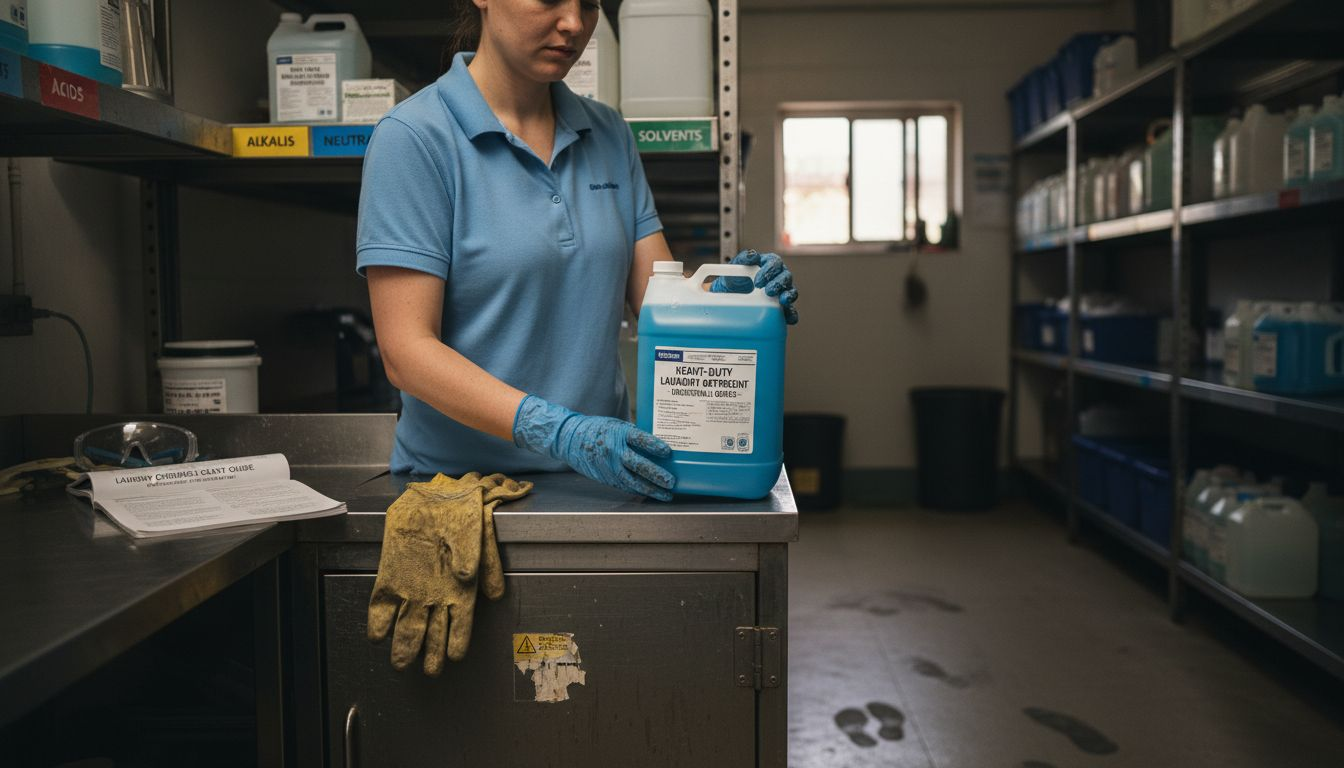
Commercial laundry facilities typically handle a wide range of chemical substances, including industrial detergents, stain removers, disinfectants, and specialized cleaning agents. Each chemical presents unique risks, necessitating specific handling, storage, and disposal procedures. Critical safety measures include proper chemical labeling, maintaining material safety data sheets (MSDS), implementing secure storage systems, and providing comprehensive staff training on chemical interaction risks, potential hazards, and emergency response protocols.
Effective chemical management involves multiple strategic approaches. This includes selecting less toxic cleaning alternatives when possible, utilizing appropriate personal protective equipment (PPE) such as chemical-resistant gloves, safety goggles, and protective aprons, and establishing clear contamination prevention protocols. Facilities must create designated chemical storage areas with proper ventilation, temperature control, and segregation of incompatible substances to minimize potential chemical reactions or accidental exposures. Regular safety audits, staff training programs, and ongoing risk assessments are essential to maintaining a safe working environment.
Pro Safety Insight: Create a color-coded chemical storage system that visually separates different types of cleaning agents and includes prominent warning labels, ensuring immediate identification of potential hazards.
Infection Control and Cross-Contamination
Infection control represents a critical safety imperative in commercial laundry environments, requiring systematic approaches to prevent pathogen transmission and maintain comprehensive hygiene standards. CDC guidelines for handling contaminated textiles provide essential frameworks for managing potentially infectious materials through structured collection, transportation, and processing protocols.
Commercial laundry facilities must implement rigorous separation strategies to minimize cross-contamination risks. This involves creating distinct processing zones for different textile categories, utilizing color-coded containment systems, and establishing clear handling procedures for potentially infectious materials. OSHA’s contaminated laundry management standards emphasize minimizing textile agitation during sorting and processing to reduce exposure risks, recommending specialized protective equipment and careful procedural controls.
Comprehensive infection control requires a multifaceted approach that integrates advanced technological solutions with meticulous staff training. Key strategies include implementing high-temperature washing protocols, using hospital-grade disinfectants, maintaining strict personal protective equipment requirements, and developing detailed documentation systems that track potentially contaminated textile streams. Advanced facilities should invest in specialized washing technologies that can effectively neutralize pathogens while preserving textile integrity, including precise temperature controls, extended wash cycles, and validated sanitization processes.
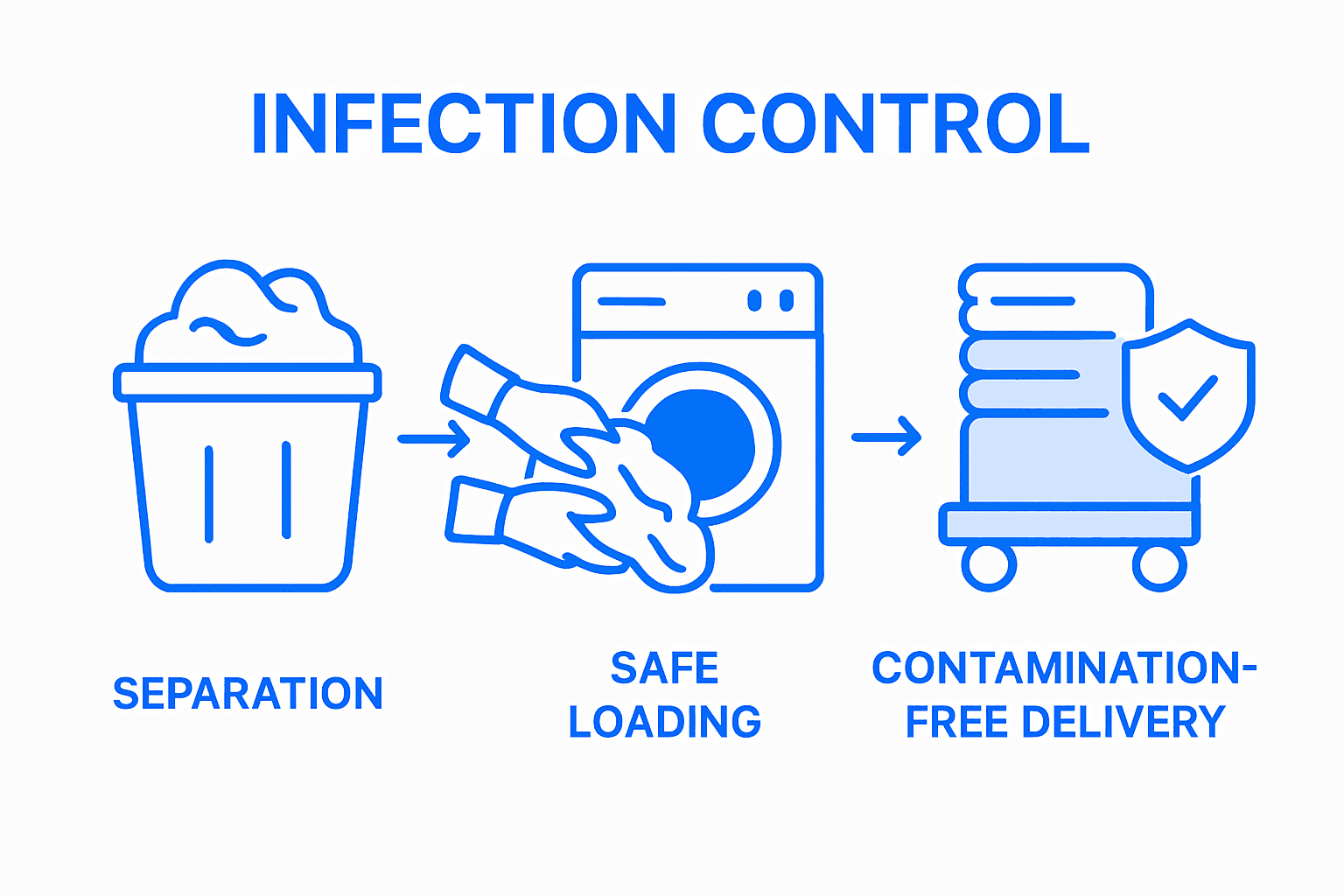
Pro Safety Insight: Develop a comprehensive color-coded containment and processing system that immediately identifies potentially infectious textiles and ensures they are handled with maximum protective protocols.
Staff Training and Emergency Protocols
Comprehensive staff training represents the cornerstone of safety management in commercial laundry operations, encompassing both preventative education and emergency response capabilities. Fire prevention guidelines established by OSHA emphasize the critical importance of systematic training programs that equip employees with the knowledge and skills necessary to identify, prevent, and respond to potential workplace hazards.
Effective training protocols must address multiple dimensions of workplace safety, including equipment operation, chemical handling, infection control, and emergency response strategies. Textile industry safety standards recommend developing comprehensive training modules that combine theoretical knowledge with practical hands-on demonstrations. These programs should cover critical areas such as proper personal protective equipment usage, hazard recognition, emergency evacuation procedures, first aid techniques, and specific protocols for managing potential workplace incidents.
A robust staff training approach requires continuous education and periodic skills reassessment. This involves implementing regular safety workshops, conducting quarterly skills evaluations, maintaining detailed training documentation, and developing adaptive training programs that respond to emerging workplace safety technologies and regulatory requirements. Advanced facilities should utilize multimedia training resources, simulation-based learning experiences, and interactive training modules that engage employees and ensure comprehensive understanding of safety protocols.
Pro Safety Insight: Develop a mandatory quarterly recertification program that requires all staff to demonstrate practical safety skills and knowledge, ensuring ongoing competence and workplace preparedness.
Compare key commercial laundry safety standards and their main focuses:
| Standard/Guideline | Main Focus Area | Typical Application in Laundries |
|---|---|---|
| OSHA Machine Guarding | Prevent mechanical injuries | Equipment protection and worker safety |
| ANSI Z8.1-2016 | Equipment design and safe operation | Protocols for machine use |
| OSHA Hazardous Chemicals | Worker protection and environment | Chemical labeling and storage |
| CDC Infection Control | Preventing pathogen transmission | Textile handling and processing |
Ensure Safety and Efficiency with Expert Commercial Laundry Solutions
Commercial laundry safety requires strict attention to detail in equipment operation, chemical handling, and infection control. If you manage a business where protecting your staff and clients from hazards like machinery risks, chemical exposure, and cross-contamination is a priority, you understand how demanding these safety standards can be. Columbia Pike Laundry knows that maintaining these protocols while handling linens, garments, and bulky items can take valuable time and resources away from your core goals.
Our Commercial Solutions | Laundry Tips are designed to relieve those burdens by offering professional in-house cleaning that meets high safety and quality standards. We control every step of the process to minimize risks, use safe detergents, and ensure proper fabric care. By trusting our family-owned business, you gain a partner committed to protecting your team and clients through reliable, transparent, and customized laundry services. Take the next step toward safer and more efficient laundry operations today by visiting Columbia Pike Laundry to schedule your service or learn more. You can also explore additional tips and best practices in Laundry Relief | Laundry Tips and Fabric Care Expertise | Laundry Tips for comprehensive support.
Frequently Asked Questions
What are the main hazards in commercial laundry operations?
The main hazards in commercial laundry operations include mechanical injuries from equipment, electrical malfunctions, exposure to hazardous chemicals, and risks of biological cross-contamination. Effective safety measures should address all these areas to protect staff and clients.
How can I ensure safe handling of chemicals in a laundry facility?
To ensure safe handling of chemicals, implement proper labeling, maintain material safety data sheets (MSDS), use personal protective equipment (PPE) such as gloves and goggles, and establish secure storage systems with proper ventilation for storing cleaning agents.
What training should staff receive regarding laundry safety?
Staff should receive comprehensive training in equipment operation, chemical handling, infection control measures, and emergency response strategies, including proper use of PPE and protocols for managing workplace hazards.
How often should equipment safety checks be conducted in commercial laundries?
Equipment safety checks should be conducted daily as part of a mandatory checklist to inspect machine guards, electrical connections, and potential mechanical wear before initiating laundry operations.
Recommended
Free pickup, expert care, delivered back to your door.
Popular Blog Articles



Meet the Author
Daniel Logan didn’t start CPL because he loved laundry. He started it because his family was drowning in time debt, and laundry was one of the biggest weights.
Mornings were chaos with two kids under 5. Evenings felt like catch-up. And weekends? Gone to sorting socks and folding piles.
He knew his story wasn’t unique. So he built a business that gave families like his just a little bit of breathing room one load at a time.
With no laundry experience but deep tech skills, Daniel rolled up his sleeves, doing every job himself while building systems that turned it into a modern laundry service that saves customers time, simplifies their lives, and delivers reliability they can count on.
That’s where CPL began. Not from a playbook, but from pain. From one dad trying to buy back time: for himself, and for every household like his.
Free pickup, expert care, delivered back to your door.