
How to choose laundry services for hospitality success

Columbia Pike Laundry offers pickup & delivery across Northern Virginia.
TL;DR:
- Hotel laundry involves high volume, strict quality, and guest-facing standards, increasing operational risks.
- Outsourcing offers predictable costs and capacity, while in-house laundry provides control but at higher expenses.
- Implementing smart technology like RFID and following best practices extend linen life and reduce costs.
Running a hotel in Arlington, Virginia means keeping hundreds of details in perfect order, and linen quality sits right at the top of that list. What most managers don’t realize is how quickly poor laundry management erodes the bottom line. Hotels lose 20-30% of their linen inventory each year to damage and theft, which can cost a 150-room property between $18,750 and $50,000 annually. That’s before you count the guest complaints, the negative reviews, and the front desk headaches that follow when a room isn’t ready on time. This article walks you through what makes hospitality laundry different, how to weigh your options, and how to put smarter systems in place right now.
Key Takeaways
| Point | Details |
|---|---|
| Hospitality laundry needs | Hotels require specialized laundry services to manage large volumes, quality standards, and rapid turnarounds. |
| Cost control strategies | Upgrading processes and tech like RFID can cut costs and linen losses by up to 35%. |
| Maximize linen lifespan | Following best practices in sorting, temperature, and inventory management extends linen use and guest satisfaction. |
| Sustainable solutions | Partnering with efficient providers and employing green strategies balances hygiene with resource savings. |
What makes hospitality laundry unique?
Most businesses that generate laundry, whether it’s a gym, a restaurant, or a medical clinic, deal with relatively predictable volumes and modest quality standards. Hotels operate in a completely different league. Understanding the role of laundry in hospitality means recognizing that linens are a guest-facing product, not just a utility.
Volume and turnaround are relentless. Every room turnover triggers a fresh cycle of sheets, pillowcases, bath towels, hand towels, washcloths, and possibly robes. A 100-room hotel running at 80% occupancy will process hundreds of individual linen pieces every single day. The difference between commercial vs home laundry isn’t just machine size. It’s the entire workflow, from sorting and staging to washing, drying, folding, inspecting, and transporting back to the floor.
Quality expectations are exacting. Guests notice everything. A towel that feels rough or a sheet with a faint stain creates an immediate perception of neglect, even in an otherwise excellent room. Hotels need consistent whiteness on white linens, reliable stain removal, soft texture after repeated washing, and zero odor transfer between guests.
The operational risks stack up fast:
- Inventory shrinkage from theft, loss in transport, or items left in rooms
- Inconsistent results when laundry staff or vendors use varying processes
- Guest review damage when even one room falls below standard
- Supply chain strain during high occupancy when linen availability becomes critical
There’s also an environmental dimension worth acknowledging. Hospitality laundry uses dramatically more water and chemicals per pound than household washing. That translates into operating costs and, increasingly, into sustainability expectations from guests.
“Losing even 20% of your linen inventory silently bleeds money out of your operation every month. Most hotels only notice the problem when the replacement invoices arrive.”
The financial and reputational stakes are clear. Treating laundry as a simple chore rather than an operational system is where most properties start losing ground.
In-house vs. outsourced laundry: Pros, cons, and costs
With these unique requirements in mind, hotels must decide whether to manage laundry internally or outsource it to a professional service. There’s no universal right answer, but the tradeoffs are well-documented and worth examining closely.
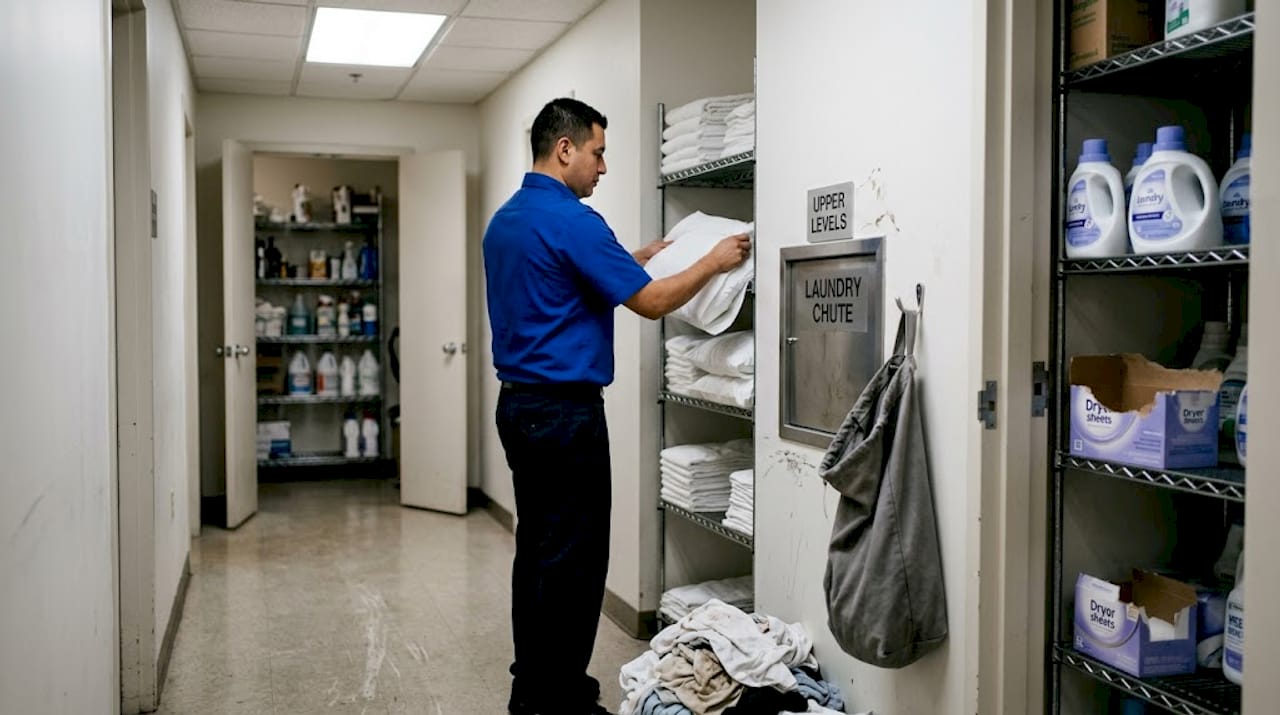
Comparing your two core options
| Factor | In-house laundry | Outsourced laundry |
|---|---|---|
| Startup cost | High (equipment, installation) | Low to none |
| Control over quality | Maximum | Depends on vendor |
| Scalability during peak seasons | Limited by capacity | High |
| Labor management | Your responsibility | Vendor managed |
| Equipment breakdown risk | Your problem | Vendor’s problem |
| Cost predictability | Variable | Generally fixed per pound |
In-house laundry offers control but comes with significantly higher variable costs and breakdown risk. Outsourcing delivers predictability and scalability but removes you from direct oversight of how your linens are handled.
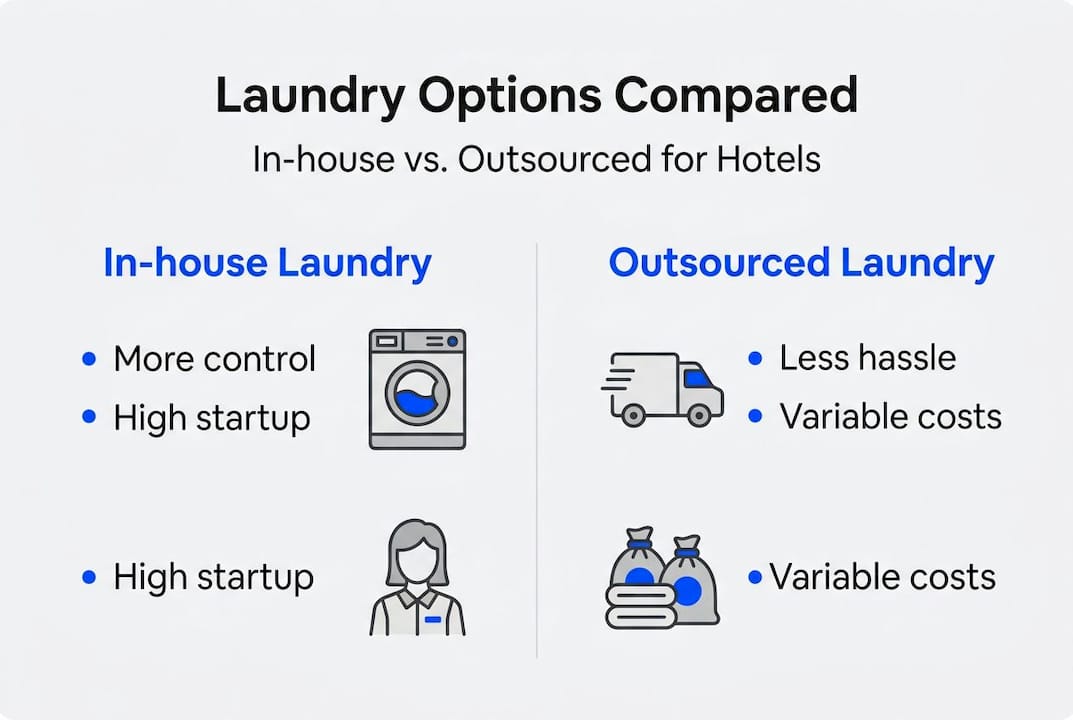
The numbers help frame the decision. Industry benchmarks run $0.50-$1.50 per pound of laundry processed, and labor typically represents 35-55% of total laundry costs. In-house operations must account for full-time or part-time staff wages, benefits, training, and coverage during turnover. Outsourcing converts those unpredictable labor costs into a more manageable per-pound or per-piece pricing structure.
Here are the key considerations when evaluating what a business laundry service provides versus running your own operation:
- Capital investment: Industrial washers and dryers for a mid-size hotel can run $50,000 or more upfront, plus installation, ventilation, and ongoing maintenance contracts.
- Staffing complexity: Managing a laundry team means hiring, scheduling, covering absences, and handling peak demand spikes, all of which add management overhead.
- Quality consistency: Your in-house team follows your standards directly, but staff turnover can create inconsistency. A strong outsourced partner standardizes the process.
- Peak season capacity: A high-occupancy weekend or a large event booking can overwhelm an in-house operation, risking delays and unhappy guests.
- Turnaround guarantees: Reliable outsourced vendors typically offer service level commitments that protect you during your busiest periods.
Pro Tip: Ask any prospective laundry vendor for references from similarly sized hotels in your market. A vendor who handles office uniforms may not have the capacity or the right processes for high-volume hospitality linen cycles.
The decision often comes down to occupancy rates and available space. Properties with consistently high occupancy and a dedicated laundry room may justify in-house operations. Properties with variable occupancy, limited square footage, or lean management teams often find outsourcing more cost-effective.
Best practices for linen life, savings, and guest satisfaction
Whether you operate in-house or outsource, following industry best practices protects your linens and your budget. The way linens are washed, dried, stored, and rotated determines how long they last and how guests experience them.
What washing practices actually affect linen life?
| Practice | Impact on linen life |
|---|---|
| Correct water temperature for fabric type | Extends life significantly |
| Overloading machines | Shortens life, causes uneven cleaning |
| Excess bleach or softener | Weakens fibers over time |
| Overdrying on high heat | Causes premature breakdown of fabric |
| Mixing rough or zippered items with linens | Creates tears and snags |
Proper sorting by soil level, color, and fabric type, along with using the right water temperatures (hot water at 60-71°C for whites, cooler for colors), and using industrial-grade detergents without excess bleach or fabric softener, are the foundation of extending linen life. Overdrying on high heat is one of the most common and most damaging mistakes.
Good laundry sorting basics aren’t complicated, but they do require consistent training and supervision. One careless load where zippered pillow covers are washed alongside cotton sheets can snag and tear an entire batch.
Beyond the wash cycle, maintaining the right linen par level (the number of complete sets in circulation) is critical:
- One set in the room actively in use by the guest
- One set in the laundry being cleaned or in transit
- One set resting for at least 24 hours to allow fibers to rehydrate
- One spare set held in reserve for emergencies or staggered turnover
Maintaining 3-4 par levels per bed is the industry standard for balancing availability with cost. Running below this threshold forces constant reuse of recently washed linens, which doesn’t give fibers time to recover and dramatically shortens linen life.
Pro Tip: Implement a FIFO (first in, first out) rotation system for your linen inventory. When linens come back from the wash, place them at the bottom of the stack so older sets get used first. This distributes wear evenly and gives you more total uses per set before replacement.
Following commercial laundry best practices consistently is also the single best way to protect your vendor relationship. Providers who receive already-sorted, properly pre-treated linens deliver faster and better results than those who have to process everything from scratch.
Smart technology and sustainability moves
Next, let’s see how technology and eco-friendly solutions are changing the game for leading Arlington hotels. The properties doing this well are not just buying better equipment. They’re rethinking the entire system.
RFID tracking is the most impactful technology shift in hospitality laundry right now. Small chips embedded in linens and towels allow properties to scan and track every item throughout its lifecycle, from the room to the laundry room to storage and back. The benefits are substantial:
- Real-time inventory visibility at any point in the process
- Alerts when items don’t return from guest rooms
- Data on average wash cycles per item (helping predict replacement timelines)
- Accountability for any outsourced vendor handling your linens
RFID can reduce total laundry costs by 25-35% and cut linen loss by 15-20%. For a hotel currently spending $30,000 a year on linen replacement, that’s a real, measurable return on technology investment.
Automated chemical dosing systems are another tool that pays for itself quickly. Rather than relying on staff to manually measure detergent and additives, automated dispensers deliver the precise amount for each load type. This eliminates the two most common mistakes: too much detergent (which builds up in fibers and creates stiffness) and too little (which leaves soiling behind).
The role of commercial laundry services has expanded beyond simple washing. Today’s best providers offer documentation of their processes, real-time order tracking, and customized handling protocols for different item types. That level of accountability matches what the best hotel operations need.
Sustainability is also moving from a nice-to-have to a guest expectation. Hotels facing peak demand increasingly find that efficient outsourced providers reduce their resource footprint while maintaining full hygiene compliance. Cold-water detergent formulations, high-efficiency extractors that reduce drying time, and consolidated pickup routes all reduce water, energy, and emissions without compromising cleanliness.
For properties investing in premium hospitality linens, smart laundry technology is a direct way to protect that investment and extend its useful life significantly. Understanding your laundry workflow in Arlington as a complete system, rather than isolated steps, is what separates properties that control costs from those that are controlled by them.
Why “good enough” laundry isn’t good enough for today’s hotels
Here’s the uncomfortable truth most laundry vendors won’t tell you: the “standard” service package that works fine during slow seasons quietly fails you when it matters most. We’ve seen this pattern play out repeatedly in the Arlington market.
Hotels that treat laundry as a back-of-house commodity to be handled as cheaply as possible tend to encounter the same problems on a loop. A slow turnaround during a sold-out weekend. A batch returned with residual stains just as a conference group is checking in. A vendor who’s too busy to prioritize your urgent order because you’re not their biggest client.
Following commercial laundry best practices isn’t just about linen care, it’s about building a system that won’t fail you under pressure. The hotels that come out ahead invest in three things: documented processes, technology accountability, and vendor partnerships built on communication and transparency, not just price.
The “bare minimum” approach costs more than you think. When a guest posts a one-star review mentioning “dingy towels” or “musty sheets,” the cost of that review in lost future bookings outweighs months of savings from a cheaper laundry contract. Guest satisfaction surveys consistently rank room cleanliness and linen quality among the top three factors affecting scores. Laundry is not invisible to your guests. It’s the most tactile part of their stay.
The hotels winning in today’s Arlington market aren’t just spending more. They’re being deliberate. They track linen cycles. They hold vendors accountable with clear service level agreements. They invest in par levels so staff are never scrambling. And they treat laundry as a guest experience decision, not just an operations one.
Trusted laundry solutions for Arlington hospitality
If you’re ready to stop managing laundry reactively and start building a system that works year-round, Columbia Pike Laundry is built for exactly this. We’re a family-owned, in-house operation at 2602 Columbia Pike, which means your linens are handled by our team from pickup to delivery, with no middlemen and no quality surprises. Learn how our laundry service works and see why hotels across the area trust us for consistent, reliable results. We also serve properties in neighboring communities, including commercial laundry in McLean and commercial laundry in Reston. Contact us today to discuss a custom plan for your property’s specific needs and volume.
Frequently asked questions
How many sets of linens should a hotel keep in rotation?
Hotels should maintain 3-4 par levels per bed, with one set in the room, one in laundry, one resting to rehydrate fibers, and one spare for emergencies. Running below this threshold accelerates wear and creates operational stress during high-occupancy periods.
What’s the biggest cause of hotel linen loss?
Damage and theft account for 20-30% of hotel linen inventory lost annually, with theft by guests and damage from improper washing being the primary drivers. Implementing RFID tracking and tighter inventory controls significantly reduces both causes.
How can technology help reduce laundry costs for hotels?
RFID systems can cut total laundry costs by 25-35% and reduce linen loss by 15-20% through better tracking and accountability across the entire linen lifecycle. Automated chemical dosing further reduces waste and protects fabric quality over time.
How do hotels balance hygiene with sustainability in laundry?
Working with efficient providers reduces water, chemical, and energy use without compromising hygiene compliance. Cold-water detergent formulations and high-efficiency equipment are practical tools for meeting both standards simultaneously.
Free pickup, expert care, delivered back to your door.
Popular Blog Articles


Meet the Author
Daniel Logan didn’t start CPL because he loved laundry. He started it because his family was drowning in time debt, and laundry was one of the biggest weights.
Mornings were chaos with two kids under 5. Evenings felt like catch-up. And weekends? Gone to sorting socks and folding piles.
He knew his story wasn’t unique. So he built a business that gave families like his just a little bit of breathing room one load at a time.
With no laundry experience but deep tech skills, Daniel rolled up his sleeves, doing every job himself while building systems that turned it into a modern laundry service that saves customers time, simplifies their lives, and delivers reliability they can count on.
That’s where CPL began. Not from a playbook, but from pain. From one dad trying to buy back time: for himself, and for every household like his.
Free pickup, expert care, delivered back to your door.