
How to Clean White Clothes and Keep Them Bright
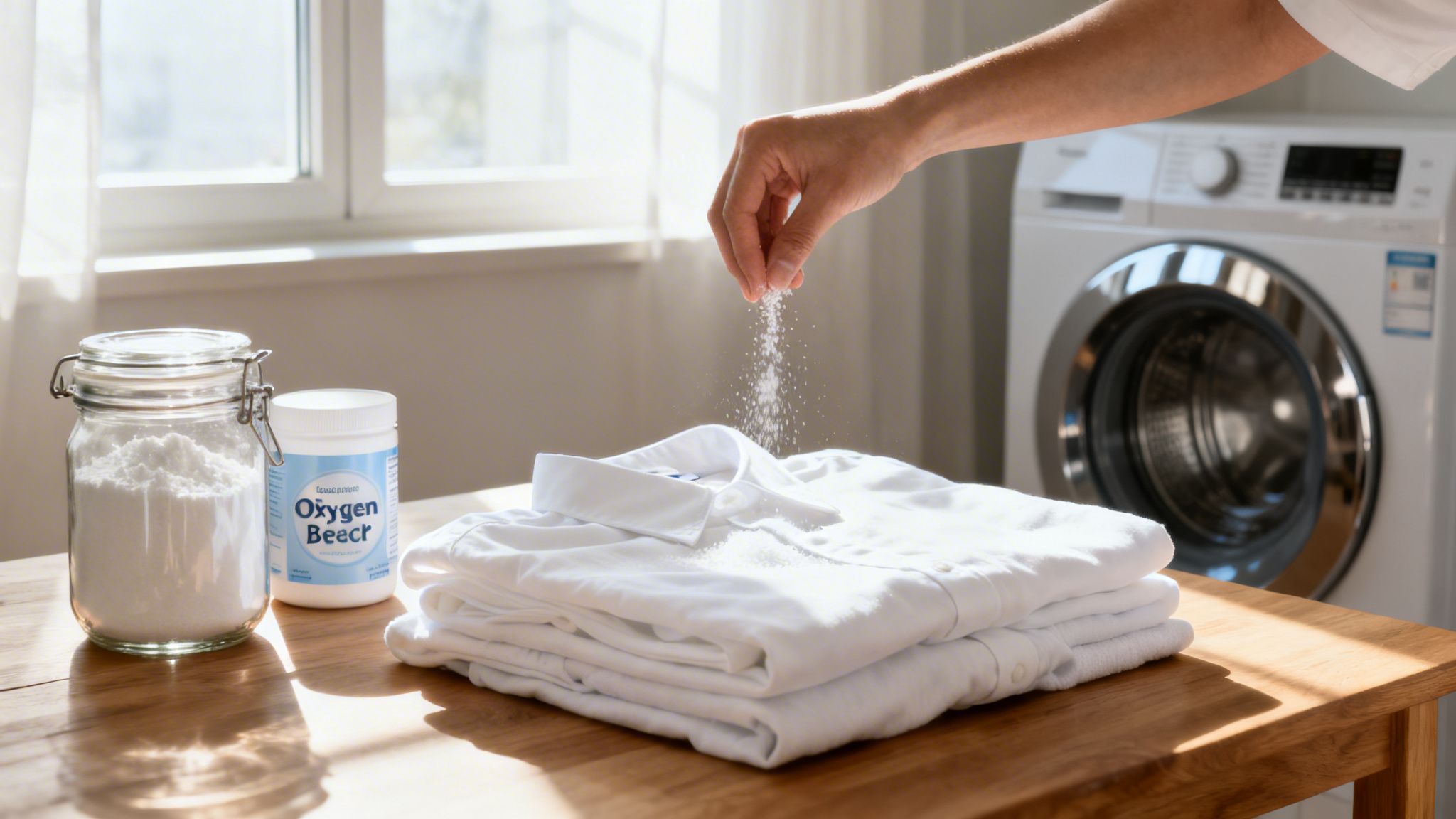
Columbia Pike Laundry offers pickup & delivery across Northern Virginia.
Keeping your favorite white clothes looking brand new is simpler than you think. The secret isn't a single magic product but a consistent routine: sort them separately, pre-treat stains right away, and use the right whitening boosters like oxygen bleach or baking soda. This straightforward approach is your best defense against the dulling and yellowing that can ruin a perfectly good garment.
The Secret to Brilliantly White Clothes Starts Here
We’ve all been there. You pull your favorite white t-shirt from the wash, only to find it looks a little… sad. That crisp, bright white has faded into a dull grey or, even worse, a faint yellow. It's a common frustration, but the good news is that keeping your whites truly white is less about luck and more about a reliable, easy-to-follow process.
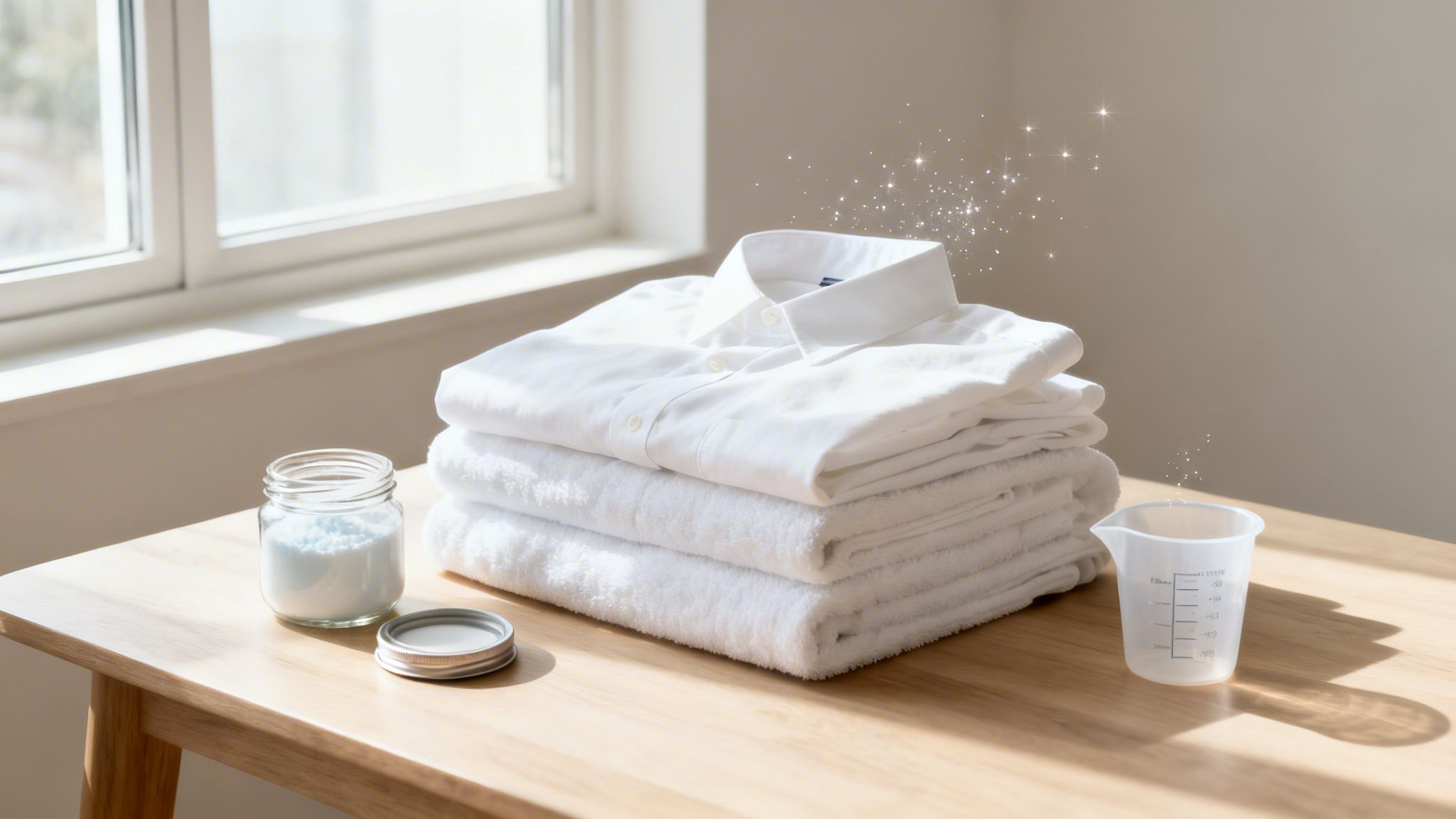
Think of this guide as your game plan for getting consistent results, moving you from just hoping for the best to knowing your whites will come out looking fantastic every time. It all starts with understanding what you're up against.
Why Whites Lose Their Brightness
The main reasons whites turn dingy are often invisible culprits that build up slowly in the fabric fibers. Over time, this accumulation is what you see as dullness or yellowing.
- Body Oils and Sweat: This is the number one cause of yellowing, especially around collars, cuffs, and underarms. Our natural oils and perspiration cling to fibers and oxidize over time.
- Hard Water Minerals: If your home has hard water, it’s likely high in minerals like iron and manganese. These deposits can leave a grayish or rusty tint on your clothes.
- Product Buildup: Using too much detergent is a classic mistake. The excess residue doesn't rinse out, creating a sticky film that actually attracts more dirt. The same goes for residue from deodorants, lotions, and fabric softeners.
In fact, it's estimated that a staggering 90% of fabric yellowing comes from the gradual buildup of hard water minerals and body oils over repeated washes. This really drives home why a proactive approach is so crucial for keeping those whites bright long-term.
This guide is designed to give you the confidence to achieve consistently clean, crisp whites without the stress. We'll cover everything from the basics of proper sorting and smart stain treatment to choosing the best products for the job. And for those all-important bed linens, you can find more specific advice on how to keep white sheets white and bright.
Of course, when life gets busy, sending your whites out can be a smart, time-saving move. The pros have the equipment and expertise for precision care, which is why the industrial laundry market is projected to hit USD 74.22 billion by 2025. It's a growing industry because sometimes, you just need that expert touch to restore your garments perfectly.
Here’s a quick reference table to keep the most important steps top of mind.
Quick Guide to Keeping Whites White
Following these key steps consistently will make a huge difference in the longevity and brightness of your white clothing.
Get Your Sorting and Prep Work Right
The secret to truly bright whites has less to do with the wash cycle itself and more to do with what you do before the clothes even hit the water. A good wash day starts with smart preparation. If you skip these first crucial steps, you're setting yourself up for the dingy, graying fabrics we all want to avoid.
Think of this initial phase as your best defense against common laundry mishaps. A few minutes of prep can prevent colors from bleeding, stop a stray zipper from snagging your favorite shirt, and give your detergent the best possible shot at working its magic.
Let's dig into the details that separate a so-so wash from a brilliant one.
Don't Just Sort by Color—Sort by Fabric
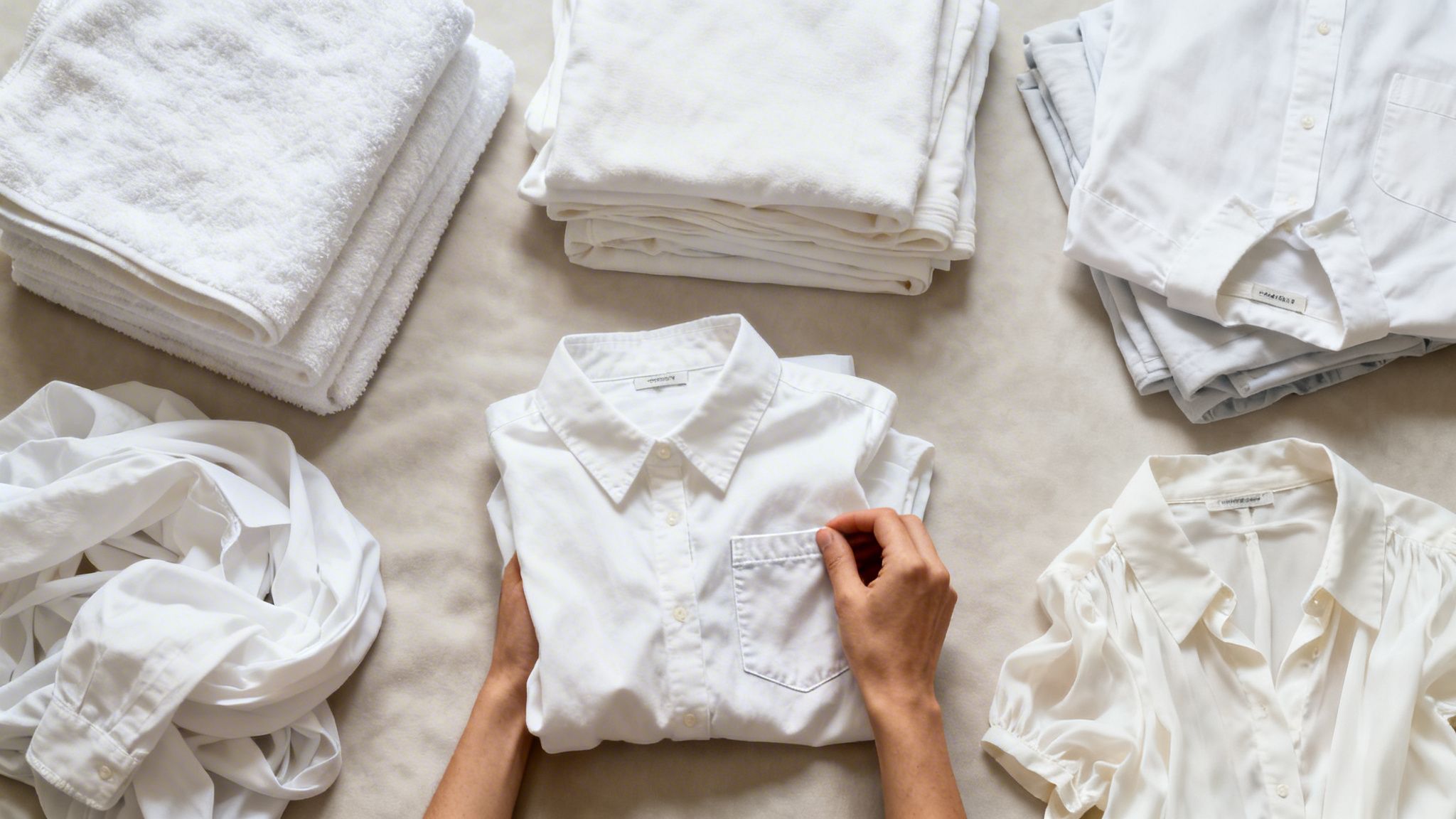
Everyone knows to make a "whites-only" pile. That's laundry 101. But the real pro move is to sort that white pile even further by fabric type and weight. Tossing everything in together is a recipe for disappointment.
Just picture it: thick, heavy bath towels tumbling around with a delicate linen blouse. The abrasive towels will batter the lightweight linen, causing snags and stretching. Meanwhile, if you run a gentle cycle to protect the blouse, the towels won't get nearly the agitation they need to come out truly clean.
For the best results, break down your whites into a few smaller, more specific loads:
- Hearty Cottons & Linens: This is your pile for towels, bedsheets, durable t-shirts, and socks. These items can take the heat and a more vigorous wash cycle.
- Synthetics & Blends: Think polyester workout gear, nylon items, or cotton-poly blend shirts. They do best in cooler water on a gentler cycle to prevent yellowing and fiber damage.
- Delicates: Anything that feels fragile goes here—silk, lace, sheer fabrics, and lingerie. These always need a delicate cycle, and I strongly recommend placing them in a mesh laundry bag for extra protection.
Taking this extra step ensures every single piece gets the exact treatment it needs. It’s the key to maintaining not just brightness, but the integrity of the fabric itself over the long haul.
A huge mistake I see is washing all whites in hot water. While heat works wonders on sturdy cotton, textile care experts warn that it can cook protein stains (like sweat) into synthetic fabrics, causing yellowing that’s nearly impossible to remove.
The Pre-Wash Checklist That Will Save Your Clothes
Before a single item goes into the machine, give it a quick once-over. This habit takes maybe two minutes, but it can spare you from some truly epic laundry disasters.
First, check every single pocket. Seriously. We all have a story about the forgotten pen that turned a load of whites into a modern art project, or the tissue that disintegrated into a million tiny, impossible-to-remove flecks. A quick pat-down prevents this headache.
Next, deal with the hardware. Zip up all zippers and fasten any hooks. An open metal zipper on a pair of jeans is like a tiny saw blade in the wash, just waiting to rip and snag your other clothes. On the flip side, you’ll want to unbutton shirts to reduce stress on the buttonholes and thread.
Finally, turn some items inside out. This is a non-negotiable for:
- Printed T-shirts or anything with embellishments to protect the design from cracking and fading.
- Knit sweaters or corduroy pants to keep them from pilling.
These simple prep habits are foundational. Good laundry isn't just about getting things clean; it's about preserving the clothes you love for as long as possible.
Your Stain-by-Stain Removal Playbook
A crisp white shirt is a beautiful thing, but it’s also a magnet for life’s little messes. A splash of coffee, a drip of salad dressing—stains are just part of the deal. The secret isn't trying to avoid them altogether, but knowing exactly what to do when they happen. This is your game plan for tackling the most common culprits.
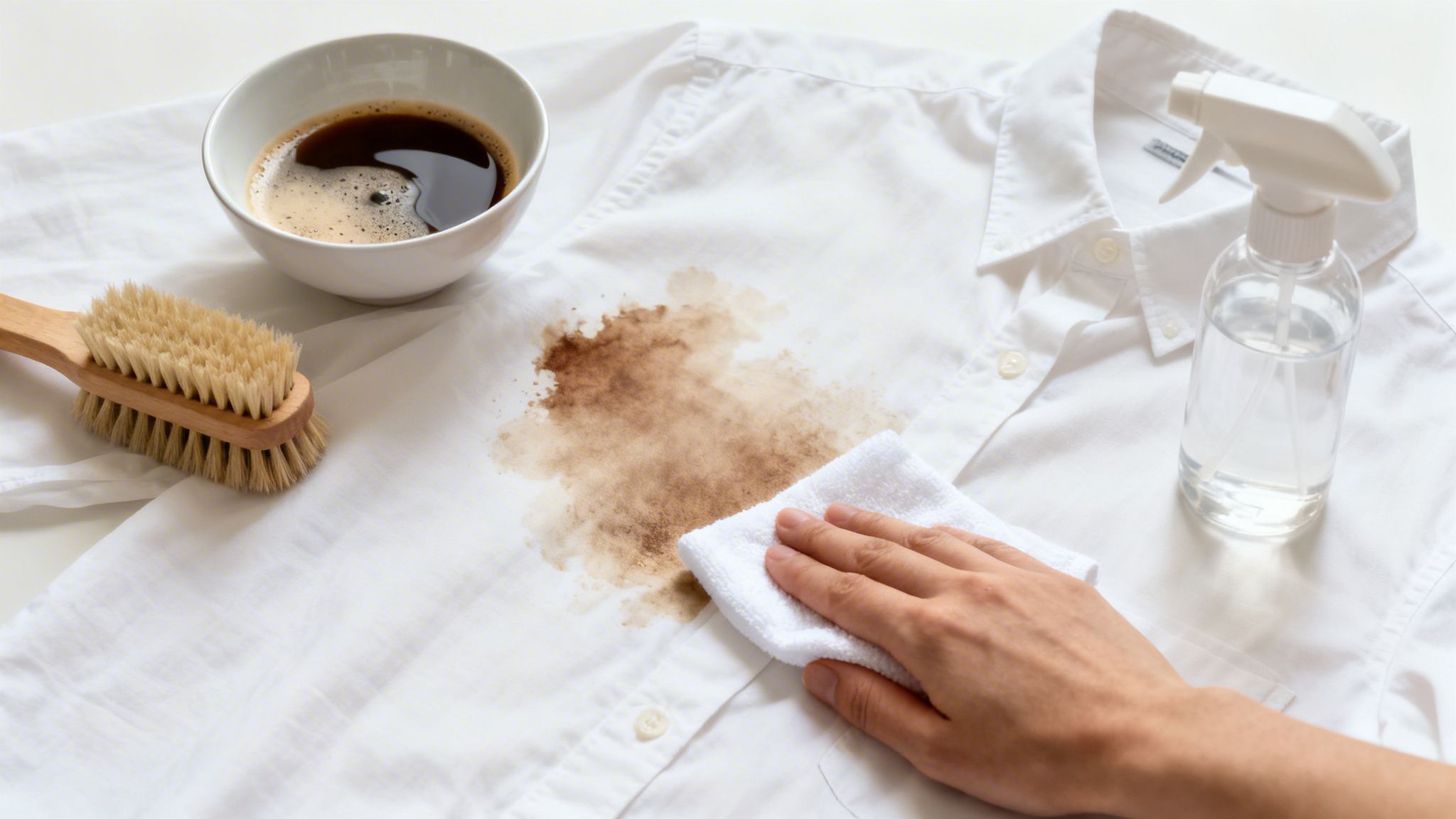
If you remember only one thing, make it this: act fast. A stain that’s just happened is a minor inconvenience. A stain that’s been sitting for a week is a major project. Getting to it quickly can make all the difference.
And here’s a universal rule for any stain: steer clear of heat. Never, ever throw a stained item in a hot dryer or take an iron to it. Heat will set that stain right into the fabric fibers, making it a permanent part of the garment. Always be sure the spot is completely gone before you even think about applying heat.
Coffee, Tea, and Red Wine Stains
These are what we call tannin stains, and they’re probably the most common offenders. The dark colors look scary, but they’re usually pretty manageable if you catch them right away.
First, blot the spot with a clean cloth to soak up any excess liquid. Then, turn the garment inside out and flush the stain from the back with cold water. This pushes the stain out of the fabric instead of driving it deeper.
For a little more muscle:
- Mix a simple soak: Dissolve a tablespoon of oxygen bleach powder in a basin of warm water.
- Let it sit: Submerge the stained area and let it soak for at least 30 minutes. For older, tougher stains, you might need to leave it for a few hours or even overnight.
- Wash normally: Once the soak is done, wash the item as you usually would. Just give it a quick check before drying to make sure the stain is gone.
Oil, Grease, and Salad Dressing Stains
Oil and water don’t mix, so just rinsing an oily stain won’t get you very far. The real hero for these kinds of spots is probably already in your kitchen: clear dish soap.
Dish soap is a surfactant, meaning it’s engineered to break down grease. It works wonders on fabric.
Just put a small dab of clear dish soap directly on the stain. Use your fingers or a soft brush to gently work it in, then let it sit for 15-20 minutes. This gives it time to do its job. Rinse it out with warm water before tossing it in the wash.
Pro Tip: If you catch an oil stain fresh, sprinkle it with cornstarch or baking soda first. Let that sit for an hour to pull out the excess oil, then scrape it off and treat what's left with dish soap. This one-two punch is incredibly effective.
Grass, Dirt, and Mud Stains
These are a bit more complex because they’re a combination of pigments, proteins, and soil. Your best bet here is a high-quality liquid laundry detergent that contains enzymes. Enzymes are fantastic at breaking down the stubborn compounds found in grass and dirt.
Let any mud dry completely first, then brush off as much as you can. Next, pour a little of that enzyme detergent right onto the stain, work it in, and let it sit for at least 15 minutes. Then, wash it in the warmest water the fabric can handle.
If you’re dealing with a particularly stubborn grass stain, pretreating it with a 50/50 mix of white vinegar and water can help break down the pigments before you even add the detergent. These types of stains are also related to the pesky yellowing that can happen over time from sweat and body oils, which you can learn more about here: https://www.columbiapikelaundry.com/post/how-to-get-rid-of-yellow-stains-on-white-clothes.
Common Stain Treatments for White Fabrics
Sometimes you just need a quick answer. This table breaks down the best first moves for common stains you'll encounter on your white clothes.
Remember to always test any treatment on a small, hidden part of the garment first to ensure it doesn't damage the fabric.
Challenging Stains Like Blood and Ink
Some stains have their own set of rules. Blood, for example, is a protein stain that absolutely must be treated with cold water only. Hot water will set it for good. For a deep dive into this tricky stain, this guide on how to remove blood stains from fabric has you covered.
Ink is another tricky one because it depends entirely on the type. For a water-based marker, rubbing alcohol usually does the trick. Ballpoint pen ink often responds to hairspray or hand sanitizer. Just be sure to test these on an inside seam first to make sure they don't cause more harm than good.
The Best Whitening and Brightening Methods
Sometimes, your white clothes just need a little extra help to get back to that brilliant, crisp look. Even with careful sorting and spot-treating, whites can start to look a bit tired and dingy over time. When your everyday detergent just isn't cutting it anymore, it's time to bring in some reinforcements.
These whitening methods are your secret weapons for breaking down the stubborn residues that a normal wash cycle just can't touch.
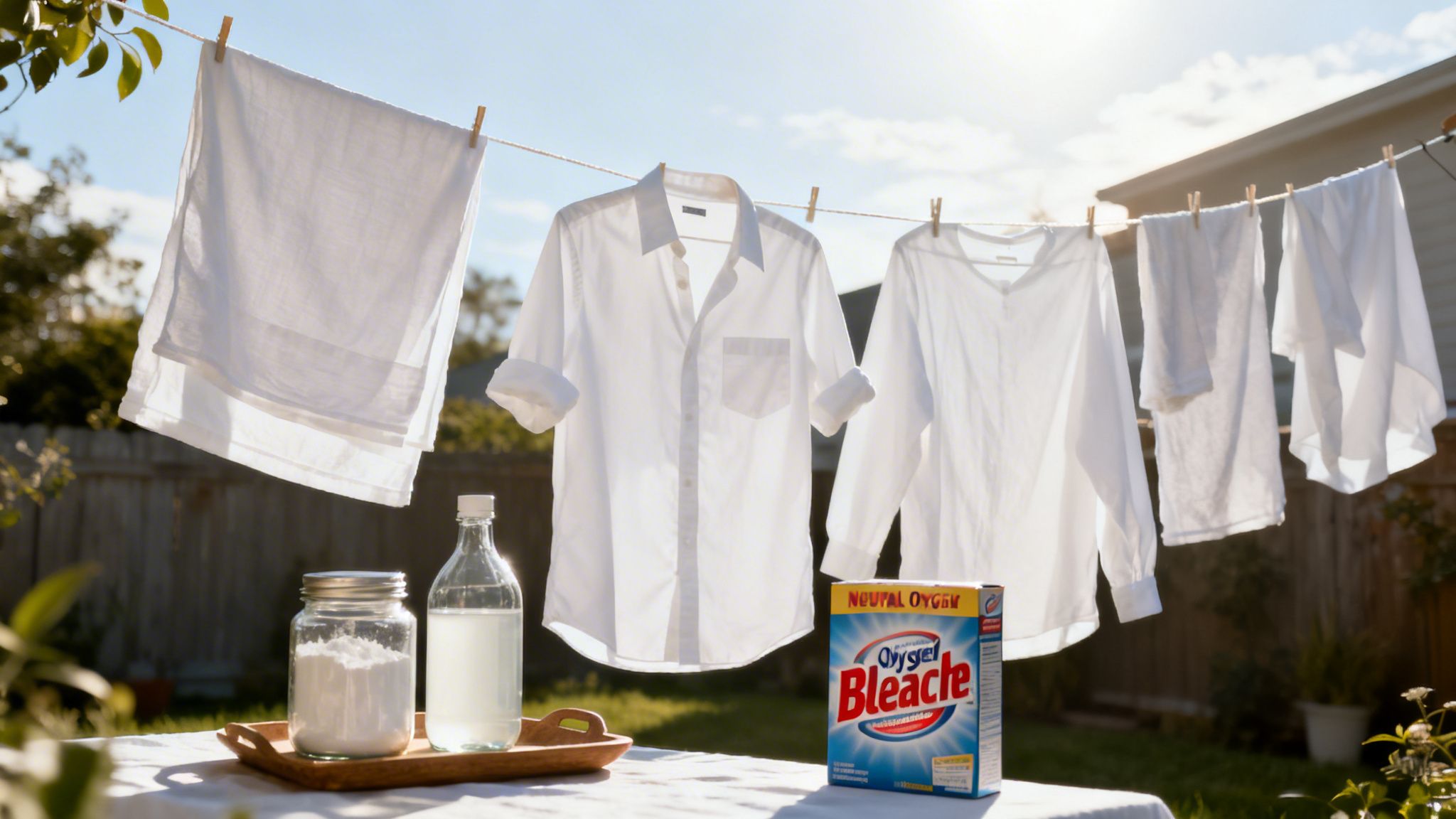
Think of this as your toolkit for laundry brilliance. We'll walk through everything from powerful whitening agents to gentle, natural solutions you probably already have at home. There’s a perfect option for every fabric and situation.
The Power of Oxygen Bleach
When you hear the word "bleach," you probably picture the classic, harsh chlorine kind. But its gentler cousin, oxygen bleach, is my go-to for routine brightening. You'll usually find it as a powder (OxiClean is a popular one) that uses sodium percarbonate. When it hits the water, it releases tiny oxygen bubbles that gently lift away stains and grime.
It's a fantastic, color-safe alternative that works on almost all washable fabrics, even synthetics and blends. Here are the best ways to use it:
- As a Wash Booster: Just toss a scoop of the powder directly into the washing machine drum along with your clothes and regular detergent. It’s that simple.
- For a Restorative Soak: If you're dealing with seriously dingy whites, this is a game-changer. Dissolve the recommended amount of powder in a sink or tub of warm water, submerge your clothes, and let them soak for at least four hours—or even overnight for tough cases. Then, just wash them like you normally would.
The real magic of oxygen bleach is how versatile it is. It tackles everything from sweat stains to food spills without being harsh on the fabric fibers, making it the safest and most reliable brightener for most of your laundry.
Natural Brighteners Hiding in Your Pantry
You don't always need to buy a special product to get fantastic results. In fact, two of the most effective and affordable whitening agents are likely sitting in your kitchen right now.
Baking Soda
This household staple is more than just for baking. It’s a mild alkali, which means it helps soften the water and allows your detergent to work much more effectively.
Just add about 1/2 cup of baking soda straight into the drum with your clothes. Not only does it help brighten whites, but it also acts as a natural deodorizer and fabric softener.
Distilled White Vinegar
Vinegar is a mild acid, which makes it perfect for dissolving the mineral deposits from hard water and the sticky soap residue that can make whites look dull.
Pour 1/2 to 1 cup of distilled white vinegar into your machine's fabric softener dispenser. It gets released during the final rinse, so don't worry about your clothes smelling like a salad—the scent washes out completely, leaving them noticeably softer and brighter.
When to Use Chlorine Bleach Carefully
Chlorine bleach is the heavy-hitter of whiteners, but it needs to be handled with respect. It’s a powerful disinfectant that can weaken fabric fibers over time, and you should never use it on materials like wool, silk, or spandex. The chemical reaction can cause permanent yellowing and damage.
That said, for sturdy cotton items like white sheets, towels, and socks, it can work wonders when used sparingly. The key is to always dilute it with water before adding it to the wash, and never pour it directly onto your clothes. A little goes a long way; over-bleaching is a common mistake that can ruin fabrics.
For a deeper dive into the different whitening options, you can find more tips in our dedicated guide on how to whiten clothes.
Harnessing the Power of the Sun
Believe it or not, one of the oldest whitening methods is also the most effective—and it's completely free. Sunlight! The sun’s UV rays have a natural bleaching effect that can make a huge difference on white fabrics.
After washing, hang your whites on a clothesline or lay them flat on a clean towel in the sun. This technique works especially well for cotton and linen. As a bonus, the sun is a fantastic natural disinfectant. Just be careful not to leave delicate fabrics out for too long, as extended exposure can sometimes cause damage.
Fabric-Specific Care for Lasting Brightness
Tossing all your whites into the same wash cycle is one of the fastest ways to ruin them. I've seen it countless times—that beautiful linen blouse just can't handle the same rough-and-tumble wash as your trusty cotton tees.
If you really want to keep your whites looking brilliant, you have to get to know your fabrics. Thinking about their specific needs is what separates laundry day frustration from long-lasting, crisp-looking clothes.
Caring for Hearty Cottons and Linens
Cotton is the workhorse of most white wardrobes—think t-shirts, socks, towels, and sheets. It’s tough, but it’s not indestructible. For most of your everyday cottons, a warm wash cycle hits the sweet spot, effectively cleaning out body oils and daily grime without being too aggressive. For really grubby items like kitchen towels or bed linens, don't be afraid to crank it up to hot for some extra sanitizing power.
Linen is a different beast. While it's also a strong natural fiber, it needs a gentler hand. Wash linen in cool or warm water on a gentle cycle to keep it from getting stiff.
Here's a common mistake I see: assuming all natural fibers love high heat. While cotton can take a lot, repeatedly blasting it and linen in a hot dryer will cause shrinking and make the fibers brittle over time. Let them air dry whenever you can—it makes a huge difference.
Navigating Synthetics like Polyester and Nylon
White synthetic fabrics, like the polyester and nylon in your workout gear, are great for durability, but they have a tricky relationship with heat and oil.
The absolute number one enemy of white synthetics is high heat. A hot wash or a scorching dryer setting can literally cook body oils into the fabric, leading to permanent yellowing. Stick with a cool or warm wash every single time for these items.
A few extra tips for keeping those white synthetics bright:
- Skip the Fabric Softener: It leaves a film that can trap dirt and messes with the moisture-wicking ability of activewear.
- Wash After Wearing: Don't let sweaty gym clothes fester in the hamper. Washing them quickly prevents bacteria and oils from setting in and causing discoloration.
- Tumble Dry on Low: If you have to use a dryer, always choose the lowest heat setting or, even better, the air-dry option.
Handling Delicates with Extra Care
Delicate fabrics like silk, lace, and fine knits are a whole other story. The intense spinning and heat of a regular wash cycle will destroy them. For these special pieces, a little more effort is non-negotiable.
Your first line of defense is a mesh laundry bag. This simple tool is a lifesaver, creating a protective barrier that prevents snagging, stretching, and getting tangled with other clothes.
Wash Settings for Delicates:
Honestly, for many of these, hand-washing is your safest bet. When you're dealing with an item you love, like a crisp white dress shirt, it pays to be cautious. For a full breakdown, check out our guide on how to wash a white shirt to get it perfect every time.
And remember, if you’re ever in doubt, especially with an expensive or sentimental garment, there's no shame in calling in the pros. A professional cleaner has the right tools and expertise to handle delicate fabrics safely, keeping them beautiful for years to come.
When to Call in a Professional
Let's be honest, sometimes the best laundry hack is knowing when to hand the basket over to someone else. It’s not about giving up; it’s about smart delegation. Think of it as reclaiming your time and sanity, especially when life gets chaotic.
Some things are just better left to the pros. That beautiful (and terrifyingly delicate) white silk blouse, a structured linen suit, or that post-vacation mountain of laundry that just seems impossible to face. These are the moments when calling for backup is the wisest move you can make.
A Calm, Dependable Solution
At Columbia Pike Laundry, we're here to offer that sense of relief. We've built our service around making your life easier, with simple pickup and delivery that brings professional-level care right to your doorstep.
We take the details seriously, meticulously separating every single load—a step that’s easy to skip when you’re in a rush at home. A recent survey found that a staggering 62% of people have accidentally ruined their whites by mixing in a stray colored item. We prevent that by default.
Plus, we use professional-grade, yet gentle, Free & Clear unscented detergent and eco-friendly GreenEarth solvents for those items that need extra care. With the demand for convenient, high-quality laundry services growing, we aim to be the quiet hero in your weekly routine.
The smartest way to manage a chore is knowing when it's not yours to do. Letting a professional handle your laundry isn’t a luxury; it’s a practical way to manage your week and focus on your priorities.
When you're feeling overwhelmed by the pile-up, let us step in. Just schedule a pickup, and we'll take it from there.
Your Top Questions About Keeping Whites White
Even after you've nailed down a solid laundry routine, some tricky situations always seem to come up. Let's tackle some of the most common questions I hear about keeping white clothes looking their best.
Is Hot Water Always the Answer for Whites?
It's a common myth that all whites need a hot water blast. While it's great for sanitizing tough stuff like cotton sheets and towels, hot water can be a real enemy to other fabrics.
High heat can actually cause synthetic fabrics like polyester to take on a yellowish tint over time. And for delicates? Forget about it. Hot water can ruin silk, lace, or rayon. The golden rule is to always check the care label first. When in doubt, or for a mixed load of everyday whites, warm water is your safest bet for great cleaning power without the risk.
What’s Making My Whites Look So Dingy?
Ah, the classic case of the yellowing or graying whites. This is incredibly common, and it's usually a slow creep caused by a few different things.
Most often, it's a gradual buildup of body oils, sweat, and residue from your laundry detergent. Using too much soap is a major culprit; the excess leaves a sticky film that dirt just loves to cling to. Another cause? Hard water mineral deposits that embed in the fibers. And, of course, letting even one light-colored item sneak into your all-white load can lead to that dull, grayish look over time.
A big one people miss is the residue from deodorant. The aluminum in most antiperspirants reacts with your sweat, creating those stubborn yellow underarm stains. Tossing the shirt in a hot dryer will bake that stain right in, making it almost impossible to remove.
To stay ahead of the dinginess, I always recommend adding an oxygen bleach booster to your white loads every few washes. It helps break down all that buildup before you can even see it.
How Often Should I Really Be Using Bleach?
Think of bleach as a powerful tool, not an everyday solution. Using it too often, especially chlorine bleach, is one of the fastest ways to destroy your clothes. It aggressively breaks down fabric fibers, leading to premature thinning and tears.
For regular brightening and upkeep, stick with a gentler oxygen-based bleach. Save the heavy-duty chlorine bleach for when you really need it—like tackling a major stain on a sturdy cotton shirt or doing a deep sanitizing wash. Using it sparingly, maybe once a month at most, is a much better strategy than adding it to every single load.
Tired of laundry day? Let us handle it. Columbia Pike Laundry offers professional wash & fold and dry cleaning services, complete with convenient pickup and delivery. Get your time back and let us do the work. Schedule your first pickup today and see how easy laundry can be.
Free pickup, expert care, delivered back to your door.
Popular Blog Articles




Meet the Author
Daniel Logan didn’t start CPL because he loved laundry. He started it because his family was drowning in time debt, and laundry was one of the biggest weights.
Mornings were chaos with two kids under 5. Evenings felt like catch-up. And weekends? Gone to sorting socks and folding piles.
He knew his story wasn’t unique. So he built a business that gave families like his just a little bit of breathing room one load at a time.
With no laundry experience but deep tech skills, Daniel rolled up his sleeves, doing every job himself while building systems that turned it into a modern laundry service that saves customers time, simplifies their lives, and delivers reliability they can count on.
That’s where CPL began. Not from a playbook, but from pain. From one dad trying to buy back time: for himself, and for every household like his.
Free pickup, expert care, delivered back to your door.