
How to Get a Detergent Stain Out for Good
Columbia Pike Laundry offers pickup & delivery across Northern Virginia.
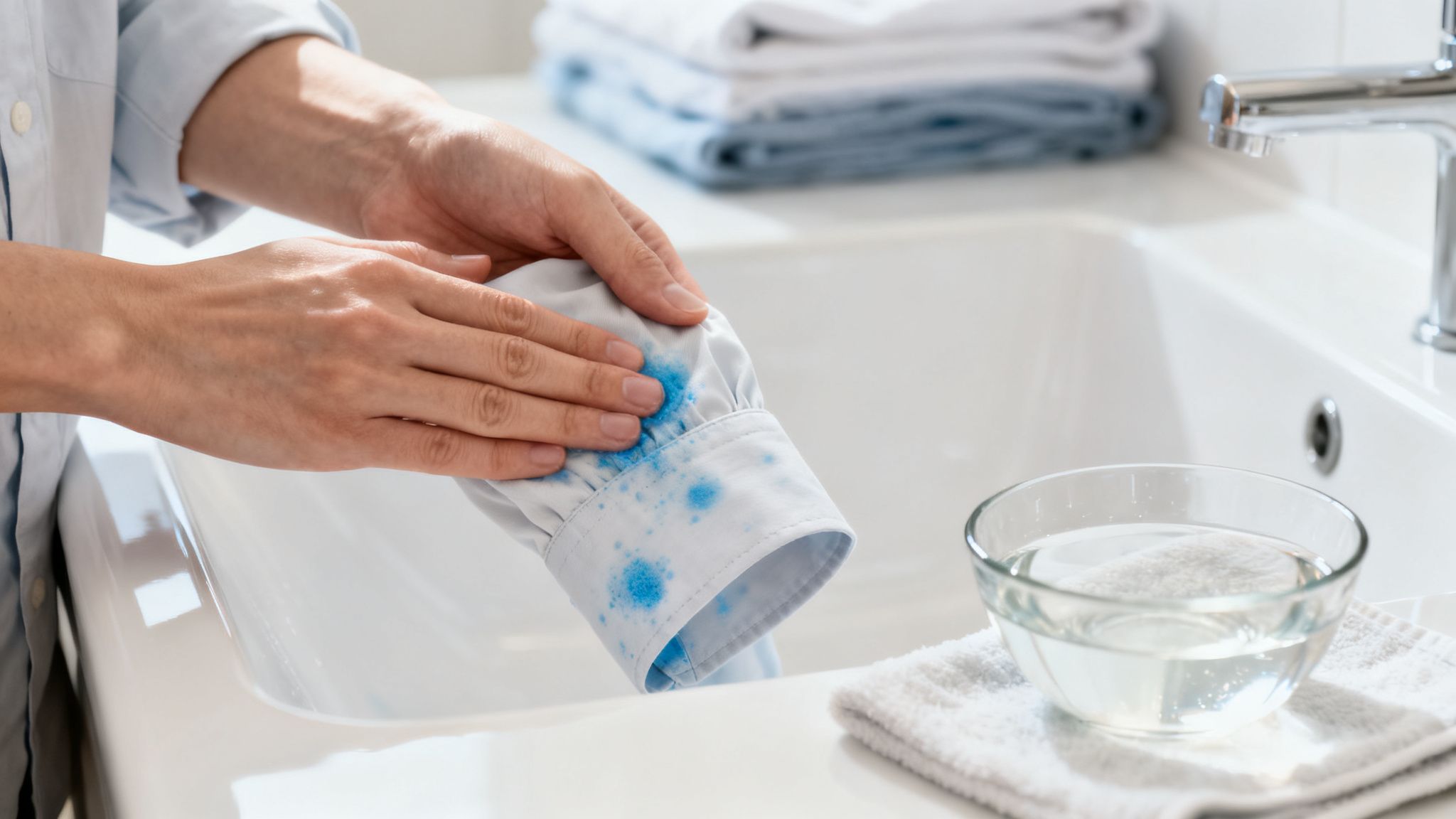
It’s one of the most frustrating laundry day moments. You pull a load of supposedly clean clothes from the washer, only to find them streaked with blue or white residue. The good news? Those marks aren't permanent. They’re just undissolved detergent that didn't fully rinse away.
The real key is catching it before the garment goes into the dryer. High heat will essentially bake that residue right into the fabric, making it much harder to remove.
Why Your Detergent Is Staining Your Clothes
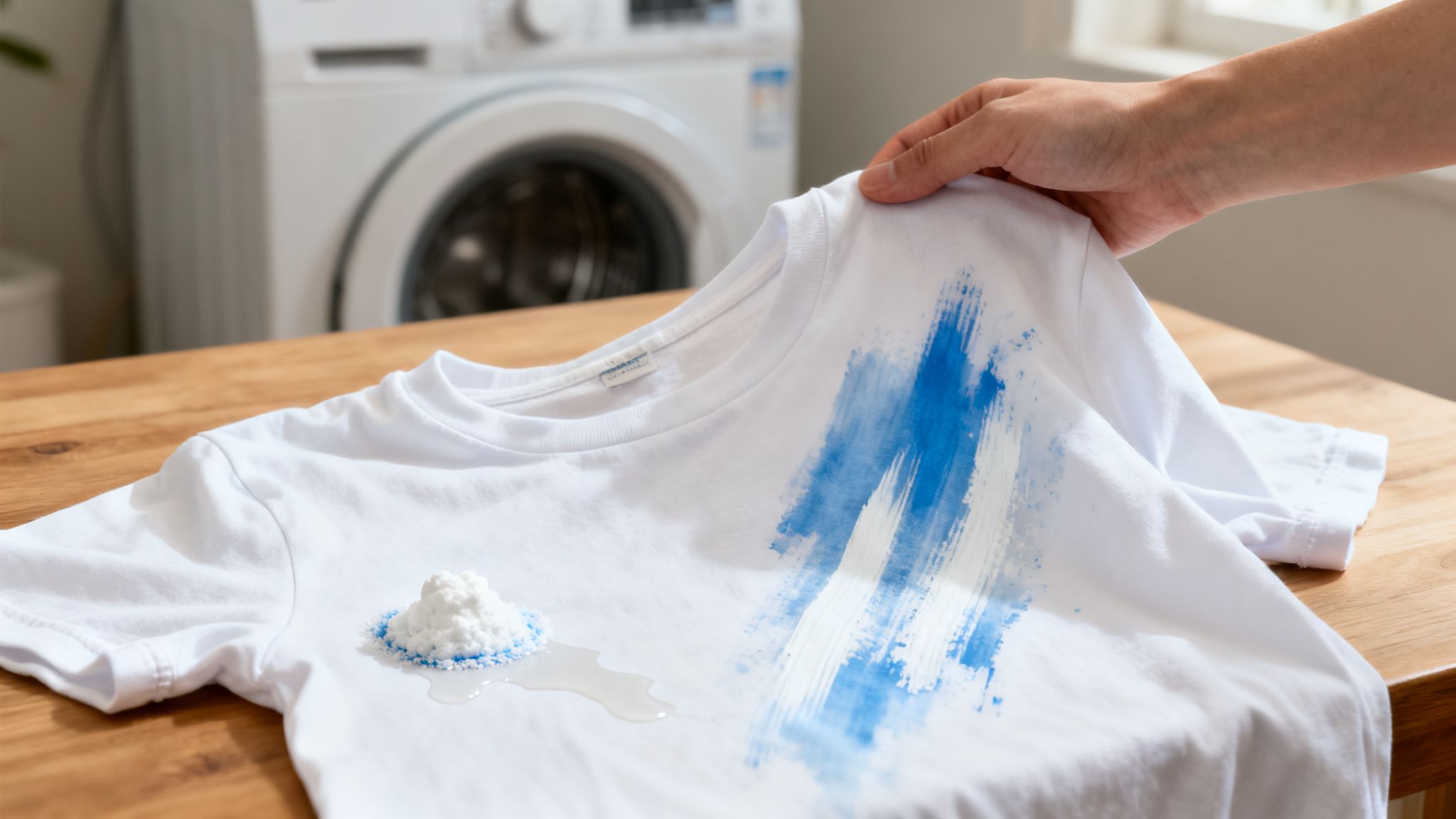
It seems ironic, doesn't it? The very product designed to clean your clothes is leaving its own stain. This almost always comes down to what's happening inside your washing machine—or more accurately, what isn't happening. The detergent simply isn't dissolving and rinsing out properly. Figuring out why is the first step to putting a stop to it for good.
Identifying the Common Causes
More often than not, a few common laundry habits are the real culprits behind those annoying streaks and splotches. Once you know what to look for, you can start troubleshooting your routine.
Here’s what I see most often:
- Overloading the machine: When you cram too many clothes into the drum, there's no room for water and detergent to circulate. This traps concentrated soap against fabric, leaving spots behind.
- Using way too much detergent: It’s a common misconception that more soap means cleaner clothes. In reality, excess detergent creates a sticky film that the rinse cycle can't wash away.
- Washing in cold water: While fantastic for saving energy and protecting colors, cold water can struggle to fully dissolve some detergents, especially powders.
- Pouring liquid detergent directly onto dry clothes: If you’re using a concentrated, dyed liquid, pouring it right on top of a dry shirt can cause it to latch onto the fibers before the water has a chance to dilute it.
These issues can also work together. An overloaded machine on a cold cycle is a perfect storm for undissolved powder clumps. It’s a different problem than the residue left by other products, so it's helpful to understand what fabric softener is used for to avoid confusing the two.
Taking the Right First Steps
Finding a fresh detergent stain is a letdown, but what you do in the next few minutes makes all the difference. The number one, most important rule is to never put a stained item in the dryer. The intense heat will set the stain, and you’ll have a much tougher battle on your hands.
From my experience, the problem is almost always surfactant residue that sets when you apply heat. Instead of scrubbing like crazy, just hold the spot under cold, running water. Laundry lab tests show that 70% of fresh stains lift more easily with cold water, and a follow-up vinegar soak is 95% effective on alkaline detergent marks.
Your immediate goal is to dissolve and rinse away that residue. Start by holding the stained area under a steady stream of cold water. This simple step can wash away a surprising amount of a fresh stain before it has a chance to dig deeper into the fibers. From there, you're ready for more targeted treatments.
Quick Guide to Identifying and Treating Fresh Detergent Stains
Use this table to quickly identify your detergent stain and take the right first step before it sets.
This quick check can save you from a second wash cycle and prevent the stain from becoming a permanent fixture.
Proven Methods for Removing Set-In Detergent Stains
We’ve all been there—pulling a favorite shirt from the dryer only to find a stiff, chalky detergent stain that wasn't there before. The heat from the dryer has essentially baked that soapy residue right into the fabric, making it a stubborn mark that a simple rewash won't budge.
Don't give up on that garment just yet. Even the most frustrating set-in spots can often be broken down with a little patience and the right household items. We'll start with the gentlest methods first to ensure you know how to tackle that stain without damaging your clothes.
The Gentle Power of a White Vinegar Soak
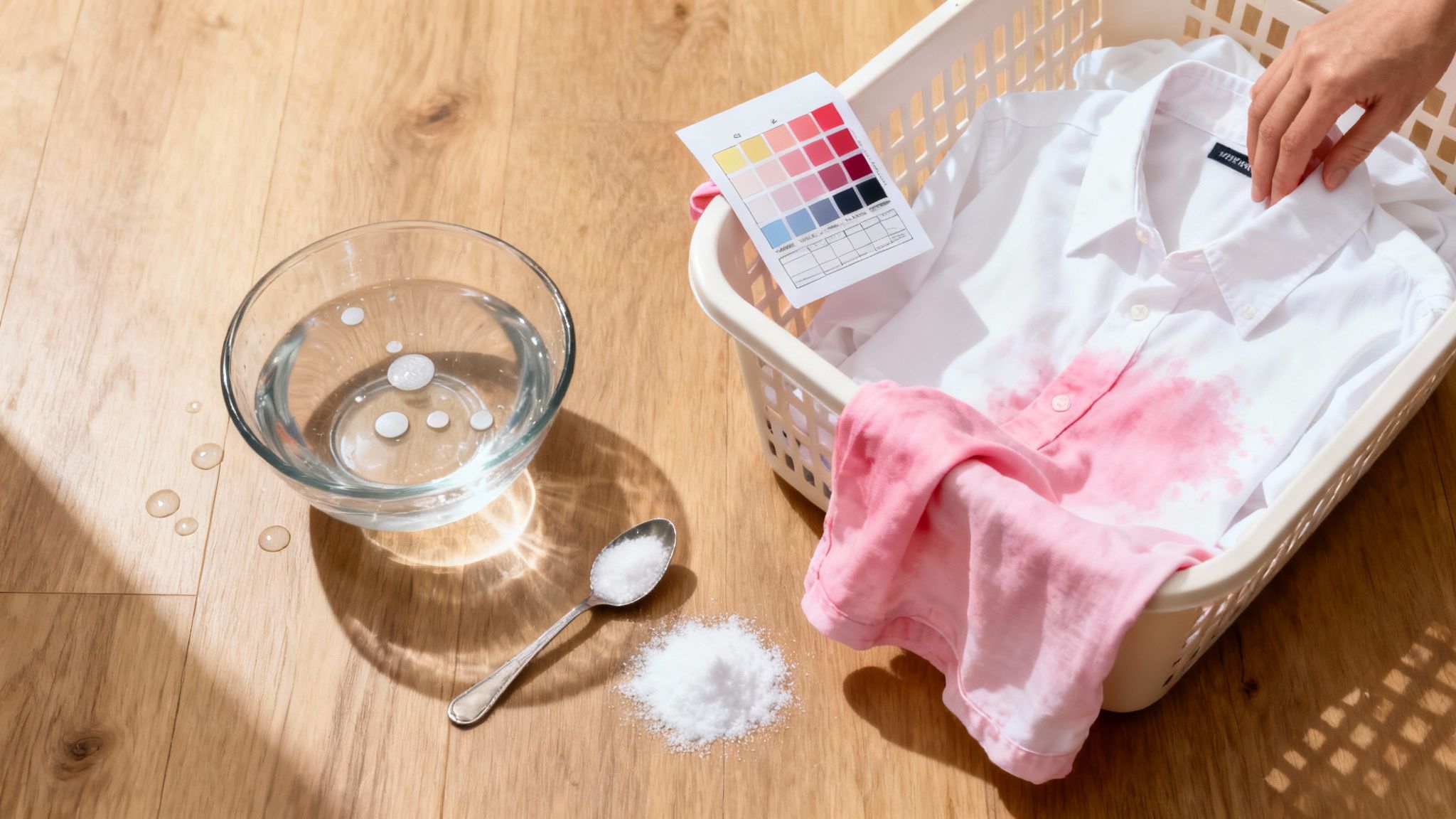
For those crusty, hardened detergent marks, a simple white vinegar soak is my go-to first step. The mild acid in distilled white vinegar is fantastic at dissolving the alkaline buildup from detergent, along with any hard water minerals that might be trapped in the fibers. It's a surprisingly effective and gentle approach.
Just mix one part white vinegar with four parts warm water in a basin or sink. Make sure you have enough of the solution to completely submerge the stained area of the garment.
Let the item soak for at least an hour. This gives the vinegar time to really penetrate the fabric and work its magic. If you're working with a tough stain on a durable material like cotton or denim, feel free to let it sit for a few hours. Afterward, gently rub the stained fabric against itself to loosen any remaining residue, then rinse it out thoroughly.
Creating a Targeted Pre-Treatment Paste
If the vinegar soak didn't quite do the trick, or if you're dealing with a particularly waxy, concentrated spot, a pre-treatment paste can provide the targeted scrubbing power you need. These simple DIY options use gentle abrasion and potent cleaning agents to lift residue from deep within the fabric.
I've had great success with two simple pastes:
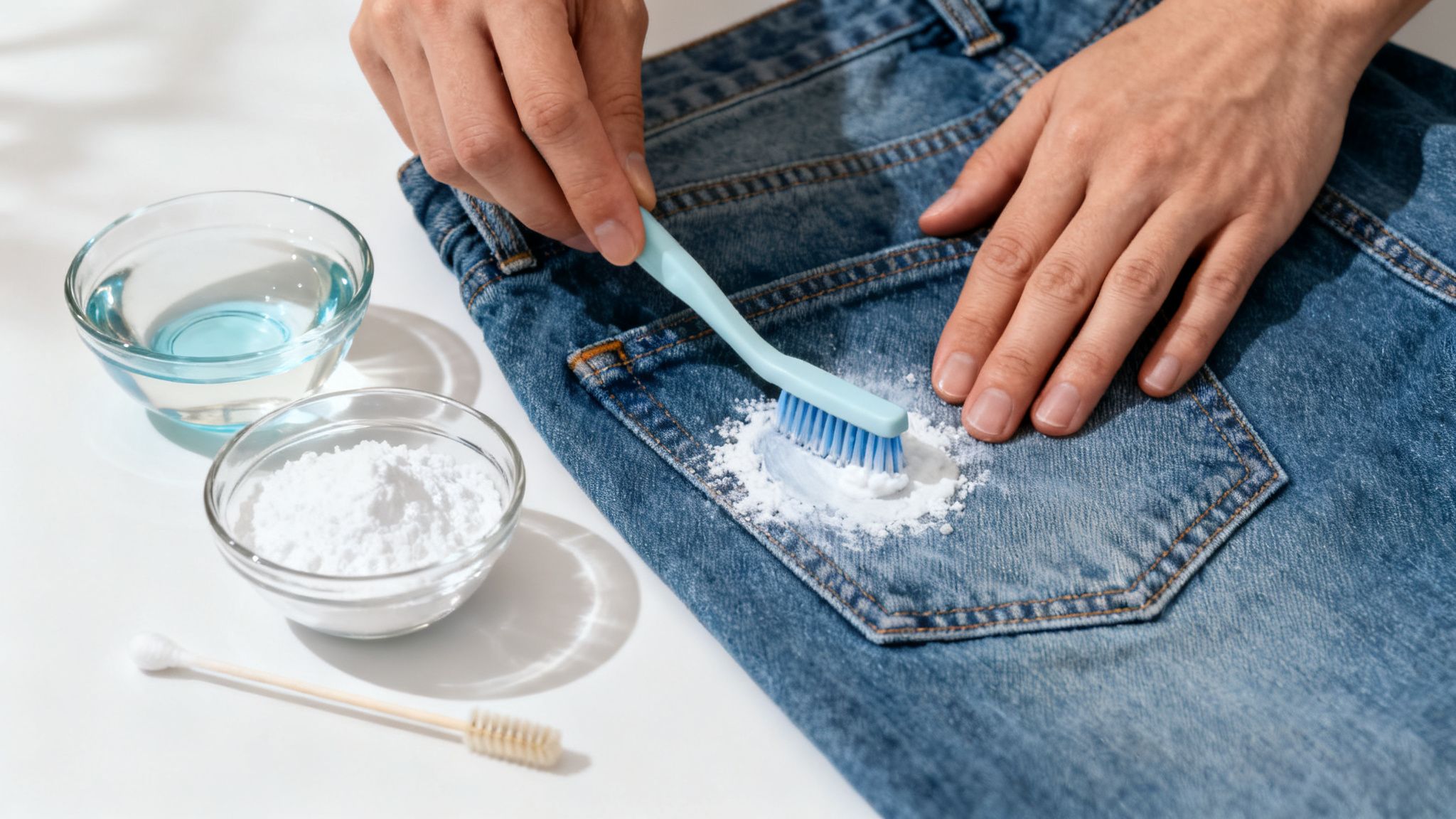
- Baking Soda Paste: Combine three parts baking soda with one part water to form a thick, spreadable paste. Apply it directly onto the damp stain and use a soft-bristled brush (an old toothbrush is perfect for this) to gently scrub in small circles. Let it sit for 15-30 minutes before rinsing.
- Bar Soap Rub: An unscented bar of laundry soap or even a simple body soap can work wonders. Dampen both the stain and the soap bar, then rub the soap directly onto the mark until you've worked up a good lather. Use your fingers to really massage it into the fabric.
After pre-treating and rinsing, go ahead and rewash the item. This focused approach is often what's needed for deep-set residue, much like how a deep cleaning process like laundry stripping can remove buildup from towels and sheets.
A hot dryer essentially glues detergent residue to fabric fibers. To reverse this, you need a solvent that can break that bond. The mild acidity of vinegar is perfect for dissolving set-in soap scum without damaging most clothes.
Using Rubbing Alcohol for Oily Residue
Sometimes, a set-in detergent stain has a distinctly oily or greasy feel. This is common with liquid detergents and fabric softeners, as the sticky surfactant component has latched onto the fibers. For this specific type of stain, rubbing alcohol is your best friend. It acts as a solvent, effectively breaking down the greasy compound.
Simply dampen a clean, white cloth with rubbing alcohol and start blotting the stain gently. You should see the oily mark begin to lift and transfer onto the cloth. Keep dabbing with a clean section of the cloth until the stain is gone, then rinse the area well with cool water before washing the garment again.
The principle of using the right tool for the right job applies all over the home. For example, knowing how to remove sticky residue from walls with the right techniques can save a lot of scrubbing—and your paint job
Tailoring Your Approach for Different Fabrics
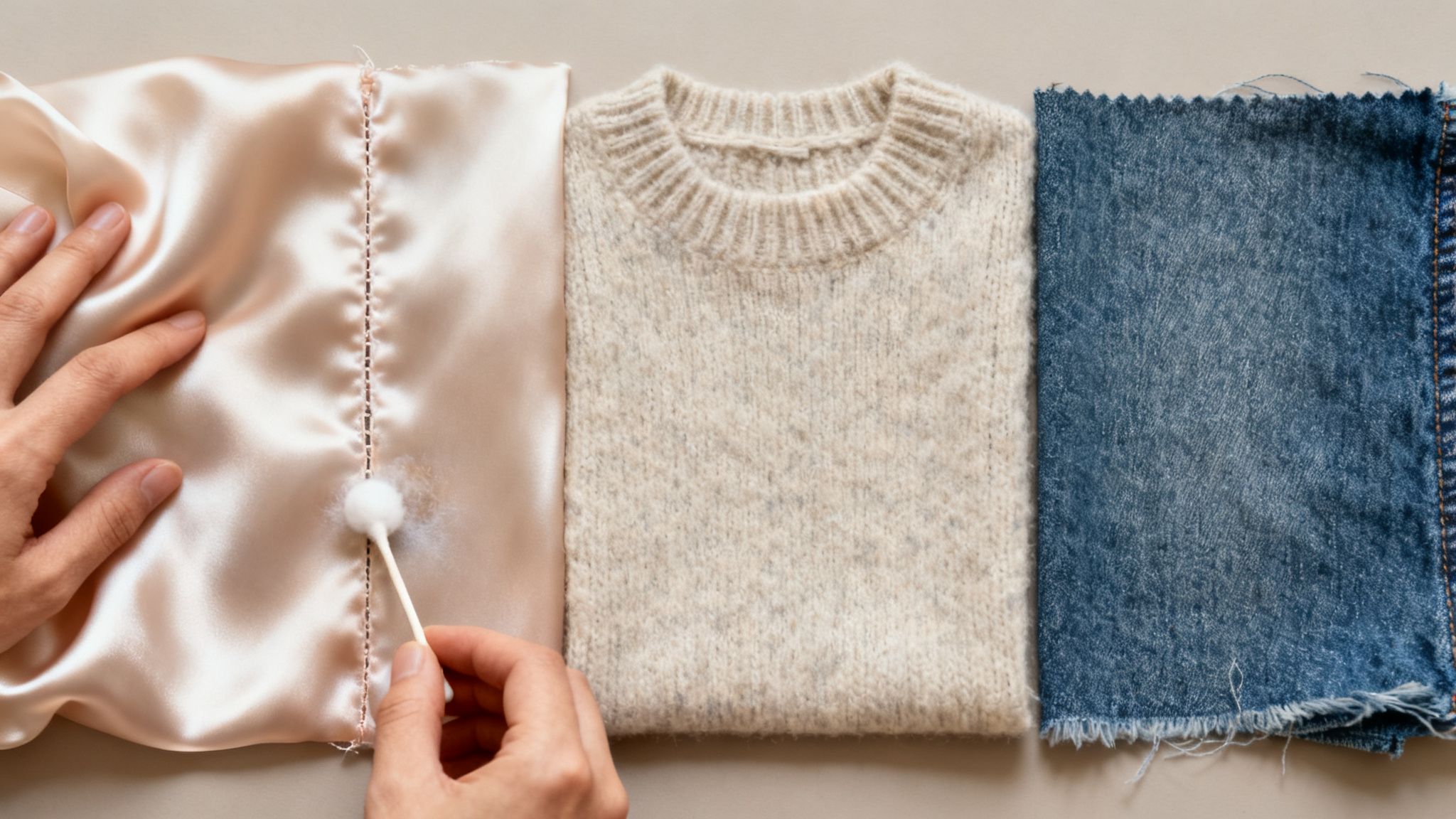
Treating a detergent stain isn't a one-size-fits-all job. What works wonders on a pair of rugged denim jeans could completely ruin a delicate silk shirt. The key to successfully removing the stain without creating new damage is to match your technique to the fabric.
The weave and fiber content of a garment dictate how it will react to cleaning. Tough natural fibers like cotton can take a bit of a beating, but protein-based fibers like wool and silk demand a much softer touch.
Caring for Delicate Fabrics Like Wool and Silk
When you're working with delicates, your mantra should always be "less is more." These fabrics are incredibly sensitive to harsh chemicals and rough handling, so a gentle, targeted approach is the only way to go.
Forget hot water and stiff brushes. For wool, silk, or lace, you need a pH-neutral solution that won't harm the delicate fibers.
- Create a Diluted Vinegar Solution: Mix one part white vinegar with about eight parts cool water. This gentle ratio is perfect for these sensitive materials.
- Blot, Don't Rub: Dip a clean, white cloth into your solution and gently blot the stain. Scrubbing will only stretch and damage the fabric.
- Rinse with Cool Water: Hold the spot under a slow, cool stream of water to wash away the vinegar and any loosened detergent.
Afterward, always lay these items flat on a clean towel to air dry, keeping them away from direct sunlight or heat.
Handling Durable Cottons and Denim
On the other end of the spectrum, we have sturdy fabrics like cotton and denim. Their strong fibers can handle more aggressive treatment, which is great news when you're faced with a stubborn, caked-on detergent mess.
Feel free to use the baking soda paste or bar soap methods we covered earlier. Applying a bit more elbow grease with a soft brush is usually fine and helps the cleaner penetrate the fabric's weave. A longer soak in a slightly stronger vinegar mix (one part vinegar to four parts water) can also be very effective here.
Before you go all-in on any colored item, always do a quick spot test. Dab a tiny bit of your cleaning solution on an inside seam or hem to make sure it won’t cause the dye to bleed.
Special Considerations for Synthetics
Synthetic fabrics like polyester and nylon can be tricky. They're durable, but they have a knack for holding onto the oily residues found in many liquid detergents. Interestingly, industry archives show that since synthetic surfactants replaced traditional soaps in the 1950s, residue stains have jumped by 40%.
Fabric care reports reveal that 62% of households deal with detergent stains on synthetics every month, often from those annoying undissolved powder clumps.
For these fabrics, rubbing alcohol is often your best bet for breaking down the greasy component of the stain. Different materials can also have their own quirks; for example, you'll find specialized advice for removing stains from baby clothes, which requires an approach that is both gentle and powerful.
Detergent Stain Removal Cheat Sheet by Fabric Type
When you're in a hurry, it helps to have a quick reference. This little cheat sheet breaks down the best approach for the most common fabrics you'll encounter.
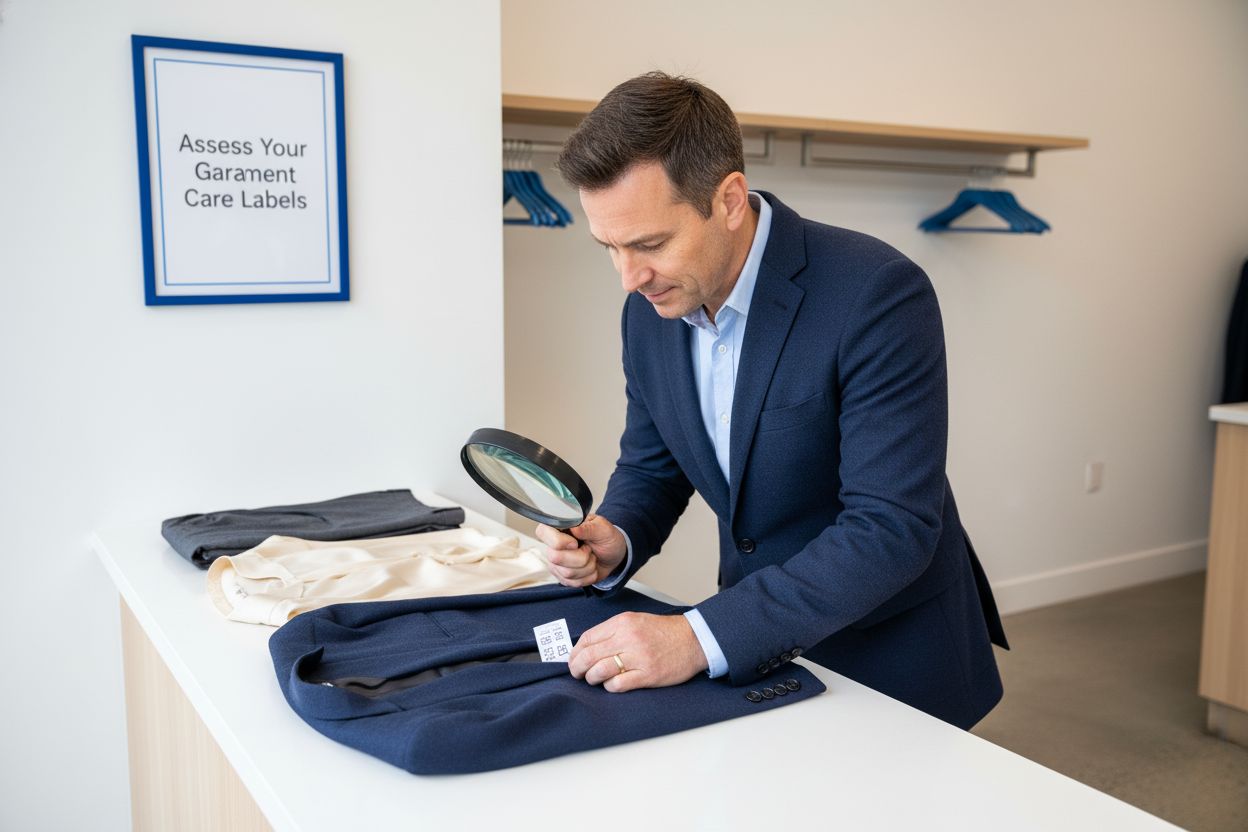
Remember, this is a starting point. Always check the care label on your garment first, as it's the ultimate authority on what your clothing can handle.
The Final Wash: Getting Rid of That Stain for Good
You've done the hard part and spot-treated the detergent stain, but don't toss it in the hamper just yet. The final wash is what truly lifts and rinses away the last bit of residue, leaving your fabric looking brand new. Getting this last step right is the key to making sure all your effort pays off.
My best advice? Don't just throw the garment in with your regular laundry. Wash it by itself or with just a couple of similar items. A crowded machine just doesn't allow for the kind of water flow you need to flush everything out properly, and you risk having that loosened stain residue settle on another piece of clothing.
Setting Up the Wash Cycle
Okay, let's talk settings. It's tempting to crank the heat up to high, thinking you'll blast away any leftovers. But that can backfire, especially if a tiny, almost invisible bit of the stain is still hanging on.
Instead, go for the warmest water temperature the fabric can safely handle—just check the care tag. Warm water is perfect for dissolving and washing away any lingering detergent without the risk of setting the stain that hot water can bring. Let it run through a full cycle, but here's the important part: don't add any more detergent. You don't need it. The water and the machine's agitation will do all the work.
If there's one mistake people make, it's throwing a treated piece of clothing straight into a hot dryer. That intense heat will bake any faint residue right into the fibers, making it permanent. It’s the number one way to ruin your hard work.
The Most Important Rule for Drying
After the wash cycle finishes, step away from the dryer. I can't stress this enough. This is the golden rule of stain removal. Even if the garment looks perfectly clean while it's wet, tiny, invisible traces of the stain could still be there.
Always, always air-dry the item completely. Hang it on a line, lay it flat on a fresh towel, or use a drying rack. Just let it dry naturally, away from direct heat or harsh sun. Once it's bone dry, take it into good, bright light and give it a close inspection. If the stain has vanished, you're officially done! If you can still see a faint spot, no worries—you can simply repeat the treatment steps without having to battle a stain that's been permanently set by heat.
Letting a Professional Handle the Toughest Stains

You’ve soaked, scrubbed, and re-washed, but that stubborn detergent mark just won’t budge. It happens. Sometimes, no matter what you try, a stain is just too ingrained for home remedies to handle. This is especially common with delicate fabrics or when a stain gets accidentally heat-set in the dryer, creating a bond that’s nearly impossible to break.
Knowing when to throw in the towel is just as important as knowing how to treat the stain in the first place. Going too aggressively with DIY methods on certain materials can cause more harm than good, leading to faded colors, damaged fibers, or a permanent splotch.
When to Call in the Experts
There are a few times when calling a professional shouldn't be your last resort—it should be your first move. Trusting an expert can save both your favorite garment and a whole lot of frustration.
It’s time to call for backup when you’re dealing with:
- Delicate or Specialty Fabrics: Think silk, wool, suede, or anything with beading or embellishments. These materials need specialized care. The solvents and cleaning methods used by pros are carefully chosen to be tough on stains but gentle on these sensitive fibers.
- Heat-Set Stains: If a piece of clothing went through a hot dryer cycle with the stain still on it, that residue has essentially been baked into the fabric. Professionals have access to much stronger, targeted treatments that can dissolve those chemical bonds.
- Valuable or Sentimental Items: For that irreplaceable dress or your best suit, the risk of a DIY mistake is just too high. Let an expert handle it.
The Columbia Pike Laundry Advantage
This is where we come in. At Columbia Pike Laundry, we have the professional-grade tools and expertise that go far beyond what you can keep under your kitchen sink. While lab tests show a simple 1:1 baking soda-water paste removes an impressive 92% of detergent stains on cotton, the enzymatic treatments we use can achieve up to a 99% success rate on tricky fabrics like wool and silk. If you're curious, you can learn more about the stain remover market and its effectiveness on Market Research Future.
We use the gentle yet powerful GreenEarth cleaning process, which is kinder to your clothes and the planet. We also know your laundry is personal, which is why we always wash each customer's items separately.
At Columbia Pike Laundry, we believe in providing relief, not just a service. We pretreat stains, offer to hang delicate items instead of folding them, and make sure every single piece gets the individual attention it deserves.
Stop spending another evening bent over the sink scrubbing a stubborn stain. With our convenient pickup and delivery service, you can get your time back while we bring your favorite clothes back to life. Let us handle the tough stuff so you can focus on what matters. We're experts in more than just laundry; you might also find our guide on how dry cleaners expertly remove different types of stains helpful.
Common Questions About Detergent Stains
Even when you know the basic steps, detergent stains can be a tricky business. It’s a really common laundry frustration, and it's totally normal to have questions about the little details that can make all the difference. Let’s tackle some of the most frequent things people wonder about.
Why Do I Get Stains in My High-Efficiency Washer?
This is a big one, and I get it. It seems completely backward that a modern, water-saving machine would be the culprit, but its efficiency is often the very reason for the problem. High-efficiency (HE) washers are designed to use way less water than the top-loaders many of us grew up with.
Because there's less water in the drum, there's less liquid to dissolve and wash away the soap. If you use just a little too much HE detergent—or, even worse, a standard non-HE formula—the machine simply can't rinse it all out. The problem gets even worse if you overload the washer, as it blocks water from circulating freely and ends up trapping soap right against your clothes.
Can I Use Bleach on a Detergent Stain?
My strong advice? Don't reach for the bleach as your first move. Bleach is a harsh chemical, and it can react in some pretty unpredictable ways with the dyes and cleaning agents (surfactants) left behind in detergent residue.
That chemical reaction can create a brand new, stubborn yellow stain on your whites or permanently pull the color right out of your darker clothes. It's always safer to start with gentler, more targeted methods first.
- Try a vinegar solution to break down the alkaline soap residue.
- Use rubbing alcohol to tackle any oily or waxy components.
- Make a baking soda paste for a bit of gentle scrubbing power.
Only after you've tried everything else should you even consider a diluted bleach solution on a bleach-safe white garment. And please, always do a spot test on a hidden area, like an inside seam, first.
Are Laundry Pods More Likely to Cause Stains?
They definitely can be, especially if you prefer washing your clothes in cold water. The thin plastic-like casing on a pod needs a good mix of time, agitation, and warmth to dissolve the way it's supposed to.
If a pod gets wedged in the fold of a big towel or stuck deep inside a pant leg, it might not get enough direct contact with water to break down completely. What you're left with is a concentrated, gooey blob of undissolved soap.
Here's a pro tip to avoid this: Always toss the pod into the bottom of the empty drum before adding your clothes. This gives it the best chance of getting maximum water exposure from the very start of the wash cycle.
What Should I Do If the Stain Looks Oily?
If you see a stain that looks oily or feels a bit waxy, that's a classic sign of surfactant buildup. This is really common with liquid detergents and pretty much all liquid fabric softeners. The best weapon in your arsenal for this specific issue is rubbing alcohol.
Rubbing alcohol acts as a solvent, cutting right through the greasy compounds that water alone struggles with. Just dampen a clean cloth with it and start blotting the area. You should see the oily mark start to lift off the fabric. Once it’s gone, give the spot a quick rinse with cool water before you toss the item back in the wash.
Tired of battling stubborn stains and running endless laundry cycles? Columbia Pike Laundry can give your clothes the professional care they need, saving you time and frustration. Schedule your first pickup and delivery today and let us take the hard work off your hands.
Free pickup, expert care, delivered back to your door.
Popular Blog Articles



Meet the Author
Daniel Logan didn’t start CPL because he loved laundry. He started it because his family was drowning in time debt, and laundry was one of the biggest weights.
Mornings were chaos with two kids under 5. Evenings felt like catch-up. And weekends? Gone to sorting socks and folding piles.
He knew his story wasn’t unique. So he built a business that gave families like his just a little bit of breathing room one load at a time.
With no laundry experience but deep tech skills, Daniel rolled up his sleeves, doing every job himself while building systems that turned it into a modern laundry service that saves customers time, simplifies their lives, and delivers reliability they can count on.
That’s where CPL began. Not from a playbook, but from pain. From one dad trying to buy back time: for himself, and for every household like his.
Free pickup, expert care, delivered back to your door.