
How to Get Oil Smell Out of Clothes for Good
Columbia Pike Laundry offers pickup & delivery across Northern Virginia.
You pull a shirt out of the washer, give it a hopeful sniff, and there it is again. Fried food. Motor oil. Salad dressing. That stale, greasy odor that survived detergent, survived the wash, and now feels welded into the fabric.
That’s the part people hate most. Not the stain you can see, but the smell that lingers after everything should have been handled already.
Oil smells are stubborn because oil doesn’t behave like ordinary dirt. It clings to fibers, hangs onto odor, and often gets worse when people panic and do the wrong thing first. Rub too hard, use heat too early, or toss a fuel-soaked shirt straight into the machine, and you can turn a manageable problem into a bigger one.
The good news is that most everyday oil smells can be improved with a calm, specific approach. The better news is that you don’t have to keep experimenting forever. Some items need home treatment. Some need professional handling. Knowing the difference is what saves your clothes, your time, and your peace of mind.
That Lingering Smell A Familiar Laundry Problem
Last night’s dinner splattered on your sleeve. This morning, your kid’s hoodie still smells like takeout fryer oil. Or maybe you spent part of the weekend in the garage and now your work shirt smells like machine grease no matter how much soap you used.
That’s a normal laundry problem. It’s also one of the most annoying ones.
Oil odor sticks because the residue settles into the fabric instead of rinsing away cleanly. A basic wash can remove surface dirt and still leave behind the greasy compounds causing the smell. That’s why clothes can come out looking clean but still smell off the second they warm up against your body.
Why people get stuck
It's common to make one of three mistakes:
- They wash too late. Fresh oil is easier to lift than set-in oil.
- They use the dryer too soon. Heat can lock in what the wash didn’t remove.
- They treat every oil the same. Cooking oil, body oil, and gasoline don’t belong in the same cleanup plan.
If the odor came from food or skin oils, you can usually improve it at home with patient pre-treatment and a careful wash. If it came from gasoline, gear oil, or a delicate fabric, stop trying random tricks. That’s where people waste hours and often make the garment harder to save.
Some laundry problems need effort. Others need judgment. Oil smells usually need both.
Relief starts when you stop guessing. You need a first response for fresh spills, a safer wash strategy based on the kind of oil, and a clear line for when to hand the item off instead of gambling with it again.
First Response Pre-Treating Oil Stains and Smells
If you want to know how to get oil smell out of clothes, the first few minutes matter more than people think. Your job is simple: remove as much oil as possible before it settles deeper into the fibers.
Start with this rule
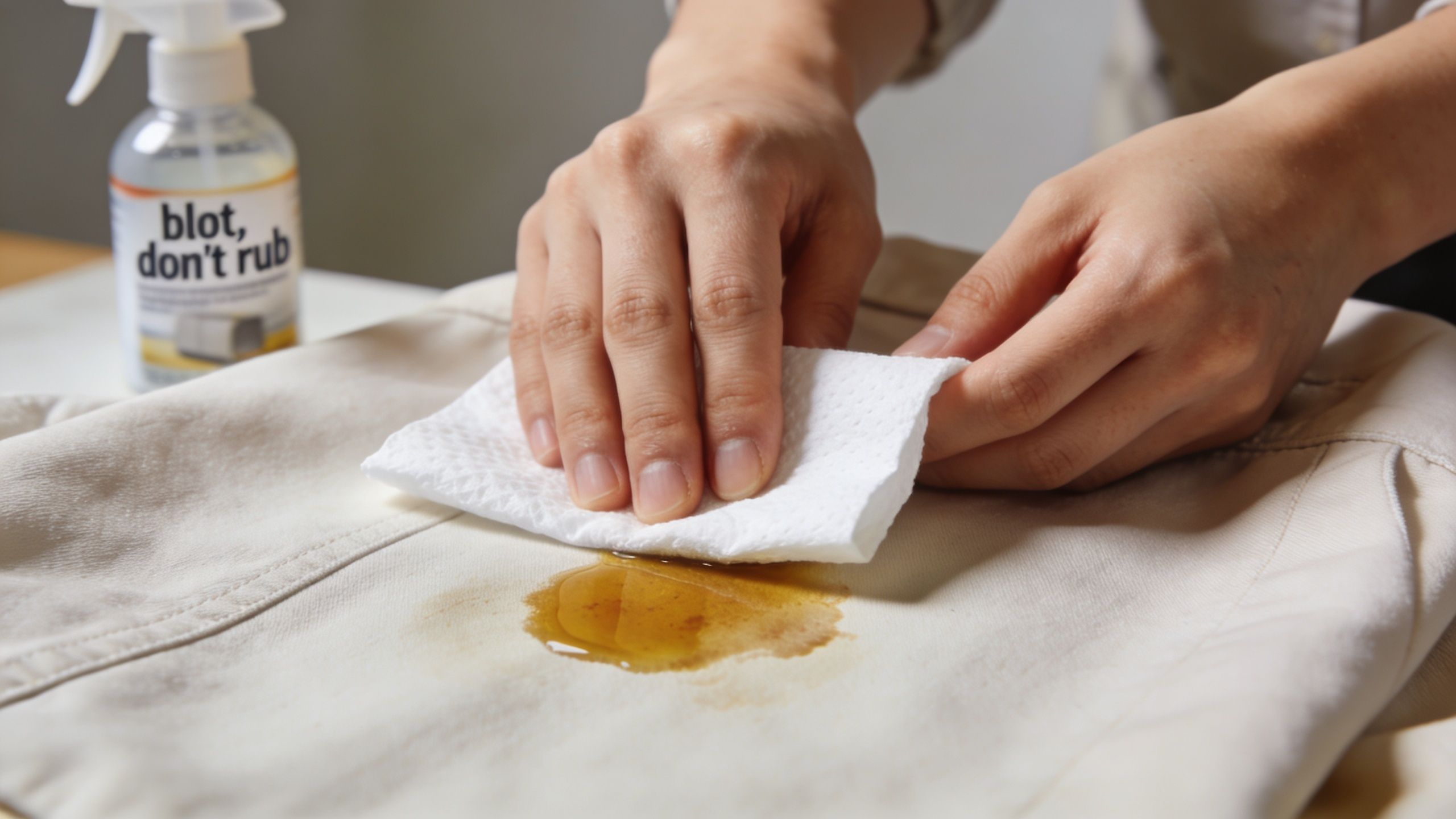
Practical rule: Blot. Don’t rub.
Rubbing spreads the oil and presses it further into the fabric. Use a paper towel or clean cloth and press gently to lift the excess. Keep moving to a clean part of the towel so you’re not pushing oil back onto the garment.
Once you’ve blotted, move to an absorbent powder.
Why baking soda works
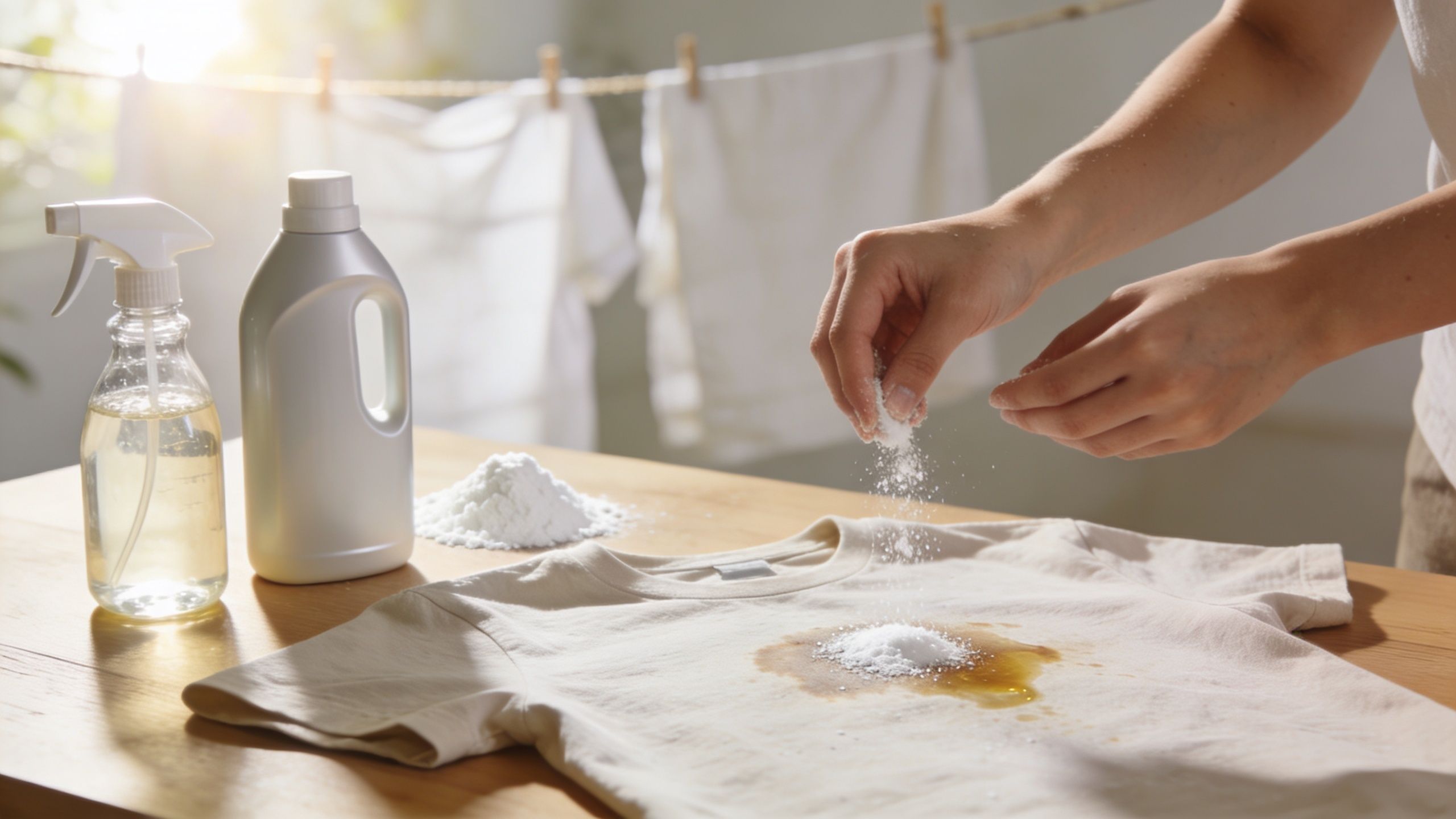
Baking soda is one of the few home treatments I recommend without much hesitation for everyday oil messes. According to a documented test from Apartment Therapy’s oil stain guide, a generous layer of baking soda left on a stain for 24 hours, followed by a vinegar-water spray and a normal wash, led to complete stain and odor removal. The same test described baking soda as a time-tested absorber that pulls oil out of the fabric and into the powder.
Use it like this:
- Blot first. Remove as much wet oil as you can.
- Cover the area heavily. Don’t dust it lightly. Coat the stain.
- Let it sit. Give it time to pull residue up.
- Brush it off gently. Don’t grind it into the fabric.
- Add a grease-cutting soap if needed. A small amount of dish soap on washable fabrics can help break up what remains.
That basic sequence works because powder absorbs and soap loosens. One pulls. One breaks down.
A simple pre-treatment routine that makes sense
For fresh cooking oil or greasy food smell, use this order:
- Paper towel first: Lift surface oil before it spreads.
- Baking soda second: Let the powder absorb residue and odor.
- Dish soap third: Work a small amount into the affected spot with your fingers.
- Wash last: Use the warmest water safe for the fabric.
- Air dry before deciding: Don’t use dryer heat until the smell is gone.
If you also deal with upholstered messes at home, this guide on how to remove sofa stains is useful because the same early rule applies there too. Absorb first, then clean.
What not to do
A few bad habits keep oil smells alive:
- Don’t toss it straight in the hamper. Oil transfers.
- Don’t spray heavy fragrance over it. You’ll get perfume plus grease.
- Don’t dry it just to “see if it worked.” Air drying tells you the truth without setting the problem.
This part isn’t glamorous, but it works. Fast blotting, absorbent powder, a targeted soap treatment, then a wash. That’s the strongest DIY start you can give an oily garment.
Custom Washing Strategies for Different Oil Types
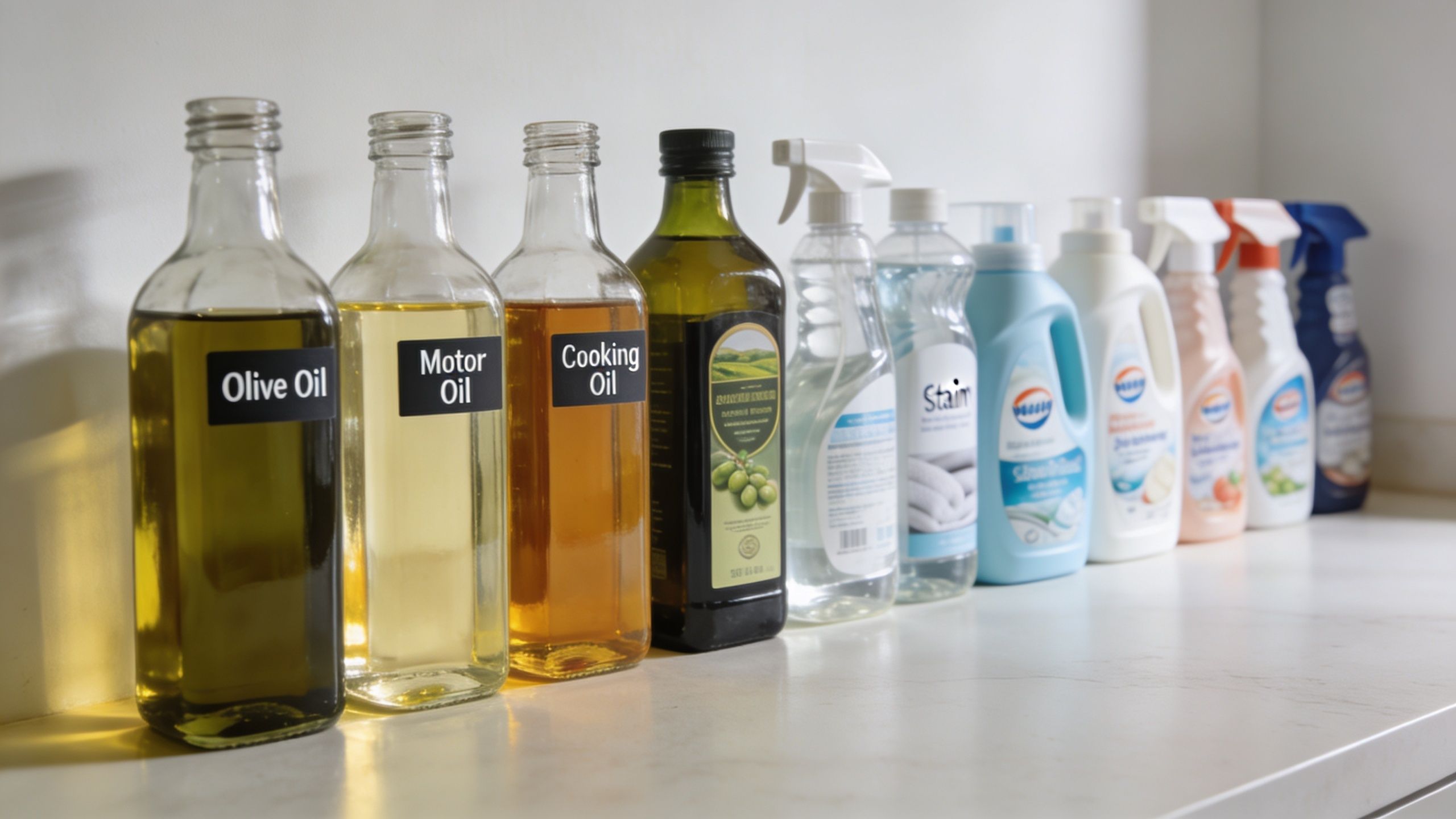
Once the pre-treatment is done, the wash plan depends on what kind of oil caused the smell. Many laundry attempts falter at this step. They use one routine for a kitchen splash, a spa oil spill, and a fuel-soaked work shirt. That’s careless laundry.
Cooking oils and food grease
These are the most forgiving. Think olive oil, vegetable oil, butter-heavy splatter, dressing, or fryer smell.
Washable items in this category usually respond well to:
- A proper pre-treatment
- The warmest water safe for the care label
- A strong detergent
- A second wash if the odor is still obvious
Food oils can smell stronger after they sit for a while, especially on cotton, towels, and kids’ clothes. If the item still smells greasy after one wash, don’t dry it. Re-treat the area and wash again.
Body oils and lotion-heavy fabrics
Pillowcases, collars, sheets, workout clothes, and robe cuffs often hold onto skin oils. These aren’t dramatic stains, but they create that sour, oily smell people notice when laundry sits in a warm room.
Body oil buildup needs consistency more than intensity. Wash regularly, don’t overload the machine, and make sure detergent can circulate. A packed drum leaves oily fabric only half cleaned.
Essential oils and heavily scented oils
These can linger in a different way. The garment may not feel greasy, but the smell hangs on. In those cases, repeated washing with too much product often backfires. Keep the load simple, skip fabric softener, and let air and sunlight help after washing.
Mechanical oils and fuel smells
This is the category where I want you to slow down.
Gasoline, motor oil, and gear oil are not ordinary laundry. According to guidance summarized in this gear oil odor removal article, the U.S. Consumer Product Safety Commission says gasoline-soaked clothes can ignite in washers or dryers and must be air-dried outdoors for 24 hours first. That 24-hour step is not optional.
If the garment smells like fuel, your first concern is safety, not freshness.
Here’s the side-by-side difference that matters most:
| Oil type | Home approach |
|---|---|
| Cooking oil | Pre-treat, wash, air dry, repeat if needed |
| Body oil | Wash thoroughly, avoid overloading, repeat as needed |
| Essential oil | Keep product use simple, wash, then air out |
| Gasoline or gear oil | Air-dry outdoors for 24 hours first, then decide whether home washing is even wise |
For mechanical oils, DIY often turns into repeat attempts with poor results. That same source notes many people still struggle with those odors even after multiple home treatments. That tracks with real life. Fuel and shop odors can sink deep into workwear and keep coming back.
A practical cutoff point
Use home washing for ordinary household oil smells on durable fabrics.
Stop and rethink if any of these are true:
- The smell is flammable
- The fabric is delicate
- You’ve already washed it more than once
- The odor fills the room, not just the garment
- It’s workwear you can’t afford to ruin
That’s where a service such as Columbia Pike Laundry becomes the sensible option, especially if you need both wash-and-fold for standard items and separate handling for garments that need different care. Relief comes from not turning one bad shirt into a whole weekend project.
Advanced Home Remedies for Stubborn Odors
Sometimes the first wash gets the stain out and leaves the smell behind. That doesn’t mean the item is ruined. It means some oily residue is still in the fibers and needs a more deliberate second round.
Try a vinegar soak carefully
White vinegar is useful for washable fabrics because it helps cut lingering odor and loosen residue that detergent missed. A soak can work well on food-based oil smells, gym fabrics with body oil buildup, and towels that still smell greasy after washing.
A simple routine looks like this:
- Use a basin or sink: Give the item room to move.
- Soak before rewashing: Let the fabric sit long enough to loosen what’s left.
- Rinse and launder again: Don’t stop at the soak.
- Skip this for fragile fabrics: If the item feels risky, don’t experiment.
Let sunlight do part of the work
People underestimate fresh air and direct sun. Hanging a washable item outside after rewashing can help break down lingering odor and leave the fabric smelling cleaner without adding more product.
That matters because too much detergent, odor booster, or softener often creates a second problem. The fabric ends up coated, not clean.
Stubborn odor usually means residue is still there. Adding more fragrance won’t fix residue.
Enzyme cleaners can help with food-based smells
For organic, food-related grease odors, an enzyme-based product may be worth trying on washable fabrics. These products are designed for messy, biological residues and can be a smarter next step than endlessly rerunning the same wash cycle.
If your broader odor problem goes beyond clothing and into the home itself, this comprehensive guide for homeowners is useful because it explains the same principle clearly: odor removal works best when you target the source, not just the smell floating around it.
Keep the process simple
If you’re using home remedies, stay disciplined:
- Re-treat the problem area.
- Rewash with purpose.
- Air dry and inspect.
- Repeat only if you see progress.
For a closer look at one of the most reliable first-line methods, Columbia Pike Laundry has a practical post on using baking soda to freshen clothes.
If two careful rounds still leave a strong oil odor, stop throwing time at it. That’s the point where DIY changes from useful to draining.
Handling Delicates and Dry-Clean-Only Fabrics
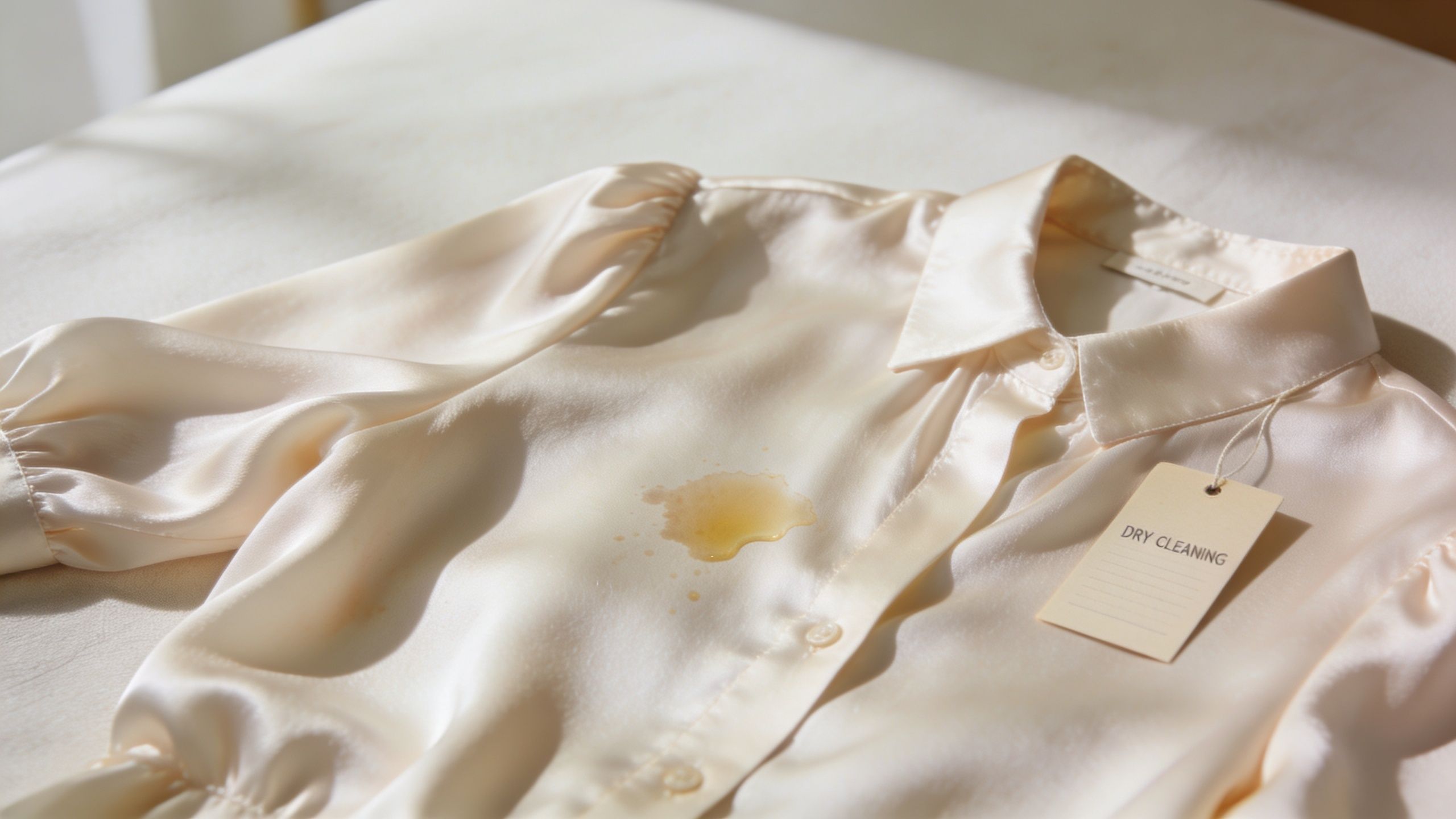
A washable T-shirt gives you room to experiment. A silk blouse, wool blazer, suede item, or lined work uniform doesn’t.
That’s the dividing line people ignore when they search how to get oil smell out of clothes and apply the same home trick to everything they own.
Why delicates go wrong so fast
Water-based DIY treatment can leave marks, shrink fibers, distort shape, or damage finish. Leather and suede can stiffen or spot. Silk can lose its smooth texture. Structured workwear can come out twisted, dulled, or permanently misshapen.
And then there’s the smell. According to this Persil guide on grease odor, forum data suggests up to 80% of people struggle with “unremovable” smells on work gear when using home methods. That’s a useful reality check. Persistence doesn’t always mean progress.
The safer choice for specialty fabrics
Professional dry cleaning exists for this exact problem. Oils dissolve differently in dry cleaning than they do in a standard water wash, and that matters when the fabric itself can’t tolerate rough handling.
A few items I’d stop treating at home:
- Silk blouses and dresses
- Wool suits and structured pieces
- Suede and leather garments
- Uniforms with stubborn shop or kitchen odor
- Anything labeled dry-clean-only
If the garment is valuable, sentimental, expensive, or required for work, don’t use it as your test case.
Silk deserves special caution
Silk is one of the easiest fabrics to damage with overconfident home stain treatment. If that’s what you’re dealing with, this article on removing oil stains from silk is a useful place to start before you do anything aggressive.
Delicate fabric care isn’t about trying harder. It’s about knowing what the fabric can survive.
What professional handling changes
Modern eco-solvent cleaning is designed to remove oily residue while protecting the fabric’s structure. That’s the main advantage. Not magic. Just the right method for the material in front of you.
If the choice is between preserving the garment and saving a few minutes with a home hack, preserving the garment wins every time.
When to Let a Professional Handle the Laundry
There’s a point where more effort at home stops being smart. You’ve pre-treated. You’ve rewashed. The smell is still there, or the item isn’t safe for trial and error, or the whole problem has turned your weekend into a laundry recovery project.
That’s when professional service earns its keep.

Signs you should stop doing this yourself
- The odor survived multiple careful washes
- The oil was gasoline, gear oil, or another flammable substance
- The garment is delicate, structured, or dry-clean-only
- You have a pile of affected laundry, not just one item
- You need the clothes back in rotation without more guesswork
For standard laundry, a wash-and-fold service removes the time burden. For specialty garments, dry cleaning is the proper lane. Columbia Pike Laundry handles both, uses Free & Clear detergent by default, keeps each customer’s laundry separate, and offers 48-hour laundry turnaround along with 3-day dry cleaning turnaround. That’s not about luxury. It’s about getting the problem handled without burning half your weekend on rewashes.
What you’re really buying
You’re buying back attention.
You’re not standing over a sink with baking soda on a Tuesday night. You’re not wondering whether one more dryer cycle will ruin the item. You’re not trying to decide if that faint fuel smell is “probably fine.”
Laundry doesn’t need to keep taking up mental space. If the job is messy, risky, stubborn, or just one task too many, hand it off.
Your Top Questions About Odor Removal Answered
A few oil-smell problems don’t fit neatly into a simple how-to. These are the ones people usually ask after they’ve already tried washing once.
Common Questions About Stubborn Oil Smells
| Question | Answer |
|---|---|
| Can I put an oily garment in the dryer to see if the smell disappears? | No. Air dry first. Heat can lock in lingering residue and make the smell harder to remove. |
| What if the stain is gone but the smell remains? | Treat it like residue is still present. Rewash with a targeted method, then air dry again before judging the result. |
| Are towels harder to fix than T-shirts? | Often, yes. Thick, absorbent fabrics can hold onto oily odor longer, so they may need repeated treatment. |
| Should I keep rewashing work uniforms that smell like oil? | Not blindly. If the fabric is tough but the odor keeps returning, home washing may not be enough. If the uniform is delicate or specialty gear, stop experimenting. |
| Can other odor problems use the same logic? | Yes. Oil, smoke, and other persistent smells all respond better when you remove the source instead of masking it. If that’s your issue at home, these steps to remove smoke smell are a helpful comparison. |
Two quick answers that save time
If the garment already went through the dryer and still smells oily, don’t assume it’s done for. It may still improve, but you’ll need a more patient re-treatment because heat can make residue cling harder.
If the item is bulky, expensive, or part of your weekly routine, don’t let one stubborn odor create a backup in your whole laundry system. One unresolved load has a way of spreading chaos into everything else.
If you’re tired of rewashing the same clothes and hoping for a different result, Columbia Pike Laundry can take the load off. Schedule wash and fold or dry cleaning, set your preferences, and get your time back. Laundry isn’t your job anymore.
Free pickup, expert care, delivered back to your door.
Popular Blog Articles



Meet the Author
Daniel Logan didn’t start CPL because he loved laundry. He started it because his family was drowning in time debt, and laundry was one of the biggest weights.
Mornings were chaos with two kids under 5. Evenings felt like catch-up. And weekends? Gone to sorting socks and folding piles.
He knew his story wasn’t unique. So he built a business that gave families like his just a little bit of breathing room one load at a time.
With no laundry experience but deep tech skills, Daniel rolled up his sleeves, doing every job himself while building systems that turned it into a modern laundry service that saves customers time, simplifies their lives, and delivers reliability they can count on.
That’s where CPL began. Not from a playbook, but from pain. From one dad trying to buy back time: for himself, and for every household like his.
Free pickup, expert care, delivered back to your door.