
How to Keep White Clothes White Without Bleach
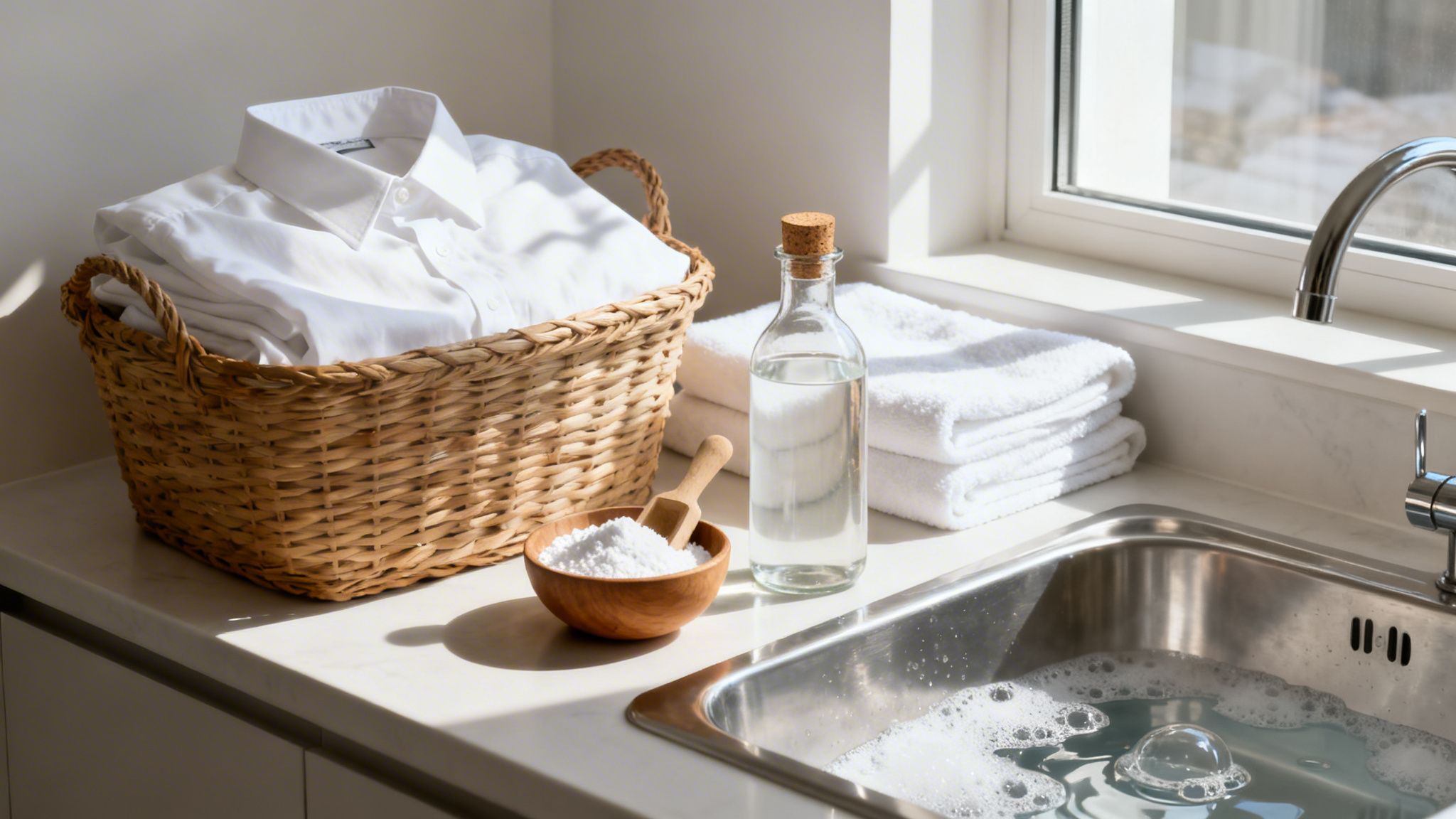
Columbia Pike Laundry offers pickup & delivery across Northern Virginia.
It’s a classic laundry dilemma: how do you keep your favorite white t-shirt from turning a sad, dingy gray? For years, the go-to answer was chlorine bleach. But as many of us have learned the hard way, bleach can be a double-edged sword.
While it’s a powerful whitener, it’s also incredibly harsh. It can weaken delicate fabrics, irritate your skin, and leave that unmistakable, overpowering chemical smell. Honestly, it often does more harm than good in the long run.
The good news? You can achieve brilliant, long-lasting whiteness without ever touching the stuff. It’s not about finding a single magic replacement for bleach, but rather adopting a smarter, gentler laundry routine that protects your clothes.
So, What’s the Real Problem with Bleach?
Chlorine bleach works by aggressively breaking down the chemical bonds in stains through oxidation. The trouble is, it doesn't know when to stop. It also attacks the cellulose fibers in natural fabrics like cotton, causing them to become brittle and wear out much faster.
Think about it this way: studies have shown that repeated bleach use can slash cotton fabric strength by up to 20% after only 10 washes. That’s a significant amount of damage that shortens the life of your favorite garments.
It's no wonder so many people are seeking better options. In fact, the global fabric care market is expected to hit a staggering $197.54 billion by 2031, largely because of a growing demand for cleaning solutions that are both effective and gentle.
This guide is your complete toolkit for breaking up with bleach for good. We’ll walk through everything you need to know to keep your whites looking brand new.
- Smart Prevention: It all starts with simple habits, like proper sorting and treating stains the right way, that stop dinginess before it even has a chance to set in.
- Powerful Natural Whiteners: We’ll explore how to use everyday household staples—like baking soda, vinegar, and even sunlight—to naturally brighten your laundry.
- Modern, Gentle Boosters: You'll learn about oxygen-based whiteners that are tough on stains but safe for almost all your fabrics.
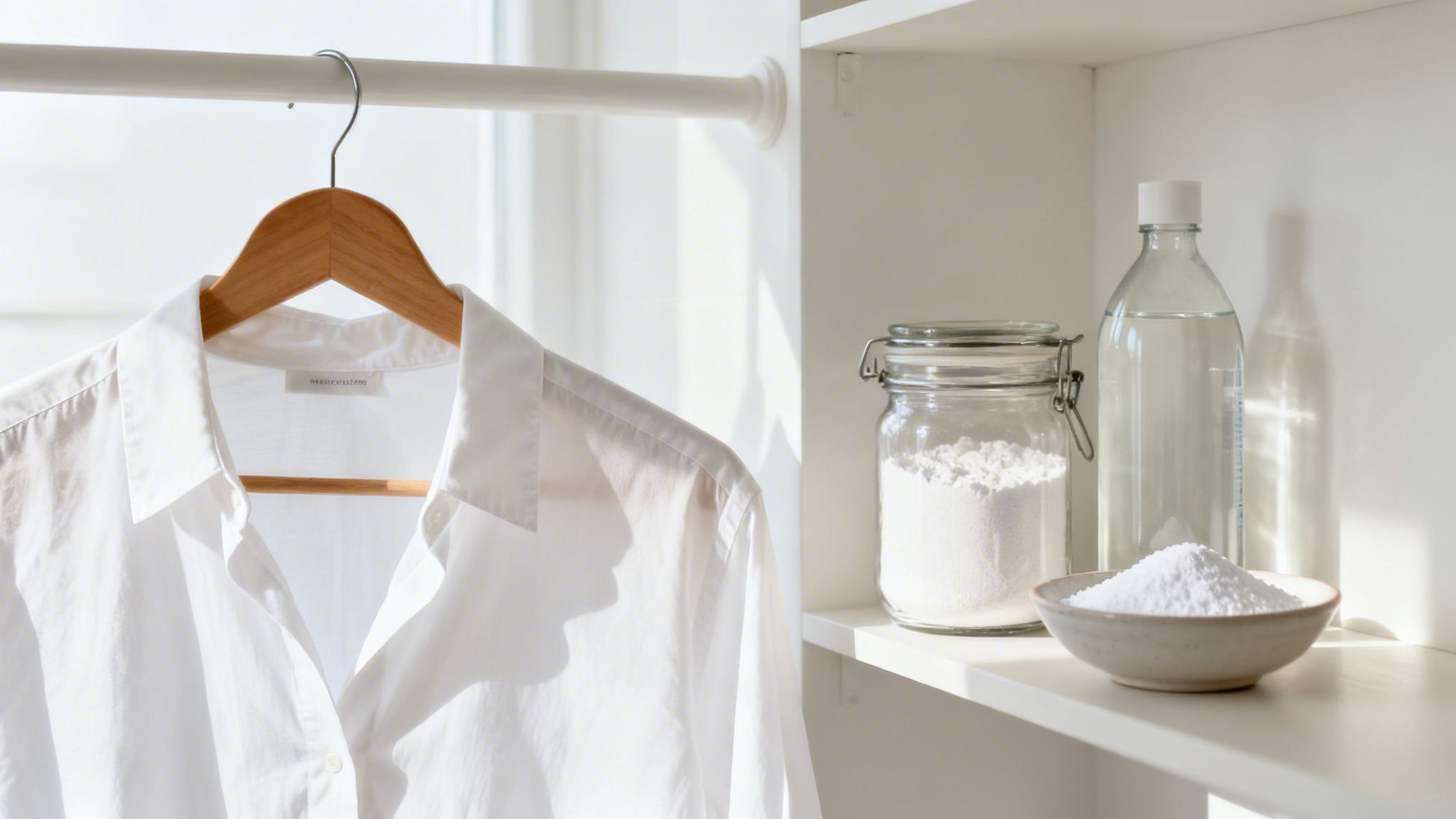
Ultimately, this isn't just about ditching one harsh chemical. It’s about learning how to care for your clothes in a way that preserves their quality, fit, and feel for years to come.
For even more tips on keeping your laundry fresh the natural way, check out our guide on steps to freshen clothes naturally.
Bleach vs Bleach-Free Whitening Methods
To see the difference at a glance, it helps to compare traditional bleach with the gentler, more fabric-friendly alternatives we'll be discussing.
Moving away from chlorine bleach opens up a world of effective, safe, and sustainable options that will leave your whites brighter and your fabrics healthier over the long haul.
Building Good Habits: Your First Defense Against Dingy Whites
The secret to keeping your whites looking brand-new doesn't start in the washing machine. It actually begins with a few simple, preventative habits that stop discoloration before it has a chance to set in. Think of these as your first line of defense against that dreaded dinginess.
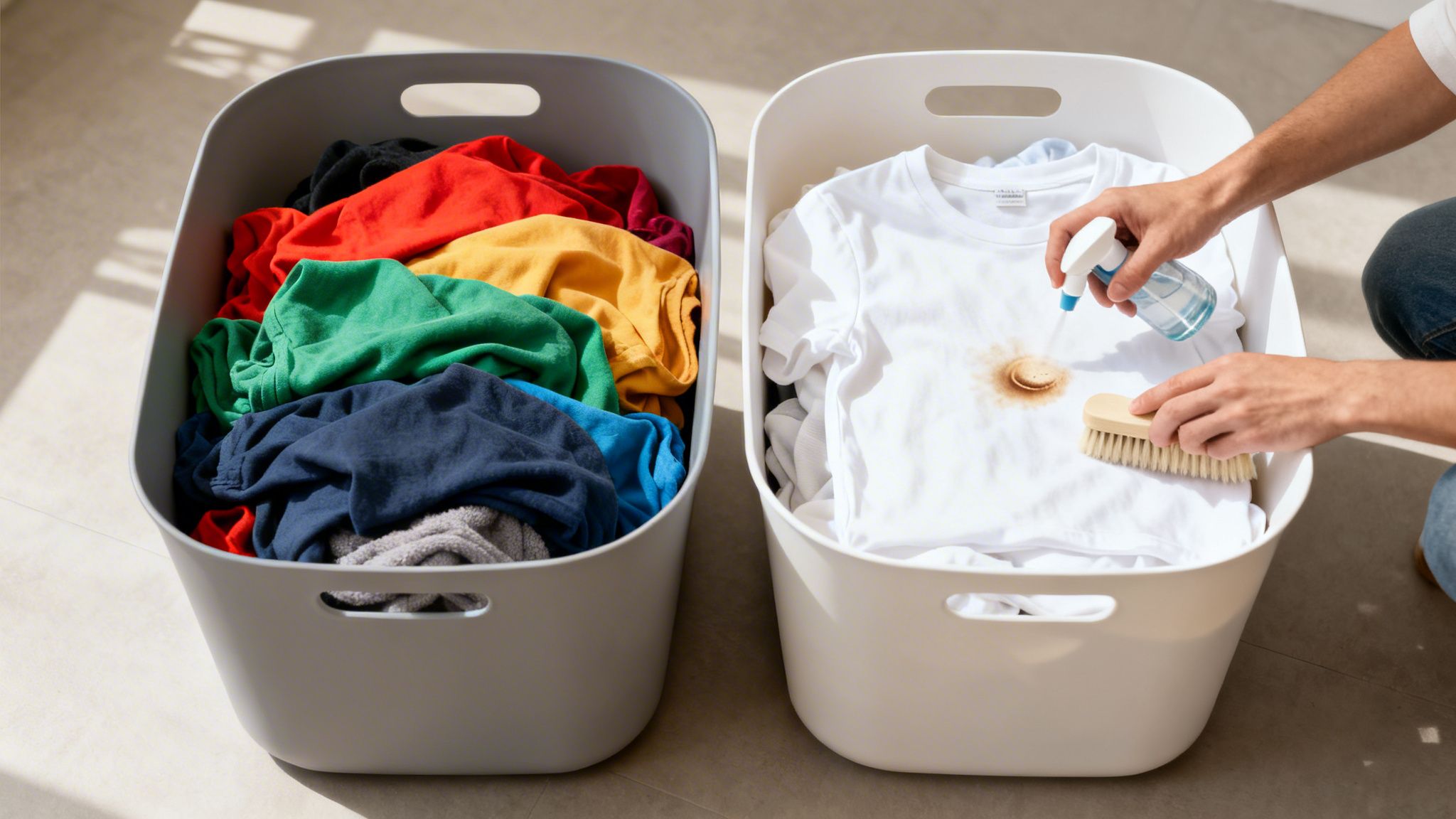
The first, and most crucial, habit is sorting your laundry with military precision. This means more than just separating whites from darks. Even a pale blue shirt or pastel-colored socks can bleed a tiny bit of dye in the wash, creating a grayish film that slowly builds up on your whites. For the brightest, crispest results, you need a load dedicated to 100% white garments.
Master the Art of Sorting
So, what do you do with those tricky pieces, like a white tee with a colorful logo or a white dress with a vibrant pattern? Play it safe and toss them in with your light-colored load, not your pure whites. This one small change prevents the subtle dye transfer that is a top culprit behind gray, faded fabrics.
Pro Tip: I keep a separate hamper just for all-white items. It makes sorting practically automatic and stops me from cutting corners and mixing loads when I’m in a rush.
The Need for Speed: Attacking Stains Immediately
The second key habit is to act fast when stains happen. That morning coffee splash, a stray drop of salad dressing, or a dirt smudge can become a permanent part of your shirt if you let it sit. The goal is to treat the stain right away, or at least as soon as you can get to it.
A quick response doesn’t need to be complicated. For a lot of common spills, just blotting the spot with a cool, damp cloth can lift most of the stain before it has time to lock into the fibers. I also like to keep a stain pen in my bag or a small spray bottle of diluted vinegar at my desk for on-the-go emergencies.
If you want to dive deeper into how laundry pros tackle different fabrics and tough stains, our detailed guide on how to wash whites breaks down more specific techniques. This kind of preventative care is a huge part of learning how to keep white clothes white without bleach.
Rethink Your Water Temperature
Let's bust an old myth: you don't always need to wash whites in scalding hot water. While hot water has its place, it isn’t a one-size-fits-all solution. It can be harsh on delicate fabrics, cause shrinkage, and even set certain stains, especially protein-based ones like sweat or blood.
For most of your white loads, washing in warm water is the sweet spot—it cleans deeply, especially with a good detergent, without being overly aggressive. Modern cold water cycles have also gotten incredibly effective and are perfect for delicates or lightly soiled items. Save the hot water for really grimy things, like your cotton socks and towels.
Using Natural and Gentle Whitening Agents
Ready to ditch the harsh chemicals? You might be surprised to learn that some of the best tools for keeping your whites brilliantly white are probably already in your kitchen pantry. These natural alternatives work wonders without the risk of fabric damage or skin irritation that comes with chlorine bleach, making them a must-have in any gentle laundry routine.

This move toward gentler laundry care is bigger than just a few households. The global laundry care market is projected to hit $144.3 billion by 2030, and a huge part of that growth comes from shoppers like you looking for premium, bleach-free products. With growing concerns about skin sensitivity, people are actively seeking safer ways to care for their clothes. You can see more about the growth of the bleach-free laundry market on grandviewresearch.com.
Harness the Power of Baking Soda
Baking soda is a true laundry workhorse. Its mild alkaline nature helps soften hard water, which lets your detergent clean more effectively. At the same time, it gently lifts stains and gets rid of funky odors. Think of it as your detergent’s best friend.
Getting it into your routine is easy:
- As a Wash Booster: Just toss 1/2 cup of baking soda directly into the drum with your white clothes. This one simple step can make a noticeable difference, especially on everyday items like cotton t-shirts and socks.
- As a Pre-Soak: For whites that have started to look a bit yellow or dingy, dissolve one cup of baking soda in a gallon of warm water. Let them soak for a few hours (or even overnight) before washing like you normally would.
Dissolve Buildup with Distilled White Vinegar
Ever wonder why your whites feel stiff or look a little gray? The culprit is often detergent residue. Over time, a film of soap can build up on fabric fibers, trapping dirt and creating that dull, yellowish tint. Distilled white vinegar is the perfect solution.
The acetic acid in vinegar gently breaks down and dissolves all that gunk, restoring softness and brightness. And don't worry—your clothes won't smell like a salad.
Important Note: Never pour vinegar directly on your clothes. The best way to use it is to add 1/2 to 1 cup of distilled white vinegar into your machine's fabric softener dispenser. It gets released during the final rinse, leaving fabrics fresh and completely residue-free.
Embrace Oxygen-Based Whiteners
When you need some serious brightening power, oxygen-based whiteners are a total game-changer. These products, which you can find in powdered form (like sodium percarbonate) or as a liquid (like hydrogen peroxide), create tiny oxygen bubbles when mixed with water. These bubbles are fantastic at safely lifting away stains and brightening fabrics without the harshness of chlorine bleach.
Understanding how alternatives like hydrogen peroxide work can be key to getting the results you want. It’s incredibly versatile and works on everything from sweat-stained gym clothes to dull bed linens. For an extra kick, add a scoop of powdered oxygen whitener to your wash or use it to pre-soak really stubborn stains.
Don't Underestimate the Sun
Finally, let's not forget the oldest, most natural whitener there is: good old-fashioned sunlight. The sun's UV rays have a natural bleaching effect that not only brightens whites but also helps disinfect them.
Next time you wash your white sheets, towels, or shirts, hang them on a clothesline outside on a sunny day. This trick works especially well for natural fibers like cotton and linen. It's completely free, eco-friendly, and leaves your laundry with that incredible fresh-air scent no dryer sheet can ever duplicate.
Tackling Stubborn Dinginess and Yellowing
Even when you do everything right, some whites will eventually need a more powerful refresh. When you’re dealing with stubborn yellowed collars, grayed-out towels, or sweat stains that just won't budge, it’s time to pull out the heavy-duty, bleach-free solutions. These are my trusted methods for reviving garments that have lost their sparkle.
For Targeted Stains: Make a DIY Pre-Treatment Paste
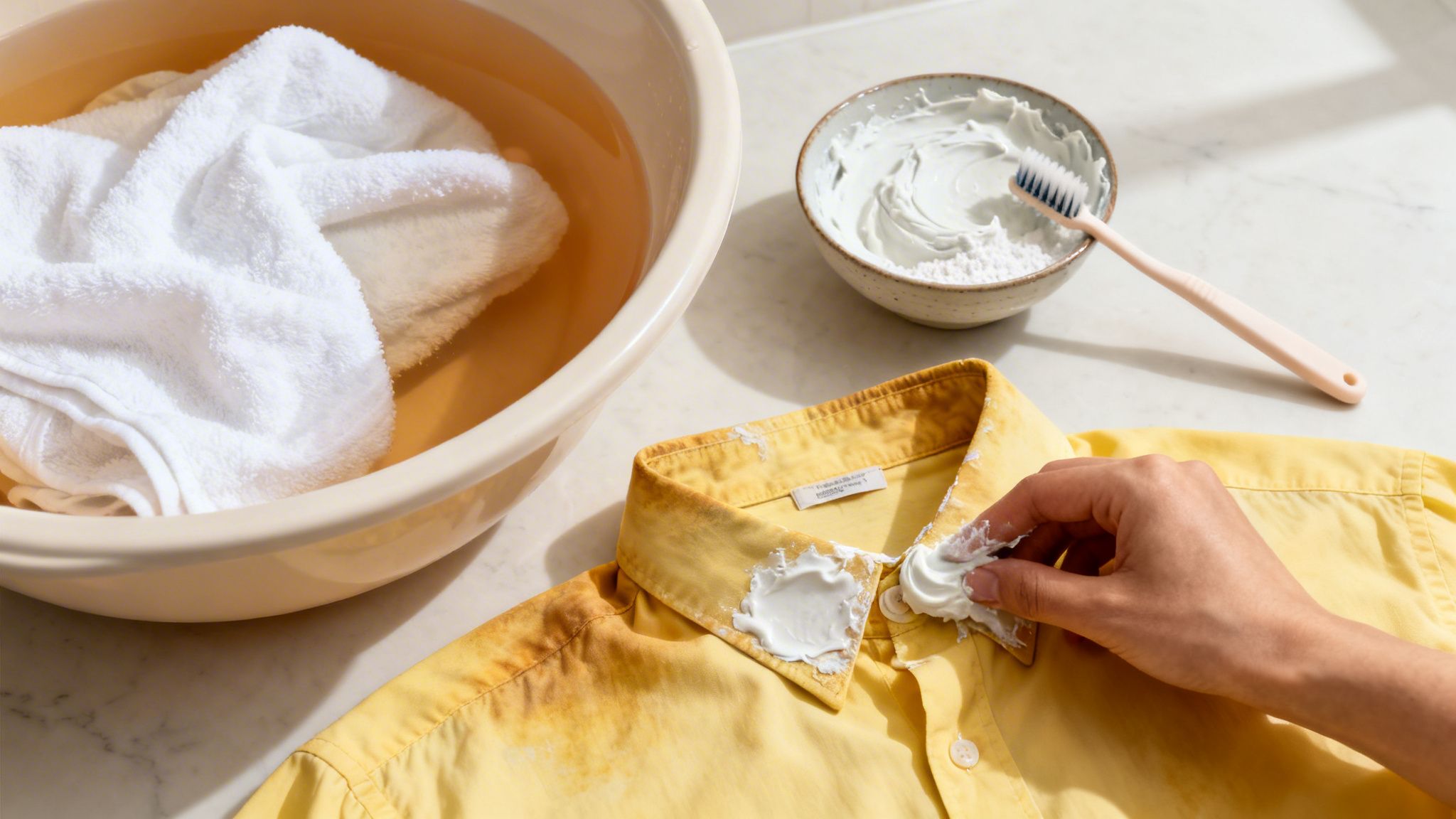
One of the most effective ways to handle targeted discoloration is a simple DIY paste. This is my go-to for lifting tough, set-in stains from armpits or collars without resorting to harsh chemicals that can damage the fabric.
It’s surprisingly easy to make and use:
- Mix: Combine two parts hydrogen peroxide with one part baking soda until it forms a thick paste.
- Apply: Gently work the paste into the stained area with an old toothbrush or your fingers.
- Wait: Let it sit for at least 30-60 minutes, then just wash the garment as you normally would.
For All-Over Dullness: Try Laundry Stripping
For more widespread dullness, especially on things like bed linens and bath towels, a deep-cleaning method called laundry stripping can be a game-changer. This process is designed to pull out the stubborn buildup of hard water minerals, body oils, and detergent residue that a regular wash just can't touch.
However, be warned: stripping is an intense process. It's best for durable items like cotton and polyester blends. You should absolutely avoid stripping delicate fabrics like wool, silk, or anything with spandex, as the hot water can cause permanent damage. If you think this is what your linens need, we have a complete guide with various laundry stripping recipes to get you started safely.
The Overlooked Mistake That’s Making Your Whites Dingy
Finally, one of the simplest yet most critical adjustments you can make is to stop overloading your washing machine. I know it’s tempting to cram as much as possible into one load, but this is a primary cause of dingy clothes.
When the drum is packed too tightly, your clothes don't have enough room to agitate properly. That means water and detergent can't circulate to reach every surface, and the dirt you’re trying to wash away just gets redeposited right back onto your whites.
For a truly effective clean, your washer should never be more than three-quarters full. This simple habit ensures each item gets the space it needs to come out brilliantly white.
When to Trust the Professionals with Your Whites
Even with the best at-home tricks, some things are just better left to the pros. Deciding to take your whites to a professional cleaner isn't throwing in the towel; it's a smart move to protect your best clothes, save yourself a headache, and get results you just can't match at home.
Think of it this way: you wouldn't fix a complex engine problem with a basic wrench set. The same goes for certain fabrics and tough stains. Professional cleaners have industrial-grade equipment and specialized solvents that are way more effective—and often gentler—than anything you can buy at the store.
When Professional Care Is the Smartest Choice
Sometimes, trying to fix a laundry problem yourself can accidentally make it permanent. You know it's time to call for backup when you're dealing with these situations:
- Delicate Fabrics: We're talking about materials like silk, lace, rayon, and fine wools. These guys are notorious for shrinking, stretching, or discoloring if you look at them the wrong way. A professional knows exactly how to handle them.
- Heirloom or Sentimental Items: That vintage tablecloth from your grandmother or a hand-knitted baby blanket? Those are irreplaceable. Trusting them to a professional ensures they're cleaned gently and preserved for the next generation.
- Deeply Set or Mystery Stains: You’ve pre-treated a stain to no avail, or worse, you have no clue what it even is. A professional can play detective, identify the culprit, and use a targeted treatment that actually works.
- Expensive or Structured Garments: A sharp white blazer, a formal gown, or a designer shirt has a lot going on inside—interfacing, padding, and delicate seams. Tossing it in the wash is a recipe for a shapeless mess. Dry cleaning is a must to keep these pieces looking structured and crisp.
Choosing a professional service is a partnership in maintaining a well-ordered, stress-free home. Outsourcing laundry is one of the simplest ways to reclaim your valuable time and ensure your favorite whites get the best care possible.
The Professional Advantage for Bright Whites
It's not just about handling tricky items. Professional services offer a level of clean that’s tough to replicate. They use precisely controlled water temperatures and pH-balanced detergents that are designed to break down the body oils and grime that cause that dreaded yellowing over time. This is their secret to keeping whites bright without ever reaching for harsh bleach.
For example, a top-notch service like Columbia Pike Laundry uses professional-grade, unscented detergents and sorts every single load by hand. That obsession with detail means your whites never even get a chance to mingle with a stray colored sock. And for items needing extra care, their dry cleaning process uses gentle, eco-friendly solvents that lift stains without weakening the fabric.
In the end, it’s about acknowledging that your time and your wardrobe are valuable. For those tough jobs or precious pieces, letting an expert take over is the best way to ensure your whites stay brilliantly bright for years to come.
Got Questions About Keeping Your Whites White? We've Got Answers.
Even when you have a solid routine, questions always come up. Here are some quick, practical answers to the most common dilemmas people face when trying to keep their whites looking their best without reaching for the bleach.
Can I Really Use Lemon Juice to Whiten My Clothes?
You bet. Lemon juice is a fantastic natural whitener because of its citric acid. For an easy brightening boost, just add about half a cup of strained lemon juice right into the wash cycle with your normal detergent.
If you're dealing with a specific spot, you can apply the juice directly to the stain and let the garment dry in the sun for an hour or so. The combination can work wonders. Just a heads-up: be careful with delicate fabrics like silk or wool. The acid can be a little strong, so it’s always a good idea to test it on an inside seam first.
How Often Should I Be Deep Cleaning My White Towels and Sheets?
Ah, the "laundry stripping" question. This is a heavy-duty deep clean, not something for your regular weekly wash. Think of it as a reset button for your linens, designed to tackle the stubborn residue that builds up over time.
For most homes, stripping white towels and sheets every four to six months is more than enough. You’ll know it’s time when your whites start looking a bit gray or feel stiff, even when they’re fresh out of the dryer.
Will These Bleach-Free Tricks Work on Older, Yellowed Clothes?
They can definitely make a huge difference, but you might need a little patience. For that aged, yellow discoloration—often from sweat or just being stored for a long time—a good, long pre-soak is your secret weapon.
I always recommend starting with an overnight soak. Just submerge the item in warm water mixed with a scoop of an oxygen-based whitener. After that, run it through a wash cycle, adding some white vinegar to the rinse. This combination can lift a surprising amount of yellowing. While you'll see a major improvement, some very old or heat-set stains might be permanent.
Is It Okay to Mix Vinegar and Baking Soda Together in the Wash?
This is a super common question, and the answer is critical: Don't mix them directly at the same time. When you combine vinegar (an acid) and baking soda (a base), they react and neutralize each other. All that fizzing just leaves you with saltwater, and you lose the cleaning power of both.
To get the real benefits, you have to use them separately during the wash process.
- Baking Soda First: Add half a cup right into the drum with your clothes and detergent at the start. It's great for brightening, deodorizing, and softening the water.
- Vinegar Last: Pour one cup of distilled white vinegar into the fabric softener dispenser. Your machine will release it during the final rinse, where it will work to dissolve any lingering soap residue and soften your fabrics.
By separating them, you let each ingredient do its job properly. The result? Brighter, softer whites, no weird science experiments required.
At Columbia Pike Laundry, we know keeping whites brilliant is both an art and a science. If you're tired of the guesswork or just don't have time for stubborn stains, let our experts take over. We'll give your clothes the professional care they need, so you can enjoy perfectly bright whites without the hassle. Schedule your first pickup today and get your free time back.
Free pickup, expert care, delivered back to your door.
Popular Blog Articles



Meet the Author
Daniel Logan didn’t start CPL because he loved laundry. He started it because his family was drowning in time debt, and laundry was one of the biggest weights.
Mornings were chaos with two kids under 5. Evenings felt like catch-up. And weekends? Gone to sorting socks and folding piles.
He knew his story wasn’t unique. So he built a business that gave families like his just a little bit of breathing room one load at a time.
With no laundry experience but deep tech skills, Daniel rolled up his sleeves, doing every job himself while building systems that turned it into a modern laundry service that saves customers time, simplifies their lives, and delivers reliability they can count on.
That’s where CPL began. Not from a playbook, but from pain. From one dad trying to buy back time: for himself, and for every household like his.
Free pickup, expert care, delivered back to your door.