
How to prepare clothes for drop off: 2026 Arlington guide

Columbia Pike Laundry offers pickup & delivery across Northern Virginia.
Laundry piles up fast when you’re juggling work, family, and everything in between. For busy Arlington families and professionals, drop off laundry services offer a lifeline, but only if you prepare your clothes correctly. Rushing through preparation can lead to lost items, damage, or delays that defeat the purpose of outsourcing this chore. This guide walks you through essential steps to sort, inspect, pack, and schedule your laundry drop off efficiently, ensuring you get the most value from professional cleaning services while reclaiming precious time in your week.
Key takeaways
| Point | Details |
|---|---|
| Sort by fabric type | Separate colors, whites, delicates, and dry clean items to prevent damage and ensure proper care |
| Empty all pockets | Remove tissues, coins, and receipts to protect your belongings and laundry equipment |
| Label bags clearly | Mark each bag with contents and special instructions to avoid mix-ups during processing |
| Use breathable containers | Choose mesh or cotton bags that prevent moisture buildup and mildew growth |
| Schedule ahead | Book drop off or pickup times in advance to fit your routine and avoid last-minute stress |
Understanding why proper preparation matters
Laundry services depend on clear organization to deliver quality results. When you hand over a jumbled mess of mixed fabrics and colors, cleaners face guesswork that can lead to shrinkage, color bleeding, or inappropriate washing methods. Properly preparing clothes prevents delays, damage, and lost items during processing. Mixed loads force services to spend extra time sorting, which either delays your order or triggers additional fees you didn’t budget for.
Emptying pockets protects both your possessions and the cleaning equipment. A forgotten pen can ruin an entire load with ink stains. Coins and keys damage washing machine drums, creating maintenance issues that slow down service for everyone. Tissues left in pockets disintegrate into white fluff that clings to every garment, requiring rewashing and extending turnaround time.
Clear labeling eliminates confusion when multiple customers drop off similar looking bags. Without labels, your navy dress pants might end up in someone else’s order, leaving you without essential work attire. Services process dozens of orders daily, and unmarked bags create bottlenecks that affect everyone’s schedule.
Pro Tip: Take photos of expensive or sentimental items before drop off. This creates a visual record if questions arise about condition or if something goes missing.
Consider these benefits of thorough preparation:
- Faster turnaround because cleaners spend less time sorting
- Lower risk of damage from improper washing methods
- Accurate pricing with no surprise charges for extra sorting
- Better stain treatment when you identify problem areas upfront
Following best practices for laundry pickup transforms a potentially stressful errand into a smooth transaction. You walk in confident that your clothes will return clean, undamaged, and on schedule. The 10 minutes you invest in preparation saves hours of hassle dealing with mistakes or replacements.
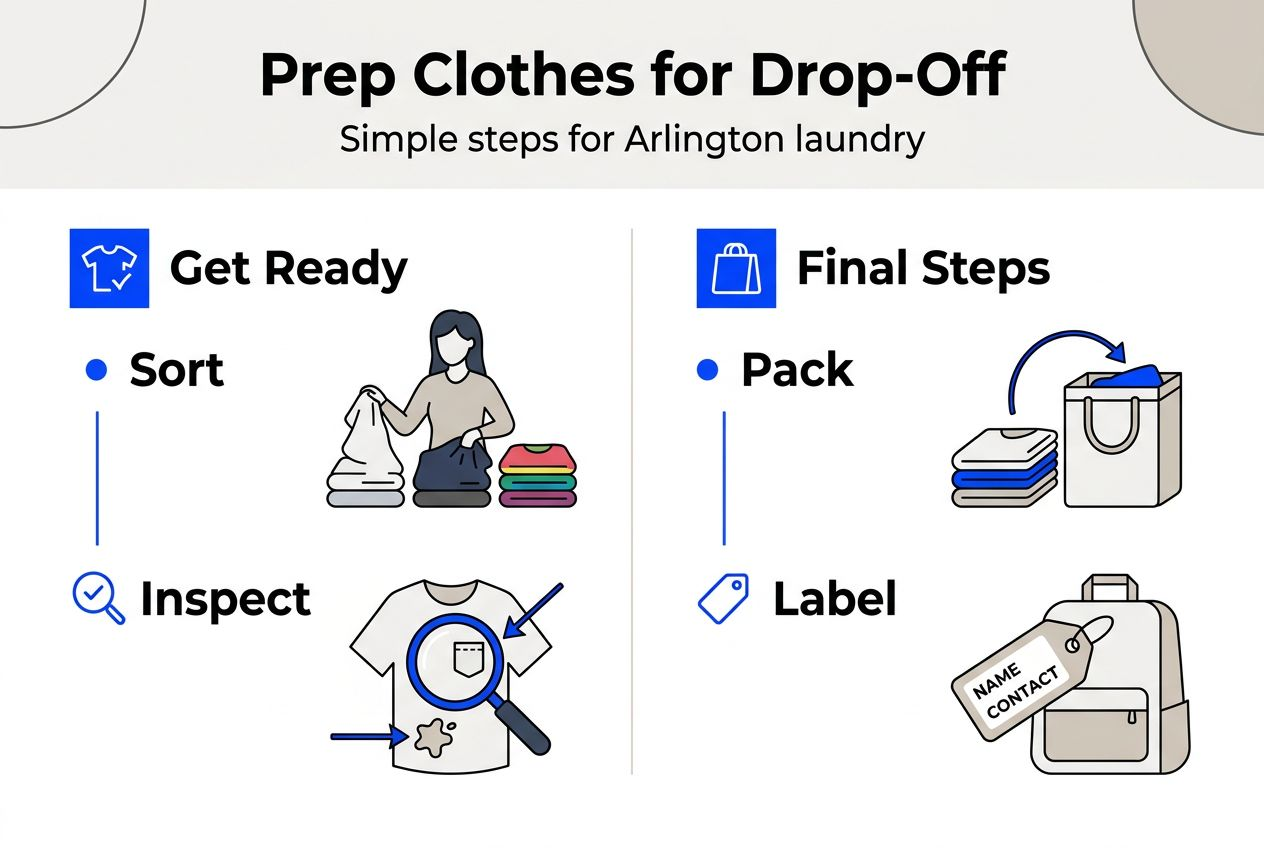
Step 1: Gathering and sorting your laundry
Start by designating collection points in your home where dirty clothes accumulate. Multiple hampers in bedrooms and bathrooms prevent the overwhelming pile that forms when everything lands in one spot. This distributed approach makes sorting easier because you can pre-categorize as items get tossed into hampers.
Sort clothes into distinct categories that align with washing requirements:
- Whites and light colors that tolerate hot water and bleach
- Dark and bright colors needing cold water to prevent fading
- Delicate fabrics like silk, lace, or wool requiring gentle cycles
- Heavy items such as towels, jeans, or bedding
- Dry clean only garments with special care labels
Check every garment’s care label before assigning it to a category. That tag inside the collar or side seam contains crucial information about water temperature, drying method, and whether the item needs professional dry cleaning. Ignoring these instructions leads to shrunken sweaters, faded colors, or damaged fabrics that can’t be reversed.
Sorting clothes by fabric and care requirements ensures effective cleaning and prevents damage. A red shirt mixed with white towels creates pink laundry disasters. Delicate blouses tumbled with heavy jeans emerge stretched or torn. Professional cleaners appreciate receiving pre-sorted loads because it allows them to process your order efficiently without guessing which items belong together.
Separate heavily soiled work clothes or kids’ play outfits from lightly worn office attire. Mud-caked pants need more aggressive treatment than a shirt worn once to a meeting. Mixing soil levels means either overwashing delicate items or underwashing dirty ones.
Pro Tip: Use different colored hampers or laundry bags for each category. Assign white bags for whites, dark bags for colors, and mesh bags for delicates so sorting becomes automatic as you undress.
Keep a dedicated spot for items needing preparing clothes for dry cleaning separate from regular wash loads. Suits, formal dresses, and anything labeled dry clean only should never touch water-based washing. Hanging these items immediately after wear prevents wrinkles and keeps them ready for professional treatment.
Step 2: Inspecting, emptying pockets, and handling stains
Before anything goes into a bag, run your hands through every pocket. Front pockets, back pockets, jacket pockets, and hidden interior pockets all harbor forgotten items. Check shirt breast pockets where pens lurk and coat pockets where receipts hide. This tactile search catches what visual inspection misses.
Emptying pockets prevents damage to clothes, machines, and lost items. Chapstick melts in dryers, creating greasy stains across entire loads. Gum stuck in pockets becomes a nightmare requiring freezing and scraping. Paper items disintegrate into pulp that embeds in fabric fibers.
Common pocket contents to watch for:
- Tissues that shred into white confetti
- Coins that damage drum mechanisms
- Credit cards or IDs that warp in heat
- Earbuds or small electronics
- Candy or gum that melts and stains
- Receipts containing important information
Inspect each garment under good lighting for stains, rips, or loose buttons. Fresh stains respond better to treatment than set-in ones that have been through heat. Identify the stain source if possible because protein stains need different treatment than oil-based ones. Mark heavily stained areas with a safety pin or sticky note so cleaners give them special attention.

Apply pre-treatment to visible stains before drop off if you have appropriate products. Blot liquid stains gently rather than rubbing, which pushes the stain deeper into fibers. For stubborn marks, note the stain type on your bag label so professionals can use targeted treatments. Don’t attempt home remedies on dry clean only fabrics because you might set the stain permanently.
Handle delicate fabrics with care during this inspection phase. Turn embellished items inside out to protect beading or sequins. Button all buttons and zip all zippers to prevent snagging during washing. Tie drawstrings to keep them from pulling out through casings.
Check the laundry pickup checklist to ensure you haven’t missed critical preparation steps. A systematic approach prevents the sinking feeling when you realize your phone went through the wash or important documents turned to mush.
Step 3: Packaging and labeling for drop off
Select appropriate containers for each sorted category. Mesh laundry bags work well for delicates because they allow water and detergent flow while protecting items from agitation. Cotton drawstring bags suit regular wash loads and stack easily. Avoid plastic garbage bags that trap moisture and create mildew problems if clothes sit even briefly.
| Bag Type | Best For | Pros | Cons | | — | — | — | | Mesh bags | Delicates, bras, lingerie | Breathable, protects items, see-through | Can snag on zippers | | Cotton drawstring | Regular wash, colors, whites | Durable, reusable, eco-friendly | Not see-through | | Laundry baskets | Heavy items, towels, bedding | Easy to carry, stackable | Takes up storage space | | Garment bags | Dry clean items, suits | Protects from wrinkles, professional | Only for hanging items |
Don’t overstuff bags because cramming causes wrinkles and prevents proper cleaning. Clothes need room to move through water and detergent. A good rule: fill bags only two-thirds full. This leaves space for agitation while keeping items contained and organized.
Label each bag clearly with waterproof markers or tags. Include your name, phone number, and contents description. Add special instructions like “fragrance-free detergent” or “air dry only” directly on the label where cleaners will see them immediately. Labeling and organizing laundry bags reduces mix-ups and speeds up processing.
Keep dry clean items completely separate from wash loads to prevent cross-contamination. Water ruins many dry clean only fabrics, and mixing them with wet laundry starts damage before processing even begins. Use dedicated garment bags or hangers for these pieces.
Pro Tip: Create a master packing list on your phone noting what went into each bag. This inventory helps verify everything returns and identifies missing items quickly.
Prepare your laundry preparation guide checklist the night before drop off. Rushing morning preparations leads to forgotten steps and mistakes. Evening prep lets you double-check everything calmly and make adjustments if needed.
Step 4: Scheduling and drop off logistics
Contact your chosen laundry service to arrange convenient drop off or pickup times. Many Arlington services offer flexible scheduling through apps or websites, letting you book slots that fit around work and family commitments. Morning drop offs often mean same-day or next-day returns, while afternoon drop offs might push into the following business day.
Follow these logistics steps for smooth handoff:
- Confirm the service’s specific packaging requirements before arrival
- Gather all prepared bags in one location for easy transport
- Count bags and verify against your packing list
- Bring any special instruction notes or stain information
- Request a receipt or confirmation number for your order
- Clarify pickup timing and any payment arrangements
Verify packaging meets service specifications. Some facilities prefer clear bags for quick visual inspection. Others require specific labeling formats or color coding. Scheduling ahead and following protocols makes laundry service smooth and efficient. Calling ahead prevents wasted trips if the service has special requirements you haven’t met.
Bring all bags together and do a final completeness check before leaving home. Forgetting a bag means either making a second trip or waiting another cycle to get those items cleaned. Check car capacity if you’re dropping off large loads to avoid multiple vehicle trips.
Get written or digital confirmation when handing over your laundry. This receipt should list the number of bags, any special instructions, expected completion time, and total cost estimate. Keep this documentation until you retrieve your cleaned items and verify everything returned correctly.
Review payment options upfront to avoid surprises. Some services charge by weight, others by bag or item count. Ask about additional fees for stain treatment, express service, or special handling. Understanding costs beforehand lets you budget appropriately and decide which services you actually need.
Plan your schedule to avoid last-minute rushes that force you to skip preparation steps. Consistent weekly or biweekly drop offs create a routine that’s easier to maintain than sporadic emergency cleaning sessions. The laundry pickup and delivery services guide explains how regular scheduling saves time and reduces stress for busy households.
Get efficient laundry drop off in Arlington with Columbia Pike Laundry
Columbia Pike Laundry simplifies the entire process with a straightforward three-step system: schedule, drop off or arrange pickup, and receive your professionally cleaned clothes. Our Arlington location at 2602 Columbia Pike serves families and professionals throughout the area, offering both convenient storefront drop off and home pickup options that fit your schedule. We handle everything in-house, giving you direct accountability and quality control that middle-man platforms can’t match. Whether you need regular wash and fold, delicate dry cleaning, or commercial services, our team processes your order with care and returns it within 48 hours standard, with express options when you’re in a rush. Discover how Columbia Pike Laundry works to save time and eliminate laundry stress. We also provide commercial laundry in McLean, VA and commercial laundry services Reston for businesses needing reliable, professional cleaning solutions.
FAQ
What should I do if I find stains after the laundry drop off?
Contact your laundry service immediately to report any stains that weren’t removed or appeared during processing. Most reputable services offer re-treatment at no charge or provide refunds according to their satisfaction policies. Document the issue with photos and bring the item back promptly for the best resolution.
Can I drop off delicate fabrics with other clothes?
Yes, but separate delicate fabrics into their own clearly labeled mesh bags to ensure proper handling. Inform the service staff verbally about delicate items when dropping off so they flag your order for gentle cycle processing. Mixing delicates with regular wash without separation risks damage from agitation and heat.
How early should I prepare my clothes before drop off?
Start sorting and inspecting clothes at least one day before your scheduled drop off to catch any issues or missing items. Pack and label bags the evening before to eliminate morning rush and ensure you haven’t forgotten critical preparation steps. This timeline gives you flexibility to handle unexpected problems like discovering items that need repair before cleaning.
What types of bags are best for laundry drop off?
Use breathable mesh or cotton laundry bags that allow air circulation and prevent mildew growth during transport and storage. Avoid sealed plastic bags that trap moisture and create odor problems, especially if there’s any delay between drop off and processing. Mesh bags also let service staff quickly verify contents without opening every container.
Recommended
Free pickup, expert care, delivered back to your door.
Popular Blog Articles



Meet the Author
Daniel Logan didn’t start CPL because he loved laundry. He started it because his family was drowning in time debt, and laundry was one of the biggest weights.
Mornings were chaos with two kids under 5. Evenings felt like catch-up. And weekends? Gone to sorting socks and folding piles.
He knew his story wasn’t unique. So he built a business that gave families like his just a little bit of breathing room one load at a time.
With no laundry experience but deep tech skills, Daniel rolled up his sleeves, doing every job himself while building systems that turned it into a modern laundry service that saves customers time, simplifies their lives, and delivers reliability they can count on.
That’s where CPL began. Not from a playbook, but from pain. From one dad trying to buy back time: for himself, and for every household like his.
Free pickup, expert care, delivered back to your door.