
How to Use a Laundromat Like a Pro A Complete Guide
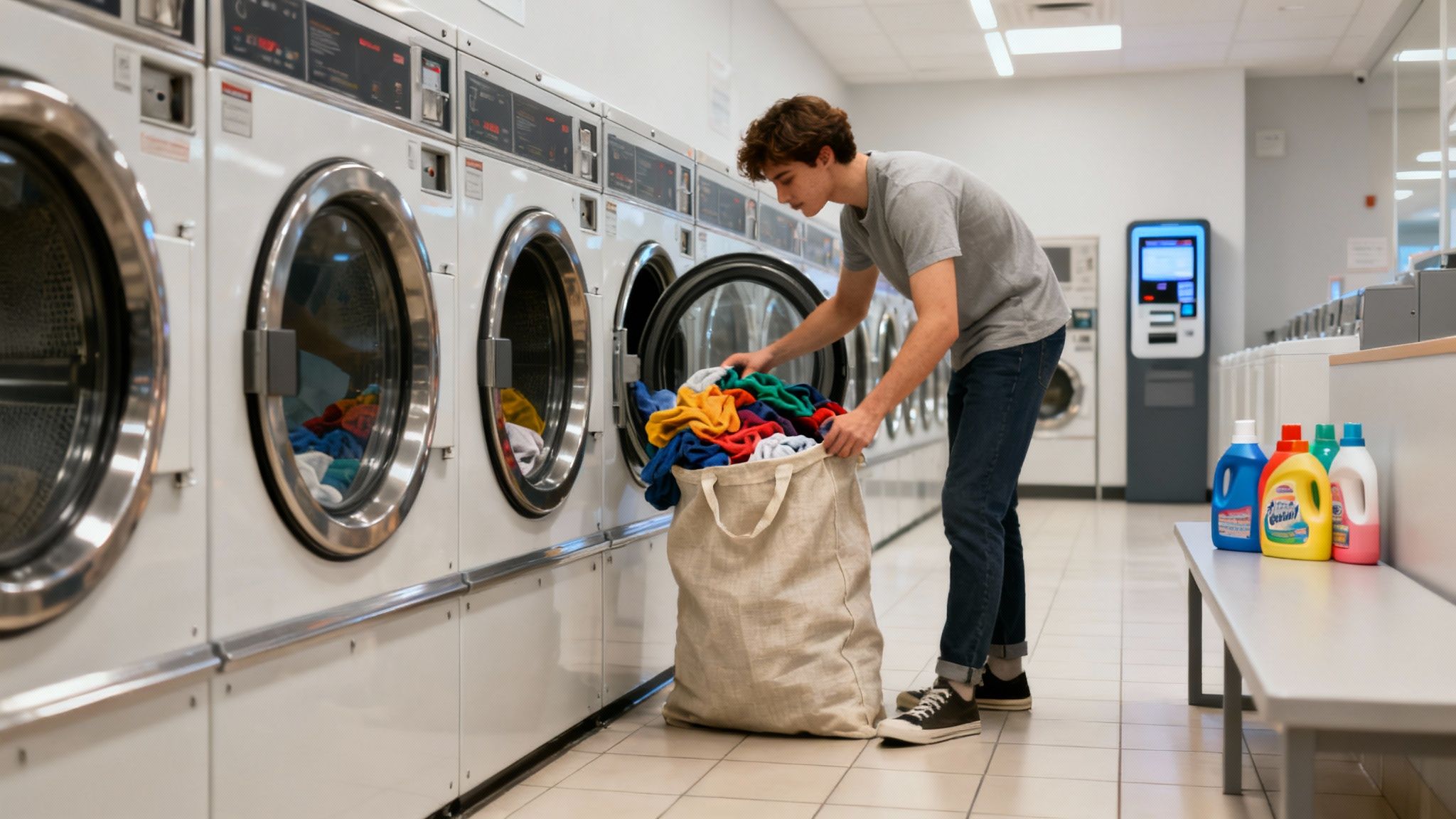
Columbia Pike Laundry offers pickup & delivery across Northern Virginia.
Using a laundromat is surprisingly simple once you get the hang of it. It all boils down to a little prep work: gather your supplies, sort your laundry at home, pick the right machine for your load size, and choose the correct settings. With a bit of planning, what feels like a chore can become a quick and easy part of your routine.
Your First Visit to the Laundromat Made Easy
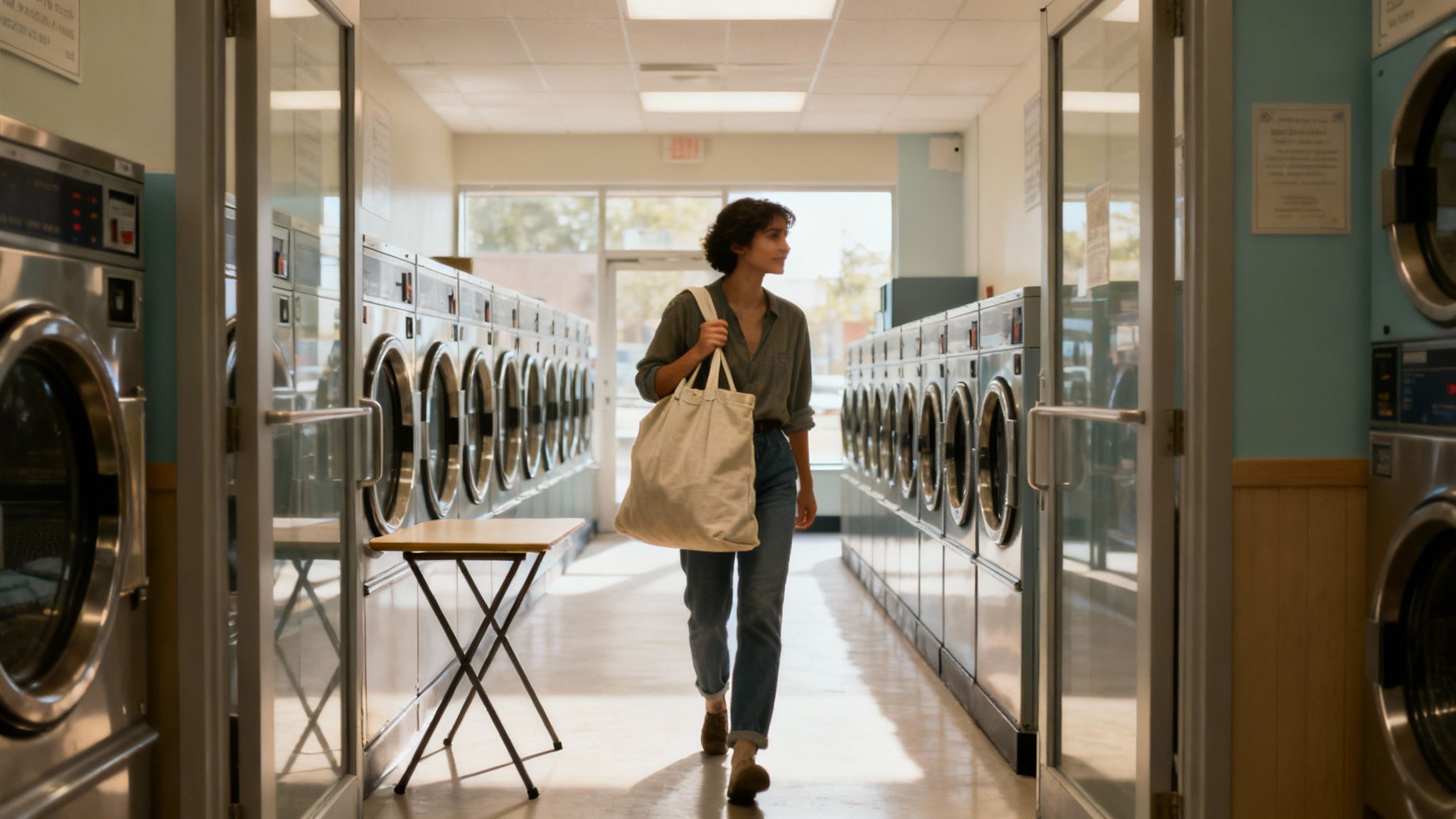
Walking into a laundromat for the first time can feel a little intimidating. You’re met with rows of spinning machines, the distinct smell of clean laundry, and the low hum of everything in motion. It's a unique environment, but it doesn't have to be confusing.
Think of this guide as a conversation with a seasoned regular who's happy to show you the ropes. We'll cover everything from what to pack in your bag to folding that last warm t-shirt, turning this errand into a streamlined and predictable process.
What to Bring for a Smooth Trip
A successful laundromat trip begins before you even walk out the door. Getting your essentials together at home means you won't have to buy overpriced, single-use supplies on-site or, even worse, make a second trip back. A well-packed laundry kit is your secret weapon.
Here’s a quick rundown of what you’ll need to make your visit completely hassle-free.
Your Laundromat Essentials Checklist
This little checklist covers everything you need for an efficient laundry day. Pack it all up, and you’ll be ready to go.
Once you’ve got these items packed, you're set for a smooth and efficient visit.
Claiming Your Space and Getting Started
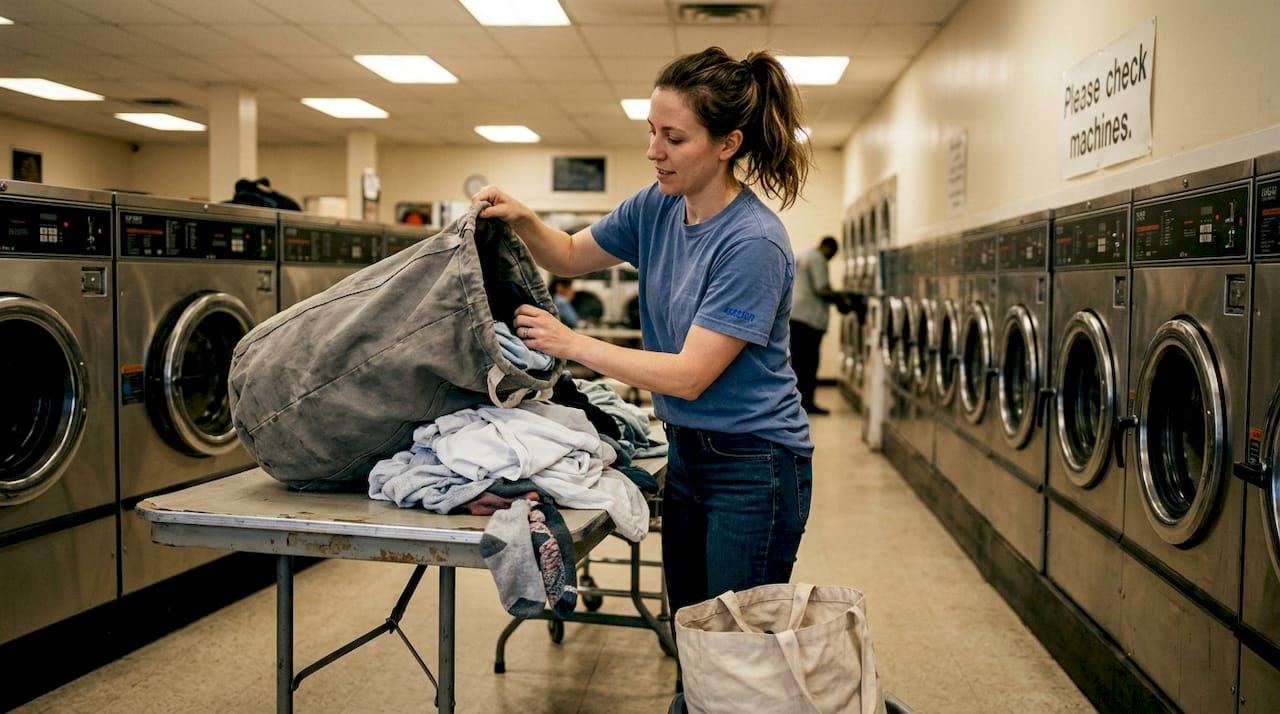
When you get to the laundromat, take a second to scope things out. Find an empty folding table or a clear corner to set down your bags. This creates your own little home base and keeps everything organized while you work.
Before you toss your clothes into a machine, do a quick inspection. Just open the door and give it a sniff—sometimes a previous user might have washed something with a strong smell, like smoke or heavy perfume, and you don't want that transferring to your laundry. It only takes a second.
Your time is valuable. A few minutes of prep at home—like pre-sorting clothes and checking pockets for loose items—can save you 15-20 minutes of hassle at the laundromat.
This simple habit is part of a bigger, more efficient system. The U.S. laundromat industry is a massive, well-oiled machine, expected to generate $7.1 billion in revenue in 2025. Smart customers contribute to that efficiency by adopting practices that save time, water, and energy. For instance, properly sorting loads can reduce water and energy costs by 20-30% per visit. You can explore more about the laundry industry's success and its impressive efficiency.
The Art of Sorting and Prepping Your Laundry
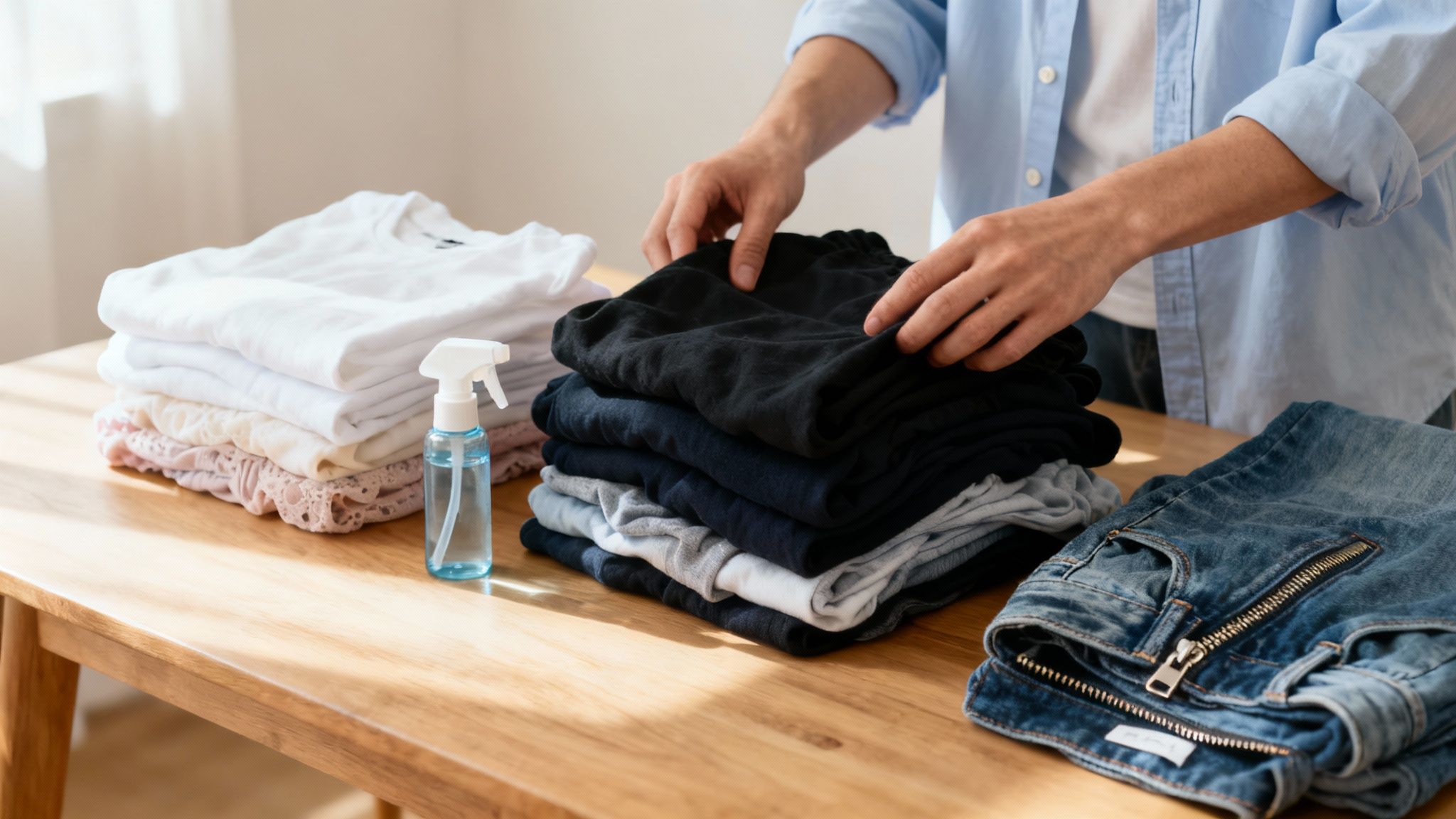
A great laundromat experience doesn't start when you walk through the door—it starts in your living room. The prep work you do at home is the secret sauce to a perfect wash and can even extend the life of your favorite clothes.
Most of us learned to separate whites from colors, and that's a solid start. But if you want to level up your laundry game, a little extra sorting will protect your wardrobe and make drying way more efficient.
Sorting Beyond Just Colors
The real art here is about more than just preventing that rogue red sock from turning a load of whites pink. When you group clothes by fabric weight and texture, you get a much better, more tailored clean.
Think about sorting your laundry into these four piles:
- Lights and Whites: This is for your t-shirts, socks, underwear, and any other light-colored basics.
- Darks and Colors: All your jeans, dark tops, and vibrant clothing go here. Washing these in cold water is the best way to keep the colors from fading.
- Delicates: Anything lacy, silky, or made from a fragile fabric needs its own gentle cycle. I always recommend using a mesh laundry bag for these items—it’s a cheap insurance policy against snags and tears.
- Heavy Items: Towels, bedding, and bulky sweatshirts are in a league of their own. They absorb a ton of water and need a more powerful wash cycle to get truly clean.
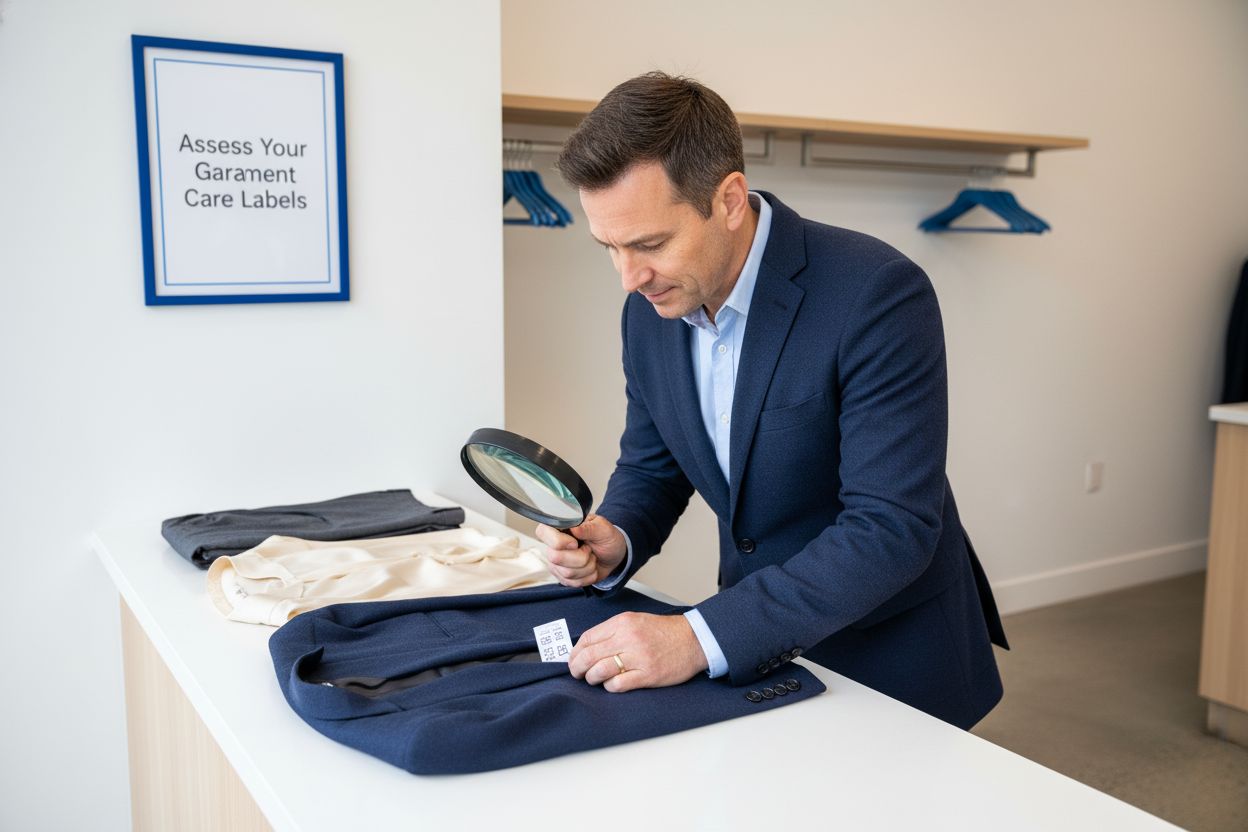
This way, a heavy pair of jeans isn't beating up against a delicate blouse. It also makes drying a breeze, since you won’t have heavy, damp towels mixed in with nearly-dry t-shirts. If you're ever unsure, our guide on how to read clothing care labels is a lifesaver.
The Final Pre-Wash Checklist
With your piles sorted, a few last-minute checks can prevent a total laundry disaster. These are the little habits that take seconds but can save you a world of hurt.
Before bagging everything up, do a quick run-through:
- Empty Every Pocket: Seriously, check them all. A forgotten pen, lipstick, or even a crumpled tissue can wreak havoc on an entire load.
- Zip All Zippers: The metal teeth on an open zipper can easily snag and rip other clothes while tumbling in the machine. Zip them up.
- Unbutton All Shirts: On the flip side, leaving shirts buttoned puts a lot of stress on the threads and buttonholes during the wash cycle. Unbutton them to prevent damage.
Pro Tip: Got a stubborn stain? Treat it at home before you go. Applying a stain remover 15-30 minutes before washing gives it time to soak in and break down the stain, making it much easier for the machine to wash it away completely.
Taking a few extra minutes for prep work turns a chore into a system. It's how you care for your clothes, save yourself future headaches, and walk away with a perfectly clean load of laundry every single time.
Choosing the Right Machines and Settings
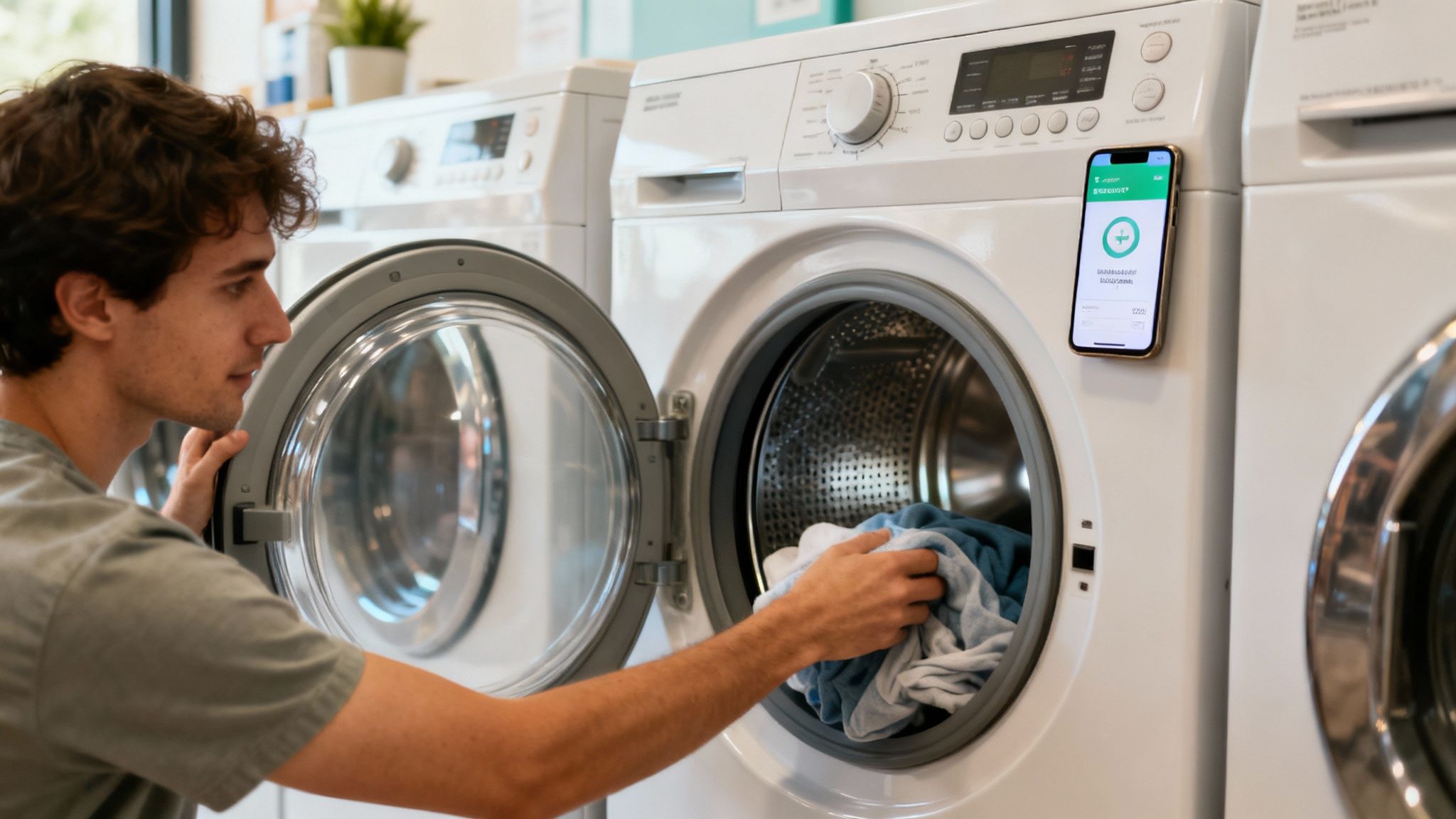
Walking into a laundromat and seeing all those machines can be a little overwhelming. You've got everything from the classic top-loaders to those giant, industrial-sized front-loaders. Picking the right one is about more than just finding an empty machine—it's about matching your laundry to the washer to get the best possible clean without wasting money or damaging your clothes.
While you might be tempted by the cheaper, old-school top-loaders, I always steer people toward the modern front-loading machines. They might cost a little more per cycle, but their tumbling action is much gentler on your clothes and, frankly, just cleans better.
Match the Machine to Your Load Size
I’ve seen it a hundred times: someone trying to cram their entire wardrobe into one machine. It’s a classic mistake. When you overstuff a washer, there’s no room for the clothes to move, so water and soap can't get to everything. You end up with clothes that are still dirty. On the flip side, putting a handful of shirts in a massive 60-pound machine is just throwing money away.
A good rule of thumb is to fill the drum about three-quarters full. That leaves the perfect amount of space for your clothes to tumble and get properly agitated for a deep clean.
- Small Load (10-15 lbs): This is your go-to for a week's worth of delicates or just a few outfits. A standard top-loader or a small front-loader will do the trick.
- Medium Load (20-30 lbs): Have a full hamper of everyday clothes? A standard front-loader is the perfect size for this.
- Large Load (40+ lbs): For the big stuff—comforters, sleeping bags, or a mountain of family laundry—you'll want to grab one of the biggest machines available.
Getting this right is half the battle. It sets you up for a successful laundry day where every single item comes out fresh and clean.
Decoding Wash Cycles and Water Temperatures
Alright, your clothes are in. Now you're faced with a panel of buttons and dials. Don't let it intimidate you. The choices usually come down to a few key settings that can make or break your results, especially the water temperature.
With 10-15% of Americans relying on laundromats, knowing how to get the most out of these machines is a real-life skill. Here’s a pro tip: use hot water (around 130°F) for whites, bedding, and towels. It's proven to lift up to 40% more stains and does a fantastic job sanitizing everything. For colors, always stick with cold water to prevent fading and shrinking. It's also good to know that most modern laundromat washers use 20-30% less water than older home models, making them a pretty eco-friendly choice. If you're curious, you can read more about laundromat usage statistics and their efficiency.
Quick Tip: Before you put a single item in, stick your head in the drum and give it a quick sniff. If you smell lingering bleach, smoke, or any other strong chemical odor from the last person's wash, find another machine. That smell will transfer right onto your clothes.
This simple check takes two seconds and ensures your laundry starts with a truly clean slate. Follow these pointers, and you'll be navigating the laundromat like you own the place.
Getting Your Clothes Dry and Wrinkle-Free
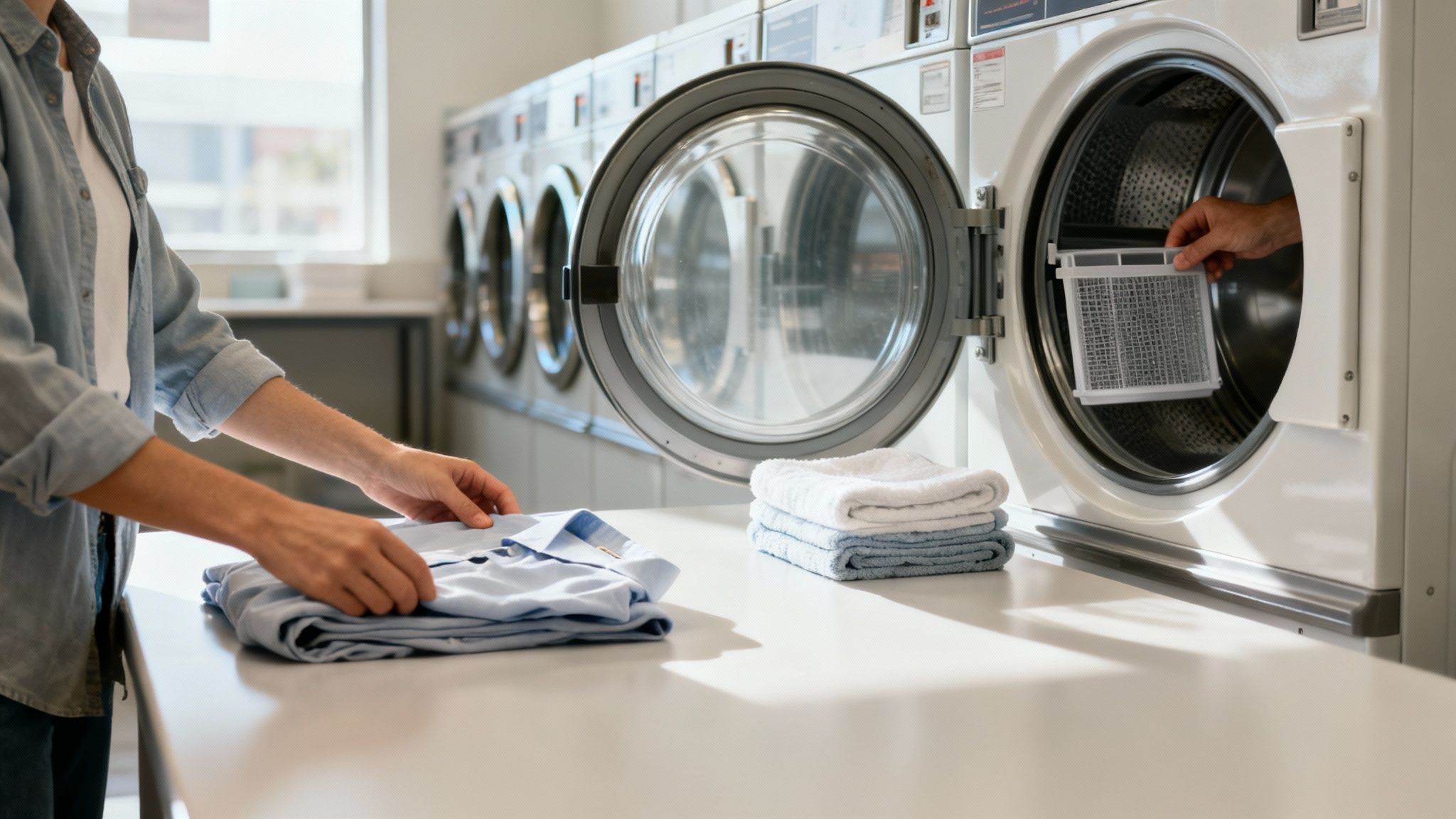
Once the washing machine dings, you're on the home stretch. But don't rush it—how you dry and fold your clothes is just as important as how you wash them. This is your chance to prevent wrinkles and head home with laundry that’s truly ready to be put away.
Before you even think about loading the dryer, do a quick pre-flight check. Pop open the door and find the lint filter. You absolutely have to clean it out every single time, even if it looks like there’s barely anything on it. A clogged filter chokes the airflow, making your clothes take forever to dry and creating a serious fire risk.
Next, stick your head in the drum and take a quick sniff. Just like with the washers, you want to make sure the last person didn’t dry anything with a funky smell that could latch onto your fresh, clean clothes.
Picking the Right Dryer Temperature
Using the wrong heat setting is a fast track to shrinking your favorite shirt or ruining delicate fabrics. Don’t just crank it to high and hope for the best. Think of the settings as specific tools for different jobs.
Here’s a breakdown of what to use and when:
- High Heat: This setting is purely for the heavyweights—think denim, thick towels, and bedding. It blasts them with enough heat to get the moisture out of those dense fibers.
- Medium Heat (Permanent Press): This is your go-to for most of your clothes. T-shirts, synthetic blends, and other everyday items do great here. It’s effective without being overly aggressive.
- Low Heat (Delicates): Anything stretchy, like your gym clothes, or delicate, like lingerie and thin blouses, needs low heat. It gently tumbles them dry, protecting their shape and elasticity.
- Air Fluff (No Heat): This is perfect for just fluffing things up. Use it on pillows, down jackets, or even dry-clean-only items you want to de-wrinkle with a dryer sheet.
Pro Tip: Whatever you do, don't over-dry your clothes. It’s the number one culprit behind fading colors, worn-out fabric, and wrinkles that refuse to budge. It's actually better to pull items out when they’re still the slightest bit damp and let them air dry the rest of the way as you fold.
Why You Need to Fold Immediately
As soon as that dryer stops, it’s go-time. If you let your warm clothes sit in a pile, either in the machine or your laundry basket, you’re basically inviting wrinkles to move in and get comfortable.
Grab your clothes and head straight for one of the large folding tables. Pull each item out, give it a good snap to shake out any lingering wrinkles, and fold it right away. Taking a minute to learn a few efficient laundry folding methods can make a huge difference here.
This simple habit of folding on the spot means you can go home and put everything directly into your drawers—no ironing required.
Laundromat Etiquette and Staying Safe
Walking into a laundromat is like stepping into a shared workspace for your clothes. Everyone's on a mission, and a little common courtesy goes a long way toward making the whole process smoother and more pleasant for all involved. Think of it as following the unwritten rules of the road.
The biggest rule? Be mindful of other people's time. We've all been there—staring down a row of finished dryers, all occupied, with no owners in sight. When your cycle ends, be there to move your clothes promptly. I always set a timer on my phone for two minutes before the machine is set to finish; that gives me just enough time to get back and be ready to unload.
Being a Good Laundromat Neighbor
Beyond the timing, a few simple acts of consideration can make all the difference. It's about treating the shared space with respect.
- Clean Up Your Mess: Spilled a little detergent? Wipe it up. Don't just leave your used dryer sheets sitting around. A quick toss in the trash bin keeps things tidy for the next person.
- Don't Hog Machines or Carts: It's tempting to "claim" a bunch of machines at once, but only use what you need right now. When you're done with a laundry cart, wheel it back to the waiting area so someone else can grab it.
- Respect Personal Space: Use the designated folding tables. It’s a bit of a faux pas to start folding your clean laundry on top of a washing machine someone else is actively using.
- Keep the Volume Down: A laundromat is already a symphony of humming and tumbling. If you’re watching videos or listening to music, pop in some headphones.
What do you do with clothes someone left in a machine? If a cycle has finished and the owner is MIA for more than 10-15 minutes, it's generally okay to carefully move their clothes to a clean cart or an empty spot on a folding table. Just never, ever put them on the floor.
This simple courtesy keeps the line moving and prevents a frustrating bottleneck.
Practical Safety Tips for Your Visit
Getting your laundry done is the goal, but your personal safety is paramount. While most laundromats are perfectly safe, it’s always smart to stay aware of your surroundings, especially if you’re doing laundry late at night or during a quiet weekday afternoon.
Try to pick a laundromat that's well-lit and has visible security cameras. When you walk in, just take a second to note where the exits are. Most importantly, keep your valuables on you at all times. Don’t leave your purse, wallet, or phone on a table while you’re loading a machine on the other side of the room.
And if you have kids with you, keep a close eye on them. The machines are big, heavy, and can get hot, so it’s best to keep little ones from playing on or around them. Following these common-sense tips will help make sure your laundry trip is productive and secure.
When to Skip the Laundromat Altogether
You’ve got the laundromat routine down to a science, from sorting at home to folding that last warm sock. But what if the best laundry hack isn't about doing the chore better, but not doing it at all? For a lot of us, the real win is getting that time back.
Think about what a typical laundromat trip actually costs you. You’re not just paying for the machines. You're spending time sorting, packing, driving, finding a machine, and then the real time-killer: waiting.
All told, you’re easily looking at a three-to-four-hour chunk of your weekend or evening gone. If you're a busy professional, a parent with a packed schedule, or just someone who values their downtime, that’s a heavy price to pay.
There's a Smarter Way to Do Laundry
This is exactly where a professional pickup and delivery service changes the game. Instead of you working around your laundry’s schedule, the service works around yours. It’s a complete flip of the script that puts your most valuable asset—your time—first.
Let’s paint a different picture:
- You book a pickup online in a couple of minutes.
- You leave your laundry bags on your doorstep.
- You go about your day.
That's it. While you’re at work, hitting the gym, or just relaxing on the couch, your laundry gets washed, dried, and perfectly folded by pros. It’s not just about getting a chore done; it’s about buying back a piece of your life. See just how easy it is in our complete guide to laundry pickup and delivery services.
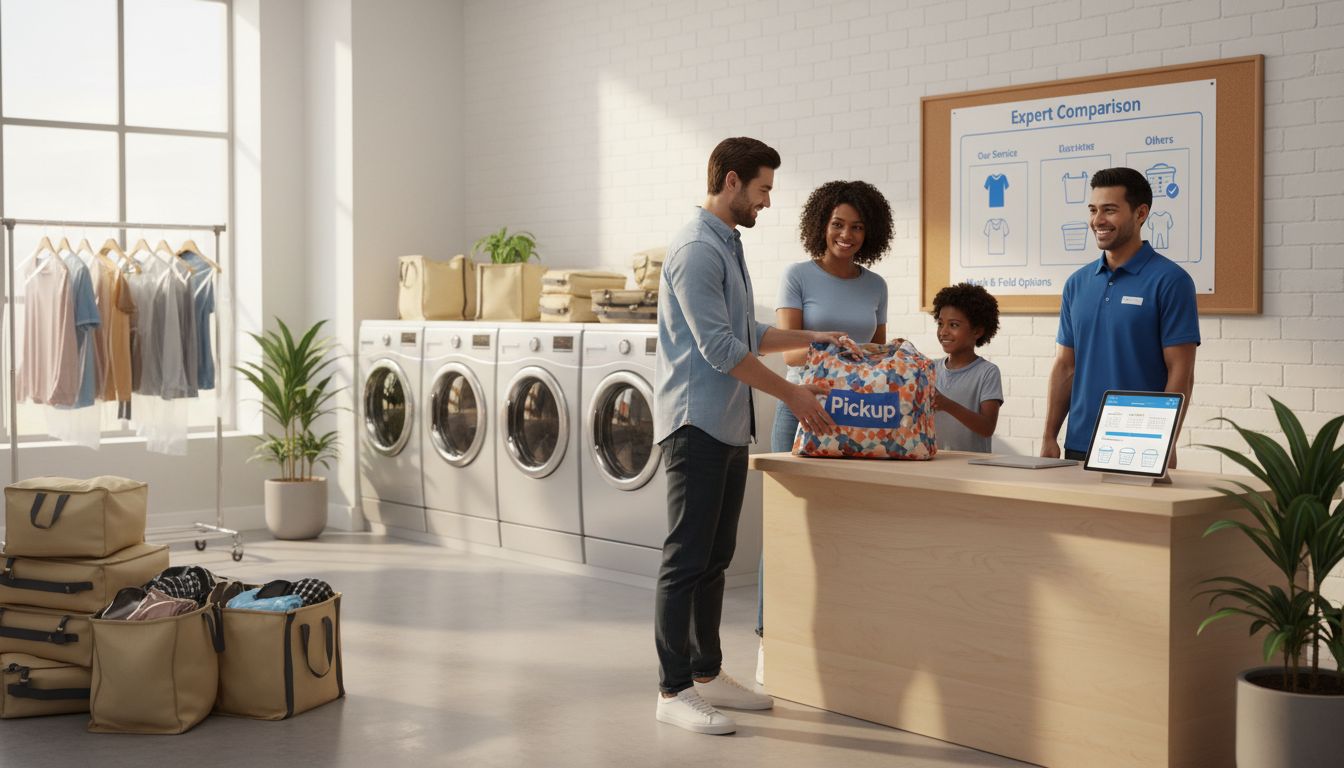
At Columbia Pike Laundry, we believe your weekends weren't made for laundromats. We handle the entire process—picking up your laundry, washing it with premium products (your clothes are always washed alone!), and delivering it back to you, fresh and perfectly folded.
Is a Laundry Service Right for You?
While anyone can appreciate the convenience, a pickup and delivery service is a lifesaver for people with demanding schedules. Busy parents get to spend more time with their kids instead of shuttling laundry bags. Professionals can stay focused on their careers without that mountain of clothes nagging them. Even small business owners, like gym or salon operators, can guarantee fresh linens without pulling staff away from their main jobs.
The choice really boils down to this: you can spend hours of your week managing the laundromat run, or you can have it all handled for you with zero effort.
DIY Laundromat vs. Columbia Pike Laundry Service
To make it even clearer, let's compare the two experiences side-by-side.
Ultimately, it’s not just about getting clean clothes. It's about deciding how you want to spend your time.
Got Questions? We’ve Got Answers.
Even the most seasoned laundromat pro has questions now and then. We get it. Here are some of the most common things people ask us, with straightforward answers to help you navigate your laundry day like an expert.
How Much Can I Actually Stuff in One Machine?
This is a great question, and the answer really depends on the machine’s size, which you'll see listed in pounds (like a 20 lb or 40 lb washer).
A good rule of thumb I always share is to fill the drum about three-quarters full. Don't pack it tight. Your clothes need room to tumble around so the water and soap can work their magic on every single item. If they're crammed in there, they just won't get properly clean.
It’s tempting to stuff it to the brim to save a buck, but it's a classic mistake that just results in dingy clothes. On the flip side, using a giant machine for just a few things is a waste of money. Finding that sweet spot is key.
Is It Okay to Leave My Laundry and Come Back?
Look, we all have errands to run. Popping out for a few minutes is usually fine, but leaving your clothes unattended for the entire wash and dry cycle isn't the best idea. It’s partly for security, but it’s also just good laundromat etiquette.
Nothing’s more frustrating than showing up to find every machine is full, with half of them holding finished, abandoned loads. It just creates a backup for everyone else.
A Practical Tip: The moment you press start, set a timer on your phone for a few minutes before the cycle ends. It’s a simple trick that shows respect for your fellow laundromat-goers and keeps your day on track.
What's the Real Difference Between Wash & Fold and Dry Cleaning?
We get this one a lot! They solve different problems for different types of clothes.
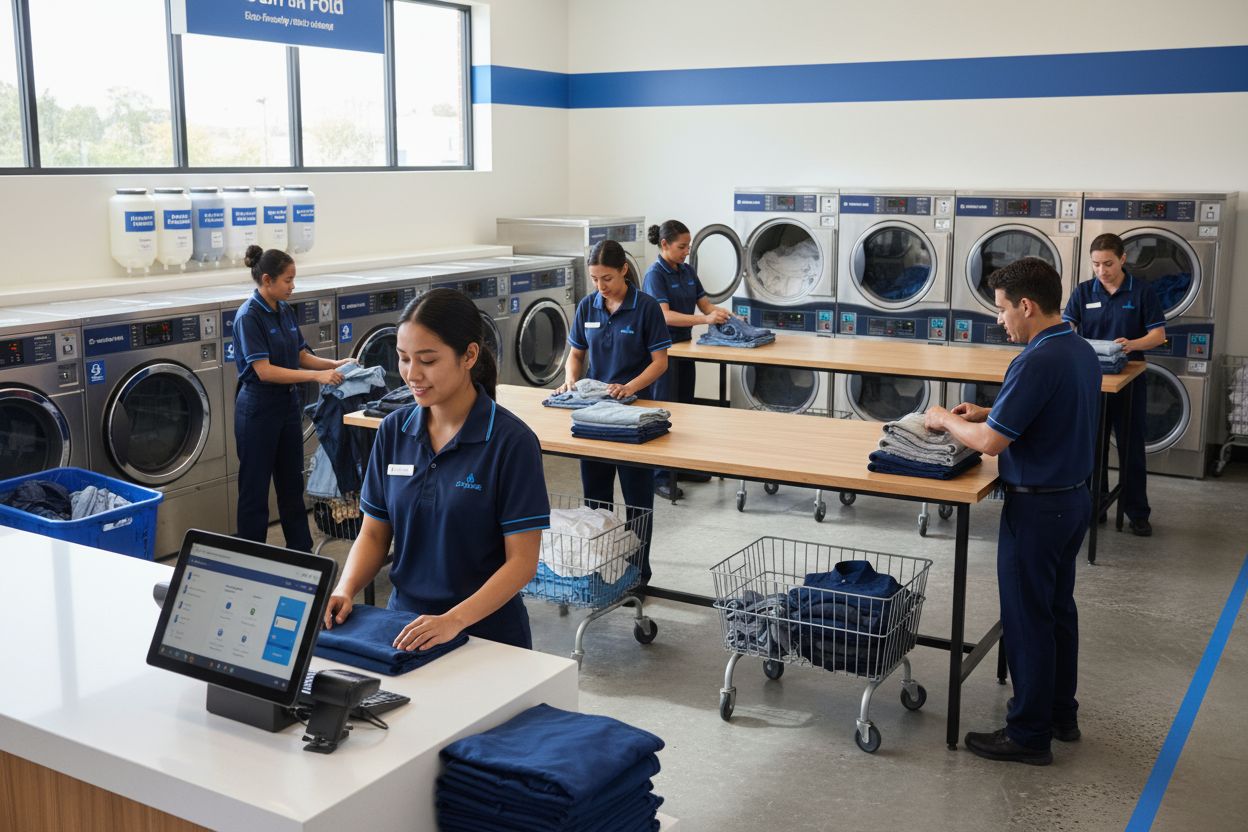
Think of our Wash & Fold service as your everyday laundry hero. It’s perfect for the durable stuff you wear all the time—your t-shirts, jeans, socks, towels, and bed sheets. We take care of the washing, drying, and folding, so everything comes back to you fresh and ready to be put away.
Dry Cleaning, on the other hand, is a specialized, water-free cleaning process meant for more delicate or structured items. We’re talking about your suits, wool coats, silk blouses, or anything with a "dry clean only" tag. A standard washing machine would ruin them.
At Columbia Pike Laundry, we handle both. Just be sure to put your regular laundry and your dry cleaning into separate bags when you send them in, and we'll take it from there.
You didn't outsource laundry. You bought back your weekend. Let Columbia Pike Laundry handle the details with our seamless pickup and delivery service. Schedule your first pickup at https://columbiapikelaundry.com and discover what you can do with your newfound free time.
Free pickup, expert care, delivered back to your door.
Popular Blog Articles

Meet the Author
Daniel Logan didn’t start CPL because he loved laundry. He started it because his family was drowning in time debt, and laundry was one of the biggest weights.
Mornings were chaos with two kids under 5. Evenings felt like catch-up. And weekends? Gone to sorting socks and folding piles.
He knew his story wasn’t unique. So he built a business that gave families like his just a little bit of breathing room one load at a time.
With no laundry experience but deep tech skills, Daniel rolled up his sleeves, doing every job himself while building systems that turned it into a modern laundry service that saves customers time, simplifies their lives, and delivers reliability they can count on.
That’s where CPL began. Not from a playbook, but from pain. From one dad trying to buy back time: for himself, and for every household like his.
Free pickup, expert care, delivered back to your door.