
7 Laundry Folding Techniques for Busy Families and Pros
Columbia Pike Laundry offers pickup & delivery across Northern Virginia.
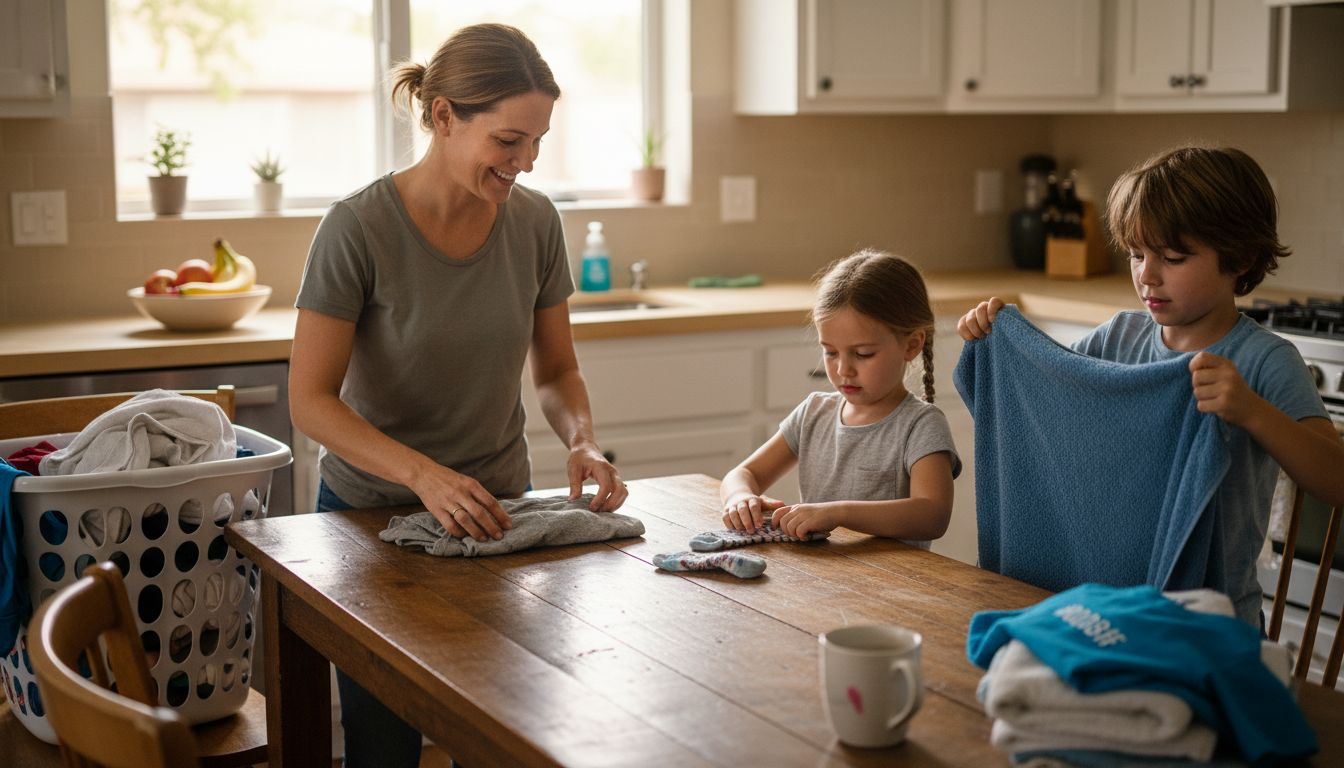
Over 70 percent of American households admit that cluttered closets and messy bedrooms add daily stress. Mastering the art of folding, from tees to linens, offers more than just a tidy home. With proven methods that save space and protect your favorite fabrics, you will discover practical ways to transform piles of laundry into organized calm while making every drawer and shelf work smarter for you.
Quick Summary
| Key Message | Explanation |
|---|---|
| 1. Learn the Basic Fold for T-Shirts | Folding t-shirts into uniform rectangles maximizes closet space and minimizes wrinkles, making items easier to store and locate. |
| 2. Master Towel Folding Techniques | The Standard Hotel Fold creates compact squares that save space, allow towels to dry faster, and enhance visual appeal. |
| 3. Utilize the Military Roll for Socks | Rolling socks tightly maintains their shape and maximizes storage, preventing the chaos of misplaced pairs. |
| 4. Apply the Retail Store Fold for Dress Shirts | This structured folding method reduces wrinkles and ensures dress shirts retain their shape for a polished look. |
| 5. Use Specialized Techniques for Delicates | The Preservation Fold and gentle rolling protect fragile fabrics and extend the life of treasured garments. |
1. Master the Basic Fold for Everyday Tees
Ever stared at a pile of wrinkled t-shirts wondering how to transform chaos into neatly organized perfection? Learning the basic fold for everyday tees isn’t just about looking tidy it’s about maximizing your closet space and creating a streamlined wardrobe that makes getting dressed a breeze.
The secret to a perfect basic fold starts with creating consistent, uniform rectangles that stack easily and minimize wrinkles. Begin by laying your t-shirt flat on a clean surface with the front facing down. Smooth out any existing wrinkles to create a crisp foundation for folding.
Here’s the step-by-step technique recommended by folding experts from the Global Montessori Network: First, fold the shirt vertically in half by bringing the side seams together. Next, fold the sleeves inward to create a straight edge. Then, fold the shirt horizontally into thirds, creating a compact rectangle that stands upright in drawers or stacks neatly on shelves.
Consistent folding does more than just look good. Uniform folds prevent unnecessary creasing, reduce fabric strain, and help you maximize storage space. When shirts are folded identically, they become easier to store, locate, and maintain.
Pro tip: Store your folded shirts vertically in drawers instead of stacking them horizontally. This “file folder” method allows you to see every shirt at a glance and prevents items at the bottom of the stack from becoming permanently wrinkled or forgotten.
2. Quick Tricks for Perfectly Folded Towels
Towel folding might seem like a mundane chore, but mastering this skill can transform your linen closet from chaotic to crisp. Imagine having a stack of towels that looks like it belongs in a luxury hotel rather than a cluttered bathroom shelf.
Interestingly, the science of folding is so precise that researchers at UC Berkeley developed a robot capable of autonomously folding towels, demonstrating just how complex textile manipulation can be. While you might not have a robotic assistant, you can still achieve professional results with a few strategic techniques.
The Standard Hotel Fold requires a systematic approach. Start by laying your towel completely flat on a clean surface. Fold the towel lengthwise into thirds, creating a long narrow rectangle. Then fold this rectangle into thirds again, resulting in a compact square that stacks beautifully and saves significant storage space.
Consistent folding does more than create visual appeal. Uniform folds help towels dry faster, reduce unnecessary fabric stress, and make your storage more efficient. When all your towels are folded identically, they become easier to organize, stack, and retrieve.
Pro tip: Always fold towels immediately after they are completely dry to prevent wrinkles and maintain a crisp appearance. Warm towels straight from the dryer fold more smoothly and retain their shape better than towels left to cool and settle.
3. Space-Saving Sock Folding Method
Socks are notorious for creating drawer chaos. One minute you have matching pairs, and the next you are hunting for lost partners in a tangled fabric labyrinth. The Global Montessori Network highlights the importance of organizational skills even for something as simple as sock management.
The Military Roll Method transforms sock storage from messy to magnificent. This technique not only saves significant drawer space but also keeps your socks neatly bundled and easily accessible. Begin by laying your socks flat with one sock slightly overlapping the other. Roll them together tightly from the toe end toward the cuff, creating a compact cylinder that prevents separation and reduces wrinkles.
This approach offers multiple benefits beyond simple organization. Tightly rolled socks maintain their shape better and resist stretching. They also create uniform stacks that maximize drawer space and make it simple to see exactly what you have at a glance. No more digging through jumbled sock piles or discovering orphaned singles buried at the bottom of your drawer.
For multicolored or patterned sock collections, consider rolling similar styles together. This method works brilliantly for athletic socks, dress socks, and even those quirky novelty pairs that tend to get lost in traditional folding systems.
Pro tip: Store your rolled socks vertically in drawer dividers or small boxes to maintain their shape and make selection easier. This “file folder” approach allows you to see every pair without disturbing the entire stack.
4. Effortless Ways to Fold Dress Shirts Neatly
Dress shirts can transform from wrinkled messes to crisp professional attire with the right folding technique. Proper shirt care techniques start the moment you remove them from the dryer.
The Retail Store Fold mimics how professional clothing stores display shirts. Begin by buttoning the shirt completely to maintain structure. Lay the shirt face down on a flat surface and smooth out any wrinkles. Fold both sleeves inward at a slight diagonal angle, creating a clean line from shoulder to cuff.
Next, fold the shirt vertically into thirds by bringing the side edges toward the center, creating a long narrow rectangle. Then fold this rectangle horizontally into thirds, starting from the bottom. The result is a compact square that prevents unnecessary creasing and maximizes storage efficiency.
Precision matters with dress shirts. This method not only saves space but also reduces wrinkles and maintains the shirt’s original shape. By folding strategically, you minimize fabric stress and keep your shirts looking professionally pressed.
Pro tip: Always fold dress shirts immediately after they are completely dry and slightly warm from the dryer. Warm fabric is more pliable and will hold crisp folds more effectively than shirts left to cool and settle.
5. Expert Tips for Folding Sheets and Linens
Sheet folding is an art form that transforms messy laundry into perfectly organized linen closets. Efficient linen management starts with understanding the unique challenges of folding large fabric items.
The Hospital Corner Method provides a professional approach to sheet folding that maximizes storage space and minimizes wrinkles. Begin with a freshly laundered sheet laid completely flat on a large surface. Fold the sheet in half lengthwise, then in half again, creating a long rectangular shape. Smooth out any wrinkles as you go to ensure crisp, clean lines.
For fitted sheets which notoriously challenge even experienced folders, start by holding the sheet lengthwise with your hands inside the top corners. Bring your hands together, folding the sheet in half and tucking the corners into each other. This technique transforms the awkward fitted sheet into a neat rectangle that stacks beautifully with other linens.
Consistency is key when organizing sheets. By developing a uniform folding method recommended by precise organizational experts from the Global Montessori Network, you can create a linen closet that looks professionally organized and saves significant storage space.
Pro tip: Store sheet sets together by folding the matching pillowcases and tucking them inside the folded fitted sheet. This keeps complete sets organized and makes bed changing day a breeze.
6. Folding Bulky Items Without the Mess
Bulky winter jackets, thick blankets, and oversized sweaters can transform your neat closet into a chaotic nightmare. Precise organizational techniques can help you master even the most challenging fabric items.
The Compression Fold Method works wonders for bulky clothing and linens. Start by laying the item completely flat on a clean surface. Smooth out any wrinkles and fold the item into thirds vertically, creating a long narrow rectangle. Then fold horizontally into thirds or quarters, depending on the item’s size. This technique significantly reduces volume and creates uniform stacks that maximize storage space.
For puffy jackets and down comforters, the key is removing excess air. Begin by buttoning or zipping the item closed to maintain its shape. Fold the sleeves or edges inward, then roll from the bottom up, pressing out air pockets as you go. The result is a compact bundle that takes up a fraction of its original size.
Strategic folding matters when dealing with large items. By understanding how to manipulate fabric volume, you can transform unruly clothing into neatly organized stacks that fit seamlessly into closets and drawers.
Pro tip: Store compressed bulky items in vacuum seal bags for maximum space savings, especially during seasonal clothing rotations. This method protects the items from moisture and dust while keeping your storage areas incredibly organized.
7. Custom Folds for Delicate or Special Requests
Some clothing items demand more than a standard fold. Professional laundry services understand that delicate fabric handling requires precision and expertise.
The Preservation Fold works brilliantly for wedding gowns, vintage garments, and heirloom textiles. This technique minimizes fabric stress by using acid free tissue paper between fabric layers. Begin by gently laying the garment flat, inserting protective tissue at critical fold points to prevent permanent creasing.
For silk scarves and delicate lingerie, the recommended approach involves gentle rolling instead of traditional folding. Lay the item on a clean flat surface, roll loosely from the narrowest point, and secure with a soft fabric tie or tissue paper band. This method prevents harsh creases that can damage fragile fabrics.
Specialized folding techniques protect garment integrity and extend the life of cherished clothing items. By understanding how different materials respond to folding, you can preserve the quality and appearance of even the most sensitive textiles.
Pro tip: Always wash delicate items in mesh garment bags and use the gentlest wash cycle to minimize fabric stress before applying any specialized folding technique.
This table summarizes various folding techniques for clothing and linens as described in the article, highlighting key methods, steps, and benefits.
| Technique | Steps | Benefits |
|---|---|---|
| Basic T-Shirt Fold | Lay flat, fold in half, fold sleeves, fold into thirds. | Maximizes space, minimizes wrinkles. |
| Standard Towel Fold | Lay flat, fold lengthwise into thirds, fold again into thirds. | Efficient storage, faster drying. |
| Military Sock Roll | Lay socks overlapping, roll tightly from toe to cuff. | Saves space, keeps pairs together. |
| Retail Dress Shirt Fold | Button up, fold sleeves inward, fold vertically into thirds, fold again. | Reduces wrinkles, maintains shape. |
| Hospital Sheet Fold | Fold lengthwise and again, smoothe wrinkles, fold fitted sheets carefully. | Maximizes space, minimizes wrinkles. |
| Compression Fold | Lay flat, fold vertically into thirds, and then horizontally. | Reduces volume, efficient storage for bulky items. |
| Preservation Fold | Use tissue between layers, fold gently, roll delicate items. | Protects fragile fabrics, extends garment life. |
Simplify Your Laundry Routine With Expert Folding and Professional Care
Managing laundry for busy families or demanding schedules can feel overwhelming, especially when striving for perfectly folded clothes, towels, and bulky items that stay neat and fresh. This article reveals essential folding techniques like the Military Roll for socks or the Compression Fold for bulky jackets to keep your wardrobe organized and save precious space. Yet even the best folding methods can be time-consuming and challenging when life gets hectic.
That is where Columbia Pike Laundry steps in to take that burden off your shoulders. Our family-owned service, rooted in Arlington, Virginia, offers meticulous Laundry Relief through expert wash and fold, dry cleaning, and customized folding preferences that match your exact needs. We handle everything in-house for outstanding quality control and provide convenient online scheduling for pickup or drop-off so you can reclaim your valuable time. Ready to experience hassle-free, perfectly folded laundry done for you Visit Columbia Pike Laundry today and discover how smart laundry solutions support your busy lifestyle with efficient care and organization.
Frequently Asked Questions
What are some quick laundry folding techniques for busy families?
Mastering the Basic Fold for everyday tees and the Military Roll Method for socks can save time and space. Start folding as soon as items are dried to maintain their shape and minimize wrinkles.
How can I fold towels to save space in my linen closet?
Using the Standard Hotel Fold will create neat stacks that look professional. Fold towels lengthwise into thirds and then again, resulting in compact squares that maximize storage efficiency.
What is the best way to fold dress shirts to avoid wrinkles?
The Retail Store Fold helps maintain the shirt’s shape while reducing creasing. Button the shirt, smooth out any wrinkles, and fold sleeves diagonally before folding down the body into thirds.
How do I properly fold fitted sheets?
Utilize the Hospital Corner Method to fold fitted sheets neatly. Start by holding the sheet lengthwise with your hands in the corners, bringing the corners together, and then folding into a rectangle for easy storage.
What folding technique can help with bulky items like jackets or blankets?
The Compression Fold Method is ideal for bulky items, reducing their volume significantly. Fold the item into thirds and roll it tightly to save space in your closet.
How should I handle delicate fabrics when folding?
For delicate items, use the Preservation Fold technique to minimize stress on the fabric. Insert acid-free tissue paper at critical fold points to prevent permanent creasing and maintain their quality.
Recommended
Free pickup, expert care, delivered back to your door.
Popular Blog Articles





Meet the Author
Daniel Logan didn’t start CPL because he loved laundry. He started it because his family was drowning in time debt, and laundry was one of the biggest weights.
Mornings were chaos with two kids under 5. Evenings felt like catch-up. And weekends? Gone to sorting socks and folding piles.
He knew his story wasn’t unique. So he built a business that gave families like his just a little bit of breathing room one load at a time.
With no laundry experience but deep tech skills, Daniel rolled up his sleeves, doing every job himself while building systems that turned it into a modern laundry service that saves customers time, simplifies their lives, and delivers reliability they can count on.
That’s where CPL began. Not from a playbook, but from pain. From one dad trying to buy back time: for himself, and for every household like his.
Free pickup, expert care, delivered back to your door.