
Life Without Laundry: Reclaim Your Weekends

Columbia Pike Laundry offers pickup & delivery across Northern Virginia.
Sunday evening hits, and the house starts asking the same tired questions. Are there clean uniforms for tomorrow. Where are the socks. Did anyone move the damp load to the dryer. Why is the machine running again when the weekend is supposed to be winding down?
For a lot of people, laundry doesn’t live in one room. It follows you around in the form of piles, reminders, and low-grade mental static. You notice it when you step over a basket in the hallway. You feel it when you hear the washer beep and know that if you ignore it now, you’ll be dealing with wrinkles later.
That’s why the idea of life without laundry resonates with busy families and professionals. It isn’t really about avoiding a chore. It’s about removing a repeating interruption from your week so your home feels lighter, your mind feels less crowded, and your time stops leaking away in small, familiar increments.
What if You Never Had to Do Laundry Again?
Many individuals don’t think of laundry as a major life problem. They think of it as background noise. That’s exactly why it becomes so exhausting.
A kitchen full of dishes announces itself. A broken appliance demands attention. Laundry is quieter than that. It builds slowly. One load becomes three. One basket becomes a chair covered in clean clothes that nobody has folded yet. Then the task stops being “wash these clothes” and becomes “manage this entire system again.”
The part nobody talks about
Laundry isn’t just washing. It’s noticing. It’s remembering. It’s checking care labels, separating colors, turning things right side out, emptying pockets, moving loads along, folding, putting away, and trying not to let damp clothes sit too long.
That’s why the fantasy of never doing it again feels so powerful. Not because people are lazy. Because they’re tired of being interrupted by something that never reaches a true finish line.
Practical rule: If a chore repeats endlessly and steals attention every few hours, it isn’t small. It’s a system problem.
In homes with children, laundry can shape the rhythm of the entire week. Someone is always changing, spilling, sweating, growing, or needing one specific item by tomorrow morning. In homes with two working adults, the friction is different but just as real. The clothes may not be scattered everywhere, but the task still sits there waiting for someone to own it.
A different way to think about it
The breakthrough comes when you stop asking, “How do I stay on top of laundry?” and start asking, “Why am I personally responsible for this in the first place?”
People outsource all kinds of repeating tasks when the trade makes sense. They hire help for taxes, lawn care, repairs, meal prep, and childcare. Laundry often stays in the house because it has always stayed in the house.
That habit hides the opportunity. A life without laundry can be practical, normal, and steady. It can mean your clothes still come back clean, sorted, and handled with care, but your Saturday no longer disappears into sorting piles and waiting on machines.
For many households, that shift does something deeper than free up time. It lowers the background pressure inside the home. There’s less negotiation, less procrastination, less blame, and less of that heavy feeling that the weekend is already half gone.
The True Cost of Your Laundry Pile
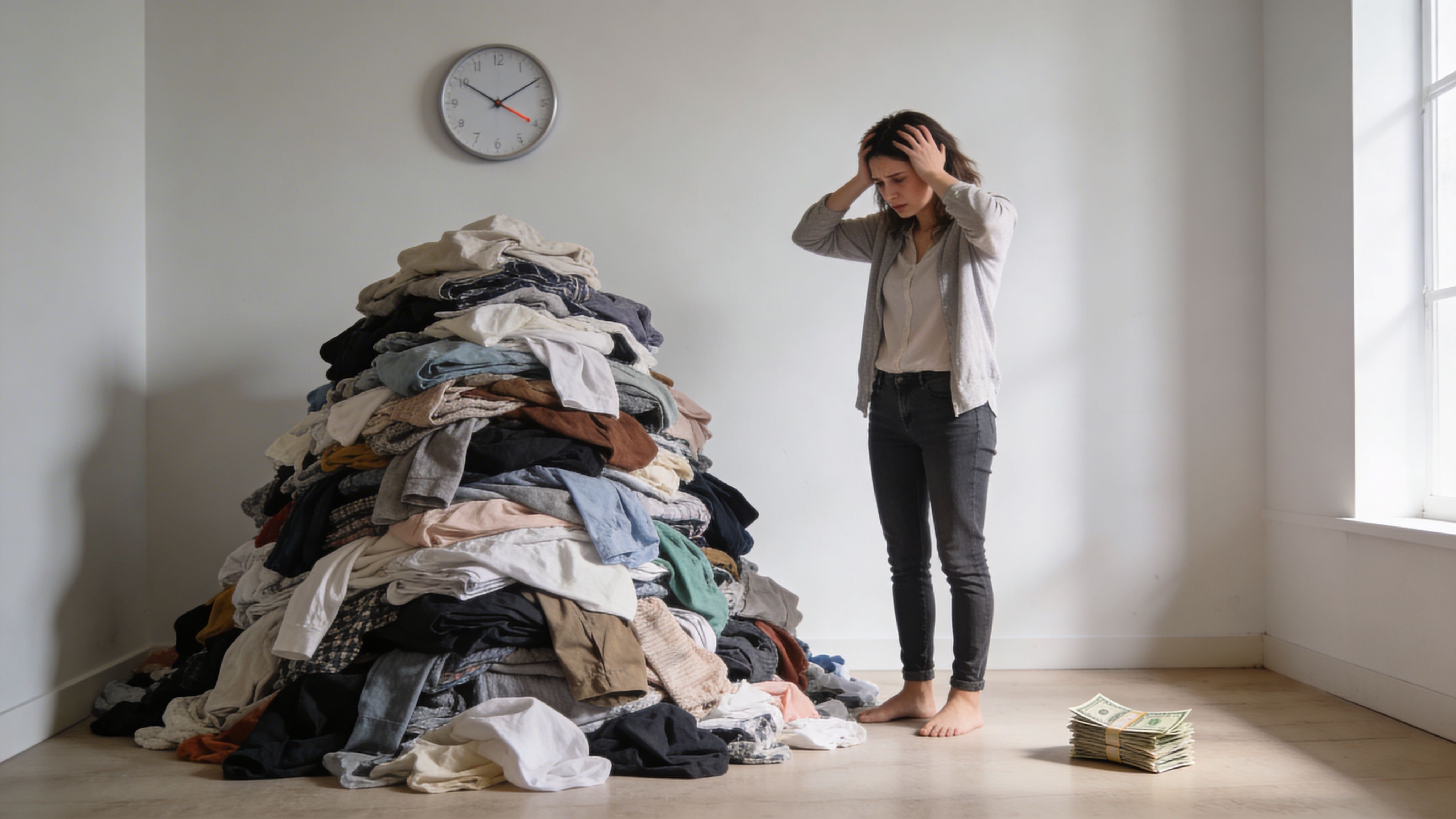
Laundry rarely feels expensive in the moment. A scoop of detergent, a quick load, ten minutes to fold a few shirts. The problem is that laundry almost never stays in that small, contained lane. It spreads into the hours around it, the mood of the house, and the low-grade pressure of knowing one more task is still waiting.
Time is the first bill
The average American household spends approximately 6 hours and 45 minutes per week on laundry, according to this breakdown of invisible laundry labor from Laundry Heap.
That number matters because laundry does not consume one clean block of time. It breaks up your day. You start a load before work, switch it at lunch, remember the dryer during dinner, then face the folding when your energy is gone. The hours are real, but the interruptions are what make the chore feel so draining.
In family life, those interruptions have a cost of their own. Attention gets pulled away from homework help, a slow breakfast, a walk, or simple rest. That is the psychological return people notice first when laundry leaves the house. Fewer mental tabs stay open.
The hidden cost is decision fatigue
Laundry is a recurring decision stack. What needs cold water. What cannot go in the dryer. Which uniform has to be ready tomorrow. Whether the towels can wait one more day. Who is out of socks. Which stain needs treatment before it sets.
A full hamper creates more than clutter. It creates unfinished business.
That mental load is one reason laundry causes friction at home out of proportion to the task itself. The basket in the hallway is not just fabric. It is a visible reminder that someone still has to notice, sort, start, switch, fold, and put away. Even clean laundry can keep the house feeling unsettled when it sits in stacks for two days.
Small systems can help at home, especially in households where clothes move between children, sports bags, and school routines. Something as basic as washable name labels for clothing can cut down on mix-ups and make the return trip from clean pile to drawer less chaotic.
Home laundry has direct costs too
The machine in your house is not free because you already paid for it. It still uses electricity and water. It still wears out. It still needs cleaning, repair, and eventually replacement. Detergent, stain treatment, dryer sheets, baskets, and lost time belong in the total.
That is why the comparison is not “Can I wash this at home?” The better question is “What does home laundry ask from my week, and is that trade still worth it?”
For many households, the answer changes once they price the task accurately. A local wash and fold pricing page makes that comparison easier because it puts a real number next to the time, utility use, and effort people usually absorb without noticing.
Here is the practical difference:
| Cost area | Doing laundry at home | Outsourcing |
|---|---|---|
| Time | You sort, wash, dry, fold, and put away | You hand off the repeating work |
| Utilities | You cover the operating costs | Those costs are built into the service |
| Maintenance | You deal with machine upkeep and replacement | No wear on your home machines for that order |
| Attention | You keep track of each stage | You get that mental space back |
Why this matters more than it seems
Many people can handle laundry. That has never been the question. The question that matters is what disappears because laundry keeps claiming the same hours and the same attention every week.
Usually it is the softer parts of life that get pushed out first. Rest. Margin. Patience. Time with kids that is not spent rushing them. A calmer evening. A weekend that feels restorative instead of administrative.
That is the true cost of the pile. It is not only measured in quarters, kilowatts, or soap. It is measured in how your home feels, and how much of yourself is left for the people living in it.
How a Professional Laundry Service Works
Saturday morning arrives, and the clothes are already handled. No sorting on the floor. No timer running in the background. No low-grade guilt about the load still sitting in the dryer. That is why this process matters. A good service removes a recurring source of household friction and gives those hours back in a form you can feel.
The handoff is simple
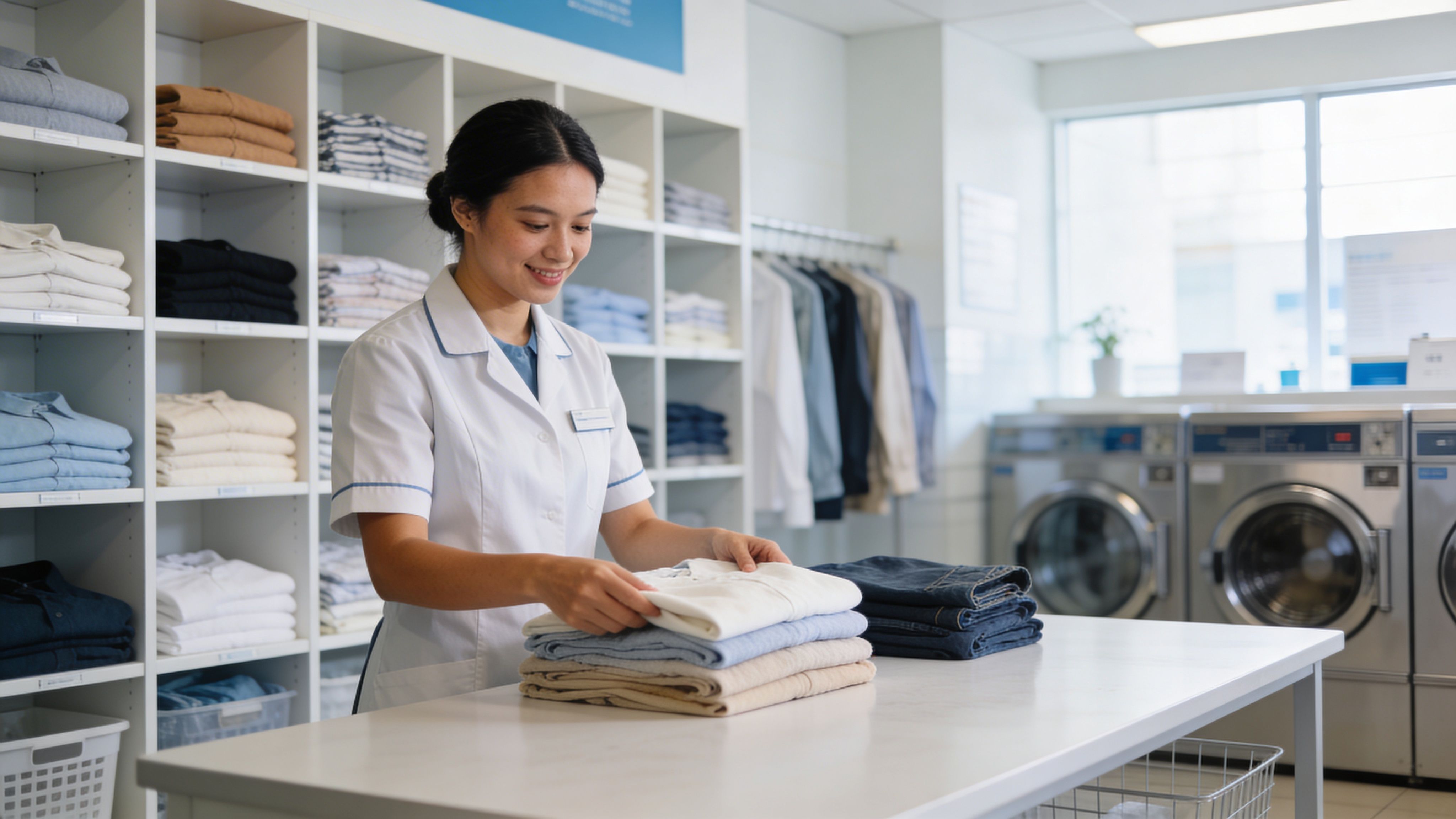
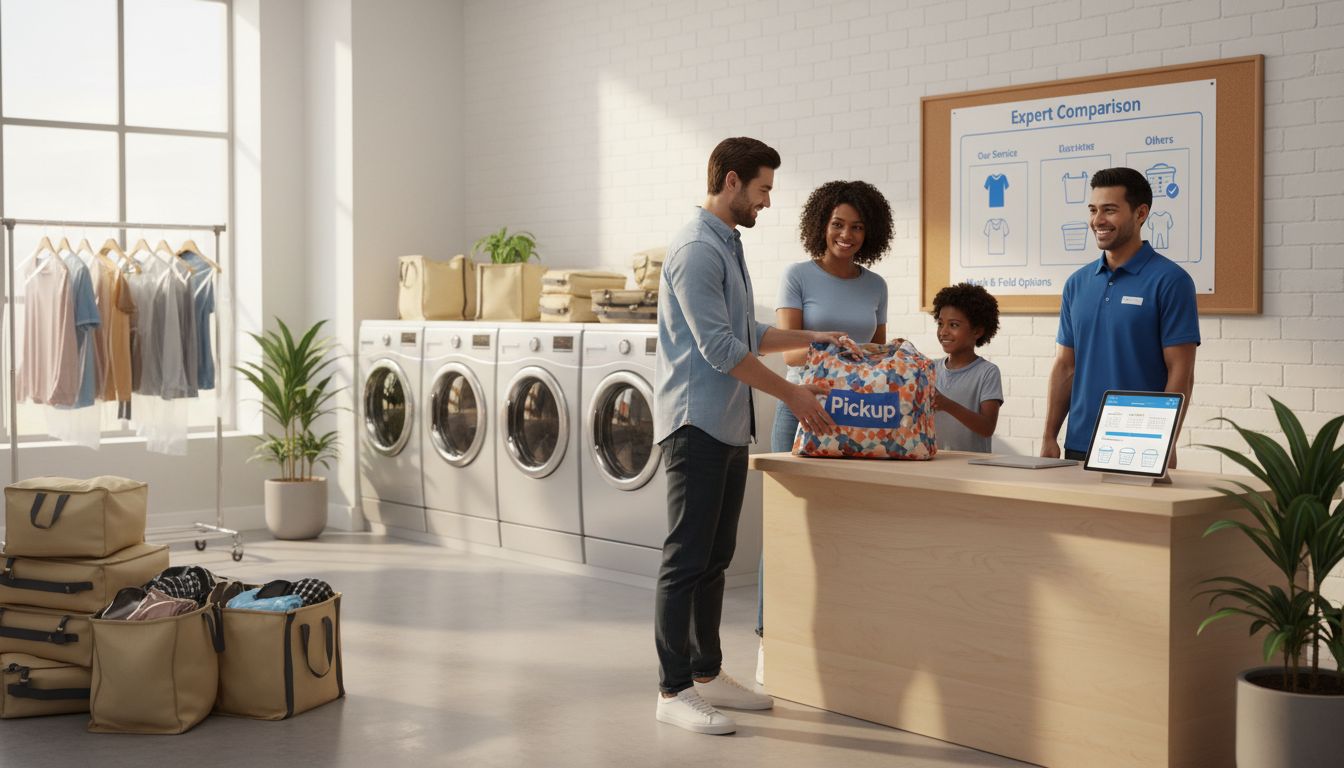
The first order is usually easier than people expect. Schedule a pickup, place everyday clothes in a bag, and keep dry cleaning separate from wash and fold items. Add notes for anything that needs different treatment, such as air-drying, hanging, or fragrance-free detergent.
That separation does two jobs. It protects specialty pieces, and it prevents small decision points from coming back to you later.
Labeling helps too, especially in households with school uniforms, sports gear, or clothing that moves between siblings. Using washable name labels for clothing can make it much easier to sort returned items back into the right rooms and drawers.
What happens after pickup
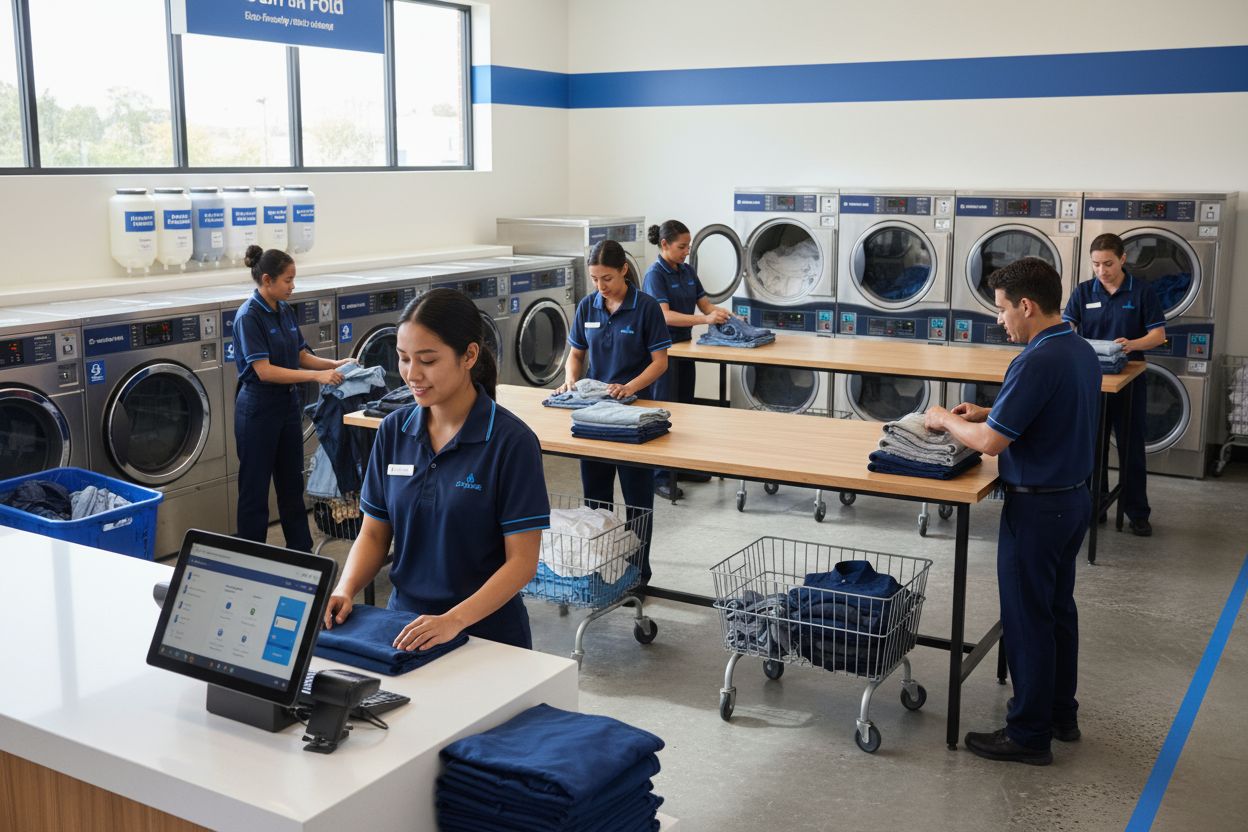
A professional service runs on process. Clothes are reviewed, sorted by type and care needs, cleaned according to the notes on the order, then dried, folded, or finished for return.
Here is the usual flow:
Intake and review
Staff check the order, read special instructions, and separate wash and fold from dry cleaning.Sorting by fabric and care needs
Colors, whites, delicates, and specialty items are handled in their proper categories.Cleaning based on your preferences
Requests like fragrance-free detergent, low heat, air-dry, or hang dry are applied to the order.Finishing and folding
Everyday items are folded for easy put-away. Dry cleaned garments are usually returned on hangers.Delivery back to your home
The order comes back ready to put away, which is the point. The job is finished, not paused.
If you want to see the available categories in one place, this local laundry service page explains them clearly.
Why professional handling changes more than the laundry
The practical benefit is obvious. Clothes come back clean and organized. The bigger benefit is mental. A repeating chore stops interrupting the week.
The primary advantage becomes apparent here. People are often less relieved by the washing itself than by the absence of constant background tracking. No one has to remember what is in the washer, what still needs folding, or whether there is time for one more load before bed. That reduction in mental load changes the tone of a home.
As noted earlier, a local service benchmark shows that a typical 15 lb order can reclaim a meaningful block of time from the week. The exact value depends on your household, but the pattern is consistent. When laundry leaves your calendar, attention returns to the people and routines that matter more.
Wash and fold versus dry cleaning
The only part that trips people up is choosing the right service for the right item. The rule is simple.
| Service type | Best for | Return style |
|---|---|---|
| Wash and fold | T-shirts, jeans, pajamas, towels, workout wear, kids’ clothes | Neatly folded |
| Dry cleaning | Suits, dresses, delicate fabrics, formalwear, structured garments | Usually on hangers |
A few clear notes improve results. “Hang work shirts.” “Air dry these leggings.” “Dry clean this blazer.” That is enough for most orders.
Once that routine is in place, the service stops feeling like an extra errand. It becomes a steady part of the household system, and one less thing competing for your patience.
Your Action Plan for a Laundry-Free Life
Saturday morning is usually where the problem shows itself. One person is hunting for clean socks, another is waiting on the dryer, and the day starts with a chore that already feels behind. A laundry-free life begins by stopping that cycle with a plan simple enough to keep.
The goal is not to build a perfect household system. The goal is to remove one repeating source of stress from the week. In practice, that usually takes three decisions: what goes out regularly, what needs special care, and how pickup happens without extra effort.
Start with one category that drains your week
A good first order is narrow.
Send the items that create the most friction first. For a family, that may be school clothes and pajamas. For an active household, it may be towels and workout wear. For working adults, weekday basics often create the main bottleneck because they affect mornings, not just laundry day.
Keeping the first order focused makes it easier to judge the service and easier to notice the relief. Use any bag you have. Separate dry cleaning or delicate pieces if needed. Add clear notes, then let the process work.
Set preferences once and stop repeating yourself
The long-term benefit is consistency. Every instruction you store now is one less decision later.
Useful preferences often include:
Detergent choice
Fragrance-free or Free & Clear can be a good default for households with sensitive skin.Hanging requests
Work shirts, blouses, and a few dresses are easier to put away when they return ready for the closet.Special care notes
Air-dry leggings, skip high heat, separate delicates. Short notes prevent avoidable mistakes.Pickup instructions
Porch, lobby, side entrance, front desk. Clear handoff instructions keep the routine easy.
A recurring pickup and delivery setup usually creates the most relief because it takes memory out of the equation.
Put the schedule on autopilot
Laundry creates stress partly because it keeps asking for attention. Even households that can physically get it done still have to track loads, timing, folding, and what is running low. A set schedule removes that background monitoring.
Weekly service fits larger families, homes with kids, uniforms, or heavy gym use. Bi-weekly service can work well for one or two adults with lighter loads. The right cadence is the one that keeps clothing from becoming a weekly negotiation.
I have seen the same trade-off come up again and again. Recurring service costs more than doing it yourself, but it often costs less than another lost evening, another tense Sunday, or another weekend hour spent catching up.
Treat it like a household stress reduction plan
People often justify outsourcing laundry as a convenience. It works better as a decision about energy.
When laundry leaves the house, the gain is not only clean clothes. The gain is fewer interruptions, fewer small arguments, and fewer moments where a basic task eats the time you meant to give your family or yourself. For parents, that can mean a calmer dinner hour. For couples, it can mean one less source of resentment. For anyone living alone, it can mean getting part of the weekend back without guilt.
A useful test is simple. If removing laundry would make home feel calmer, the value is already larger than the machine cycle.
Make a few small changes at home
You do not need a full reset. A few simple adjustments make the switch easier to keep.
Keep two visible containers
Use one bag or basket for everyday wash and fold, and one for dry cleaning or special care. That keeps sorting from turning into a last-minute project.
Add a two-minute pre-pickup habit
Empty pockets. Turn clothes right side out if needed. Pull out anything with special instructions. This small routine prevents the rushed check that usually happens at the door.
Tie pickup to an existing routine
Choose a day that already has structure. After school Tuesday. Before work Friday. Consistency matters more than the specific day.
What tends to break the system
The biggest problem is partial commitment. Households try to outsource laundry while still keeping half the burden in their own heads.
These patterns usually create more clutter than relief:
Using the service only in emergencies
That turns a helpful routine into a rescue plan.Keeping instructions unwritten
If preferences live in memory, someone still has to manage them every time.Sending mixed bags with no notes
The wider the mix, the more important clear sorting becomes.
A laundry-free routine should feel ordinary. Quiet. Predictable. That is usually the sign it is working.
Answering Your Biggest Laundry Service Questions
Sunday night is often when the doubts show up. A full bag is sitting by the door, school clothes are needed in the morning, and the question is not whether laundry can be washed. It is whether handing it off will make life easier or create a new kind of stress.
That concern is reasonable. Clothes are personal, and a laundry routine affects privacy, comfort, timing, and trust. The questions below are the ones that matter.
Is my laundry washed with other people’s clothes
A professional wash and fold service should keep each customer’s order separate. That is the standard to look for.
If a provider is vague on this point, ask directly before using them. Clear separation protects hygiene, reduces mix-ups, and gives people the confidence to stop mentally tracking every sock and shirt.
What about delicate pieces and special garments
Delicates, structured garments, and formalwear usually need a different process than everyday wash and fold. Good service starts with sorting those items correctly, then following the care label and the fabric’s actual needs.
Some cleaners use GreenEarth for dry cleaning, which GreenEarth Cleaning describes as a silicone-based process designed to be gentler on many fabrics than traditional perc cleaning. The practical takeaway is simple. Specialty items often benefit from professional handling, and they should not be tossed into the same routine as gym clothes, towels, and kids' pajamas.
Will they follow my preferences
Yes, if the instructions are specific and repeatable.
Short notes work best. “Fragrance-free detergent.” “Hang work shirts.” “Air dry leggings.” “Dry clean wool sweater.” Those directions are easy for a team to follow and easy for you to keep consistent from order to order.
Vague requests create problems. “Be careful” does not tell anyone what to do differently.
Can a service handle stains
Often, yes. Results depend on the fabric, the stain, and how long it has been there.
Flag stained items early. A simple note gives the staff a better chance to inspect and treat the spot before heat or delay makes it harder to remove.
Good cleaners are honest about stain work. Some stains lift completely. Some fade. Some stay visible.
Will I get my clothes back in time
Usually, yes, if your pickup and return schedule matches your real week.
Laundry service works best as a standing routine, not a last-minute rescue. If school uniforms, workwear, or kids’ bedding are needed on certain days, build around that. Ask about turnaround times for formalwear, dry cleaning, or unusual fabrics, since those items can take longer than standard wash and fold.
Is outsourcing worth it if I already have machines at home
For many households, yes. Home machines clean clothes. They do not remove the planning, the switching, the folding, the pile on the chair, or the low-grade stress of always being behind.
That is the value. Outsourcing laundry buys back attention. It reduces one recurring source of friction in the house, which can make it easier to balance work and family life without spending every weekend catching up on domestic tasks.
The trade-off is cost and a little upfront coordination. For people who want more time, fewer arguments about chores, and less mental clutter, that trade is often worth making.
What if I’m particular about how things are folded
That is common, and it usually has an easy fix.
Decide which preferences matter at home and which ones do not. Maybe shirts need to be hung. Maybe each child’s clothes should stay grouped together. Maybe towels only need to be clean and stackable. Once those priorities are clear, the service can usually follow them with much less effort than doing everything yourself.
Perfection is not the goal. Relief is. When the system returns clothes in a way that supports your home, the mental load drops with it.
Reclaim Your Weekends with Columbia Pike Laundry
The deeper promise of life without laundry isn’t convenience. It’s recovery.
When Hans Rosling praised the washing machine as one of the greatest inventions of the industrial revolution for liberating women’s time, he was pointing to something bigger than an appliance. He was naming the power of removing repetitive domestic labor so people can invest that time elsewhere, a point reflected in this discussion of laundry access and social impact.

Laundry services are the modern extension of that same idea. In homes that already have washers and dryers, they still free up time for family, education, recovery, and plain old breathing room.
What a free weekend actually looks like
It usually doesn’t turn into some dramatic, cinematic transformation. It looks smaller and better than that.
A parent drinks coffee while it’s still hot. A couple takes the kids out without mentally calculating whether there’s time to rotate loads later. A Sunday evening feels calmer because school clothes are already handled. The apartment sounds quieter because no one is waiting on the final dryer cycle before bed.
Those changes matter because they improve the quality of ordinary hours.
The family shift people notice first
The first gain is time. The second is mood.
When laundry leaves the house, it often takes a few familiar tensions with it. No more asking whose turn it is. No more stacks parked on the guest bed. No more guilt about the clean load that sat too long or the damp one that needs rewashing.
For families trying to balance work and family life, removing one recurring household burden can make the whole week feel less reactive. Not perfect. Just less crowded and more livable.
A local solution for a very common problem
In Arlington, Alexandria, DC, and nearby areas, people aren’t struggling with laundry because they’re disorganized. They’re struggling because modern life asks a lot. Work expands. School schedules sprawl. Kids need gear. Adults need professional clothes. Home chores don’t shrink to make room.
That’s why outsourcing laundry isn’t indulgent. It’s strategic.
If a service reliably returns your clothes clean, folded, and ready to put away, then what you bought wasn’t just cleaning. You bought margin. You bought a more peaceful weekend. You bought one less thing hanging over the house.
A good service doesn’t just remove a task. It changes the emotional texture of the week.
That’s the true secret behind life without laundry. The clothes matter, but the peace matters more.
Columbia Pike Laundry helps families and busy professionals in Arlington, Alexandria, DC, and surrounding areas step out of the laundry loop with dependable pickup, delivery, wash and fold, and dry cleaning. If you’re ready to buy back your weekends and make clean clothes someone else’s job, schedule your first order at Columbia Pike Laundry.
Free pickup, expert care, delivered back to your door.
Popular Blog Articles




Meet the Author
Daniel Logan didn’t start CPL because he loved laundry. He started it because his family was drowning in time debt, and laundry was one of the biggest weights.
Mornings were chaos with two kids under 5. Evenings felt like catch-up. And weekends? Gone to sorting socks and folding piles.
He knew his story wasn’t unique. So he built a business that gave families like his just a little bit of breathing room one load at a time.
With no laundry experience but deep tech skills, Daniel rolled up his sleeves, doing every job himself while building systems that turned it into a modern laundry service that saves customers time, simplifies their lives, and delivers reliability they can count on.
That’s where CPL began. Not from a playbook, but from pain. From one dad trying to buy back time: for himself, and for every household like his.
Free pickup, expert care, delivered back to your door.