
Natural Fabric Softener A Guide to Softer Healthier Clothes
Columbia Pike Laundry offers pickup & delivery across Northern Virginia.
Let's be honest, we all want soft, cozy laundry. But what if you could get that result without the mystery chemicals found in most conventional fabric softeners? That's where a natural fabric softener comes in.
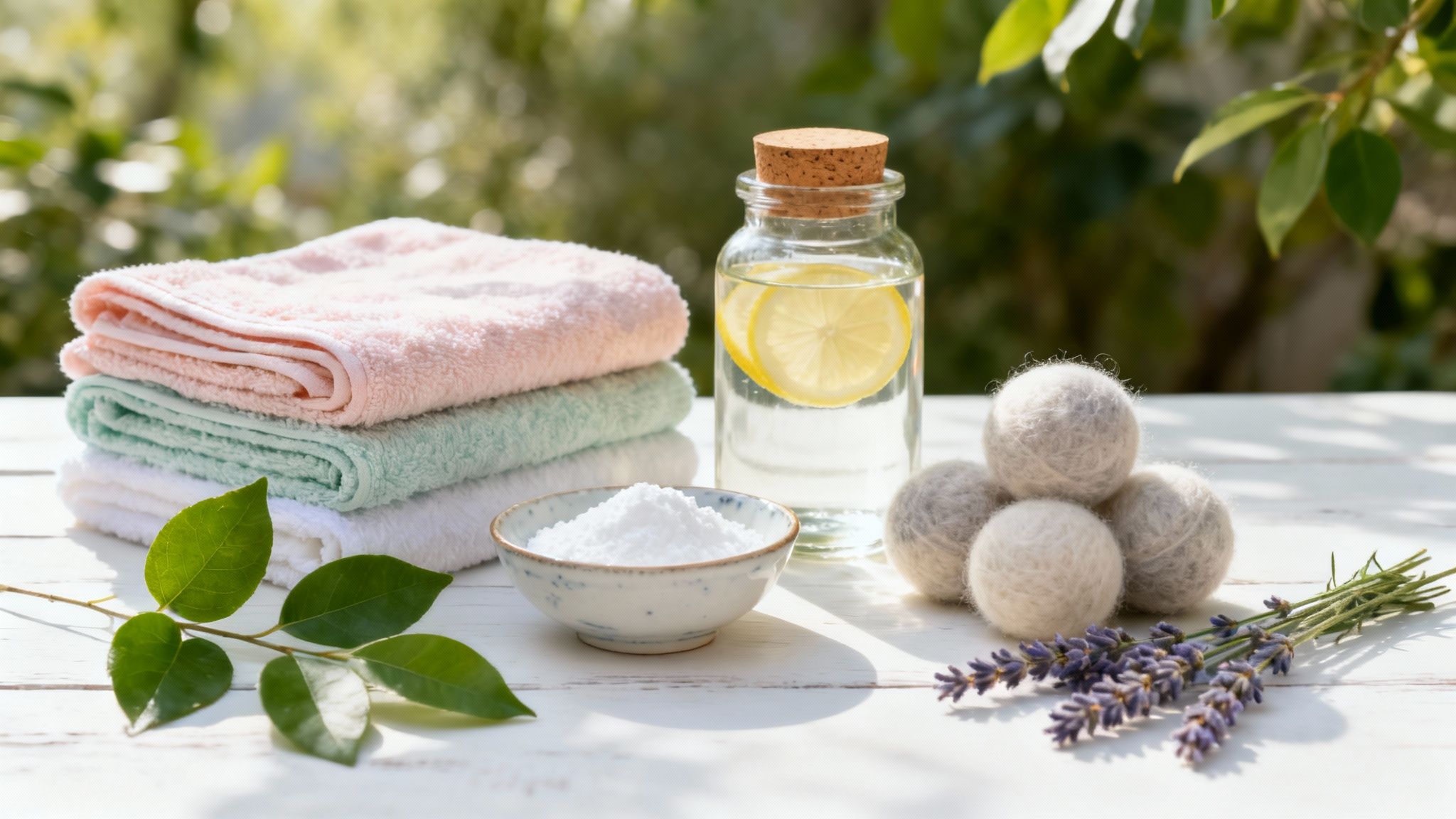
Put simply, it's a laundry product made from ingredients you can actually recognize—think plant-derived or mineral-based things like white vinegar, baking soda, or even wool. Instead of coating your clothes in synthetic softeners, these natural alternatives work to reduce mineral buildup and get rid of static cling, leaving your clothes feeling genuinely soft.
Understanding The Natural Approach To Softer Clothes
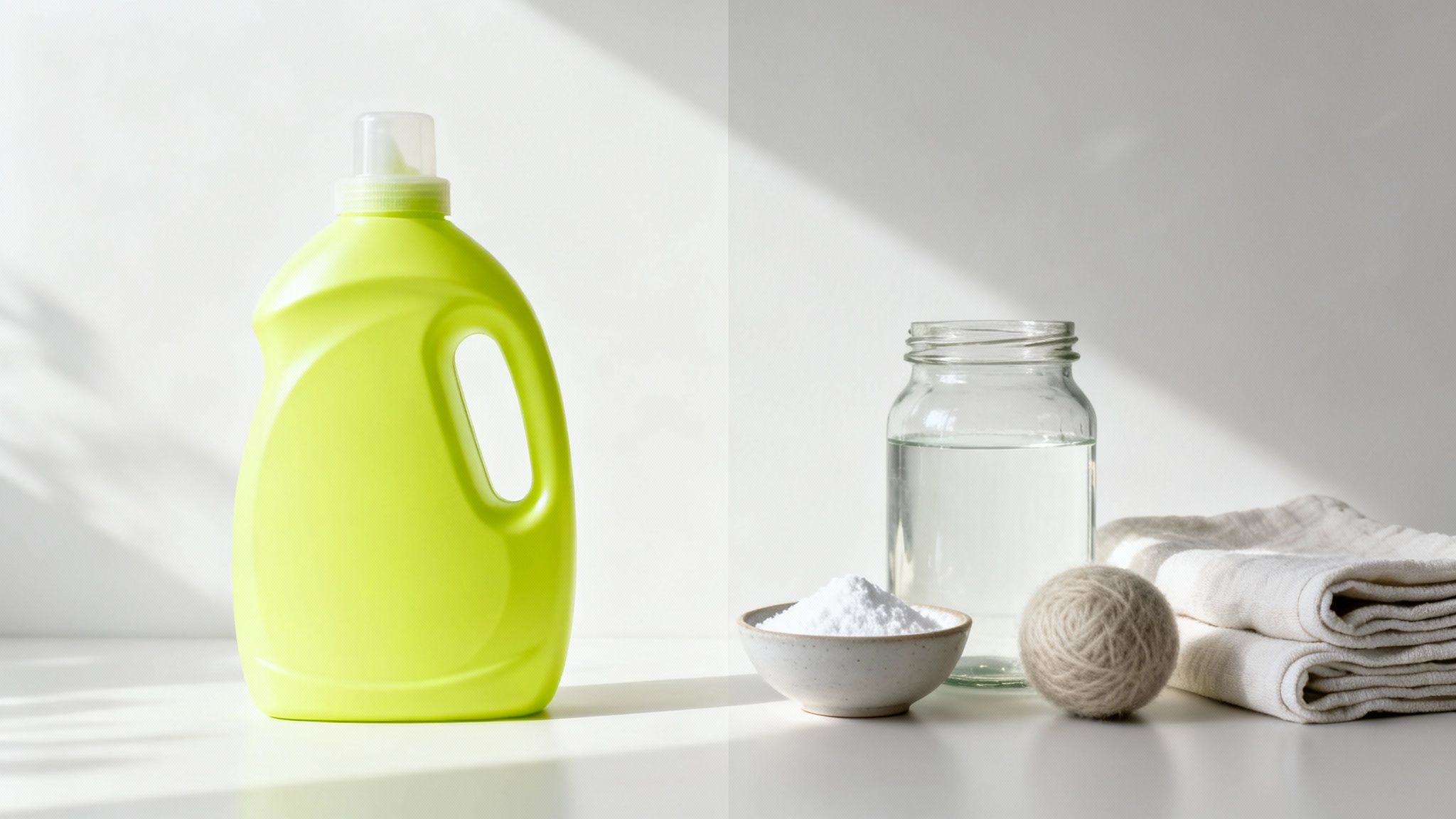
Think of it like this: a conventional fabric softener is like putting conditioner on your hair without rinsing. It leaves a film behind to create a slick, soft feeling. A natural softener, on the other hand, is like using a clarifying shampoo to wash away all the gunk and restore your hair's natural texture.
Most store-bought softeners use chemicals to coat fabric fibers with a waxy, lubricating layer. While this makes clothes feel smooth and cuts down on static, it can also trap detergent residue and, over time, make things like towels and workout gear less absorbent. If you're curious about how they work, we break it down in our guide on what fabric softener is used for.
A natural fabric softener works differently. It goes after the root cause of stiff, scratchy clothes—which is usually mineral deposits from hard water and leftover detergent. Ingredients like distilled white vinegar gently dissolve that buildup, freeing the fabric fibers to be their naturally soft selves without leaving any film behind.
This isn't just a niche trend. More and more people are looking for simpler laundry solutions. Projections show that organic fabric care products are on track to grab 41.5% of the market share by 2025. The demand is real, with the organic segment expected to grow at a rate of 7.41% through 2031, easily outpacing the conventional market.
Natural Vs Conventional Fabric Softeners At A Glance
To make it even clearer, here's a quick side-by-side look at how these two approaches stack up.
The choice really comes down to what you prioritize: a quick-fix coating or a genuine, residue-free softness that's better for your skin, your clothes, and the planet.
Why People Are Ditching Conventional Softeners
Those brightly colored bottles in the laundry aisle make a lot of promises—cuddly-soft clothes, mountain-fresh scents. But more and more people are starting to look past the pretty packaging. They're ditching conventional fabric softeners, and it's not just about what’s in them, but about what they do to clothes and washing machines over time. The reasons usually boil down to a few common, very real frustrations.
The core of the issue is how these products get that signature softness. Imagine coating a beautiful wood table with a thick layer of wax. At first, it feels super smooth, but soon that wax builds up, masking the wood's natural grain. Conventional softeners do something very similar to your clothes, using chemicals like quaternary ammonium compounds (often called "quats") to leave a lubricating film on every single fiber.
It’s this leftover residue that causes some of the most frequent laundry headaches.
The Problem With Waxy Buildup
With every wash, that waxy coating gets a little thicker, and you start to notice your fabrics just don't perform like they used to. It's like the softener creates a water-resistant barrier on your clothes—which is the exact opposite of what you want for most items. This is where a simple swap to a natural fabric softener can make a world of difference.
Here are the most common complaints I hear:
- Less Absorbent Towels: Ever dry off with a towel that feels soft but just seems to push water around? That's the waxy film at work, preventing the fibers from actually absorbing moisture.
- Stifled Athletic Wear: Your workout gear is specifically designed with moisture-wicking tech to pull sweat away from your skin. Softener residue clogs the fabric's pores, trapping sweat and odor instead of letting them out.
- Dingy Whites: That sticky buildup can act like a magnet for dirt and grime, locking it into the fibers of your clothes and making your whites look dull and yellowish over time.
This buildup doesn’t just impact performance. A study from Virginia Tech found that the fatty lubricants in some liquid softeners can actually make certain fabrics, especially cotton, more flammable.
Skin Irritation And Lingering Chemicals
Beyond what it does to fabric, the ingredients themselves are a huge red flag for many families, especially those with sensitive skin. The synthetic fragrances and preservatives that create those powerful scents are some of the most common culprits behind skin irritation and allergic reactions from laundry detergents and softeners.
What begins as a search for softer laundry can easily lead to mysterious rashes or itchiness. That "fresh linen" smell is often a complex cocktail of chemicals designed to stick to fabric, meaning it's in direct contact with your skin all day long. For families with kids or anyone dealing with eczema, switching to a natural fabric softener isn't just a lifestyle choice—it's a practical move toward a more comfortable, irritation-free home.
The Best Household Ingredients For Softening Clothes
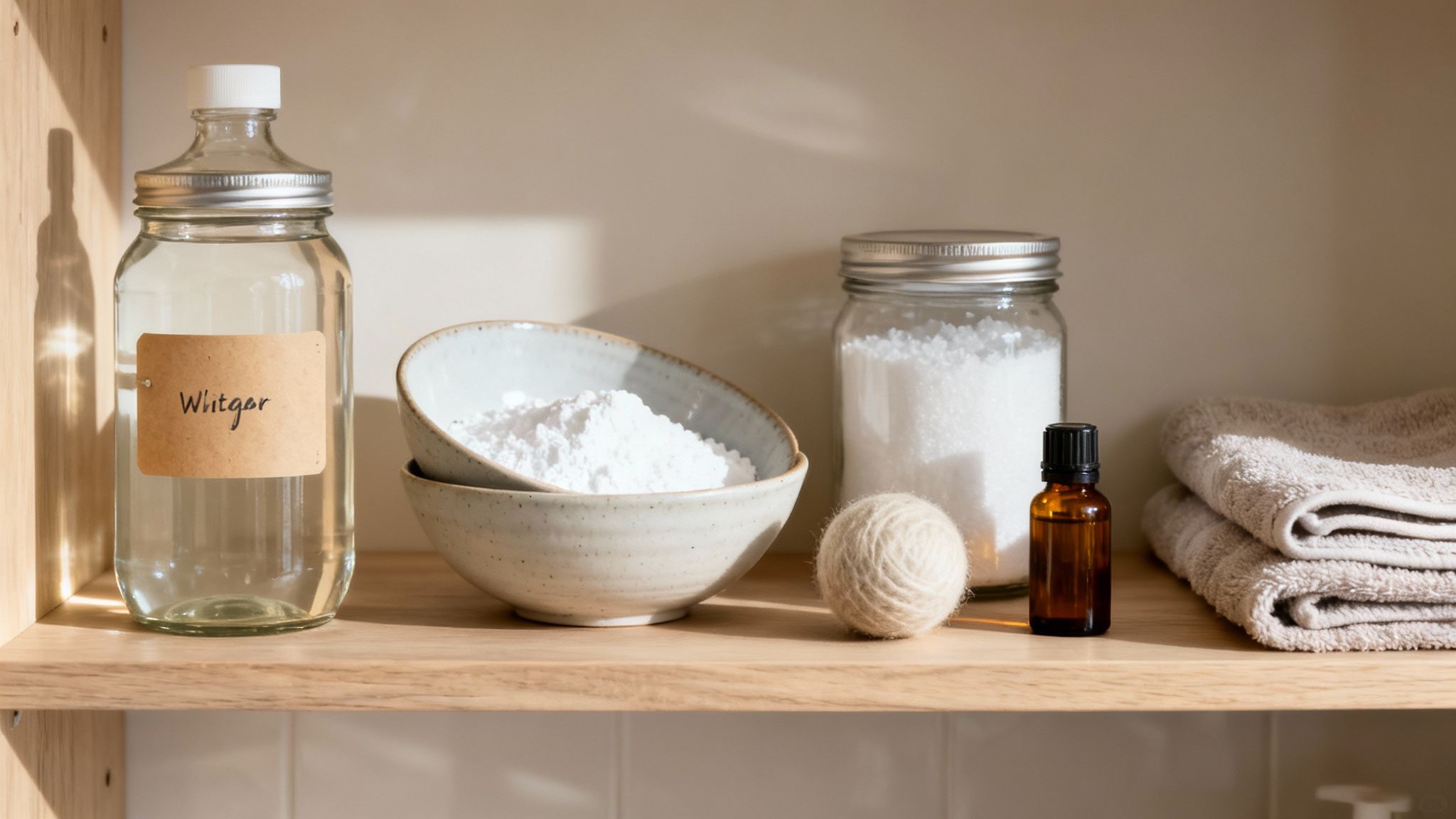
Making the switch to a natural fabric softener doesn't mean you need to hunt down specialty products. The truth is, some of the most effective ingredients are likely already in your kitchen pantry, ready to completely change how you do laundry. These everyday items are simple, powerful, and incredibly easy on your wallet.
Let's break down how these household heroes work their magic. You'll quickly see how a few small changes can make a world of difference in the feel of your clothes—all without the waxy chemical coatings that commercial softeners leave behind. It’s all about making laundry care feel simple and accessible.
Distilled White Vinegar: The Residue Buster
Think of distilled white vinegar as a clarifying rinse for your clothes. The number one culprit behind stiff, scratchy fabrics is often the buildup of leftover detergent and hard water minerals. The gentle acetic acid in vinegar is fantastic at dissolving all that gunk, which allows the fabric fibers to relax and feel naturally soft again.
It's so easy to use. Just pour about a half-cup of white vinegar into the fabric softener dispenser of your washing machine. It gets added during the final rinse, and don't worry about the smell! The vinegar scent washes out completely, leaving your laundry smelling perfectly fresh and clean, not like a salad dressing. This one ingredient is a total game-changer, especially for bringing towels back to their fluffy glory.
Baking Soda: The Gentle Deodorizer
From the garden to the laundry room, baking soda is a must-have for natural cleaning. When you add it to your wash, baking soda (sodium bicarbonate) acts as a natural water softener. By helping to balance the water's pH level, it prevents hard water minerals from settling into your fabrics in the first place.
Not only does this stop your clothes from feeling stiff, but it also gives your detergent a little extra cleaning muscle. And for a great bonus, baking soda is an amazing deodorizer, tackling stubborn smells in workout gear or musty towels with ease. All you have to do is toss a half-cup right into the drum with your clothes before you start the wash.
Pro Tip: Vinegar and baking soda are both fantastic, but they work best alone. If you mix them in the same rinse cycle, they’ll just neutralize each other and you won't get the benefits of either. Stick to using one per load for the best results.
Wool Dryer Balls: The Static Eliminator
Is static cling the bane of your laundry existence? If so, wool dryer balls are about to become your new best friend. They are a brilliantly simple and reusable alternative to dryer sheets, and they work by physically tumbling around with your laundry.
Here’s a quick look at how they deliver softer, static-free clothes:
- Better Airflow: The balls separate your clothes, letting the hot air move around more freely. This can even shorten your drying time by 10-25%.
- Gentle Agitation: As they bounce around in the dryer, they gently fluff up the fabric fibers, making everything feel softer.
- Static Reduction: Wool naturally absorbs a bit of moisture, which creates a slightly more humid environment inside the dryer. This humidity is key to preventing static electricity from building up.
Using a natural fabric softener really is that straightforward. If you’re hungry for even more ideas, our complete guide on how to soften fabrics is packed with extra tips and tricks to perfect your laundry routine.
Simple DIY Natural Fabric Softener Recipes
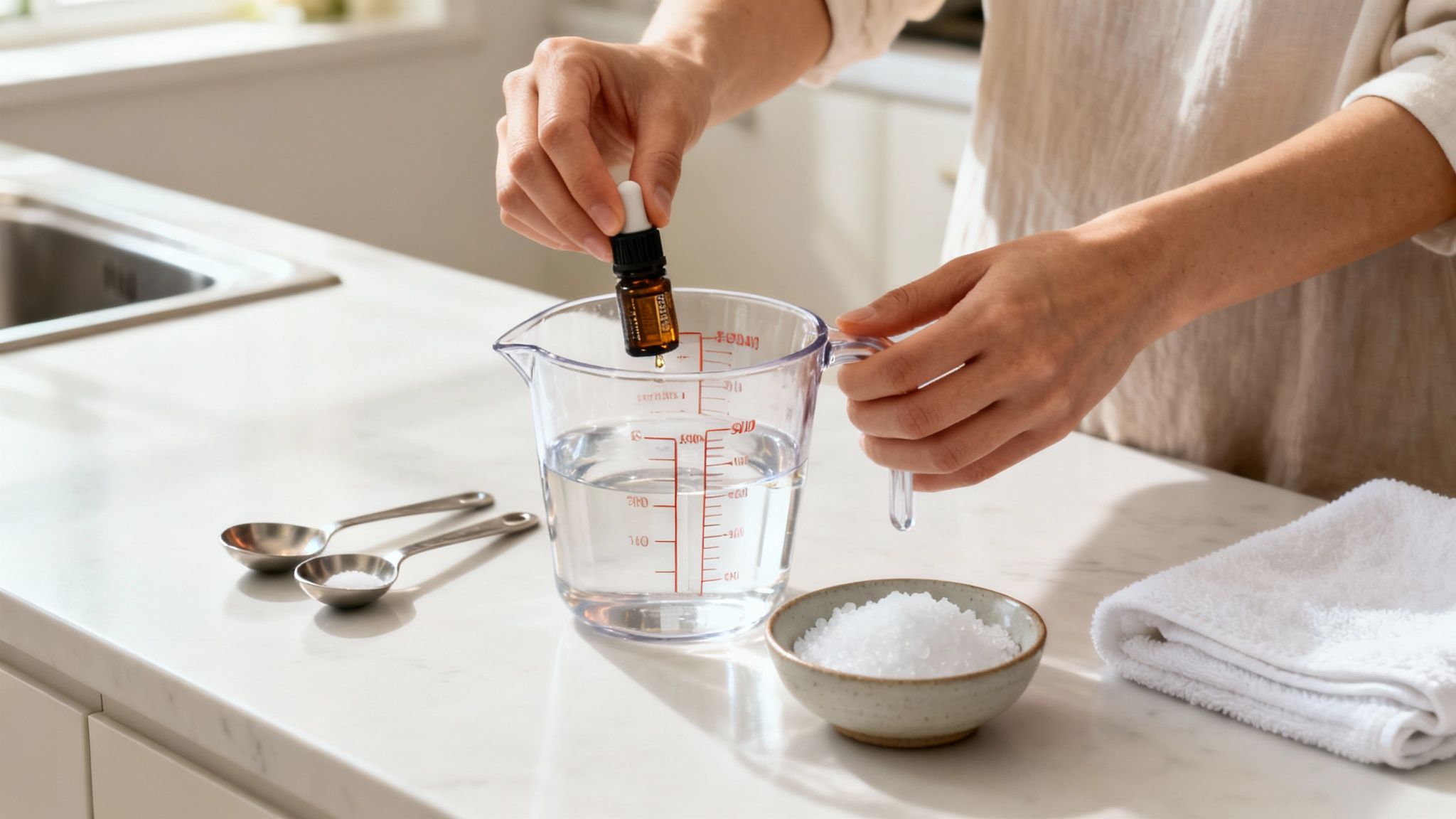
If you're the kind of person who likes a hands-on approach, you’ll love this. Making your own natural fabric softener is not just easy, it's incredibly rewarding. You can whip up a batch in just a few minutes using stuff you probably already have in your pantry.
These DIY recipes put you back in the driver's seat, giving you total control over what touches your family's clothes. No more squinting at long chemical lists. These formulas are simple, safe, and honestly, they work like a charm.
Here are three of my favorite foolproof recipes to get you started.
The Basic Vinegar Rinse
This is the classic, the original, the simplest way to get softer clothes, naturally. Vinegar is brilliant because it dissolves the soap and mineral buildup that makes fabrics stiff in the first place. It doesn't coat the fibers; it just brings them back to their natural, soft state.
- Grab Your Ingredient: Just one thing needed here—plain old distilled white vinegar.
- Measure and Add: Pour 1/2 cup of vinegar right into your machine’s fabric softener dispenser. If you don't have one, just add it yourself during the final rinse cycle.
- Run the Cycle: Let the machine do its thing. I promise, the vinegar smell completely disappears, leaving your laundry just smelling clean and fresh.
The Deodorizing Baking Soda Softener
Got workout clothes, musty towels, or anything that needs a little extra help in the odor department? Baking soda is your best friend. It’s a fantastic water softener and odor neutralizer, giving your detergent a serious boost.
- Find Your Ingredient: All you need is standard baking soda.
- Add to the Drum: Measure out 1/2 cup of it.
- Toss and Wash: Just sprinkle the baking soda directly into the washer drum with your clothes, right before you hit start. It gets to work from the very beginning of the cycle.
Quick Tip: Here's a little laundry chemistry for you. Use vinegar or baking soda, but never both in the same load. They basically cancel each other out, and you won't get the softening benefits. Pick one powerhouse per wash for the best results.
The Scented Epsom Salt Booster
If you’re missing that light fragrance from store-bought softeners, this recipe is for you. Epsom salt is a great softening agent, and a few drops of essential oil can add a custom, subtle scent without any of the synthetic stuff. This mixture is a true laundry booster, softening and scenting in one go.
Here's how to make your own scented salt crystals:
- Combine Ingredients: In a glass jar, mix 1 cup of Epsom salt with 15-20 drops of an essential oil you love. Lavender, lemon, and eucalyptus are all fantastic choices. Stir it all together really well.
- Let It Infuse: For the best scent, let the jar sit for at least an hour. This gives the salt time to really absorb the oil.
- Add to Your Wash: Toss 2-3 tablespoons of your scented salt mix right into the drum with your clothes when you start the load.
This little trick turns laundry day into a mini aromatherapy session, leaving your clothes incredibly soft and smelling amazing.
How To Choose The Best Store-Bought Options
Let's be real—not everyone has the time or desire to mix up their own laundry potions. If DIY recipes aren't your thing, you can still easily make the switch to a healthier routine. The good news is the market for natural fabric softeners has boomed, so you have plenty of great store-bought options.
The trick is knowing what to look for. You have to become a bit of a detective in the laundry aisle to tell the difference between a genuinely natural product and one that’s just dressed up with clever marketing.
Decoding The Labels
Think of it just like reading a food label. You wouldn't buy a snack without glancing at the ingredients, right? The same logic applies here. A few seconds spent scanning the bottle can save you from bringing unwanted chemicals home.
When you're comparing products, keep an eye out for these positive signs:
- Plant-Based Ingredients: This is a big one. It means the stuff that actually makes your clothes soft comes from nature—like coconuts or soy—instead of petroleum.
- Biodegradable: This tells you the formula is designed to break down safely once it goes down the drain, so it won’t pollute waterways.
- Hypoallergenic: While there's no official standard for this term, it usually signals that the product skips common irritants, making it a safer bet for sensitive skin.
On the flip side, there are some red flags to watch for. Be wary of vague terms like "fragrance" or "parfum," which can be a catch-all for hundreds of mystery chemicals. You'll also want to specifically avoid phthalates and synthetic dyes.
One of the best shortcuts to finding a trustworthy brand is to look for third-party certifications. An EPA Safer Choice logo, for instance, means scientists have given the product a thumbs-up, confirming it meets tough safety standards for both your family and the planet.
The Growing Demand For Transparency
This shift toward conscious buying is more than just a passing trend. The global fabric softener market is on a massive growth spurt, projected to jump from USD 23.07 billion in 2025 to USD 48.31 billion by 2033.
What's driving this? You are. Customers are more aware than ever of chemical sensitivities and are demanding safer, more transparent products. You can dive deeper into these market projections for fabric softeners and conditioners to see just how big this movement is.
By learning to read the labels, you're not just buying a product; you're casting a vote for healthier homes and a cleaner environment. For even more tips, check out our guide to eco-friendly laundry softeners.
Getting The Softest Clothes With A Laundry Service
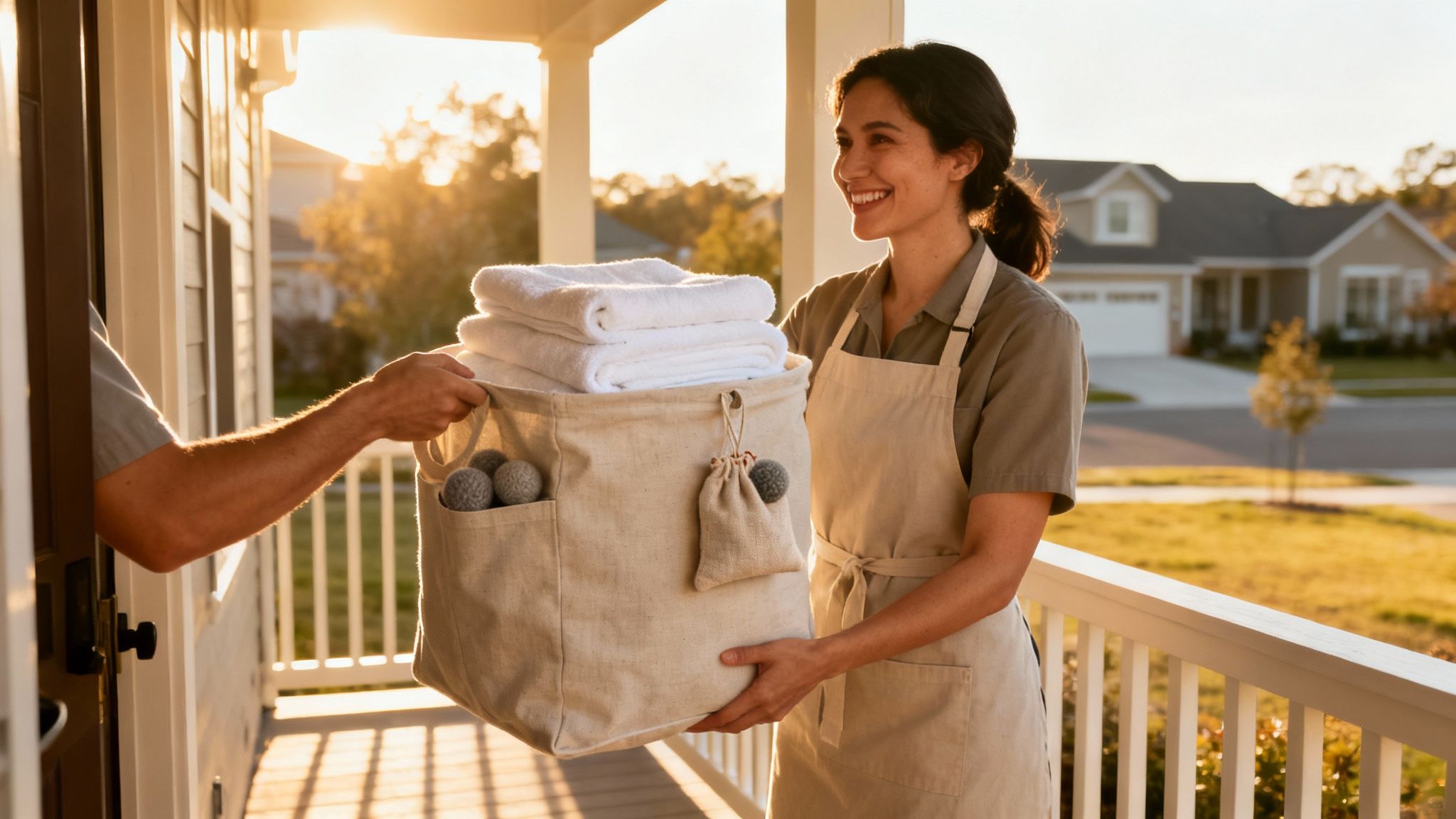
Just because you've switched to a natural fabric softener doesn't mean you're stuck doing all the laundry yourself. For busy families and professionals, finding time to wash clothes—let alone mix up DIY softeners—can feel like a fantasy. This is exactly where a modern laundry service can be a game-changer, helping you get soft, healthy clothes without sacrificing your precious time.
You can absolutely stick to your preference for gentle, natural care while handing off the chore. A top-notch laundry service gets that it’s not one-size-fits-all. It's about getting your laundry done your way, with the products you trust.
How To Customize Your Laundry Service
Think of a premium laundry service as an extension of your own home, not just a convenience. You shouldn't ever have to compromise on the products used for your family's clothes.
With a service like Columbia Pike Laundry, customization is part of the package. When you book your pickup and delivery, you can easily outline your specific needs. Here’s how you can get professionally cleaned, naturally soft clothes:
- Request Hypoallergenic Options: The easiest route is to ask for ‘Free & Clear’ detergents and request that they skip the softeners altogether. This immediately cuts out unwanted chemicals and fragrances.
- Provide Your Own Softener: Have a favorite natural brand from the store or your own DIY vinegar rinse? Just pack it with your laundry pickup. Let the team know, and they’ll happily use it on your load.
That kind of flexibility is everything. It guarantees your clothes get the exact care you'd give them at home, blending a professional clean with your personal standards.
The desire for specific laundry care is a huge market trend, not just a niche request. In fact, North America holds the biggest slice of the fabric softener market, with 31.05% of the global share in 2025. This shows just how much people value premium results—something that local services in the Arlington, Alexandria, and Washington D.C. areas are perfectly set up to deliver. You can see the full breakdown in this in-depth market analysis.
Fitting your natural laundry routine into a bigger household plan can make things even smoother. To stay on top of all your home cleaning tasks, check out this handy weekly cleaning schedule template. It helps turn laundry from just another chore into a seamless part of your home wellness routine—even when you’re not the one pushing the buttons.
Answering Your Questions About Natural Fabric Softeners
Switching up any part of your laundry routine can feel like a bit of a leap. You’ve got questions, and we’ve got answers. Let's tackle some of the most common things people wonder about when they're thinking of going natural with their fabric softener.
Will My Clothes Smell Like a Salad if I Use Vinegar?
This is easily the biggest worry people have, but you can relax—it's a total myth! The vinegar smell completely disappears during the rinse cycle.
The acetic acid does its job softening the water and dissolving residue, then washes away clean. Your laundry will come out smelling fresh and neutral, not like you've been pickling vegetables.
Are Natural Softeners Okay to Use in Any Washing Machine?
Yes, absolutely. Go-to natural softeners like distilled white vinegar and baking soda are completely safe for all types of washing machines, and that includes the newer high-efficiency (HE) models.
For the best results, just pour the vinegar into the fabric softener dispenser. This makes sure it gets added at the perfect moment—during the rinse cycle—to do its best work.
Key Takeaway: Here's a cool bonus: while conventional softeners can leave a waxy film that gums up your machine over time, natural options actually help clean that gunk away. Your washer will run better for it!
Do They Actually Soften as Well as the Store-Bought Stuff?
They definitely do, but they work in a smarter way. Instead of just coating your clothes in a layer of chemicals to feel soft, a natural fabric softener gets to the root of the problem. It strips away the hard water minerals and leftover detergent that make fabrics stiff in the first place.
The result is a genuine, fluffy softness from the fabric itself. Even better, this process boosts the absorbency of things like towels and workout clothes—something conventional softeners actually ruin. You get truly soft laundry that performs better, too.
Ready to reclaim your time and get perfectly laundered clothes without the hassle? Columbia Pike Laundry offers convenient pickup and delivery services tailored to your preferences. Schedule your first pickup today!
Free pickup, expert care, delivered back to your door.
Popular Blog Articles

Meet the Author
Daniel Logan didn’t start CPL because he loved laundry. He started it because his family was drowning in time debt, and laundry was one of the biggest weights.
Mornings were chaos with two kids under 5. Evenings felt like catch-up. And weekends? Gone to sorting socks and folding piles.
He knew his story wasn’t unique. So he built a business that gave families like his just a little bit of breathing room one load at a time.
With no laundry experience but deep tech skills, Daniel rolled up his sleeves, doing every job himself while building systems that turned it into a modern laundry service that saves customers time, simplifies their lives, and delivers reliability they can count on.
That’s where CPL began. Not from a playbook, but from pain. From one dad trying to buy back time: for himself, and for every household like his.
Free pickup, expert care, delivered back to your door.