
The Commercial Dry Cleaning Process Explained Fully

Columbia Pike Laundry offers pickup & delivery across Northern Virginia.
TL;DR:
- Most dry cleaning uses liquid solvents, not water, to dissolve oils and soils without damaging fabrics. Skilled inspection, pretreating stains, and precise finishing are crucial for high-quality garment care. Modern industry practices emphasize greener solvents and closed-loop systems, ensuring safer and more sustainable cleaning methods.
Most people drop off a suit and pick it up two days later without giving a second thought to what happened in between. But the commercial dry cleaning process is genuinely fascinating, and understanding it changes how you care for your clothes, communicate with your cleaner, and evaluate the quality of the service you’re paying for. Spoiler: the word “dry” is misleading. Dry cleaning uses liquid solvents to clean fabrics, not water, and not air. This guide walks you through every stage of the process so you know exactly what’s happening to your garments.
Key Takeaways
| Point | Details |
|---|---|
| Solvents, not water | Commercial dry cleaning uses liquid solvents to dissolve oils and soils without swelling or shrinking fabric fibers. |
| Inspection drives quality | Every garment is tagged and inspected before cleaning to track order accuracy and plan the right treatment method. |
| Pretreatment is non-negotiable | Stain type determines pretreatment solution; skipping this step leaves stains permanently set after solvent cleaning. |
| Post-spotting requires skill | Manual post-cleaning spot work is the most technique-dependent step and separates average cleaners from excellent ones. |
| Modern cleaning is greener | Closed-loop solvent systems and professional wet cleaning options have significantly reduced environmental impact industry-wide. |
The commercial dry cleaning process starts at intake
Before a single garment goes near a machine, it goes through a careful intake and inspection phase. This step determines everything that follows, and skipping it creates problems that are nearly impossible to fix later.
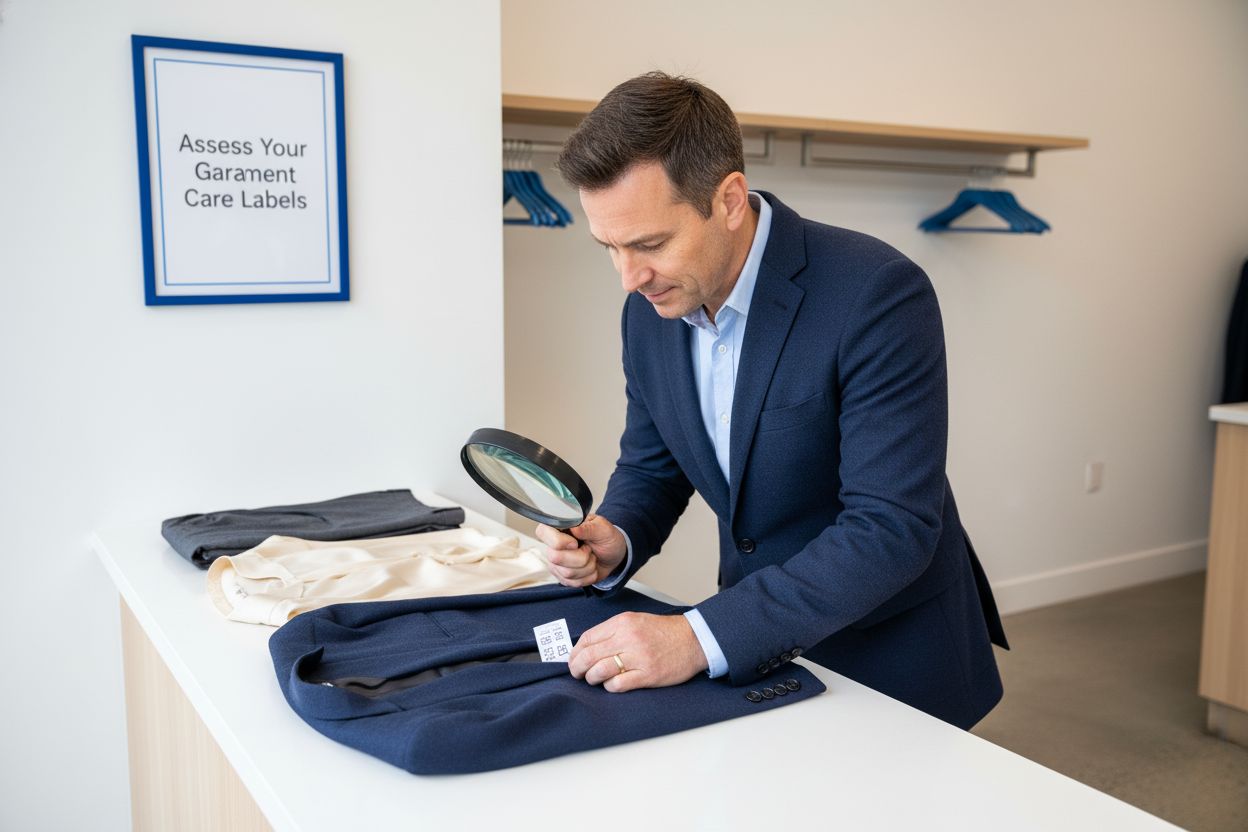
When your clothes arrive at a professional facility, a technician examines each piece individually. They check fabric type and construction, look for existing damage like tears or worn seams, and identify every visible stain. Each of these observations informs the cleaning method selected. A silk blouse, a wool blazer, and a polyester uniform may all get dry cleaned, but they won’t all be treated the same way.
Garment tagging ensures tracking accuracy from intake through delivery. Tags are attached using paper pins or iron-on barcode strips. These follow the garment through every stage of the process, eliminating the risk of mix-ups in large commercial or industrial dry cleaning facilities handling hundreds of pieces a day.
Here is what skilled technicians are specifically evaluating at intake:
- Fabric content and care label instructions to select the appropriate solvent and machine settings
- Pre-existing damage including fraying, missing buttons, or weakened seams that need to be flagged before cleaning
- Stain locations and types to plan targeted pretreatment
- Colorfastness concerns for dyed or printed garments that could bleed or fade
- Embellishments like beading, sequins, or leather trim that require special handling
Pro Tip: Before dropping off your garments, point out any stains to the counter staff and describe what caused them. The more information your cleaner has upfront, the better equipped they are to treat stains correctly the first time.
Pretreatment and stain removal before the cycle
Not every stain dissolves in solvent alone. That is why pretreatment happens before the machine cycle, not after. Getting this step right is what separates a clean garment from one that comes back with a ghost ring where the stain used to be.
Pretreatment varies by stain type because different soils have different chemical structures. Oil-based stains from cooking grease or cosmetics respond to solvent-based spotting agents. Tannin stains from wine, coffee, and tea need acid-based solutions. Protein stains from blood, sweat, or egg require enzyme treatments that break down the biological material without damaging the fabric underneath.
Professional cleaners also work with combination stains, like a salad dressing that contains both oil and tannin. These get treated in stages using multiple agents applied in a specific order. Applying the wrong agent first can actually bond the stain more deeply to the fiber, making removal harder.
Here is where most at-home attempts go wrong:
- Rubbing instead of blotting spreads the stain and pushes it deeper into the weave
- Using hot water on protein stains cooks the material into the fabric
- Applying bleach to colored garments without testing colorfastness first
- Using generic stain removers on specialty fabrics like silk or rayon that cannot handle harsh surfactants
- Waiting too long before treating, which allows stains to oxidize and set permanently
Pro Tip: Never try to pre-treat a garment with home products before bringing it to a dry cleaner, especially for silk or wool. Some home spotters contain bleaching agents that interact badly with dry cleaning solvents and create damage that cannot be reversed.
Inside the solvent cleaning machine
This is the stage most people picture when they think of dry cleaning, and it is where the name “dry” becomes genuinely confusing. The machine looks similar to a large front-loading washer, but the mechanics and chemistry are entirely different.
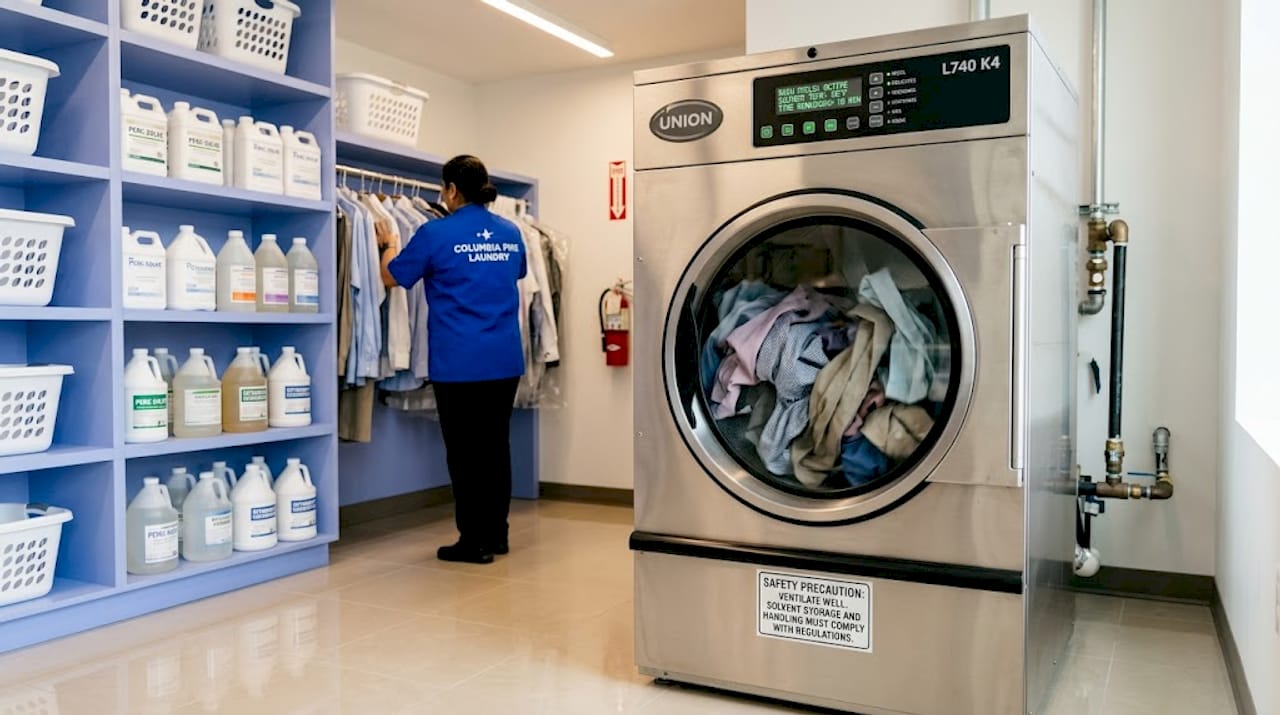
Instead of water and detergent, the machine uses a liquid solvent. Solvents dissolve oils and residues that water cannot break down effectively, without causing the fiber swelling and shrinking that water washing produces. That is why fabrics like wool and silk, which distort badly when wet, can be safely cleaned in solvent.
The evolution of which solvents get used is worth understanding. Early dry cleaning used combustible solvents like kerosene and petroleum spirits that posed serious fire and health risks. The industry later shifted to perchloroethylene (PERC), which was effective but came with its own toxicity and environmental concerns. Modern commercial and industrial dry cleaning facilities now predominantly use hydrocarbon-based solvents or silicone-based alternatives that are significantly safer for workers, customers, and the environment.
| Solvent Type | Era of Use | Key Properties | Status Today |
|---|---|---|---|
| Petroleum/Kerosene | Late 1800s to early 1900s | Highly flammable, effective on oils, strong odor | No longer used commercially |
| Perchloroethylene (PERC) | Mid-1900s to present | Highly effective, non-flammable, toxic residue concerns | Declining due to regulations |
| Hydrocarbon | 1990s to present | Lower toxicity, mild odor, fabric-friendly | Widely used in modern facilities |
| Silicone-based (GreenEarth) | 2000s to present | Non-toxic, odorless, gentle on fabrics and colors | Growing adoption in quality operations |
Once loaded, the drum rotates to tumble garments through the circulating solvent. The solvent passes through filters continuously to remove dissolved soils. At the end of the cycle, the machine recovers the solvent through a distillation process so it can be reused. That last part matters a great deal for both economics and environmental compliance.
Pro Tip: When selecting a dry cleaner, ask what solvent they use. A facility using hydrocarbon or silicone-based solvents is making a meaningful investment in your garment’s safety and their environmental footprint.
Post-cleaning inspection and finishing
Coming out of the machine clean is not the finish line. Post-cleaning inspection catches anything the machine missed, and finishing is what gives professionally cleaned garments that polished, pressed look that home cleaning never quite achieves.

Post-spotting is the most skill-dependent step in the entire process. A trained technician examines each garment under focused lighting to identify any residual staining. They use steam guns and targeted chemical agents to work remaining spots by hand. The combination of heat, moisture, and chemistry applied in precise amounts is what removes what the machine left behind. Getting this wrong can spread a stain, distort the fabric weave, or permanently alter color.
Finishing is where the garment goes from clean to genuinely presentable. Professional techniques used at this stage include:
- Steam pressing to relax fabric and remove wrinkles without the direct-contact heat damage that home irons can cause
- Form finishing using air-inflated garment forms to reshape jackets and blouses back to their original silhouette
- Hand pressing for structured pieces like suit jackets where crease placement and collar roll require manual judgment
- Crease resetting for trousers to restore sharp lines that hold through wearing
- Fabric restoration techniques including brushing wool pile and restoring nap on velvet or suede
Finishing affects garment longevity in ways most people don’t realize. Proper steaming relaxes fiber tension rather than forcing it flat, which means the fabric recovers better between wearings. Over time, the difference between well-finished and poorly-finished garments shows in drape, shape retention, and overall wear life.
Sustainability in modern dry cleaning
The dry cleaning industry has changed dramatically in the past two decades. Environmental pressure, regulatory requirements, and genuine investment in safer chemistry have produced an industry that looks quite different from the kerosene-soaked operations of a century ago.
The single biggest shift is the adoption of closed-loop solvent recycling systems. In these systems, solvent is continuously recaptured, filtered, and returned to the cleaning drum rather than being vented or discarded. This minimizes worker exposure, reduces emissions, and significantly cuts solvent consumption per cleaning cycle. A well-run closed-loop system loses very little solvent over time.
Solvent types have shifted toward safer alternatives, moving away from PERC and early petroleum products to hydrocarbon and silicone-based options with better safety profiles. Many facilities now also offer professional wet cleaning as a complement to traditional solvent methods. Wet cleaning uses specialized detergents, computerized machines with precision moisture and agitation control, and is suitable for many delicate garments that previously required solvents. It is considered one of the most environmentally responsible cleaning methods available today.
Pro Tip: Ask your cleaner whether they offer wet cleaning as an option for garments labeled “dry clean only.” Many modern facilities can handle these pieces safely with wet cleaning, which leaves zero solvent residue on the fabric.
| Method | Solvent Used | Best For | Environmental Impact |
|---|---|---|---|
| Traditional solvent cleaning | Hydrocarbon or silicone | Heavily soiled garments, structured tailoring | Low with closed-loop systems |
| Professional wet cleaning | None (water-based) | Delicate fabrics, odor removal, everyday care | Minimal when using biodegradable detergents |
My honest take on what most customers miss
I’ve spent years looking closely at how garment care operations run, and the thing that consistently separates a good dry cleaner from a great one is not the machine they use. It’s the judgment and skill applied before and after the machine does its part.
Most customers focus on price and turnaround time, which are reasonable things to care about. But what I’ve found is that the post-spotting and finishing stages are where the real quality difference lives. You can send a garment through a perfectly calibrated solvent cycle and still return it looking mediocre if the post-spot work is rushed or the presser doesn’t understand how that particular fabric behaves under heat. There is genuine craft in this work, and not every facility invests in developing it.
I’ve also seen how much customer communication matters. When you bring in a stained garment and say “I don’t know what that is,” the cleaner is guessing at treatment. When you say “that’s olive oil from last Tuesday,” they can work with that information directly. The difference in commercial dry cleaning outcomes between an informed client and an uninformed one is measurable.
The sustainability angle is not just marketing, either. Modern facilities running hydrocarbon or silicone solvents with closed-loop recovery are genuinely different operations than what dry cleaning used to be. If you haven’t revisited your cleaner’s practices in a while, it’s worth asking. The industry has moved significantly, and the best operators are proud to talk about it.
— Daniel
Get expert dry cleaning care from Columbiapikelaundry
Understanding the commercial dry cleaning process makes one thing clear: quality results depend on skilled hands at every stage, from inspection to finishing. At Columbiapikelaundry in Arlington, Virginia, every garment is handled in-house from start to finish. There are no third-party handoffs, no guesswork on process, and no compromises on accountability.
Whether you need a single suit cleaned or regular pickup and delivery for your household or business, Columbiapikelaundry offers professional dry cleaning services with 48-hour standard turnaround and express options when timing matters. You can compare dry cleaning vs wash and fold to figure out which service fits each garment in your wardrobe. Schedule through the app or website, set your preferences, and let a team that does this every day take it from there.
FAQ
What does “dry” mean in dry cleaning?
“Dry cleaning” is a misnomer. The process uses liquid solvents instead of water to clean fabrics, which is why it’s called dry. No water means no fiber swelling, shrinking, or distortion.
Why can’t I treat stains at home before dry cleaning?
Home stain products often contain bleaching agents or surfactants that react badly with dry cleaning solvents, creating permanent damage. Pretreatment should be left to the professional cleaner who knows which agents are compatible with their process.
How do dry cleaning machines work?
Garments tumble in a rotating drum where liquid solvent circulates and dissolves soils. The solvent is then filtered and recovered through distillation for reuse, with modern closed-loop systems minimizing waste and emissions throughout the cycle.
What is post-spotting and why does it matter?
Post-spotting is manual stain removal performed after the machine cycle using steam guns and targeted chemicals. It addresses residual stains the solvent cycle could not fully remove and is considered the most skill-dependent step in the entire process.
Is modern dry cleaning safe for delicate fabrics?
Yes. Modern hydrocarbon and silicone-based solvents are significantly gentler than older PERC-based chemistry, and many facilities also offer professional wet cleaning for the most delicate pieces. Always check with your cleaner about which method they recommend for your specific garment.
Free pickup, expert care, delivered back to your door.
Popular Blog Articles




Meet the Author
Daniel Logan didn’t start CPL because he loved laundry. He started it because his family was drowning in time debt, and laundry was one of the biggest weights.
Mornings were chaos with two kids under 5. Evenings felt like catch-up. And weekends? Gone to sorting socks and folding piles.
He knew his story wasn’t unique. So he built a business that gave families like his just a little bit of breathing room one load at a time.
With no laundry experience but deep tech skills, Daniel rolled up his sleeves, doing every job himself while building systems that turned it into a modern laundry service that saves customers time, simplifies their lives, and delivers reliability they can count on.
That’s where CPL began. Not from a playbook, but from pain. From one dad trying to buy back time: for himself, and for every household like his.
Free pickup, expert care, delivered back to your door.