
Washing Clothes Hot Or Cold Water A Complete Guide
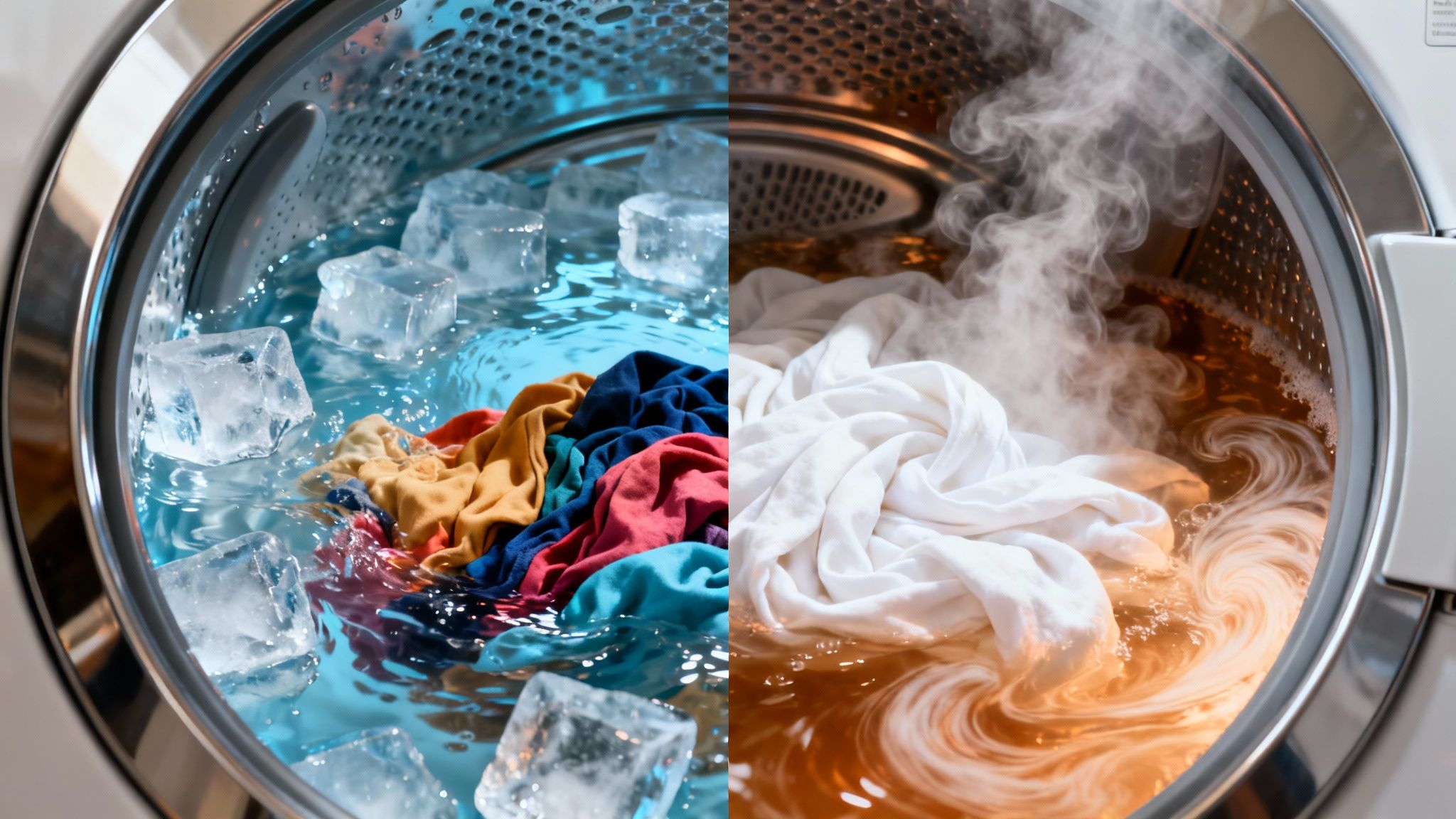
Columbia Pike Laundry offers pickup & delivery across Northern Virginia.
Staring at the temperature dial on your washing machine can feel like a pop quiz. Hot? Cold? What’s the right call? You're not alone in wondering. Let's clear it up right now: for most of what you wash, cold water is the way to go.
It’s kinder to your clothes, keeps your brights from looking dull, and can make a real dent in your energy bill. Think of hot water as your special teams player—you call it in for the tough jobs, like sanitizing sheets after someone's been sick or battling a serious grease stain.
Hot Vs Cold Water: The Daily Decision
Choosing between hot and cold water affects everything from your power bill to how long that favorite t-shirt will last. For decades, the default was to use warm or hot water for just about everything. But today's washing machines and high-efficiency detergents have changed the game, making cold water the MVP for your everyday laundry.
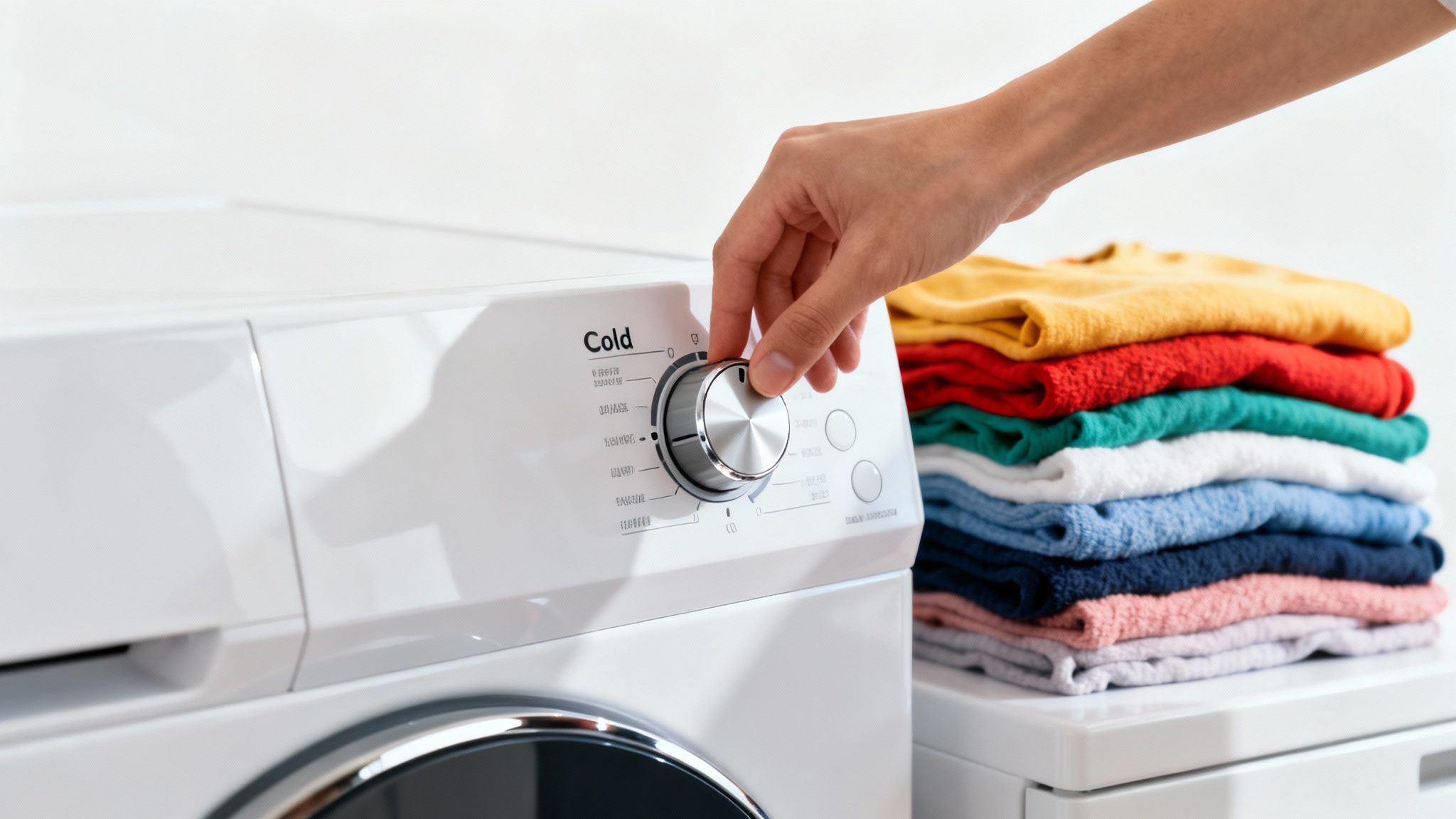
This is a bigger deal than you might think. A staggering 90% of a washing machine's energy use is dedicated to just heating the water. By simply turning that dial to cold, you’re making a smart choice for your wallet and the planet without giving up a great clean on your regular loads.
Of course, that doesn't push hot water into retirement. It’s absolutely essential for certain situations where its ability to sanitize and deep-clean is exactly what you need. The real trick is knowing when to use each temperature.
Before you toss anything in, a quick glance at the tag is always a good idea. Taking a moment to learn how to read clothing care labels will pay off in the long run by keeping your clothes looking their best.
To make things even easier, here’s a quick breakdown of how hot and cold water stack up.
Quick Guide: Hot Vs. Cold Water Washing At A Glance
This table breaks down the core differences, helping you make the right choice for every load.
Ultimately, it’s about using the right tool for the job. Cold water is your daily workhorse, while hot water is your heavy-duty specialist.
A Detailed Comparison Of Wash Temperatures
Choosing between hot and cold water for your laundry isn't just about twisting a dial. It's a decision that hits your wallet, your wardrobe, and even the environment. A quick pro/con list doesn't do it justice. To really master your laundry, you need to understand the distinct strengths and weaknesses of each temperature for every specific challenge you face.
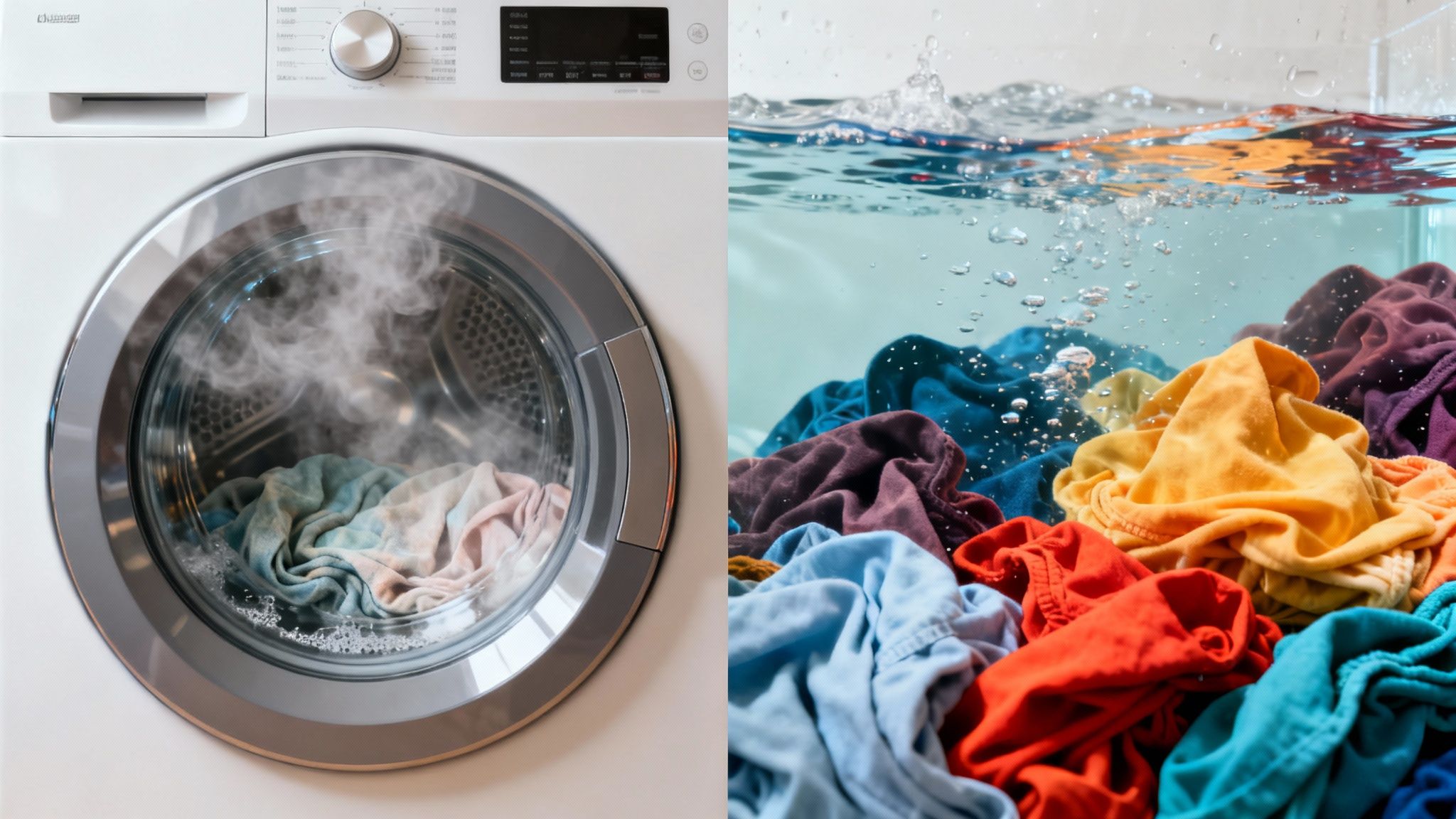
Let's get past the basics and dig into the real-world results, from preserving your favorite jeans to deep-cleaning your kid's sports gear.
Energy Consumption And Environmental Impact
Here's where the difference is most stark. The single biggest energy hog in your laundry routine is heating the water. In fact, a staggering 90% of a washing machine's energy consumption goes directly to heating water. When you choose a cold cycle, you basically sidestep that massive energy draw.
This one choice has a huge ripple effect. Washing a load in cold water can slash its energy use by 70–90% compared to a hot or even warm cycle. For perspective, simply switching from hot to cold can cut your water-heating energy for that load by about 90%. That’s a powerful move for lowering your carbon footprint and your utility bills. The American Chemical Society has some great insights into these savings.
Hot water, on the other hand, demands a serious amount of energy to get up to temperature, which means a bigger environmental toll and higher cost with every single wash.
Fabric Preservation And Colorfastness
Your clothes can either thrive or suffer depending on the water temperature. Hot water is notoriously tough on many fabrics, especially natural fibers like cotton, wool, and linen.
The impact is pretty clear when you compare them side-by-side:
- Hot Water: The intense heat makes fibers constrict, leading to that dreaded, irreversible shrinkage. It also breaks down dyes much faster, causing vibrant colors to fade and look tired before their time.
- Cold Water: This is the undisputed champion of gentle fabric care. Cold water helps fibers relax, preventing shrinkage and preserving the original fit and feel of your clothes. It’s also brilliant at locking in dyes, making it the only real choice for brights, darks, and anything you want to keep looking new.
By consistently choosing cold water for your colored laundry, you are actively extending the life and vibrancy of your wardrobe. It’s the single most effective change you can make to prevent premature fading and wear.
Learning more about what temperature to wash colors can give you even more specific tips for keeping your clothes looking their best.
The Science Of Stain Removal
When it comes to stains, the hot vs. cold debate gets interesting. There’s no single "best" temperature—it all comes down to what you're trying to remove. Choosing the wrong one can make the problem worse.
To get the best results, you need a targeted approach. This quick guide breaks down which temperature to use for common fabrics and stubborn stains, ensuring you treat them right the first time.
Fabric And Stain Temperature Guide
Understanding this chemistry is key. It’s not just about cleaning; it’s about using temperature as a tool to either release or set a stain.
Cold Water for Protein-Based Stains
For stains like blood, sweat, or a splash of milk, cold water is non-negotiable.
- Real-World Example: Your kid slides into home base and comes back with grass-stained jeans. If you toss them in hot water, you’ll bond that green pigment to the cotton fibers for good. A cold wash, however, will help lift the stain right out.
Hot Water for Oil-Based Stains
On the flip side, hot water is your best weapon against grease, oil, and waxy messes.
- Real-World Example: You spill some oily salad dressing on a cotton tablecloth. Cold water will just smear it around. A hot cycle will dissolve that grease, letting the detergent work its magic and leaving the fabric spotless.
Sanitization And Hygiene
When killing germs is the main goal, hot water is the clear winner. There’s really no contest. Its ability to eliminate bacteria, viruses, and allergens makes it essential in certain situations.
Cold water cleans, but it doesn't sanitize. It does a great job of removing visible dirt, but the temperature isn’t high enough to kill microscopic threats like flu viruses, E. coli, or dust mites.
Think about these scenarios where you absolutely need the sanitizing power of hot water:
- After an Illness: Washing bedding, towels, and PJs in hot water is critical to stop germs from spreading through the household.
- Allergy Sufferers: A hot wash is one of the best ways to obliterate dust mites from sheets and pillowcases, providing much-needed relief.
- Contaminated Items: For cloth diapers or anything soiled with bodily fluids, a hot water cycle is the only way to ensure they are hygienically clean.
The Role Of Modern Detergents
Years ago, hot water was a necessity because old-school detergents needed heat to work properly. That’s no longer the case. The game has completely changed.
Today’s advanced detergents are packed with enzymes designed to attack stains effectively even in cold water. These smart enzymes are formulated to target specific messes—proteases for proteins, lipases for fats—and break them down chemically without needing any help from heat. This innovation is what makes cold-water washing so powerful for most of your laundry. Just be sure to pick a high-quality detergent made for cold cycles to get a truly deep clean while you save energy and protect your clothes.
When To Strategically Use Hot Water
Cold water is your everyday workhorse, but hot water is the specialist you bring in for the really tough jobs. It's the go-to solution when you need serious cleaning power or sanitization that cold water just can't deliver. Its real strength is in its ability to dissolve stubborn, greasy messes and kill germs.
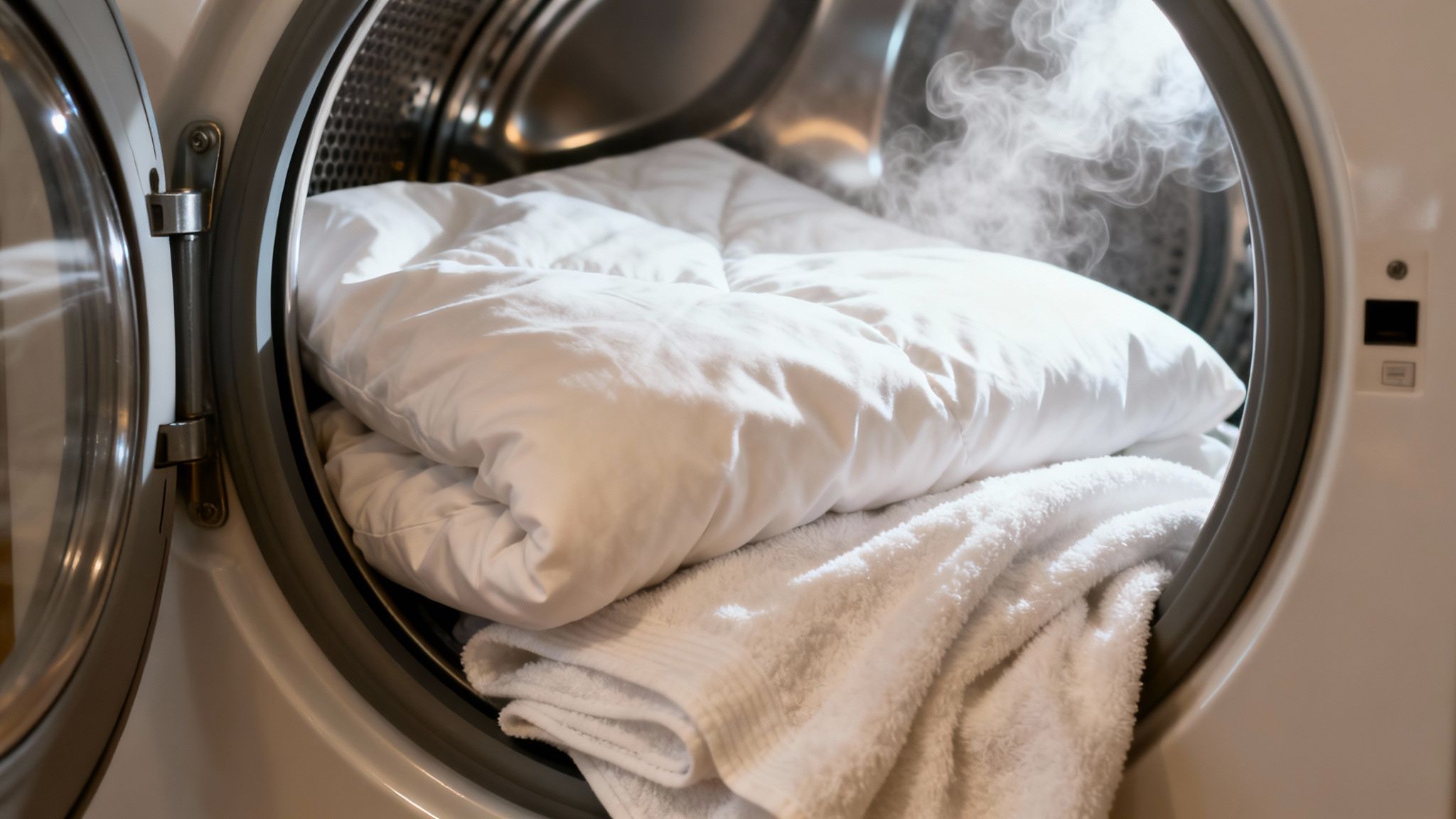
But all that power has a downside. Hot water can be tough on fabrics, and it's well-known for shrinking clothes and making colors fade. The trick is knowing exactly when to use it so you get all the benefits without wrecking your favorite shirt.
For Deep Sanitization and Hygiene
When it comes to killing germs, hot water is the only reliable choice. If someone in your house is sick or you're dealing with items that need to be truly hygienic, a hot cycle is non-negotiable.
Here are the moments when you absolutely should crank up the heat:
- During or after an illness: To stop germs from spreading, wash bedding, towels, and PJs in water that’s at least 54°C (130°F). This is a must for knocking out flu or cold viruses.
- Cleaning reusable diapers: Anything exposed to bodily fluids needs a hot water wash to be considered truly clean and safe for reuse.
- Sanitizing kitchen linens: Dish towels are notorious for collecting bacteria like E. coli. A hot wash cycle is the best way to eliminate these threats and keep your kitchen safe.
In these cases, you’re not just washing away dirt; you’re sanitizing on a microscopic level for true peace of mind.
Tackling Tough Grease and Oil Stains
Ever tried washing a greasy pan with cold water? It doesn't work. The same logic applies to your laundry. Stains from grease, cooking oil, or wax won't budge without heat to break them down.
Hot water essentially melts these oily substances, which allows your detergent to get deep into the fabric fibers and lift the stain out. Without that heat, the detergent can't do its job effectively.
Key Takeaway: For a mechanic's greasy overalls, oily kitchen towels, or a tablecloth that caught a salad dressing spill, a hot wash is essential. Using cold water can actually set these types of stains, making them permanent.
Brightening and Restoring Whites
After a while, white cotton sheets, socks, and undershirts can start looking a little dingy or yellow. That's usually from a buildup of body oils and sweat that cold water leaves behind.
A hot water wash is your secret weapon for bringing them back to life. The heat effectively dissolves that accumulated grime, letting the detergent work its magic and restore their original brightness.
Just be careful—only use hot water on sturdy white fabrics like 100% cotton or linen. Always double-check the care tag first, because a hot cycle will ruin more delicate materials.
Eradicating Allergens Like Dust Mites
If you or someone in your family struggles with allergies, your washing machine can be a powerful tool for relief. Dust mites, a major trigger for allergy and asthma flare-ups, love to live in our bedding and pillows.
Luckily, they can't handle the heat. Washing your sheets, pillowcases, and duvet covers in hot water is one of the most effective ways to kill dust mites and remove their allergens. This one simple change can make a huge difference in your bedroom's air quality and help you breathe easier. When it comes to the debate over washing clothes hot or cold water for allergy sufferers, hot water wins, hands down.
The Real Impact of Choosing Cold Water
When you think about saving money and being a bit greener, laundry might not be the first thing that comes to mind. But that little temperature dial on your washing machine? It holds more power than you might realize. While hot water definitely has its place, making cold water your go-to setting can have a surprisingly big impact on your wallet and the planet.
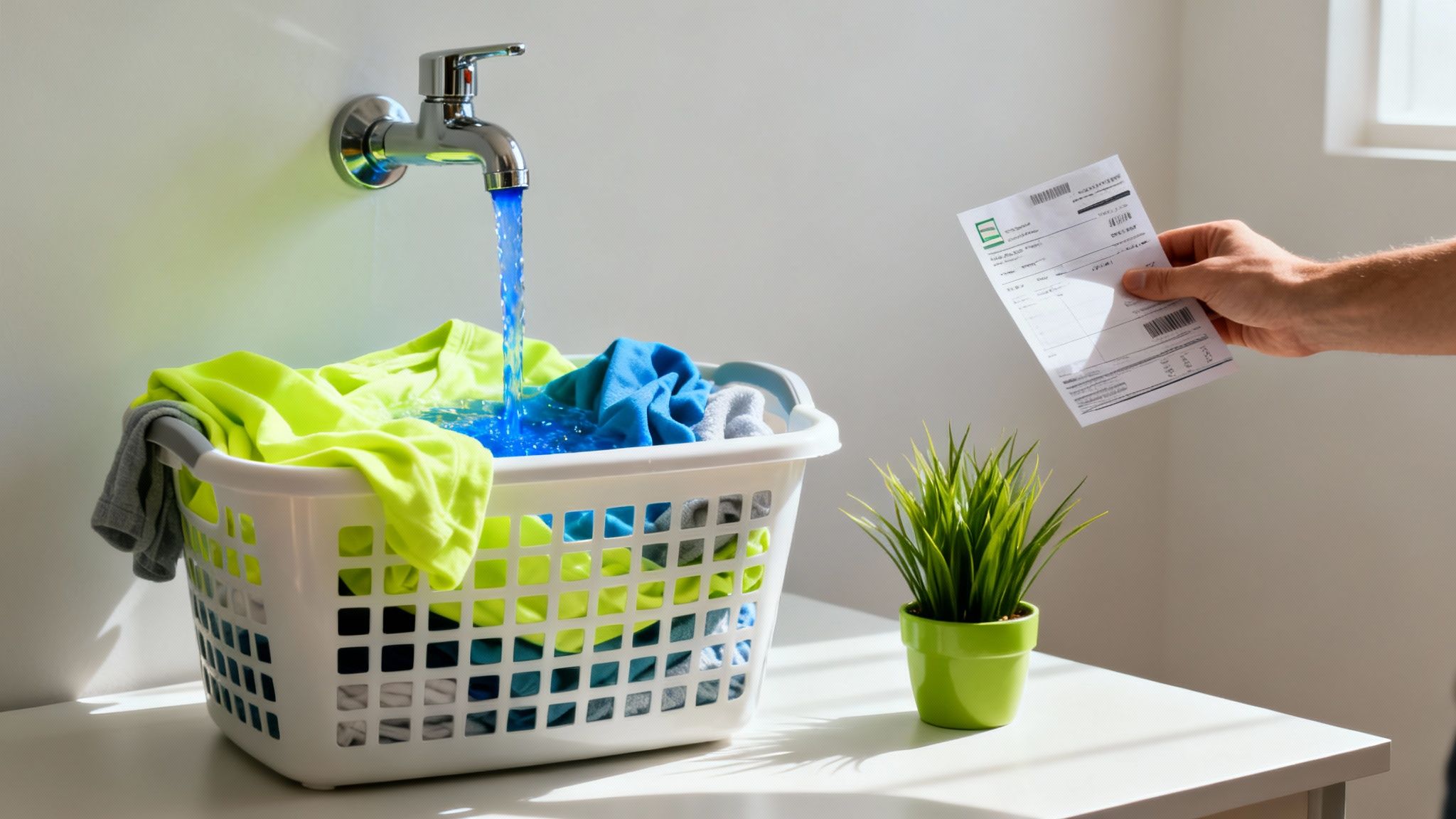
The secret is all about energy. Believe it or not, an astonishing 90% of the energy a washing machine uses goes directly into heating the water. When you opt for a cold cycle, you sidestep that massive energy requirement almost entirely. It’s one of the simplest and most effective ways to cut down your home’s energy consumption without any real effort.
What Does This Mean for Your Wallet?
All that energy savings translates directly into lower utility bills. Let's break it down. The average American family runs about 300 loads of laundry a year. By switching from hot to cold, you can save up to $0.68 per load.
That might not sound like much at first, but it really adds up.
- Annual Savings: For an average family, that simple switch can easily lead to over $200 in savings on your electricity bill each year.
- Long-Term Impact: Keep that habit up for ten years, and you've just kept $2,000 in your pocket. Not bad for just pressing a different button.
This is one of those rare instances where the cheapest option is also the easiest one for most of your laundry.
Your Laundry and the Planet
Beyond saving you money, choosing cold water is a powerful move for the environment. Less energy used means fewer greenhouse gases are released. When millions of households make the switch, the collective impact is massive.
By washing in cold, a single household can slash its annual laundry emissions significantly—by tens or even hundreds of kilograms of CO2, depending on how its local electricity is generated. If you're curious, you can find more data on the global climate impact of laundry choices.
Choosing cold water isn't just about doing the laundry. It's about joining a larger effort to conserve resources and lighten the environmental load of our daily routines. It’s a small change that creates a big, positive ripple effect.
A Sustainable Habit for a Cleaner Future
The takeaway here is pretty straightforward: switching to cold water is an easy win. Thanks to modern detergents specifically formulated for cold-water performance, you're not sacrificing cleanliness. They're designed to tackle everyday grime and stains effectively, even in chilly water.
Let's recap the benefits:
- Energy Conservation: You dramatically reduce the electricity needed to run a load.
- Cost Reduction: Less energy equals real, tangible savings on your monthly bills.
- Environmental Protection: You’re actively lowering your household’s carbon footprint.
- Fabric Care: As an added bonus, cold water is gentler on your clothes, helping them last longer and keep their color.
Making the switch is a practical step toward a more sustainable and budget-friendly household. It’s a great reminder that small, consistent changes in our daily habits can lead to big wins for our finances and the health of the planet.
How To Get The Best Results At Any Temperature
Getting a great clean is about more than just picking between hot and cold water. Think of the water temperature as setting the stage—your detergent and machine settings are the lead actors. To really nail your laundry, you need all three working together perfectly.
Mastering a few basics can take your laundry from a chore to a science, giving you fantastic results no matter which temperature you choose.
Choose The Right Detergent
Once you've picked a temperature, your next move is selecting the right detergent. This is a critical step because modern detergents are highly specialized.
- For Cold Washes: You absolutely need to use a detergent labeled for "cold water." These formulas are packed with enzymes specifically engineered to activate in cool temperatures, where they can effectively break down dirt and stains without any help from heat.
- For Hot Washes: While most detergents work just fine in hot water, a heavy-duty formula can give you an extra edge when you're up against serious grime or greasy stains.
It's no surprise that the laundry industry is pouring money into cold-water technology. The market for low-temperature laundry chemicals is expected to hit about $3.4 billion by 2036, a testament to how effective these innovative detergents have become.
Match The Cycle To The Fabric
Your washing machine's cycles aren't just for show—they're tailored for different fabrics and soil levels. Using the right one is key to getting a thorough clean without causing damage.
- Delicate Cycle: This is your go-to for items like silk, lace, or loosely woven sweaters. It uses a slow spin and gentle agitation, making it perfect for a cold water wash.
- Normal Cycle: A solid all-rounder for everyday items like cottons, linens, and durable synthetics. It works well in warm or cold water.
- Heavy-Duty Cycle: With its longer wash time and faster agitation, this cycle is built for heavily soiled items like work clothes, towels, or sturdy bedding that can handle the heat of a hot wash.
If you're ever unsure, the care labels on your clothes and bedding are your best friend. A quick guide to understanding fabric care symbols can be a lifesaver for choosing the right temperature and cycle.
Pro Tip: Always wash new, brightly colored items in a cold water cycle to prevent dye transfer. For extra peace of mind, check out our guide on how to prevent color bleeding in laundry.
Master Essential Laundry Techniques
A couple of simple habits can make a huge difference in your laundry outcome, regardless of the water temperature.
Pre-Treat Stains Immediately: Don't give stains a chance to settle in. Dab a stain remover or a bit of liquid detergent directly onto the spot as soon as you can. Let it sit for at least 15 minutes before washing to give the enzymes time to work their magic.
Avoid Overloading The Machine: This is probably the most common laundry mistake out there. Your clothes need room to tumble freely so water and detergent can circulate. A stuffed machine leads to a poor wash and can even leave soapy residue on your clothes.
By pairing the right temperature with the right supplies and techniques, you can guarantee every load comes out looking and feeling its best.
Frequently Asked Questions About Wash Temperatures
Even when you know the basics, a specific laundry problem can leave you scratching your head in front of the machine. Deciding between washing clothes in hot vs. cold water isn't always straightforward. Here are some quick answers to the most common questions we hear.
Does Cold Water Actually Get Clothes Clean?
Absolutely. It’s an old myth that you need heat to get things clean, and it comes from a time before modern laundry detergents existed. The real magic today is in the soap.
Today’s detergents are packed with enzymes specifically designed to activate in cold water, breaking down dirt, oils, and everyday grime. When you pair that with the tumbling action of your washer, cold water does a fantastic job on most of your laundry loads while being much kinder to your clothes.
Can I Mix Colors If I Wash in Cold Water?
Cold water is your best friend when it comes to preventing colors from bleeding. It significantly lowers the risk of that rogue red sock turning a whole load of whites pink, making mixed loads a much safer bet.
That said, it's not a foolproof guarantee. If you have a brand-new item with a deep, saturated color—think dark-wash jeans or a bright red t-shirt—it’s wise to wash it solo for the first cycle or two. This gives any loose, excess dye a chance to rinse out before it can ruin your other clothes.
Quick Tip: For extra peace of mind with a mixed load, toss in a color catcher sheet. These little sheets are designed to trap any stray dyes floating around in the wash water before they can settle onto other garments.
What Is Warm Water and When Should I Use It?
Think of warm water—usually around 32–43°C (90–110°F)—as the perfect middle ground. It packs more of a cleaning punch than cold water for lifting dirt, but it’s far gentler than hot water, so you don't have to worry as much about fading or shrinking.
It’s the ideal compromise for your everyday loads of moderately dirty clothes, like cottons, linens, and synthetic blends. When your laundry isn't heavily stained but could use a little extra oomph, warm water is often the best choice.
Will Hot Water Shrink All My Clothes?
Hot water is definitely the main culprit behind shrinking, but not all fabrics react the same way. Natural fibers like cotton, wool, and linen are the most vulnerable; the heat makes their fibers contract, which is what makes the garment smaller.
On the other hand, synthetics like polyester and nylon are much more stable and can usually handle the heat without shrinking. The golden rule is simple: always check the care label. If that little tag says to wash cold or warm, tossing it in a hot cycle is a gamble you’ll probably lose. That tag should always be your first stop when deciding between washing clothes in hot or cold water.
Laundry shouldn't be a constant puzzle. At Columbia Pike Laundry, we handle every item according to its specific needs, taking the guesswork out of your hands. Let us give you back your time and peace of mind with our expert wash & fold and dry cleaning services. Schedule your first pickup today at https://columbiapikelaundry.com and discover a life with less laundry.
Free pickup, expert care, delivered back to your door.
Popular Blog Articles





Meet the Author
Daniel Logan didn’t start CPL because he loved laundry. He started it because his family was drowning in time debt, and laundry was one of the biggest weights.
Mornings were chaos with two kids under 5. Evenings felt like catch-up. And weekends? Gone to sorting socks and folding piles.
He knew his story wasn’t unique. So he built a business that gave families like his just a little bit of breathing room one load at a time.
With no laundry experience but deep tech skills, Daniel rolled up his sleeves, doing every job himself while building systems that turned it into a modern laundry service that saves customers time, simplifies their lives, and delivers reliability they can count on.
That’s where CPL began. Not from a playbook, but from pain. From one dad trying to buy back time: for himself, and for every household like his.
Free pickup, expert care, delivered back to your door.