
What Temperature to Wash Colors for Best Results

Columbia Pike Laundry offers pickup & delivery across Northern Virginia.
When you're trying to figure out what temperature to wash colors in, the simplest and best rule of thumb is to default to cold water. Seriously, it’s the safest and most effective choice for keeping those vibrant dyes locked in, preventing shrinkage, and even saving a little money on your energy bill. For most of your everyday colored clothes that aren't caked in mud, cold is always your best bet.
Your Quick Guide To Washing Colored Clothes

Think of the temperature dial on your washing machine as a specific tool for a specific job. Each setting—cold, warm, and hot—has its own purpose. Using the wrong one is like trying to use a sledgehammer to hang a picture frame; you might get the nail in the wall, but you’ll probably cause some damage in the process.
Cold water is your gentle, all-purpose tool. It carefully cleans the fabric without disturbing the dye molecules that give your clothes their color.
Warm and hot water, on the other hand, are much more aggressive. That heat can agitate the dye bonds, causing them to loosen and bleed out. This is exactly how one rogue red sock can turn an entire load of laundry a lovely shade of pink. It's a classic laundry mistake that's super easy to avoid just by making cold water your standard setting for colors. For a closer look at preventing this kind of color catastrophe, our guide on how to wash whites has some great tips on sorting and temperature control.
To take the guesswork out of your next laundry day, here’s a quick-glance table. It’ll help you make a fast, confident decision based on what you're tossing in the machine.
Wash Temperature Quick Reference For Colors
Ultimately, choosing the right temperature is about balancing cleaning power with fabric care. This simple chart makes it easy to protect your investment in your clothes while still getting them perfectly clean.
How Water Temperature Actually Affects Your Clothes
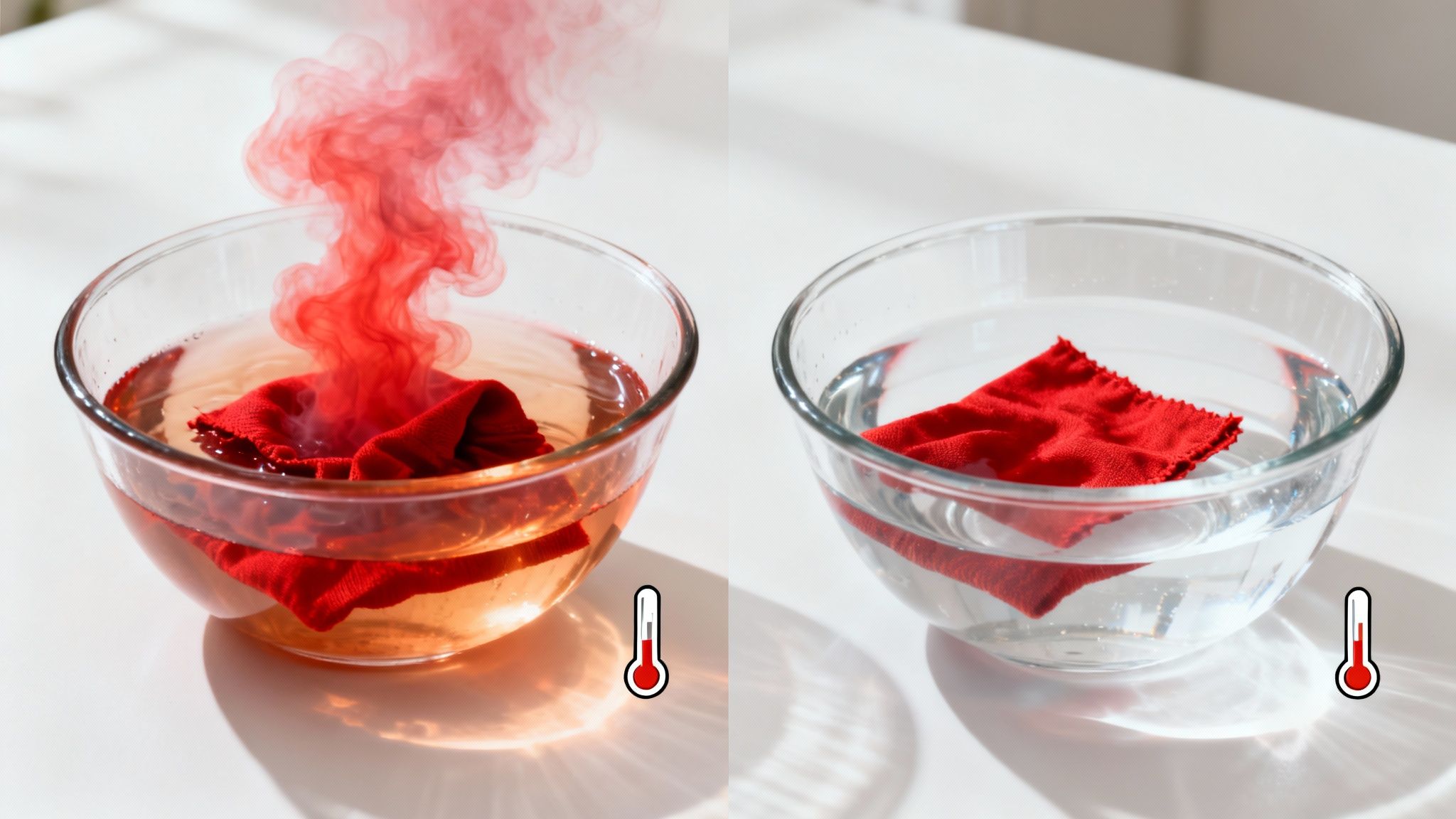
Ever had a rogue red sock turn a whole load of whites a lovely (and permanent) shade of pink? The reason this happens all comes down to the simple science of how heat works on fabric dyes and fibers. Once you get this, you’ll be a pro at preventing laundry disasters.
Think about making a cup of tea. If you use hot water, the color and flavor flood out of the tea bag almost instantly. Try it with cold water, and you’ll be waiting a long, long time. This is the exact same principle at play when you’re figuring out what temperature to wash colors.
The Science of Color Bleeding
Most dyes are chemically bonded to fabric, but that bond isn't always superglue-strong. When you add the heat and tumbling of a warm or hot wash, you're essentially shaking those bonds loose. This lets the dye molecules escape and swim around in the wash water.
Once they're free, those rogue dye molecules are looking for a new home—and they'll happily settle onto your lighter-colored clothes. This is why a new pair of dark-wash jeans or a vibrant t-shirt can be such a problem in a mixed load. Cold water, on the other hand, is much calmer. It doesn't provide enough energy to break the dye bonds, so the color stays locked right where it belongs.
Key Takeaway: Hot water acts like an agitator for dye. It excites the molecules and encourages them to flee. Cold water keeps everything calm and in place, preserving each garment's original color.
Why Fabrics Shrink in Hot Water
Color bleeding isn't the only risk. Heat can also completely change the structure of the fabric itself. Natural fibers are the biggest culprits here—think cotton, wool, and linen. They're especially prone to shrinking in hot water.
When these fabrics are made, their fibers are stretched out under tension. Hot water acts as a release valve, relaxing all that tension and letting the fibers snap back to their shorter, natural state. Suddenly, your favorite t-shirt is a size too small.
While synthetic fibers like polyester and nylon are more stable, they aren't totally bulletproof. Really high heat can still damage them, causing warping or melting that permanently ruins their shape. This is why checking the care label for temperature advice is so important. When in doubt, defaulting to cold water for your colors practically eliminates the risk of accidental shrinkage.
How to Read Laundry Care Labels Correctly
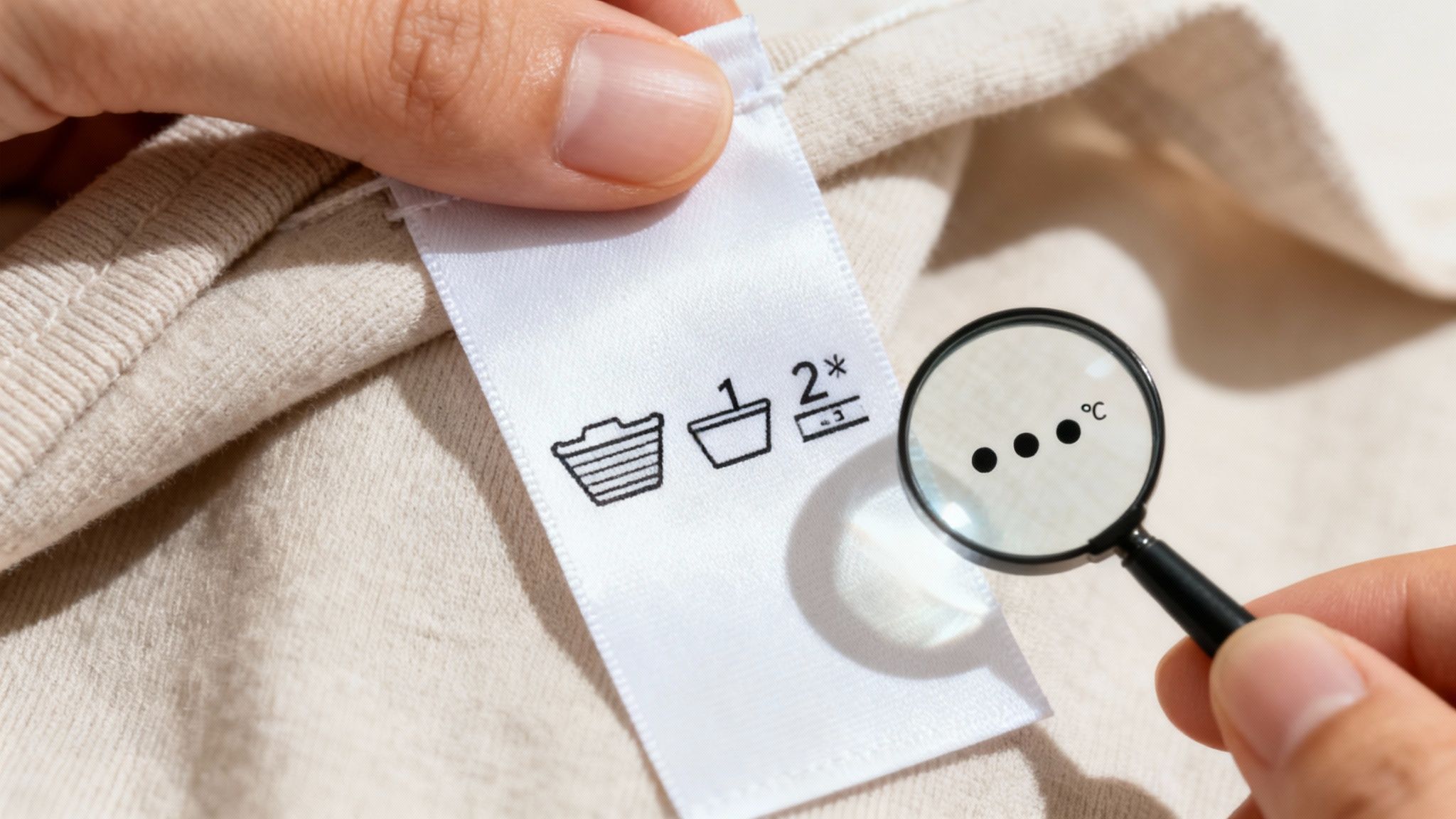
When in doubt, the single best piece of laundry advice comes straight from the source: the manufacturer. Think of that little tag on your shirt as a cheat sheet written by the very people who designed the fabric and chose the dye. But let's be honest, those tiny symbols can feel like trying to crack a secret code.
This label is your ultimate guide for deciding what temperature to wash colors in. The symbol you’re looking for is the washtub. An empty washtub icon simply means it’s machine washable, but the real secrets are the symbols inside that tub.
Decoding Temperature Dots
Those little dots inside the washtub symbol are the key. They’re a universal language that tells you exactly how much heat your garment can handle. It’s pretty straightforward: more dots equal more heat.
- One Dot: This is your signal for cold water, usually around 86°F (30°C). It’s the go-to setting for anything delicate or vibrantly colored that you don't want to fade or shrink.
- Two Dots: This means warm water, typically about 104°F (40°C). It’s a great middle-ground for everyday colored clothes made from sturdy fabrics like cotton that need a little extra cleaning power.
- Three Dots: This symbol is calling for hot water, around 122°F (50°C). You won't see this often on colored items, and for good reason—it’s a high-risk setting that can easily lead to fading.
And if you see a washtub with a big "X" through it? That's a hard stop. It means "do not wash" and almost always points to a dry-clean-only item. Ignoring that is a surefire way to ruin your favorite piece of clothing.
Those tiny symbols on your clothing tags aren't just suggestions; they're a visual guide to keeping your garments looking their best. The table below breaks down the most common temperature symbols you'll encounter.
Decoding Wash Temperature Symbols on Care Labels
Getting familiar with these icons takes the guesswork out of laundry day, ensuring every wash is the right one for that specific garment.
Pro Tip: If the care label is long gone or has faded into oblivion, always play it safe. Wash the garment by itself in cold water on a gentle cycle. It’s the best way to minimize the risk of color bleeding or accidental damage.
By taking a few seconds to check the label, you're not just following rules—you're protecting your wardrobe and making sure your colored clothes stay bright and true for years to come.
Matching Wash Temperature to Different Fabrics
Let's be honest, not all fabrics are the same. You wouldn't treat a rugged pair of jeans the same way you'd handle a delicate silk blouse, and the wash temperature is a huge part of that. Think of it like cooking—you use high heat for searing a steak, but gentle, low heat for melting butter. The same principle applies to your laundry.
Using the wrong temperature is a fast track to shrunken sweaters, faded t-shirts, and stretched-out athletic wear. Getting it right is the secret to making your clothes last. This guide breaks it down, fabric by fabric, so you can nail the perfect wash every time.
Sturdy Cottons and Durable Denim
Cotton is the workhorse of most wardrobes. It's in everything from your favorite t-shirts and towels to those trusty denim jeans. As a tough natural fiber, it can generally handle more heat than other materials, which is great for getting things truly clean.
For most of your everyday colored cottons, a warm wash (around 104°F or 40°C) hits the sweet spot. It's got enough muscle to lift dirt and body oils without being so harsh that it causes major fading. But a word of caution for dark or very bright cottons and brand-new denim: stick with cold water. This is especially crucial for the first few washes of a new pair of dark jeans to prevent the dye from bleeding all over everything else.
Synthetic Blends Like Polyester and Nylon
Fabrics like polyester, nylon, and acrylic are popular for a reason—they're durable and don't shrink easily. These man-made materials aren't as fussy about temperature as natural fibers, giving you a bit more wiggle room.
A warm wash works well for cleaning synthetics, and it's particularly good for things like activewear that tend to trap odors. The warmth helps break down and release the sweat and oils caught in the fibers. Just be careful not to go too hot. Extremely hot water can actually damage these plastic-based fibers over time, causing them to warp or lose their shape.
For most synthetic blends, a cold or warm wash is your best bet. Cold water is fantastic for keeping the vibrant colors in athletic gear looking sharp, while warm water gives you a deeper clean when you need it, without putting the fabric at risk.
Delicate Fabrics Like Wool and Silk
Alright, this is where you need to pay close attention. Delicate natural fibers—think wool, silk, cashmere, and even some rayons—are extremely sensitive to heat. Hot water is their absolute worst enemy.
- Wool: Heat and agitation are a recipe for disaster, causing wool fibers to mat together and shrink dramatically. Always wash colored wool items in cold water on a gentle or wool-specific cycle. No exceptions.
- Silk: This beautiful fabric can lose its signature sheen and weaken in warm water. To protect its fibers and color, a cold water hand wash or a super-delicate machine cycle is the only way to go.
- Lace and Rayon: These can easily stretch out of shape or tear in the machine. Play it safe with cold water and always pop them in a mesh laundry bag for extra protection.
For these sensitive fabrics, the rule is simple: when in doubt, go cold. It's the most important thing you can do to keep your delicate colored garments looking beautiful for years to come. This careful approach prevents irreversible damage and keeps those rich colors from washing away.
The Right Temperature for Tackling Common Stains

When you see a splash of coffee or a smear of mud on your favorite colored shirt, your first instinct might be to crank up the heat. But before you do, take a breath. Blasting certain stains with hot water is often the worst thing you can do, as it can essentially "cook" them right into the fabric for good.
The secret is knowing what the stain is made of. Different messes react very differently to heat, so matching the water temperature to the stain is every bit as important as knowing what temperature to wash colors in the first place.
Cold Water for Protein Stains
Here’s a great analogy: think about cleaning up a raw egg. If you run it under cold water, it rinses away cleanly. But what happens if you use hot water? It cooks instantly, becoming a rubbery mess that's a pain to scrub off. The exact same principle applies to your laundry.
Always reach for cold water to pretreat and wash these common protein-based stains:
- Blood: Hot water will set the proteins in blood, making the stain virtually permanent.
- Grass: It might seem tough, but the green pigments are quickly set by heat.
- Baby food and dairy: These are classic protein stains that need a cold-water approach to break down.
- Mud: Let it dry, scrape off as much as you can, then start with a cold rinse to lift the dirt without baking it into the fibers.
The golden rule here is to always start cold. This simple step prevents these stains from setting, giving your detergent a fighting chance to remove them completely. Once the stain is gone, you can wash the garment normally.
Warm and Hot Water for Oily Stains
Now, on the flip side, greasy and oily stains are a different beast. They actually need a little heat to loosen their grip. It's just like washing a greasy frying pan—cold water just pushes the grease around, but warm, soapy water cuts right through it. Your laundry is no different.
For oily messes, a warm or hot wash is your best friend:
- Grease and Oil: Whether it's salad dressing or car grease, warmth helps dissolve and lift the residue from the fabric.
- Makeup: Many foundations, concealers, and lipsticks have an oily base that responds much better to warmer temperatures.
- Crayon and Ink: These often have waxy or oily components that require warm water to melt and wash away.
Knowing how to treat a spot is half the battle, but sometimes accidents happen in the wash itself. If a new red sock has turned your whole load a lovely shade of pink, don't panic. We have a guide just for that. You can find the right steps on how to remove color bleed from clothes. By tackling each stain with the right temperature from the start, you can save your colored garments from all sorts of laundry headaches.
Smarter Sorting and Detergent Choices
Picking the right water temperature is a huge part of getting laundry right, but it's not the whole story. To really nail your routine, you need to think about two other key players: how you sort your clothes and the detergent you use.
When you get these two things right, you’re not just cleaning your clothes—you're actively caring for them.
Master the Art of Sorting
Proper sorting is more than just separating your whites from your colors. The real pro move is to also sort by fabric weight. Think about it: tossing a pair of heavy denim jeans in with a few delicate silk blouses is asking for trouble. The rough, heavy fabric will batter the lighter ones in the wash, causing unnecessary wear and tear.
This one simple habit can dramatically extend the life of your favorite clothes. If you want to get into the weeds on this, our guide explains why professional laundry services separate colors and how you can bring that expertise home.
Choose Your Detergent Wisely
The detergent you pour in is just as critical as the temperature you select. While any old soap will get things clean-ish, modern detergents are formulated for specific jobs.
- Standard Detergents: Many of these rely on heat to really activate their cleaning ingredients and lift stubborn stains.
- Cold-Water Formulas: These are the unsung heroes for colored clothes. They're packed with special enzymes that attack dirt and grime effectively even in cool water, which is fantastic for keeping colors vibrant.
If you're really looking to protect your colors, it helps to know a little about detergent chemistry. For instance, understanding neutral pH cleaners can give you some great insight into how different formulas interact with fabric dyes.
When you pair cold water with a detergent designed for it, you create the perfect storm—for stains, that is. You get a powerful clean that protects your clothes from fading, bleeding, and shrinking. It's a win for your wardrobe and your energy bill.
This thoughtful approach is the final piece of the puzzle. When you sort by weight and grab a modern, enzyme-based detergent, you guarantee that your clothes come out looking their best every single time.
Common Questions About Washing Colored Clothes
Even with the best intentions, some laundry situations can still be a bit confusing. Let's tackle some of the most common questions people have about washing colors, so you can handle any load with confidence.
Can I Wash All My Colors Together in One Cold Load?
For the most part, you absolutely can. Running a mixed-color load in cold water is a smart, energy-saving strategy for most of your regular laundry. It dramatically lowers the risk of colors bleeding onto each other while still getting everything clean, especially if you're using a detergent made for cold washes.
The big exception? Brand-new, deeply saturated garments. Think dark-wash denim or that new, bright red t-shirt. These items should always get a few solo washes first. They're notorious for shedding excess dye—a process known as crocking—which can happen even in cold water and ruin lighter-colored clothes in the same load.
What Really Happens if I Use Warm Water on a Cold-Wash Item?
Ignoring a "cold wash only" tag is definitely a roll of the dice. With some tougher fabrics, you might not see any damage after one or two times. But repeated warm washes will almost certainly cause noticeable fading as the heat breaks down the dyes in the fabric fibers.
The much bigger risk is shrinkage, especially with delicate materials like wool, silk, or rayon. Warm water can cause these fibers to contract permanently, altering the fit of your favorite sweater or blouse for good. It's always best to follow the care label—it's there for a reason.
Key Insight: If you're following all the temperature rules but your clothes still aren't coming out right, the problem might not be your method. It could be worth looking into common washing machine issues and solutions that can impact performance. Sometimes, the machine itself is the real culprit.
Does Cold Water Actually Get Clothes Clean?
Yes, it really does! It's a persistent myth that you need hot water for a proper clean, but modern laundry technology has completely changed the game.
Today's high-efficiency detergents are packed with powerful enzymes specifically engineered to attack and dissolve dirt, oils, and everyday grime in cool temperatures. While hot water is still the king for serious sanitizing (like for bedding after someone's been sick), a good cold-water detergent has more than enough power for your daily laundry needs. Plus, it saves your clothes from wear and tear and shrinks your energy bill.
Tired of sorting, second-guessing temperatures, and spending your weekends in the laundry room? Let Columbia Pike Laundry take the chore off your hands. We handle everything with expert care, so you can reclaim your time for what truly matters. Schedule your first pickup today and experience the relief of perfectly clean clothes delivered right to your door.
Free pickup, expert care, delivered back to your door.
Popular Blog Articles



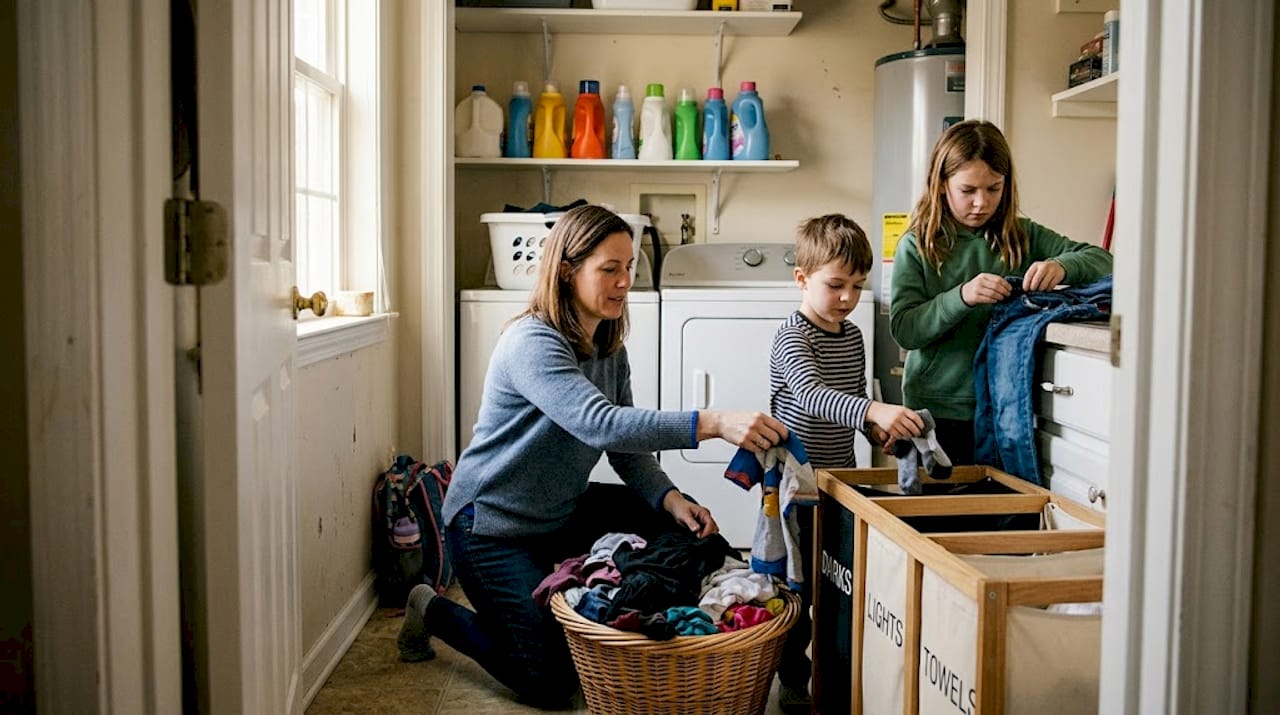


Meet the Author
Daniel Logan didn’t start CPL because he loved laundry. He started it because his family was drowning in time debt, and laundry was one of the biggest weights.
Mornings were chaos with two kids under 5. Evenings felt like catch-up. And weekends? Gone to sorting socks and folding piles.
He knew his story wasn’t unique. So he built a business that gave families like his just a little bit of breathing room one load at a time.
With no laundry experience but deep tech skills, Daniel rolled up his sleeves, doing every job himself while building systems that turned it into a modern laundry service that saves customers time, simplifies their lives, and delivers reliability they can count on.
That’s where CPL began. Not from a playbook, but from pain. From one dad trying to buy back time: for himself, and for every household like his.
Free pickup, expert care, delivered back to your door.