
What Is a Delicate Wash and When Should You Use It?
Columbia Pike Laundry offers pickup & delivery across Northern Virginia.
Think of the delicate cycle as your washing machine's "kid gloves" setting. It’s designed to mimic the gentle touch of hand-washing, giving your most fragile garments a spa-like treatment instead of a rough-and-tumble cleaning.
This cycle is all about preventing the common culprits of laundry damage—stretching, snagging, and shrinking—for your favorite silk blouses, lace items, and fine-knit sweaters.
What Is the Delicate Wash Cycle, Really?
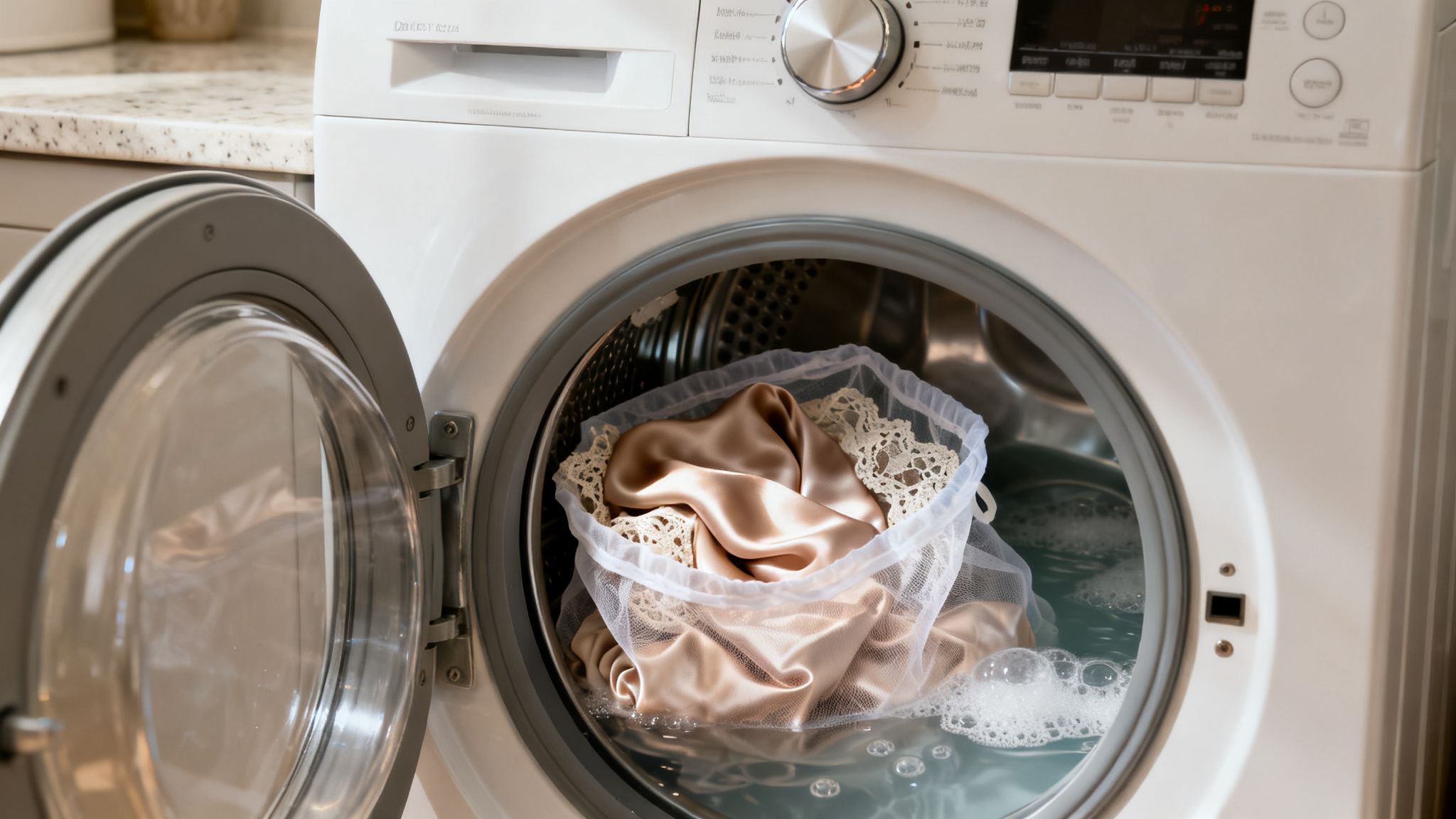
If you were cleaning a fragile, antique vase, you wouldn't blast it with a pressure washer. You'd handle it carefully, using cool water and a soft touch. The delicate wash cycle applies that exact same logic to your clothes. It dials back the three biggest stress factors in any wash: friction, speed, and heat.
Instead of the aggressive tumbling you see in a normal cycle, the machine drum will gently rock back and forth. This soft motion ensures that delicate fibers in fabrics like wool or rayon aren't pulled, snagged, or stretched out of shape by rubbing against other clothes or the machine itself.
At its heart, the delicate cycle is your laundry's built-in safety net. It’s specifically programmed to give your most vulnerable items the careful handling they need, which helps them last longer and stay looking new.
Key Features of a Delicate Wash
So, what’s happening behind the scenes? This setting is a special combination of functions that work together to protect your clothes.
- Low Agitation: The drum turns slowly and pauses often, which dramatically reduces the friction between your clothes.
- Cold Water Temperature: It defaults to cold or lukewarm water, typically around 86°F (30°C), to keep colors from bleeding and prevent fibers from shrinking.
- Slow Spin Speed: The final spin is much slower than a normal cycle—usually under 800 RPM. This extracts less water, but it's crucial for stopping delicate knits and other fabrics from losing their shape.
- Shorter Wash Time: To minimize wear and tear, the entire cycle is usually shorter, limiting how long your clothes are exposed to water and movement.
Why Gentle Washing Is Your Wardrobe's Best Friend
Think of your washing machine’s delicate cycle as a spa day for your most treasured clothes. You wouldn't take a priceless painting to a car wash, right? The same logic applies to that silk blouse or merino wool sweater you love. Subjecting them to a standard, high-energy wash is a recipe for disaster.
Gentle washing is all about one thing: preservation. The goal is to minimize stress on delicate fabric fibers. This is achieved through a combination of cold water (typically below 86°F or 30°C) and a slow spin cycle (under 800 RPM). It’s a lot like the careful art of gently removing grime while preserving the patina on a valuable antique—the focus is on care, not force.
Ultimately, this low-impact method is the secret to keeping your favorite garments looking brand new for years to come.
The Science Behind a Softer Touch
Why all the fuss? It comes down to how different fabrics handle heat and friction. Hot water is the enemy of natural fibers like wool and cashmere, causing them to shrink and felt. Meanwhile, a fast spin cycle can feel like a rollercoaster ride for your clothes, stretching knits out of shape and ripping off beads or sequins.
A gentle wash cycle prevents this by:
- Protecting Fibers: The slow, rocking motion dramatically reduces friction. This keeps the tiny threads in fabrics like silk, lace, and chiffon from snagging, fraying, or breaking.
- Keeping its Shape: Low spin speeds are just strong enough to press out excess water without yanking or stretching the garment. This is key for helping sweaters and knits bounce back to their original form.
- Saving the Color: Cold water helps lock dyes into the fabric. It’s your best defense against the fading that makes vibrant and dark-colored clothing look washed out and old.
When you press that "delicates" button, you’re making a conscious choice to extend the life of your clothes. It’s a simple action that maintains quality, prevents expensive damage, and saves you money by keeping you from having to replace your favorites prematurely.
Ignoring those little care tags can be a costly mistake. That "delicate wash only" instruction isn't just a suggestion; it's a warning. In fact, improper washing accounts for a huge portion of the 30-40% of clothing damage reported each year. To get a better sense of how big the market for proper fabric care is, check out this detailed market report on the rise of premium laundry products.
What Kinds of Fabrics Actually Need Delicate Care?
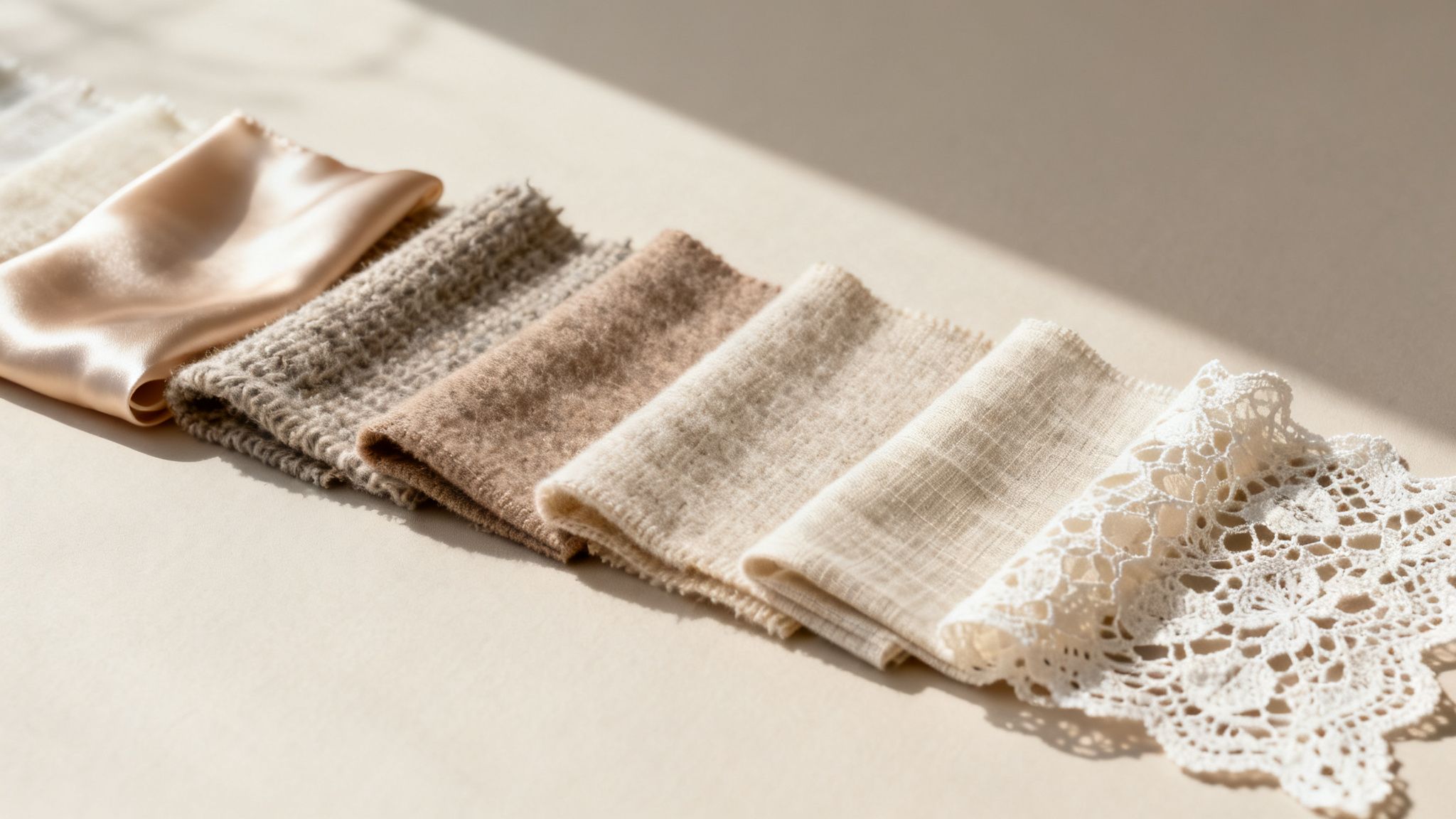
Knowing when to hit that "delicates" button all comes down to one question: what am I trying to protect? This cycle isn't just for that antique lace doily from your grandma. It's for any piece of clothing whose fibers, shape, or special details could be ruined by a regular, more aggressive wash cycle.
The simplest way to know for sure is to check the care tag. If it says "hand wash only" or "delicate cycle," you’ve got a clear answer. But tags can be cryptic or missing, and that’s when you need to put on your fabric detective hat.
The Usual Suspects: Common Delicate Fabrics
Some materials just can't handle the heat and friction of a normal wash. They're the ones most likely to shrink, snag, or stretch out of shape. Think of them as the high-maintenance members of your wardrobe.
- Silk and Satin: These fabrics are prized for their smooth, lustrous finish, which can easily be snagged or dulled by rough tumbling.
- Wool and Cashmere: Famous for shrinking and "felting"—where the fibers mat together—when exposed to hot water and high spin speeds.
- Linen: While it’s a strong fiber, linen can wrinkle like crazy in a rough cycle. Gentle washing helps it soften up beautifully over time.
- Rayon and Modal: These plant-based fabrics are surprisingly weak when they're wet, making them very prone to stretching and tearing.
- Lace and Sheer Fabrics: It's no surprise here. The open, airy weave of these materials makes them incredibly easy to snag and rip.
You also have to look beyond the fabric type and consider how the garment is made. Anything with beading, sequins, embroidery, or intricate stitching needs a gentler touch, no matter the material. If you want to dive deeper, our guide on the care of fabrics has you covered.
My rule of thumb: If an item feels light, has a loose knit, or features any kind of decorative element, it’s a candidate for the delicate cycle. It's always better to be overly cautious than to pull a beloved sweater out of the wash two sizes too small.
This idea of gentle handling isn't just for laundry day. Experts who work with fabrics, like tailors, understand this principle deeply—even down to things like adjusting presser foot pressure for different fabrics when sewing. The delicate cycle simply applies that same careful, customized approach to washing your clothes.
A Step-by-Step Guide to Washing Delicates
Washing your delicates perfectly doesn't have to be complicated. Think of it as a simple ritual of care that keeps your favorite items looking their best for years to come. A few key steps can be the difference between a laundry day win and a shrunken, stretched-out disaster. This is your playbook for preserving the look, feel, and shape of your most cherished garments.
First things first: prep work. Before a single item touches water, give it a quick once-over for any spots or stains. It’s crucial to pre-treat them with a gentle stain remover, because the cold water of a delicate cycle often isn't powerful enough to lift stains on its own. Just apply the treatment and let it work its magic for a few minutes.
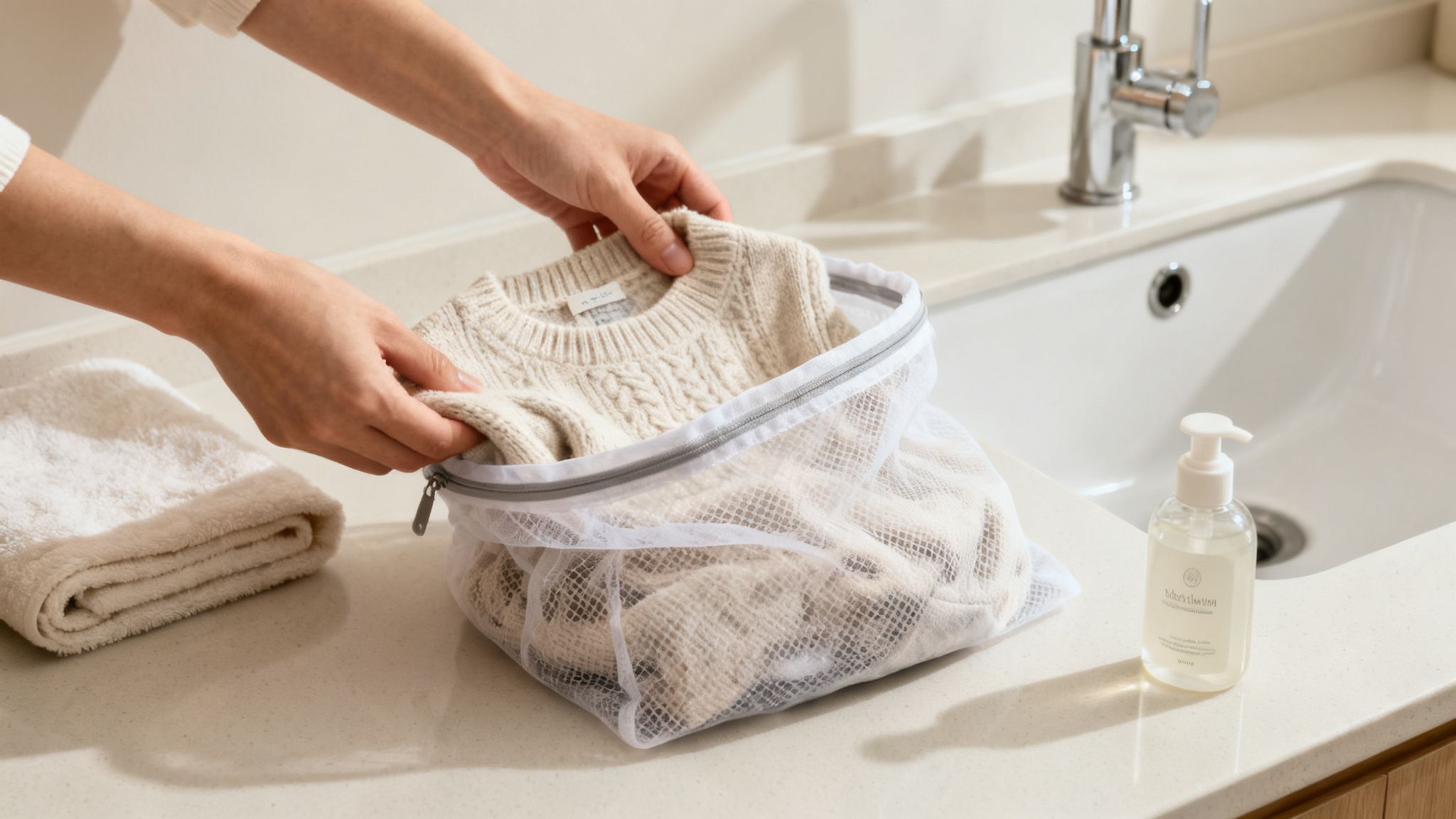
Next, you'll want to protect your clothes from the machine itself. Zippers, buttons, and even the washing machine drum can easily snag and damage fragile fabrics.
A mesh laundry bag is your best friend for a delicate wash. It acts like a suit of armor for your clothes, preventing snags and tears while still letting the water and soap do their job.
Setting Up the Perfect Delicate Wash
With your items prepped and protected in their mesh bags, it's time to dial in the machine settings for the gentlest clean possible. The goal here is to mimic hand-washing as closely as we can, reducing all that friction and stress on the fibers.
Pick a Mild Detergent: Always reach for a detergent made specifically for delicates or one that’s pH-neutral. Harsh chemicals can strip natural fibers like wool and silk of their essential oils, leaving them brittle and sad. And remember, less is more—too much soap is hard to rinse out in a low-water cycle.
Keep Loads Small and Light: This one is a big deal. Overcrowding the washer is a fast track to tangled, stretched-out clothes. A small load gives everything room to move freely. A good rule of thumb? Never fill the drum more than halfway.
Choose the Right Settings: Look for the delicate, gentle, or hand-wash cycle on your machine. Double-check that the water temperature is on cold and the spin speed is cranked down to its lowest setting. This trio of settings is the secret sauce for a safe and effective delicate wash.
Finally, know what to leave out. It's often best to skip the fabric softener on materials like silk or performance wear, as it can leave behind a residue that messes with their natural properties. Follow these steps, and your delicates will come out clean, damage-free, and ready for careful drying.
The Right Way to Dry and Store Delicate Garments
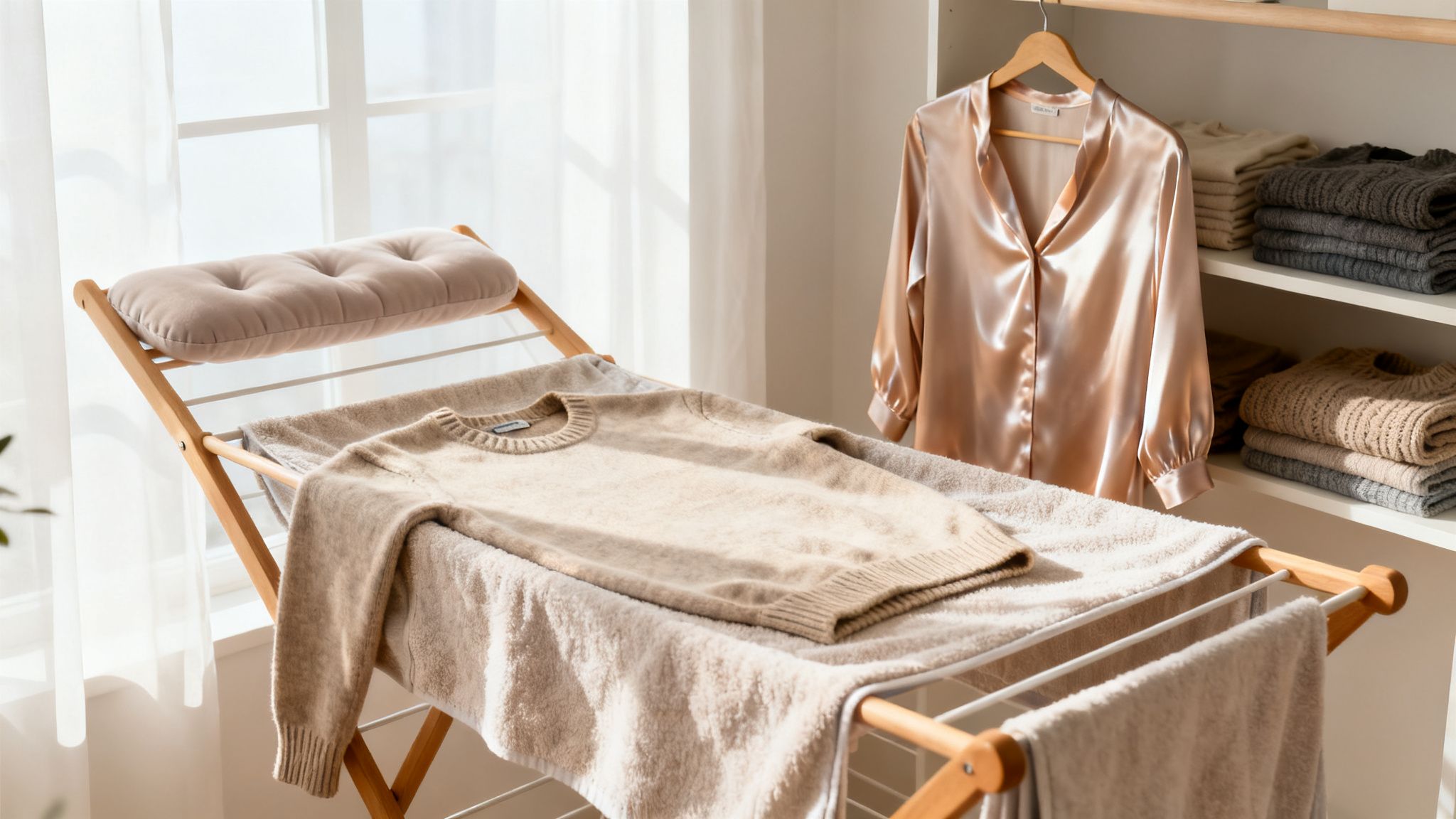
You can do everything right during the wash cycle, only to ruin your favorite sweater in the final ten minutes of your laundry routine. The high, tumbling heat of an automatic dryer is the absolute enemy of delicate fabrics. It’s notorious for causing irreversible shrinking, warping, and fiber damage.
To keep your delicates safe, your best bet is to skip the machine dryer entirely. The safest, most effective method is good old-fashioned air-drying. This gentle approach preserves the fabric's integrity and shape, making sure your favorite items last for years to come.
The most crucial part of caring for delicates happens after the wash. Proper drying and storage techniques are non-negotiable for maintaining the shape, feel, and longevity of your favorite garments.
Best Practices for Air-Drying Delicates
Not all delicates should be dried the same way. Following a few simple rules will prevent stretching, misshaping, and other laundry tragedies.
- Lay Sweaters Flat: Heavy knitwear like wool and cashmere will stretch out of shape if you hang them while wet. Instead, lay them flat on a clean, dry towel or a mesh drying rack. I like to gently pat the sweater back into its original shape, then flip it over halfway through the drying process.
- Use Padded Hangers: For lighter items like blouses made of silk, satin, or rayon, use padded or wide-shouldered hangers. This distributes the weight evenly and prevents those dreaded "hanger bumps" and stretched-out shoulder seams.
- Fold, Don't Hang, Knitwear: Once your sweaters are completely dry, always fold them. Storing knit items on a hanger—even for a short time—can cause them to stretch and lose their shape under their own weight.
Mastering these simple steps is the secret to extending the life of your wardrobe. For even more tips, you can learn about the art of storing clothes properly to keep everything in pristine condition.
When to Trust the Professionals with Your Delicates
Learning to wash your own delicates is a fantastic skill, but let's be honest—sometimes life just doesn't leave room for it. Between a packed schedule and the genuine fear of shrinking that one sweater you absolutely love, handing things over to an expert is often the smartest move. This is exactly when a professional laundry service stops being a luxury and becomes a lifesaver.
At Columbia Pike Laundry, we completely get the anxiety that comes with entrusting your favorite fragile pieces to someone else. Our team treats your garments with the same meticulous care you would, but we bring years of professional experience to the table. We start by carefully separating your delicates from the rest of the laundry, ensuring every single item gets the specific treatment it needs to come out perfect.
Peace of Mind in Every Load
We use a high-quality, unscented Free & Clear detergent that’s powerful enough to clean effectively yet gentle on sensitive skin and delicate fabrics. Opting for a professional wash doesn't just save you time; it can actually extend the life of a garment by up to 50%, protecting the clothes you’ve invested in. For a deeper dive into how proper care impacts clothing longevity, check out these insights on intimate apparel care.
Our pickup and delivery service is designed to give you your weekend back. With a standard 48-hour turnaround, you can reclaim those precious hours without ever stressing about a laundry mishap. And if you're ever on the fence about whether an item needs a delicate wash or a trip to the dry cleaner, our guide on how to choose between wash and dry cleaning can help you decide.
Common Questions About Washing Delicates
Even with a solid game plan, you're bound to have a few questions when it comes time to actually wash your delicates. Getting straight answers can be the difference between feeling confident and feeling that little knot of laundry anxiety. Here are some of the most common questions we get, with answers to help you get it right.
Can I Just Use the Delicate Cycle for Everything?
It's tempting to think of the delicate cycle as the "safe mode" for all your clothes, but it's not the best idea. That gentle cycle just doesn't have the muscle to deal with heavily soiled clothes like sweaty gym gear, muddy jeans, or dirty towels. The low agitation and cold water simply won't be enough to lift out serious grime, bacteria, and odors.
The key is to match the wash cycle to the fabric and how dirty it is.
What if My Machine Doesn't Have a "Delicate" Setting?
No "Delicate" button? No worries. Many washers have the same type of cycle, just with a different name. Look for options like "Gentle" or "Hand Wash"—they do the same job.
If your machine is more basic and lacks any of these, you can easily create your own gentle cycle. Just set it to:
- The coldest water temperature setting.
- The lowest spin speed available.
- The shortest wash time.
This combination does a great job of recreating a standard delicate cycle, keeping your fragile clothes safe from a rough ride.
The goal is always to minimize three things: friction, speed, and heat. As long as you can control those elements, you can create a safe wash for your delicates in just about any machine.
Is Hand Washing Actually Better Than Using the Machine?
For certain items, yes. Hand washing is still the undisputed champion of gentle cleaning. If you have something truly irreplaceable, like a piece of antique lace or a family heirloom, washing it by hand is the safest path.
That said, modern washing machines have come a long, long way. Today's delicate cycles are remarkably good and get incredibly close to the gentleness of hand washing, but with way less work. For most of your everyday delicates—silks, wool sweaters, and nice lingerie—the machine's delicate setting is a perfectly safe and reliable choice.
You didn’t just outsource your laundry; you bought back your weekend. Let Columbia Pike Laundry give your delicates the professional care they deserve so you can focus on what really matters. Schedule your first pickup today and feel the relief.
Free pickup, expert care, delivered back to your door.
Popular Blog Articles




Meet the Author
Daniel Logan didn’t start CPL because he loved laundry. He started it because his family was drowning in time debt, and laundry was one of the biggest weights.
Mornings were chaos with two kids under 5. Evenings felt like catch-up. And weekends? Gone to sorting socks and folding piles.
He knew his story wasn’t unique. So he built a business that gave families like his just a little bit of breathing room one load at a time.
With no laundry experience but deep tech skills, Daniel rolled up his sleeves, doing every job himself while building systems that turned it into a modern laundry service that saves customers time, simplifies their lives, and delivers reliability they can count on.
That’s where CPL began. Not from a playbook, but from pain. From one dad trying to buy back time: for himself, and for every household like his.
Free pickup, expert care, delivered back to your door.