
What Is Delicates Wash and When Should You Use It?
Columbia Pike Laundry offers pickup & delivery across Northern Virginia.
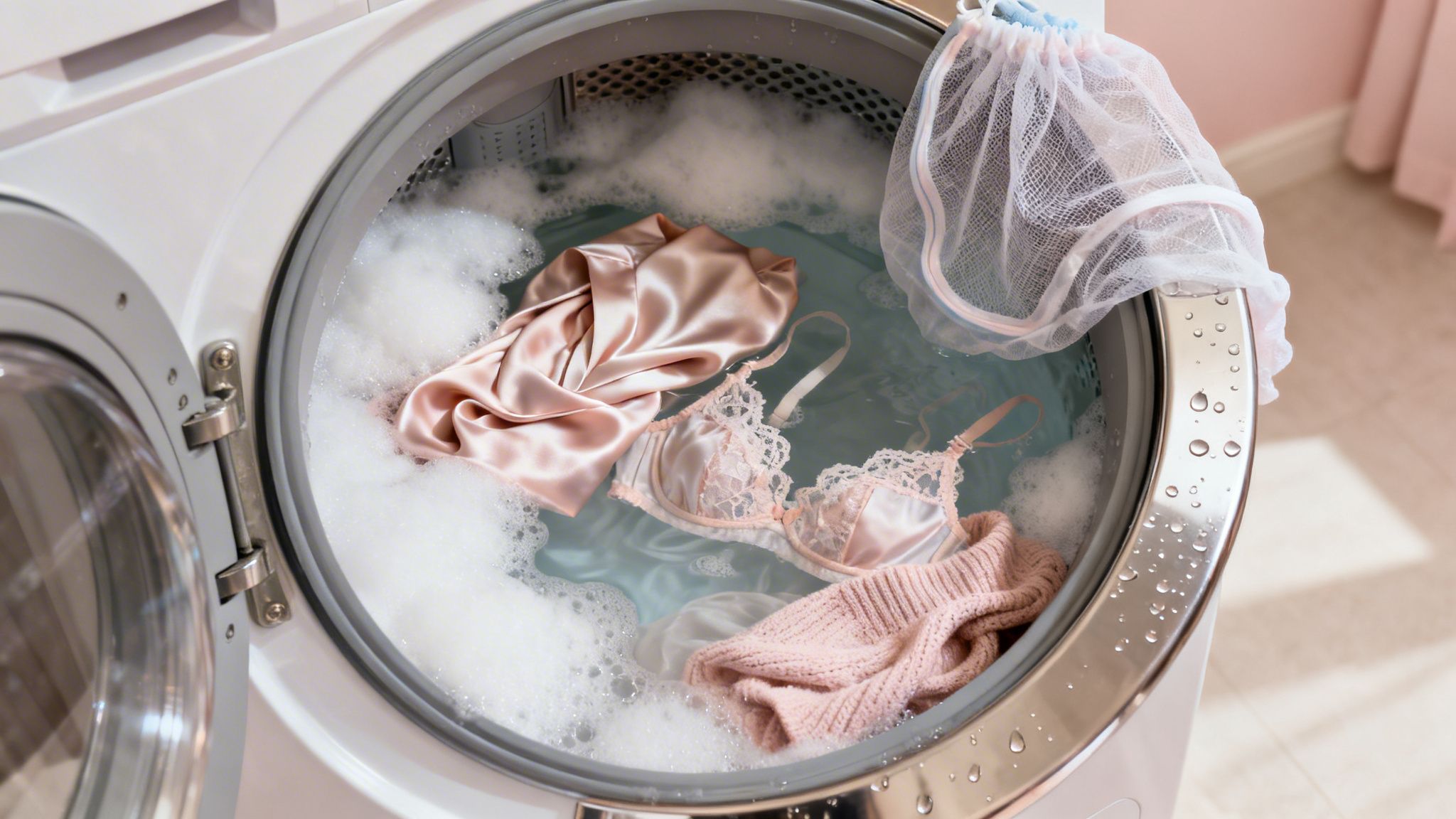
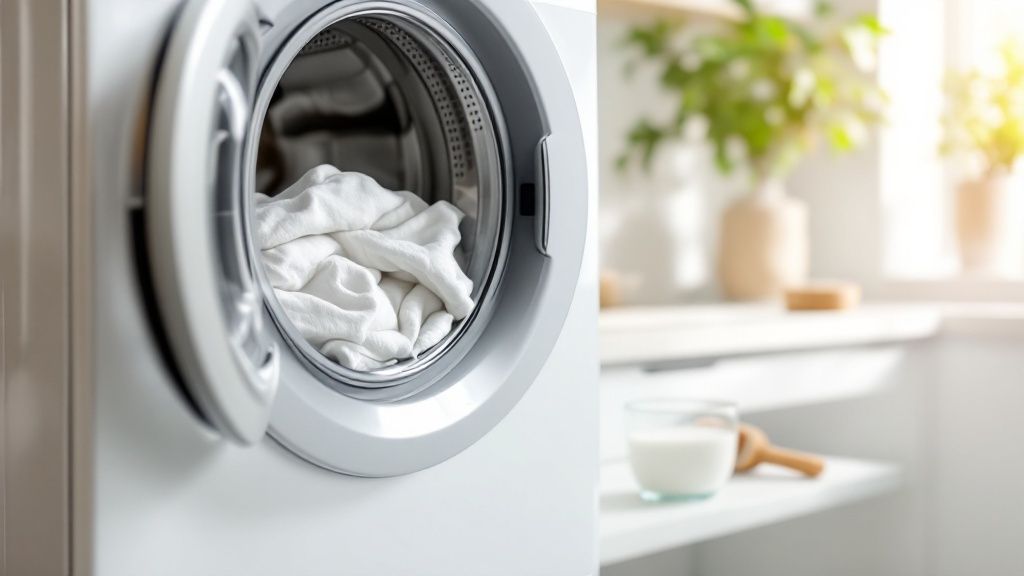
Ever wondered what the delicates wash setting on your machine actually does? Think of it as the laundry equivalent of hand washing—it's your machine's gentlest cycle, specifically designed for those items that just can't take the heat and tumble of a regular wash. It uses cool water and slower speeds to prevent delicate fabrics from stretching, snagging, or losing their color.
Understanding the Delicates Wash Cycle
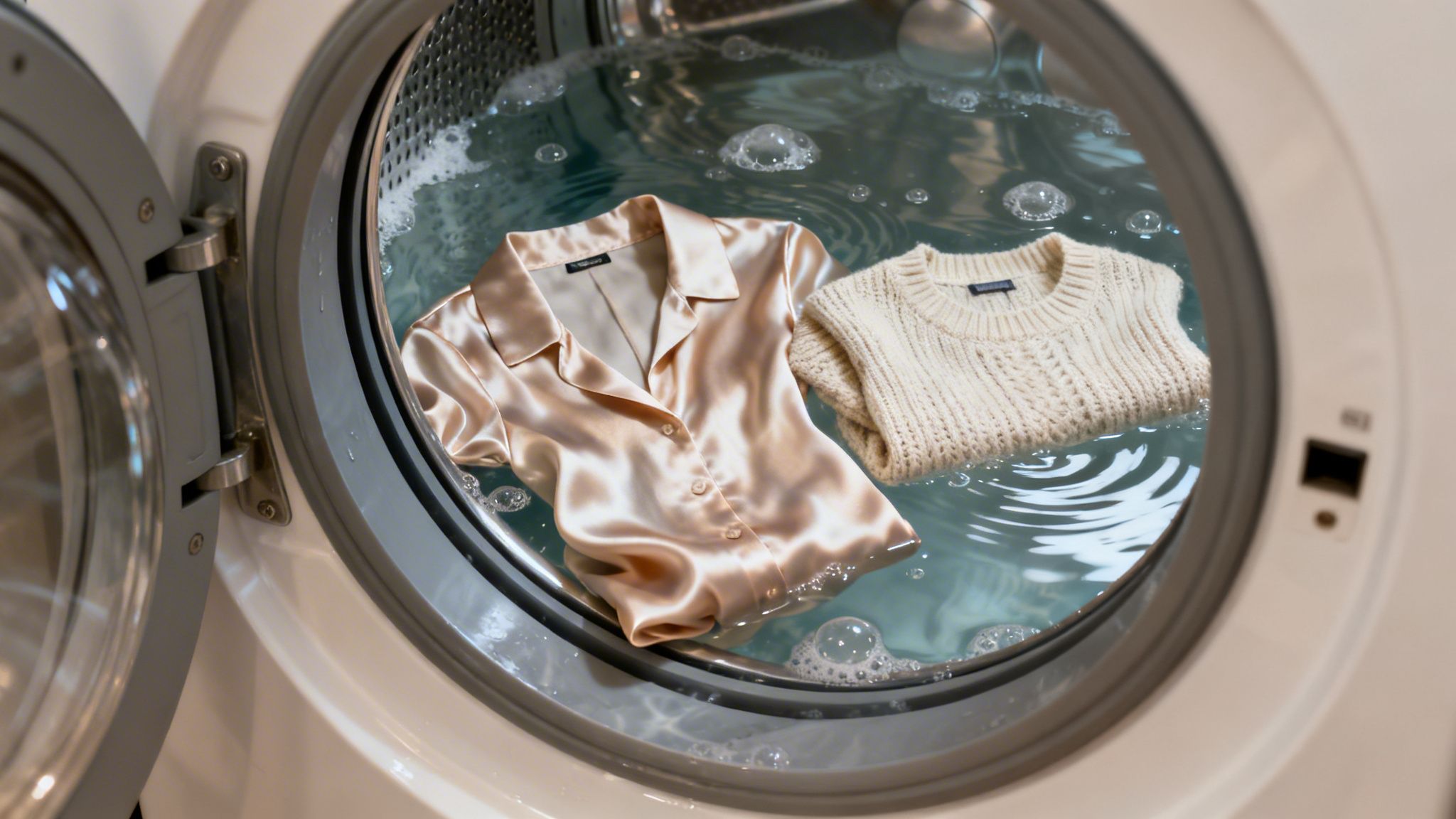
If a standard wash cycle is like a high-intensity workout for durable clothes like jeans and towels, then the delicates cycle is a gentle yoga class for your more sensitive garments. It’s all about protecting your clothes with a combination of three key settings.
Key Settings That Make a Difference
- Cool Water Temperature: The cycle almost always uses cold or lukewarm water. This is crucial for preventing fabrics like wool or silk from shrinking and for stopping vibrant colors from bleeding.
- Slow Agitation: The wash drum tumbles or agitates at a much slower pace. This soft touch minimizes the friction and pulling that can break down fragile fibers or cause those annoying little pills on sweaters.
- Low Spin Speed: To finish, the machine spins out excess water very gently. A low spin speed avoids the intense force that can stretch out fine knits or damage intricate lacework.
To quickly see how different these settings are, here's a simple breakdown.
Delicates Cycle vs Regular Cycle At a Glance
This gentle approach is why the delicates cycle is your best friend for keeping your favorite clothes looking new.
The delicates cycle first became a must-have feature as fabrics like nylon and polyester became everyday staples. Modern research backs this up, showing that using a delicates cycle can reduce fabric wear and tear by a whopping 40-50% compared to a normal wash. That’s a huge difference in preserving the shape and feel of your clothes.
For a deeper dive, our guide breaks down the complete delicate wash cycle step-by-step.
Identifying Which Clothes Need Gentle Care
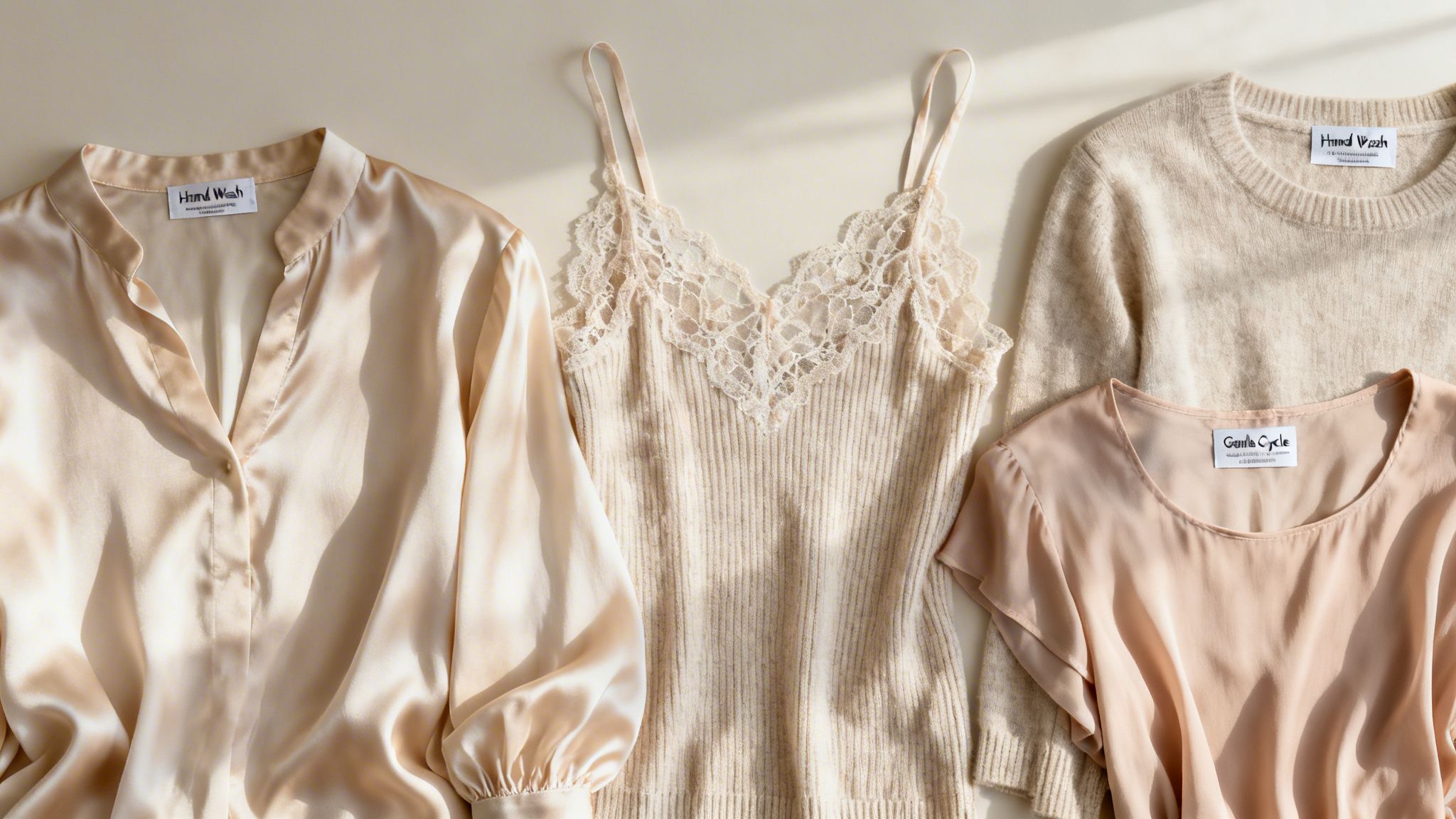
So, how do you know when to use the delicates wash setting? It all comes down to spotting the right candidates in your laundry hamper. This isn't just about what looks flimsy; it's about knowing a fabric's structure and how it's going to hold up against heat, water, and spinning.
Some items are a dead giveaway. That sheer silk blouse or lace-trimmed camisole? Definitely delicates. Their fine fibers can easily snag, stretch, or even tear under the high-speed agitation of a normal wash cycle. The same goes for that cozy wool sweater, which can shrink or felt into a doll-sized version of itself if you're not careful.
The material itself tells a big part of the story. For instance, this helpful guide to custom blanket materials like fleece, sherpa, and woven fabrics explains why even seemingly tough textiles often need a gentle touch to stay in good shape.
Look at the Fabric, Not Just the Item
It's not just the usual suspects like silk and lace that need special treatment. Many modern fabrics, including synthetics like rayon, modal, and Tencel, are known for their incredibly soft feel but can easily lose their shape or pill if you wash them too aggressively.
Even your high-performance athletic wear with spandex should go in the delicates pile. Why? A gentle wash helps preserve its elasticity and moisture-wicking features for the long haul.
A good rule of thumb is to check for a few key characteristics:
- Loose Weaves: Think linen, certain knits, or anything crocheted.
- Embellishments: Beading, sequins, and embroidery are easily damaged by a rough-and-tumble wash.
- Lightweight Feel: If it’s sheer or feels unusually light, treat it as a delicate.
- Natural Protein Fibers: Silk and wool are the big ones here, as they react badly to heat and agitation.
To make it even easier, here’s a quick-reference table to help you spot common delicate items at a glance.
A Guide to Common Delicate Fabrics and Items
This table covers the usual suspects, but there's one foolproof way to know for sure what your garment needs.
When in Doubt, Trust the Care Label
Honestly, your best guide is always hiding on the inside seam: the care tag. Manufacturers test their fabrics to find the absolute best way to clean them, so ignoring their advice is a real gamble. Think of it as the instruction manual for your clothes.
A care label isn’t just a suggestion—it's the manufacturer's specific instructions for keeping your garment looking its best. Learning to decode it is the single most effective way to prevent laundry mishaps.
Look for phrases like "Gentle Cycle" or "Hand Wash Only." A symbol of a wash basin with a hand in it is another clear signal. If you're staring at the tag and feeling like you're reading a foreign language, our guide on how to read clothing care labels will make you fluent in no time.
Preparing Your Delicates for a Perfect Wash
A successful delicates wash actually starts before your clothes even get near the machine. Just a few minutes of prep can be the difference between a favorite sweater lasting for years and one that gets snagged or stretched on its first trip through the wash.
Think of it as setting your clothes up for success. The goal is to give your most fragile pieces a little extra protection so they can make it through the cycle completely unscathed.
The Essential Prep Routine
Before tossing anything into the washer, run through this quick but critical checklist. It's a small time investment that pays off big by keeping your best clothes looking their best.
Fasten Everything Up: Zip all zippers, button every button, and latch any hooks or clasps. This simple step prevents those sharp bits from catching on other fabrics and causing a tear.
Turn Garments Inside Out: This is a must-do for anything with embroidery, beading, sequins, or even delicate prints. Turning them inside out protects all that beautiful detail from the friction of the wash.
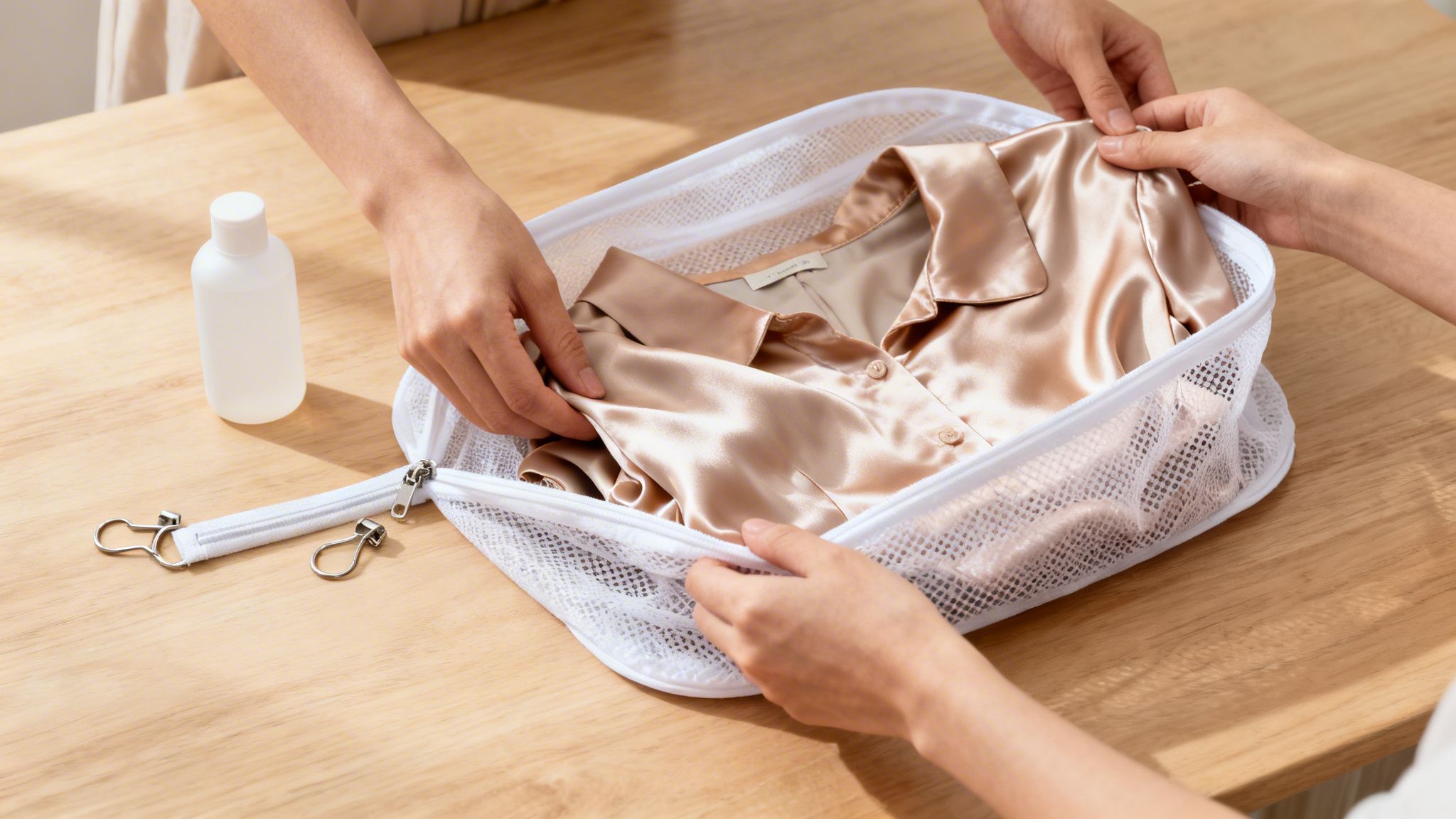
Use Mesh Laundry Bags: For lingerie, hosiery, and anything with skinny straps, these bags are your best friend. A mesh bag acts like a suit of armor, stopping items from tangling into a knot or getting stretched out of shape.
Using a mesh bag is probably the single most effective trick in the book for protecting delicates. It keeps small things from getting lost and prevents straps from wrapping around other clothes or parts of the machine.
Proper prep also means dealing with any stains before they go into the wash. If you're dealing with a particularly stubborn spot, a practical guide to cleaning various fabric items can offer some more specialized advice.
Spot-treating stains with the right detergent is key. Liquid detergents are fantastic for delicates because they dissolve easily, even in cold water. In fact, a huge reason so many delicate garments get ruined at home is from using the wrong detergent or cycle.
Choosing the Right Detergent for Delicate Fabrics
Picking the right wash cycle is only half the job. The detergent you choose is just as important, and using a harsh, standard detergent completely defeats the purpose of a gentle cycle. It's a bit like washing a priceless painting with a scrub brush—you're just undoing all your careful work.
Those heavy-duty detergents are packed with aggressive enzymes and chemicals designed to blast stains out of tough fabrics like denim. But on delicate fibers, they're overkill. They can strip the natural oils from materials like silk and wool, leaving them feeling brittle and dull, or cause vibrant colors to fade. Over time, they can even weaken the very structure of lace or chiffon.
Look for Mild and pH-Neutral Formulas
When washing delicates, your best bet is always a mild, pH-neutral detergent. Think of it less like a heavy-duty degreaser and more like a gentle shampoo for your clothes. These formulas are made to clean effectively without being abrasive on sensitive fibers.
Look for bottles that are specifically labeled "for delicates," "for silk and wool," or "gentle wash." These specialized soaps are formulated to be kind to your clothes and typically leave out the harsh stuff:
- Enzymes: While great for tackling protein and fat stains, enzymes like protease can actually eat away at protein-based fibers like wool and silk.
- Bleach and Brighteners: These aggressive agents can weaken fabrics and cause colors to fade or become blotchy.
- High-Alkaline Formulas: A pH-neutral or slightly acidic formula is much gentler and helps preserve the natural softness and feel of your garments.
The goal here is simple: lift away dirt and oils without stripping the life out of the fabric. A gentle, pH-neutral detergent cleans your clothes while respecting their delicate nature, which is the key to making them last.
One final tip: always choose a liquid detergent over a powder. Powders can have a tough time dissolving completely in the cool water of a delicate cycle, sometimes leaving a chalky residue behind. A good liquid detergent mixes in perfectly, giving you a clean, gentle rinse every time.
When to Trust the Professionals with Your Delicates

Knowing how to use the delicates wash cycle is a great skill, but let's be honest—sometimes the best move is to hand your favorite items over to an expert. Life is hectic. The last thing you want to do is spend your precious free time meticulously sorting, pre-treating stains, and babysitting a load of fragile clothes.
That’s where professional care steps in. Trusting a service like Columbia Pike Laundry isn’t just about getting laundry done; it's about buying back your time and gaining total peace of mind. We use professional-grade, gentle detergents and an expert sorting process that goes far beyond what’s possible with a standard home wash. It's a system designed specifically for the garments you simply can’t risk ruining.
More Than Laundry, It’s Peace of Mind
For busy professionals and families, time is the one thing you can't get more of. The growing demand for specialized laundry services reflects this reality, with the dry-cleaning and laundry market seeing steady growth as more people opt for convenience and expert care.
When you hand off this detailed chore to us, you can feel confident it's being done right. We take the guesswork out of it. For those tricky items that could go either way, our team has the experience to make the right call between washing and dry cleaning.
If you want to learn more about making that decision yourself, our guide on how to choose between wash and dry cleaning offers some great insights.
At Columbia Pike Laundry, we treat your delicate garments with the precision and attention they deserve. Our seamless pickup and delivery service brings expertly cared-for clothes right back to your door, giving you one less thing to worry about.
Instead of spending your weekend chained to the washing machine, imagine knowing your best clothes are in good hands. It’s the ultimate relief from a never-ending household chore.
Common Questions About Washing Delicates
Even when you feel like you've mastered the delicates cycle, a few questions always seem to pop up. Let’s clear up some of the most common uncertainties you might have about washing your finer garments.
Can I Put 'Dry Clean Only' Items in the Delicates Wash?
Tempting, isn't it? But that "Only" on the tag is there for a reason. While a very sturdy 'Dry Clean' item might make it through, it’s a gamble. The risk of shrinking, color bleeding, or completely ruining the fabric's texture is just too high. When the label says 'Dry Clean Only', your best bet is to trust the professionals.
What’s the Best Way to Dry Delicates After Washing?
High heat is the enemy of delicate fabrics. Your dryer's regular setting can cause irreversible damage, so it's best to avoid it altogether.
The safest method is always air-drying.
- Lay sweaters, cashmere, and other heavy knits flat on a towel to help them keep their shape.
- Hang everything else, like blouses or lingerie, on padded hangers away from direct sun, which can fade colors.
If you absolutely must use a machine, stick to the 'no heat' or 'air fluff' setting for just a few minutes to remove excess moisture before hanging.
Hand Wash or Machine Cycle: Which Is Better?
It really depends on the item. For most of your durable delicates—think synthetics or cotton blends—the machine's gentle cycle is perfectly fine and saves a ton of time. But for those truly irreplaceable pieces like antique lace, silk, or anything with beading, hand washing is the way to go. It gives you the most control and is by far the gentlest option.
When you'd rather skip the guesswork and get perfect results every time, Columbia Pike Laundry is ready to help. We treat your delicates with the professional care they need, giving you back your time and peace of mind. Schedule your first pickup today and let us handle the rest.
Free pickup, expert care, delivered back to your door.
Popular Blog Articles





Meet the Author
Daniel Logan didn’t start CPL because he loved laundry. He started it because his family was drowning in time debt, and laundry was one of the biggest weights.
Mornings were chaos with two kids under 5. Evenings felt like catch-up. And weekends? Gone to sorting socks and folding piles.
He knew his story wasn’t unique. So he built a business that gave families like his just a little bit of breathing room one load at a time.
With no laundry experience but deep tech skills, Daniel rolled up his sleeves, doing every job himself while building systems that turned it into a modern laundry service that saves customers time, simplifies their lives, and delivers reliability they can count on.
That’s where CPL began. Not from a playbook, but from pain. From one dad trying to buy back time: for himself, and for every household like his.
Free pickup, expert care, delivered back to your door.