
Why Clothes Shrink: Science & Smart Laundry
Columbia Pike Laundry offers pickup & delivery across Northern Virginia.
You pull your favorite sweater out of the laundry basket, hold it up, and immediately know something's wrong. The sleeves look shorter. The body looks narrower. It isn't your imagination, and it isn't bad luck either.
Shrinkage is often treated like a random laundry disaster. It feels that way in the moment. But why clothes shrink has a pattern. Fiber type matters. Fabric construction matters. Even a garment's age matters more than generally realized.
A soft cotton tee, a chunky knit sweater, and a polyester workout shirt don't respond to water, heat, and motion the same way. A loosely knit top has more room to shift than a tightly woven button-down. And that older shirt you've loved for years may react differently now than it did on wash day one, because repeated wear and washing slowly change the fibers.
Once you understand that shrinkage is a process instead of a single mistake, laundry gets less mysterious. You stop guessing. You start reading fabric, structure, and care labels more clearly. And you get much better at keeping clothes in the shape and size you bought them in.
The Heartbreak of a Shrunken Sweater
It usually happens when you're already busy.
You toss in a quick load before work, or after soccer practice, or late at night when you're too tired to think about water temperature. The next day, your sweater comes out looking like it belongs to a much smaller person. A favorite cotton shirt suddenly fits snug across the shoulders. Your child's pajamas seem to have skipped straight to the "too small" pile overnight.
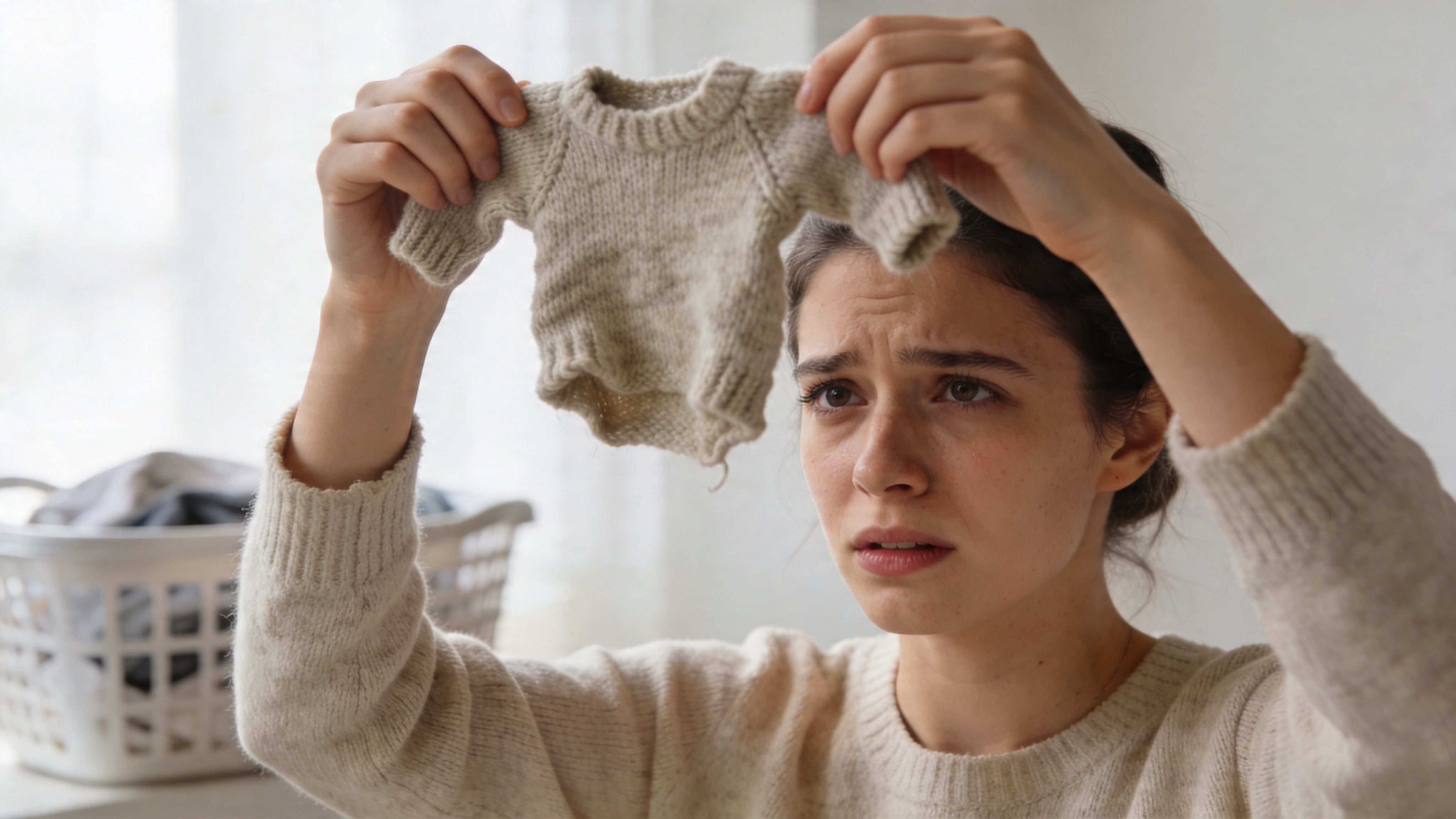
That frustration is real because shrinkage feels unfair. You followed a basic wash routine. You didn't set out to ruin anything. But clothing doesn't respond only to your intentions. It responds to fiber, moisture, heat, movement, and time.
Why it feels so random
One sweater survives years of washing. Another changes shape after one rough cycle. That's where people get tripped up. They assume all clothes shrink for the same reason, or only after one obvious mistake like using hot water.
The truth is less dramatic and more useful. Shrinkage usually comes from a mix of factors working together.
- Fiber content matters because natural fibers often react more strongly to water and heat.
- Construction matters because loose knits and open weaves can tighten more easily.
- Garment history matters because older clothes may already have weakened fibers from repeated wear.
Clothes don't usually "suddenly" shrink without a reason. The reason was just hidden in the fabric all along.
Once you see that, the problem starts to feel manageable. A shrunken sweater isn't a sign that you're bad at laundry. It's a clue. Your clothes are telling you how they're built, how they're aging, and how gently they need to be handled.
The Science Behind a Shrunken Wardrobe
Clothes shrink because fibers don't stay frozen in the shape they had in the store. Washing and drying can push them back toward a more relaxed state. Textile experts often describe this as fiber relaxation, and it's one of the biggest reasons garments change size after laundering.
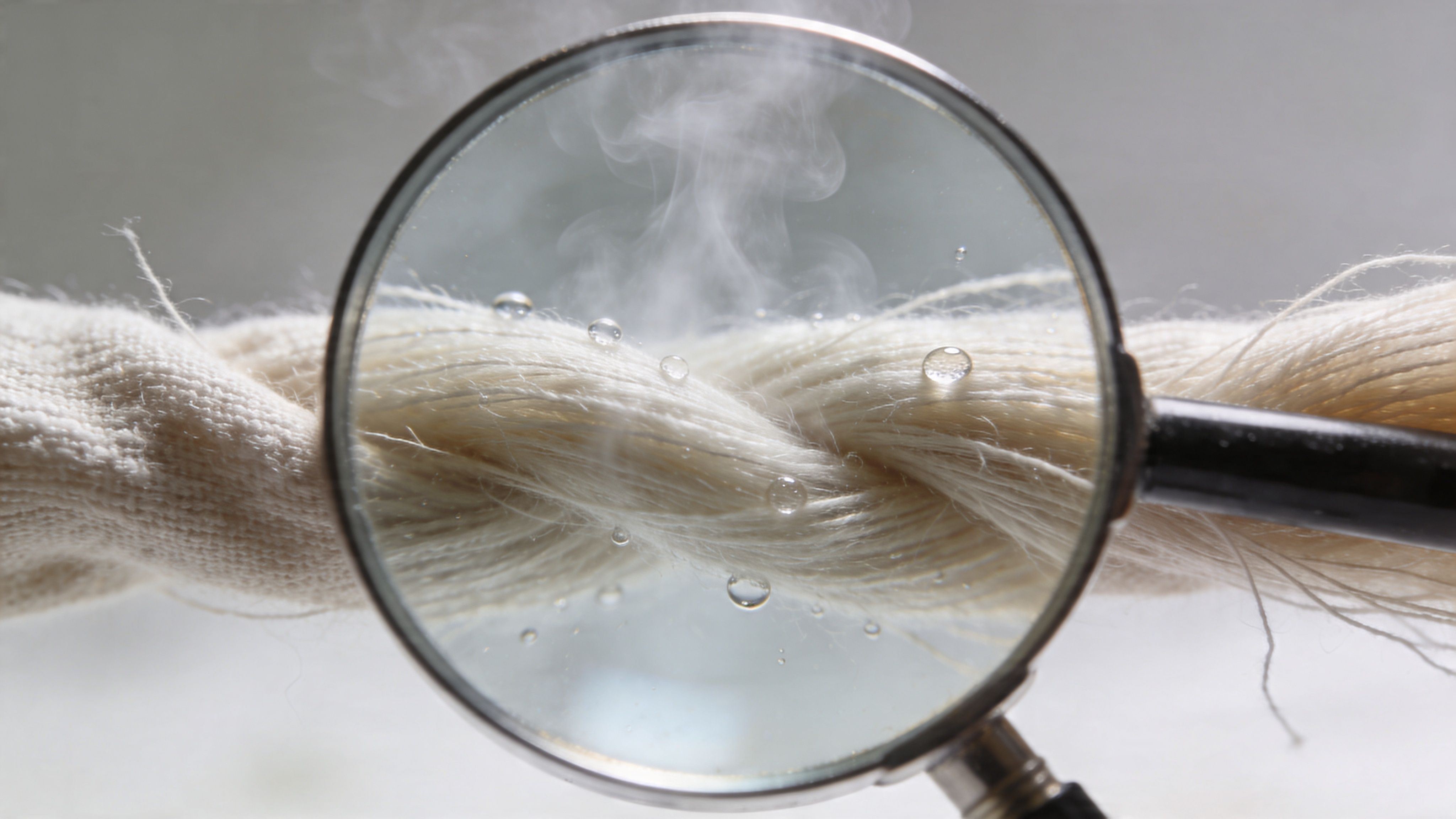
A simple way to picture it is this. Think of fabric fibers like tiny coiled springs that were stretched during manufacturing. While the garment is being made, those fibers and yarns are pulled, tensioned, and set into a neat shape. Once water, heat, and agitation show up, some of that built-in tension can release. The fibers recoil. The fabric tightens. The garment gets smaller.
Moisture starts the process
Water isn't just "wet." It changes the shape and behavior of many fibers.
Cotton is a great example because it's in so many closets. According to this explanation of textile shrinkage, cotton's cross-sectional area increases by 40-50% upon water absorption, while its length expands by only 1-2%, which pushes yarn intersections closer together and shortens the overall fabric dimensions.
That sounds technical, but the everyday version is simple. Cotton swells more sideways than lengthwise. When those swollen fibers sit inside a woven or knitted structure, the whole fabric can tighten and pull inward.
Heat makes relaxation happen faster
Heat confuses a lot of people because it seems like the only villain. It isn't the only one, but it can speed things up.
In cotton, the fibers are made of cellulose chains linked by hydrogen bonds. When heat enters the picture, especially in hot washing, those bonds can loosen enough for the fibers to relax toward their natural crinkled shape. That same textile shrinkage explanation notes that hot water disrupts those hydrogen bonds, which helps the fibers recoil.
This is why one wash in cool water may leave a shirt mostly unchanged, while a warm or hot cycle can produce a noticeable difference.
Agitation turns small shifts into visible shrinkage
Now add movement.
Washers rub fabric against fabric. Dryers tumble garments repeatedly. That motion isn't just cleaning action. It also gives fibers and yarns more chances to settle into a tighter arrangement.
Here are the three forces working together:
- Moisture softens and swells fibers.
- Heat helps release built-in tension.
- Agitation encourages the fabric structure to tighten.
Practical rule: If a garment is already vulnerable, the harshest combination is usually wet, warm, and tossed around.
That helps explain a common laundry mystery. People say, "I barely changed anything." But maybe they used the same detergent, the same machine, and the same routine on a different fabric with a looser knit. The care result changed because the garment was built differently from the start.
Why one shirt shrinks more than another
Two cotton shirts can behave very differently. A tightly woven oxford shirt may hold its shape better than a soft jersey tee. A chunky sweater may shift more than a compact knit. The fabric's construction controls how much room the yarns have to move when the fibers relax.
That interplay between fiber type and fabric structure is the part many people miss. Shrinkage isn't just chemistry. It's chemistry plus architecture.
A Fabric-by-Fabric Guide to Shrinkage Risk
If you've ever looked at a care tag and thought, "Okay, but what does this mean in real life?" this is the part that helps.
Not all fabrics shrink the same way, and not all risk comes from the label alone. A cotton poplin shirt, a wool cardigan, and a rayon blouse can all shrink for different reasons. Some fibers absorb water easily. Some tighten when exposed to warmth. Some stay fairly stable but still lose shape if blended with more delicate materials.
According to this fiber guide on shrinkage behavior, natural fibers like cotton and wool are the most vulnerable. The same source says cotton shrinks 3-5%, wool 5-10%, and polyester 1-2%, with hot water above 40-60°C increasing the chance that stretched cotton chains will recoil.
Fabric Shrinkage Cheat Sheet
| Fabric Type | Shrinkage Risk | Best Care Method |
|---|---|---|
| Cotton | Moderate to high | Cold water, gentle cycle, low heat or air dry |
| Wool | High | Cool handling, minimal agitation, reshape and dry carefully |
| Linen | Moderate | Cool wash, avoid aggressive drying, smooth while damp |
| Silk | Moderate | Gentle cleaning, low heat, careful handling |
| Rayon | High | Avoid rough washing, keep water and drying gentle |
| Polyester | Low | Standard gentle care, avoid unnecessary high heat |
| Nylon | Low to moderate | Gentle wash, low dryer settings |
| Acrylic | Moderate | Avoid overheating, reshape as needed |
| Blends | Variable | Follow the most delicate fiber in the blend |
Natural fibers need the most caution
Cotton is common, comfortable, and deceptively easy to overtrust. It can seem sturdy because it handles everyday wear well, but it still reacts strongly to moisture and heat. Soft tees, sweatshirts, and knit basics are often the first items people accidentally shrink.
Wool behaves differently. It doesn't just relax. It can also tighten and compact in a way that feels more dramatic, especially in sweaters. If you've ever seen a wool sweater turn denser and smaller after a warm wash, you know how unforgiving that can be.
Linen usually feels crisp and breathable, but it can still contract and look smaller after washing if it's dried too aggressively. It often responds well to careful smoothing and pressing.
Silk is delicate in a different way. The risk isn't always dramatic shrinkage. Sometimes it's subtle tightening, loss of drape, or shape distortion that makes the garment feel off even if the size change looks small.
Regenerated and blended fabrics can surprise you
Rayon catches a lot of people off guard. It feels soft and flowy, so many people assume it will behave like a stable synthetic. It often doesn't. It can become fragile when wet and lose shape easily.
Blends are even trickier.
A shirt made from cotton and polyester may not shrink as much as pure cotton, but that doesn't mean it's risk-free. The natural fiber portion can still move differently from the synthetic portion. That mismatch can cause twisting, puckering, or uneven fit instead of an obvious all-over size drop.
A blended fabric doesn't cancel risk. It changes the way risk shows up.
Construction changes the answer
The care tag alone stops being enough.
A loose knit cotton tee has more room to tighten than a tightly woven cotton shirt. A bulky sweater has more visible surface movement than a smooth, compact knit. Open structures invite change because the yarns can shift more freely when washing releases tension.
If you want a deeper plain-English breakdown of that relationship, this guide on fabric shrinkage in wool and cotton gives a useful overview of how material and structure work together.
A simple way to judge risk in your own closet
Before washing, ask three questions:
- What is it made of. Natural fibers usually need more caution than synthetics.
- How is it built. Loose knits and softer fabrics tend to move more.
- How precious is the fit. If a garment only fits when everything is just right, treat it as high risk.
That quick check catches a lot of shrinkage before it happens.
Your At-Home Prevention Playbook
Good laundry habits don't need to be fancy. They need to be consistent.
Most shrinkage prevention comes down to lowering stress on the garment. Less heat. Less rough motion. Better sorting. Better timing in the dryer. If you make those decisions before pressing start, you prevent a lot of regret later.
Start with the care label and the cycle
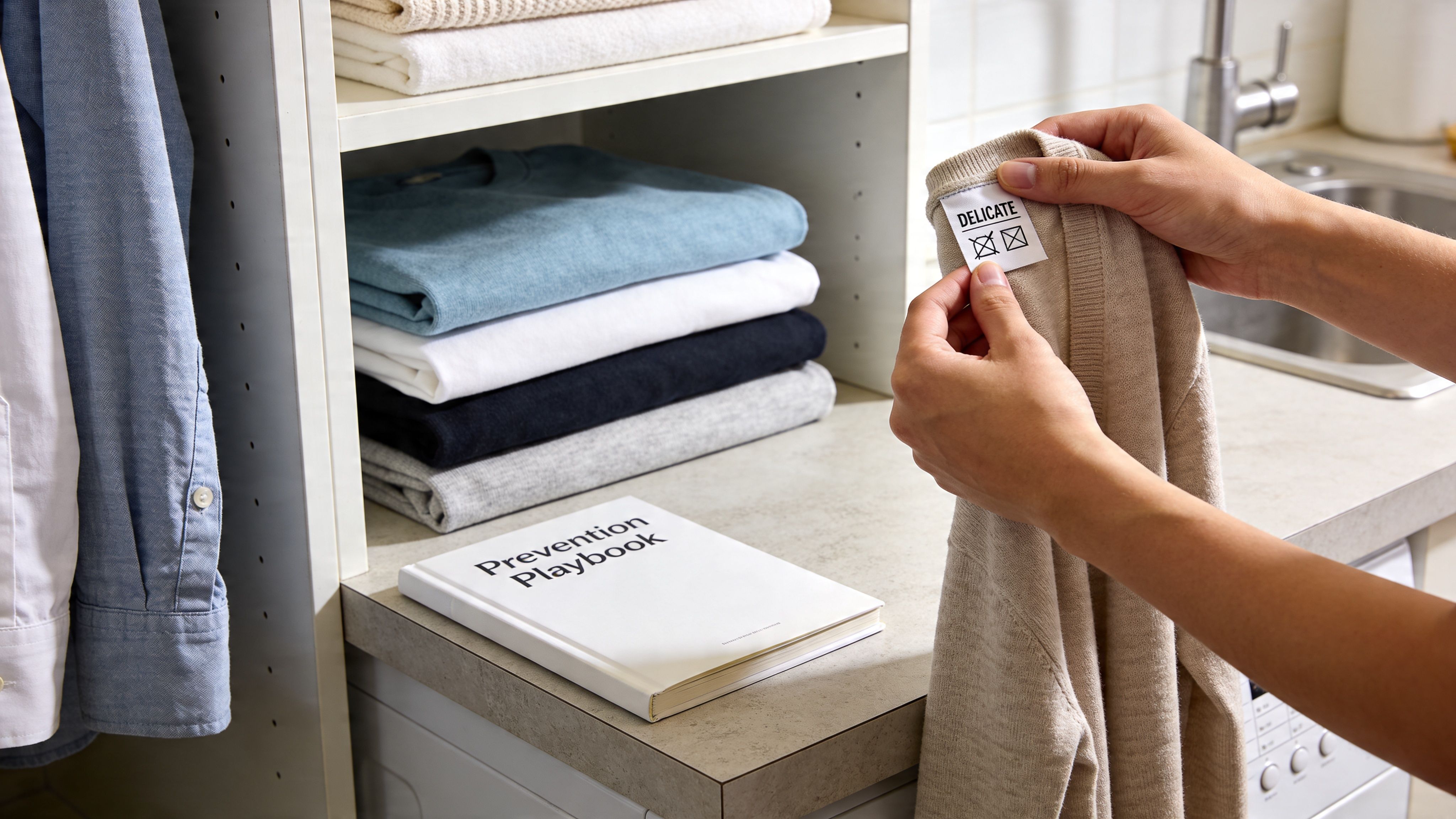
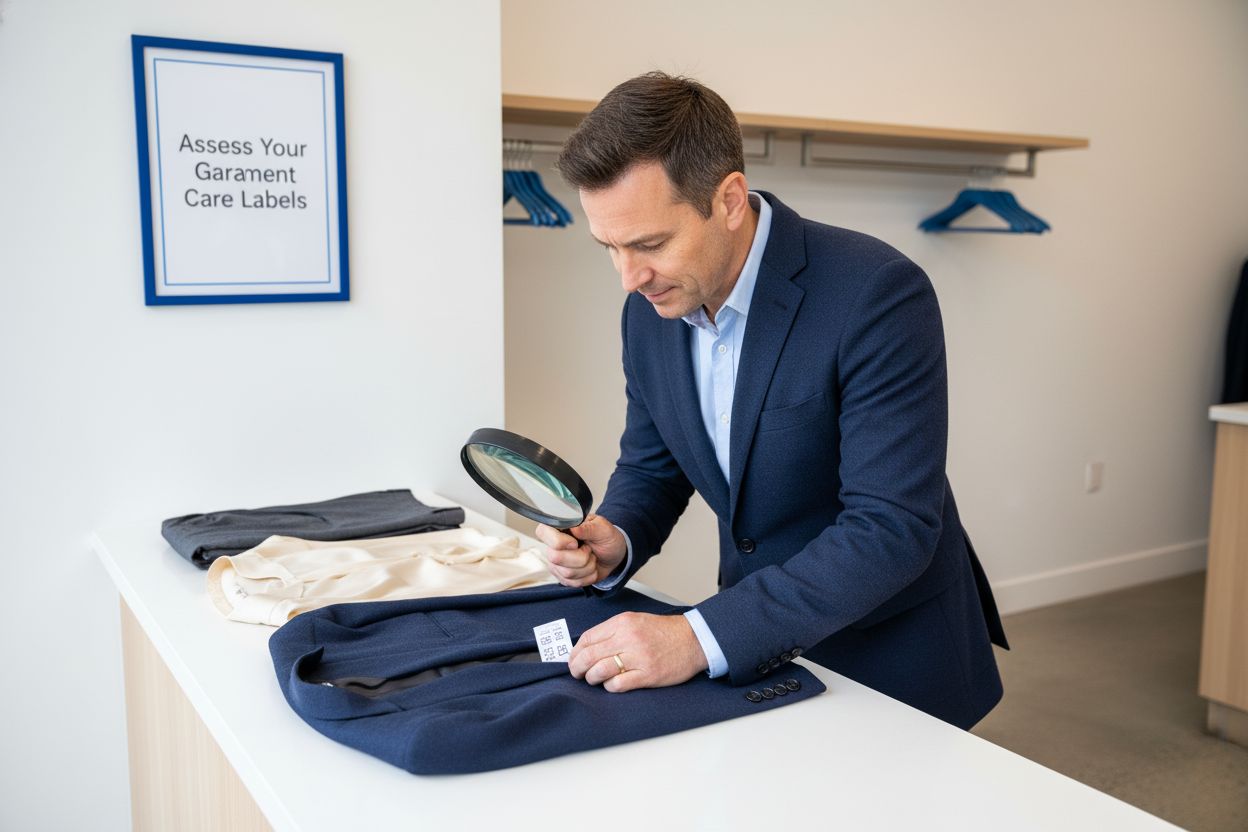
The care label isn't there to boss you around. It's there to tell you what the fabric won't forgive.
If a label says cold wash, gentle cycle, reshape, lay flat, or dry clean only, take it seriously. Those instructions usually reflect the fiber and construction, not brand fussiness. If you need a refresher on what each machine setting does, this guide to washing machine cycles is helpful because it connects the label to the machine choices in front of you.
Four habits that prevent the most shrinkage
- Sort by more than color. Separate by fabric weight and fragility too. Heavy towels and jeans can rough up lighter knits and tees during washing.
- Default to cold water for riskier items. Cooler washing is usually the safer choice for garments prone to shrinking.
- Choose gentler cycles. A delicate or lower-motion cycle gives fibers less punishment.
- Pull items out sooner. Don't let clothes bake in a dryer after they're already dry.
The dryer myth people get wrong
Many people blame heat alone, but dryer behavior is more nuanced than that. According to this article on dryer shrinkage and moisture control, Speed Queen says, "Lack of moisture, not heat, causes clothes to shrink," and the same source notes that emerging 2025-2026 models with AI moisture sensors aim to reduce shrinkage by 20-30% through more precise stopping points.
The practical takeaway isn't that heat doesn't matter. It does. The takeaway is that overdrying is a big part of the problem. Once a garment has gone through washing and the fibers have shifted, continuing to dry it past the right point can push it further toward shrinkage.
If your dryer has an auto-dry or moisture-sensing setting, that's usually smarter than running a long timed cycle by habit.
A simple decision tree for home laundry
When you're holding a garment and unsure what to do, use this:
- Natural fiber and loose knit? Choose cold water and the gentlest path.
- Structured item or delicate shape? Avoid aggressive tumble drying.
- Blended or mystery fabric? Treat it like the more delicate component.
- Already a little snug? Don't test your luck with heat.
Air drying isn't always convenient, but for sweaters, fitted tops, and anything with sentimental or expensive value, it's often the safest move. Even partial air drying helps. Let the garment dry most of the way naturally, then finish briefly only if needed.
Small choices add up. That's what makes this a playbook instead of a trick.
Quick Fixes and Protecting Your Clothes Long-Term
If a garment has already shrunk, don't panic and don't yank on it while it's dry. That usually makes the shape worse.
Slight shrinkage can sometimes be softened with patience. Rewashing gently, reshaping while damp, and laying the item flat can help. Sweaters and knits often respond best when you guide them back into shape slowly instead of stretching hard in one direction.
What you can try right away
These fixes are best for mild shrinkage, not severe damage.
- For knitwear gently dampen the item, then ease it back into shape with your hands on a towel.
- For cotton tees smooth seams, straighten side lines, and tug lightly while the fabric is still damp.
- For shaped items match the garment to a similar piece that still fits well, then use that as your size guide while reshaping.
Sometimes that's enough to recover wearable comfort, even if the piece doesn't return perfectly.
Why older clothes can suddenly start shrinking
This is the part people rarely hear. Shrinkage risk changes over a garment's lifespan.
According to this discussion of wear-related shrinkage, "Clothes that have been worn and washed multiple times are more likely to shrink... fibers weaken and lose elasticity," which means an older favorite may become more vulnerable even under normal care. That helps explain why a shirt can behave well for months, then suddenly come out feeling tighter.
Older clothes don't always fail because of one bad wash. Repeated wear, washing, and drying can slowly reduce the fabric's ability to bounce back.
That long-term view changes how you care for a wardrobe. Laundry isn't just about getting through this week's pile. It's about how many cycles a garment can survive without losing fit, drape, or softness.
One practical thing that helps is improving the whole drying environment, not just the setting on the machine. If you're trying to reduce overdrying and help your dryer work more predictably, this guide to energy-efficient dryer vents is a useful read because airflow affects how evenly clothes dry.
When to Trust a Professional With Your Laundry
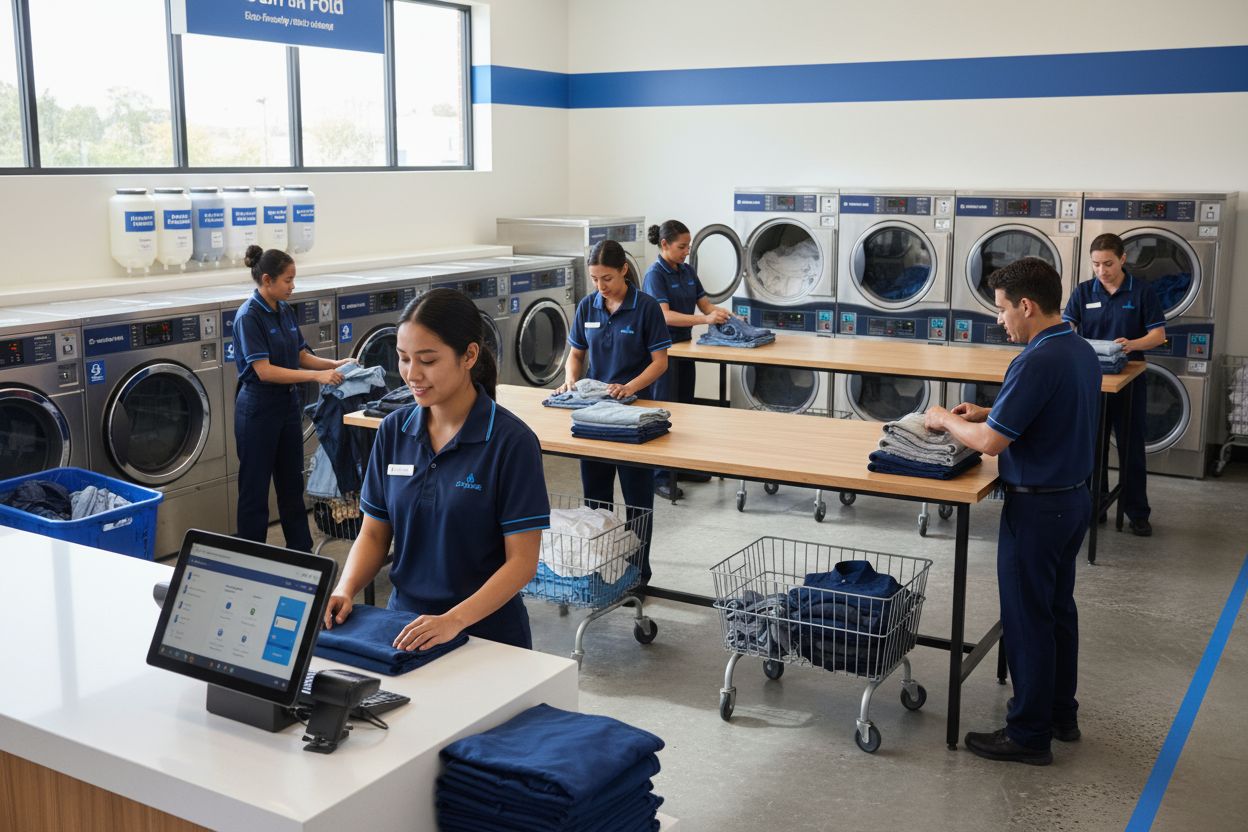
Home laundry can work well when you have the time to sort carefully, check labels, reshape knits, separate risk levels, and catch garments before the dryer goes too far. Real life doesn't always leave room for that.
Busy households make fast decisions. You wash after bedtime. You dry between meetings. You fold while answering texts. That's exactly when good intentions collide with mixed loads, default settings, and one sweater that needed a gentler plan than the rest.
The clothes that deserve extra caution
Some items ask for more precision than a regular home cycle can easily give.
Think about pieces like these:
- Delicate sweaters that lose shape easily
- Structured garments that rely on careful finishing
- Special fabrics with sensitive texture or drape
- Favorite everyday staples that you want to keep fitting the same way month after month
These aren't always "fancy" clothes. Sometimes the item worth protecting is the black work top that fits perfectly, the child's uniform sweater, or the weekend shirt you reach for every time it's clean.
Professional care protects more than one wash
The value of professional cleaning isn't just avoiding one laundry mishap. It's reducing stress on the garment over time.
Professional cleaning can mean more controlled temperatures, more deliberate sorting, better handling for delicates, and less rough treatment during drying and finishing. That matters when you're trying to preserve fit across the life of the item, not just get through one load.
For garments that need solvent-based care or more specialized handling, dry cleaning is often the better path than hoping a careful home cycle will be "close enough."
Convenience matters too
A lot of people frame professional laundry as a luxury. For many families and professionals, it's closer to a sanity tool.
It removes a recurring decision stack. No second-guessing the sweater. No last-minute rewashing because something came out wrong. No standing over the dryer trying to catch the exact right moment. You hand off a task that has a real cost when it goes badly, and you get back time, attention, and a little more calm at home.
That's why the smartest reason to get help often isn't that laundry is impossible. It's that your time and your wardrobe are both worth protecting.
If you're tired of treating every wash day like a gamble, Columbia Pike Laundry offers a calmer way to care for your clothes. Their family-owned team handles Wash & Fold, dry cleaning, and pickup and delivery with careful sorting, gentle products, and the kind of attention that helps clothes hold their shape longer. You didn’t outsource laundry. You bought back your weekend.
Free pickup, expert care, delivered back to your door.
Popular Blog Articles




Meet the Author
Daniel Logan didn’t start CPL because he loved laundry. He started it because his family was drowning in time debt, and laundry was one of the biggest weights.
Mornings were chaos with two kids under 5. Evenings felt like catch-up. And weekends? Gone to sorting socks and folding piles.
He knew his story wasn’t unique. So he built a business that gave families like his just a little bit of breathing room one load at a time.
With no laundry experience but deep tech skills, Daniel rolled up his sleeves, doing every job himself while building systems that turned it into a modern laundry service that saves customers time, simplifies their lives, and delivers reliability they can count on.
That’s where CPL began. Not from a playbook, but from pain. From one dad trying to buy back time: for himself, and for every household like his.
Free pickup, expert care, delivered back to your door.