
Keep Your Zip Up White Sweater Pristine
Columbia Pike Laundry offers pickup & delivery across Northern Virginia.
There's a reason we're all drawn to a classic zip up white sweater. It's the perfect blend of cozy and chic, a single piece that instantly makes you look put-together. But let's be honest—wearing it can feel like a high-stakes game. One wrong move with your morning coffee, and it’s all over. This guide is here to take the fear out of the equation, so you can actually enjoy your favorite sweater.
Why That White Sweater Is Worth The Effort

It’s easy to see the zip-up sweater as just a modern fashion staple, but its roots are surprisingly practical. Think back to the 1930s, when Champion (then the Knickerbocker Knitting Company) first developed hooded sweatshirts for workers in cold-storage warehouses in New York. They needed warmth without the bulk. By the mid-20th century, that design evolved into the quarter-zip style we know today, giving athletes and laborers a quick way to adjust their ventilation. You can read more about the journey of this iconic garment over at Smithsonian Magazine.
Today, that functional history has translated into one of the most versatile pieces you can own. A bright white zip-up acts as a clean slate, ready to be styled for just about any situation. It nails that effortless look, whether you’re heading out for a weekend coffee or layering up for a chilly evening.
The Ultimate Wardrobe Workhorse
So, what makes this one item so essential? It all comes down to its incredible adaptability. When you keep it looking crisp and bright, a white sweater has the power to elevate everything else in your closet.
- The Perfect Layering Piece: Slide it under a blazer for a sharp, office-appropriate look, or throw it on over a t-shirt for laid-back weekend style.
- A Transitional Season Saver: It’s the ideal garment for those awkward spring and fall days when a heavy coat is just too much.
- An Effortless Statement: The clean contrast of brilliant white against dark denim or colored pants creates a polished outfit without you even having to try.
Consider this your permission slip to wear that beautiful white sweater without fear. We'll give you the exact playbook for keeping it looking brand new, wash after wash.
Unlocking its full potential, however, means getting the care right. From unexpected spills to that slow, creeping dinginess that can set in over time, maintaining that pure white can feel like a chore. But it doesn't have to be. Knowing how to choose the right fabrics for longevity is a great start. From here, we'll get into the nitty-gritty of decoding care labels, tackling stains like a pro, and mastering the art of storage.
Your First Step: Read The Fine Print On The Tag
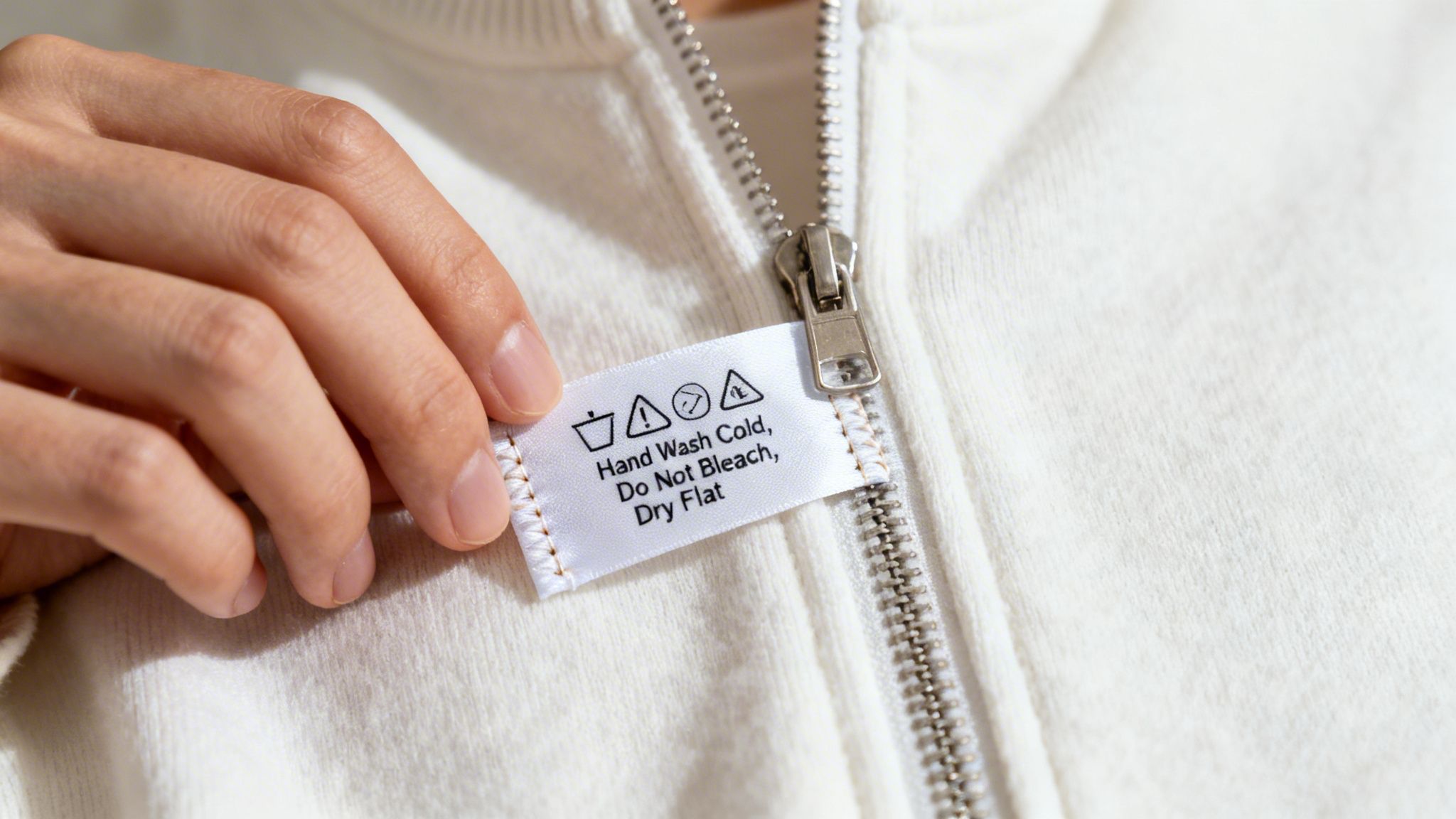
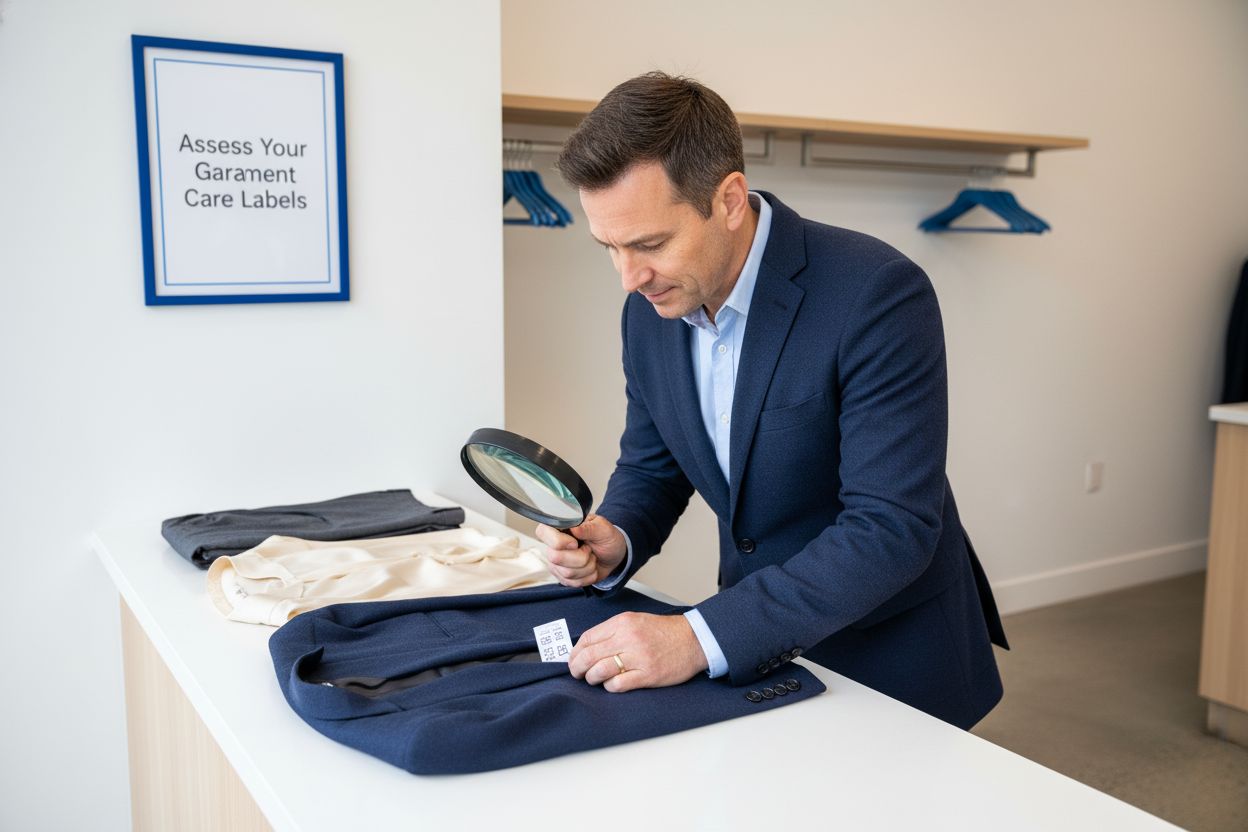
Before you even think about washing that zip up white sweater, stop. Find the care label. I know it seems small and insignificant, but that little tag is the most important guide you have, written by the people who actually made the garment. Ignoring it is the quickest way I've seen a beautiful sweater turn into a costly mistake.
That label holds the key: the fabric composition. This one detail changes everything about how you should handle your sweater. The right method for a sturdy cotton zip-up will absolutely destroy a delicate cashmere blend, leading to shrinking, stretching, or felting that you just can't undo.
Know Your Material: Why Fabric Content is King
The first thing you'll see on the tag is what your sweater is made of. This isn't just trivia; it dictates the entire cleaning process. Think of it as a personality profile for your garment.
- Cotton: This is a workhorse fiber. It’s tough and can usually handle a gentle cycle in the machine with cold water. It's breathable and comfortable, but high heat is its enemy—it will shrink.
- Wool (Merino, Lambswool): Fantastic for warmth, but it's a natural hair fiber that's very sensitive. Hot water or aggressive spinning will cause it to felt and shrink dramatically. Hand washing or taking it to a professional dry cleaner is almost always the rule here.
- Cashmere: The ultimate in softness, but it’s also incredibly delicate. Cashmere demands the gentlest touch—a careful hand wash in cold water or a trip to the dry cleaner is non-negotiable if you want to preserve its luxurious feel.
- Synthetics (Polyester, Acrylic, Nylon): These man-made fibers are often blended in to add durability and help the sweater keep its shape. They're pretty resilient and can typically be machine washed, though you still need to be careful with high heat, which can damage the fibers or create static cling.
A 100% cotton sweater might come out of the wash looking perfect, but put a 100% wool sweater through that same cycle, and you'll be left with something that might fit a teddy bear. That’s why you have to check.
Cracking the Code of Care Symbols
Beyond listing the material, the label uses a set of universal symbols. They can look a bit like modern hieroglyphics, but they give you crystal-clear instructions for washing, drying, and bleaching.
A consumer laundry study found that while over 90% of us glance at the care label on new clothes, many of us are just guessing what all the symbols actually mean. Getting them right is the entire foundation of good garment care.
Let's quickly translate the most important ones you'll find on your white sweater.
Washing Symbols
The washtub icon tells you exactly how to clean it.
| Symbol | Meaning | Practical Advice for Your White Sweater |
|---|---|---|
| Washtub with an X | Do Not Wash | This is a hard stop. The item is dry clean only. Don't even try to hand wash it at home. |
| Washtub with a Hand | Hand Wash Only | Fill a basin with cool or lukewarm water and a mild soap. Gently swish, but never twist or wring it out. |
| Washtub with a Dot | Machine Wash, Cold | Use the cold setting on your washer (usually 65-85°F or 20-30°C). This is perfect for preventing shrinkage and keeping whites bright. |
| Washtub with Two Dots | Machine Wash, Warm | A warm cycle (around 105°F or 40°C) is fine. This is typically reserved for tough cotton or synthetic blends. |
Drying and Bleaching Symbols
The square icon is all about drying, and the triangle is for bleaching—a lifesaver for keeping white fabrics looking fresh.
- A square with a circle inside: Tumble drying is okay. Dots inside tell you the heat level (one for low, two for medium). If it has an "X" through it, do not tumble dry under any circumstances.
- An empty triangle: Go for it. You can use any type of bleach.
- A triangle with diagonal lines: This means use only non-chlorine (or oxygen-based) bleach. This is the safest and most common recommendation for white sweaters.
- A solid triangle with an "X": No bleach of any kind. Don't risk it.
Taking just a minute to read these instructions is the simplest thing you can do to give your zip up white sweater a long, happy life. It’s all about working smarter, not harder.
A Practical Guide To Removing Common Stains
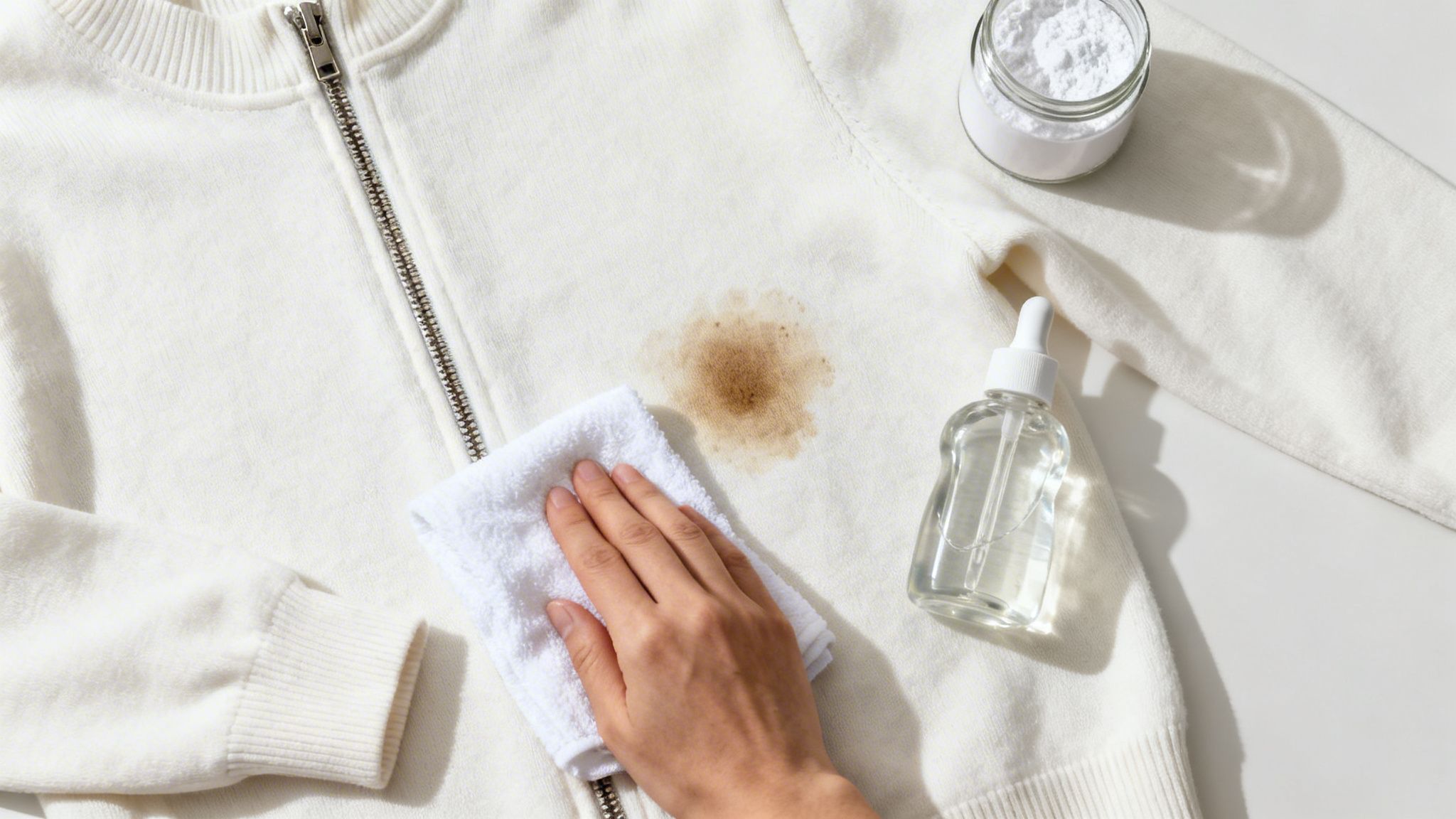
It’s that sinking feeling we all know: a drop of coffee, a smear of something greasy, and suddenly your crisp white sweater has a new, unwanted spot. But don't panic. A stain isn't the end of the world, as long as you act fast and, more importantly, act smart.
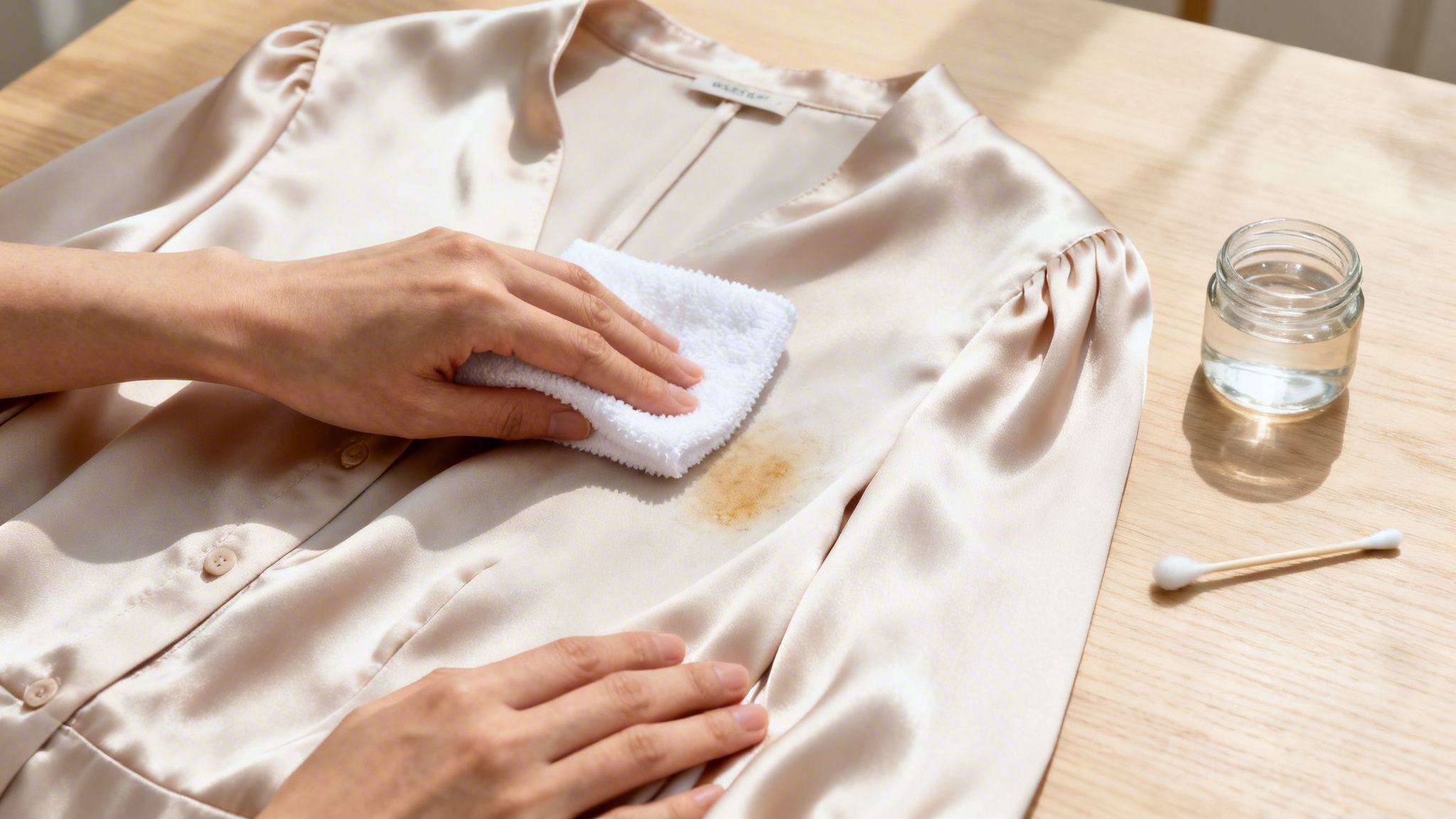
The first instinct is often to rub furiously at the spot, but that’s the worst thing you can do. Rubbing only grinds the stain deeper into the fibers, making it spread and set. Instead, always blot, never rub. Use a clean, white cloth to gently lift away the excess. This simple first step can make all the difference.
Your Kitchen's Stain-Fighting Arsenal
You’d be surprised what you can accomplish with a few common household items. Forget the expensive, specialized chemicals for a moment—some of the best pre-treatment tools for your zip up white sweater are probably already sitting in your kitchen.
For instance, a single drop of clear dish soap is fantastic for cutting through grease and oil. A simple paste of baking soda and water can lift all sorts of food stains. Even club soda is a classic for a reason; its carbonation helps push red wine out of the fabric. It’s all about matching the right tool to the job.
A Stain-By-Stain Action Plan
Every stain has a different chemical profile, so a one-size-fits-all approach is a recipe for disaster. Using the wrong method can lock in a stain permanently. Knowing what you're up against is half the battle.
The most common laundry error is treating all stains the same way. An oil-based stain needs a solvent or absorbent, while a water-based stain often just needs a gentle detergent and cold water. Getting this right from the start dramatically increases your chances of a successful removal.
To take the guesswork out of it, I’ve put together a quick guide for the most common stains you're likely to face. Consider this your cheat sheet for saving your sweater. For a deeper dive into stain removal, you can read also about our complete approach to removing stains from clothes and tackle just about anything.
Here's a quick-reference guide to help you pre-treat common stains before you even think about washing your white sweater.
Stain Removal Cheat Sheet for White Sweaters
| Stain Type | What to Do Immediately | Effective Pre-Treatment Solution |
|---|---|---|
| Coffee or Tea (Black) | Blot with a dry cloth to absorb as much liquid as possible. | Mix a few drops of clear dish soap with cold water. Gently dab the solution onto the stain, let it sit for 5-10 minutes, then rinse with cold water from the back of the fabric to push the stain out. |
| Oil, Grease, or Salad Dressing | Do NOT use water. Immediately cover the stain with an absorbent powder like cornstarch or baking soda. | After letting the powder sit for 15-20 minutes to absorb the oil, scrape it off. Apply a small amount of clear dish soap directly to the spot and gently work it in before washing. |
| Red Wine | Blot carefully, then sprinkle with salt to draw out the moisture and pigment. Alternatively, blot with club soda. | After blotting, apply a paste of baking soda and water or use a commercial oxygen-based stain remover. Let it sit according to the product's directions before laundering. |
| Makeup (Foundation/Lipstick) | Gently scrape off any excess solid makeup with the edge of a credit card. | For oil-based makeup, use clear dish soap. For powder makeup, try a solution of equal parts white vinegar and water. Always test on a hidden seam first. |
| Blood | Immediately rinse with cold water from the back of the stain. Never use hot water, as it will "cook" the protein and set the stain permanently. | Dab with hydrogen peroxide (for cotton or synthetics, test first!) or a paste of salt and cold water. Let it bubble or sit for a few minutes before rinsing thoroughly. |
By following these targeted steps, you can confidently handle most everyday accidents. The goal is to address the stain before it has time to become a permanent part of your beautiful zip up white sweater, ensuring it stays brilliantly white for years to come.
How To Wash Your White Sweater Without Damage
Alright, you’ve identified your sweater’s fabric and tackled those initial stains. Now comes the moment of truth: the wash. This is where a great sweater can either be refreshed or ruined, so choosing the right path is everything. We’ll walk through the three main options—machine washing, hand washing, and calling in the pros.
It’s funny to think how far we've come. The modern sweatshirt was born back in 1926 when an Alabama quarterback, Benjamin Russell Jr., got fed up with itchy wool jerseys. He and his father created the first soft, all-cotton version, a game-changer later refined by Champion with hoods in the 1930s. Today, that legacy lives on in the versatile zip-up white sweater. It's a wardrobe staple—a whopping 82% of adults aged 18-34 own a hoodie, and white versions made up 25% of those sales in 2023. You can read more about the history of this iconic garment to see just how much it has evolved.
The Machine Washing Method For Durable Fabrics
If the care tag on your sweater gives you the green light for a machine wash (usually for 100% cotton or a tough synthetic blend), you can use the machine, but you have to be smart about it. Don’t just throw it in with a load of towels and jeans.
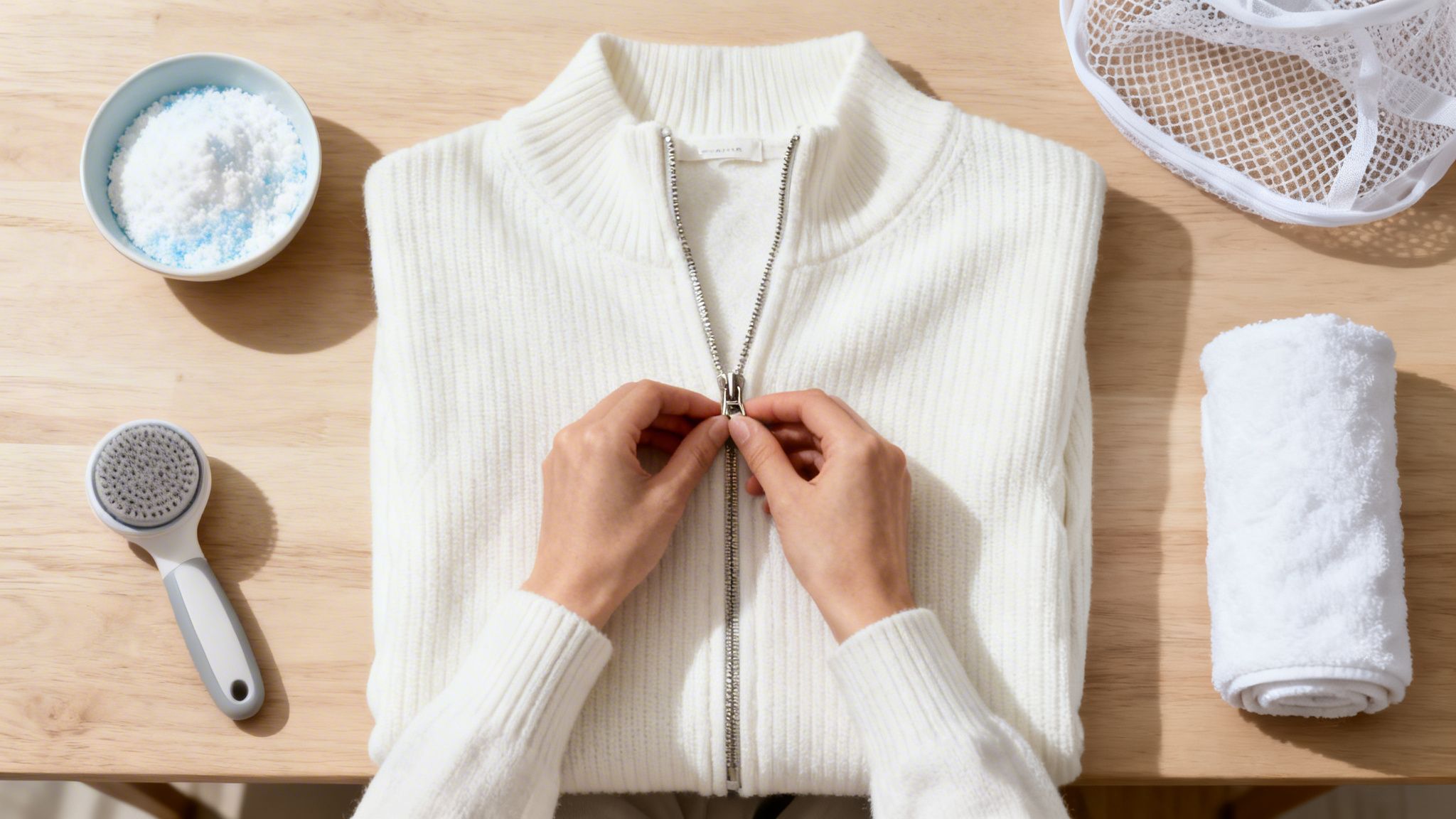
The very first thing you must do is zip it up all the way. An open zipper, whether it's metal or plastic, is a menace in the wash. It will absolutely snag the delicate knit of your sweater or catch on other clothes, causing pulls and even holes.
Next, tuck the sweater into a mesh laundry bag. This isn't just a suggestion; it's essential. The bag acts like a suit of armor, keeping the sleeves from stretching out and shielding the fabric from getting roughed up by other items. It's a simple, cheap tool that makes a world of difference.
With your sweater zipped and bagged, use these settings:
- Cycle: Stick to the delicate or gentle cycle. A normal cycle’s agitation is far too aggressive for most sweater knits.
- Water Temperature: Cold water only. Hot water is the number one enemy of a white sweater—it causes shrinking and can make whites look dingy and yellow over time.
- Detergent: Go for a mild liquid detergent. Powders sometimes don't dissolve completely in cold water, leaving behind a chalky film.
The Hand Washing Technique For Delicate Sweaters
When you're dealing with something more precious—think wool, cashmere, or a delicate blend—hand washing is your best and safest bet. It sounds like a lot of work, but it's actually a pretty quick process that gives you total control.
Start by filling a clean sink or basin with lukewarm water. Never hot. Add just a little bit of a gentle, pH-neutral detergent (a wool wash is perfect) and swish it around so it dissolves before the sweater goes in.
Gently submerge your zip-up white sweater, pressing it down until it’s fully saturated. Now, just let it be. Let it soak for 20-30 minutes so the soap can do its job without you needing to scrub or agitate it.
The biggest mistake I see people make is wringing out the sweater like a dishrag. This is a death sentence for the fibers. It stretches them, breaks them, and permanently ruins the sweater's shape. Instead, gather the sweater, supporting its weight, and gently squeeze the water out.
Once the soak is done, drain the soapy water and refill the basin with clean, cool water for rinsing. Gently swish and squeeze until all the suds are gone.
When To Trust a Professional Cleaner
Sometimes, the best move is to hand it off to an expert. If the tag says "Dry Clean Only," listen to it. Those instructions are there for a reason, usually because the fibers, dyes, or construction of the garment can't handle water.
Beyond that, professional dry cleaning is the right call for:
- Tough, set-in stains that your pre-treatment efforts couldn't budge.
- Extremely fine fabrics like high-quality cashmere or silk blends that you don't want to risk.
- Sweaters with structure, like those with special linings, shoulder pads, or delicate embellishments.
- Pure peace of mind. If you’re short on time or just aren't confident you can wash it safely, outsourcing is a smart investment.
A professional cleaner like Columbia Pike Laundry has access to solvents and techniques that clean deeply without the risks that come with water, shrinking, or color loss. It's the best way to protect your favorite white sweater and keep it looking perfect for years to come.
Drying And Storing To Maintain Shape And Color
You’ve carefully washed your zip-up white sweater, and now it's time for the make-or-break steps: drying and storing. This is where a little patience goes a long way, preventing all your hard work from being undone by a stretched-out, misshapen garment.
I can’t stress this enough: never, ever hang a wet sweater. The weight of the water is a knit’s worst enemy, pulling the fibers down and stretching them for good. You’ll end up with bizarrely long sleeves and those tell-tale pointy bumps on the shoulders.
The Right Way To Dry Your Sweater
The goal here is to remove moisture without gravity working against you. It's a simple process, but it's non-negotiable for keeping your sweater's shape.
First, grab a clean, thick towel and lay it out on the floor or a counter. Place your sweater on top and smooth it out.
Now, roll the towel and sweater up together like a jelly roll. Press down firmly on the roll to squeeze the excess water into the towel—don’t wring or twist it. The towel does all the heavy lifting here.
Once you unroll it, the sweater will be damp instead of dripping wet. This next part is key to its final shape.
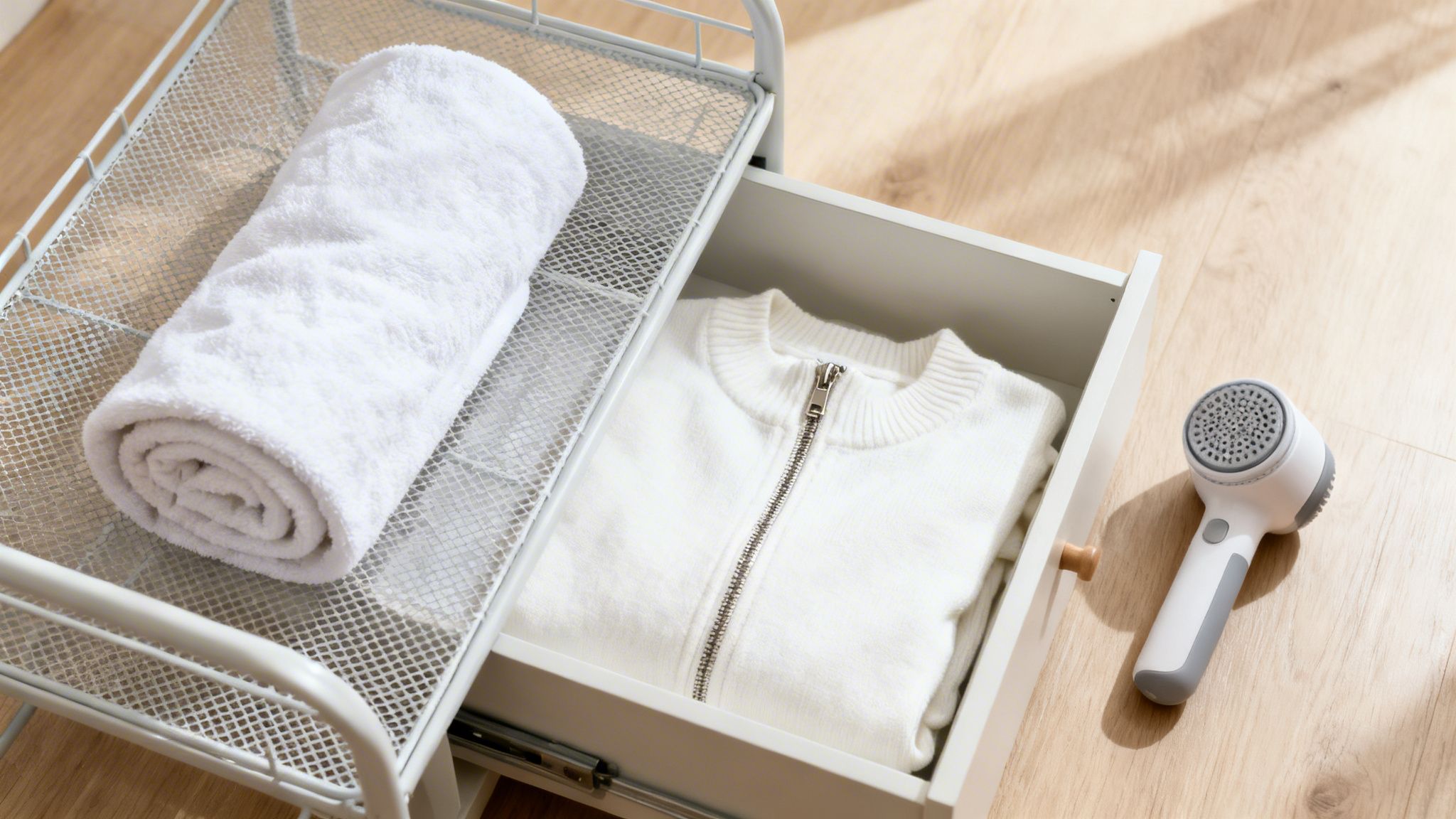
A flat mesh drying rack is your best friend. It lets air circulate all around the garment, which not only speeds up drying time but also prevents that dreaded musty smell from developing.
Lay the damp sweater flat on the rack. Take a minute to reshape it with your hands—pat the torso into shape, straighten the waistband, and adjust the sleeves. Keep it out of direct sunlight and away from heaters, which can cause yellowing or damage to the fibers. It could take a few hours or up to a day to dry completely, depending on how thick the knit is.
Keeping Your Sweater Bright and New
Even with perfect washing, time can take its toll. The two biggest issues you'll face are pilling (those annoying fuzzballs) and a gradual loss of brightness. Thankfully, both are easy to fix.
Pilling happens when short fibers get tangled on the surface. To get rid of them, a good fabric shaver or sweater comb is a fantastic investment. Just glide it gently over the dry fabric, and it will shave off the pills without snagging the knit underneath. The difference is immediate.
The Best Storage Method
Once your sweater is clean, dry, and looking sharp, how you put it away is just as important as how you washed it. Just like with a wet sweater, hanging a dry one is a no-go for long-term storage. That constant pressure from the hanger will create permanent shoulder bumps.
The only way to store your zip-up white sweater is to fold it. Lay it face down on a flat surface, fold the arms in, and then fold the body in half. Store it in a drawer or on a shelf where it has room to breathe and won’t get crushed.
Storage Tips for Long-Term Freshness:
- Fight the Dinginess: To prevent that slow yellowing that happens in storage, always make sure the sweater is 100% dry before you put it away. For an extra whitening boost, you can use an oxygen-based bleach alternative in the wash every so often.
- Ward Off Pests: If your sweater is wool or cashmere, toss a few cedar blocks or lavender sachets in the drawer with it. Moths hate the smell, and it’s a great natural way to prevent those tiny, heartbreaking holes.
- Let It Breathe: Avoid storing knits in plastic bags or sealed containers. Fabrics need airflow to stay fresh and prevent discoloration or moisture buildup.
When to Trust a Professional Laundry Service
Look, we've all been there. You've spent time and effort learning how to care for that favorite zip up white sweater, but life happens. Deciding to use a professional service isn't admitting defeat; it’s a smart move to protect your clothing and, just as importantly, your time. It’s about knowing when to tag in an expert.
You've mastered the at-home routine, but what about those moments when a simple wash feels like a high-stakes gamble or your schedule is just completely slammed?
Knowing When to Call for Backup
Think of a professional service as your garment's best insurance policy. While at-home care is perfect for regular maintenance, some situations really do call for the pros. Handing your sweater over to our team at Columbia Pike Laundry is often the safest and wisest choice.
Here are the times when it's best to let us handle it:
- You're up against a mystery stain. If you've tried your go-to pre-treatment and that spot isn't budging, pushing further with home remedies can be risky. It's easy to accidentally cause permanent yellowing or even thin the fabric. We have access to specialized solvents that can lift stubborn stains without damaging delicate fibers.
- Your sweater is made from a sensitive fabric. Cashmere, merino wool, silk, and other delicate blends are notoriously fussy about water temperature and agitation. One wrong move in the washing machine can lead to irreversible shrinking or felting. We know exactly how to handle them.
- The care tag says "Dry Clean Only." This isn't just a friendly suggestion—it's a direct order from the people who made the garment. It means the fabric, dyes, or even the zipper and seams can't handle a water-based wash.
- You just don't have the time. Your weekends are for you, not for stressing over laundry. Sometimes the peace of mind that comes from outsourcing is worth every penny.
Entrusting your favorite white sweater to a professional isn't a failure—it's an act of preservation. You're choosing expertise over guesswork, especially when it matters most.
Honestly, if you find yourself hesitating before washing your sweater because you're worried you might ruin it, that's your cue. Let a pro take the guesswork out of it. You can learn more about the benefits in our complete professional laundry service guide.
Prepping Your Sweater for a Columbia Pike Laundry Pickup
Getting your sweater ready for our pickup and delivery service couldn't be simpler. We've designed the process to be completely stress-free, ensuring your garments get the exact care they need.
When you're sending in your zip up white sweater with your regular wash-and-fold laundry, the single most important thing you can do is place it in a separate, clearly marked bag. A simple plastic grocery bag or any small, distinct tote works perfectly. This is an immediate visual cue for our team that this item needs special attention.
Want to give us a little more context? Just tuck a note inside the bag. A quick line about your concerns helps our stain specialists get right to work.
Here’s a great example of a helpful note:
"Please take a look at the small coffee stain on the right sleeve of this white zip-up. I think it’s a wool blend. Thanks!"
This little bit of information is a huge help and ensures we start with the right treatment right away.
From the moment your order arrives at our facility, your sweater is in good hands. If it's part of a wash-and-fold order, our process guarantees your whites are washed separately from colors with hypoallergenic, unscented detergents. If you've designated the item for dry cleaning, it's immediately routed to our specialists who use gentle, eco-friendly solvents. You get a perfectly clean sweater back, without any of the work or worry.
Frequently Asked Questions
Even with a solid care routine, a few tricky situations always seem to come up with a favorite sweater. Here are some of the questions I get asked all the time by our customers about keeping that white zip-up looking brand new.
Can I Use Chlorine Bleach On My White Sweater?
I know it’s tempting to reach for the chlorine bleach to get that brilliant white, but please don't. It’s one of the harshest things you can do to a sweater. Chlorine is incredibly aggressive and will eat away at delicate fibers like wool or cashmere, and it can even cause a permanent, ugly yellowing on synthetics over time.
Instead, always opt for an oxygen-based bleach (like OxiClean) or another gentler, color-safe whitener. They work wonders at lifting that dingy film and reviving whites without causing any collateral damage to the fabric's structure.
Think of it this way: Chlorine bleach is a shortcut that ultimately ruins the garment. Oxygen-based alternatives work with the fabric, not against it, keeping it soft and strong for years to come.
How Do I Fix A Wavy Zipper After Washing?
Ah, the dreaded wavy zipper. This is a common headache, and it happens when the zipper's fabric tape shrinks differently from the sweater's knit—usually because of high heat in the washer or dryer.
Prevention is your best friend here. Always zip the sweater completely before you wash it, and stick to cold water. If the wave has already set in, don't panic. Grab a handheld steamer (or carefully use the steam from an iron held a few inches away) and gently steam the area around the zipper. While it's still warm and damp, lay it flat and carefully stretch the rippled area smooth, holding it in place as it cools.
How Often Should I Wash My Sweater?
This is a big one. Sweaters aren't like t-shirts that need a wash after every wear. Since they don’t usually sit right against your skin, washing them too often just leads to premature pilling and wear.
As a rule of thumb, you can wash your zip-up white sweater after every 3-4 wears. If it's not visibly dirty or holding onto any odors, just let it air out overnight on the back of a chair. This simple habit will refresh it beautifully and make it last so much longer.
Knowing how to care for your favorite pieces is empowering, but that doesn't mean you have to do all the work yourself. At Columbia Pike Laundry, our job is to give you perfectly clean clothes and something even more valuable: your time back.
Free pickup, expert care, delivered back to your door.
Popular Blog Articles




Meet the Author
Daniel Logan didn’t start CPL because he loved laundry. He started it because his family was drowning in time debt, and laundry was one of the biggest weights.
Mornings were chaos with two kids under 5. Evenings felt like catch-up. And weekends? Gone to sorting socks and folding piles.
He knew his story wasn’t unique. So he built a business that gave families like his just a little bit of breathing room one load at a time.
With no laundry experience but deep tech skills, Daniel rolled up his sleeves, doing every job himself while building systems that turned it into a modern laundry service that saves customers time, simplifies their lives, and delivers reliability they can count on.
That’s where CPL began. Not from a playbook, but from pain. From one dad trying to buy back time: for himself, and for every household like his.
Free pickup, expert care, delivered back to your door.