
Balancing Work and Family Life Without the Burnout

Columbia Pike Laundry offers pickup & delivery across Northern Virginia.
If you’re a busy professional with a family, you’ve probably been told to find a good "work-life balance." The problem is, that idea is a myth. It sets us up for failure.
This constant chase for a perfect 50/50 split between your job and your family is a recipe for guilt. When you’re at the office, you feel like you should be at home. When you’re at home, your mind wanders back to that unfinished project. It's a no-win situation.
The real goal isn't balance; it's finding a rhythm. It’s about learning to be fully present wherever you are, knowing that some days will be all about work, and others will be all about family. And that's okay.
Forget Balance and Find Your Family's Rhythm

I've seen so many people burn out trying to walk the tightrope of a perfectly balanced life. The truth is, life is more like a dance than a balancing act—it demands flexibility, grace, and a willingness to adapt to the music.
When it’s time to work, dive in and focus. When it's family time, put the laptop away, silence your phone, and truly connect with the people who matter most. This shift from chasing perfection to being present is what cuts down on the guilt and makes the time you do have feel so much richer.
The advice I give is this – You don’t have to get it all done, in fact it would be IMPOSSIBLE to get it all done... So don’t be so hard on yourself. Put your kids needs first. Work hard to support them financially and then come home and enjoy them.
Shifting from a 'Balance' Mindset to a 'Rhythm' Mindset
Moving from a "balance" mindset to a "rhythm" mindset is a fundamental change in how you approach your week. You stop trying to fit your life into rigid, equal boxes and instead learn to flow with your priorities. This lets you respond to what’s urgent—whether that’s a sick kid or a project deadline—without feeling like you’re letting someone down.
Here's a quick look at how these two mindsets really stack up.
Shifting from a 'Balance' Mindset to a 'Rhythm' Mindset
Ultimately, finding your family's unique rhythm means accepting that it will change. The schedule that works when you have a toddler won't work when you have a teenager in sports. The demands of your job will ebb and flow. By building in this flexibility from the start, you create a life that feels supportive and fulfilling, not overwhelming.
Create Boundaries That Actually Protect Your Time

If you've ever found yourself checking work emails during a family dinner, you know how easily professional life can bleed into personal time. This isn't just a bad habit; it's a phenomenon I've seen countless times called work creep. A "quick question" from a colleague on a Saturday morning pulls you right out of the moment, and suddenly you're back in work mode instead of enjoying the playground with your kids.
This is where boundaries come in. Think of them less as walls and more as doors that you control. You get to decide what comes in and what stays out, allowing you to be fully present wherever you are. When you’re at work, you’re all in. When you’re home, you’re truly home.
Define Your Workday "Hard Stop"
One of the most powerful things you can do is give your workday a non-negotiable end time. This is your hard stop—the moment you physically and digitally unplug from your job. No exceptions.
Pick a realistic time, maybe 5:30 PM, and treat it like an unbreakable appointment. When that time hits, log off the computer, silence the work notifications on your phone, and do something to mark the transition. It could be as simple as changing out of your work clothes or taking a five-minute walk around the block. That small ritual signals to your brain that the workday is officially over.
Setting boundaries isn't a sign of weakness or rigidity. It's a mark of self-respect. You're making a clear statement that your personal time is just as valuable as your professional time, and protecting it is what allows you to show up as your best self in both worlds.
Use Clear Language to Communicate Your Limits
The key to making boundaries stick is communicating them clearly and calmly. You don't have to be aggressive or defensive; you just need to be direct. This manages everyone's expectations and prevents misunderstandings down the road.
Here are a few phrases I've found work wonders:
- When asked to stay late: "I can give this my full attention first thing in the morning. I have a hard stop at 5:30 PM today for a family commitment."
- For after-hours requests: "I'm offline for the evening, but I'll make this a priority when I'm back at my desk tomorrow."
- When you need to say no: "Thanks for thinking of me for this. My plate is pretty full right now, and I need to pass so I can stay focused on my current priorities."
This same idea works beautifully at home, too. A simple "no phones at the dinner table" rule or creating designated "focus time" for both parents and kids can protect your family connection from constant digital interruptions. For working mothers especially, these boundaries are a lifeline, a topic we explore more in our guide on time management for working mothers.
When you communicate your needs with respect, you’re not just guarding your own time—you’re modeling healthy and sustainable habits for your whole family.
Master Strategic Prioritization and Delegation

If there's one lesson I've learned from juggling a career and family, it's this: you simply can't do it all yourself. Honestly, you shouldn't even try. The feeling that you have to is a trap that leads straight to burnout.
Real balance comes from being intentional about where you spend your limited energy. It’s about shifting your mindset from conquering an endless mountain of tasks to strategically picking the ones that truly matter for your career and your family's happiness.
Sort Your Tasks with Purpose
A game-changing habit is to get brutally honest about your to-do list. Before diving in, take a moment with each item and ask two simple questions: Is this urgent? And is this important?
This quick mental filter helps you see what actually needs your attention right now versus what's just noise, creating a false sense of urgency. I like to sort everything into four buckets.
Do First (Urgent & Important): These are the non-negotiables. Think a crisis at work with a hard deadline, or getting a call that your child is sick and needs to be picked up from school. These tasks demand your immediate focus.
Schedule (Important, Not Urgent): This is where real progress happens. This bucket holds the things that move your life forward but are easy to push off—like blocking out time for deep work, planning a much-needed date night, or researching summer camps. Get them on the calendar!
Delegate (Urgent, Not Important): Welcome to the time-suck category. These are the tasks that feel pressing but don't actually require you. It could be routine administrative reports at work or household chores that need to get done but not necessarily by you.
Delete (Not Urgent, Not Important): These are the distractions you can give yourself permission to drop entirely. Mindless scrolling on social media, that "optional" meeting with no clear agenda—let them go without guilt.
The goal isn't just to get more done. It's to make sure you're doing more of what matters. By distinguishing between what's urgent and what's important, you reclaim control over your schedule instead of letting it control you.
Embrace the Power of Delegation
Once you've identified the "Delegate" tasks, the next step—and often the hardest—is to actually let them go. But this is where you'll find the most relief. Delegation isn't about admitting defeat; it’s a power move to buy back your time and mental space.
At home, make it a team sport. Even young kids can handle age-appropriate chores. It’s a fantastic way to teach them responsibility and that everyone contributes to the household. We have some great ideas in our guide on smart laundry tips for kids to get them started.
Outsourcing is another form of delegation that can be life-changing. Think of it as an investment in your well-being. Services for grocery delivery, house cleaning, or laundry pickup aren't just luxuries—they are practical tools that give you back your weekends and protect your sanity.
Take Back Your Week with a Sunday Reset
If your week feels like a constant game of catch-up, it’s usually because you’re reacting to everything instead of setting the agenda. The real secret to balancing a demanding career with a thriving family life is to get proactive. And it starts with a simple but powerful ritual: the weekly reset.
This isn't about militant, minute-by-minute scheduling—that’s a recipe for failure. Instead, think of it as sketching a rough map for the next seven days. All it takes is 15-20 minutes on a Sunday evening. Sit down, maybe with your partner, and just look at the calendar. What are the big, immovable appointments? Where are the potential crunch times? What’s one thing you could plan that would make the week feel less stressful and more connected?
This quick planning session is your best defense against decision fatigue, that mental drain you feel from making a million tiny choices all day. When you already know what’s for dinner on Tuesday or that you’ve guarded Thursday afternoon for focused work, you reclaim precious mental energy for the things that actually matter.
Build a Rhythm with Time Blocking
Time blocking is a game-changer. It’s a simple visual method for giving every part of your day a job. By literally blocking out chunks of time on your calendar for specific types of tasks, you’re giving yourself permission to single-task and focus. It’s the fastest way I know to build a predictable, calming rhythm into an otherwise hectic week. For a great deep dive, look into creating a daily schedule for less chaos and more joy.
Here’s what this might look like in practice:
- Deep Work Blocks: Carve out two or three 90-minute blocks for high-stakes, focused work. These are your "do not disturb" zones. Turn off your phone notifications and let your team know you're offline.
- Family Connection Blocks: Guard your evenings. Put "Family Dinner: 6:00-7:00 PM" on the calendar and treat it like an unbreakable appointment. No phones, no distractions—just connection.
- Admin & Errands Block: Stop letting small tasks interrupt your flow. Group all those little things—paying bills, scheduling appointments, a post office run—into one dedicated block of time each week.
- "You" Block: This is non-negotiable. Schedule downtime for yourself with zero agenda. Whether you read a book, go for a walk, or just stare at the wall, putting it on the calendar makes it real.
A well-designed week isn't packed; it's prioritized. The goal is to create space for both productivity and presence, ensuring that your most important commitments—to your work, your family, and yourself—are honored.
The Simple Fix for the 5 PM Scramble
What’s for dinner? That question alone can cause a spike in daily anxiety. A little meal planning goes a long way here.
On Sunday, just jot down 3-4 dinner ideas for the week ahead. You don’t need a rigid seven-day menu. Just having a few go-to options is enough to stop the last-minute scramble and make your grocery run more efficient.
Finally, always leave some breathing room. Life happens. A meeting runs late, a kid gets sick, or you’re just wiped out. Build 30-minute buffers between appointments, and leave at least one night a week totally unplanned for leftovers or a spontaneous pizza night. That flexibility is what makes a plan stick.
Reclaim Your Weekend by Outsourcing Laundry

Let's be honest—of all the chores that never seem to end, laundry is the undisputed champion of time theft. It’s a relentless cycle of sorting, washing, drying, folding, and putting away that can easily eat up a huge portion of your week without you even realizing it.
A few loads here and there might not feel like a big deal, but the numbers don't lie. Research shows that the average American family spends between 5 to 10 hours on laundry every single week. That’s a full workday or your entire Saturday gone, lost to a mountain of clothes. It's the perfect example of a task that feels urgent but isn't truly important—it has to get done, but you don't have to be the one doing it.
The True Cost of "Free" Labor
If you're serious about finding a better balance between your work and family life, you have to get real about what your time is actually worth. Every hour you spend wrestling with fitted sheets is an hour you’re not spending on something that actually fills your cup or connects you with your family.
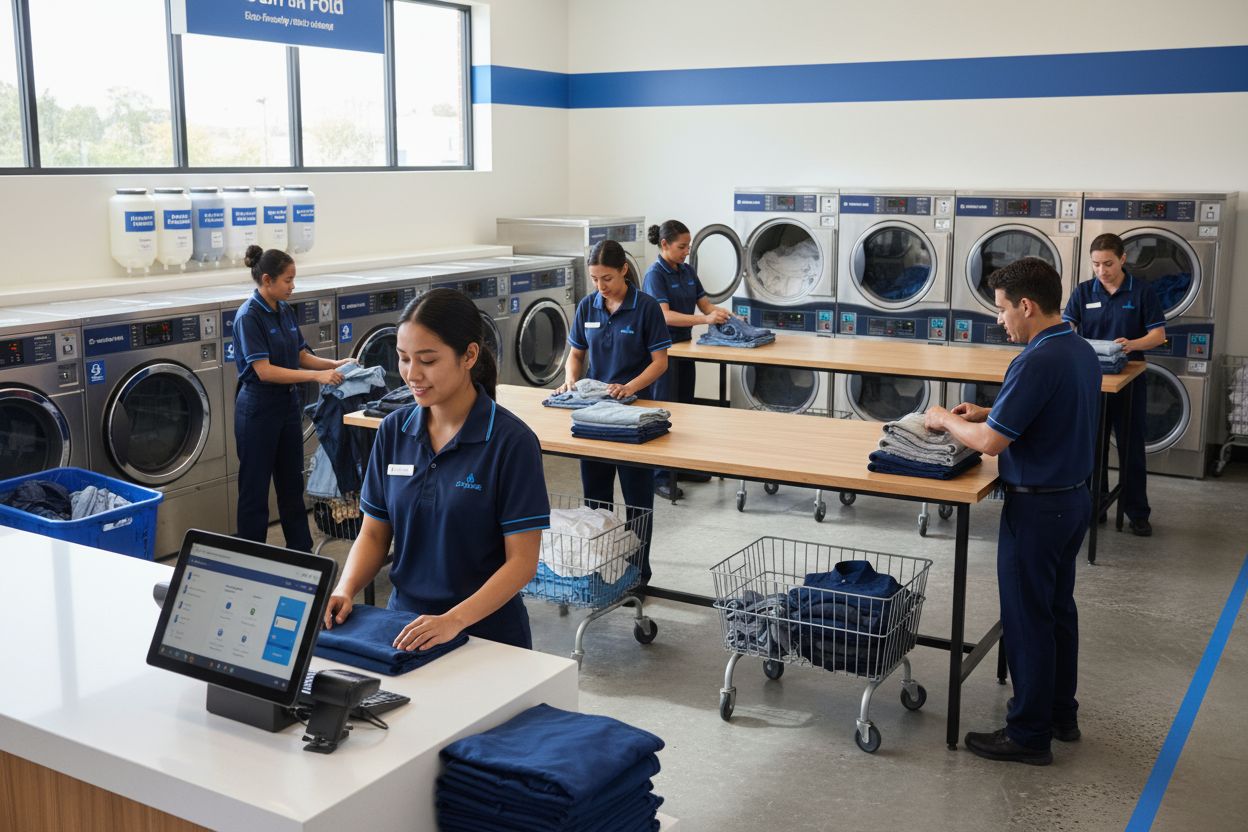
This is where smart outsourcing comes in. It’s not about being lazy; it's a strategic choice to buy back your most precious, non-renewable resource: time. Services like Columbia Pike Laundry’s pickup and delivery are designed specifically to lift this weight off your shoulders.
Picture this: Instead of spending Saturday morning trapped in the laundry room, you're enjoying a slow coffee on the porch while the kids play nearby. Your laundry is just... gone. It's been whisked away to be handled by pros.
This isn't just about clean clothes. It's about buying back your weekend for what truly matters—making memories, resting, and connecting with the people you love. You didn't outsource laundry; you invested in your family's well-being.
How Laundry Pickup and Delivery Works
If you’ve never tried a laundry service before, you might be surprised at how incredibly simple it is. The whole process is built for people who have zero time to spare.
You start by scheduling a pickup online, choosing a window that fits your schedule. For your first order, you can use any bag you have lying around—a couple of kitchen trash bags work just fine.
On pickup day, you just leave the bags in your designated spot, whether that's your front porch or your building's lobby. You don't even have to be home.
Within 48 hours, your clothes reappear—professionally washed, perfectly folded, and ready to go straight into the closet. After your first order, you’ll even get a reusable laundry bag for the next time.
For the ultimate "set it and forget it" approach, a recurring service is a total game-changer. You can schedule a weekly or bi-weekly pickup and take laundry off your mental to-do list for good. It just becomes a seamless part of your routine, freeing up hours of time and mental energy. For even more tips, you can check out our complete guide on why outsourcing laundry is a smart move for busy families.
Common Questions About Balancing Work and Family
Deciding to change how you manage your time at home is a big step. It’s one thing to read about strategies, but putting them into practice often brings up some very real questions and a bit of uncertainty. Let’s walk through some of the most common hurdles I see families run into and how to clear them.
"But How Can I Justify the Cost of Outsourcing?"
This is, without a doubt, the first question on everyone's mind. It's completely normal to feel a pang of guilt spending money on something you could technically do yourself.
The real shift happens when you stop seeing it as an expense and start viewing it as an investment in your time.
Think about it. If you spend five hours a week doing laundry—and for many families, that’s a conservative estimate—that's 20 hours a month. What is that time actually worth? If you put a modest value on your time, say $20 an hour, you're spending $400 worth of your life on laundry every month. Outsourcing usually costs far less and buys you back your most precious, non-renewable resource. That’s time you can pour directly into date nights, bedtime stories, or just catching your breath.
"My Partner and I Both Have Demanding Jobs. How Do We Coordinate?"
When both partners are running on fumes, the thought of implementing a "new system" can feel like adding yet another chore to the list. The secret is to forget about a massive overhaul. Start small.
All you need is a 15-minute "weekly check-in," maybe on a Sunday evening. Sit down together, look at the calendar, and identify just one or two major pain points for the upcoming week.
- Pick one goal: Maybe the only goal is to eat dinner together three times this week, with no phones allowed. That's it.
- Delegate one thing: Maybe you decide to offload just one big task, like grocery shopping or, well, the laundry.
Tackling one thing at a time and celebrating that small win builds momentum. It proves change is possible and much less daunting than you imagine. For a deeper look at sharing the mental load, this guide on how to balance work and family life has some great insights.
It's not about achieving a perfect system from day one. It's about taking small, consistent steps together toward a life that feels more manageable and connected.
"I've Never Outsourced Laundry Before. How Do I Even Start?"
Getting started is far simpler than you might be picturing. Honestly, for your first pickup with Columbia Pike Laundry, you just need to gather your clothes. Any bag will do—a couple of kitchen trash bags stuffed full works perfectly.
Then, just schedule your pickup online and leave the bag on your porch or wherever you've designated. We handle the rest. We’ll return your clean, perfectly folded laundry in one of our durable, reusable laundry bags, which you can then use for all your future orders. The minimum for a pickup order is just $50, which is about what one of those big kitchen bags holds.
"What If My Schedule Is Too Unpredictable for a Service?"
This is exactly why flexibility is built in. While setting up a recurring weekly or bi-weekly pickup is the easiest way to stay on top of things, life happens.
With Columbia Pike Laundry, you can easily log into your account and skip or pause a week anytime, with no penalty. There are no contracts locking you in. You can use the service on a regular schedule or just call for a rescue pickup on those weeks when you feel completely overwhelmed.
Ready to take laundry off your plate for good and get your weekend back? Columbia Pike Laundry makes it incredibly simple.
Schedule Your First Pickup Today and Rediscover Your Weekend
Free pickup, expert care, delivered back to your door.
Popular Blog Articles





Meet the Author
Daniel Logan didn’t start CPL because he loved laundry. He started it because his family was drowning in time debt, and laundry was one of the biggest weights.
Mornings were chaos with two kids under 5. Evenings felt like catch-up. And weekends? Gone to sorting socks and folding piles.
He knew his story wasn’t unique. So he built a business that gave families like his just a little bit of breathing room one load at a time.
With no laundry experience but deep tech skills, Daniel rolled up his sleeves, doing every job himself while building systems that turned it into a modern laundry service that saves customers time, simplifies their lives, and delivers reliability they can count on.
That’s where CPL began. Not from a playbook, but from pain. From one dad trying to buy back time: for himself, and for every household like his.
Free pickup, expert care, delivered back to your door.