
Cleaning Out Closet: Master Your Wardrobe Clutter
Columbia Pike Laundry offers pickup & delivery across Northern Virginia.
You open the closet to get dressed, shift three hangers aside, pull one sweater halfway out, then shove it back because it needs steaming. The jeans you want are buried under pieces you forgot you owned. There are shoes on the floor, a tote full of dry cleaning you meant to deal with, and a small pile of “maybe” clothes that has somehow lived there for months.
That kind of mess isn’t just visual. It follows you into the morning. It makes getting dressed feel harder than it should. It also turns a simple project like cleaning out closet space into something you keep postponing because you know it won’t be quick.
Most closets feel overstuffed for a reason. In the average American home, 80% of clothing remains unworn and unused, and just 20% of clothes are worn 80% of the time, according to The Simplicity Habit’s roundup of clutter statistics. A packed closet can still leave you with “nothing to wear” because volume and usefulness are not the same thing.
Cleaning out closet clutter is part decision-making, part emotional cleanup, and part logistics. That last part matters more than often anticipated. You can make excellent decisions and still end the day with a bedroom full of laundry, delicates, donation bags, and garments that need stain treatment or pressing. That’s where people stall.
A good closet reset isn’t about becoming minimalist overnight. It’s about making your wardrobe easier to use, easier to maintain, and easier to trust on a busy Monday morning.
The Quiet Chaos of a Crowded Closet
A crowded closet usually looks ordinary from the outside. The door closes. The rods still hold. Nothing appears urgent. But daily life tells the truth. You re-wear the same few outfits, ignore half the shelves, and keep postponing decisions about the things that don’t fit, don’t flatter, or don’t feel worth dealing with.
That’s why cleaning out closet space can feel oddly emotional. Some pieces represent money you spent. Some represent a past version of you. Some are perfectly good clothes that stopped matching your life. None of that makes you messy. It makes you human.
Why the mess feels heavier than it looks
When a closet is full, every small choice becomes slower. You have to sort through visual noise before you can even tell what you own. You may also be managing clothes that are technically wearable, but only if you mend a hem, remove a stain, replace a button, or finally wash the dry-clean-only pieces sitting in limbo.
A crowded closet rarely means you need more storage first. It usually means the closet is holding too many unresolved decisions.
The hard part is that cluttered wardrobes often contain useful items mixed in with fantasy items, guilt items, and delayed-maintenance items. So the closet becomes a holding zone for your intentions, not just your clothes.
What relief actually looks like
A successful clean-out doesn’t give you an empty closet. It gives you a closet that answers you clearly. You can see what fits. You know what needs care. You stop digging.
That shift matters because the problem isn’t only the volume of clothing. It’s the friction. When the closet works, mornings get quieter. Laundry becomes more manageable. Shopping gets more intentional because you can finally see what’s missing and what isn’t.
Cleaning out closet clutter is one of those jobs that sounds cosmetic until you finish it. Then it feels structural.
Preparing for Your Closet Reset
The most common mistake is starting with energy and no plan. You pull everything out, make a dramatic pile, get tired halfway through, and end up with a larger mess than the one you started with. Preparation prevents that.
According to the Soap and Detergent Association, getting rid of closet clutter can eliminate up to 40% of housework in an average home, as noted by the American Cleaning Institute’s spring cleaning report. That’s a strong reason to treat this as real household maintenance, not a side chore you squeeze in while doing five other things.

Set yourself up before you touch a hanger
A closet reset goes better when you decide the rules in advance. Don’t rely on motivation alone.
Use this short prep list:
- Block real time: Protect a dedicated window so you’re not stopping every half hour.
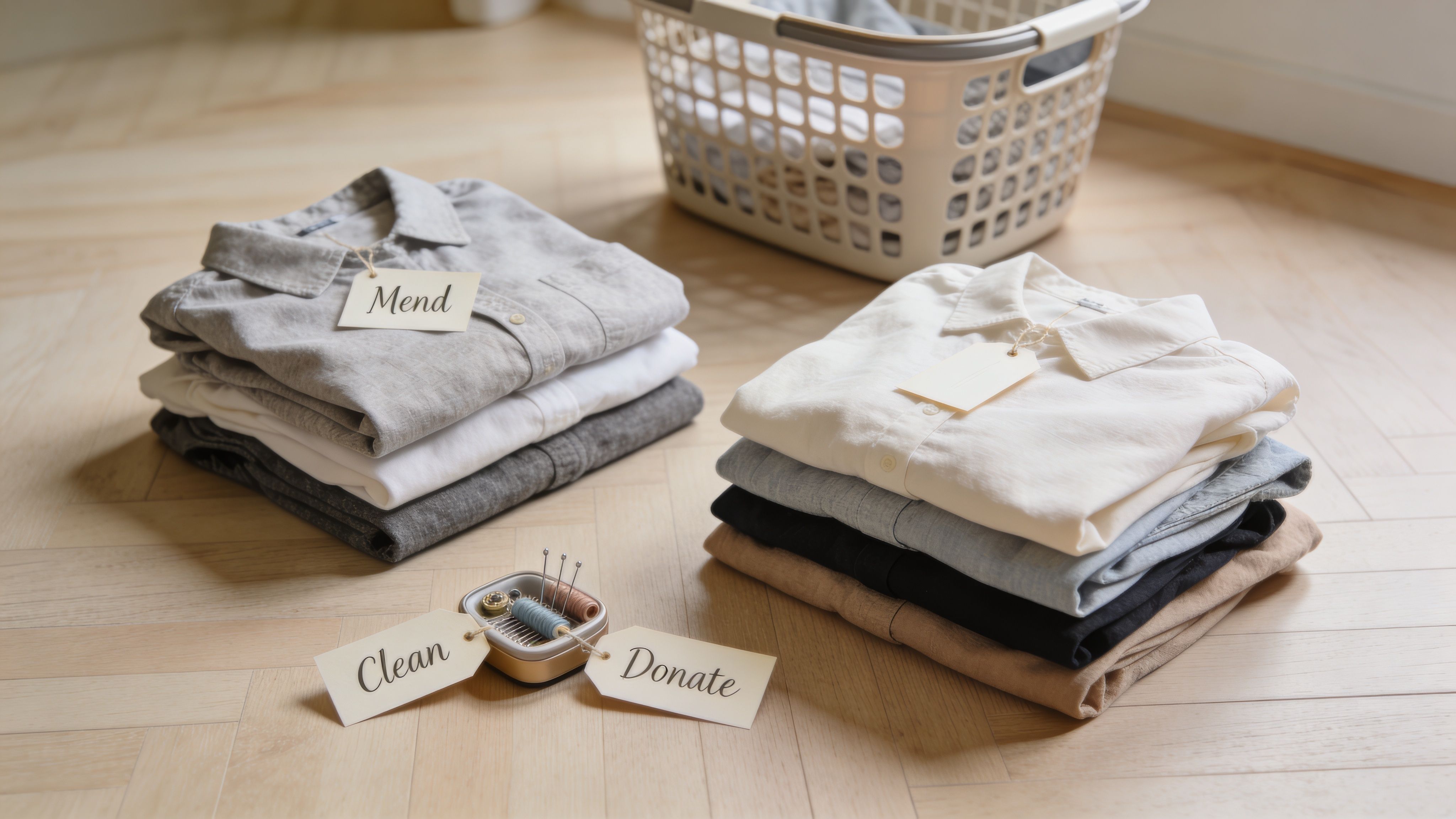
- Gather containers: Use bags or bins labeled keep, mend/clean, donate/sell, and recycle/toss.
- Dress for try-ons: Wear something close-fitting enough that you can test layers, waistlines, and hemlines quickly.
- Bring water and a snack: Decision fatigue shows up fast when you’re tired.
- Clear one staging area: A bed, bench, or clean patch of floor gives you room to sort without creating chaos everywhere.
If you’re tackling this before a bigger life change, it helps to think beyond the closet itself. A moving guide like how to declutter before moving house is useful because it treats decluttering as a practical reduction of future work, not just a cleaning task.
Decide what this closet needs to do for you
Before you sort, define the life your closet serves now. Workwear? School drop-off and errands? Travel? Client meetings? A mix? If you don’t answer that first, you’ll keep clothes for versions of your life that aren’t current.
Write down a few style words if that helps. Not aspirational ones. Real ones. Think “easy,” “polished,” “washable,” “comfortable,” “sharp,” or “versatile.”
Practical rule: If your closet doesn’t match your actual week, it will always feel disorganized, even when it looks neat.
That clarity also helps with the emotional side. You’re not rejecting your past purchases. You’re editing for use.
Plan for the hidden workload
This is the part people skip. A closet clean-out creates follow-up work. You’ll uncover laundry, delicates, stained garments, tailoring needs, and pieces that are worth saving but not ready to go back in the closet yet.
If you don’t plan for that workload now, it becomes the next pile that clogs the room.
The Four-Category Sorting System
Failure to clean out closet clutter often stems from using blurry categories. “Keep” and “get rid of it” aren’t enough. You need one more level of honesty and one more level of practicality.
Style professionals use a Closet Edit process that helps clients reduce wardrobes by 50% to 70%, using criteria like true fit, color harmony, and asking “Would I buy this today?” That same process can reduce daily outfit assembly time by as much as 75%, according to Next Level Wardrobe’s guide to closet cleanouts.
That framework works because it separates value from action. An item can be good and still not belong in your active wardrobe.
Start with a full pull-out
Take everything out of the closet. Everything. Hanging clothes, folded stacks, shoes, bags, the random scarf basket, the top-shelf stuff you haven’t checked in ages.
Then sort by category before you make decisions. Put tops with tops, pants with pants, dresses with dresses, jackets with jackets. If you want another practical walkthrough while you work, how to declutter your closet offers a helpful outside perspective on simplifying the process.
This step matters because duplication hides when everything is mixed together. Five nearly identical black cardigans don’t feel excessive when they live in different corners.
Use four categories and only four
Below is the system that keeps the project moving.
| Category | Ask Yourself... | Action |
|---|---|---|
| Keep | Does it fit my body right now? Does it suit my current life? Would I buy it again today? | Return it to the closet only if the answer is clearly yes. |
| Mend/Clean | Would I wear this if it were cleaned, pressed, or repaired? Is the issue care-related rather than style-related? | Set aside for laundering, stain treatment, pressing, or repair. |
| Donate/Sell | Is it in good condition but no longer right for me? | Bag it immediately and move it out of the room. |
| Recycle/Toss | Is it too worn, damaged, stretched, or unusable for donation? | Send it to textile recycling or dispose of it responsibly. |
The decision questions that work
For each item, ask a small set of direct questions.
Would I buy this today, at full attention, for the life I live right now?
That question cuts through nostalgia fast.
For the Keep pile, use a practical lens:
- Fit now: Not “almost.” Not “after I fix this one thing.”
- Comfort: If you adjust it all day, it isn’t earning its space.
- Compatibility: It should work with shoes, layers, and routines you currently have.
For the Mend/Clean pile, be strict:
- The item must be worth the effort.
- The issue must be fixable.
- You need a next step, not a vague intention.
This category is where garments often get trapped for months. If something needs professional care, note that immediately. Delicates, structured pieces, and special fabrics often belong in dry cleaning, not the home washer.
For Donate/Sell, avoid overthinking resale. Some items are worth listing. Many are worth releasing. If the thought of photographing, measuring, posting, messaging, and shipping makes you tired before you start, donation may be the better finish.
For Recycle/Toss, don’t let guilt make you keep unusable fabric. A stretched-out camisole with permanent damage is not a future project. It’s clutter.
What works and what doesn’t
What works:
- Try on the uncertain pieces.
- Make decisions standing up, not sitting in a pile.
- Finish one category fully before drifting to another.
- Remove filled donation bags from the room as soon as possible.
What doesn’t:
- Keeping a giant “maybe” group.
- Saving stained pieces without a care plan.
- Re-hanging items just because they were expensive.
- Mixing repair items back in with ready-to-wear clothes.
If an item needs work before you can wear it, it is not a keep. It is a pending task.
That distinction changes everything. It keeps your rebuilt closet honest.
Conquering the Post-Sort Piles
The sorting stage gets the glory. The post-sort stage decides whether the project comes to completion.
It's easy to create neat piles for an afternoon. The genuine challenge starts when you’re staring at a bag of everyday laundry, a stack of blouses that need pressing, a jacket with a stain on the cuff, two dresses missing buttons, and a donation pile that still needs to leave the house. That’s where the “laundry mountain” forms. It turns your clean-out into a second unfinished project.
Why this is the stage that derails people
After sorting, your energy is lower and your standards are looser. You’ve already made dozens of decisions. So you start bargaining with yourself. “I’ll wash this later.” “I’ll deal with the stain next weekend.” “I’ll list these online when I have time.”
That’s usually how the piles stay put.
A better approach is to treat each pile as a separate workflow with a deadline. The mend/clean pile needs immediate processing. The donate/sell pile needs departure. The recycle/toss pile needs responsible disposal.
Save the pieces that still deserve a life
Many people throw away clothes with fixable problems. According to Next Level Wardrobe’s clean-out guide, professional cleaning with gentle solvents like GreenEarth can salvage garments with treatable issues like wine or oil stains, potentially saving 20% to 30% of a purged wardrobe from the landfill.
That matters because some pieces aren’t clutter. They’re just unresolved care.
Use this filter for the mend/clean pile:
- Everyday washables: T-shirts, pajamas, kids’ clothes, gym wear, socks, towels.
- Delicates and structure: Silk blouses, lined trousers, blazers, dresses, suits.
- Stain cases: Items with oil, wine, ink, makeup, or mystery marks.
- Repair candidates: Loose hems, missing buttons, small tears, fallen hooks.
If you can send those items out instead of creating a multi-load home laundry marathon, the clean-out ends cleanly. That’s why services like laundry pickup and delivery are less of a luxury than a completion tool. They remove the backlog that usually repopulates the room.
The fastest way to ruin a successful closet reset is to leave a “deal with later” pile on the floor.
Move donations and recycling fast
Donations should leave your home quickly. Seal the bag, label it, and place it by the door or in the car. If you’re selling, choose a short list of higher-value items and set a firm cutoff. If they aren’t listed soon, donate them.
For clothes that are too worn for donation, learn your local textile options first. A practical primer on recycling old clothes can help you separate reusable garments from true textile waste.
A finished closet reset is not just less stuff. It’s fewer unfinished errands.
The strategic reason to outsource this stage
Doing all the aftercare yourself sounds responsible, but it often keeps the whole project hanging over you. Home laundering sorted piles can take multiple cycles, drying time, folding time, ironing time, and a surprising amount of mental bandwidth.
When those tasks are handled externally, you can focus on the higher-value decisions only you can make. What belongs. What fits. What gets donated. What needs replacing. That’s the work that changes the closet.
Designing Your New Organized Space
Once the clutter is gone and the care pile is in motion, the closet starts to become useful again. This is the rebuild. Not fancy. Functional.
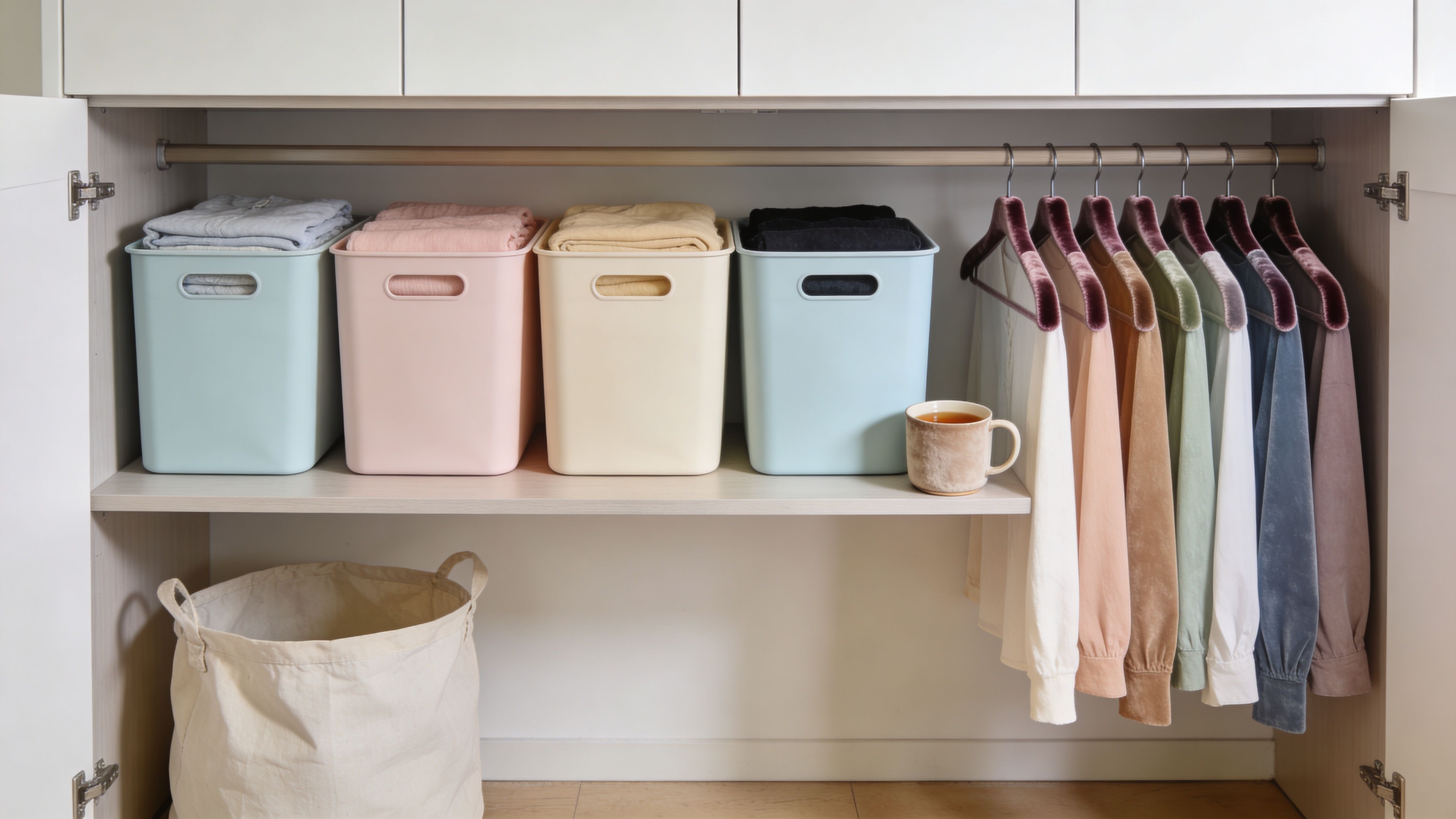
A good organized closet reduces friction. You shouldn’t have to decode your own storage every morning. The goal is quick visibility, easy access, and enough structure that things naturally return to their place.

Build around categories first
Start with the broad groups you use. Tops together. Bottoms together. Dresses together. Outerwear together. Bags, belts, and scarves each get a defined zone.
Then choose the best real estate in the closet for the items you reach for most often. Daily pieces should be at eye level and within easy reach. Occasion wear can live higher or farther back.
Uniform hangers help more than people expect. They save space, reduce visual noise, and make lengths easier to compare.
Use color to reveal what you own
Professional organizers recommend color-coding from white to black through the ROY G BIV spectrum because it creates visual efficiency and quickly reveals duplicate-heavy categories, as described by Nourishing Minimalism’s closet clean-out guidance.
Color order does two useful things:
- It makes the closet look calmer.
- It exposes inventory problems you couldn’t see before.
If ten black tops are bunched together, you’ll notice. If all your work blouses live in one clean sequence, you’ll stop buying replacements for pieces you already own.
Create a maintenance-friendly layout
Good organization is less about aesthetics than return paths. If putting something away takes too many steps, you won’t do it.
Keep the system simple:
- Open shelf bins: Best for sweaters, denim, or workout wear.
- Small containers: Useful for socks, hosiery, belts, and undergarments.
- Shoe boundaries: Use shelves, cubbies, or one defined floor zone so shoes don’t spread.
- Seasonal rotation box: Move off-season pieces out of prime space.
- One visible outbox: Keep a bag or bin for items you’re ready to release later.
For more garment-care ideas after the reset, the art of storing clothes properly offers useful guidance on keeping fabrics in good shape once your closet is back under control.
An organized closet should make the next right action obvious. Hang it, fold it, bin it, or let it go.
That’s how the space stays calm without constant effort.
How to Maintain Your Closet Zen
A closet reset holds when you stop treating it like a one-time event. The calmer closet comes from a rhythm.
Keep it simple. Do a short weekly reset. Return stray items, re-hang what belongs there, and move any new problem pieces into a clear care or donation path. A small check-in keeps clutter from getting a foothold.
Use a one-in, one-out rule when shopping. If a new sweater comes in, an old one leaves. That rule isn’t about restriction. It protects your space from slow creep.
It also helps to separate wearable clothes from pending-care clothes at all times. If something needs washing, stain treatment, pressing, or repair, don’t let it drift back into your active wardrobe. That’s how closets become crowded without becoming useful.
The smartest maintenance habit is reducing laundry bottlenecks before they become visual clutter. When washing, folding, and specialty care happen on a regular schedule, your closet stays current. You don’t build up mystery bags, chair piles, or “I’ll deal with it later” stacks.
Cleaning out closet clutter feels great once. Maintaining that ease is better. You open the door, see what you own, and get dressed without negotiating with your wardrobe. That’s the point.
If your closet clean-out always stalls at the laundry stage, Columbia Pike Laundry can help you finish the project instead of just starting it. Schedule wash and fold for the everyday pile, send delicate or structured pieces for dry cleaning, and use pickup and delivery to keep the post-sort mess from taking over your home again. It’s a practical way to protect the time and clarity you just worked hard to create.
Free pickup, expert care, delivered back to your door.
Popular Blog Articles






Meet the Author
Daniel Logan didn’t start CPL because he loved laundry. He started it because his family was drowning in time debt, and laundry was one of the biggest weights.
Mornings were chaos with two kids under 5. Evenings felt like catch-up. And weekends? Gone to sorting socks and folding piles.
He knew his story wasn’t unique. So he built a business that gave families like his just a little bit of breathing room one load at a time.
With no laundry experience but deep tech skills, Daniel rolled up his sleeves, doing every job himself while building systems that turned it into a modern laundry service that saves customers time, simplifies their lives, and delivers reliability they can count on.
That’s where CPL began. Not from a playbook, but from pain. From one dad trying to buy back time: for himself, and for every household like his.
Free pickup, expert care, delivered back to your door.