
How Long Is a Normal Wash Cycle Explained
Columbia Pike Laundry offers pickup & delivery across Northern Virginia.
So, you’re wondering how long a normal wash cycle really takes. It feels like it should be a simple question, but the answer is a bit of a moving target. Generally, you can plan on a cycle lasting anywhere from 50 to 75 minutes. If you've got a newer high-efficiency machine, though, that time can easily creep closer to two hours.
The Real Answer to Your Laundry Time Question
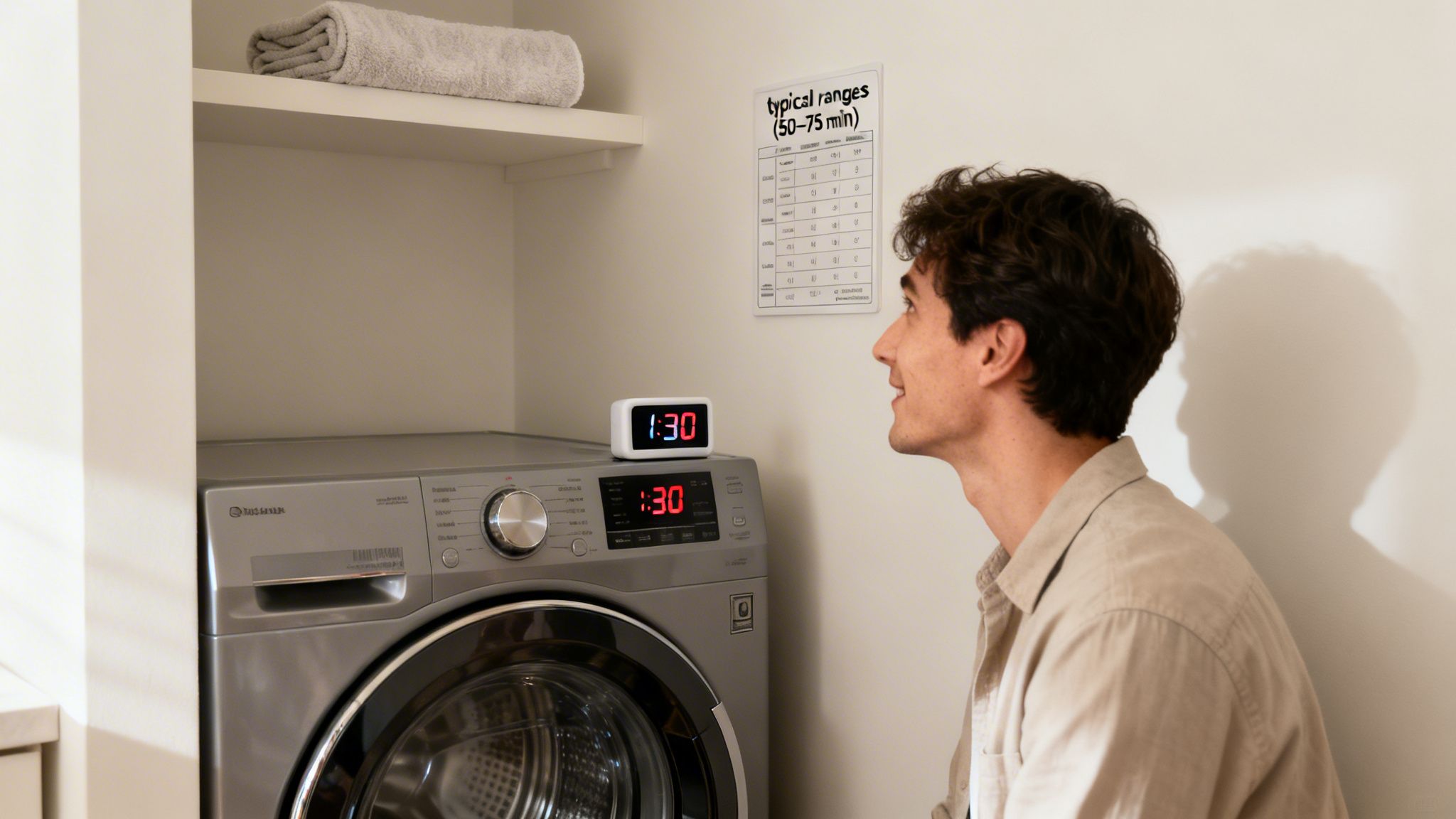
If you've ever stood in front of a new washer, staring at the digital timer and thinking, "This can't be right," you're not alone. Many people who upgrade their washing machines notice the cycles seem to take much longer than they did on their old, familiar model. It's not your imagination—and there’s a good reason for it.
At its core, the extended wash time is a deliberate trade-off. Modern machines are designed to be incredibly efficient, using far less water and energy. They’re also much gentler on your clothes. To get that same deep clean with less water, the machine simply needs more time to soak, agitate, and rinse everything thoroughly.
Think of it this way: you're not just waiting on your laundry; you're participating in a more resource-conscious cleaning process. That extra time translates directly into savings on your utility bills and helps your favorite clothes last longer.
We all know life is busy enough without being chained to the laundry room. A normal cycle for a standard load in a typical home machine often clocks in around 50 to 60 minutes. However, the industry average can stretch to nearly 118 minutes once you factor in modern front-loaders that prioritize that deep clean and water conservation. If you want to dive deeper into the numbers, Whirlpool offers a good breakdown of everyday laundry routines.
A Quick Look at Average Wash Times
To give you a clearer picture, it helps to see how the different types of machines stack up. The kind of washer you own is the single biggest factor influencing how long that "normal" cycle will take.
Here's a quick reference to give you a baseline before we dig into the why behind these numbers.
Average 'Normal' Wash Cycle Times at a Glance
This table provides a quick summary of typical wash cycle durations for common types of washing machines, helping you quickly find the information relevant to your machine.
| Washing Machine Type | Average Normal Cycle Time | Common Time Range |
|---|---|---|
| Traditional Top-Loader | 45 minutes | 30 - 55 minutes |
| High-Efficiency (HE) Top-Loader | 65 minutes | 55 - 80 minutes |
| Front-Loader | 75 minutes | 60 - 120 minutes |
As you can see, the classic top-loader with a central agitator is still the speed champion. Modern front-loaders, on the other hand, take a much more leisurely—and thorough—approach. High-efficiency (HE) top-loaders strike a balance right in the middle, offering a blend of speed and resource conservation.
What Happens During a Normal Wash Cycle

Have you ever wondered what’s actually going on inside your washing machine while it hums and sloshes away for an hour? It's not just a simple tub of spinning, soapy water. A normal wash cycle is more like a carefully timed sequence of events, with each step playing a critical role in getting your clothes clean.
Think of it as a multi-step cleaning process. Each stage builds on the last, taking your clothes from soiled to spotless. Knowing these steps helps make sense of why a "normal" cycle can take so long and where all that time is actually spent.
The Five Main Stages of Washing
Every wash cycle, regardless of the machine, follows a fundamental sequence. The exact timing might change, but the core process remains the same. Let's break it down.
Fill and Pre-Soak (5-10 minutes): First things first, the machine fills with water and mixes in your detergent. Many modern cycles then pause for a brief pre-soak, which gives the soap time to really work its way into the fabric fibers. This initial step is all about loosening dirt before the heavy-duty cleaning starts.
Main Wash (15-30 minutes): This is the heart of the operation and the longest part of the cycle. The drum tumbles and agitates the clothes, creating friction that scrubs away dirt, oils, and stains. The duration of this stage is the biggest variable, depending heavily on the cycle you've chosen and how dirty your clothes are.
The main wash is where the magic happens. It’s a powerful combination of mechanical action (the tumbling), water, and detergent working together to lift grime from your laundry. A longer wash time here usually translates to a deeper, more thorough clean.
The Rinsing and Spinning Finale
Once the main wash is done, the machine’s job is only half-finished. Getting all that dirty, sudsy water out of your clothes is just as important as the wash itself.
Drain (2-3 minutes): The machine pumps out all the grimy, soapy water. It’s a quick but crucial step that clears the way for the rinse cycle.
Rinse (10-20 minutes): Next, the drum refills with fresh, clean water to flush out any lingering soap residue. To ensure your clothes don't come out feeling stiff or soapy, some cycles will perform this step two or even three times, which is why rinsing can take up a surprising amount of time.
Final Spin (5-15 minutes): This is the grand finale. The drum spins at an incredibly high speed, using centrifugal force to wring as much water out of your clothes as possible. The more effective the spin, the less time your clothes will need in the dryer. If you want to learn more, our complete guide to the rinse and spin cycle dives deeper into how this last step works.
- Load Size and Balance: This is a big one. Overstuffing a machine is a sure-fire way to add time. Your clothes need room to tumble and get clean. If the drum is too packed or the load shifts and becomes unbalanced, the washer will pause the spin, add more water, and tumble slowly to try and fix it. This can add 10-15 minutes or more to your cycle.
- Soil Level: Just how dirty are those clothes? Most modern machines have sensors that can actually "see" the grime in the wash water. If it detects a heavily soiled load—like muddy soccer uniforms—it will automatically extend the wash and rinse phases to make sure everything comes out spotless.
- Water Temperature: This is all about physics. Heating water takes energy and time. A hot water wash will almost always take longer than a cold one simply because the machine’s internal heater needs time to get the water up to the right temperature before the main wash can really kick in.
- Fabric Type: Not all cycles are created equal. A sturdy "Cottons" cycle is designed for durability, using vigorous agitation and high-speed spins. On the other hand, the "Delicates" cycle is programmed for caution, with gentle tumbles and slow spins to protect fragile fabrics. These different mechanical actions directly influence the total cycle length.
- Delicates Cycle: This is your go-to for anything you're worried about damaging—wool sweaters, lingerie, or clothes with silk or lace. It uses cold water and a much gentler tumbling action with a slow spin to prevent stretching and snags.
- Heavy Duty Cycle: When you’re facing serious grime—mud-caked jeans, grimy work uniforms, or a load of dirty towels—it's time to call in the powerhouse. The Heavy Duty cycle uses more water, higher heat, and a longer, more aggressive wash to break down tough messes.
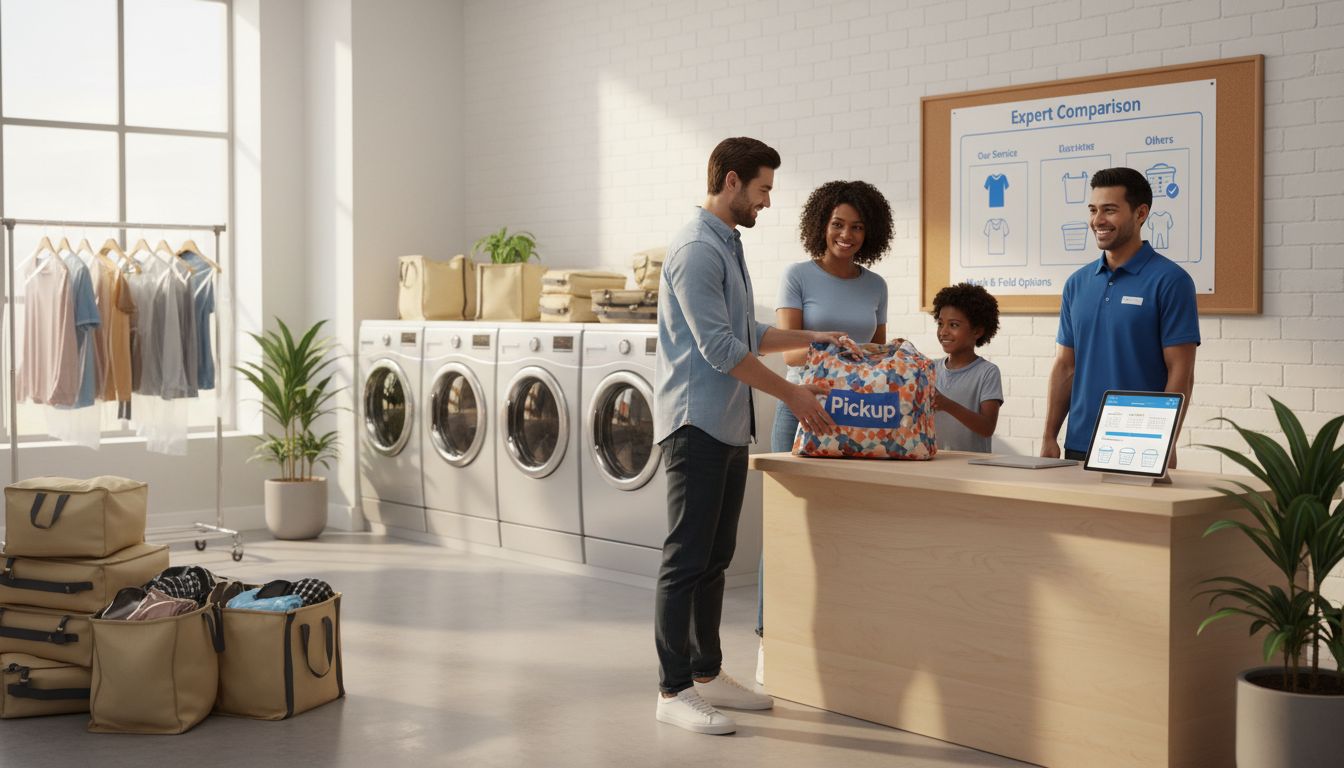
- Schedule a Pickup: Just hop online and pick a time slot that works for your schedule.
- Leave It at Your Door: Put your laundry and dry cleaning in bags and leave them in your designated spot. You don't even need to be home.
- Get It Back Fresh: We bring everything back, perfectly cleaned, folded, and ready to go straight into your drawers.
Key Factors That Change Your Wash Cycle Time
So, you’ve hit 'Start,' and the timer on your washer says 45 minutes. But an hour later, it’s still whirring away. What gives? It’s a common frustration, but the machine isn’t broken—it’s thinking.
Think of that initial time displayed as an educated guess. Your washer is constantly assessing the job at hand and adjusting on the fly. Several key factors can easily turn a standard cycle into a much longer affair, and it’s all about the choices you make and the smart tech inside the machine.
The Big Four Time-Changers
It really boils down to four main variables that have the biggest impact on your total wash time. Getting a handle on these gives you much more control over your laundry day.
It's a common myth that a smaller load is always a faster one. A small, heavily soiled load might actually take longer than a larger, lightly soiled one. The machine's sensors will work overtime to get the grime out, sometimes extending the cycle well beyond the initial estimate.
Your Washer’s Secret Weapon: The Sensor
The real wild card in modern washers is the automatic load sensing technology. This is the "brain" of the operation. Before the cycle even starts, these sensors weigh the dry clothes or measure how much water the load absorbs to figure out exactly how much laundry is inside.
This intelligence is fantastic for efficiency, as it ensures the machine uses the perfect amount of water and energy. But it also means the washer is constantly making decisions that affect the clock.
If you want to dive deeper into how your temperature setting plays into all this, check out our guide on the pros and cons of washing clothes in hot or cold water. Understanding the dance between sensors, load size, and temperature is the key to finally solving the mystery of your washer's ever-changing timer.
Comparing Front-Load and Top-Load Wash Times
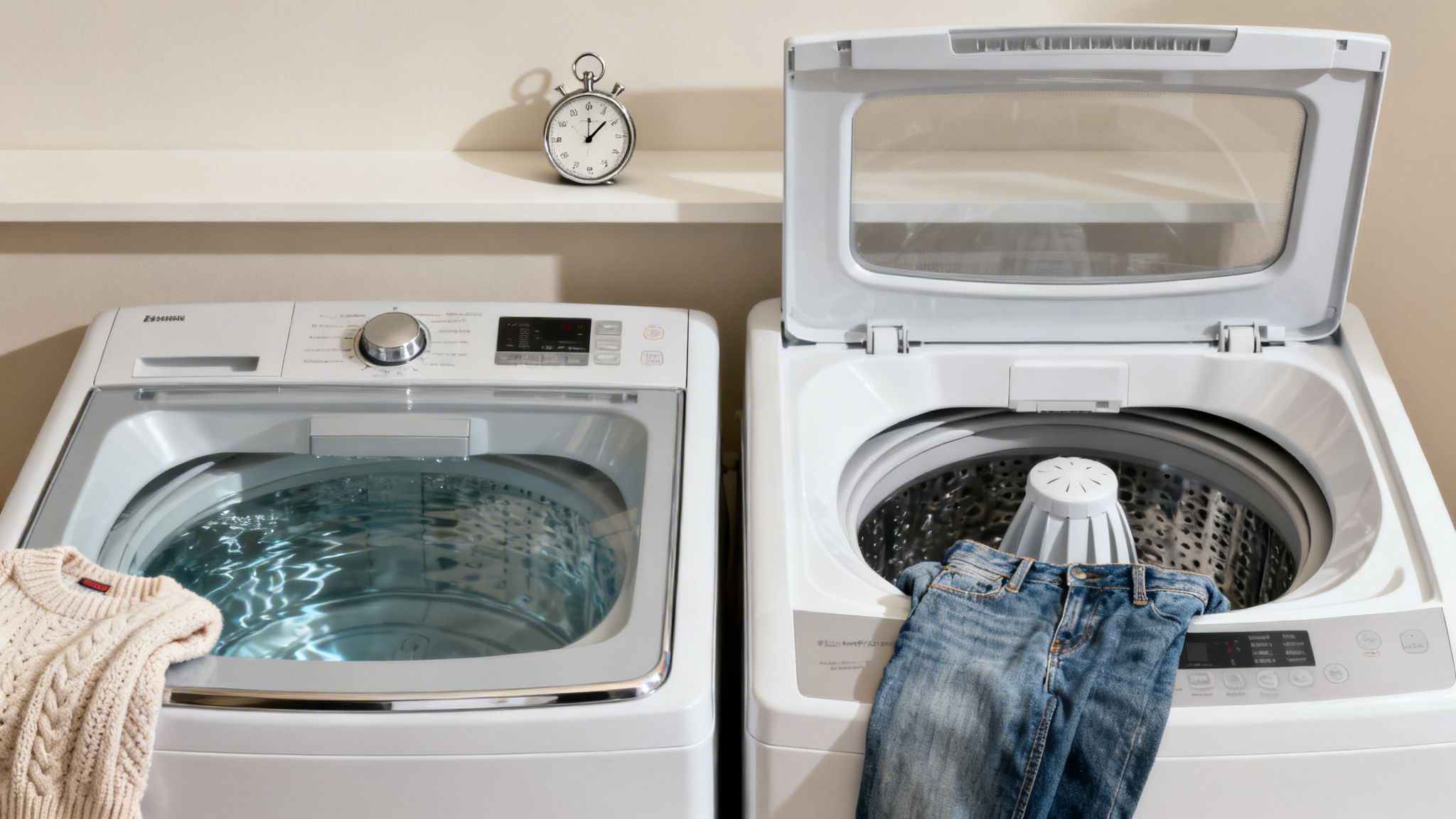
The biggest single factor that dictates how long a normal wash cycle will take? It's the type of machine you're using. The classic debate between front-load and top-load washers isn't just about looks; their core designs lead to completely different cleaning methods, and that directly impacts the time you'll spend waiting.
Think of front-loading machines as the marathon runners of the laundry room. They use a surprisingly small amount of water, filling just the bottom of the drum. Gravity and a gentle tumbling motion do the heavy lifting, dropping clothes through the water for a thorough, low-impact clean. While fantastic for your clothes and utility bills, this method takes time. A normal cycle often stretches to between 60 and 120 minutes.
This is why learning how to wash comforters correctly often points you toward a large-capacity front-loader. The extra space and gentle tumbling are ideal for bulky items, but you'll need to plan for a longer wash time.
Top-Loaders: The Sprinters of the Laundry World
On the other hand, traditional top-loaders with a central agitator are all about speed. These machines are the sprinters, filling the entire tub with water and using the powerful agitator to churn clothes clean in a hurry. You can expect a normal cycle to finish in as little as 30 to 50 minutes. The trade-off, of course, is that they use significantly more water and energy.
A popular compromise is the high-efficiency (HE) top-loader. It ditches the central agitator for a wash plate at the bottom, which creates a gentler, tumbling action similar to a front-loader. HE top-loaders are more efficient than their traditional cousins, but they aren't quite as fast. A typical cycle lands in the 55 to 80-minute range.
The evolution of these machines tells a story of trading speed for efficiency. Just a decade ago, some front-loaders took around 99 minutes. Now, that average has crept up to about 143 minutes, with a huge range from a quick 58 minutes to a lengthy 278 minutes for certain cycles. You can see this firsthand by checking out user-reported data and owner discussions on modern machines.
Front-Loader vs. Top-Loader: A Head-to-Head Comparison
To make sense of it all, it helps to see the key differences laid out side-by-side. This table breaks down what you can expect from each type of machine.
| Feature | Front-Loader | Top-Loader (with Agitator) | HE Top-Loader |
|---|---|---|---|
| Normal Cycle Time | Long (60-120 min) | Fast (30-50 min) | Medium (55-80 min) |
| Water Usage | Very Low | High | Low |
| Energy Efficiency | Excellent | Fair | Good |
| Gentleness on Clothes | Very Gentle | Harsher | Gentle |
| Cleaning Performance | Excellent | Good | Very Good |
Ultimately, the right machine comes down to what you value most. If speed is your number one priority, a traditional top-loader is hard to beat. But if you’re focused on saving water, lowering energy bills, and giving your clothes the gentlest clean possible, a front-loader is the clear winner—even if it means a longer wait.
Choosing the Right Cycle to Save Time and Energy
Think of all those buttons on your washing machine as a specialized toolkit. While it's tempting to just hit "Normal" and walk away, you're missing out. Picking the right cycle for the job is the single best way to save time and energy without sacrificing that perfectly clean feeling. It's really just about matching the cycle to the mess.
Most modern washers have a few key settings beyond the standard one. Once you know what they do, you'll feel like you've unlocked a secret level of laundry mastery and clawed back some precious time in your day.
Quick Wash for When You're in a Hurry
We've all been there. You need that gym outfit for a class in an hour, or you spill something on your favorite shirt right before heading out. This is where the Quick Wash or Express Wash cycle becomes your hero.
This setting is built for speed, focusing on small, lightly soiled loads that just need a refresh. It drastically cuts down the wash and rinse times, often getting the job done in under 30 minutes. Just remember, it’s not for everything. Trying to clean a week's worth of muddy kid clothes on Quick Wash will only lead to disappointment.
Delicates and Heavy Duty Cycles
For everything else, your machine has settings that strike the right balance between cleaning power and fabric care.
Think of it this way: using a Quick Wash for a full load of dirty towels is like trying to wash your car with a spray bottle. On the flip side, putting a delicate blouse through a Heavy Duty cycle is a surefire way to ruin it. The key is to be intentional with your choice.
The time difference between these cycles is significant. A Quick Wash can be over in 15 to 40 minutes, while a Normal cycle for delicate items might run anywhere from 45 to 80 minutes. Looking at the data, the numbers can be all over the place; one study found averages of 58 minutes for Normal, 34 for Delicates, and 73 for Towels, with the total time spent on laundry averaging close to two hours. If you're curious about how laundry habits have shifted over time, you can find some interesting insights from recent European studies.
What If You Could Reclaim Your Laundry Day for Good?

After breaking down all the details of how long a normal wash cycle takes, it’s pretty obvious that laundry is a real time sink. Even if you master every setting on the most advanced machine, you’re still losing hours every single week to sorting, washing, drying, and folding.
But what if you could just... not?
This is where handing off the whole task makes a world of difference. Instead of trying to find another open slot in your already-crammed schedule, you can cross laundry off your to-do list for good. Think about it: your laundry day could vanish, giving you that time back for family, hobbies, or simply catching your breath.
For some, getting organized with tools like laundry schedule templates is a big help. But if you're looking for the ultimate time-saver, nothing comes close to letting a professional handle it.
Your Weekend Isn't for Laundry
With Columbia Pike Laundry’s pickup and delivery service, you’re not just outsourcing a chore—you’re buying back your free time. We designed the whole process to be incredibly simple for busy people and families who have better things to do.
It’s about more than just getting clean clothes. It's about giving yourself permission to walk away from the laundry room and get back to what you love. We take care of it all with professional-level care, from sorting your items to using the right detergents for your fabrics.
Our service handles everything you need, from your weekly wash and fold to specialized dry cleaning for those delicate items. Ready to see what it's like to have your laundry done for you? You can get the full rundown in our guide to laundry pickup and delivery services.
Common Questions We Hear About Wash Cycles
It's natural to still have a few questions, even after you've got the basics down. Let's clear up some of the most common laundry mysteries we get asked about all the time.
How Often Should I Wash My Jeans?
Ah, the great jeans debate. The truth is, you should wash your jeans as little as possible—only when they're actually dirty or start to smell. A good target is after about 10 wears. Washing denim too often breaks down the fibers and can quickly fade that perfect color you worked so hard to get.
Why Is the Timer on My Washer So Inaccurate?
Ever feel like your washer’s timer is just making things up? You're not crazy. That initial number is really just a best guess. Modern machines are packed with sensors that weigh your clothes and even check how dirty the water is getting. If the load is heavier than expected, lopsided, or extra grimy, the machine's "brain" will add more time for washing or rinsing to make sure the job gets done right.
Think of your washer's timer like a GPS. It gives you an initial ETA, but it will recalculate the route if it hits unexpected "traffic" like a very dirty load or an unbalanced drum, ensuring the best possible outcome.
What Does the Normal Cycle Actually Clean?
The "Normal" cycle is your laundry workhorse. It’s the go-to setting for most of your everyday clothes—things like cotton t-shirts, socks, underwear, and bed linens that have seen typical, daily wear. It’s engineered to give a great clean without being too harsh on the fabrics, striking that perfect balance. While it won't conquer caked-on mud, it provides a much deeper clean than any Quick Wash setting.
Can a Professional Service Really Save Me Time?
It's not even a question. A quick wash cycle might only take 30 minutes, but that’s just one small part of the whole chore. When you factor in sorting, pre-treating, loading, unloading, drying, folding, and finally putting everything away, you've lost hours. A professional pickup and delivery service hands all of that time back to you. You just bag up your laundry, and it reappears, perfectly clean and folded. It's a total game-changer for a busy week.
Tired of staring at your washer and wondering how long is a normal wash cycle? Just let Columbia Pike Laundry make it disappear. Schedule your first pickup and get your weekend back.
Free pickup, expert care, delivered back to your door.
Popular Blog Articles


Meet the Author
Daniel Logan didn’t start CPL because he loved laundry. He started it because his family was drowning in time debt, and laundry was one of the biggest weights.
Mornings were chaos with two kids under 5. Evenings felt like catch-up. And weekends? Gone to sorting socks and folding piles.
He knew his story wasn’t unique. So he built a business that gave families like his just a little bit of breathing room one load at a time.
With no laundry experience but deep tech skills, Daniel rolled up his sleeves, doing every job himself while building systems that turned it into a modern laundry service that saves customers time, simplifies their lives, and delivers reliability they can count on.
That’s where CPL began. Not from a playbook, but from pain. From one dad trying to buy back time: for himself, and for every household like his.
Free pickup, expert care, delivered back to your door.