
How to Clean a Down Comforter Without Ruining It

Columbia Pike Laundry offers pickup & delivery across Northern Virginia.
There's nothing quite like the feeling of a fresh, fluffy down comforter. It's an investment in good sleep, but keeping it that way takes a little know-how. The secret isn't complicated: the best method involves a large, front-loading washing machine, a mild detergent made for down, and a slow, patient drying cycle with a few dryer balls tossed in.
Following this process will wash away allergens and oils without ruining the delicate down fill inside.
Why You Can't Just Ignore a Dirty Comforter

Let's be honest—that comforter is more than just a blanket. It's where you spend a huge chunk of your time. Over months of use, it slowly collects a nasty mix of body oils, sweat, dust mites, and other allergens. This buildup doesn't just make it feel less fresh; it can actually impact your sleep and kick up allergies. In just one year, a comforter can become home to millions of dust mites, a serious problem for anyone with sensitivities.
So why do so many people put off washing their comforters? Fear. It's a valid concern—we've all heard horror stories of a beautiful comforter coming out of the wash as a lumpy, useless mess. That’s usually because of easily avoidable mistakes, like using the wrong machine or too much heat. Stuffing a queen or king-sized comforter into a standard top-loader is asking for torn seams and clumpy, scorched down.
Protecting Your Bedding Investment
A well-made down comforter can last for a decade or more, but only if you take care of it. When dirt and oils are left to sit, they start to break down the delicate down clusters, which is what gives your comforter its warmth and loft. Learning how to wash it right is the key to making it last.
You really have two solid options for getting it clean:
- The DIY Approach: You can absolutely wash it at home. This guide will walk you through it, but you'll need the right equipment to do it safely.
- The Professional Route: This is the foolproof choice for delicate fabrics, big stains, or if you just want to know it's done right without the hassle.
At the end of the day, it doesn't matter which path you choose. The goal is the same: get rid of the grime and allergens, and bring back that light, airy loft you paid for. A clean comforter is about more than just hygiene—it's about restoring that incredible comfort.
Deciding which option is best for you is the first step. Here’s a quick breakdown of your options for cleaning a down comforter.
Can You Wash a Down Comforter at Home?
Here’s a quick breakdown of your options for cleaning a down comforter.
Choosing the right method ensures your comforter will come out feeling like new. With the right technique, you can wash it confidently and enjoy years of cozy, restorative sleep. This guide will give you the practical advice you need to get it right every time.
Your Pre-Wash Comforter Checklist
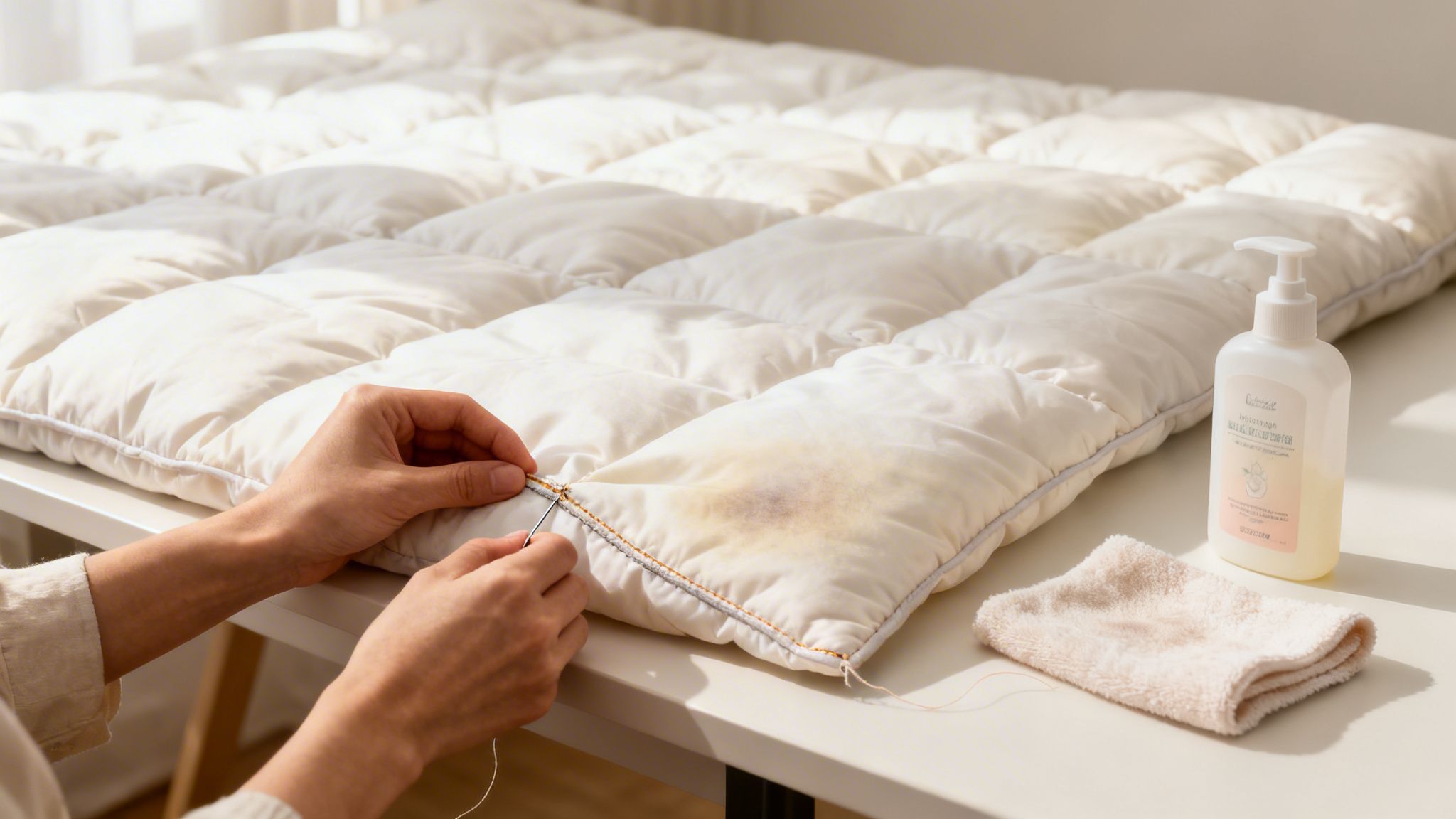
It's so tempting to just toss your comforter straight into the washing machine and hope for the best. But trust me, taking just a few minutes to prep is the single most important thing you can do. This brief inspection is what separates a beautifully clean comforter from a lumpy, feather-filled laundry room disaster.
Think of it this way: a little prep work now prevents big headaches later. You’ll avoid setting stains permanently and ensure you don’t end up with a washer full of loose down.
Check for Rips and Loose Seams
First things first, spread your comforter out on your bed or a clean patch of floor. You need to give it a really thorough once-over, looking for any weak spots that the washing machine will gleefully turn into a major blowout.
I've seen it happen more times than I can count. Pay close attention to:
- Seams and Baffle Boxes: Run your fingers along the stitching. Any fraying or weakness here is a red flag, as this is where a comforter is most likely to split open.
- The Outer Shell: Look for any small holes, tears, or even areas where the fabric looks thin and worn. A tiny snag can easily become a massive tear during the spin cycle.
- Loose Threads: If you spot any long, dangling threads, snip them off. This stops them from getting caught on the machine's agitator and unraveling a whole seam.
Found some damage? Don’t panic. A simple needle and some matching thread are all you need to patch things up. A few stitches now will save you from a catastrophic down explosion later.
Decode the Care Label
Every comforter has a care tag, but those little symbols can look like hieroglyphics. This tag is the manufacturer's instruction manual for your comforter, and ignoring it is a gamble.
The tag tells you everything from the ideal water temperature to the recommended dryer setting. The most critical symbol to find, however, is the one for dry cleaning. If you need a refresher, we have a helpful guide on how to read clothing care labels.
Seeing "Dry Clean Only" can be intimidating. Often, it's just a strong recommendation from the manufacturer to protect the delicate down clusters. If the outer shell is a sturdy cotton and you have a large-capacity, front-loading washer, you can usually wash it at home with great results. But if the shell is silk, rayon, or another delicate fabric, take that "Dry Clean Only" tag seriously and head to a professional.
Spot-Treat Stains First
Throwing a stained comforter into the wash is a surefire way to lock those stains in for good. The heat from the wash and dry cycles will bake in things like coffee, sweat, or makeup, making them a permanent part of your bedding.
For a much better result, tackle those spots individually before the main wash. All you need is a down-safe detergent or a good stain remover.
Gently mix a tiny bit of detergent with cool water. Using a clean white cloth, dab—never scrub—the solution onto the stain. Work from the outside of the stain toward the center to keep it from spreading. Once you've lifted the spot, use a separate, damp cloth to blot the area and "rinse" away the soap, then blot it as dry as you can.
Taking the time to pre-treat ensures the main wash cycle can focus on refreshing the entire comforter rather than fighting a losing battle against old, concentrated stains. It's a small step that makes a huge difference in the final outcome.
This pre-wash diligence is truly what separates a successful cleaning from a laundry mishap. It’s also why so many people choose to outsource the job. In fact, a surprising 40% of comforter owners skip regular washing entirely, which can shorten a comforter's lifespan by 40% due to issues like mildew from improper home drying.
How to Machine Wash Your Comforter at Home
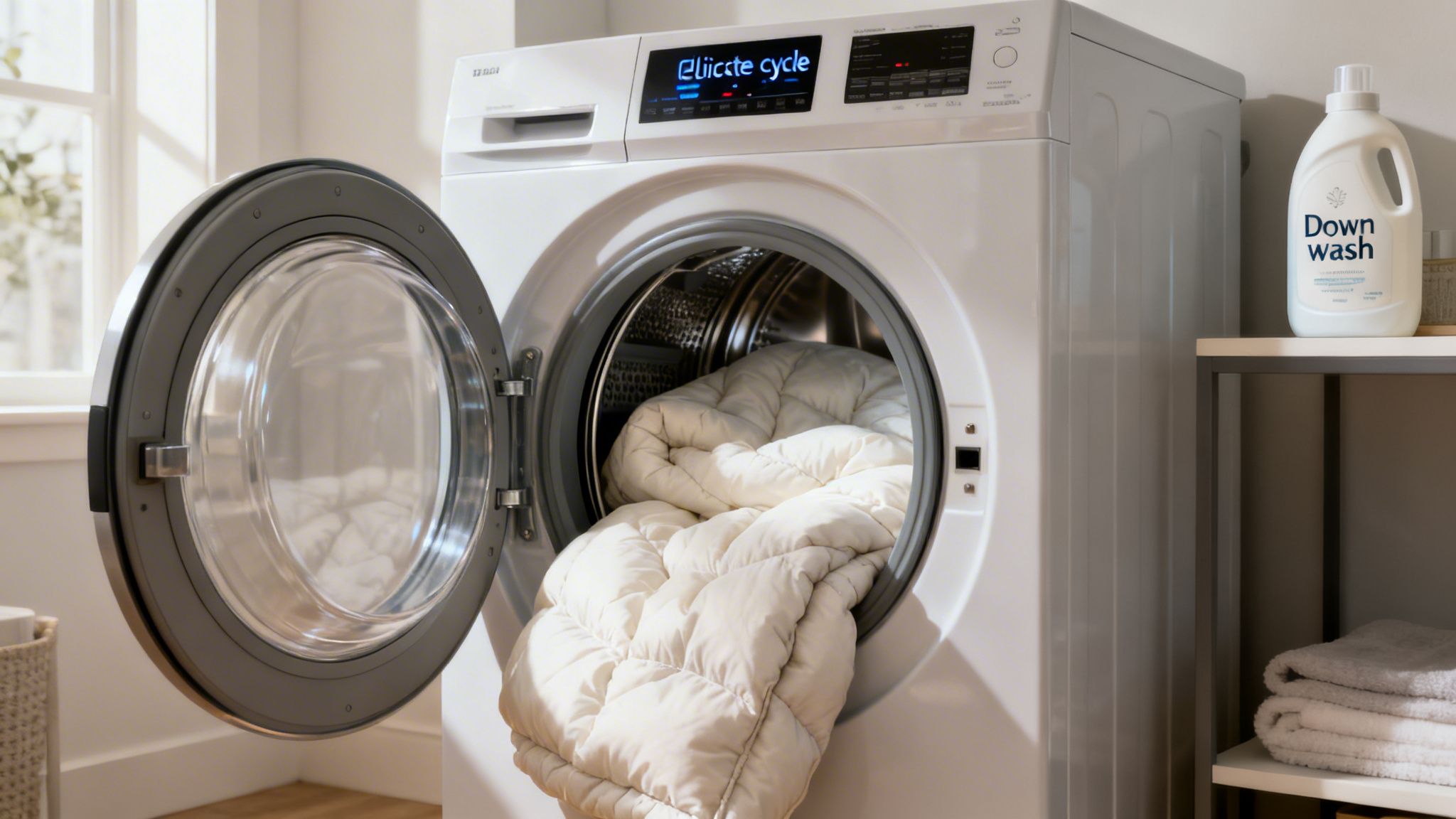
Thinking about washing your down comforter at home? It’s absolutely doable, but success really boils down to having the right machine and using the right technique. If you just toss it in without a plan, you can end up with clumpy, damaged down. But if you follow a few key principles, you’ll have a fresh, fluffy comforter in no time.
The most critical piece of the puzzle is the washing machine itself. Your standard top-loading washer with a central agitator is a comforter's worst enemy. That tall spindle in the middle is notorious for grabbing, twisting, and even ripping the delicate fabric and stitching, which can cause a messy—and irreparable—feather explosion.
You need a large-capacity, front-loading washing machine. These machines work by gently tumbling the contents, which is exactly the kind of care your comforter needs. If your home washer isn't big enough to give the comforter plenty of room to move, don't try to stuff it in. A trip to the laundromat to use their industrial-sized machines is a smart move.
Choosing the Right Detergent and Settings
With the right machine lined up, your next big decision is the detergent. Most standard laundry detergents are far too harsh for down. Their enzymes and surfactants are designed to break down oils, but they'll also strip the natural, protective oils right off the feathers. That’s what ruins their loft and insulating power.
Instead, you’ll want to reach for a gentler option:
- Specialized Down Wash: This is the gold standard. These products are pH-neutral and formulated to clean down clusters effectively without causing any damage.
- Mild, Low-Suds Detergent: If you can’t get your hands on a down wash, a gentle, dye-free, and fragrance-free liquid detergent is the next best thing. Just be sure to use it sparingly—a few teaspoons is all you need.
Before you start, give your machine a quick once-over. A washer that isn't working correctly might not rinse all the soap out or could spin way too aggressively. If you're worried your appliance is on the fritz, it's better to be safe and call in a pro for washing machine repair before you risk your expensive comforter.
The Washing Process
Alright, it’s time to get washing. Gently load the comforter into the drum all by itself. It needs plenty of space to tumble freely, so if the machine looks crowded, it’s too small. A cramped wash will lead to an uneven clean and make it nearly impossible to rinse properly.
For the settings, you’ll want to be very specific:
- Cycle: Choose the delicate or gentle cycle. This minimizes any stress on the seams.
- Water Temperature: Stick with cold water, always. Hot water can shrink the cotton shell and is tough on the down fill.
- Spin Speed: Select a low or medium spin. A high-speed spin cycle will just compress the down into tight clumps that are a real headache to break up later.
Once that first wash cycle finishes, don't pull the comforter out just yet. There’s one final step that makes all the difference.
I can't stress this enough: run an extra rinse cycle. Soap residue is the number one reason down comforters come out feeling stiff and flat. A second rinse ensures every last bit of detergent is washed away, leaving the feathers perfectly clean and ready to fluff back up.
After the final rinse and spin, your comforter is going to feel shockingly heavy and waterlogged. Don't panic; this is totally normal. Carefully scoop it out of the washer, supporting its full weight so you don't strain the seams. Now, you’re ready for the final—and most patient—part of the job: getting it dry.
The Secret to Drying for Maximum Fluff
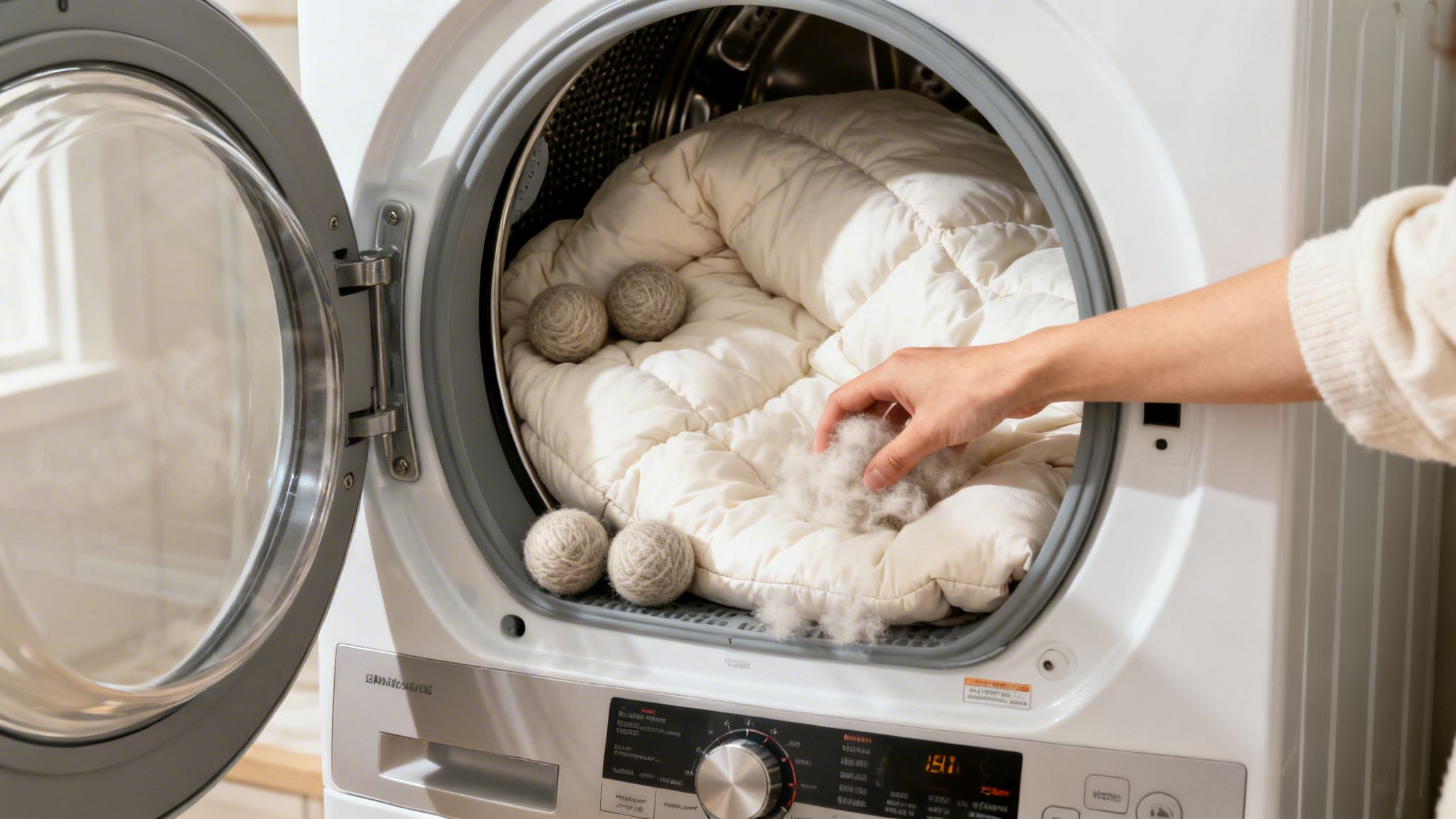
Washing is only half the job. The real magic—or tragedy—happens in the dryer. This is where you either bring back that cloud-like loft or end up with a lumpy, lifeless pancake of a comforter. Your goal isn't just to remove moisture; it's to fluff every single down cluster back to its original glory.
Let me be clear: this requires patience. Blasting it with high heat is the quickest way to scorch the delicate down, leaving you with brittle, flat fill. When drying down, the only way to go is low and slow.
Setting Up the Dryer Correctly
The first mistake most people make is trying to cram their comforter into a standard-sized dryer. It just won't work. You absolutely need a large, commercial-capacity machine that gives the comforter room to tumble and expand. If it's packed in tight, air can't circulate, which is how you get those dreaded damp spots and permanent clumps. If a large dryer isn't an option, you can explore other methods like learning how to properly hang laundry to dry, but it’s a much tougher job for a comforter.
Once you have the right machine, select the low-heat or no-heat/air-dry setting. This gentle approach is non-negotiable for protecting the down’s fragile structure.
Now, for your secret weapon: dryer balls. Throw in three or four clean wool or rubber dryer balls. As the comforter tumbles, these balls will bounce around, breaking up wet clumps of down and helping redistribute the fill. Think of them as tiny, tireless hands doing the fluffing work for you.
The Art of the Drying Cycle
Drying a down comforter is a marathon, not a sprint. Plan for it to take several hours—often up to four or more for a thick king-size. This isn't a "set it and forget it" task.
You'll want to set a timer for every 30 to 45 minutes. Each time it buzzes, you need to intervene.
- Pull the entire comforter out of the dryer.
- Give it a good, vigorous shake from all four corners to move the down around.
- Feel around for any dense, damp clumps with your hands. When you find one, gently pull it apart before tossing the comforter back in.
This periodic fluffing is absolutely essential. It’s the only way to prevent the down from matting together in the corners and to ensure warm air can reach deep inside the filling. You'll repeat this cycle of drying, shaking, and de-clumping until the comforter feels completely dry, light, and airy. For lasting freshness and quality for linens, ensuring they are 100% dry before storage is the most important step.
Why You Can’t Rush the Final Step
It’s shocking how much water a down comforter can secretly hold. The outer fabric might feel bone-dry to the touch, but the dense clusters of down inside can still be damp. Storing it or putting it back on your bed too soon is a recipe for disaster—trapped moisture will quickly turn into mildew and musty smells.
Don’t stop until it's 100% bone-dry. If you have any doubt, run it for one more cycle on the air-dry setting. It’s far better to over-dry on low heat than to under-dry and ruin your comforter.
This is where so many at-home attempts go wrong. In fact, an estimated 35% of home-washed down items lose 15-20% of their loft because of improper drying that leads to permanent clumping. Given that the down bedding market is valued at over $34 billion, taking the time to dry your investment properly is well worth the effort.
When to Let a Professional Handle It
There’s a real sense of pride in successfully washing your own down comforter. But let's be honest, sometimes the smartest move is knowing when to call in the experts. This isn't about giving up; it’s about protecting a serious investment in your comfort and avoiding a laundry room disaster.
Knowing the red flags can save you from accidentally ruining a comforter you love. It all comes down to understanding the limits of your home appliances and the specific needs of your bedding.
The Clear Signs You Need a Pro
Some comforters just aren't meant for a DIY wash. If your care tag has the non-negotiable phrase “Dry Clean Only,” please listen to it. This is usually because the outer shell is made of a delicate fabric like silk, satin, or rayon that simply won’t survive a trip through your washing machine. These materials can shrink, bleed color, or lose their beautiful sheen in a water-based wash.
Beyond the tag, here are a few other clear signs it's time to outsource the job:
- Stubborn, Set-In Stains: If you're looking at old stains from things like wine, blood, or body oils, your home spot treatments probably won't cut it. Professionals have specialized solvents and techniques designed to break down these tough spots without harming the down fill or the fabric.
- Your Machine is Too Small: This is the big one. A queen or king-sized comforter needs a massive amount of room to get clean. When you cram it into a standard home washer, you're not getting a deep clean, you're trapping soap residue, and you’re almost guaranteed to get clumpy, matted down.
- Visible Damage or Age: Is your comforter a family heirloom? Are the seams looking a little weak or is the fabric feeling thin? The tumbling and pulling of a wash cycle, even a gentle one, can be the final straw. A professional service can assess its condition and use the most delicate method possible.
The bottom line is that a professional service isn't just washing your comforter; they're preserving it. They have the right equipment and experience to handle oversized, delicate items, ensuring it comes back to you in pristine condition.
Still on the fence? Deciding between doing it yourself and calling in a pro can be tough. This quick comparison should help you weigh the factors and make the best choice for your comforter.
DIY vs Professional Comforter Cleaning
Ultimately, while the DIY route saves a few dollars upfront, the professional option provides peace of mind and far superior results, especially for a high-quality down comforter that you want to last for years.
The Professional Advantage: Industrial Equipment and Expertise
When you bring your comforter to a service like Columbia Pike Laundry, you're not just saving time—you're getting access to equipment that’s built for this exact job. Our industrial-sized, front-loading washers are the key. They provide more than enough space for even a massive king-size comforter to move freely, letting water and detergent penetrate every single fiber for a truly deep, even clean.
That extra space is just as crucial during the rinse cycle. It guarantees that every last bit of soap is washed away. Lingering soap residue is the number one cause of stiff, flat down, and our multi-rinse process completely eliminates that problem.
The same goes for drying. Our commercial dryers have the huge capacity and precise temperature controls needed for the slow, gentle heat that down requires. Combined with constant tumbling, this process fully restores the loft and leaves your comforter feeling fluffier than you ever thought possible. That’s a level of fluffiness that’s incredibly difficult to achieve at home. You can find out more about how we handle all kinds of bedding in our detailed bedding cleaning service guide.
Specialized Cleaning for Every Need
Not all comforters are created equal, so a one-size-fits-all cleaning approach just won't work. For those with delicate shells or "Dry Clean Only" labels, we offer an eco-friendly GreenEarth dry cleaning option. This process uses a gentle, silicone-based solvent that cleans beautifully without the harsh chemicals that can damage fragile down clusters.
At the end of the day, using a professional service turns a risky, all-day chore into a simple, worry-free task. There's a reason the global duvet cleaning market is a multi-billion dollar industry—proper care is essential. In fact, an estimated 80% of down comforter labels recommend professional service to prevent damage. As you can read in market research from firms like Data Bridge Market Research, the demand is high because the results are real.
Industry insights also show that improper home washing is responsible for a shocking 25% of all comforter returns to retailers each year. By letting an expert handle it, you get back a perfectly clean, revitalized, and incredibly fluffy comforter, ready for many more years of cozy nights.
Answering Your Top Comforter Care Questions
Even with the best instructions, a few common worries tend to pop up when it's time to wash a down comforter. It can feel like a high-stakes laundry day, but a little expert insight can help you navigate those tricky spots with confidence.
Think of this as your troubleshooting guide for the real-world problems we see all the time. Knowing what to do when things don't go perfectly is the key to getting that fresh, fluffy result you’re after.
How Often Should I Be Washing My Down Comforter?
This is, without a doubt, the question we hear most often. The answer really comes down to a single factor: whether or not you use a duvet cover. That cover is your first line of defense, absorbing the body oils, sweat, and dust that would otherwise settle into your comforter.
- With a Duvet Cover: If your comforter lives inside a cover that you wash regularly, you only need to wash the comforter itself every two to three years.
- Without a Duvet Cover: When the comforter is your top layer, it's getting direct exposure every night. In that case, you’ll want to wash it once or twice a year to keep it hygienic and fresh.
For a quick refresh between washes, just air it out on a clothesline for a few hours on a dry, sunny day. The sunlight is a natural disinfectant and does wonders for dissipating any minor odors or moisture.
What Do I Do If My Comforter Smells Like Mildew?
That musty, damp smell is a tell-tale sign of one thing: your comforter isn't completely dry. The outer fabric might feel fine, but deep inside those dense clusters of down, moisture is still trapped.
Unfortunately, just tossing it back in the dryer isn't enough at this point. That smell means mildew has already started to form, and more heat alone won't kill it. You have to wash it again. This time, add a cup of white vinegar to the rinse cycle; it will help neutralize the odor and kill the spores.
Then, you have to be relentless with the drying process. Use low heat, toss in plenty of dryer balls, and let it run for as long as it takes—often several hours. Don't pull it out until you are 100% certain it's bone-dry through and through.
A mildew smell is a clear signal of trapped moisture. You have to rewash it to remove the spores and then dry it completely on low heat, no matter how long it takes. Rushing the drying phase is what causes this problem.
Is It Safe to Use Bleach on My White Down Comforter?
Please don't. You should never use chlorine bleach on a down comforter, even a pure white one. The harsh chemicals in bleach will literally destroy the delicate protein structure of the down feathers.
Once that damage is done, it’s permanent. The down becomes brittle, breaks down into dust, and loses all its loft and insulating power. You'll be left with a flat, limp, and far less cozy comforter.
If you need to brighten a dingy white comforter, look for a non-chlorine, oxygen-based brightener and be sure to follow the product directions carefully.
My Comforter Is Still Clumpy After Drying. What Went Wrong?
Clumping is probably the most common frustration after a wash day. It almost always means one of two things: you didn't dry it long enough, or you used a dryer that was too small. Those clumps are just tightly matted balls of damp down that never got the space or air to separate and fluff back up.
The fix? More drying time. Put the comforter back in a large-capacity dryer on low heat with your wool or tennis balls. You'll need to be hands-on here. Pause the dryer every 30 minutes or so, pull the comforter out, and use your hands to find and manually break apart any stubborn clumps you feel. It's a bit tedious, but it’s the only way to get that perfectly even, cloud-like finish.
Feeling like this is more of a project than you signed up for? You can skip the hassle completely. Columbia Pike Laundry provides professional comforter cleaning that guarantees a fresh, perfectly fluffed result without any of the work or worry. Schedule your pickup and delivery online and let us handle it for you.
Free pickup, expert care, delivered back to your door.
Popular Blog Articles





Meet the Author
Daniel Logan didn’t start CPL because he loved laundry. He started it because his family was drowning in time debt, and laundry was one of the biggest weights.
Mornings were chaos with two kids under 5. Evenings felt like catch-up. And weekends? Gone to sorting socks and folding piles.
He knew his story wasn’t unique. So he built a business that gave families like his just a little bit of breathing room one load at a time.
With no laundry experience but deep tech skills, Daniel rolled up his sleeves, doing every job himself while building systems that turned it into a modern laundry service that saves customers time, simplifies their lives, and delivers reliability they can count on.
That’s where CPL began. Not from a playbook, but from pain. From one dad trying to buy back time: for himself, and for every household like his.
Free pickup, expert care, delivered back to your door.