
How to Remove Wine Stains from Clothes A Complete Guide
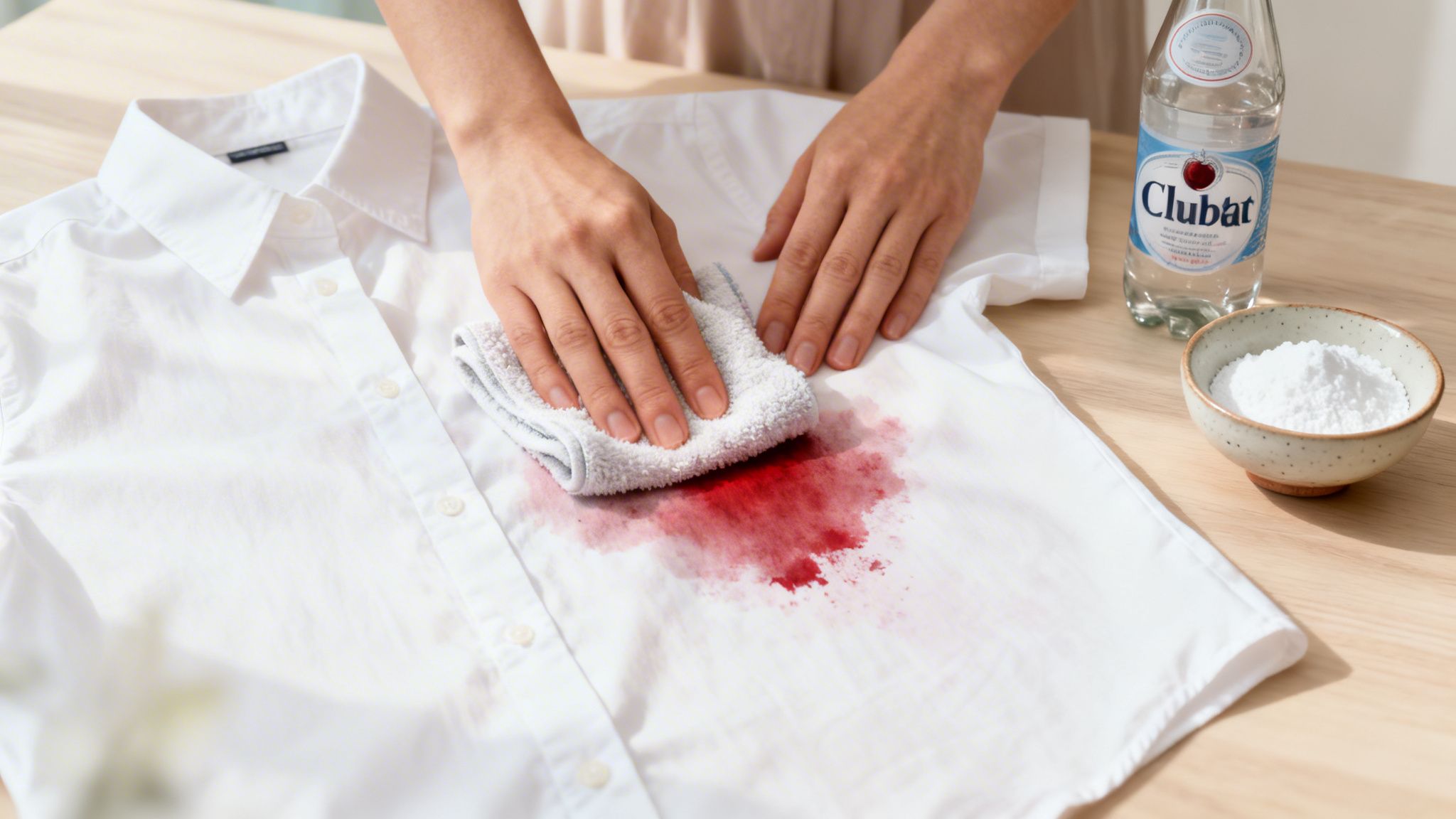
Columbia Pike Laundry offers pickup & delivery across Northern Virginia.
It’s happened to the best of us. That slow-motion moment when a glass of red wine takes a nosedive onto your brand-new white shirt or your favorite tablecloth. Your first instinct might be to panic, but what you do in the next few minutes can make the difference between a temporary mishap and a permanent stain.
That Sinking Feeling: Your First 15 Minutes After a Wine Spill
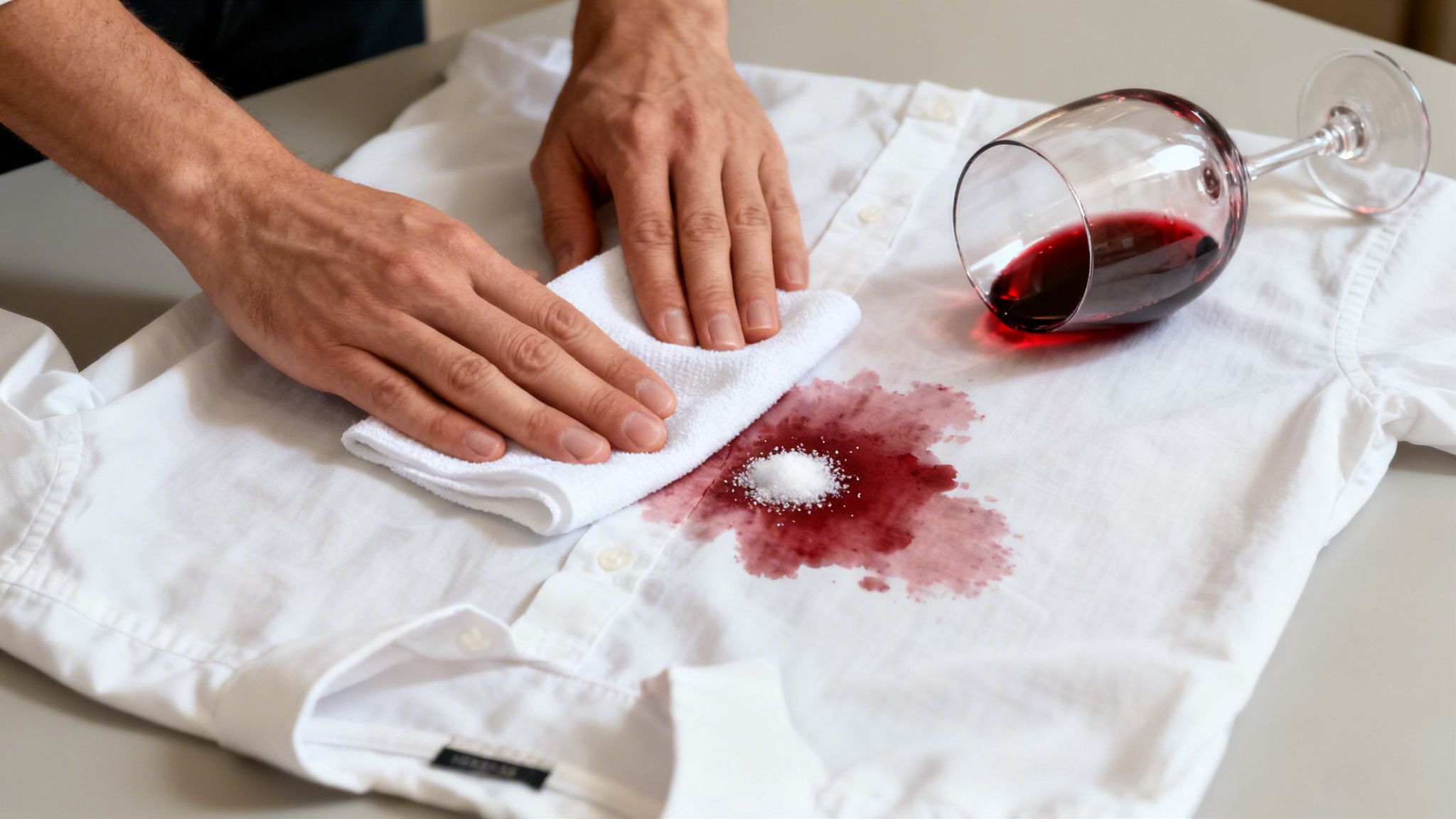
The first 15 minutes are absolutely critical. Your goal isn't to erase the stain completely right then and there—it's to contain the damage and lift as much of the wine out of the fabric as possible before it decides to move in for good.
Resist the Urge to Scrub
Whatever you do, don't scrub! Frantically rubbing the stain will only grind the wine’s pigments deeper into the fibers and make the spot bigger. The single most important first step is to blot.
Grab a clean, dry cloth or a stack of paper towels and gently press down on the stain. Start from the outside edge and work your way toward the center. This keeps the stain from spreading and wicks the liquid up and out of the fabric. Once you've blotted up as much of the spill as you can, it’s time for some quick-thinking kitchen chemistry.
Bring on the Salt (or Baking Soda): Don't be shy here. Pile a thick layer of table salt or baking soda directly onto the damp stain. You'll actually see it start to turn pink as it pulls the moisture and color out of the fibers. Let it sit for at least five minutes, but longer is even better.
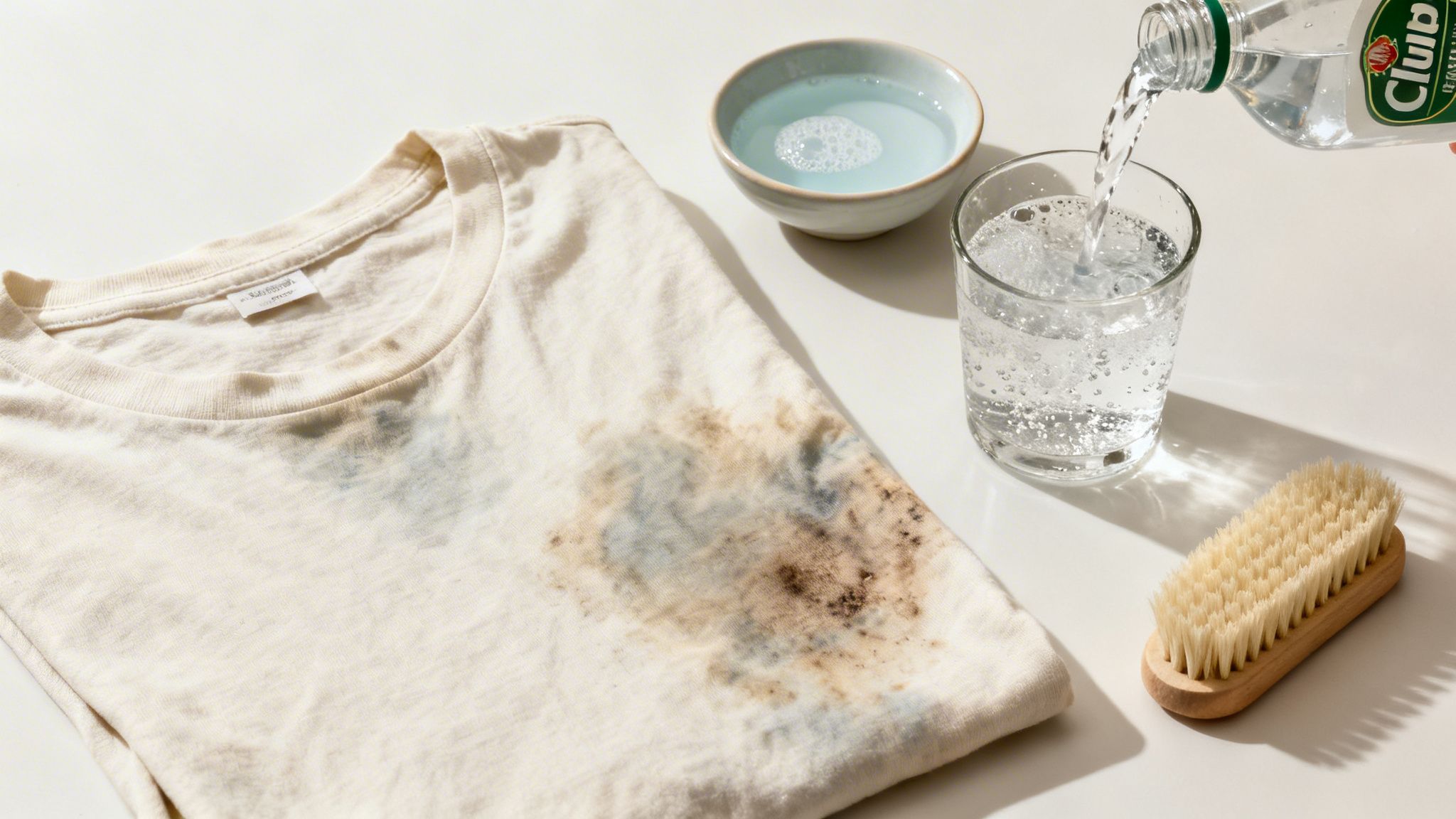
Try a Little Club Soda: If you're at a party and club soda is handy, it can be a real lifesaver. The carbonation helps fizz the stain particles up to the surface. Just pour a small amount on and continue to blot gently with a fresh cloth.
When you're faced with a sudden spill, it helps to have a quick reference. Here's a simple breakdown of what to do (and what to avoid) in those crucial first moments.
Immediate Wine Stain First Aid
Think of these actions as first aid for your fabric. They stabilize the situation and give you the upper hand before you can get the garment home for a proper cleaning.
Expert Tip: Your immediate goal is absorption, not aggressive cleaning. Blotting and applying something like salt buys you precious time and prevents a simple spill from becoming a permanent problem.
Why Every Second Counts
So, what makes wine, especially red wine, such a stubborn stain? It all comes down to tannins. These are naturally occurring pigments in grapes that essentially act like a dye. The longer tannins have to sit on a fabric, the more time they have to chemically bond with the fibers. Acting fast interrupts this process.
It's no surprise that a whole industry has sprung up around this very problem. In the United States alone, the stain remover market was valued at an estimated $5.87 billion in 2024. Liquid formulas are especially popular because they can saturate a fresh spill quickly.
These immediate steps are your best defense, but sometimes a stain needs more firepower. For other common household spills, you can find more practical tips in our comprehensive stain removal guide for busy moms.
Mastering At-Home Wine Stain Removal Techniques
Alright, you’ve managed to blot the fresh spill and stop it from spreading. Now for the real magic. Knowing a few reliable home remedies for wine stains can feel like having a secret weapon, turning a clothing catastrophe into a manageable fix.
While different materials need different levels of care, the basic game plan for most everyday fabrics is the same. You want to use a solution that’s gentle on the fibers but tough on the wine pigments. It’s more about patience and chemistry than brute force.
Your Go-To Solutions for Durable Fabrics
For the workhorses in your closet—think cotton, linen, and most synthetics—you can be a bit more assertive. These fabrics are pretty resilient, which opens up some powerful and easy-to-make options using things you probably already have.
Dish Soap & Hydrogen Peroxide: This is my personal favorite and a classic for good reason. Just mix one part blue dish soap with two parts 3% hydrogen peroxide. Gently work the mixture into the stain and let it sit for 20-30 minutes. The soap breaks everything down, and the peroxide safely lifts the color. It’s incredibly effective.
Club Soda Flush: Don't underestimate the power of bubbles. While it’s great for the initial blotting, you can also use club soda as a full-on treatment. Stretch the stained part of the fabric over a bowl and secure it. Then, slowly pour the club soda through the stain, letting the carbonation and water flush the wine right out of the fibers.
Before you go all-in, always do a quick spot test on a hidden area, like an inner seam. This simple step ensures your chosen method won't accidentally bleach or damage the garment.
The “Why” Behind What Works
Ever wonder why these tricks are so effective? It all comes down to the tannins in red wine, which are the organic compounds that give it color and, unfortunately, staining power. The goal is to break down or neutralize these tannin molecules. Hydrogen peroxide, for instance, uses oxidation to change the chemical structure of the tannins, rendering them colorless.
This growing understanding of stain chemistry has helped create a massive market for cleaning products. In fact, the global stain remover industry was valued at around $24.98 billion in 2024, largely because we all want quick, reliable fixes. Busy lifestyles demand effective solutions, whether we’re tackling stains at home or turning to the pros. If you're curious about market trends, you can dive deeper into the data with this detailed market report.
A Critical Reminder: Whatever you do, never apply heat to a wine stain. The heat from an iron or a clothes dryer will chemically bond the tannins to the fabric, making the stain permanent. Always air-dry the item until you’re positive the stain is completely gone.
Once you’ve treated the spot, go ahead and wash the garment like you normally would, but stick to cold water. A cold cycle will rinse away any leftover wine and cleaning solution without any risk of setting the stain. Give it a good look before you even think about putting it in the dryer—you might need a second round of treatment.
Tackling Tough and Set-In Wine Stains
So, what happens when you pull a shirt from the back of your closet and discover a dark, mysterious red stain that’s been there for who knows how long? Finding a set-in wine stain can feel like a death sentence for your favorite garment, especially if it’s already been through a wash cycle. But don't toss it in the donation pile just yet.
With the right approach and a bit of patience, even old, dried wine stains aren’t a lost cause. The trick is to rehydrate and break down those stubborn tannins that have bonded to the fabric fibers, which calls for a good, long soak.
Reviving Clothes with an Oxygen-Based Soak
For most durable fabrics like cotton and synthetics, your best bet is an oxygen-based cleaner. These powders are fantastic because they release tiny oxygen bubbles in the water, which safely break apart the stain molecules without bleaching or harming the fabric’s color.
Here’s how I handle these tough stains with a deep soak:
- Grab a bucket or just plug a clean sink and fill it with cool water.
- Add a scoop of your oxygen cleaner, following the package instructions for a pre-soak.
- Push the stained item into the water, making sure it’s completely submerged.
- Now, walk away. Let it soak for at least a few hours, but for a really gnarly stain, an overnight soak usually does the trick.
After its bath, take a look at the stain. If it's faded but still hanging on, you can make a thick paste from the oxygen cleaner and a little water. Gently work that paste right into the spot before washing the garment as you normally would, but in cold water.
Old wine stains are a battle of patience, not power. Repeated, gentle treatments are far more effective than one aggressive scrubbing session, which can damage fabric fibers permanently.
Using White Vinegar for Stubborn Stains
If you don't have an oxygen cleaner handy, a couple of common household items can work wonders: white vinegar and your regular laundry detergent. The mild acid in the vinegar is great for breaking down the pigments in the wine, giving your detergent a much-needed head start.
Just mix equal parts white vinegar and cool water to create a simple pre-soaking solution. Submerge the garment for about 30 minutes. After it soaks, gently rub some liquid laundry detergent into the stain and then toss it in the wash on a cold cycle. As a critical safety note, never mix vinegar directly with bleach, as this can create a dangerous toxic gas.
Tackling old stains often requires more than just a quick wash. For a deeper dive into restoring garments with set-in blemishes, check out our complete guide on how to get old stains out. Remember, the goal is restoration, and sometimes a second or third attempt is what it takes to bring your clothes back to life.
What to Do With Wine Stains on Delicate and Special Fabrics
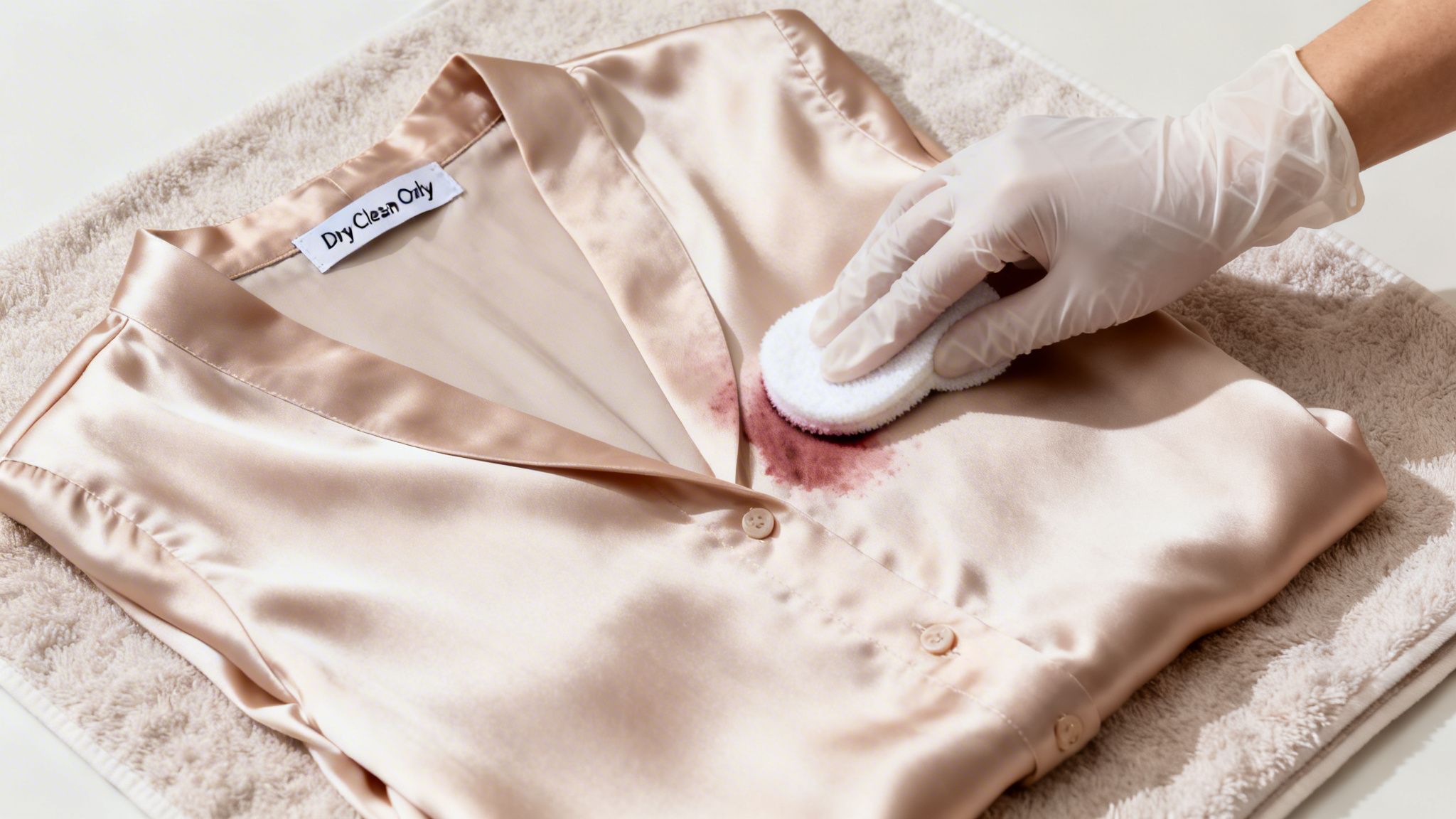
Spilling wine on a sturdy cotton tee is annoying. Spilling it on your favorite silk blouse, a wool blazer, or a special-occasion dress? That’s a code-red, heart-sinking moment.
When you're dealing with delicate materials, the rules change completely. Your top priority is no longer just attacking the stain—it's protecting the fabric itself. In these situations, knowing what not to do is often more important than what you do.
The Risks of DIY on Delicate Fabrics
I’ve seen far too many beautiful garments ruined by well-intentioned home remedies. Materials like silk, wool, and rayon (often labeled as viscose) simply can't handle the same treatments as cotton or synthetics.
Water itself can be the enemy here, causing permanent water spots on some silks or shrinking rayons. Add in heat and friction, and you can easily cause irreversible damage.
Here's why you have to be so careful:
- Silk: It's a protein fiber, much like your own hair. Acidic cleaners (like vinegar or lemon juice) can eat away at the fibers, causing discoloration and weakness.
- Wool: This material is famous for its tendency to shrink. The combination of water, heat, and any kind of rubbing can cause the fibers to felt and lock together permanently.
- Rayon/Viscose: This semi-synthetic fabric is surprisingly fragile. It can lose up to 50% of its strength when wet, making it incredibly easy to tear while you’re trying to blot out a stain.
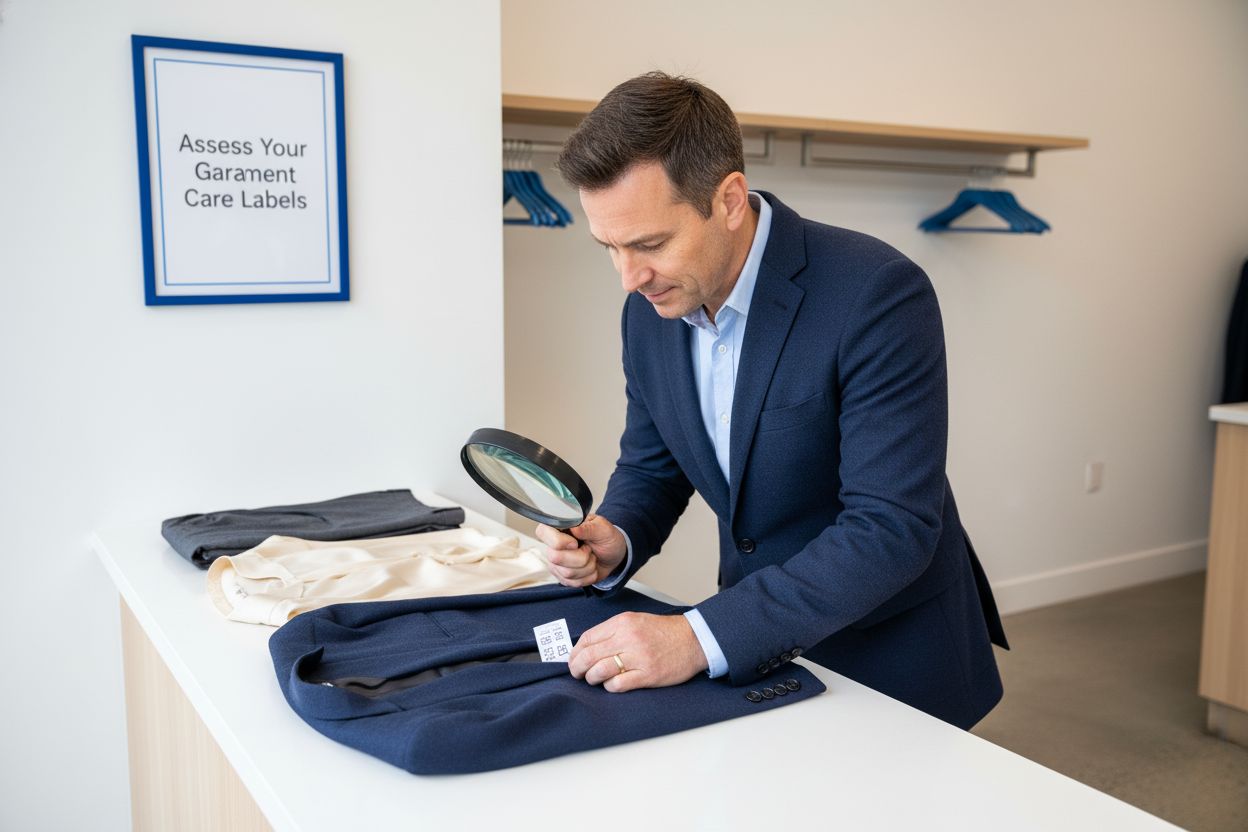
Before you do anything else, find the care label. If it says “Dry Clean Only,” take it seriously. It’s a clear warning from the manufacturer that water-based cleaning is a no-go.
The only safe move you can make at home on a delicate or "Dry Clean Only" garment is to gently blot the spill. Use a clean, dry, white cloth to absorb as much of the wine as you can. Don't add water, club soda, or anything else. Just blot, and then get it to a professional.
Why Professional Cleaning Is Your Safest Bet
Trying to treat a wine spill on a delicate garment is a huge gamble. You might lift some of the wine, but you risk leaving behind a tell-tale water ring, a discolored patch, or a patch of frayed, damaged fibers—all of which look much worse than the original stain.
Professional cleaners are equipped to handle these exact scenarios. The commercial laundry industry has developed highly specialized solutions that just aren't available for home use. For example, companies are constantly innovating with products like Henkel’s Persil Activewear Clean, which recently won a 2025 Product of the Year USA Award for its targeted formula. This is just one example of how professionals tackle tough stains with precision.
Bringing your stained silk or wool item to us at Columbia Pike Laundry isn’t giving up—it’s the smartest move you can make. We have the right solvents, equipment, and experience to treat the stain without compromising the integrity and beauty of your clothing.
Wine Stain Treatment by Fabric Type
Navigating fabric care can be confusing, especially in a panic. This table gives you a quick summary of what to do—and when it's time to call for backup.
Ultimately, for your most treasured and delicate pieces, the safest course of action is always the one that involves professional expertise. It’s the best way to ensure your garment survives the spill and looks great for years to come.
When It’s Time to Call in the Pros at Columbia Pike Laundry

There are times when the smartest thing you can do for a wine-stained garment is to step away from the salt and bring it to a professional. I've seen it countless times—a well-intentioned home remedy accidentally sets a stain for good. Calling for help isn't giving up; it's the strategic move that gives your favorite piece of clothing its best shot at survival.
If you’ve already tried a method and the stain is still there, that’s your cue. Stop what you're doing. Any further scrubbing or soaking could just push the pigments deeper into the fibers or, even worse, damage the fabric itself.
The Clear Signs You Need an Expert
Certain situations are just too risky for a DIY approach. Knowing when to hand it over can save you a lot of heartache and protect the clothes you’ve invested in.
Here are the non-negotiable times to bring your item straight to us at Columbia Pike Laundry:
- The Fabric is Delicate: Materials like silk, wool, velvet, and rayon are incredibly easy to damage. The risk of water spots, shrinkage, or ruining the texture is just too high for guesswork.
- The Label Says "Dry Clean Only": This is the most important instruction you can get. The manufacturer is telling you that water and home detergents will likely ruin the garment's structure, color, or finish.
- The Stain is Old and Set: A stubborn, dried-in wine stain has bonded with the fabric. While our home remedies can help, a professional has access to solvents that can safely break down those old tannins without harming the clothing.
- You Can't Identify the Fabric: Is it a poly-blend? Viscose? Don't gamble. We can quickly identify the material and apply the exact right treatment, taking the risk completely out of the equation.
Trusting a professional isn’t just about getting the stain out. It’s about preserving the garment's texture, color, and fit for years to come.
The Columbia Pike Laundry Difference
So, what’s our secret? When you bring a stained garment to us, it doesn't just get tossed in a machine. We treat it with a scientific, careful approach that’s worlds away from a standard wash cycle.
Our process starts with a thorough inspection. We analyze the fabric type and the stain itself under specialized lights to determine the best course of action. This tells us everything we need to know about what we're up against.
Next, we select the perfect tool for the job from our arsenal of professional-grade spotting agents. For delicate items, we often turn to our eco-friendly GreenEarth dry cleaning process. This liquid silicone solvent is incredibly gentle, won't cause shrinkage, and is safe for the environment. You can read more about how dry cleaners effectively remove stains and what makes our methods so effective.
Finally, we use specialized equipment to flush the stain and the cleaning agents out with precision. Sometimes, the best way to deal with a stubborn wine stain is to simply let a trusted expert handle it for you.
Your Questions About Wine Stains Answered
We’ve walked through the step-by-step methods for tackling wine stains, but I know from experience that there are always a few tricky "what if" scenarios. Over the years, we've heard just about every wine stain question imaginable. Let's clear up some of the most common ones we get at the shop.
Can I Use White Wine to Remove a Red Wine Stain?
Ah, the classic party trick. Does it actually work? The short answer is, not in the way you hope. Pouring white wine on a red wine spill might seem like it’s working because it dilutes the color, but you’re just swapping one problem for another. You're adding more liquid and sugars to the fabric, which can set into a different, yellowish stain over time.
Your best move is to skip the white wine and stick to proven methods. Blotting the excess and then using club soda or salt is a much safer bet for immediate damage control.
Is It True That Shaving Cream Can Remove Wine Stains?
This is another one I see making the rounds online. There's a tiny bit of truth to it, as most shaving creams contain surfactants that can help lift a stain. For a very minor drip on a sturdy fabric, you might see some effect.
But here's the catch: shaving creams are loaded with other things like moisturizers and fragrances that have no business being on your clothes. They can leave a weird, greasy residue that’s often harder to get out than the original wine spot. Honestly, it’s a risky move when a simple mix of dish soap and hydrogen peroxide is so much more effective and designed for cleaning.
We get asked about home remedies all the time. While some have merit, others are more myth than magic. When in doubt, always test a small, hidden area first or opt for a method specifically designed for fabric.
Will Boiling Water Really Get a Wine Stain Out?
The boiling water flush can be incredibly effective, but it comes with a huge warning label. The idea is to stretch the stained fabric over a bowl and carefully pour boiling water through it from a foot or two above. The combination of heat and force can literally push the stain right out of certain durable fabrics, like a 100% white cotton tablecloth.
However, you should never use boiling water on:
- Delicate fabrics like silk or wool; the intense heat will cause irreversible damage.
- Colored garments, as the high heat can make the surrounding dye bleed, creating a bigger mess.
- Synthetic fabrics, which can shrink, warp, or even melt under that kind of heat.
Think of it as a high-risk, high-reward technique. It's best reserved for those very specific situations on tough, white textiles. When it comes to safely learning how to remove wine stains from clothes, gentler is almost always better.
What’s the Difference Between Wash & Fold and Dry Cleaning for Stains?
This is a fantastic and important question. The two services are designed for completely different needs.
Our Wash & Fold service is your go-to for everyday laundry—think t-shirts, jeans, and cotton sheets. These are items that can be safely laundered in water and traditional detergent. We wash, dry, and neatly fold them for you.
Dry Cleaning, on the other hand, is a water-free process that uses a special solvent to gently clean clothes. This method is absolutely essential for delicate materials like silk or wool, or any garment with a "Dry Clean Only" tag. If you spill wine on a silk blouse, for example, dry cleaning is the only professional method that will treat the stain without ruining the fabric.
Still wrestling with a stubborn stain or feeling unsure about how to treat a favorite garment? Let us take the stress off your hands. Columbia Pike Laundry offers expert stain treatment alongside our professional Wash & Fold and Dry Cleaning services to restore your clothes with care. Schedule your first pickup today and get back to your life—we’ll handle the laundry.
Free pickup, expert care, delivered back to your door.
Popular Blog Articles




Meet the Author
Daniel Logan didn’t start CPL because he loved laundry. He started it because his family was drowning in time debt, and laundry was one of the biggest weights.
Mornings were chaos with two kids under 5. Evenings felt like catch-up. And weekends? Gone to sorting socks and folding piles.
He knew his story wasn’t unique. So he built a business that gave families like his just a little bit of breathing room one load at a time.
With no laundry experience but deep tech skills, Daniel rolled up his sleeves, doing every job himself while building systems that turned it into a modern laundry service that saves customers time, simplifies their lives, and delivers reliability they can count on.
That’s where CPL began. Not from a playbook, but from pain. From one dad trying to buy back time: for himself, and for every household like his.
Free pickup, expert care, delivered back to your door.