
Laundry Detergent Types: What Actually Works and Why
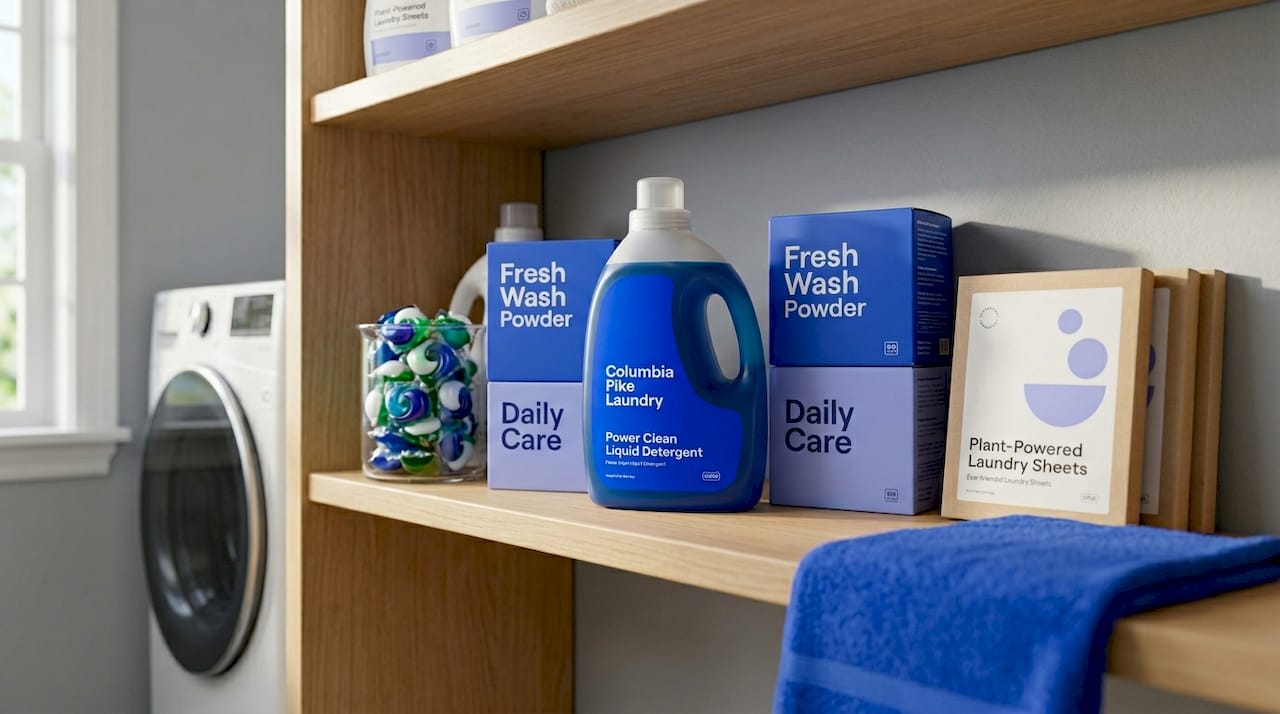
Columbia Pike Laundry offers pickup & delivery across Northern Virginia.
TL;DR:
- Choosing the right detergent depends on your washer type, water hardness, fabric, stains, and skin sensitivities.
- Powders excel on heavy soils but may not dissolve fully in cold water; liquids are versatile but prone to overdosing.
- Pods and sheets offer convenience but can be inefficient or underperform for heavily soiled laundry, especially with environmental concerns.
Walk down any detergent aisle and you’ll face liquid bottles, powder boxes, colorful pods, and paper-thin sheets. Each format claims to be the best. The reality is that laundry detergent types differ significantly in how they clean, how they behave in different machines, and how well they suit your specific fabrics. Getting this choice right protects your clothes, your washer, and your budget. This guide breaks down every major format, compares them honestly, and helps you figure out which one actually fits your laundry routine.
Key takeaways
| Point | Details |
|---|---|
| Format affects performance | Liquids, powders, pods, and sheets clean differently depending on water temperature and machine type. |
| HE machines need matching detergent | Using a non-HE formula in a high-efficiency washer causes residue buildup and reduced cleaning over time. |
| Dosing matters as much as formula | Overdosing any detergent, especially in HE machines, creates residue that stiffens fabric and traps odors. |
| Sheets are convenient, not powerful | Eco-friendly laundry sheets underperform in lab cleaning tests compared to liquids, powders, and pods. |
| Sensitive skin needs specific formulas | Fragrance-free, dye-free detergents reduce irritation risk and are widely recommended for allergy-prone households. |
1. What to know before choosing a laundry detergent type
Before you compare formats, you need to know what conditions you’re working with. The right detergent for your neighbor’s top-loader may be completely wrong for your front-loading HE machine. Detergent selection should be condition-matched, not treated as a one-size-fits-all decision, because water hardness, washer type, stain profiles, and fabric needs all shift what works.
Here are the core factors that should drive your choice:
- Washer type. High-efficiency (HE) washers use far less water than traditional top-loaders. They require low-suds HE-labeled detergents to prevent residue and poor rinsing. Using a standard formula in an HE machine is one of the most common laundry mistakes people make.
- Water hardness. Hard water reduces detergent effectiveness because minerals compete with surfactants. Powder detergents often contain water-softening agents that perform better in hard water conditions.
- Fabric type. Delicate fabrics like wool and silk need gentle, low-enzyme formulas. Heavy cotton loads with body soil benefit from enzyme-heavy detergents.
- Stain types. Protein-based stains like blood and sweat respond to enzyme detergents. Grease stains need strong surfactant blends. Knowing what you’re washing most often shapes what formula you need.
- Skin sensitivity. Households with eczema-prone or allergy-sensitive skin should prioritize fragrance-free and dye-free formulas. You can find a thorough breakdown of detergent options for sensitive skin that covers what to look for and what to avoid.
- Environmental priorities. Some formats create more plastic waste than others. Sheets and powder in cardboard boxes generate less packaging waste than large plastic liquid jugs.
Pro Tip: Check your washer’s manual before buying detergent. HE-only machines clearly state this requirement, and ignoring it shortens both the machine’s life and the quality of your wash.
2. Powder detergent: the original workhorse
Powder was the dominant detergent format for decades, and it still earns its place in many laundry rooms. It tends to cost less per load than liquid or pods, stores well in a cool dry location, and works particularly well on ground-in dirt and clay-based stains.
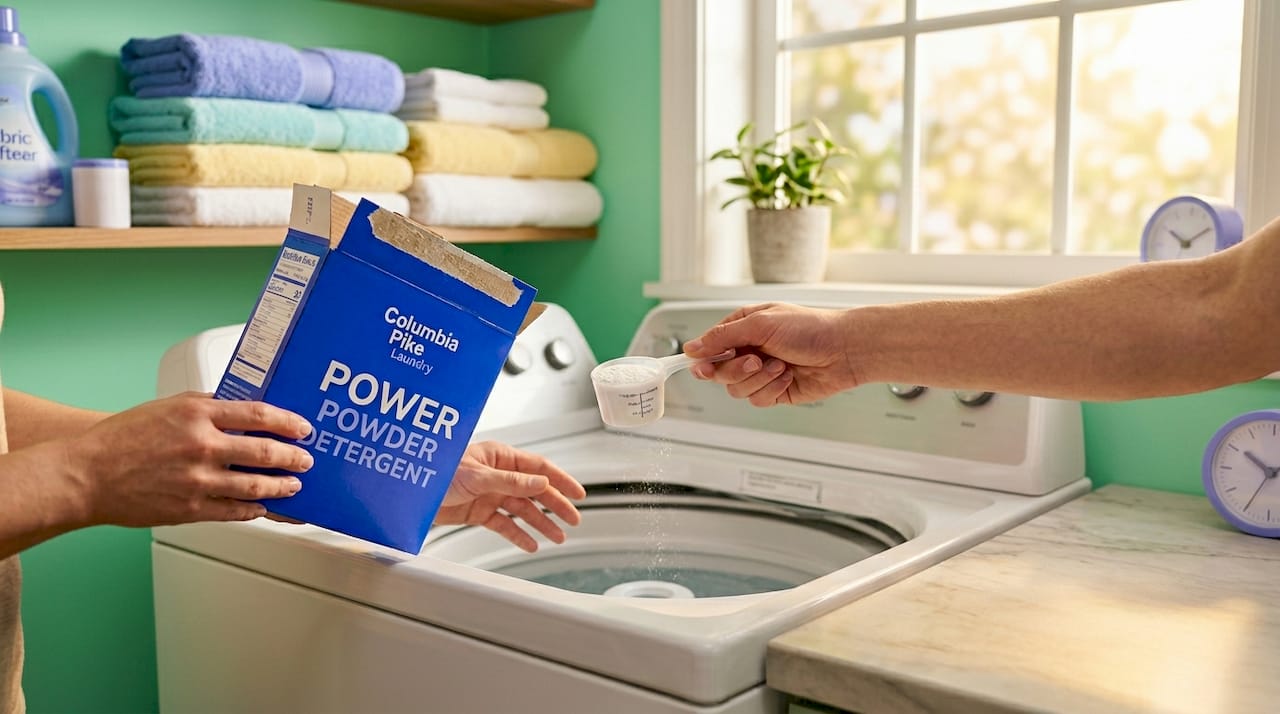
The active cleaning agents in powder, called surfactants and enzymes, reduce water’s surface tension and break apart different categories of soil. Powder formulas often include oxygen-based bleaching agents and water-softening compounds that give them an edge in hard water conditions.
The main drawbacks are dissolution and residue. In cold water washes, powder can clump or fail to dissolve fully, leaving white patches on dark fabrics. This is less of a problem with modern formulas, but it’s still a real risk if you mostly run cold cycles.
Pro Tip: If you use powder in cold water, dissolve your measured dose in a cup of warm water first before adding it to the drum. This simple step prevents undissolved powder from sticking to fabric.
3. Liquid detergent: the flexible everyday choice
Liquid detergent is the bestselling format in the U.S., and the reasons are practical. It dissolves completely in any water temperature, which means cold-water washes get the full benefit of the formula. It also works as a pre-treater for stains. You can apply it directly to a grease spot, let it sit for a few minutes, then wash as usual.
Surfactant blends in liquids are particularly effective at lifting body oils and grease because the liquid medium keeps active ingredients in a stable, ready-to-work state. This makes liquid a strong choice for households with gym clothes, oily cooking stains, or baby items.
The downsides: liquid is easy to overdose. The measuring caps in most bottles are designed to encourage you to use more than you need, which costs you money and creates residue in your machine. Liquids also come in heavy plastic jugs that add up in landfill waste.
4. Pods and pacs: convenient but inflexible
Pods (also sold as pacs or capsules) are pre-measured single doses of concentrated liquid detergent wrapped in a water-soluble film. They’re popular because they remove the guesswork from dosing, they’re compact, and they’re easy to store.
From a residue standpoint, pods leave less residue in HE machines than liquids or powders when used correctly, because the dose is fixed and the film dissolves rapidly. That consistency is genuinely useful for HE machine owners who want to avoid the cumulative buildup that stems from overdosing in low-water cycles.
The significant limitation is inflexibility. You cannot use half a pod for a small or lightly soiled load. You’re locked into a fixed dose regardless of whether you’re washing three pairs of socks or a full load of muddy jeans. For households with highly variable load sizes, this gets wasteful. Pods also cost more per load than powder or liquid.
Pro Tip: Place pods directly in the drum before adding clothes. Never put them in the detergent dispenser drawer. The film needs direct contact with water to dissolve properly.
5. Laundry sheets: eco-friendly, but with tradeoffs
Laundry sheets are thin, dissolvable strips that you toss into the drum with your laundry. They’ve grown in popularity thanks to plastic-free packaging and minimal storage footprint. For travelers and people in small apartments, the convenience is real.
The cleaning performance, though, is where sheets fall short. Consumer Reports testing finds that sheets consistently underperform compared to liquids, powders, and pods. If your laundry is lightly soiled, sheets can handle it. If you’re dealing with heavy body soils, grease, or set stains, they often come up short.
The tradeoff here is real: eco-friendly sheets sacrifice cleaning power for environmental appeal. That’s a legitimate choice for the right household, but you should make it with full information rather than marketing claims.
6. How different detergent formats compare side by side
Here’s a direct comparison across the factors that matter most when picking a format:
| Format | Cleaning power | HE compatible | Dosing ease | Cold water performance | Cost per load | Eco-friendly packaging |
|---|---|---|---|---|---|---|
| Powder | Strong (especially on heavy soils) | Yes, if HE-labeled | Moderate (requires measuring) | Fair (can clump) | Lowest | Good (cardboard) |
| Liquid | Strong (especially on grease/oils) | Yes, if HE-labeled | Low (easy to overdose) | Excellent | Moderate | Poor (plastic jugs) |
| Pods/Pacs | Strong | Yes | High (pre-measured) | Good | Highest | Moderate |
| Sheets | Weak (underperforms in lab tests) | Yes | High (pre-measured) | Good | Moderate | Excellent (paper-based) |
One nuance worth adding: proper detergent-machine matching and accurate dosing are as important as the format itself. A high-quality liquid overdosed in an HE machine will perform worse than a mid-range powder dosed correctly.
7. Enzyme detergents: what they are and when you need them
Most people have heard of enzyme detergents without fully understanding what enzymes do. They’re biological catalysts that target specific types of soils. Enzyme-based detergents attack protein-based stains like sweat, blood, grass, and food, breaking them down at a molecular level. This makes them particularly effective for odor removal and cold-water washing, since heat denatures (deactivates) enzymes.
Proteases break down protein stains. Lipases target fats and oils. Amylases work on starch-based soils. The best detergents for household laundry contain multiple enzyme types to cover a broad range of stain profiles.
Where enzyme detergents fall short is with delicate fabrics. Wool and silk contain proteins, and repeated exposure to protease enzymes can break down those fibers over time. For your everyday cotton and synthetic loads, enzymes are a clear advantage. For your delicates, go enzyme-free or use a gentler formula.
8. HE washers and detergent compatibility
HE (high-efficiency) washers operate on significantly less water than traditional top-loaders. This affects every detergent you use. HE detergents are engineered specifically for low-suds, low-water environments. Using a standard detergent in an HE machine creates excess suds that the machine can’t rinse away fully, leading to residue on clothes and internal machine buildup.
The residue problem in HE machines often traces back to overdosing and insufficient rinse cycles rather than a bad formula. If your clothes feel stiff or smell musty after washing, cut your detergent dose by 20 to 30 percent before you buy a completely different product.
Hard water users running HE machines face an additional challenge. Soap-based HE detergents in particular can build up faster in hard water conditions, compounding residue issues. Surfactant-based HE formulas handle hard water better. If you’re unsure what format is correct for your setup, this guide to selecting detergents by machine type is worth reading before your next purchase.
9. Choosing the right detergent for your household
Now that you understand the formats, here’s how to apply that knowledge to your specific situation:
- If you have an HE washer, use only HE-labeled detergent and use less than the package suggests. Pods are a reliable choice because the fixed dose removes the risk of overdosing.
- If you wash mostly in cold water, choose liquid. It dissolves fully in cold water and activates faster than powder. Enzyme-heavy liquid formulas perform especially well at low temperatures.
- If your household has sensitive skin, prioritize fragrance-free, dye-free formulas in any format. Liquid and pods are available in sensitive-skin versions across most major brands.
- If you’re trying to lower costs, switch to powder. It costs the least per load, performs well on heavy soils, and stores for long periods without degrading.
- If you care about packaging waste, consider powder in a cardboard box as your primary detergent. Sheets are another option if your loads are consistently light.
- If you frequently wash gym clothes or odor-heavy items, use an enzyme-based liquid with a protease and lipase blend. Add an extra rinse cycle to ensure full removal.
- If you have variable load sizes, avoid pods. Use a liquid or powder so you can adjust the dose to match the actual load weight and soil level.
My honest take on detergent choices
By Daniel
I’ve seen firsthand how much confusion surrounds detergent selection, and honestly, most of it comes from marketing rather than chemistry. The phrase “what’s the best laundry detergent to use” gets searched millions of times a month because people genuinely don’t know, and the answer they find is usually a brand ranking paid for by the brands themselves.
Here’s what I’ve actually learned: the format matters less than how you use it. I’ve watched people switch from powder to expensive pods and still end up with stiff, smelly clothes because they never adjusted their HE machine’s rinse settings. The detergent residue issue almost always comes down to dose, not brand.
The eco-friendly sheet category frustrates me because the marketing is getting ahead of the performance. Telling people sheets are just as good when lab tests say otherwise is misleading. If you want to make a greener choice, powder in cardboard gives you strong performance with dramatically less plastic waste. That’s a real trade-up, not a compromise.
My actual recommendation for most households: HE-labeled liquid for everyday loads, enzyme-based formula for anything athletic or heavily soiled, and a fragrance-free version of whatever you use if anyone in the house has sensitive skin. Simple, honest, and it works.
— Daniel
Let Columbiapikelaundry take it from here
Not everyone wants to spend time calibrating detergent doses and testing different formats. That’s exactly why Columbia Pike Laundry handles the whole process for you. Based in Arlington, Virginia, Columbiapikelaundry cleans everything in-house, uses fragrance-free options for sensitive-skin customers, and applies professional knowledge of fabric care and detergent selection to every order. Whether you drop off your laundry at 2602 Columbia Pike or schedule a pickup through the app, you get expert wash-and-fold results without the guesswork. For busy families and anyone tired of laundry decisions, it’s the simplest solution.
FAQ
What are the main laundry detergent types?
The four main types are powder, liquid, pods (pacs), and laundry sheets. Each differs in cleaning strength, dosing ease, cost, and suitability for different washer types and water conditions.
What’s the best detergent to use for an HE washer?
Use only HE-labeled detergent in a high-efficiency washer. Pods are a reliable choice because they prevent overdosing, which is the primary cause of residue buildup in low-water HE machines.
Are laundry sheets as effective as liquid or powder?
No. Consumer Reports testing shows that sheets underperform compared to liquids, powders, and pods in lab cleaning tests, making them better suited for lightly soiled loads.
What’s the best laundry detergent to use for sensitive skin?
Choose a fragrance-free, dye-free formula in any format. Liquid options are easy to find in sensitive-skin versions and perform well at cold water temperatures, which further reduces skin irritation risk.
Why do my clothes still smell after washing?
Lingering odors after washing usually point to detergent residue from overdosing in an HE machine or insufficient rinsing. Try reducing your detergent dose by 25 percent and running an extra rinse cycle before switching products.
Free pickup, expert care, delivered back to your door.
Popular Blog Articles




Meet the Author
Daniel Logan didn’t start CPL because he loved laundry. He started it because his family was drowning in time debt, and laundry was one of the biggest weights.
Mornings were chaos with two kids under 5. Evenings felt like catch-up. And weekends? Gone to sorting socks and folding piles.
He knew his story wasn’t unique. So he built a business that gave families like his just a little bit of breathing room one load at a time.
With no laundry experience but deep tech skills, Daniel rolled up his sleeves, doing every job himself while building systems that turned it into a modern laundry service that saves customers time, simplifies their lives, and delivers reliability they can count on.
That’s where CPL began. Not from a playbook, but from pain. From one dad trying to buy back time: for himself, and for every household like his.
Free pickup, expert care, delivered back to your door.