
Printable stain removal guide for busy Arlington parents
Columbia Pike Laundry offers pickup & delivery across Northern Virginia.
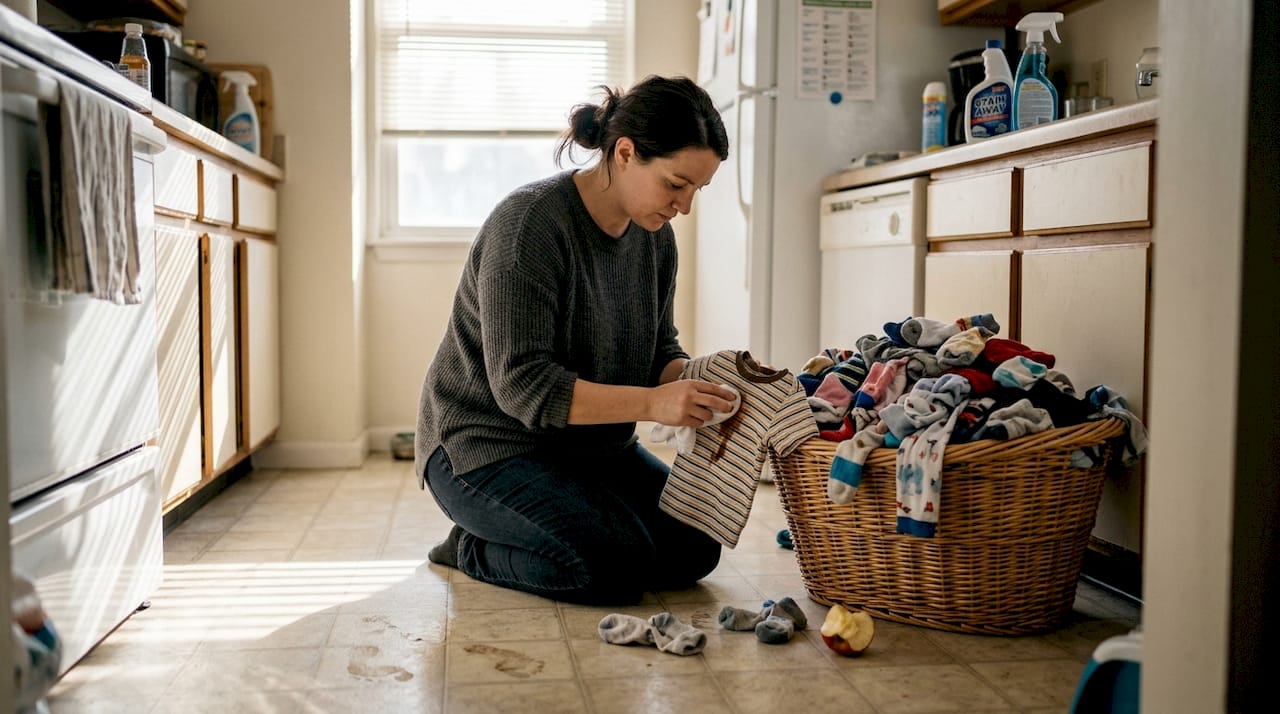
Stains on kids’ clothes happen fast and often, turning laundry day into a frustrating puzzle for busy Arlington parents. Between juice spills, grass stains, and mystery marks from the playground, keeping children’s clothing and household linens clean can feel overwhelming. The good news is that effective home remedies exist, and having a quick, printable stain removal guide at your fingertips can save both time and money. This article provides proven, practical strategies designed specifically for parents who need fast-acting solutions that work without complicated steps or expensive products.
Key takeaways
| Point | Details |
|---|---|
| Act quickly | Blot stains immediately without rubbing to prevent them from setting deeper into fabric fibers. |
| Use proven remedies | Dawn dish soap mixed with hydrogen peroxide (2:1 ratio) tackles grease, blood, grass, and chocolate effectively. |
| Match water temperature | Cold water works best for protein stains like blood or milk, while warm water removes oily marks. |
| Never dry stained items | Heat from the dryer permanently sets stains, making removal nearly impossible afterward. |
| Keep guides handy | Printable cheat sheets in your laundry room help you respond confidently to any stain emergency. |
Understanding stains and why prompt action matters
Not all stains are created equal, and understanding the difference between protein-based marks, oil stains, and dye transfers can dramatically improve your success rate. Protein stains like blood, milk, or baby food require cold water treatment to prevent the proteins from binding permanently to fabric fibers. Oil-based stains from butter, salad dressing, or crayon respond better to warm water and degreasing agents. Dye stains from berries, juice, or markers need immediate attention before they oxidize and become nearly impossible to remove.
Timing makes an enormous difference in stain removal success. Fresh stains treated within five minutes have the highest chance of complete removal because the staining substance hasn’t had time to bond chemically with fabric fibers. The moment you notice a spill, blot gently with a clean cloth to absorb excess liquid. Rubbing pushes the stain deeper into the weave and spreads it across a larger area, making your job harder.
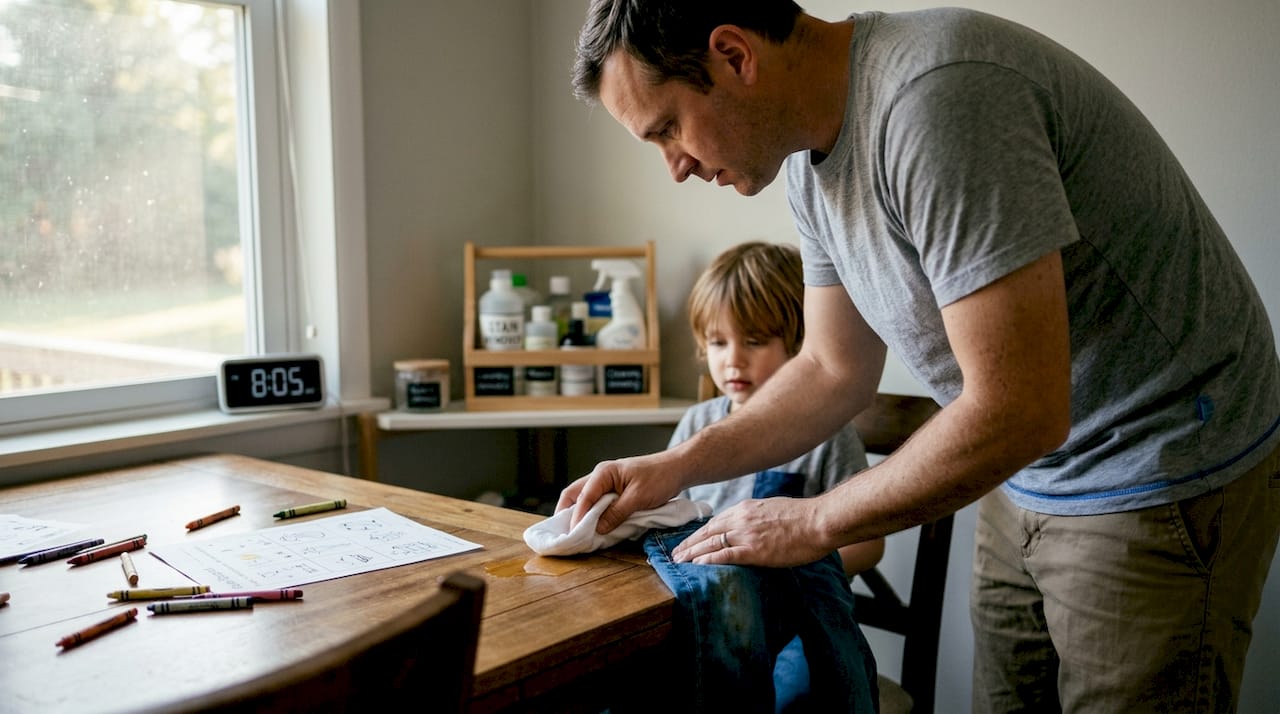
Water temperature is not just a preference but a critical factor in stain removal chemistry. Cold water keeps protein molecules from cooking into fabric, while warm water helps dissolve oils and greases that would otherwise resist treatment. Using the wrong temperature can actually set a stain permanently, which is why understanding stain types matters so much for busy parents.
Pro Tip: Never put stained clothing in the dryer until you’ve confirmed the mark is completely gone. Heat from drying sets stains permanently by causing chemical bonds that no amount of scrubbing can break. Air dry treated items first, check them in good light, and retreat if needed.
The basic stain removal sequence remains consistent across most stain types: blot immediately, pretreat with appropriate home remedies, soak if the stain is stubborn, wash in the correct water temperature, and air dry to verify success. This systematic approach, combined with the right remedies for each stain category, gives Arlington parents a reliable framework for handling the inevitable messes that come with raising kids. For more detailed guidance on tackling common household stains, check out this stain removal guide for moms.
Top printable home remedies for common kids’ stains
Having the right remedies ready to go makes all the difference when stains strike. The Dawn dish soap and hydrogen peroxide mixture stands out as the most versatile solution for busy parents, tackling everything from grease and chocolate to blood and grass stains. Mix two parts hydrogen peroxide with one part Dawn dish soap in a small spray bottle, apply directly to the stain, let it sit for 10 minutes, then wash as usual. This combination works because Dawn breaks down oils while hydrogen peroxide oxidizes organic compounds.
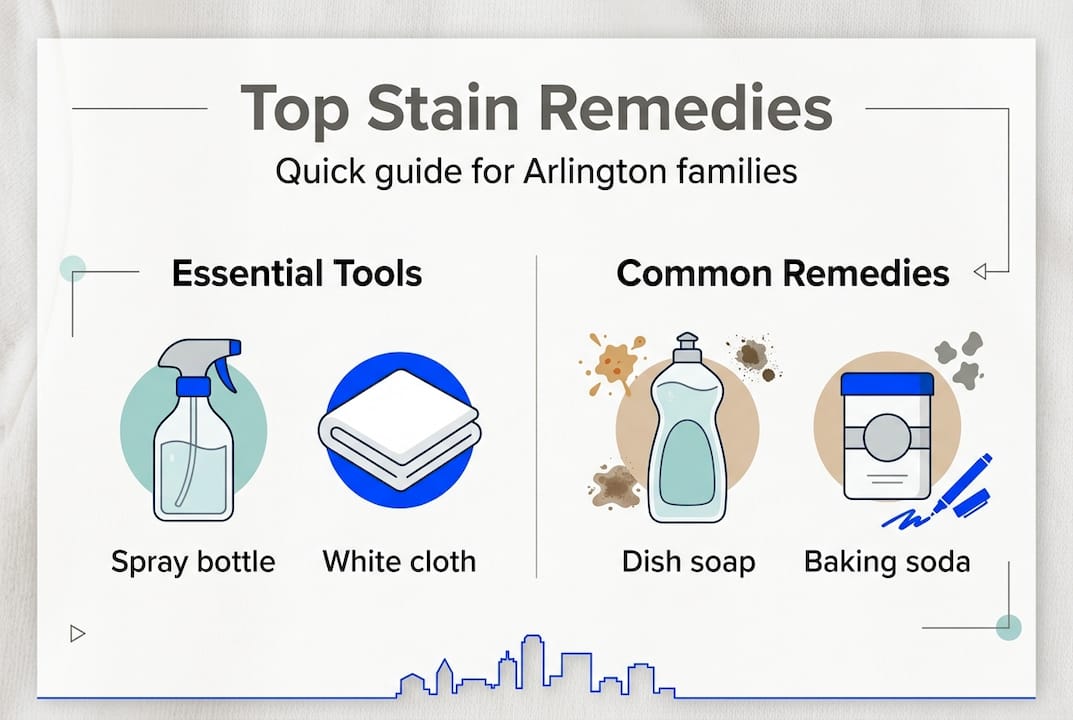
Vinegar sprays offer a gentle yet effective approach for food and berry stains that frequently appear on kids’ clothes during meals and snacks. Mix equal parts white vinegar and water in a spray bottle, saturate the stained area, and let it work for 15 minutes before washing. Vinegar’s acidity helps break down the pigments in fruit juices, tomato sauce, and other common food culprits without harsh chemicals that might irritate sensitive skin.
Baking soda creates a powerful paste for mud and grass stains that seem impossible to remove from play clothes and sports uniforms. Mix three parts baking soda with one part water to form a thick paste, spread it generously over the stain, let it dry completely, then brush off the residue before washing. The abrasive texture lifts dirt particles while the alkaline nature of baking soda helps neutralize acidic stains.
| Stain Type | Best Remedy | Application Method | Wait Time |
|---|---|---|---|
| Grease, chocolate | Dawn + peroxide (2:1) | Spray directly, work gently | 10 minutes |
| Food, berries | Vinegar spray (1:1) | Saturate area thoroughly | 15 minutes |
| Mud, grass | Baking soda paste | Apply thick layer, let dry | Until completely dry |
| Gum, wax | Ice cube | Freeze solid, scrape off | 5 minutes |
Ice provides a surprising solution for sticky situations like gum or candle wax stuck to clothing. Place ice cubes directly on the affected area until the substance hardens completely, then gently scrape it off with a dull knife or credit card edge. This method works because freezing makes these materials brittle and easy to remove without leaving residue or damaging fabric fibers.
Printable cheat sheets keep these remedies organized and accessible right where you need them most. Print a reference guide and laminate it for your laundry room wall, or keep a copy inside your laundry detergent cabinet for quick consultation when stains happen. Having visual reminders eliminates the need to search online mid-crisis and ensures you always use the correct remedy for each stain type. For specific guidance on general stain removal techniques, visit resources on how to get stains out of clothes and learn about hydrogen peroxide safety for different fabrics. Additional stain removal techniques can expand your toolkit even further.
Pro Tip: Label your spray bottles clearly with contents and mixing dates. Hydrogen peroxide loses effectiveness over time when exposed to light, so mix fresh batches monthly and store them in opaque containers.
Handling tricky, old, and set-in stains efficiently
Set-in stains require patience and persistence rather than aggressive scrubbing that damages fabric. Old or set-in marks need longer soaking and often multiple treatment cycles to break down the bonds that have formed over time. Fill a basin with cool water, add a tablespoon of oxygen bleach or your chosen stain remover, and submerge the garment for several hours or overnight. This extended contact time allows the cleaning agents to penetrate deeply and work gradually on stubborn marks.
Protein stains become exponentially harder to remove once they’ve been exposed to heat or allowed to dry completely. Blood, dairy products, and egg-based stains require cold water exclusively because hot water causes proteins to coagulate and bond permanently with fabric fibers. If you’ve already washed a protein stain in warm water, don’t panic. Soak the item in cold water with enzyme-based detergent for 24 hours, then retreat with your hydrogen peroxide mixture before washing again in cold water.
Color testing protects your favorite garments from accidental bleaching or discoloration during stain treatment. Before applying hydrogen peroxide or any strong remedy to visible areas, test it on an inside seam or hidden hem. Apply a small amount, wait 10 minutes, then blot with a white cloth to check for color transfer. This simple precaution prevents turning a small stain into a larger disaster on delicate or brightly colored fabrics.
| Stain Age | Treatment Approach | Success Rate | Special Considerations |
|---|---|---|---|
| Fresh (under 5 min) | Immediate blotting + remedy | 95% | Easiest to remove completely |
| Recent (under 24 hrs) | Standard treatment + wash | 75% | May need one repeat |
| Old (days to weeks) | Extended soak + multiple treatments | 50% | Requires patience |
| Set-in (heat dried) | Professional help often needed | 25% | Home methods may fail |
Repeat treatments work better than single aggressive attempts for challenging stains. After your first treatment and wash cycle, check the garment while it’s still damp. If you can still see the stain, apply your remedy again immediately rather than letting the fabric dry. Each treatment cycle weakens the stain’s grip on the fabric, and persistence often succeeds where a single strong treatment fails.
Following a systematic approach maximizes your chances with tough stains. First, identify the stain type and choose the appropriate remedy. Second, test your solution on a hidden area. Third, apply the treatment and allow adequate contact time. Fourth, rinse thoroughly with the correct water temperature. Fifth, check results before drying. Sixth, repeat if necessary. This methodical process, which you can outline on a printable checklist, prevents common mistakes and ensures you don’t accidentally set a stain by rushing through steps.
For persistent old stains that resist home treatment, professional services offer specialized solutions. Learn more about removing old stains and specific techniques for set-in grease marks that require extra attention.
Pro Tip: Keep a dedicated stain treatment basket near your washing machine with all your remedies, clean white cloths for blotting, and a small brush for working solutions into fabric. This setup saves precious time when you’re juggling kids and household tasks.
Additional tips and resources for Arlington parents
Arlington families won’t find hyper-localized printable stain guides specific to Virginia water conditions or regional laundry challenges, but the fundamental chemistry of stain removal works the same everywhere. The general DIY methods and professional backup options available throughout the DMV area provide excellent support for busy parents tackling household stains. Focus on mastering the core techniques outlined in this guide, and you’ll handle 90% of common stains successfully at home.
Printable checklists transform chaotic stain emergencies into manageable tasks by providing step-by-step guidance right when you need it most. Create a laminated reference card that lists stain types, appropriate remedies, water temperatures, and treatment times. Keep this card visible in your laundry area so anyone in your household can respond effectively to spills and marks. Visual guides eliminate guesswork and reduce the stress that comes with unexpected messes.
When home remedies reach their limits, local professional laundry services offer convenient backup for particularly stubborn or delicate items. Sometimes a vintage dress, expensive suit, or mysteriously stained heirloom requires expertise beyond DIY methods. Having a trusted professional service in your back pocket means you can attempt home treatment first, then escalate to expert care if needed without risking permanent damage to valuable items.
Safety considerations matter especially in households with young children who might access laundry products. Choose gentle, child-safe treatments whenever possible, and store all cleaning solutions in clearly labeled containers out of reach. Dawn dish soap and diluted hydrogen peroxide rank among the safest options for regular use, but even these should be kept away from curious toddlers. Avoid harsh chemical stain removers that emit strong fumes or could cause skin irritation.
“The key to managing stains in a busy household isn’t having every product under the sun. It’s having a simple system with a few proven remedies that you can grab quickly and use confidently. Printable guides make that system foolproof.”
Organizing your laundry space for stain success means keeping remedies accessible and clearly labeled. Store your Dawn and peroxide mixture, vinegar spray, and baking soda container together in a designated spot. Add a small basket with clean white cloths for blotting, a soft brush for working in treatments, and your laminated stain guide. This setup allows you to respond immediately when spills happen, maximizing your success rate.
For comprehensive guidance tailored to Arlington families, explore this detailed laundry stain removal guide and download a practical stain removal checklist designed specifically for busy households. If you need professional support, research the best dry cleaners in Arlington to find trusted local options.
Simplify stain removal with Columbia Pike Laundry services
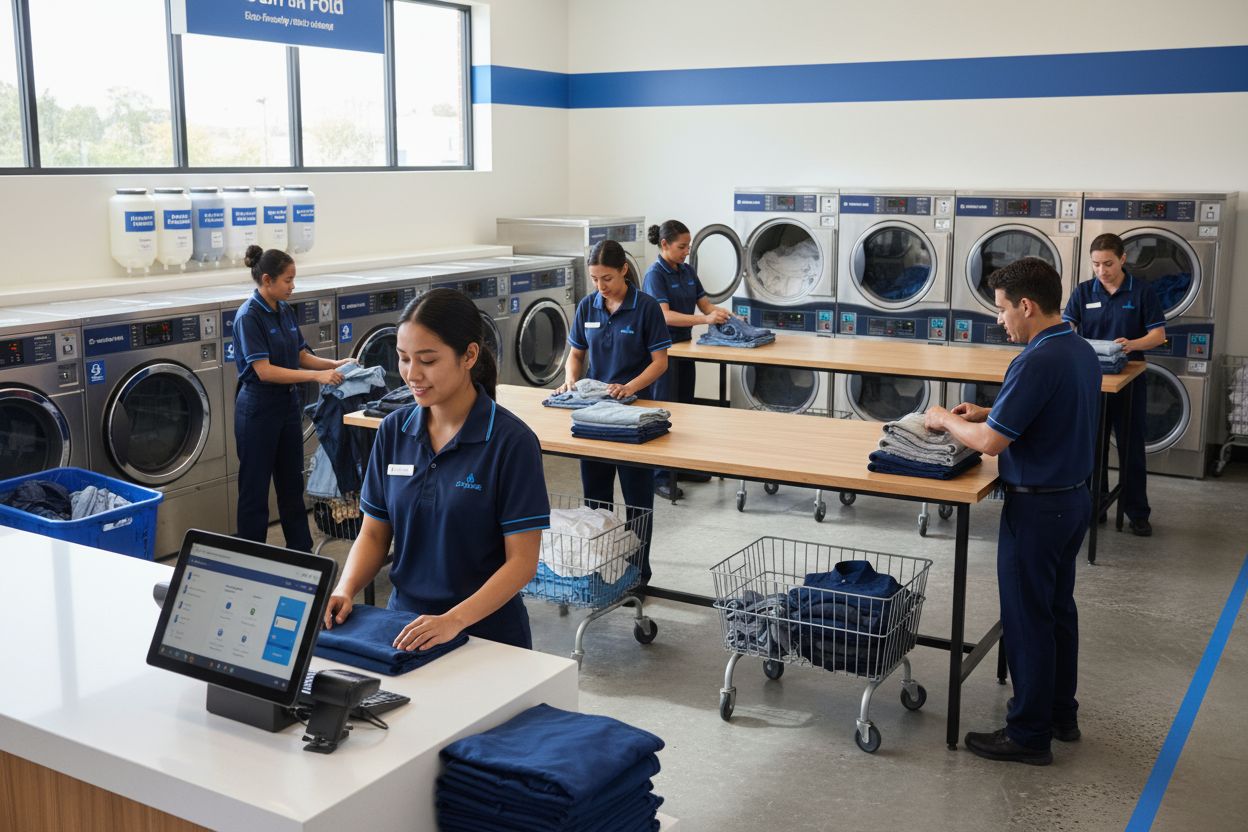
When DIY stain removal reaches its limits or your schedule simply doesn’t allow time for treating tough marks, Columbia Pike Laundry offers a straightforward solution for Arlington families. Our three-step process makes professional laundry care effortless: schedule a pickup through our app or website, we clean everything in-house with expert attention to stains and fabric care, then deliver your items back folded, pressed, and ready to wear. This eliminates the stress of tackling set-in stains or delicate fabrics that need specialized treatment.
Our in-house cleaning means we control quality from start to finish, unlike app-based services that outsource to unknown facilities. We handle tough stains that resist home remedies, accommodate special requests like fragrance-free detergents, and offer reliable 48-hour turnaround with express options when you need items back faster. Learn how Columbia Pike Laundry works and explore our convenient commercial laundry service in McLean and Reston for nearby families.
Printable stain removal guide FAQs
How soon should I treat a stain after it happens?
Treat stains within minutes by blotting gently to absorb excess liquid without rubbing it deeper into fabric. Fresh stains less than five minutes old have the highest chance of complete removal because the staining substance hasn’t bonded chemically with fibers yet. Acting fast is the single most important factor in successful stain removal, even more important than which remedy you choose.
Are Dawn and hydrogen peroxide safe for kids’ clothes?
Dawn dish soap and diluted hydrogen peroxide are effective and safe for most kids’ clothes when you test fabrics first on a hidden area. Avoid using this mixture on delicate silks, wools, or non-colorfast fabrics without spot testing, as hydrogen peroxide can lighten some dyes. For typical cotton play clothes, t-shirts, and everyday items, this combination works beautifully without harsh chemicals. Learn more about hydrogen peroxide safety on different fabrics.
Can I print stain removal cheat sheets to keep by the laundry?
Yes, printable cheat sheets from multiple practical sources are an excellent way to keep stain solutions visible and handy exactly where you need them. Laminate your printed guide to protect it from laundry room moisture and hang it inside a cabinet door or on the wall near your washing machine. These visual references help busy households react quickly and confidently without searching online during stain emergencies. Download a ready-to-use stain removal checklist for Arlington families.
What do I do if a stain doesn’t come out after home treatments?
Try repeat treatments and thorough soaking before giving up on stubborn marks. Old or set-in stains require longer soaks or professional cleaning if home remedies fail after two or three attempts. Never put the item in the dryer between treatments, as heat will set the stain permanently. For valuable or delicate items, consider professional laundry services that have specialized stain removal equipment and expertise. Read more about removing old stains that resist initial treatment.
Is it better to use cold or warm water for different stains?
Use cold water for protein-based stains like blood or milk to prevent proteins from cooking into fabric fibers permanently. Warm water works better for oily or greasy stains because heat helps dissolve fats that would otherwise resist treatment. Using the wrong temperature can actually set a stain permanently, so identifying stain type before washing is crucial. For comprehensive guidance on matching water temperature to stain type, check out this laundry stain removal guide for Arlington families.
Recommended
Free pickup, expert care, delivered back to your door.
Popular Blog Articles




Meet the Author
Daniel Logan didn’t start CPL because he loved laundry. He started it because his family was drowning in time debt, and laundry was one of the biggest weights.
Mornings were chaos with two kids under 5. Evenings felt like catch-up. And weekends? Gone to sorting socks and folding piles.
He knew his story wasn’t unique. So he built a business that gave families like his just a little bit of breathing room one load at a time.
With no laundry experience but deep tech skills, Daniel rolled up his sleeves, doing every job himself while building systems that turned it into a modern laundry service that saves customers time, simplifies their lives, and delivers reliability they can count on.
That’s where CPL began. Not from a playbook, but from pain. From one dad trying to buy back time: for himself, and for every household like his.
Free pickup, expert care, delivered back to your door.