
Red wine stains how to remove: Quick, DIY Fixes That Work
Columbia Pike Laundry offers pickup & delivery across Northern Virginia.
We've all been there. That slow-motion horror as a glass of red wine tumbles, splashing across a favorite shirt or a clean, white tablecloth. It feels like a complete disaster, but it doesn't have to be.
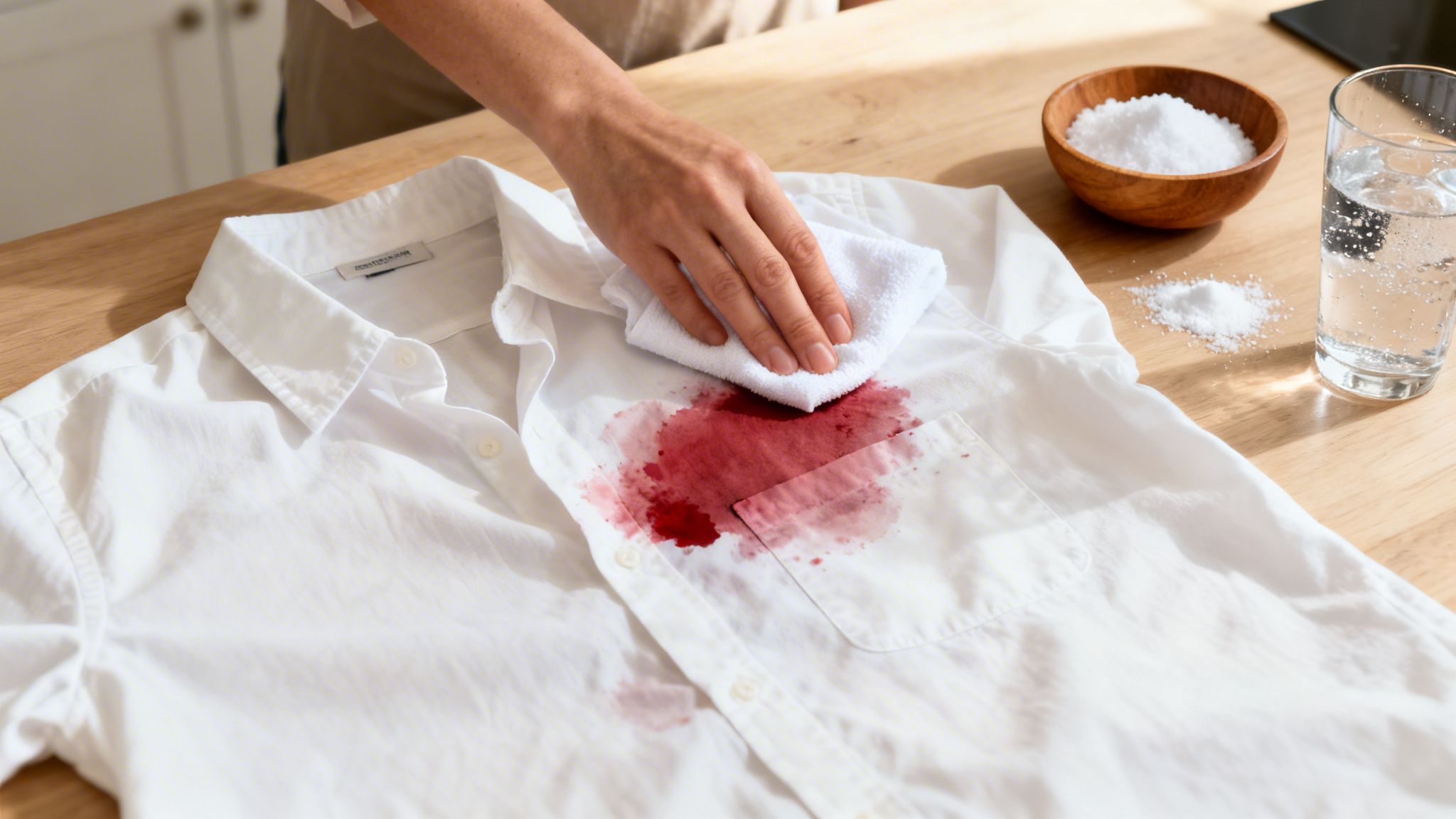
The absolute key to beating a red wine stain is speed. Forget about scrubbing later—what you do right away is what truly matters. The first and most critical move is to blot the spill with a clean, dry cloth. Your goal is to soak up as much of the wine as you can before it has a chance to settle in. Whatever you do, don't rub. Rubbing just grinds the stain deeper into the fabric's fibers, making it a much bigger problem.
The First Five Minutes: Your Immediate Action Plan for a Wine Spill
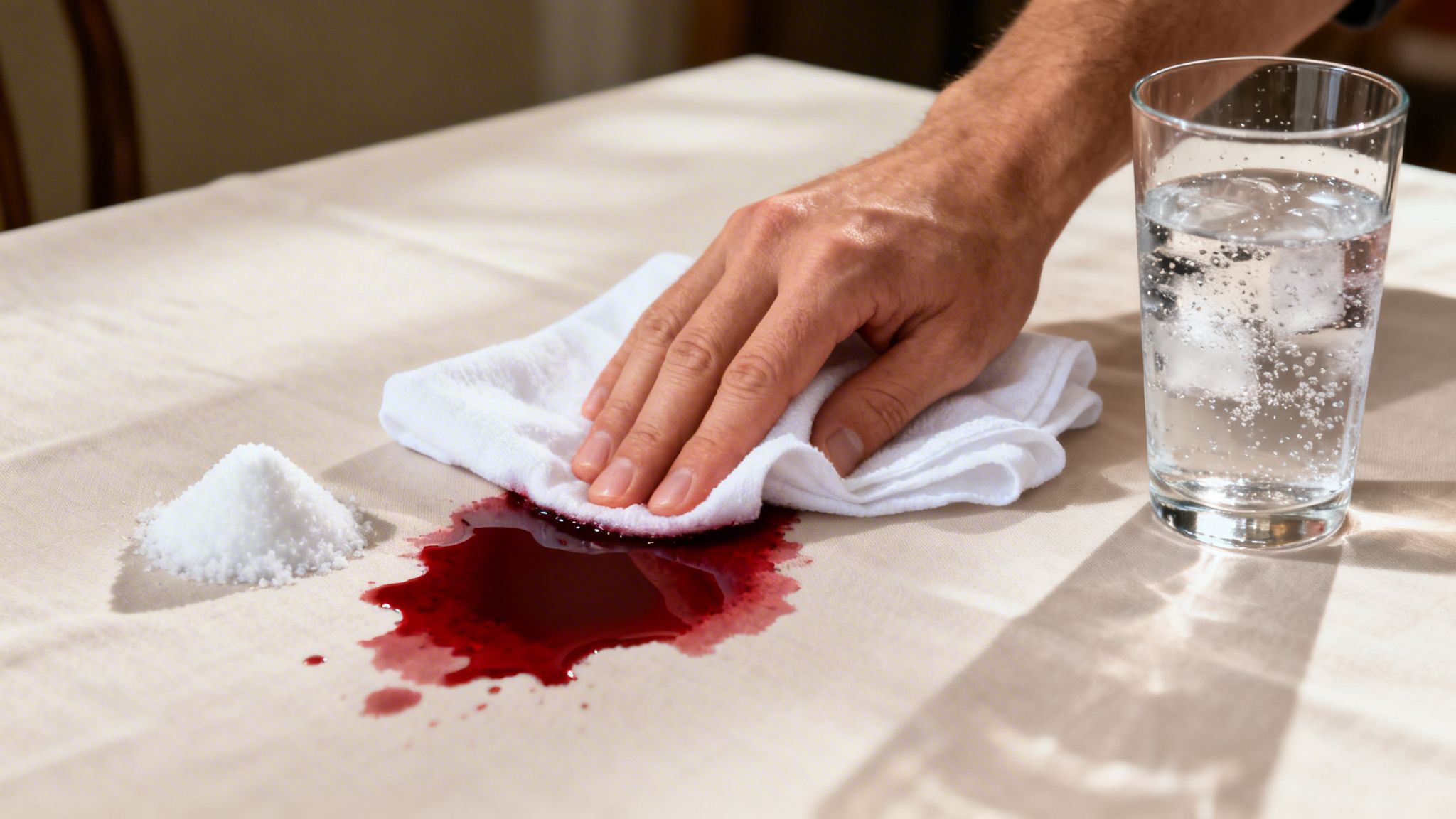
When that splash of Merlot or Cabernet hits, the clock is officially ticking. The moves you make in these first few minutes are far more important than any special cleaner you might use an hour later. Think of it as first aid—you're trying to contain the damage and stop the stain from becoming a permanent guest.
Blot, Don't Rub
I can't say this enough: resist the urge to scrub. It’s the single worst thing you can do. Scrubbing forces the wine's pigments—the tannins—to bond with the fabric, almost like a dye.
Instead, grab a clean, absorbent cloth (white is best so you can see the wine being lifted) or a few paper towels. Gently press down on the spill, dabbing and lifting. You’ll want to work from the outside edge of the stain toward the center. This keeps you from accidentally making the stain bigger. Keep dabbing with a fresh, dry part of the cloth until you're not pulling up much more wine. It’s amazing how much you can remove with this one simple step.
My #1 rule for red wine stains: Always use cold water. Heat is your enemy. Hot water or a spin in a hot dryer will essentially "cook" the wine's pigments into the fabric, setting the stain for good.
Your Kitchen First-Aid Kit
After you've blotted away the excess, it's time for some quick damage control with a few things you probably have on hand. These aren't permanent fixes, but they are fantastic at pulling even more of the wine out before you can properly wash the item.
- Salt: This is the classic trick for a reason. Pile a generous amount of plain table salt directly onto the fresh stain. The salt crystals work to draw the moisture and pigment out of the fibers. You’ll see it start to turn pink as it works. Just let it sit for a while, then scrape it off before treating the stain further.
- Club Soda: Out at a restaurant? Club soda is your best friend. The carbonation helps lift and separate the stain from the fabric. Pour a little on, let it fizz, and continue blotting gently.
- Dish Soap & White Vinegar: A quick, powerful solution can be made from one part dish soap and one part white vinegar mixed with a bit of cool water. Just dab it on with a cloth.
Mastering these immediate actions is half the battle. Once you know how to handle the initial spill, you’ll be much more successful with the final wash. If you’re looking for more pro tips on stain-fighting, our guide on how to get stains out of clothes has you covered.
DIY Stain Removal Methods for Washable Fabrics
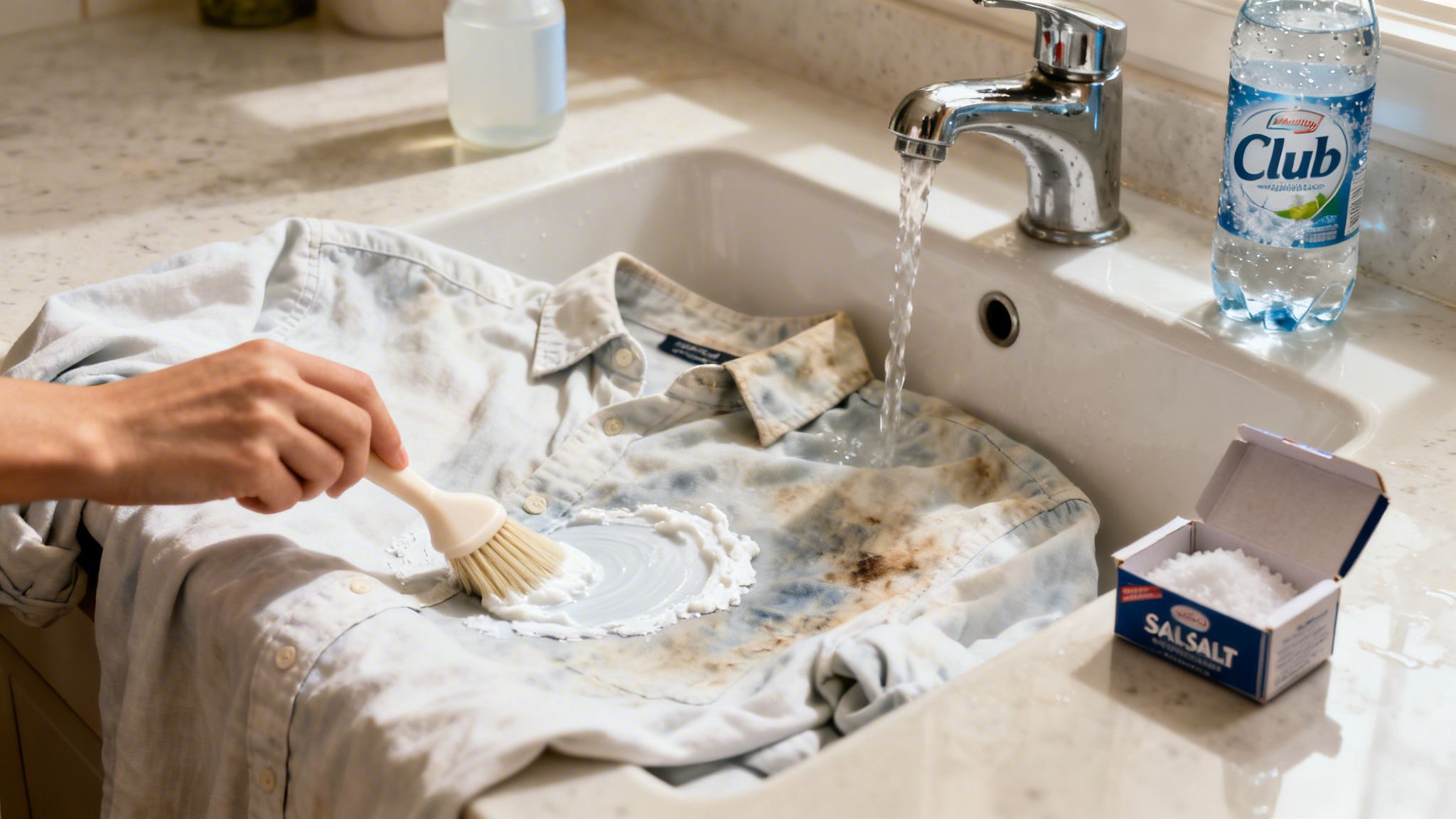
Alright, you've dealt with the immediate spill. Now it's time to go to work on what's left behind on your washable fabrics—think cotton t-shirts, sturdy denim, or that polyester tablecloth. You don't need a miracle; you just need a few common items from your kitchen pantry.
These aren't old wives' tales. The methods that work best use a little bit of basic chemistry to break down the pigments in the wine and lift them right out of the fabric fibers.
The Power of Salt and Osmosis
Remember that salt trick we used for first aid? It’s more than just a quick fix; it’s an excellent pre-treatment. By piling salt onto a fresh stain, you're kicking off a process called osmosis.
In simple terms, the dry salt crystals act like tiny magnets, pulling the liquid wine out of the fabric. The water in the wine moves from an area of high concentration (your soaked shirt) to one of low concentration (the salt). Once you see the salt turn pink, just scrape it away. You'll be amazed at how much of the wine comes with it, making the next steps much more effective.
A Fizzy Paste of Vinegar and Baking Soda
For a stain that's a little more stubborn, a paste made from equal parts white vinegar and baking soda is surprisingly powerful. This is where chemistry really starts to work in your favor.
The acid in the white vinegar gets to work breaking down the tannins—the compounds that give red wine its color and staining power. When you add baking soda, the mixture fizzes up, and that gentle bubbling action helps lift the now-loosened stain particles away from the fabric.
- How to apply it: Mix the vinegar and baking soda into a thick paste and spread it directly over the entire stain. Don't be shy with it.
- Give it time: Let the paste sit for at least 30 minutes. You’ll actually see it start to draw the color out of the fabric.
- Rinse it out: After it's done its job, gently rinse the area with cold water before you toss the item in the wash.
A word of caution: Whatever you do, check that the stain is completely gone before putting the garment in the dryer. The heat from a dryer will set that stain for good, and at that point, it’s nearly impossible to get out.
To help you choose the right approach, here's a quick look at how these common household remedies stack up.
At-Home Red Wine Stain Removal Methods
| Method | Best For | How It Works | Key Tip |
|---|---|---|---|
| Salt | Fresh, wet stains | Uses osmosis to draw liquid wine out of the fabric fibers before it can set. | Pile it on thick! The more salt, the more liquid it can absorb. |
| Vinegar & Baking Soda Paste | Slightly dried or stubborn stains | Vinegar's acid breaks down wine tannins, while the fizzing reaction lifts the stain. | Let the paste sit for at least 30 minutes to give it time to work. |
| Dish Soap & White Vinegar | General purpose pre-treatment | Dish soap acts as a surfactant to lift the stain, and vinegar helps break it down. | Use a clean, white cloth to dab the solution so you don't transfer any dye. |
Each of these methods is designed to do the heavy lifting before your washing machine takes over, giving you the best shot at a stain-free result.
Dish Soap and White Vinegar Solution
Here’s another fantastic combination you can whip up in seconds: a few drops of dish soap and a tablespoon of white vinegar mixed into about two cups of cool water. Dish soap is an incredible surfactant, which means it helps break the surface tension of the stain and lifts it right off the fibers.
When you add the acidic punch of vinegar, you get a powerful pre-treatment solution. Just dip a clean, white cloth in the mixture and gently dab the stain. Let it sit for about 15-20 minutes to penetrate the fibers, then rinse it all out thoroughly with cold water.
The whole point of these at-home methods is to dissolve and lift the stain before the main wash. Pre-treating like this drastically increases your chances of saving the garment. Once you're done, just wash the item in cold water with your usual detergent and check your work.
What About Delicate and Dry-Clean-Only Fabrics?
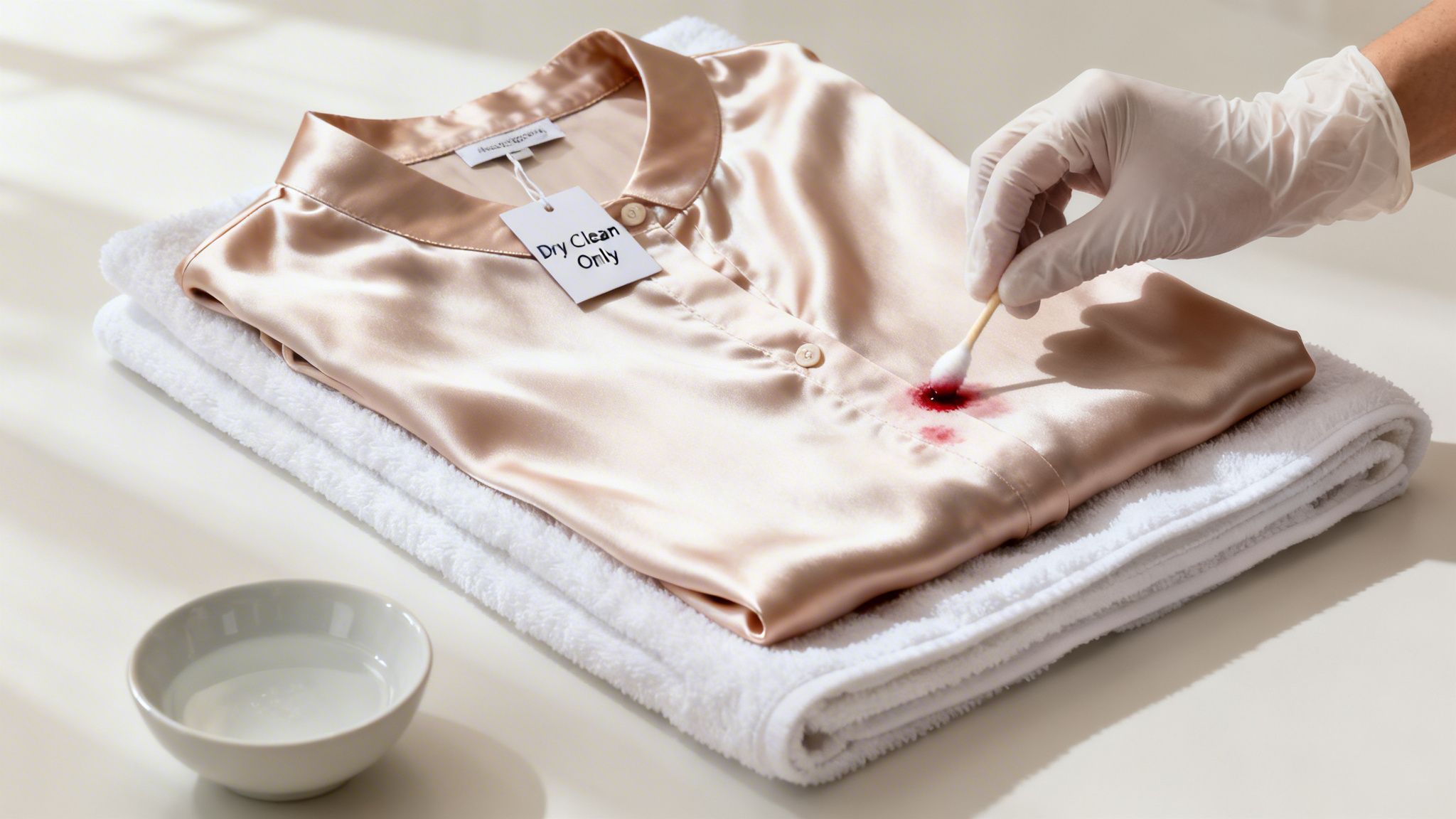
So, what happens when that splash of Cabernet lands on your favorite silk blouse, a wool sweater, or that dress with the dreaded "Dry-Clean-Only" tag? This is where you have to hit the pause button. The aggressive tactics that work on sturdy cotton can absolutely ruin these finer materials.
The biggest culprit is often just plain water. With fabrics like silk, water can leave its own mark—a faint but permanent ring that’s sometimes more noticeable than the original spill. For others, like wool or rayon, getting them wet can cause the fibers to warp, shrink, or stretch, permanently altering the garment's shape and feel.
Your First (And Only) DIY Step
Before you throw in the towel and head to the cleaners, there is one safe thing you can do immediately. Grab a clean, dry, white cloth and gently blot the stain. The key here is to absorb, not to rub.
Press the cloth onto the wine spill, working from the outside edge of the stain inward to keep it from spreading. Once you've soaked up as much of the liquid as you can, stop. Seriously, that's it. Don't add salt, club soda, or anything else. This simple blotting action can make a huge difference and will make a professional's job much easier.
The smartest thing you can do for a delicate garment is know when to step away. Protecting the fabric itself is far more important than a risky at-home stain removal attempt.
When to Call in the Pros
If the tag says "dry-clean-only," trust it. For special materials like silk, cashmere, velvet, or wool, your best bet is always a professional cleaner. It’s just not worth the risk.
Professionals have an arsenal of tools and solvents designed for exactly these situations. Here at Columbia Pike Laundry, for example, we often turn to eco-friendly GreenEarth solvents that are incredibly effective at lifting stains but gentle on delicate fibers. It's part of a bigger shift toward sustainability you see everywhere—in fact, market projections from sources like Fortune Business Insights show that by 2026, 58% of new stain products in Europe will highlight sustainability, much like our own unscented, Free & Clear options.
A good cleaner understands the unique chemistry required for different fabrics. A tricky red wine stain on silk, for instance, needs a completely different approach than one on wool. You can learn more in our dedicated guide on removing stains from silk.
Handing over your favorite clothing to a professional isn't admitting defeat—it's the smartest play to make sure you'll get to wear it again.
How to Remove Red Wine Stains from Carpet and Upholstery
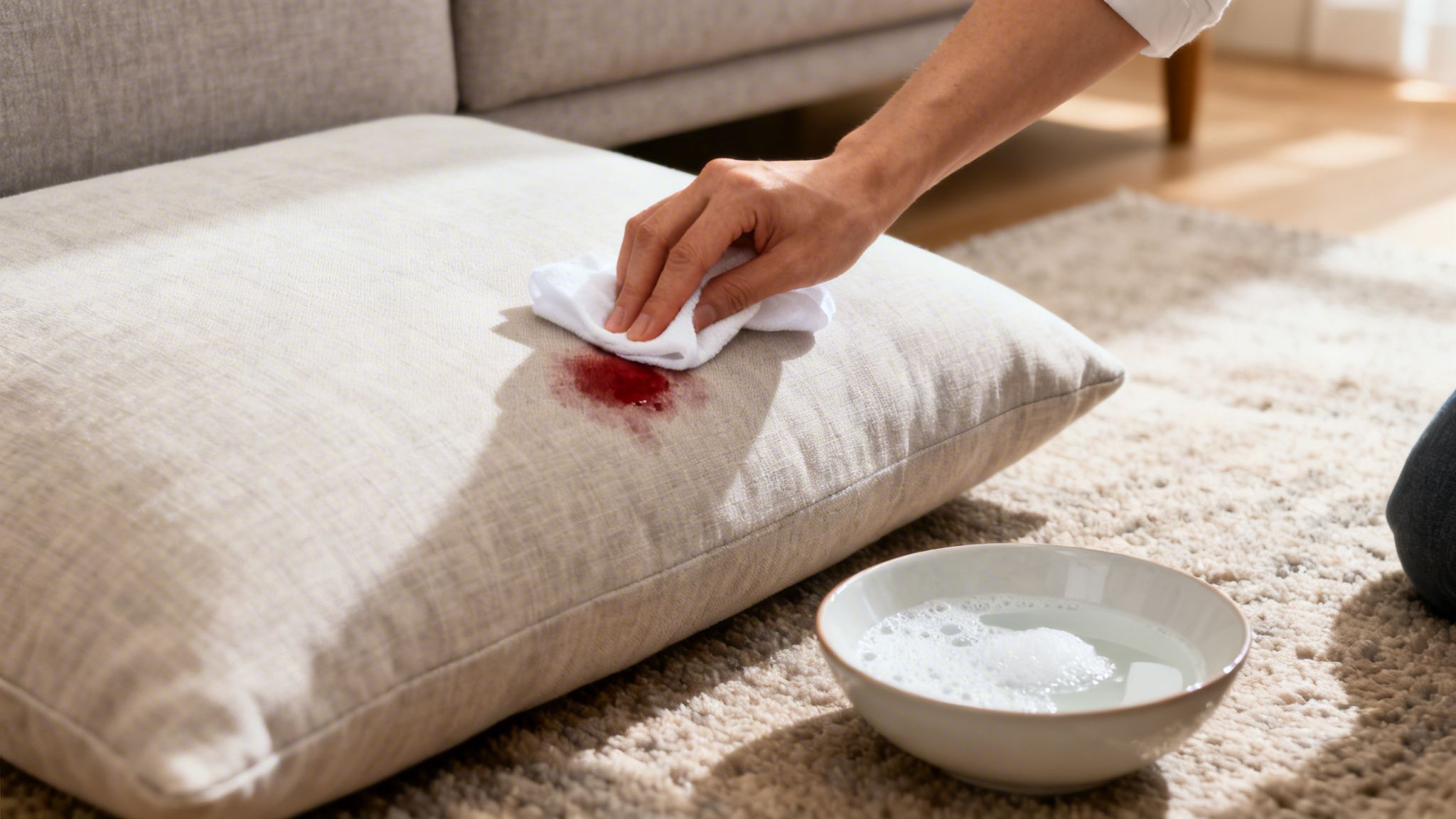
That heart-stopping moment when a glass of red wine topples over onto the carpet or your favorite armchair—we’ve all been there. The stakes feel much higher than a simple shirt stain. You can't just throw a sofa cushion in the wash, and there's a real risk of oversaturating the fabric and inviting mildew if you're not careful.
But don't panic. The key is to act quickly and blot, never rub. Once you've soaked up as much of the initial spill as you can, it’s time to move on to a gentle but effective cleaning solution you can whip up right in your kitchen. This approach is all about lifting the stain out, not driving it deeper or soaking the padding underneath.
Creating a Gentle Cleaning Solution
For most synthetic carpets and durable upholstery fabrics, a simple DIY mixture can work absolute wonders. I've found this solution is gentle enough that it won't damage the fibers, but it’s still powerful enough to break down the wine’s stubborn pigments.
Here’s the recipe I swear by:
- 1 tablespoon of clear, unscented dishwashing liquid
- 1 tablespoon of plain white vinegar
- 2 cups of cool water
Just mix these three ingredients together in a small bowl. The dish soap is your lifter—it helps pull the stain up from the fibers. The vinegar’s mild acidity gets to work breaking down the tannins in the wine, which are responsible for that deep red color.
Important Takeaway: Always, always test your cleaning solution on a small, hidden spot first. Try it on an area under a cushion or inside a closet to make sure it doesn't cause any discoloration before you tackle the main stain.
The Blotting and Rinsing Technique
With your solution ready, your technique is what makes all the difference. How you apply the cleaner and "rinse" the area is what will determine success. The number one rule? Never scrub. Scrubbing will only fray the fibers of your carpet or upholstery and permanently set the stain.
Here’s your game plan for getting that wine out:
First, dip a clean, white cloth into your dish soap and vinegar mixture. Gently dab it onto the stain, always working from the outside edges inward. This keeps the stain from spreading out even further.
Let the solution sit for about five minutes to do its work. Then, take a separate dry, white cloth and blot the area firmly. As you press down, you should see the red wine transferring from the carpet right onto your cloth. Keep repeating this with fresh sections of the cloth.
Next, you'll want to "rinse" the soap out. Dampen a new, clean cloth with just plain cool water and blot the area again. This is a crucial step because any leftover soap residue can actually attract more dirt over time.
Finally, dry the spot completely. Place a thick stack of dry paper towels over the damp area and weigh it down with something heavy, like a stack of books. This will act like a poultice, pulling every last bit of moisture (and any lingering stain) up and out of the fibers.
Knowing the basics of fabric care goes a long way. Building on your knowledge with guides like how to care for wool rugs can save you a lot of headaches when dealing with other household textiles.
When It's Time to Trust a Professional
While you can work wonders on many spills at home, there are moments when even the most determined DIY-er should throw in the towel. Knowing when to stop scrubbing and call in a pro isn't about admitting defeat—it's about saving the garment.
Sometimes, a stain just digs its heels in. If you’ve tried a couple of gentle methods and that red wine spot is still staring back at you, more aggressive scrubbing will likely just damage the fabric fibers, causing pilling or thinning. This is your cue that the stain has bonded too deeply for pantry solutions.
Knowing When to Make the Call
Certain fabrics are notoriously tricky. We see it all the time. Materials like velvet, silk, rayon, and some delicate wool blends simply don't play well with water and vigorous cleaning. Trying to treat these at home often leads to new problems, like water rings, a ruined texture, or even faded color.
If the care tag says "Dry-Clean Only," believe it. It's not just a suggestion. Those garments are made with fibers that require special solvents to get clean without being destroyed.
Your weekend is too valuable to lose in a battle with a stubborn Merlot stain. Knowing when to pass the torch to a professional is the smartest move you can make—for your clothes and your sanity.
Another major red flag is an old, set-in stain. The longer wine sits on fabric, the more it oxidizes, creating a chemical bond that’s incredibly tough to break. It’s not always impossible, but aged stains require a level of firepower that you just won’t find under your kitchen sink.
The Professional Approach
So, what kind of magic do we work when you bring a stained garment to a service like ours? It's less magic and more science.
The first, and most critical, step is identifying the fabric. What works wonders on a cotton tablecloth could completely ruin a silk blouse. You can get a deeper look into this process in our guide on what dry cleaners use to remove stains.
From there, we choose a specific commercial-grade solvent engineered for that exact type of stain and fabric. Our team has an entire arsenal of solutions that can target the stubborn tannins in red wine without harming the garment. That expert assessment is what separates a saved favorite from a laundry-day casualty.
Your Red Wine Stain Questions Answered
Even when you know the basic steps, a red wine spill can leave you with a lot of questions. We’ve seen every kind of stain disaster imaginable over the years, so we’ve put together answers to the questions we hear most often—from tackling old, set-in spots to figuring out which internet "hacks" actually work.
Can You Remove an Old Red Wine Stain That Has Set?
This is a tough one, but don't lose hope just yet. Getting an old stain out really depends on the fabric and just how long it’s been sitting there. An old stain has had time to oxidize and essentially bond itself to the fabric’s fibers, making it much harder to lift.
If you're working with a sturdy, washable fabric like cotton or a poly-blend, your first job is to rehydrate the stain.
- Give it a long soak. Submerge the stained part of the item in cold water for a few hours, or even overnight if you can. This helps wake up and loosen those dried stain particles.
- Make a treatment paste. After soaking, gently squeeze out the extra water. Mix a thick paste using a bit of a powerful laundry detergent and a splash of white vinegar.
- Apply and wait. Work that paste right into the stain with your fingers or a soft brush. Now, be patient. You need to let it sit for at least 30-60 minutes so it has time to penetrate the fibers.
- Wash and check. Launder the garment in cold water. Before it goes anywhere near a dryer, hold it up to the light and check if the stain is gone. If you still see a faint mark, it's time for round two of the treatment.
If you’re dealing with a delicate fabric or the stain simply refuses to budge, it’s probably time to call in the professionals. Our specialized soaking agents and spot treatments can often break down aged tannins that home remedies just can't handle.
Does the Salt Trick Really Work on Wine Stains?
Yes, it absolutely does! The salt trick is one of the best first-aid moves you can make for a fresh red wine spill. It’s not a complete stain removal solution by itself, but it’s fantastic for damage control right in the moment.
When you pour a mountain of salt over a fresh, wet spill, it acts as a desiccant. Through a process called osmosis, the salt crystals draw the liquid wine up and out of the fabric before the pigments can set. Think of it as a tiny, granular sponge soaking up the problem before it sinks in for good.
A Word of Caution: Whatever you do, don't rub the salt into the fabric. The abrasive crystals can easily fray or damage delicate fibers. Just pile it on, let it sit for five or ten minutes until it turns pink, and then gently scrape it all away before you start cleaning.
Should I Ever Use Hot Water on a Red Wine Stain?
Let me make this simple: never. This is probably the single most important rule to remember. Using hot water on a red wine stain is the fastest way to turn a temporary spill into a permanent part of your fabric.
Red wine is packed with tannins, which are natural pigments. Heat—whether from hot water or a clothes dryer—acts as a mordant, which is a substance that helps dye bond to fabric. When you apply heat, you're essentially "cooking" those tannins right into the fibers, setting the stain forever. You’ve just turned a simple spill into an irreversible tie-dye project.
Always, always stick with cold or cool water for all rinsing and washing until you are 100% certain the stain has vanished.
How Do You Treat a Wine Stain on a Bulky Comforter?
Spilling wine on a big, bulky comforter is a special kind of headache. You can't just run it under the sink for a quick spot treatment. Your first moves are the same: act fast, blot like crazy to absorb the excess wine, and then spot-treat the area.
A simple solution of one tablespoon of dish soap, one tablespoon of white vinegar, and about two cups of cool water works well. Dab it on, let it sit for a bit, and then blot it out with a clean cloth. The real challenge comes with rinsing. It’s incredibly difficult to rinse a thick comforter at home without leaving behind a soapy residue, which will just attract more dirt over time.
This is where a professional service can be a lifesaver. At Columbia Pike Laundry, we have industrial-sized washers that can handle bulky comforters, ensuring a deep clean that removes the stain and a thorough rinse that leaves absolutely no residue behind.
Battling a stubborn red wine stain can feel like a losing fight. Instead of spending your valuable time scrubbing, let the professionals at Columbia Pike Laundry handle it. We’ll buy back your weekend. Schedule your pickup today.
Free pickup, expert care, delivered back to your door.
Popular Blog Articles




Meet the Author
Daniel Logan didn’t start CPL because he loved laundry. He started it because his family was drowning in time debt, and laundry was one of the biggest weights.
Mornings were chaos with two kids under 5. Evenings felt like catch-up. And weekends? Gone to sorting socks and folding piles.
He knew his story wasn’t unique. So he built a business that gave families like his just a little bit of breathing room one load at a time.
With no laundry experience but deep tech skills, Daniel rolled up his sleeves, doing every job himself while building systems that turned it into a modern laundry service that saves customers time, simplifies their lives, and delivers reliability they can count on.
That’s where CPL began. Not from a playbook, but from pain. From one dad trying to buy back time: for himself, and for every household like his.
Free pickup, expert care, delivered back to your door.