
Role of Laundry for Restaurants – Ensuring Hygiene and Image
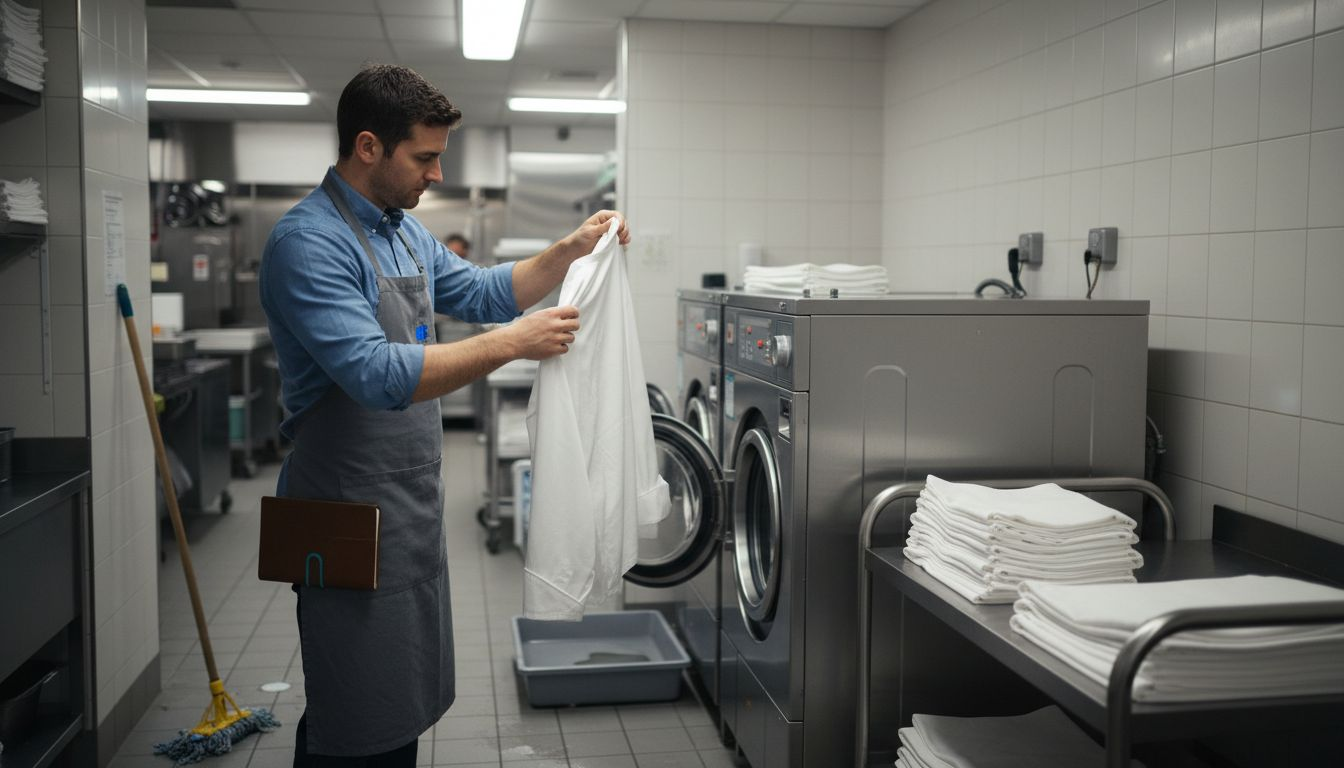
Columbia Pike Laundry offers pickup & delivery across Northern Virginia.
Uniform stains and linens that lose their fresh look can make any Arlington restaurant manager uneasy about customer impressions. Clean textiles not only reinforce your staff’s professional appearance, they also protect guests and employees from harmful microbes. With the right restaurant laundry service, you gain consistent access to hygienically clean linens and uniforms, keeping your facility in line with strict food safety standards and providing a more welcoming and trustworthy experience for every visitor.
Key Takeaways
| Point | Details |
|---|---|
| Importance of Professional Laundry | Restaurant laundry services are essential for maintaining hygiene, preventing pathogen transmission, and enhancing the establishment’s reputation. |
| Specialized Laundering Techniques | Different textile types require unique laundering approaches to address specific challenges like grease stains and bacterial contamination. |
| Compliance with Health Standards | Restaurants must adhere to stringent health regulations and maintain detailed documentation to ensure textile hygiene and safety. |
| Cost-Benefit Analysis of Laundry Practices | Evaluating in-house versus outsourced laundry operations can reveal financial optimization opportunities while ensuring compliance and textile longevity. |
Understanding the Role of Laundry Services
Restaurant laundry services are far more than a simple cleaning routine. They represent a critical operational element that directly impacts food safety, employee presentation, and overall business reputation. Preventing pathogen transmission through professional textile cleaning is fundamental to maintaining hygiene standards in food service environments.
The laundering process involves sophisticated mechanical, chemical, and thermal techniques designed to eliminate harmful microorganisms from uniforms, tablecloths, napkins, and other essential restaurant textiles. Professional laundry services use specialized protocols that go beyond standard home washing, ensuring comprehensive infection control through precise temperature management and industrial-grade sanitization methods.
Key elements of restaurant laundry services include targeted stain removal, fabric preservation, uniform maintenance, and microbial decontamination. These services protect not just the physical textiles but also the restaurant’s professional image, demonstrating a commitment to cleanliness that reassures customers about the establishment’s hygiene standards. Properly laundered textiles communicate attention to detail and professionalism in every aspect of restaurant operations.
Pro tip: Schedule routine professional textile assessments to identify potential hygiene risks and maintain consistently high cleaning standards for all restaurant linens.
Types of Restaurant Laundry Needs
Restaurant laundry requirements encompass a diverse range of textile categories that demand specialized cleaning and maintenance. Restaurant hygiene standards mandate comprehensive laundering of multiple essential textile types to prevent potential contamination and maintain professional appearance.
The primary textile categories in restaurant laundry services include work uniforms, chef coats, aprons, kitchen towels, table linens, and cleaning cloths. Each category requires unique handling techniques to ensure proper sanitization, fabric preservation, and compliance with food safety regulations. Industrial laundry processes must address specific challenges like grease stains, food residues, potential bacterial contamination, and maintaining fabric integrity through repeated washing cycles.

Restaurants must strategically manage their textile inventory and maintenance by maintaining adequate par levels. This involves having sufficient backup textiles to rotate during laundering, ensuring continuous operational readiness while preventing cross-contamination. Professional laundry services play a crucial role in helping restaurants maintain these complex textile management requirements efficiently and hygienically.
Here’s a summary of how different restaurant textiles require specialized laundering approaches:
| Textile Type | Primary Challenge | Specialized Laundering Focus |
|---|---|---|
| Work uniforms | Stain and odor removal | High-temperature and odor treatment |
| Chef coats | Grease contamination | Degreasing and fabric whitening |
| Aprons | Food residue buildup | Intense stain removal and sanitizing |
| Kitchen towels | Heavy soil, bacteria | Disinfection and durability preservation |
| Table linens | Wine and food stains | Stain lifting, color care |
| Cleaning cloths | Pathogen spread risk | High-level disinfection, separation |
Pro tip: Establish a systematic textile tracking system to monitor wear, replacement needs, and laundering frequency for each textile category in your restaurant.
How Professional Laundry Services Operate
Professional laundry services for restaurants follow a meticulously structured operational process that goes far beyond standard washing techniques. Strict hygiene protocols are implemented to ensure every textile meets rigorous health and safety standards, protecting both restaurant staff and customers from potential contamination risks.
The operational workflow involves several critical stages: comprehensive textile sorting, specialized cleaning techniques, precise temperature management, and thorough quality inspection. Textile sorting is performed by fabric type, soil level, and potential contamination risk, allowing for customized washing approaches. Different textiles require specific detergents, water temperatures, and washing cycles to effectively remove stains, eliminate bacteria, and preserve fabric integrity. Professional laundry services utilize industrial-grade equipment capable of maintaining consistent sanitization standards that home or commercial washers cannot achieve.
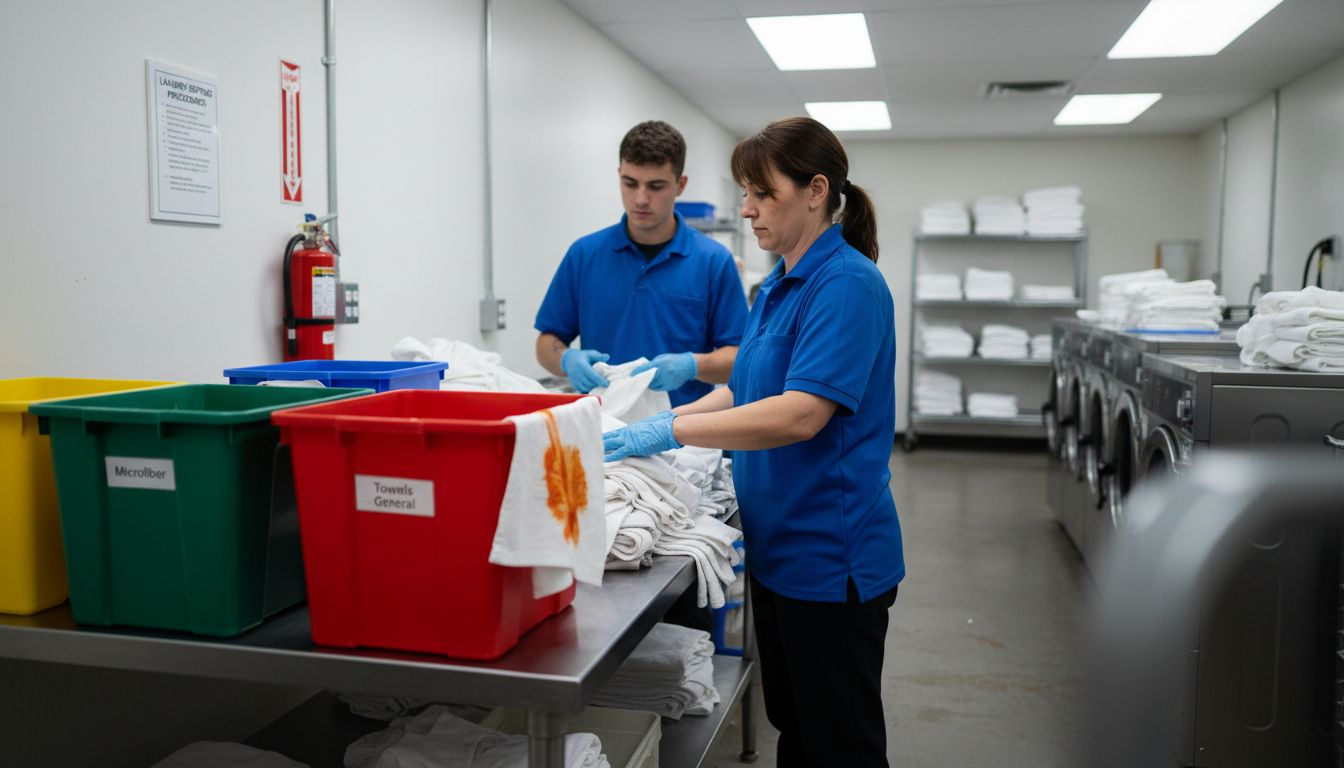
Cross-contamination prevention is a fundamental aspect of professional laundry operations. Staff members wear personal protective equipment (PPE) during textile handling, and strict protocols are maintained to prevent bacterial transfer between different textile categories. Advanced laundering techniques include high-temperature washing, specialized sanitization chemicals, and rigorous drying processes that eliminate potential microbiological risks. Regular equipment maintenance and calibration ensure that every washing cycle meets the highest standards of cleanliness and safety required in food service environments.
Pro tip: Implement a color-coded sorting system for different textile types to streamline your laundry workflow and minimize cross-contamination risks.
Legal and Health Standards for Restaurant Laundry
Restaurant laundry operations are governed by comprehensive legal and health standards designed to protect public safety and prevent foodborne illness transmission. Infection control guidelines mandate stringent protocols that restaurants must follow to ensure textile hygiene and minimize potential health risks.
The legal framework for restaurant laundry encompasses multiple critical components. Pathogen inactivation requires specific temperature controls and chemical disinfection processes that eliminate harmful microorganisms. Restaurants must maintain detailed documentation of washing procedures, demonstrating compliance with local health department regulations. This includes maintaining precise records of washing temperatures, chemical treatments, and sanitization processes to prove that textiles meet required hygiene standards.
Regulatory standards mandate strict separation protocols between soiled and clean textiles, preventing cross-contamination. Recommended laundry practices require restaurants to implement systematic handling procedures that minimize bacterial transfer. These standards typically specify requirements for personal protective equipment, textile storage, transportation, and processing methods. Health inspectors can conduct surprise audits to verify compliance, with potential penalties for establishments failing to meet established hygiene and safety protocols.
Pro tip: Develop a comprehensive laundry compliance documentation system that tracks every step of your textile cleaning process to simplify health department inspections.
Financial Impact and Cost Considerations
Restaurant laundry services represent a significant operational expense that extends far beyond simple cleaning costs. Cost management strategies demonstrate that balanced investment in quality laundering can ultimately reduce long-term financial risks associated with poor textile maintenance.
The financial implications of restaurant laundry encompass multiple complex factors. Operational expenses include direct costs such as labor, equipment maintenance, detergents, and utility consumption, as well as indirect costs like textile replacement and potential health code violation penalties. Restaurants must strategically balance immediate expenses with long-term savings by investing in efficient laundering processes that minimize textile degradation and maintain high hygiene standards.
Efficient laundry management involves optimizing inventory levels, selecting energy-efficient equipment, and implementing strategic textile rotation practices. Restaurants can reduce overall expenses by maintaining appropriate par levels of linens and uniforms, which prevents overinvestment in excessive textile stock while ensuring continuous operational readiness. Calculating the total cost of ownership for laundry services includes evaluating equipment efficiency, maintenance requirements, energy consumption, and potential long-term savings from reduced textile replacement.
Below is a comparison of in-house versus outsourced restaurant laundry operations:
| Aspect | In-House Laundry | Outsourced Service |
|---|---|---|
| Equipment Cost | High initial investment | Service fee, no equipment purchase |
| Labor Requirements | Dedicated staff and time needed | Minimal staff involvement |
| Infection Control | Relies on staff training | Strict industry protocols enforced |
| Textile Longevity | Potential faster wear | Professional fabric care extends life |
| Compliance Burden | Restaurant manages documentation | Provider supplies compliance records |
Pro tip: Conduct a comprehensive cost-benefit analysis of your current laundry practices, comparing in-house laundering expenses against professional laundry service rates to identify potential financial optimization opportunities.
Risks and Common Mistakes in Laundry Management
Restaurant laundry management involves complex processes where seemingly minor oversights can lead to significant operational risks. Laundry procedure errors can compromise textile hygiene, potentially exposing restaurants to health code violations, customer dissatisfaction, and substantial financial liabilities.
Common mistakes in restaurant laundry management include improper temperature control, inadequate sanitization protocols, and inconsistent textile handling. Temperature management is critical, as insufficient heat fails to eliminate harmful microorganisms effectively. Restaurants frequently underestimate the importance of using precise water temperatures and appropriate chemical treatments that completely neutralize potential pathogens. Additionally, cross-contamination risks emerge when establishments do not properly segregate soiled and clean textiles or fail to maintain rigorous cleaning equipment maintenance schedules.
Operational risks extend beyond immediate hygiene concerns. Inconsistent laundering practices can accelerate textile degradation, leading to increased replacement costs and compromised uniform appearance. Restaurants must develop systematic approaches that balance thorough cleaning requirements with fabric preservation. This involves understanding specific textile compositions, selecting appropriate detergents, implementing strategic washing techniques, and establishing comprehensive quality control mechanisms that prevent potential health risks and maintain professional image standards.
Pro tip: Develop a detailed laundry management checklist that documents every step of your textile cleaning process, ensuring consistent adherence to hygiene and quality standards.
Elevate Your Restaurant’s Hygiene and Professional Image with Expert Laundry Solutions
Maintaining impeccable textile hygiene is essential to prevent contamination risks and ensure your restaurant’s professional appearance reflects your commitment to cleanliness. The challenges of managing stain removal, precise temperature control, and preventing cross-contamination often require specialized knowledge and equipment. By entrusting your laundering needs to a reliable partner, you eliminate the worries of inconsistent sanitization and fabric wear. Columbia Pike Laundry offers tailored Commercial Solutions designed specifically for businesses like yours.
Experience the benefits of professional in-house cleaning with transparent processes and dependable turnaround times. With options for convenient pickup and delivery, your kitchen uniforms, aprons, and linens will return ready to impress customers and satisfy health standards. Take control of your textile hygiene and operational efficiency today by visiting Columbia Pike Laundry to explore how our services provide true Laundry Relief. Contact us now to protect your restaurant’s reputation and gain peace of mind with expert laundry care.
Frequently Asked Questions
What is the importance of laundry services in restaurants?
Laundry services are critical for maintaining hygiene, preventing pathogen transmission, and ensuring employee presentation in restaurants. They help uphold food safety standards and enhance the overall business reputation.
How do professional laundry services ensure hygiene in restaurant textiles?
Professional laundry services use advanced cleaning techniques, including high-temperature washing, specialized sanitizing chemicals, and meticulous sorting to eliminate harmful microorganisms and maintain fabric integrity, ensuring compliance with health and safety regulations.
What types of textiles require specialized laundering in a restaurant?
Restaurants typically have various textiles that require specialized laundering, including work uniforms, chef coats, aprons, kitchen towels, table linens, and cleaning cloths. Each type has unique requirements based on the challenges posed by food residues and bacteria.
What are the common mistakes restaurants make in laundry management?
Common mistakes include improper temperature control, inadequate sanitization, and failure to segregate soiled and clean textiles. These can lead to health code violations, increased replacement costs, and compromised hygiene standards.
Recommended
Free pickup, expert care, delivered back to your door.
Popular Blog Articles



Meet the Author
Daniel Logan didn’t start CPL because he loved laundry. He started it because his family was drowning in time debt, and laundry was one of the biggest weights.
Mornings were chaos with two kids under 5. Evenings felt like catch-up. And weekends? Gone to sorting socks and folding piles.
He knew his story wasn’t unique. So he built a business that gave families like his just a little bit of breathing room one load at a time.
With no laundry experience but deep tech skills, Daniel rolled up his sleeves, doing every job himself while building systems that turned it into a modern laundry service that saves customers time, simplifies their lives, and delivers reliability they can count on.
That’s where CPL began. Not from a playbook, but from pain. From one dad trying to buy back time: for himself, and for every household like his.
Free pickup, expert care, delivered back to your door.