
Rug Cleaning Drop Off: A Pro's Guide to Perfect Results
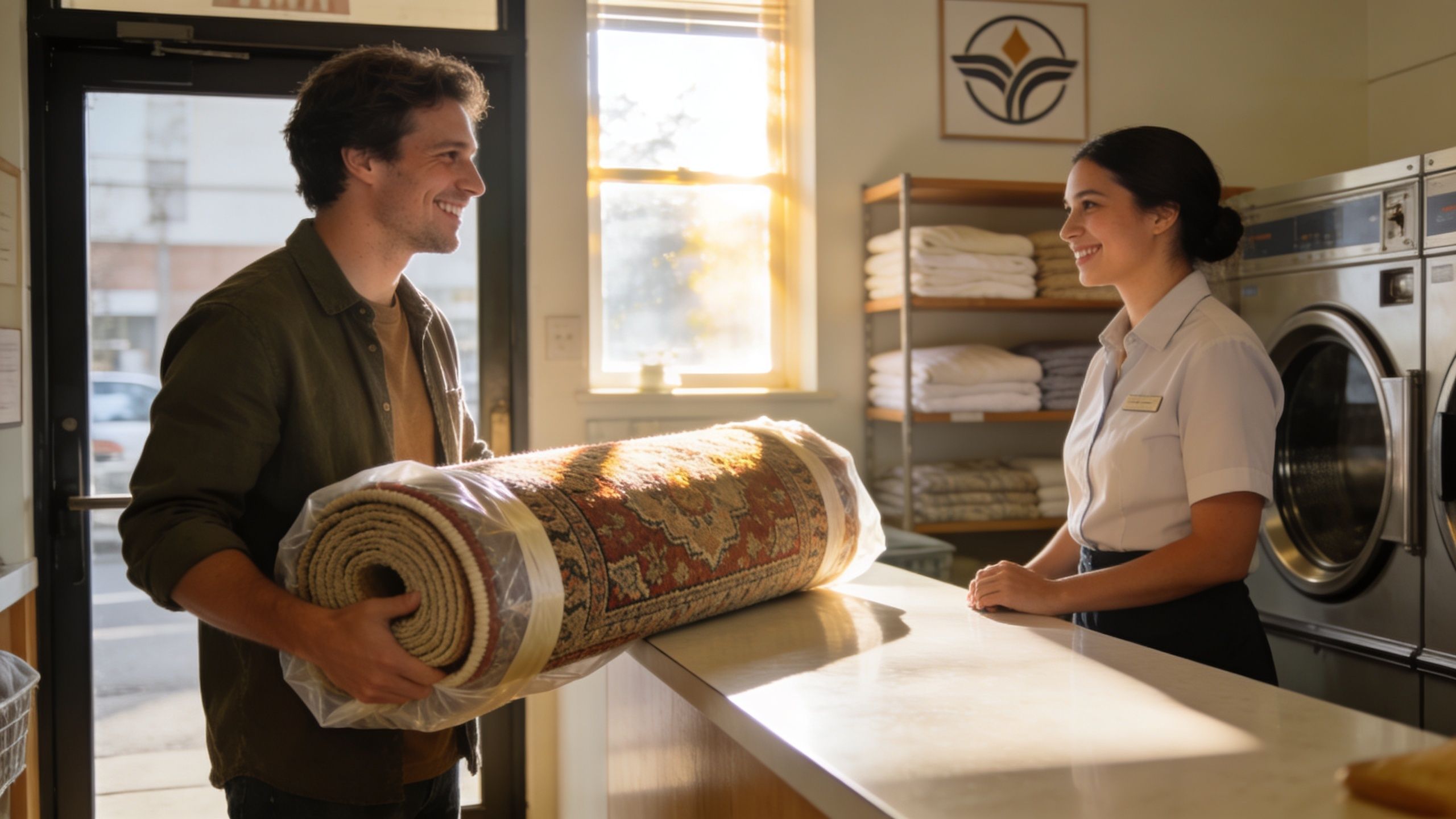
Columbia Pike Laundry offers pickup & delivery across Northern Virginia.
You’ve probably got a rug folded over a hallway bench, draped in the trunk, or still sitting under the dining table because you’re not quite sure what happens after rug cleaning drop off. That hesitation makes sense. A rug isn’t just another household item. It catches muddy shoes, pet naps, snack spills, and years of foot traffic, and some rugs are valuable enough that one bad cleaning choice can shorten their life.
The good news is that rug cleaning drop off can work very well when you handle the prep properly and choose the right service for the rug you own. Most problems don’t start in the wash. They start before the rug ever leaves the house. A rushed roll, a damp trip in bad weather, or missing stain details can create headaches that a cleaner has to untangle later.
That’s the part many places skip. The smartest move is a quick bit of preparation before you load the rug in the car. Those few minutes can help prevent fiber stress, reduce confusion at check-in, and give the cleaner a much better shot at getting the result you want.
Deciding Between Rug Drop-Off and Professional Pickup
You’re standing in the hallway with a rolled rug at your feet, trying to decide whether it goes in the trunk or stays put for a scheduled service. That choice matters more than many customers realize. The wrong call can add stress to the job before the cleaner ever sees the rug.
When drop-off makes sense
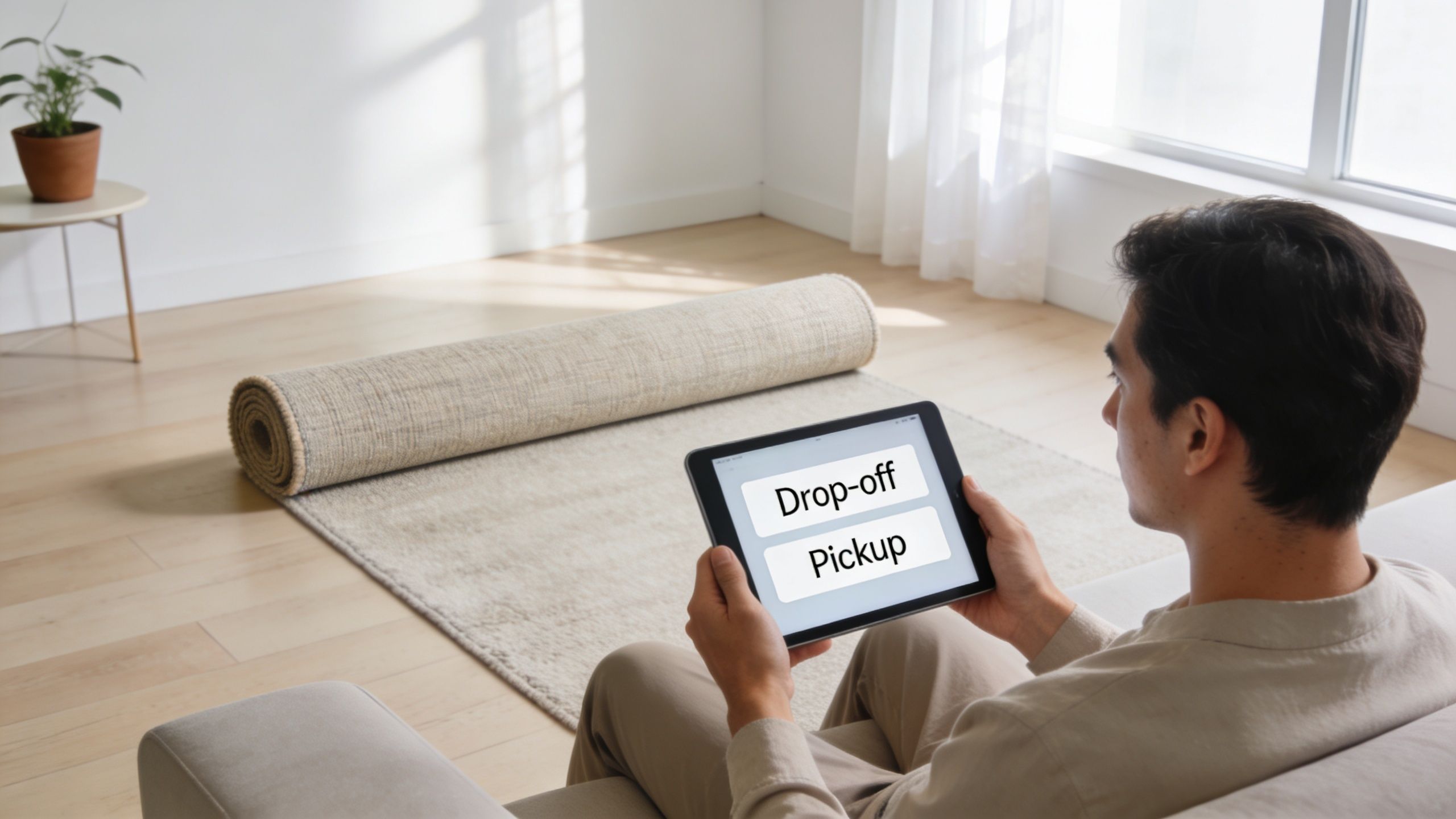
Drop-off works well for rugs you can move without bending, dragging, or forcing them through doorways. A small area rug, a synthetic runner, or a newer rug with stable backing usually fits that category. If you already have errands planned, dropping it off yourself can save time and give you more control over the schedule.
It also lets you do one thing many customers skip. You can inspect the rug before it leaves home, note any stains or wear, and hand that information to the cleaner in person. That small bit of prep often leads to a better result because the team starts with clearer information about what happened on the rug and where to focus.
Drop-off is the better value only if the trip is low-risk. If loading the rug means folding it sharply, tying it too tight, or squeezing it into a damp trunk, the savings disappear fast.
When pickup is worth it
Pickup is the safer choice for rugs that are heavy, oversized, delicate, or awkward to handle. That includes wool rugs with fringe, older rugs with edge wear, and sentimental pieces that you would hate to damage in the parking lot before cleaning even starts.
A simple rule works well here. If you need help lifting it, pickup is usually the better option.
Professional crews know how to roll, carry, and load rugs without putting extra stress on the edges and foundation. That matters with larger pieces, because transport damage often starts at home, not in the wash. Bent corners, cracked backing, fringe tears, and moisture exposure during the drive are all common problems I’ve seen from well-meaning self-transport.
For a look at how home service fits into a busy schedule, this guide to Birmingham area rug cleaning shows why many households choose pickup for larger or harder-to-handle rugs.
A practical way to choose
Ask three questions before you decide:
| Best fit | Drop-off | Pickup |
|---|---|---|
| Small, manageable rug | Strong choice | Optional |
| Large or heavy rug | Less ideal | Better choice |
| Tight schedule | Works if you’re nearby | Often easiest |
| Delicate or heirloom piece | Only if transported carefully | Safer option |
| You want to buy back time | Some savings, more effort | More relief |
Can you roll it properly without folding it? Can you carry it without scraping walls, stairs, or corners? Can you keep it dry and secure during the trip? If the answer to any of those is no, pickup usually protects the rug better.
For households that want less lifting and one less errand, local pickup and delivery can be the smarter call.
Your 5-Minute Pre-Drop-Off Rug Inspection
Before you roll anything up, give the rug a short inspection. Not a deep technical assessment. Just a clean, practical look that helps you spot issues before the cleaner does. This step protects you, and it helps the service team start with better information.
Check the basics first
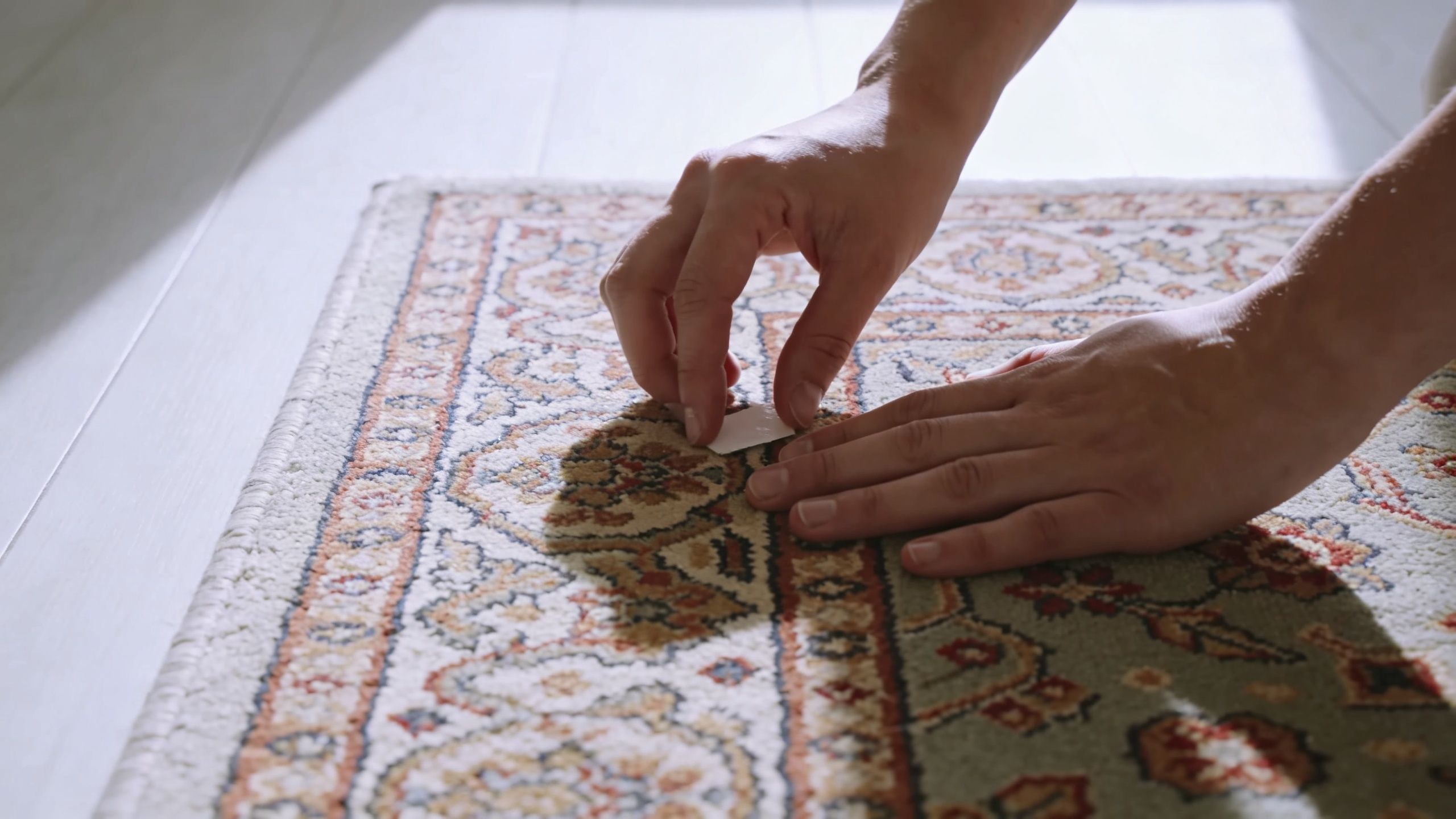
Start with the care tag if the rug has one. Look for fiber clues such as wool, silk, synthetic blends, or specialty backing. If there’s no tag, don’t guess. Just make a note that the tag is missing. That alone tells the cleaner to inspect more carefully.
Then take a few before photos in good light. Get one full shot and a few close-ups of any stains, fringe wear, curling corners, or existing damage. These photos aren’t about preparing for a dispute. They’re a smart way to remember the rug’s condition before it leaves the house.
A few details to look for:
- Fringe condition. Is it tangled, thinning, or partly detached?
- Corners and edges. Do they curl, crack, or feel brittle?
- Backing issues. Is there flaking, stiffness, or a musty smell?
- Color concerns. Do any areas look sun-faded or uneven?
- Pet spots or odor zones. Mark where they are, even if they seem obvious.
Measure it loosely, not perfectly
You don’t need surveyor-level precision. A rough length and width are enough to help you anticipate how the rug may be classified. Many household textile services price bulky items by piece or by size rather than by weight, so having a basic measurement keeps the intake process smoother.
If you can lift the rug safely, notice whether it feels unusually heavy for its size. That can matter if it has trapped soil, moisture, or a dense backing. Don’t try to force a weigh-in at home. Just note whether it’s light, average, or much heavier than expected.
Bring photos and notes on your phone if that’s easiest. A quick record beats relying on memory at the counter.
What not to do before drop-off
People often try to “help” the cleaner by scrubbing a spot or spraying a store-bought solution right before bringing the rug in. That can make identification harder and may set some stains deeper into the fibers.
Skip these last-minute moves:
- Don’t saturate the rug with water or spot spray.
- Don’t apply tape to mark stained areas.
- Don’t shake it aggressively if the foundation already seems weak.
- Don’t fold it tightly just to make it fit in the car.
A calm inspection takes about five minutes. It gives you a clearer picture of what you’re handing over, and it gives the cleaning team a better starting line.
How to Document Stains for the Best Cleaning Results
Stains tell a story. The cleaner’s job is easier when you share that story before the rug goes into treatment.
A lot of customers hand over a rug and say, “There’s a spot on one side.” That’s understandable, but it leaves out the information that often matters most. Was it coffee with cream, a pet accident, candle wax, or an old mystery mark that’s already been scrubbed three times? Those details change the treatment plan.
Give the spot a backstory
Professional cleaners act like fabric detectives. In expert drop-off rug cleaning, the process starts with a pre-inspection under special light to identify fiber type and stains, and technicians test small areas to prevent dye bleeding before moving into a multi-step immersion process that can achieve up to 98 percent soil removal, according to ProCare of Nashville's rug cleaning explanation.
That level of care works best when the customer adds context the machine can’t see. A dark mark may look similar on the surface, but a food spill, cosmetic product, and pet stain don’t behave the same way.
Use a simple note in your phone with three points:
- What it is if you know. Coffee, juice, pet urine, grease, makeup.
- How old it is in rough terms. Same day, a week old, or “has been there a while.”
- What you already tried. Blotting with water, dish soap, a carpet spray, or nothing.
A small note can prevent a big mistake
Say you spilled red wine months ago and then used a grocery-store stain remover. That’s useful to mention. If a pet had repeated accidents in one corner, say that too. Surface spotting and odor contamination aren’t always the same problem.
A sticky note on the backing can work if it’s attached gently and removed easily, but a phone note is usually cleaner and safer. Some customers even take close-up photos and label them by room side, such as “entry edge” or “window corner.”
The best stain notes are short, plain, and honest. You’re not expected to diagnose the problem. You’re just giving the cleaner clues.
If you’re dealing with clothing and household stain issues regularly, Columbia Pike Laundry's stain guide is a helpful general reference for understanding why stain type and timing matter so much.
Safely Rolling and Transporting Your Rug for Drop Off
The trip to the cleaner should be uneventful. That’s the goal. No creases, no dragging, no wet corner from the parking lot.
Roll it, don’t fold it
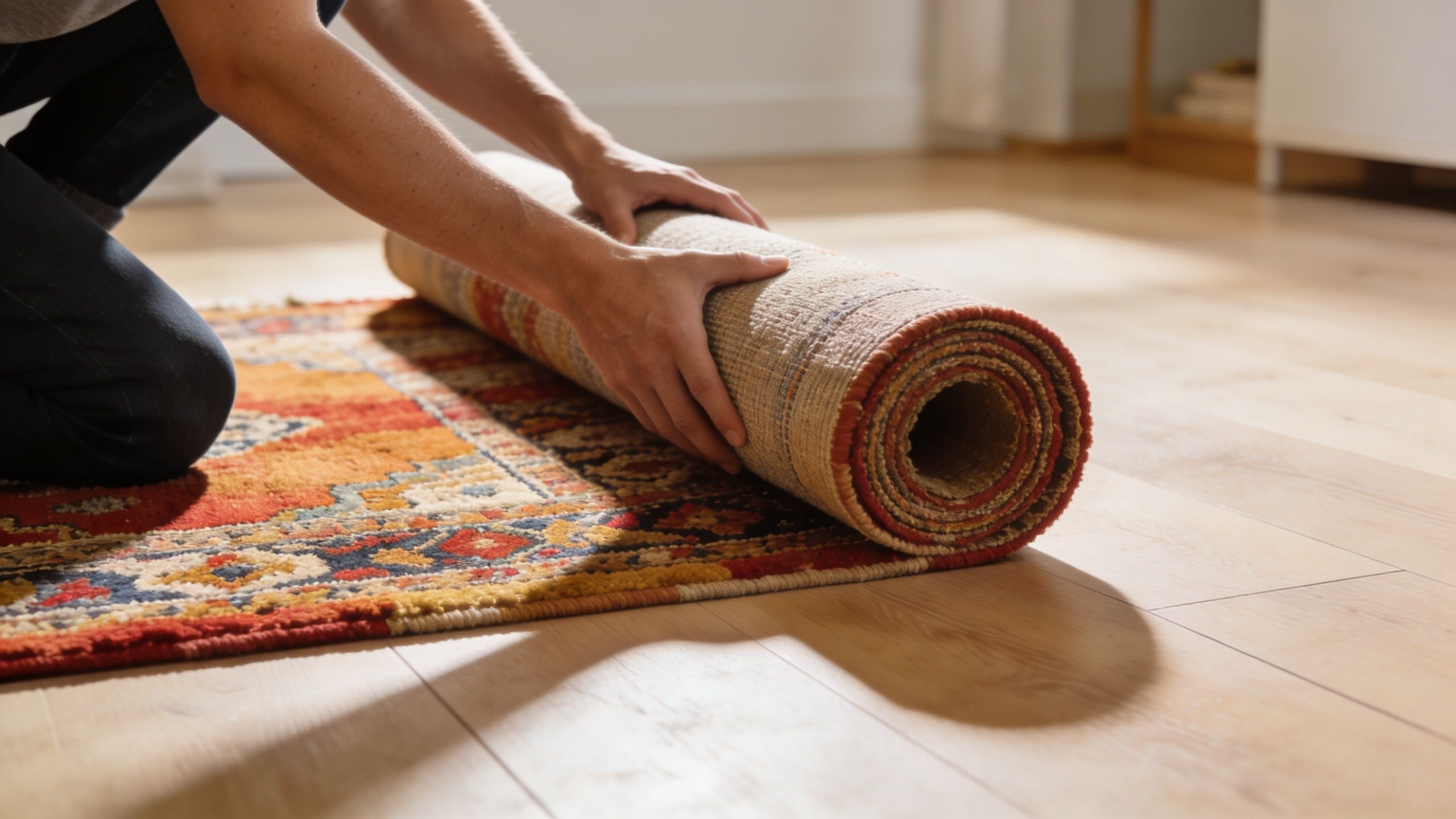
Most rugs should be rolled rather than folded. Folding creates stress lines and can put too much pressure on the backing or foundation, especially if the rug has age, stiffness, or a dense pile.
As a practical rule, roll the rug with the pile facing inward when possible. That helps protect the visible face of the rug during transport. It also reduces the chance of scuffing the fibers against the car interior, driveway, or doorway on the way in.
A simple method works well:
- Clear the floor so the rug stays clean while you handle it.
- Smooth the surface with your hands so debris doesn’t get trapped inside the roll.
- Start at the short end.
- Roll slowly and evenly, keeping the edges lined up instead of tightening one side more than the other.
Secure it gently
Don’t wrap packing tape around the rug. Tape can catch fibers, leave residue, or pull at the finish on delicate materials.
Use soft ties instead. Cotton twill tape, fabric strips, or clean cord with light tension all work better than anything adhesive. You only need enough hold to keep the rug from unfurling in the trunk.
If a tie leaves a dent before the rug even leaves your house, it’s too tight.
For rainy weather or a dirty cargo area, place the rolled rug inside a clean plastic cover or large contractor bag without sealing in moisture. If the rug is already damp from a spill or weather exposure, tell the cleaner right away rather than wrapping it tightly and hoping for the best.
A few transport mistakes to avoid
Some of the most preventable problems happen in the parking lot or at the curb.
- Dragging the rug across concrete can rough up edges and fringe.
- Standing it in a wet trunk can transfer moisture to one end.
- Tying it to a roof rack uncovered exposes it to weather and road grime.
- Cramming it into a too-small back seat can create hard bends that take time to relax.
If the rug resists rolling, feels unusually rigid, or seems too heavy for one person, that’s often a sign to stop and arrange pickup instead of forcing the move.
What to Expect at the Columbia Pike Laundry Counter
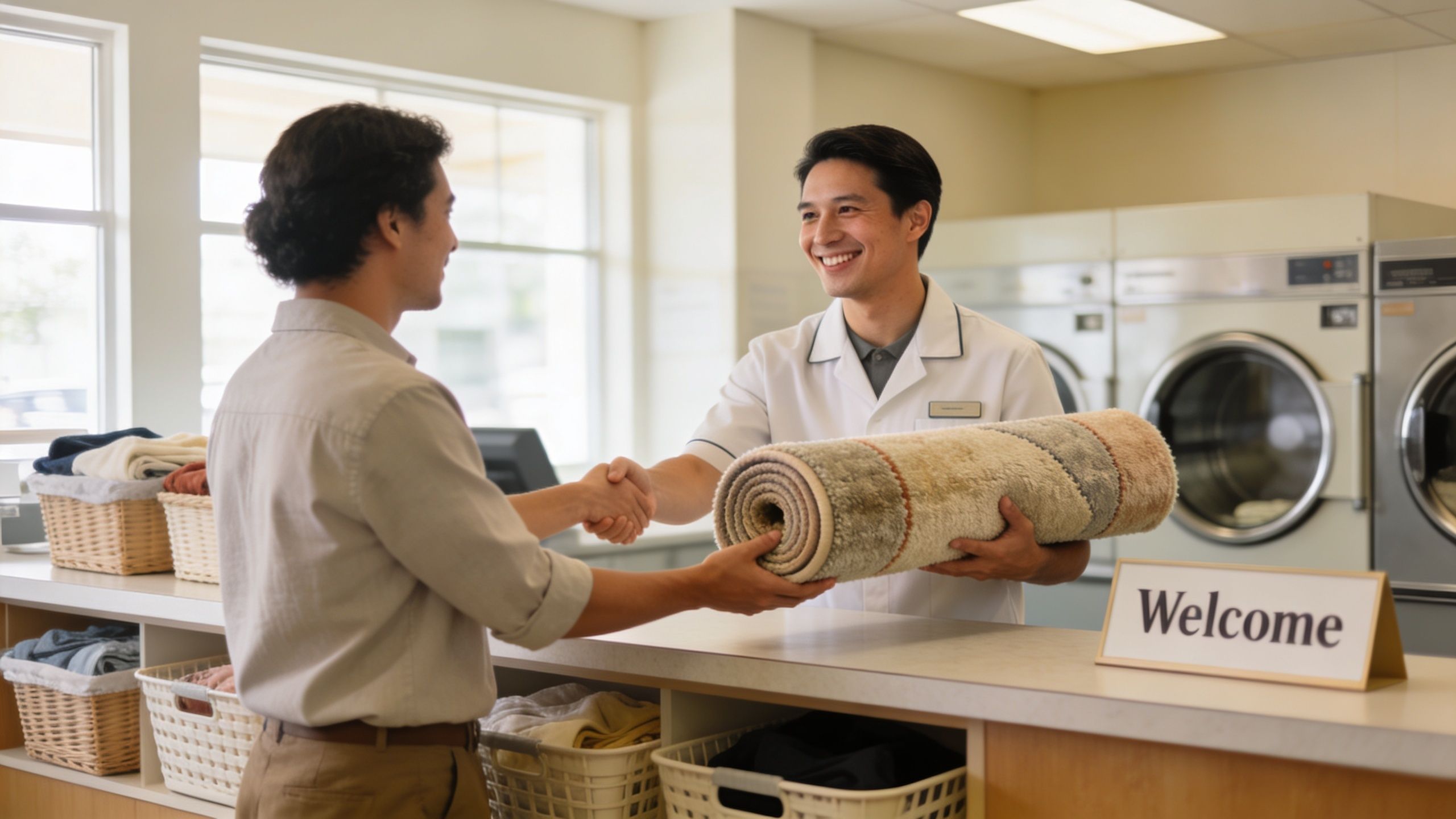
First-time drop-off customers usually want the same thing. A clear handoff, straightforward answers, and no surprises. That’s exactly how the counter experience should feel.
What happens when you walk in
At the counter, staff will typically confirm your contact details, ask about any stains or problem areas, and look over the rug’s condition as part of intake. Your photos and notes are especially helpful during this step. If you’ve documented a pet area, fringe issue, or old spill, the handoff goes much more smoothly.
You should also expect a basic conversation about rug type and cleaning route. Not every rug should be treated the same way. A durable synthetic rug may be a good candidate for one process, while silk, leather, suede, or certain handmade rugs may need specialty handling.
For synthetic rugs, professional hot water extraction can be highly effective when cleaners pre-treat stains, use water heated to over 136°F, perform multiple extraction passes, and finish with an acid rinse to reduce sticky buildup and rapid re-soiling, according to Alexander's Rug Care on poor rug cleaning consequences. That’s a good example of why intake matters. The cleaner needs to know what they’re looking at before choosing the method.
Questions worth asking at the counter
A good counter conversation doesn’t need to be long, but it should answer the practical basics.
Here are smart questions to ask:
- How will this rug be cleaned if the fiber or construction suggests different methods?
- Are there any visible concerns with fringe, backing, or previous stain treatment?
- Is this handled in-house or by a specialty partner if it’s leather, suede, silk, or another delicate material?
- What should I expect for timing based on the rug type?
That last question matters. Standard garment dry cleaning may follow a typical turnaround pattern, but specialty rugs can take longer because they may require separate handling or outside specialist care. If you need confirmation on a specific rug timeline, the safest answer is to have a team member verify it rather than guessing at the counter.
Pricing and transparency
Pricing for rugs is usually based on the item itself, often by size or category rather than by weight alone. That’s different from everyday wash-and-fold. It’s one reason your quick home measurements are useful.
You don’t need a technical education to have a good drop-off experience. You just need a clear intake, honest notes, and a service team willing to tell you when a rug needs a more specialized path.
A trustworthy counter experience feels calm. Nobody rushes you past the questions that actually matter.
For local customers, the in-store experience is designed to be straightforward. The shop is located at 2602 Columbia Pike in Arlington, with hours Monday to Friday 8am to 8pm, and weekends 10am to 6pm. Those details make it easier to fit a rug drop-off into a normal week instead of turning it into a whole project.
Your Local Partner for Laundry Relief in Arlington
Household chores have a way of piling up all at once. The rug needs cleaning, the laundry basket is full, and one more errand can feel like too much. That’s why the best local service isn’t just about cleaning an item correctly. It’s about making life feel more manageable.
Columbia Pike Laundry serves Arlington with the kind of steady, careful help busy families and working professionals need. The same mindset that matters for a rug matters for everything else too. Good intake, clear communication, and respect for the things people trust you to handle.
That approach carries across every laundry service. Some customers need wash and fold relief. Some need dry cleaning handled without extra back and forth. Some need help with specialty items and want a local team that won’t treat the process like a mystery.
The store is family-owned, located at 2602 Columbia Pike in Arlington, and open Monday through Friday from 8am to 8pm, with weekend hours from 10am to 6pm. That schedule makes it easier to stop in when life is already full.
If you want less friction in your week and more confidence that your household items are being handled with care, local service still matters. Done right, it doesn’t just clean your things. It gives you some breathing room back.
Frequently Asked Questions About Rug Drop Off
Can I vacuum my rug before bringing it in
Yes, light vacuuming is fine if the rug is stable and you’re just removing surface debris. Skip aggressive beater-bar vacuuming if the fringe is fragile or the foundation seems weak.
Should I try to spot clean a stain first
Usually no. Blotting a fresh spill with a clean cloth is one thing. Applying random stain products right before drop-off can complicate treatment and make the cleaner’s job harder.
What if I don’t know the rug material
That’s common. Bring the rug in with any tag information you have, and mention that you’re unsure. It’s better to say “I don’t know” than to guess wrong.
Can I drop off a rug that smells musty or has pet odor
Yes, but say so clearly at intake. Odor issues often need different handling than a standard soil-removal clean.
Do I need an appointment
For many drop-off situations, no appointment is needed. If you have an unusually large rug or a delicate specialty piece, calling ahead can still be helpful.
What if I’m shopping for a replacement rug after cleaning
That happens more often than people expect. If your concern is how a rug will behave on hardwood once it comes back clean, this guide can help you find the ideal rug for wood floors with less trial and error.
How do I know if pickup would be better than drop-off
If the rug is too heavy, too large, too stiff to roll safely, or too valuable for a rushed car trip, pickup is often the better choice. A straightforward test applies. If moving it feels risky, it probably is.
If you’re ready for less hassle and more peace of mind, Columbia Pike Laundry is here to help. Stop by the Arlington store with your rug, your questions, and even a quick photo on your phone. You’ll get a straightforward handoff, careful service, and the kind of neighborly help that makes one more household task feel a lot lighter.
Free pickup, expert care, delivered back to your door.
Popular Blog Articles


Meet the Author
Daniel Logan didn’t start CPL because he loved laundry. He started it because his family was drowning in time debt, and laundry was one of the biggest weights.
Mornings were chaos with two kids under 5. Evenings felt like catch-up. And weekends? Gone to sorting socks and folding piles.
He knew his story wasn’t unique. So he built a business that gave families like his just a little bit of breathing room one load at a time.
With no laundry experience but deep tech skills, Daniel rolled up his sleeves, doing every job himself while building systems that turned it into a modern laundry service that saves customers time, simplifies their lives, and delivers reliability they can count on.
That’s where CPL began. Not from a playbook, but from pain. From one dad trying to buy back time: for himself, and for every household like his.
Free pickup, expert care, delivered back to your door.