
What Do Dry Cleaners Do to Care for Your Clothes?
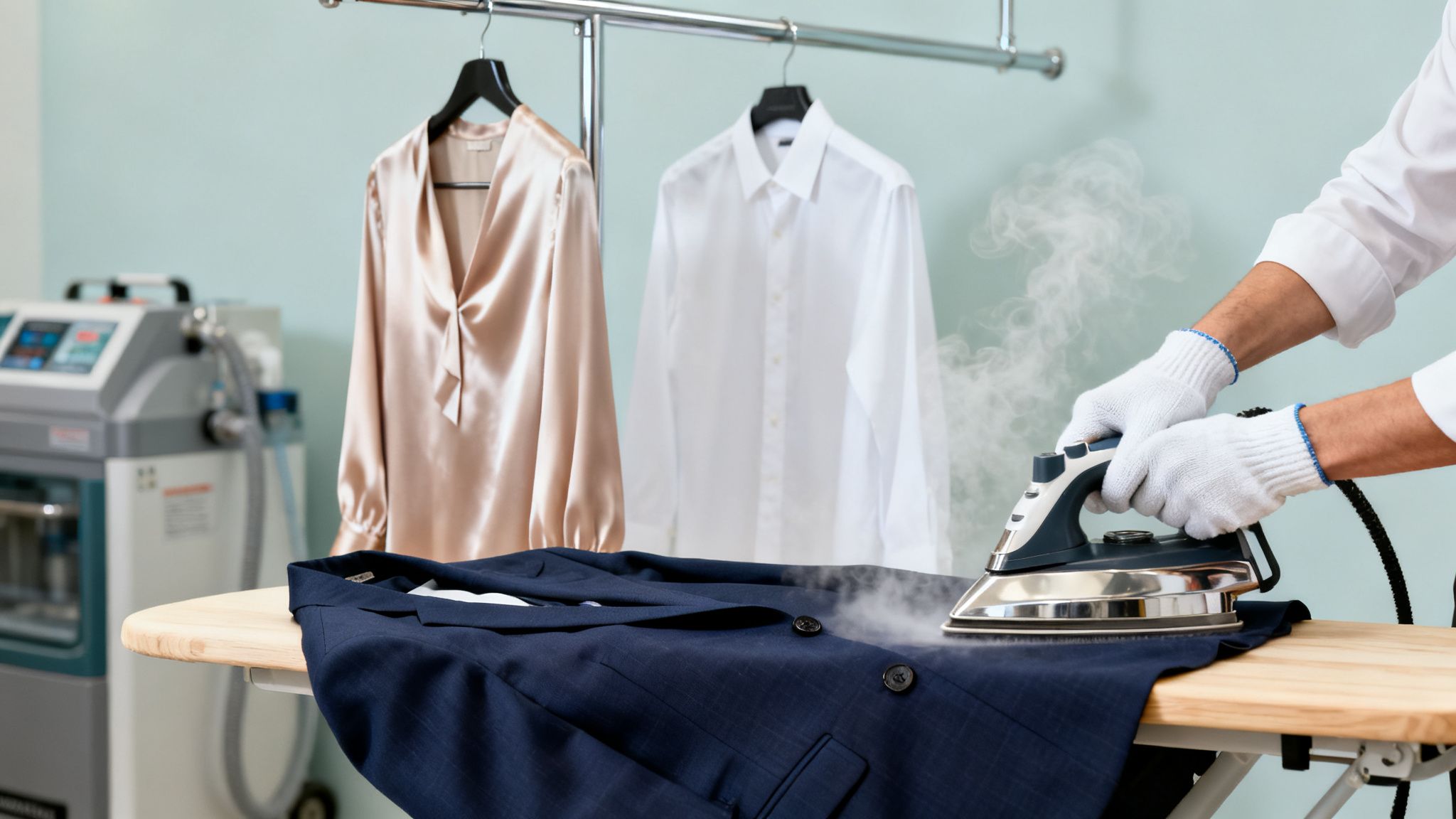
Columbia Pike Laundry offers pickup & delivery across Northern Virginia.
At its core, a dry cleaner cleans your clothes without water. It's a specialized process designed for delicate items that would be ruined by a typical washing machine. Instead of soap and water, this method uses gentle liquid solvents to lift away dirt, oils, and stains without shrinking fabrics, fading colors, or damaging materials like wool, silk, and leather.
The Secret to How Dry Cleaners Protect Your Garments
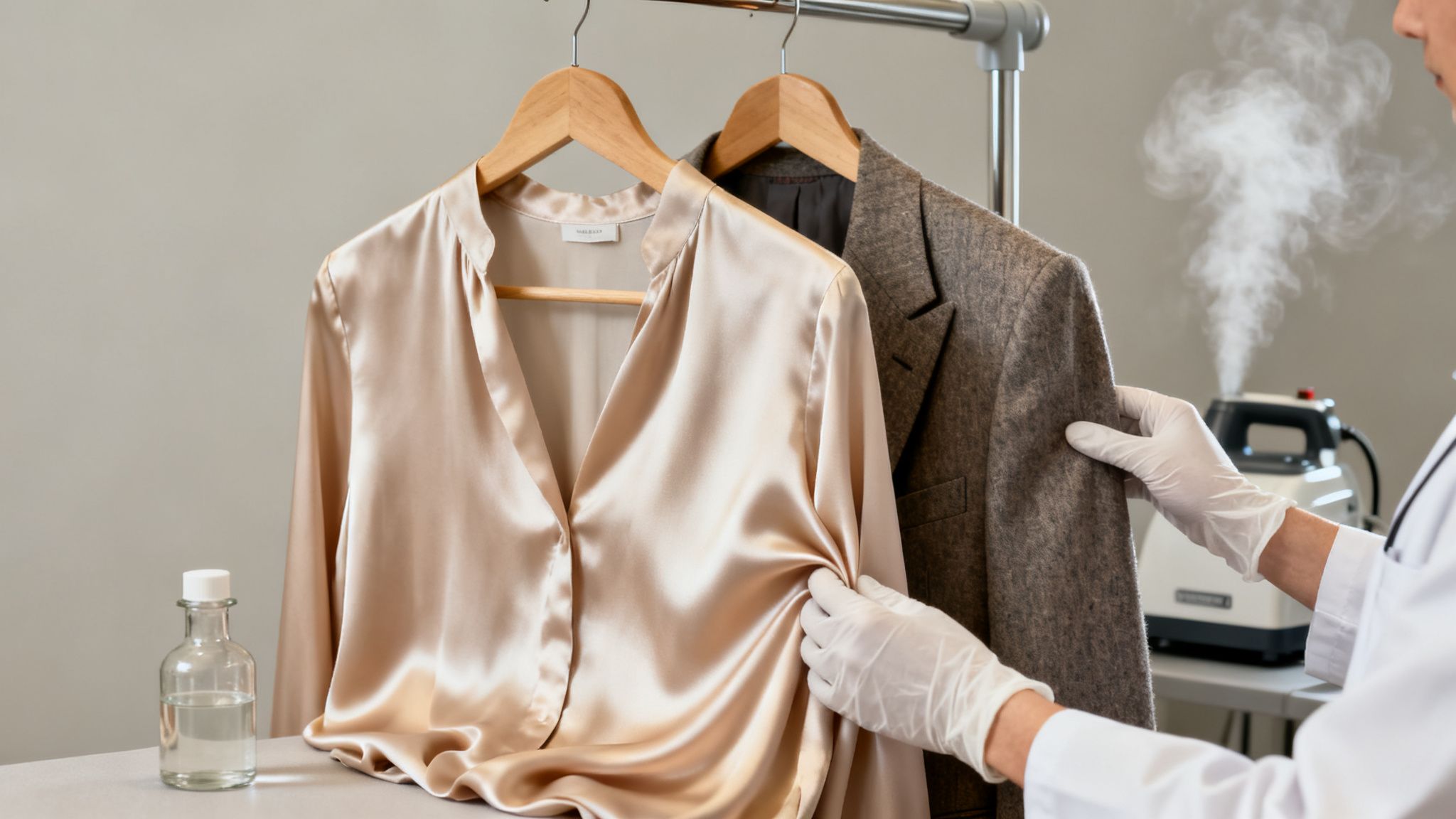
Think of it this way: home laundry is like a standard car wash, while professional garment care is more like a meticulous detailing service for your favorite clothes. The magic is in avoiding water, which can cause natural fibers like wool to shrink or silk to lose its shape and sheen. Dry cleaning immerses garments in a solvent that gently dissolves grime instead.
This is absolutely crucial for preserving the fabric's integrity, keeping colors vibrant, and maintaining the original fit of your most delicate and valuable pieces.
Why Solvents Matter More Than Water
The key difference between dry cleaning and washing really comes down to the cleaning agent. While water is a fantastic all-around solvent, it can be surprisingly harsh on certain textiles. Professional cleaners, on the other hand, use specialized solvents formulated to tackle specific stains without causing damage.
For instance, here at Columbia Pike Laundry, we use GreenEarth, an environmentally friendly, silicone-based solvent that’s much gentler on your clothes and the planet. We break down the different types of dry cleaning solvents and how they work in our detailed guide. This approach ensures your garments come back to you clean, fresh, and in perfect shape.
By avoiding the aggressive tumbling and water saturation of a home washer, dry cleaning effectively extends the life of your wardrobe, protecting your investment in quality clothing.
Beyond Cleaning: Preservation and Protection
Ultimately, what dry cleaners really do is provide complete garment care that goes far beyond just removing a stain. This includes professional pressing for a crisp, wrinkle-free finish and a careful inspection to make sure every last detail is perfect.
For those truly special items you want to keep for years, proper storage is just as important. After a professional cleaning, using a garment bag moth proof storage solution is a great next step. When you entrust your clothes to experts, you’re not just getting them cleaned—you’re actively maintaining the quality and appearance of your favorite pieces for the long haul.
Your Garment's Journey Through the Dry Cleaning Process
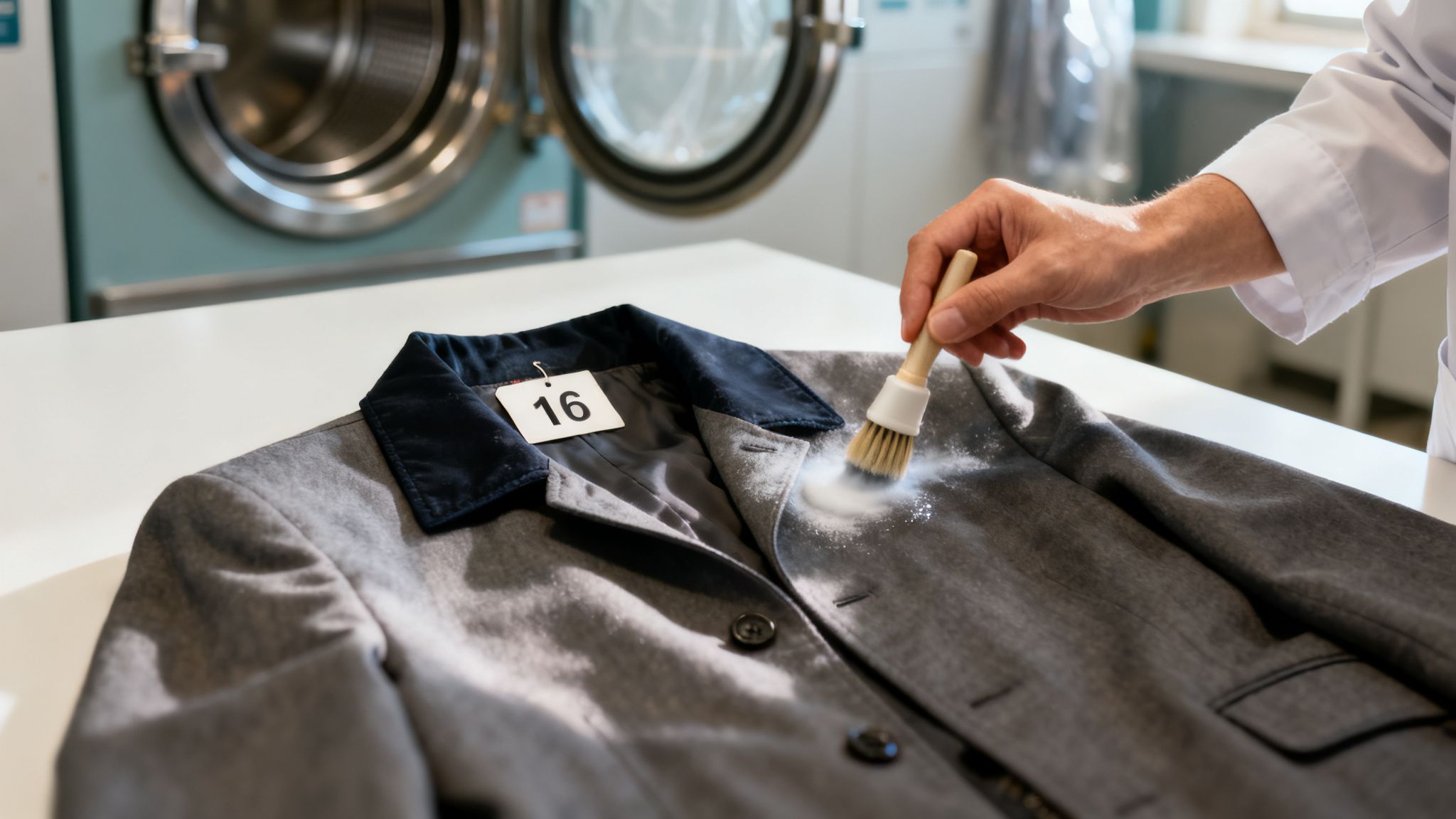
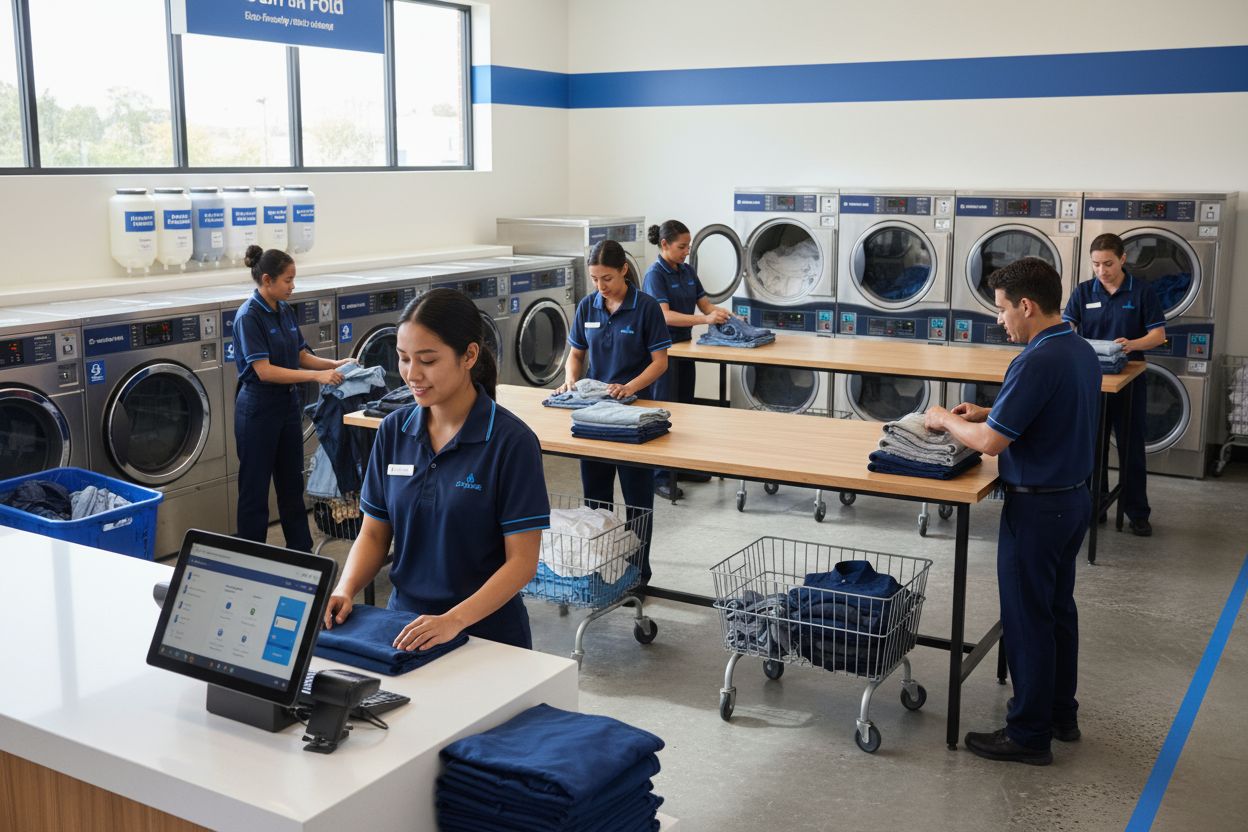
Ever wondered what happens behind the counter after you drop off your favorite clothes? It’s not just a fancy wash. Think of it as a detailed spa day for your garments, with a carefully planned process to get them back to you looking their absolute best.
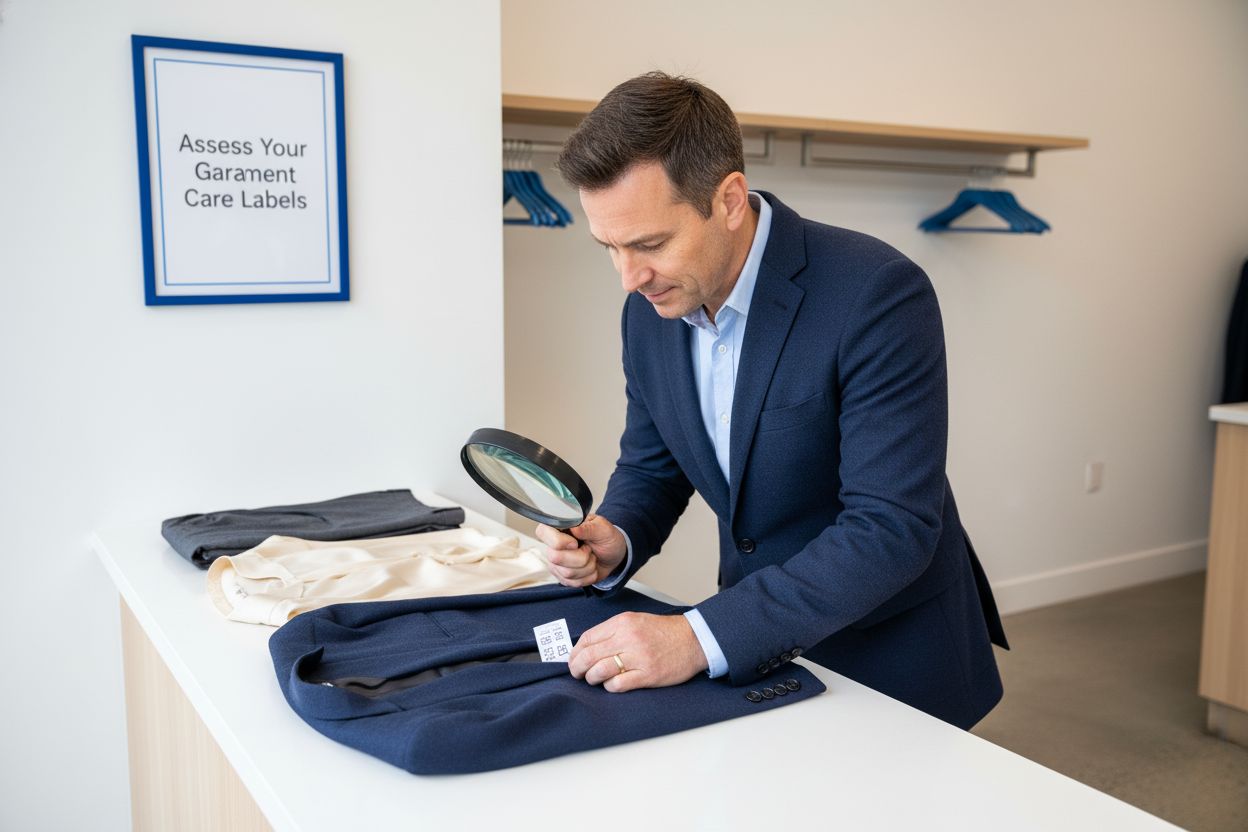
The journey starts the second your clothes come through our doors. We kick things off with a thorough inspection, reading every care label, noting the fabric type, and checking for any sneaky damage or unique features. This is also when we tag each piece with its own unique identifier so nothing ever gets lost in the shuffle.
From Pre-Treatment to a Perfect Press
Once everything is logged, the real magic begins. Our trained specialists get to work on pre-treatment, a step often called "spotting," where they tackle specific stains head-on. A coffee drip on a silk blouse needs a completely different touch than an ink smudge on a wool blazer, and getting this part right is the key to removing spots without damaging the material.
Next up is the cleaning cycle itself. Your clothes are placed in a high-tech machine that uses a gentle, water-free solvent to lift away dirt, grime, and oils. The whole process is incredibly precise. We meticulously sort items that can't handle water, treat every last stain, and use our solvent to deep-clean everything without the risk of shrinkage. Finally, each piece is steamed and pressed back to life.
The journey doesn't end when the machine stops. Post-cleaning care is what creates that professional, polished look that’s impossible to replicate at home.
The final stage is all about those finishing touches that make all the difference. This includes:
- Professional Pressing: We use specialized equipment to steam and press your clothes, smoothing out every wrinkle and restoring their original shape.
- Minor Repairs: Our team keeps an eye out for loose buttons or stray threads and takes care of minor fixes on the spot.
- Final Inspection: Before anything gets bagged, a quality control expert gives every garment one last look to make sure it meets our standards.
Only after passing this final check are your clothes carefully bagged and ready for you to enjoy. To get a closer look at the equipment and solvents we use, dive into our guide on how dry cleaning works behind the scenes.
What Do Dry Cleaners Actually Do? A Look at Their Core Services

You might think of a dry cleaner as just the place for business suits, but today's shops offer a whole lot more. They're really fabric care specialists, equipped to handle the toughest stains and most delicate items in your wardrobe and home—things your washing machine simply can't touch.
The heart of their work is professional stain removal, which is part art, part science. An experienced technician knows that not all stains are created equal. A grease spot on a synthetic blazer needs a completely different approach than a red wine spill on a silk dress. They use specialized spotting agents to target and dissolve stains before the main cleaning even begins, which makes all the difference in getting your garment back to pristine condition.
Handling Your Most Cherished and Delicate Garments
Some items just need a higher level of care. Think about that gorgeous evening gown with intricate beading, or the delicate lace on a family wedding dress. These aren't things you can just toss in a machine.
Cleaners have specific protocols for these pieces:
- Formalwear Cleaning: Gowns, tuxedos, and silk blouses are treated with extreme care to protect their shape, color, and any embellishments.
- Wedding Gown Preservation: This is a meticulous service. The gown is expertly cleaned and then packed in a special acid-free box to stop the fabric from yellowing or deteriorating over the decades.
- Delicate Fabric Care: Materials like cashmere, chiffon, and fine wools are cleaned using gentle methods and low heat to prevent any shrinking, stretching, or damage.
It’s about more than just cleaning; it’s about preserving the fabric, the craftsmanship, and the memories these special pieces hold.
Dry cleaners also have the right equipment for those bulky household items that are impossible to wash at home. Heavy drapery, down comforters, and large duvet covers are cleaned in industrial-sized machines that get them thoroughly clean without the clumping or uneven drying you'd get at home. It's an easy way to get rid of dust, allergens, and oils, refreshing your entire space.
Handling Leather, Suede, and Other Specialty Materials
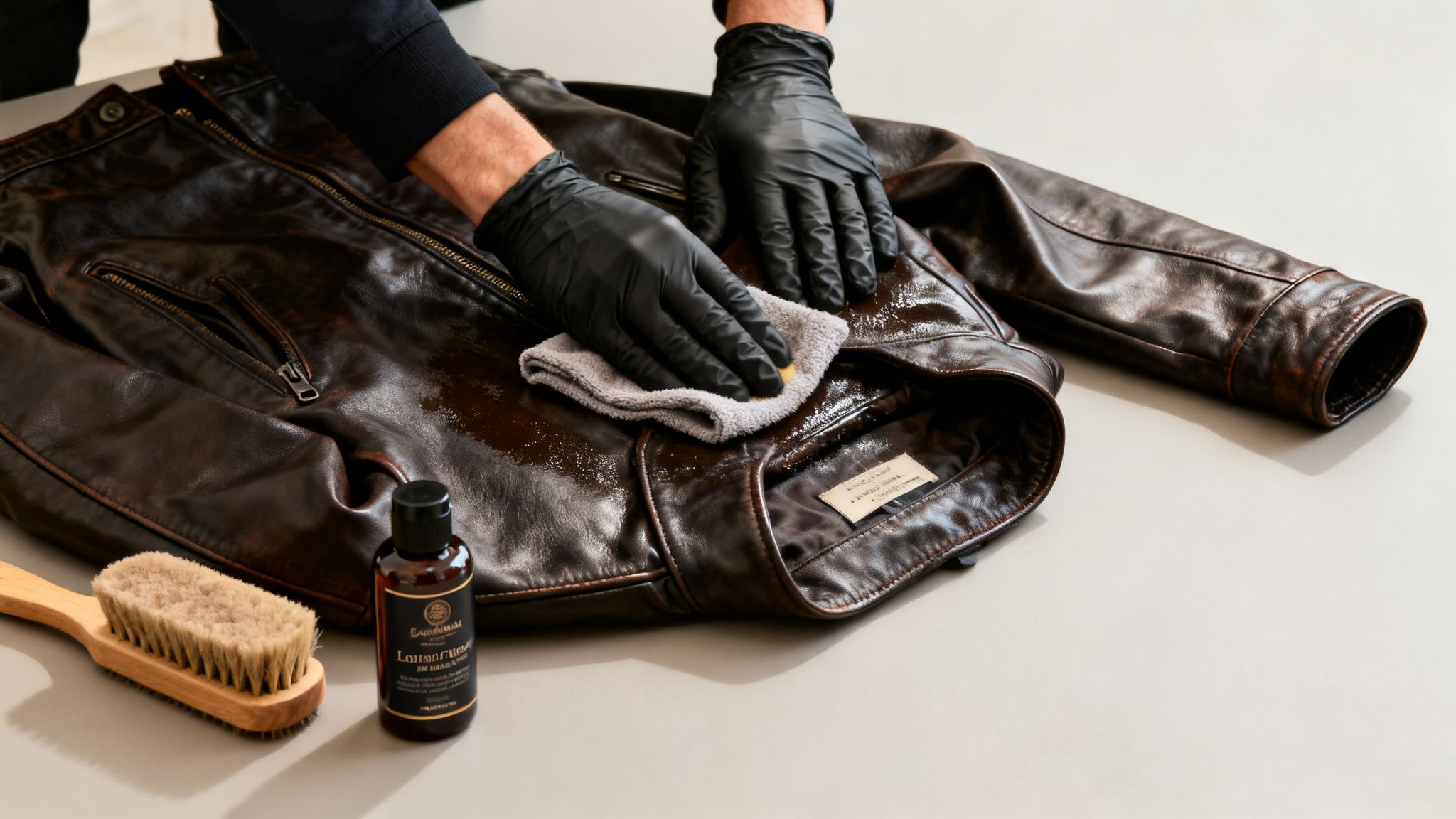
While the usual dry cleaning process is perfect for most delicate fabrics, materials like leather, suede, and fur are in a league of their own. It helps to think of them almost like skin—they have natural oils that are crucial for keeping them flexible, soft, and looking great.
Putting a leather jacket through a standard dry cleaning cycle would be a disaster. It would strip out all those vital oils, leaving the material stiff, brittle, and prone to cracking. So, what do we do instead? It’s less about simple cleaning and more about a careful, meticulous restoration process.
The Specialized Process for Unique Materials
Because these materials are so unique, they can’t just be tossed in with everything else. In fact, most high-quality cleaners send leather and suede garments to off-site facilities where dedicated technicians work their magic. This isn't a shortcut; it's the only way to guarantee a proper, safe treatment.
The whole process is very hands-on and follows a few key steps:
- Gentle Cleaning: Technicians use special agents to lift away dirt and grime without stripping the natural oils.
- Oil Reconditioning: This is the most important step. After cleaning, they carefully reapply conditioning oils to bring back that softness and flexibility.
- Color Restoration: If there are any faded spots or minor discoloration, experts will touch them up by hand to even out the color.
- Finishing: Finally, the garment is professionally pressed and finished to restore its original shape and feel.
This careful handling is why specialty items have a longer turnaround time. It’s a deliberate, hands-on process designed to protect and extend the life of your most valuable pieces.
Knowing what goes into this treatment helps you understand why it's worth handing these pieces over to a pro. You're not just getting them cleaned; you're investing in their longevity. For a closer look, our guide on professional leather clothing care breaks down even more of what makes this process so unique.
What to Expect From Your Dry Cleaning Experience
Going to the dry cleaner shouldn't feel like a mystery. Once you know the ropes, the whole process—from dropping off your favorite blazer to picking it up fresh and clean—is actually pretty simple.
The first thing you’ll probably notice is how pricing works. It’s a bit different from your standard laundry service, which usually charges by the pound. Dry cleaning is priced per item, and for good reason. A delicate silk blouse needs a completely different touch than a heavy wool coat, and the price reflects that specialized care. The fabric, how complex the garment is, and any specific stains all play a role in the final cost.
Turnaround Times and Modern Conveniences
So, how long does it all take? For most standard items, you can expect them back in a few days. Here at Columbia Pike Laundry, our usual turnaround is three business days. Of course, more complex pieces like a leather jacket or a detailed wedding gown will need a bit more time on our end to get the treatment just right.
Life is busy, and modern dry cleaners get that. That's why services like contactless pickup and delivery have become so popular. You can set everything up from your phone without ever having to leave the house—a convenience that’s a big part of why the U.S. dry cleaning industry is valued at $9.6 billion and growing. To see how the industry keeps adapting, you can learn more about the state of the dry cleaning industry on ibisworld.com.
Here’s a pro tip: When you drop off your clothes, point out any faint or invisible stains. Spills from things like white wine or sugary sodas can actually caramelize under heat and set permanently. Giving your cleaner a heads-up makes a huge difference in getting those tricky spots out.
Knowing these basics—how items are priced, typical timelines, and how to prep your clothes—makes every trip to the dry cleaner a breeze.
Answering Your Top Dry Cleaning Questions
Even after you get the basics down, you probably still have a few questions floating around. That’s completely normal. Let's walk through some of the things we hear most often from our customers to help you get the most out of every cleaning.
"Can Dry Cleaning Really Get Out Any Stain?"
This is probably the number one question we get. While our stain removal experts are wizards with most spots, the honest answer is: not always. Some stains, especially if they’ve been sitting for a while or are caused by certain dyes, can permanently bond with fabric fibers.
Think of it this way: the sooner we see it, the better our chances. Success really comes down to the stain itself, the type of fabric, and how quickly you can get it to us. Always point out any specific spots when you drop off your clothes—it makes a huge difference.
"How Often Should I Actually Dry Clean My Clothes?"
This one comes up a lot, and there’s no magic number. It really depends on what the item is and how you wear it. Here’s a good rule of thumb:
- Suits and Blazers: After wearing them two or three times is a good cadence, but bring them in sooner if you notice any spots.
- Coats and Outerwear: Once or twice a season should do the trick, unless it's your go-to jacket for braving the elements daily.
- Dresses and Formalwear: It’s best to clean these after every single wear. Spills from drinks or even invisible perspiration can set over time and cause damage later.
A pro tip is to get familiar with your garment's care label. A simple circle means "Dry Clean Only." If you see a "P" or "F" inside that circle, it's a note for us on which solvent to use. An "X" through the circle? That's a clear signal to avoid dry cleaning altogether.
You might be surprised at how essential this service has become. The global dry-cleaning market was valued at a whopping USD 83.2 billion in 2025 and is expected to soar to USD 149.1 billion by 2035. As our lives get more demanding, having professionals handle everything from our daily work suits to priceless wedding gowns is less of a luxury and more of a necessity. If you're curious, you can explore more dry cleaning statistics and trends on presscleaners.com. This industry isn’t just surviving; it’s growing to fit our modern lives.
Ready to take laundry day off your to-do list for good? Let us show you how easy it can be. Schedule your first contactless pickup with Columbia Pike Laundry today and see what a difference professional care makes.
Just visit us at https://columbiapikelaundry.com to get started.
Free pickup, expert care, delivered back to your door.
Popular Blog Articles




Meet the Author
Daniel Logan didn’t start CPL because he loved laundry. He started it because his family was drowning in time debt, and laundry was one of the biggest weights.
Mornings were chaos with two kids under 5. Evenings felt like catch-up. And weekends? Gone to sorting socks and folding piles.
He knew his story wasn’t unique. So he built a business that gave families like his just a little bit of breathing room one load at a time.
With no laundry experience but deep tech skills, Daniel rolled up his sleeves, doing every job himself while building systems that turned it into a modern laundry service that saves customers time, simplifies their lives, and delivers reliability they can count on.
That’s where CPL began. Not from a playbook, but from pain. From one dad trying to buy back time: for himself, and for every household like his.
Free pickup, expert care, delivered back to your door.